Queensland national park is a croc-spotter’s dream

hero media
Go searching for crocodiles in Queensland’s second-largest national park and you’ll discover a true adventure territory of sandstone hills, sweeping grasslands, coastal estuaries and more than a few salties.

I’m a little nervous as I walk down towards the Normanby River at Kalpowar Crossing. The waterways around here, inside Queensland’s Rinyirru National Park, are notorious for two resident species.

The first of those, barramundi, are prized by anglers and best cooked over hot coals, with perhaps a squeeze of lemon. The second, estuarine crocodiles, are likely to reverse that scenario.

There’s already a man up ahead standing by the riverbank, though not too close to risk being trapped inside the jaws of a dinosaur. He’s wearing the Cape York Peninsula uniform of garish fishing polo and trucker cap over quick-dry shorts and thongs so, rather obviously, I ask him if he’s come here to fish for barra.

“No chance," he says, shaking his head vigorously. “I’m not going near that water. We’re just happy having a few days’ camping."

I have to admit I’m envious. He and his travelling companions look like they’ve chosen a lovely spot to camp, back from the river among some stately eucalypts. But that river’s proximity would still worry me.

Though I can’t see any, I have little doubt crocs would be lurking somewhere in those waters, waiting patiently for a slip in concentration or a moment’s misplaced bravado. In fact, I’m certain of it, especially after hearing the tragic story about the owner of Laura’s Peninsula Hotel being taken by a croc not far from here a couple of years back.
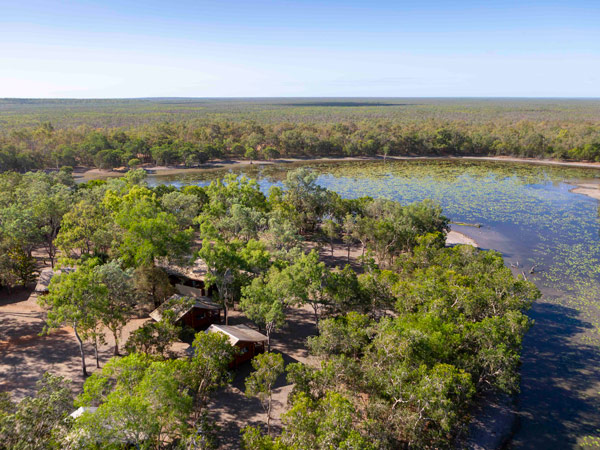
the Lotusbird Lodge by the water
Lotusbird Lodge sits on a lagoon edge. (Image: Mark Daffey)

Our base for exploring Queensland’s second-largest national park over two days is the Outback Spirit-owned Lotusbird Lodge . It’s a little further up the road, just outside its western boundary, where the countryside mirrors that inside the park.
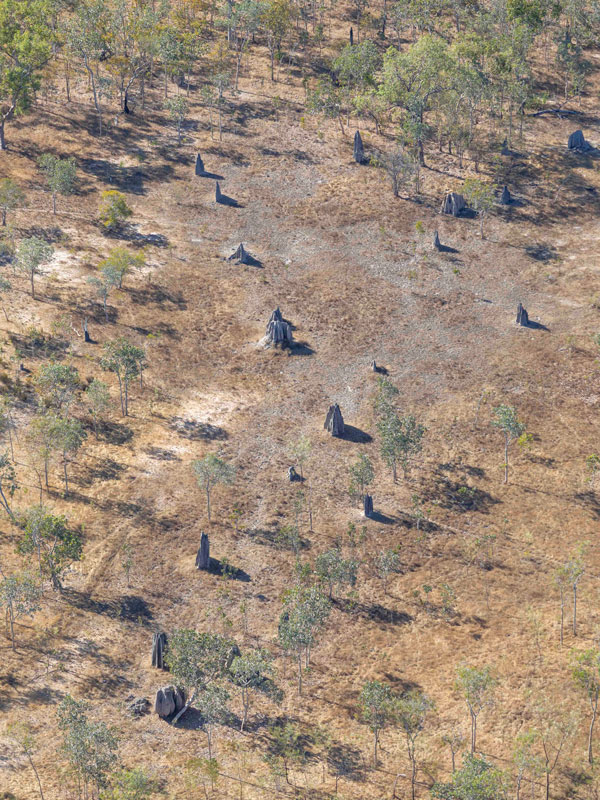
the termite mounds in Rinyirru National Park
Termite mounds as seen from above. (Image: Mark Daffey)

In places, spindly eucalypts and ironwood trees sprout from plains plagued by termite mounds. In others, extensive paperbark forests fringe marshy swamps. The one constant is the presence of water; the park is a natural floodplain.

On my first morning at the lodge, I’m roused by birdsong and jump out of bed to walk down to a blackwater lagoon shaded by Leichhardt, bloodwood and black wattle trees. Wandering-whistling ducks and magpie geese mill around the water’s edge.
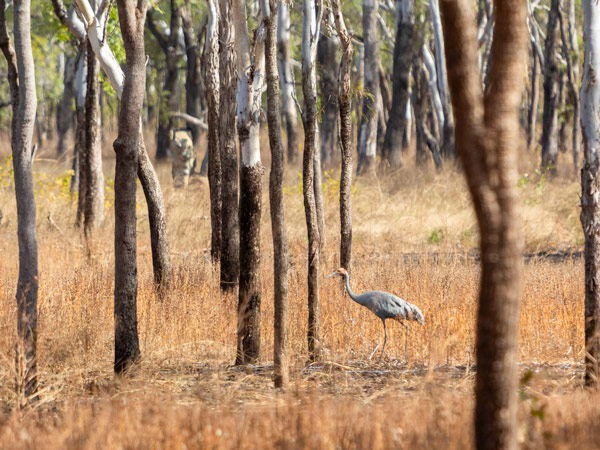
the Brolga waterbird
The brolga, Australia’s largest waterbird. (Image: Mark Daffey)

Black ibises fly overhead. Egrets tiptoe through the shallows and jacanas tap-dance across lily pads on the water’s surface. Darters perch on fallen tree trunks, drying outstretched wings. A shy jabiru keeps watch from the opposite bank.

I can’t see any crocodiles in the water, and nor do any appear to be sunning themselves on the banks. But of course, that doesn’t mean they’re not around.
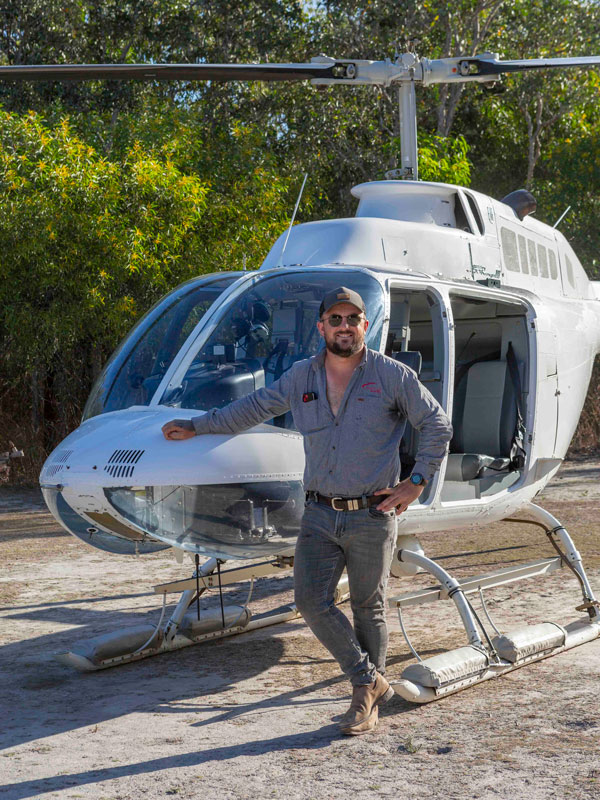
pilot Nathan Summerfield posing beside a helicopter, Cape York Wilderness Adventure
Helicopter pilot Nathan Summerfield. (Image: Mark Daffey)

Lagoons like this are splashed all over the national park, as I discover during a scenic helicopter flight that afternoon. Pilot Nathan Summerfield offers a running commentary as he navigates east over the national park then north, hovering over Saltwater Creek and the North Kennedy River as they coil towards the tidal mudflats bordering Princess Charlotte Bay.
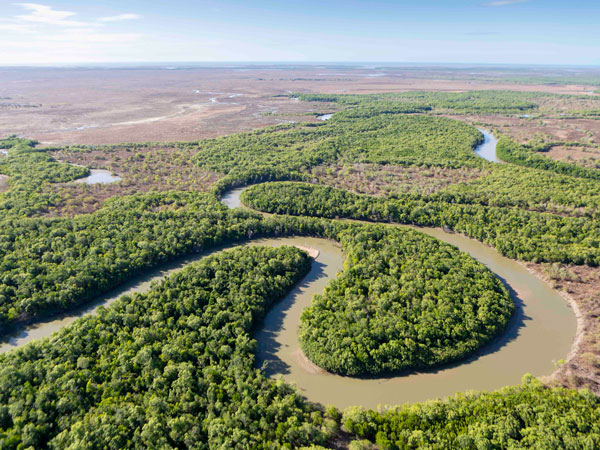
an aerial view of the Kennedy River
The snaking Kennedy River from above. (Image: Mark Daffey)

As we fly over the inky expanses of Sweetwater Lagoon – “the biggest bit of water around here" according to Nathan – I ask him if it would contain any crocs. “Oh, yeah. There are crocs in every piece of water around here," he says. “I won’t even wash my hands in a puddle."

Eventually, I spot one of the reptilian monsters slicing through a forest of green algae in a billabong, leaving a blackened trail behind it.

“All of those lines you see are made by crocs," says Summerfield. There are lines everywhere I look.
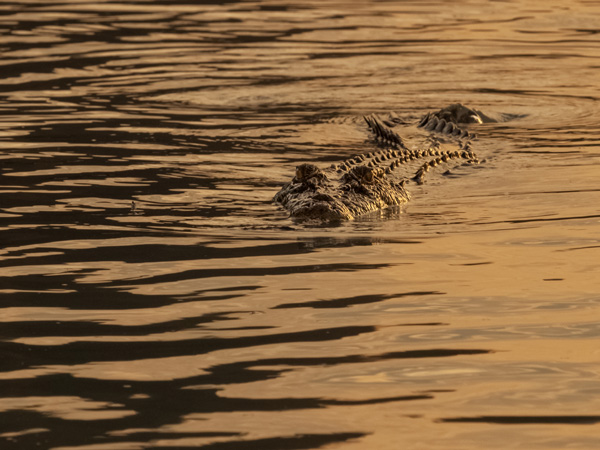
a saltwater crocodile lurking in the water
The national park is notorious for saltwater crocodiles. (Image: Mark Daffey)

As we continue to fly over the marshy northern reaches of the park, I spy more and more crocs drying out on mudflats and on slimy riverbanks. But there are also pelicans and jabirus. And a surprising number of wild cattle and pigs wallow about in the lagoons.

“Crocs don’t need to feed too often," says lodge manager Dan Costantino back at camp. “… the feral pigs are always getting taken." Better them than me.
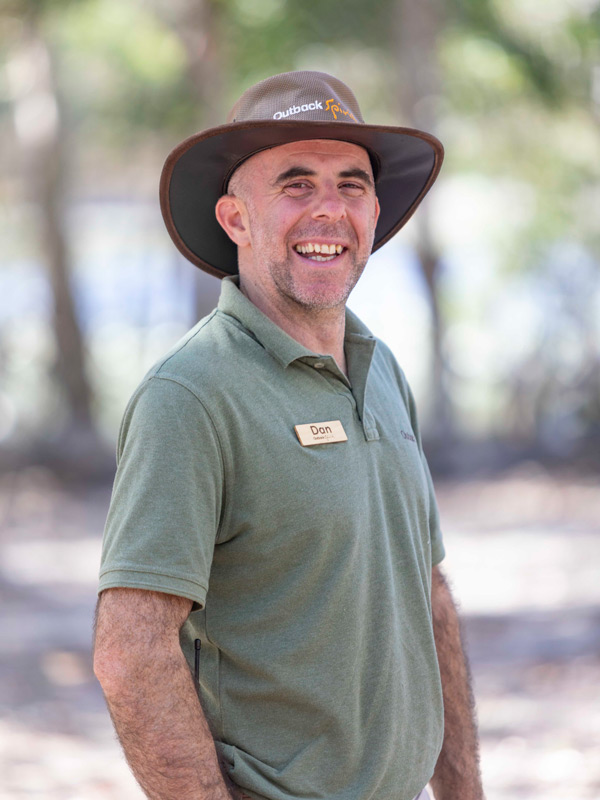
Lotusbird Lodge manager Dan Costantino
Meet Lodge manager Dan Costantino. (Image: Mark Daffey)

A traveller’s checklist

Outback Spirit’s 13-day Cape York Wilderness Adventure tours depart between May and September. The itinerary starts in Cairns/Gimuy and travels north to the tip of Queensland, including stops in Port Douglas, the Daintree, Laura and Thursday Island, among others.
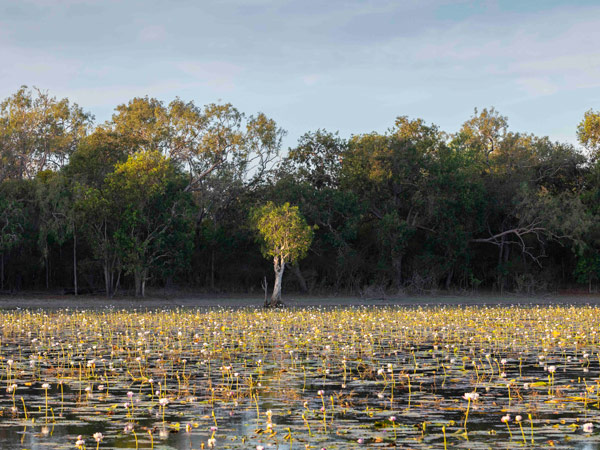
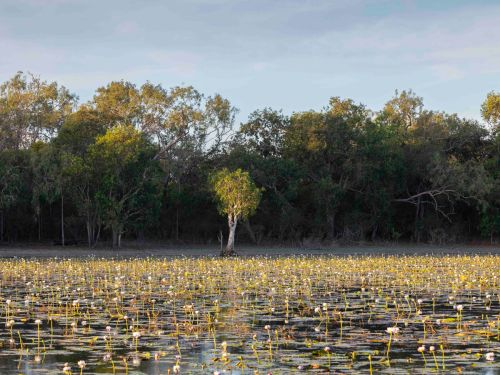
the Blackwater Lagoon covered in lilies
This lilypad-covered blackwater lagoon is the view from Lotusbird Lodge. (Image: Mark Daffey)

Guests stay in comfortable cabin accommodation for two nights at Lotusbird Lodge while they explore Rinyirru National Park. A 45-minute scenic helicopter ride over the national park is included, as well as guided walks and all food and drinks.
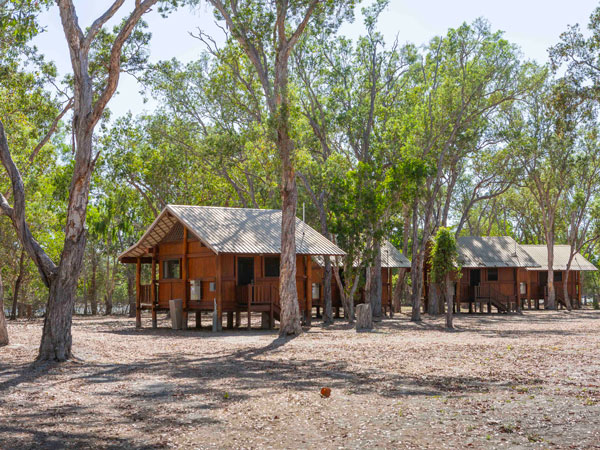
the Outback Spirit’s Lotusbird Lodge
Base yourself at Outback Spirit’s Lotusbird Lodge. (Image: Mark Daffey)
Mark Daffey
Mark Daffey is a writer, photographer and editor specialising in travel and business. He's an avid traveller and a health and fitness nut who loves to explore destinations that are off the beaten track.
See all articles

Discover the remote Queensland lodgings bringing luxury to the outback

hero media
Adventure and refined Luxury combine at the stunning Rangelands Outback Camp.

Iconic Australian red dirt, ancient rocky landscapes and bursts of greenery and wildflowers all make the small town of Winton, and its surrounds, a sight to behold. Escape the ordinary and unwind in the Queensland outback, where ancient landscapes and off-grid luxury await at Rangelands Outback Camp.

cosy seats in Rangelands Outback Camp
Unwind in the ancient outback.

About Rangelands Outback Camp

Unforgettable 360-degree views of this 95-million-year-old land await at Rangelands; bathed in style and positioned on top of a jump-up (or mesa), your tented camp seamlessly blends into its outback setting.

Set on the 53,935-square-kilometre Rangelands Station – a working cattle property – the abundant wildlife are your only neighbours; kangaroos, echidnas, eagles and other birdlife all call Rangelands home.

Bathed in style, your tented camp seamlessly blends into its outback setting. Indulge with carefully curated menus, personalised service and supersized luxury tents that guarantee a private experience. This exclusive camp only has a maximum of 12 guests at a time.

Here, the aim is pampering. From tasty menus to supersized tents with all the creature comforts, to a range of guided tours around the property and beyond.

Guests are transferred from Winton or Longreach by a dedicated Rangelands driver.

aerial shot of Rangelands Outback Camp tent
Soak in 360-degree views.

Rangelands Outback Camp tours

Join small-group tours and enjoy exclusive access to the ancient Rangelands Rifts with your Rangelands hosts. These incredible rock formations were formed by millions of years of erosion, leaving dramatic channels through the rock. Or explore the surrounds with Rangeland’s touring partner, Red Dirt Tours .

Get sunset birds-eye views over dramatic mesa country in a helicopter, from Queensland’s own Three Sisters to Corey’s Range, stopping at the best lookouts along the way.

Get up close and personal with this rugged land on four wheels, with expert drivers and guides leading guests through famous Bladensburg National Park, visiting Gondwana Stars Observatory and more.

The Winton area is famous for its boulder opals (the second-rarest opal in the world, after black opals), and a stop at the mining community of Opalton sheds a fascinating light on the unique fossicking method used to find them.

A trip to dinosaur country is a must, as this is the place that ramped up Australia’s dino contribution after a fossilised footprint was found in 1962; after more exploration, the discovery of 3300 footprints made it clear this was the world’s only evidence of a dinosaur stampede. Those same footprints are still on display today at Lark Quarry Conservation Park , a 90-minute drive from Winton. Also check out Australia’s largest collection of Australian Dinosaur fossils Australian Age of Dinosaurs, just 30 minutes from Winton. Here, join a tour through a working laboratory, dinosaur canyon and more.

A twice-daily transfer into downtown Winton is offered to guests, where they can explore the Royal Outdoor Theatre, opal shops, Waltzing Matilda Centre and more.

tour being led through Rangeland rifts
Have an exclusive adventure through the Rangeland Rifts. (Image: TEQ)

Sleeping in luxury

After a day of exploring, return to your tranquil tent for a blissful open shower and uninterrupted views from your private deck.

Designed to integrate guests into the surrounding nature, each tent feels like its own private haven. While being off-grid in the outback (in fact, each tent is powered by its own solar panels, with the added support of a backup generator), guests can also luxuriate in comfortable amenities like air conditioning, a supremely comfortable king-size bed and stylish designer touches.

Guests can stroll to the open-air Sunset Deck for breathtaking panoramic views, or to the main lounge and dining tent, where books, on-demand coffee and drinks make it the perfect place to relax after a day in the outback.

inside Rangelands Outback Camp bedroom
Enjoy plenty of space inside, and stunning views outside.

Rangelands Outback Camp dining

As the sun starts to dip below the horizon, gather for drinks and canapés on the expansive Sunset Deck, watching the sun drench the landscape in pinks and oranges as it sinks below the horizon.

Later, head to The Mahal lounge area and dining tent where mealtime magic happens. Savour a gourmet meal made fresh by Rangeland’s onsite chef. The meals use local produce to elevate classic outback dishes, and don’t worry, dietary requirements are happily accommodated.

Enjoy an open bar filled with an expansive hand-selected list of wines and premium beers, with wine pairings offered by Rangelands hosts come dinner time.

Discover more and book your luxurious stay at rangelandscamp.com.