The Great Barrier Reef is a living structure under pressure, threatened by climate change, pollution and land run off, and other factors. While flying to Lady Elliot Island, its southernmost coral cay, for a few days of saltwater fun isn’t going to solve all the reef’s problems, your visit can have a positive impact finds Kara Murphy.
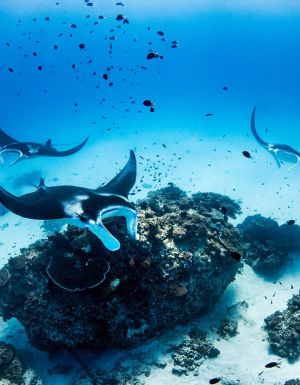
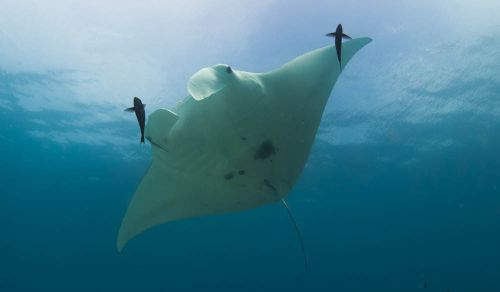
As your Seair Pacific flight circles Lady Elliot Island, two local celebrities – a manta ray and sea turtle – glide just beneath the sea’s surface, near an enticing stretch of reef. You can’t wait to land and get in the water.
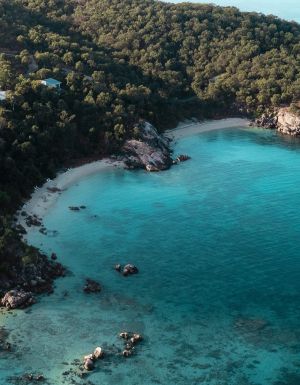
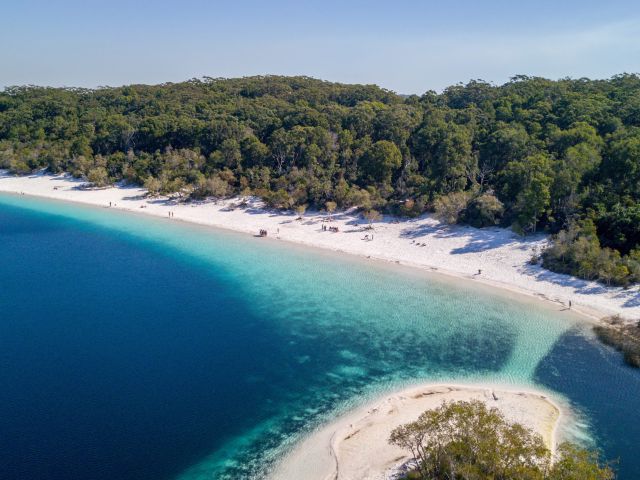
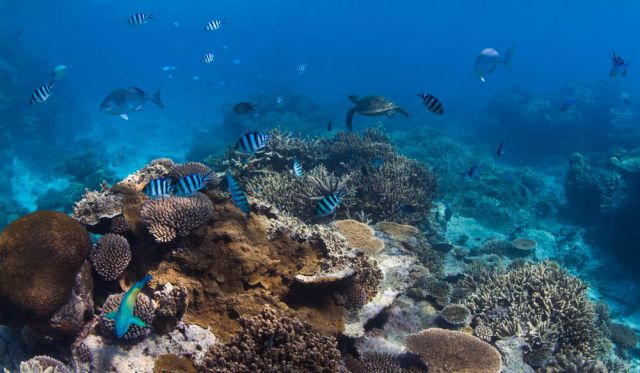
This 45-hectare coral cay, 85 kilometres north-east of Bundaberg, in the southernmost Great Barrier Reef Marine Park , is a paradise for snorkellers and scuba divers. Its shallow lagoon teems with coral, fish, and sea turtles; its deeper waters harbour rich marine life; and its unpretentious eco resort champions conservation and sustainability. While your visit won’t magically eliminate major threats to the Great Barrier Reef (climate change, for example), it can help in the following ways.
1. Your tourism dollars support eco-initiatives
In 2005, managing director and leaseholder Peter Gash took over resort guardianship. Since then, Lady Elliot Island Eco Resort has significantly reduced its energy consumption and CO2 emissions by installing a hybrid power station and more than 417 solar panels. Renewable energy currently fulfils 80 per cent of the resort’s energy requirements, and it plans to be 100 per cent sustainable by 2020.
Other eco-initiatives include a re-vegetation program, which enhances natural habitats frequented by nesting seabirds and turtles; water conservation and solar freshwater production; waste management; and the use of environmentally friendly jet-powered outboard motors on boats. As you walk past seabird nests to snorkel near coral that hasn’t been damaged by propellers, smile knowing your tourist dollars are helping the resort preserve the Great Barrier Reef’s natural environment.
2. You can reduce the impact of your flights to Lady Elliot Island
Flying offers a beautiful perspective of Lady Elliot Island; however, the plane’s fuel releases carbon dioxide and other emissions into the atmosphere, which contributes to climate change. You can offset these emissions, though, by donating $2 per person per flight. These funds are used to plant native forests at Barolin Nature Reserve (near the Mon Repos turtle rookery), which help capture carbon emissions, reduce the impact of light pollution on nesting turtles and hatchlings, improve the quality of water flowing into the reef, and more.
3. You’ll learn about the reef
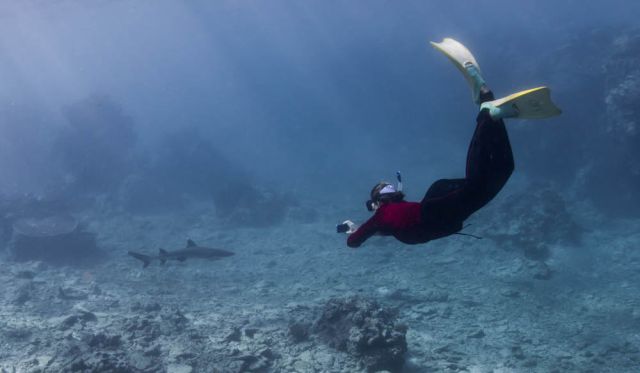
The more you know about something, the better positioned you are to protect it. With displays about the dive and snorkel sites and the creatures you’ll find there, the Reef Education Centre is a worthwhile stop. And you can learn about marine species and the fragile reef ecosystem as you snorkel as well, particularly on guided snorkel safaris and glass bottom boat tours. You’ll learn, for example, that the blacktipped reef shark you see enjoys swimming close to shore thanks to its diet of molluscs, crustaceans, and small fish… not because it wants to hang out near you.
4. You’ll protect your new friends
You could easily spend hours snorkelling near trusting sea turtles here; after a few moments swimming alongside one, you’ll want to protect them. Sea turtles (and other marine life) can become entangled in discarded fishing gear; they’ll also ingest plastic – for example, plastic bags, which they fatally mistake for jellyfish. Picking up rubbish, particularly near the ocean, is one thing you can do to help them.
Another is only buying seafood that is caught or farmed responsibly. (In unsustainable methods, turtles and other threatened species might be accidentally caught in fishing gear.)
5. You’ll avoid single-use plastic
If you’re hoping to buy bottled water or use plastic straws here, you’ll be disappointed. Instead, buy a reusable ‘Eco Warrior’ drink bottle and fill it with pure desalinated seawater. And island cocktails taste just as delicious with the environmentally friendly paper straws provided.
Bottled water generates hundreds of times more greenhouse gas emissions than tap water. In Australia alone, more than 300 million plastic water bottles end up in landfills each year. If they wind up in the ocean, they’ll eventually break into small pieces, which marine species and seabirds might fatally mistake for food. Armed with this knowledge (and a groovy reusable bottle), you’ll avoid single use plastics when you return home.
6. You can help monitor the reef
You’ll have plenty of time to marvel at coral while here – so why not also spend some time helping monitor it? Reef Check Australia has established several monitoring sites, which you can help monitor using a ReefSearch slate (available in the Reef Education Centre). To participate, snorkel for 10 minutes within a two metre-wide area, recording the key reef organisms (anemone fish, sea cucumbers, sea urchins, etc.), reef substrate (live corals, slimy algae, rocks, sand, and rubble), and impacts (broken coral, white coral, and rubbish). Afterwards, upload your findings to the ReefSearch Hub.
Eye on the Reef is another program. To participate, download the app and share photos of what you see while snorkelling or diving.
7. You can assist with manta ray research
The island is a hotspot for reef manta rays – particularly in winter, when they aggregate in larger numbers. If you have an underwater camera, you can assist with the University of Queensland’s Project Manta team’s research, which focuses on the population ecology and biology of manta rays within Australian waters.
When you encounter a manta, try to take a photo of its ventral surface (belly), which has unique markings. Afterwards, email your photos to project.manta@uq.edu.au , including the date and location of the sighting. If the manta you photographed is new to Project Manta’s database, you get to name it!
8. You’ll discover ways to protect the reef
If you’re starting to feel waterlogged after all that snorkelling, set out on the self-guided Climate Change Trail. The trail includes 11 signs highlighting the impacts climate change could have on a coral cay ecosystem – coral bleaching, rising sea levels, and ocean acidification, for example.
It also suggests ways you can help protect the reef. For example, you can help slow climate change by reusing your bath towels and sheets and investing in solar panels for your home. And you can help keep coral healthy (and better able to survive climate impacts) by staying clear of it when snorkelling and diving.