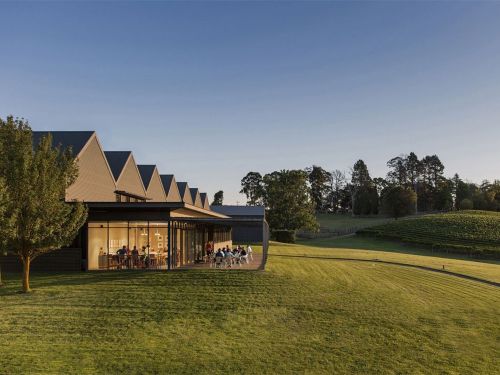
A guide to South Australia’s best winery experiences

hero media
South Australia’s wine regions cater to all tastes – from its robust shiraz to aromatic whites and experimental drops aged in buried amphorae.

Hundreds of wineries across the state make every imaginable type of wine, and cellar doors these days do far more than just sell the finished product. Visitors can find a growing range of unique experiences on offer alongside the wine: here are six of the best.

1. The Home Of Grange

Penfolds Magill Estate is more than just the spiritual home of Australia’s most famous wine. The original winery on the edge of the Adelaide foothills has a 175-year history, and it was there that pioneering chief winemaker Max Schubert began experimenting with a new red blend in the 1950s. Initially, the new red was so poorly received by critics and the public that Schubert was ordered to stop production. Instead, he continued to make Grange in secret, hiding several new vintages in the depths of the cellars until management saw the wine’s potential.


The Ultimate Penfolds Experience lets you tour the original working winery and famous bluestone cellars, including the otherwise unremarkable cupboard where Schubert hid his forbidden fruit. And most importantly, you can then retire to a private tasting room to sample a range of Penfolds’ super-premium wines, including the iconic Grange.
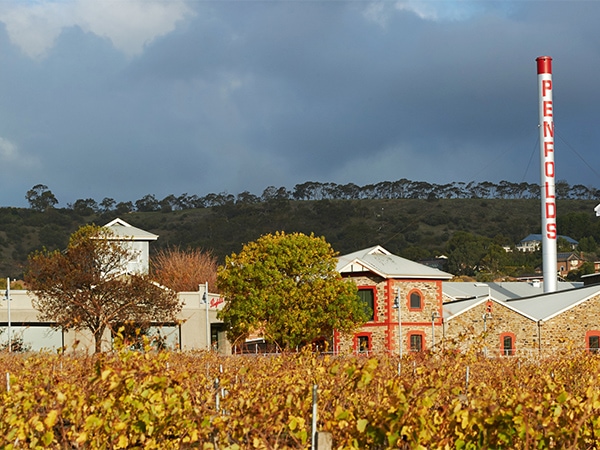
Penfolds is more than just the spiritual home of Australia’s most famous wine

2. A Surreal Degustation

The five-story d’Arenberg Cube is the most eye-catching building in McLaren Vale, and the views out over the lush Lofty Ranges and cliff-ringed beaches of the Fleurieu are worth the trip alone. Amazingly, what’s inside is even more memorable. Shockingly bright harlequin-covered chairs and lurid artworks are just a hint of what awaits in the Cube restaurant.


The chefs’ mission is to engage the imagination and challenge convention, and they succeed abundantly at their task. Fusing Heston-style molecular gastronomy with Lewis Carroll’s creativity, some of the offerings include “coals" of barramundi and vegemite, sherbet that’s sucked off a mirror through a rolled hundred dollar bill and 3D printed dishes. In comparison, the Dali exhibition being displayed on the grounds looks downright conventional. Whether you think it’s unfiltered madness or pure inspiration, it’s impossible to deny that the result is one of the most memorable meals in the country.
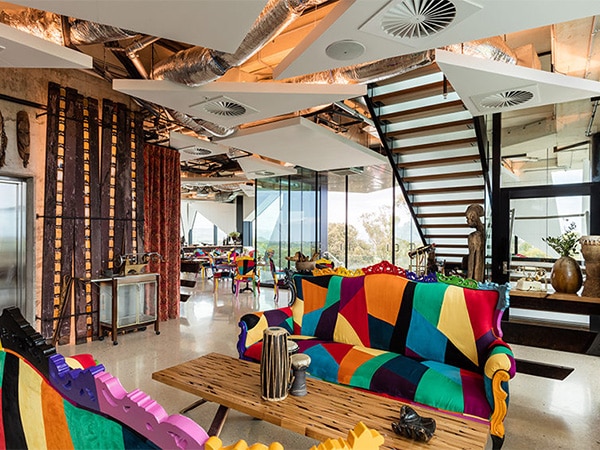
Curiosity awaits in the Cube restaurant

3. Tawny Time Capsules

If Chester Osborn at d’Arenberg is the wine world’s mad hatter, Warren Randall must surely be its master perfumier The olfactory wizard has created a sensory paradise at his Seppeltsfield complex in the heart of the Barossa.


The soothing scent of olive oil soap at Vasse Virgin is enhanced by hints of sandalwood and essential oils, while the kitchen at Fino Seppeltsfield is responsible for a range of tantalising aromas. But entering the Centennial Cellar is like ascending to a loftier plane. Walk into this magical space and you’re immediately be engulfed by a warm cloud of toffee and almonds. This is the angel’s share of barrels representing every vintage of tawny dating back to 1878, a collection that is unrivalled anywhere in the world. You can only enter on a guided tour and, fortunately, all of them include at least one tasting. Taste your birth year direct from the barrel, sample a 100-year-old tawny or embark on the ultimate choose-your-own-adventure with This Is Your Life , a selection of five vintages that can go back as far as 1902.
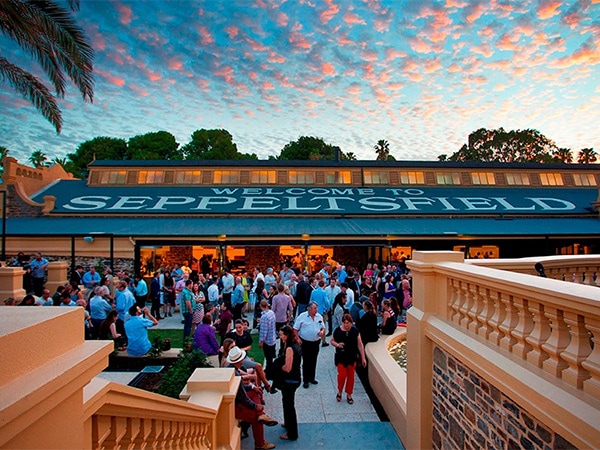
Seppeltsfield complex in the heart of the Barossa

4. Be A Winemaker For A Day

Plenty of wineries allow you to blend your own wine, but Coonawarra’s Raïdis Estate goes one step further and gives you control over every step of the process. Each vintage, a select few wine enthusiasts gather at the friendly-family winery and help to make that season’s Kefi. And they’re in charge of everything, from picking the grapes to deciding what kind of oak and fermentation method to use (with a little guidance from the winemakers).


The day begins with a strong Greek coffee before you head out to pluck grapes directly from the vine. After crushing the fruit, the hard work is done and you can indulge in an elaborate Greek feast accompanied by plenty of Raïdis back vintages. Then you can sit back and wait for updates on how the wine is progressing and, once it’s ready to be released, you’ll receive a bottle in the post so you can see just how well you did.
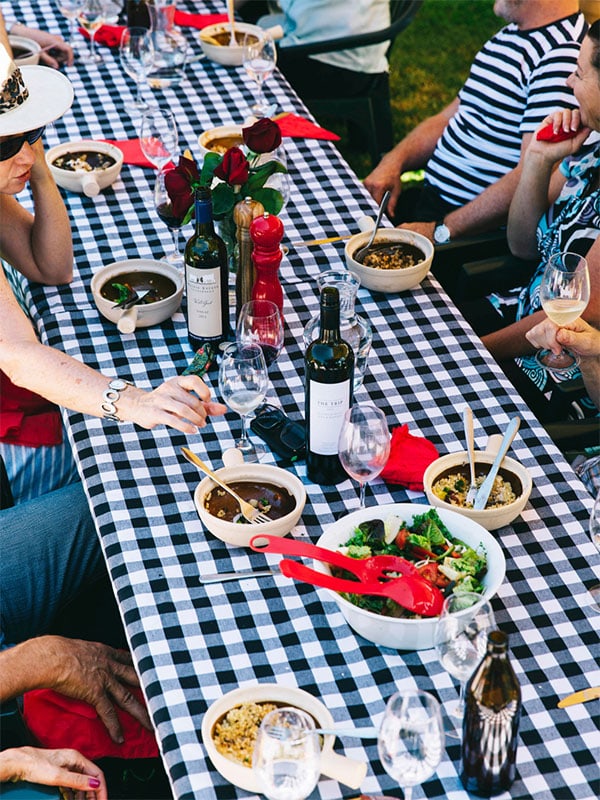
Share a unique bottle at Raidis Estate

5. Learn From The Best

The Adelaide Hills is the land of the long lunch, and few are more satisfying than Shaw + Smith ’s. Perched above a beautiful lake near Balhannah, the cellar door is one of the most picturesque in the region, and the views from the vineyards are even better. After beginning the Friday Table experience with a walk through the vines, venture behind the scenes of the winery with a tour through the barrel halls and fermentation rooms as you learn the craft of winemaking and sample wines in various stages of maturation. 


Retire to a private room for a guided tasting of some limited edition single site wines and sit down to a meal where each of the courses is paired with two vintages for side-by-side comparison. Shaw + Smith is the only winery in Australia that’s home to two Masters of Wine, and you can see if some of their expertise has rubbed off on you by finishing with a blind tasting opposite one of the winery’s top guns.
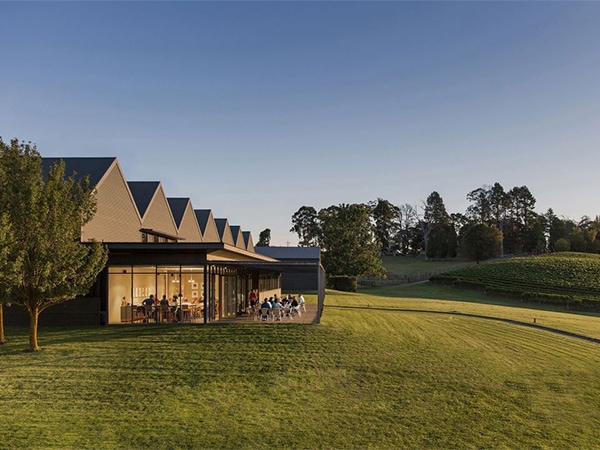
This cellar door is one of the most picturesque in the region

6. The Ultimate Cellar Door

You won’t find a more convenient vineyard than the one at the National Wine Centre of Australia , in the Adelaide CBD. Seven varieties are grown here, but they’re mostly for educational purposes and the 120 wines on offer in Australia’s largest tasting room represent all 65 wine regions around the country. 


That means there’s something to suit every taste and budget on offer from the Enomatic dispensers (which represent a small selection from the 18,000-bottle cellar). If the choice is overwhelming and you need a little assistance, ask one of the centre’s sommeliers to take you on a tour followed by a master class that takes you to any wine region in the country.
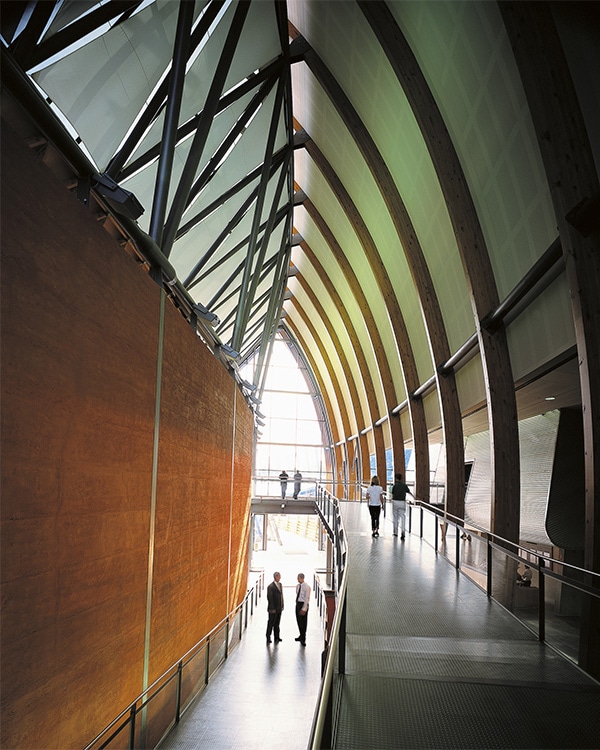
Architectural facade of National Wine Centre of Australia
Alexis Buxton-Collins
Alexis Buxton-Collins spent his twenties working as a music journalist and beer taster before somehow landing an even dreamier job as a freelance travel writer. Now he travels the world from his base in Adelaide and contributes to publications including Qantas, Escape, The Guardian and Lonely Planet. Alexis has never seen a hill he didn't want to climb and specialises in outdoor adventures (he won the 2022 ASTW award for best nature/wildlife story for a feature on Kangaroo Island). When he's not scouring South Australia for the newest wineries and hikes, he's looking for excuses to get back to spots like Karijini and Ningaloo.
See all articles

From coast to bush: these are Gippsland’s best hikes

Video credit: Tourism Australia

From coast to mountains, hiking in Gippsland offers a stunning array of landscapes, with trails that take you deep into the region’s heritage.

I step out onto the sand and it cries out underfoot. Kweek! I take another step and there’s another little yelp. Screet! Picking up the pace, the sounds follow me like my shadow, all the way down to the water. It’s obvious how this spot got its name – Squeaky Beach – from the rounded grains of quartz that make the distinctive sounds under pressure.

For many, Wilsons Promontory National Park is the gateway to Gippsland , and the best way to explore it is by walking its network of hiking trails, from coastal gems such as Squeaky Beach through to the bushland, among the wildlife. But it’s still just a taste of what you’ll find on foot in the region.

Venture a bit further into Gippsland and you’ll discover the lakes, the rainforest, and the alpine peaks, each changing with the season and offering summer strolls or winter walks. Just like that squeaky sand, each step along these trails has something to tell you: perhaps a story about an ancient spirit or a pioneering search for fortune.

The best coastal hikes in Gippsland

sunset at Wilsons Promontory National Park
Wilsons Promontory National Park is a sprawling wilderness with many coastal bushland trails. (Image: Mark Watson)

Wilsons Promontory National Park (or ‘The Prom’, as you’ll end up calling it) is an easy three-hour drive from Melbourne, but you might ditch the car when you arrive, with much of the park’s 50,000 hectares accessible only by foot. From the inky water of Tidal River (dyed dark purple by abundant tea trees), I like the easy walks along the coast, among lichen-laden granite boulders, to golden beaches and bays.

a couple on Mount Oberon
Panoramic views from the summit of Mount Oberon. (Image: Everyday Nicky)

The trail to the panoramic views at the summit of Mount Oberon is a bit harder, up steep timber and granite steps, but it’s a popular 6.8-kilometre return. The more remote hikes are found through the open banksia and stringybark woodland of the park’s north, or along the multi-day Southern Circuit , which ranges from about 35 to 52 kilometres, with sunrises and sunsets, kangaroos and cockatoos, and maybe even whales.

a golden sand beach at Wilsons Promontory National Park
Walk ‘The Prom’s’ golden sand beaches. (Image: Tourism Australia/Time Out Australia)

You might also see whales on the George Bass Coastal Walk , even closer to Melbourne on the western edge of Gippsland. This dramatic seven-kilometre trail along the clifftops takes in sweeping views of the wild ocean, occasionally dipping down from grassy green hills to coastal gullies and a secluded beach. It also now links into the Bass Coast Rail Trail for an extra 14 kilometres.

the George Bass Coastal Walk
George Bass Coastal Walk trails for seven kilometres along clifftops. (Image: Visit Victoria/Time Out Australia)

Over at the eastern edge of Gippsland, in Croajingolong National Park, you can wander along the lakeshores beneath koalas and around goannas (I keep my distance since one chased me here!). For those who are even more adventurous, the park is also the starting point for the 100-kilometre Wilderness Coast Walk , usually done over seven days.

the Croajingolong National Park, Gippsland
Wander along the lakeshores in Croajingolong National Park. (Image: Tourism Australia)

The best bush hikes in Gippsland

the Baw Baw National Park
The alpine heath of Baw Baw National Park. (Image: Everyday Nicky)

Deep in the Long Tunnel Extended Gold Mine at Walhalla, mining guide Richard tells me how this small town in the mountains east of Melbourne boomed when prospectors found gold here in 1862. These days, you’ll find most of the town’s treasure – its heritage – above ground, with the Walhalla Tramline Walk a wonderful way to explore it.

Just seven kilometres long, the walk takes you through decades of Gold Rush history, following the original rail trail from lush bushland to the mining sites, and through the charming village of just 20 residents with its wooden cottages and old shopfronts adorned with turn-of-the-century advertising posters. Blazing a trail where trailblazers once opened up the region, this is also the starting point for the 650-kilometre Australian Alps Walking Track.

Nearby, Baw Baw National Park has walks through gnarled snow gums and alpine heaths that show off the colourful wildflowers in summer and the pristine carpet of white in winter. Several trails are perfect for snowshoes, including a 45-minute route from St Gwinear up to vast views across the Latrobe Valley.

Further up into the mountains, the Toorongo and Amphitheatre Falls Loop Walk is an easy 2.2-kilometre path that serenades you with the sound of flowing water as you pass mossy rocks and tree ferns en route to two sets of waterfalls cascading over boulders in the remote wilderness.

The best cultural hikes in Gippsland

the Mitchell River National Park, Gippsland
Hike the Mitchell River National Park. (Image: Parks Victoria/Grace Lewis)

Across a pool in a natural sandstone amphitheatre, deep within a cave behind a waterfall, it’s said the Nargun has its lair. A fierce creature, half human and half stone, that abducts children and can’t be harmed by boomerangs or spears, the story of the Nargun has been told around the campfires of the local Gunaikurnai people for generations.

As a culturally significant place for women, hikers are asked not to go into the Den of Nargun, but a 3.4-kilometre loop walk leads you through a rainforest gully to the entrance where you can feel the powerful atmosphere here in Mitchell River National Park , along Victoria’s largest remaining wild and free-flowing waterway.

the bee-eaters at Mitchell River National Park
Bee-eaters at Mitchell River National Park. (Image: Parks Victoria/Grace Lewis)

The Den of Nargun is part of the Bataluk Cultural Trail , a series of important traditional Gunaikurnai sites through central Gippsland. Another location is Victoria’s largest cave system, Buchan Caves Reserve, with trails to important archaeological sites of human artefacts up to 18,000 years old. The FJ Wilson Interpreted Walk includes the naturally sculpted white limestone steps of the 400-metre-long Federal Cave, while the Granite Pools Walk goes among tall timber and moss-covered gullies.

the ancient rainforest of Tarra-Bulga National Park
The ancient rainforest of Tarra-Bulga National Park. (Image: Josie Withers)

Also important to the Gunaikurnai people is Tarra-Bulga National Park , known for its ancient myrtle beeches and enormous mountain ash trees. Just 40 minutes return, the Tarra Valley Rainforest Walk offers a taste of this verdant landscape, while the Grand Strzelecki Track takes you deep into the lost world of forest giants on an epic 100-kilometre trail rich with tradition.

A traveller’s checklist

Staying there

the WildernessRetreats in The Prom
Wilderness Retreats in The Prom. (Image: Christian Pearson)

Wilderness Retreats in Wilsons Promontory offers glamping-style tents with luxurious queen beds. Star Hotel is a reconstruction of a Gold Rush-era hotel from 1863 in the heart of heritage Walhalla. Caves House is a historic three-bedroom house with views over the Buchan River.

Eating there

the Carrajung Estate, Gippsland
Enjoy a post-hike lunch at Carrajung Estate. (Image: Everyday Nicky)

Kilcunda General Store serves great coffee and meals of local produce at the George Bass Coastal Walk. Alpine Trout Farm is located near Toorongo Falls in Noojee. Fish for your own lunch and barbecue it with the provided cookware.

Carrajung Estate is a short drive from Tarra-Bulga National Park. The winery’s restaurant offers a seasonal menu of regional ingredients and you can stay at The Lodge.

a seafood feast at Carrajung Estate, Gippsland
The table is set for a seafood feast at the estate.

Video credit: Tourism Australia