hero media

Adelaide Hills has a 97-hectare botanic garden with 6 nature trails

Wander your way through Mount Lofty Botanic Garden with these six walks.

There’s never a better time to visit Adelaide Hills’ Mount Lofty Botanic Garden than in spring. Take in 97 hectares blooming to life, changing the land with vibrant colours and scenting the air with sweet fragrances. And these six Mount Lofty Botanic Garden walking trails will help you make the most of it.

1. Rhododendron Trail
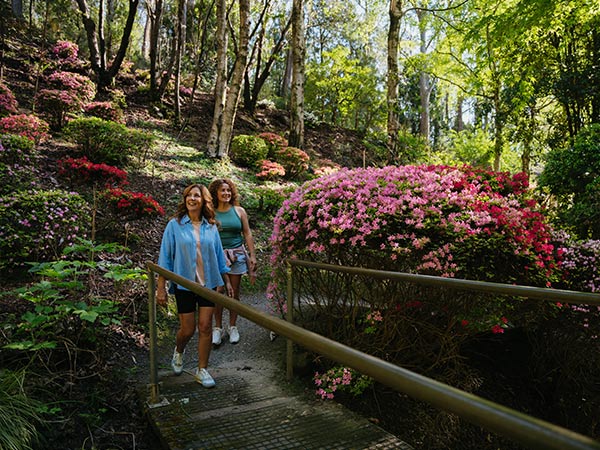
women on Rhododendron Gully Mount Lofty Botanic Garden walking trails
See all the Rhododendron colours. (Image: Paula McManus)

Distance: 700 metres

Love the pink and purple hues of this flower, hailing from eastern Asia and the Himalayas? Take the short (but somewhat steep) walk through some of the most spectacular Rhododendron displays. Enter from either the upper car park or past the duck pond and wander through gorgeous woodland with a carpet of colourful petals at your feet.

Just try to time this walk for early spring or late winter, when the flowers will be at their blooming best.

2. Lakeside Loop
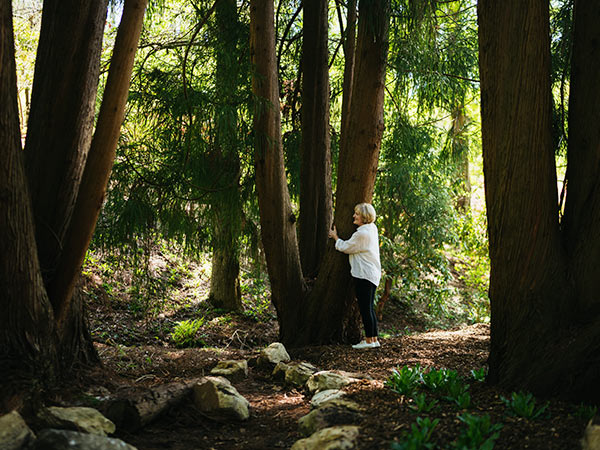
Lakeside Loop, Mount Lofty Botanic Garden walking trails
Stop to hug a tree. (Image: SATC)

Distance: 1 kilometre

Short on time and energy, or in need of an accessible option? Get a short but sweet taste of Mount Lofty on this Lakeside Loop, taking walkers around the central lake. Starting from the lower car park where the seasonal display garden bed lies, continue past soft meadows of moss, through strikingly shaped trees and a rainforest canopy featuring plenty of ferns. Stop to look at a collection of sculptures along the way.

Need tips, more detail or itinerary ideas tailored to you? Ask AT.

AI Prompt

3. Lower Loop

Distance: 1.2 kilometres

This easy walk certainly isn’t short on views. Start at the duck pond and follow the path along gardens featuring plant life from around the world. Take a seat on a bench in the forest to soak in the sights and smells around you, before heading into the South America gardens, with gorgeous views over the lake and treetops.

Along the walk, you’ll spot everything from exotic flora from China to monkey trees that are usually found thriving in the Andes Mountains of Chile and Argentina.

4. Central Walk

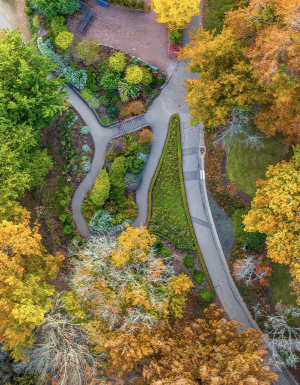
aerial of mount lofty botanic garden
Mount Lofty comes alive with colour in spring. (Image: Jake Wundersitz)

Distance: 2 kilometres

This is the first walk with an incline, but it’s only medium. Starting from the lower car park again, head uphill past the Central Gazebo before heading down to the quiet Woodland Garden. Continue on to spot waterfalls, California redwood trunks and a stunning view over Piccadilly Valley.

Weekly travel news, experiences
insider tips, offers, and more.

5. Boundary Loop
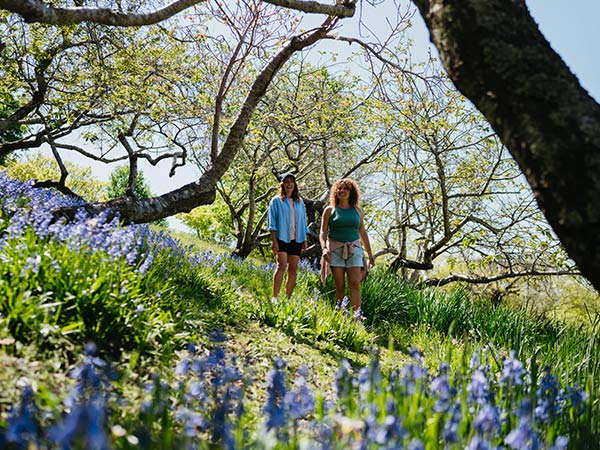
Mount Lofty Botanic Garden walking trails
Explore Boundary Loop. (Image: SATC)

Distance: 2 kilometres

Now we’re getting into steeper incline territory, but it’s an absolute showstopper come spring. Head uphill, through pin oak canopies, the Heritage Rose Gardens and the Cherry Tree Collection (brought over from Adelaide’s Japanese sister city, Okayama). Be rewarded with panoramic views of the Adelaide Hills and the  Rhododendron Gully from above. Once you’ve had your fill, continue on through the Southeast Asian Gully and Magnolia Gully – where 36 different magnolia species come to life in spring.

6. Heysen Trail
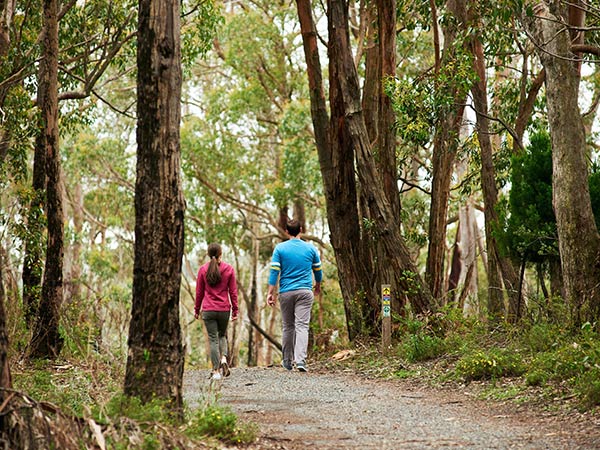
people walking in Cleland Conservation Park
Walk through stringybarks at Cleland National Park. (Image: SATC)

Distance: 7.5 kilometres

Want to get off the beaten path? This trail takes you to the untamed side of Mount Lofty Botanic Garden, and you’ll have to return the way you came. The paths won’t always be sealed, and the inclines can be steep, but you’ll get a wonderful mix of all the sights mentioned on the walks above. Plus, you’ll get a panoramic view from the summit of Mt Lofty, the small farms of Piccadilly Valley and the stringybark forests of Cleland National Park. Start at the car park at the entrance to Mt Lofty Summit.

The garden is open daily with free entry every day, and free parking on Sundays (thought it’s still very cheap during the week at $4.40 a day). Discover more beautiful walks around Adelaide.

Kassia Byrnes
Kassia Byrnes is the Native Content Editor for Australian Traveller and International Traveller. She's come a long way since writing in her diary about family trips to Grandma's. After graduating a BA of Communication from University of Technology Sydney, she has been writing about her travels (and more) professionally for over 10 years for titles like AWOL, News.com.au, Pedestrian.TV, Body + Soul and Punkee. She's addicted to travel but has a terrible sense of direction, so you can usually find her getting lost somewhere new around the world. Luckily, she loves to explore and have new adventures – whether that’s exploring the backstreets, bungee jumping off a bridge or hiking for days. You can follow her adventures on Instagram @probably_kassia.
View profile and articles

How a $1 deal saved Bendigo’s historic tramways

The passionate community that saved Bendigo Tramways has kept the story of this city alive for generations.

It was an absolute steal: a fleet of 23 trams for just $1. But such a fortunate purchase didn’t happen easily. It was 1972 when the Bendigo Trust handed over a single buck for the city’s historic collection of battery, steam and electric trams, which had transported locals since 1890.

inside the historic Bendigo Tram
Bendigo Tramways is a historic transport line turned tourist service. (Image: Bendigo Heritage)

The city’s tram network had been declared defunct since 1970 due to post-war shortages in materials to upkeep the trams and declining passenger numbers as motor vehicles were increasing. However, determined locals would not hear of their beloved trams being sold off around the world.

The Bendigo Trust was enlisted to preserve this heritage, by converting the trams into a tourist service. The Victorian government approved a trial, however news spread that the Australian Electric Tramways Museum in Adelaide had acquired one of the streetcars for its collection.

a tram heading to Quarry Hill in 1957
A tram on its way to Quarry Hill in 1957. (Image: Bendigo Heritage)

An impassioned group rallied together to make this physically impossible. Breaking into the tram sheds, they welded iron pipes to the rails, removed carbon brushes from the motors, and formed a blockade at the depot. The community response was extraordinary, and a $1 deal was sealed.

A new chapter for the city’s fleet

the old Tramways Depot and Workshop
The old Tramways Depot and Workshop is one of the stops on the hop-on, hop-off service. (Image: Tourism Australia)

Today, Bendigo Tramways welcomes some 40,000 passengers annually, operating as a hop-on, hop-off touring service aboard the restored trams. Fifteen of the now 45-strong fleet are dubbed ‘Talking Trams’ because of the taped commentary that is played along the route. The trams loop between Central Deborah Gold Mine and the Bendigo Joss House Temple, which has been a place of Chinese worship since 1871, via other sites including the old Tramways Depot and Workshop.

a Gold Mine Bendigo Tram
The fleet comprises 45 trams that have been restored. (Image: Visit Victoria/Robert Blackburn)

Keeping things interesting, throughout the year visitors can step aboard different themed trams. Tram No. 302 becomes the Yarn Bomb Tram, decorated both inside and out with colourful crochet by an anonymous group of locals.

During the festive season, Tram No. 15 operates as a tinsel-festooned Santa Tram, and the big man himself hides out somewhere along the route for excited children to find. And on selected dates, the adults-only Groove Tram runs nighttime tours of the city, accompanied by local musicians playing live tunes and a pop-up bar.

the historic post office turned visitor centre in Bendigo
Visitors can hop on and off to see the city’s sites such as the historic post office turned visitor centre. (Image: Tourism Australia)

As well as preserving the city’s history, however, the continuation of the tram service has kept the skills of tram building and craftsmanship alive in a practical sense. Bendigo’s Heritage Rail Workshop is world-renowned for restoring heritage trams and repurposing vehicles in creative ways.

Locally, for example, Tram No. 918 was transformed into the Dja Dja Wurrung Tram with original Aboriginal artworks by emerging artist Natasha Carter, with special commentary and music that shares the stories and traditions of Bendigo’s first people. You can’t put a price on preserving history. Nonetheless, it was a dollar very well spent.