These spirits aren’t just inspired by the ocean; they’re made from it.
On South Australia’s Eyre Peninsula, life is ruled by the tides. It’s a region famous for wild coastlines, fresh seafood and a thriving aquaculture industry, where everyone from fisherfolk to marine biologists make a living on the sea.
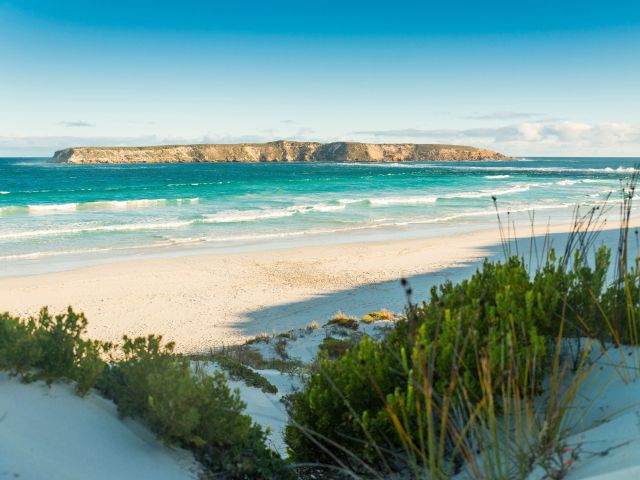
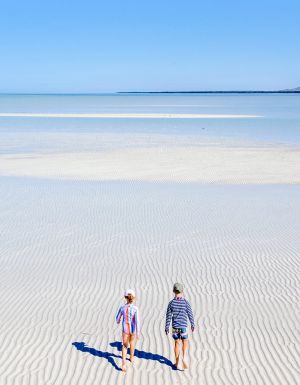
Wildly beautiful coastlines characterise Coffin Bay. (Image: South Australian Tourism Commission)
But tucked between these sandy folds is something far more unexpected – a distillery redefining what it means to work with the ocean.
Don’t let its (slightly morbid) name fool you – Coffin Bay is a town full of colour and life. Over 600 kilometres south of Adelaide, it’s a place primarily known for its oyster production, a prosperous industry driven by local businesses offering everything from tours to tastings.
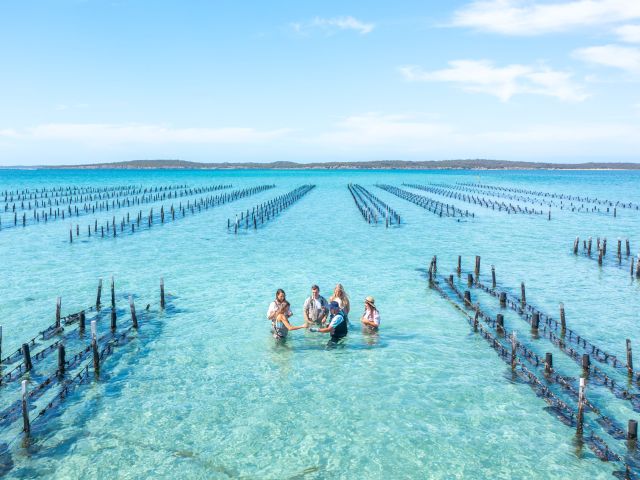
The Eyre Peninsula’s oyster production is an industry of abundance. (Image: Tourism Australia)
But on the other side of town, a small team is capturing the coast and its flavours in a whole new way. On the surface, Coffin Bay Spirits doesn’t seem too dissimilar to its neighbours, deeply rooted in its surrounds and championing local produce.
But take a closer look and you’ll start to notice the small differences that set it apart: hyperlocal ingredients, exclusive experiences, hands-on processes, and a product so specialised there’s nothing else quite like it.
Need tips, more detail or itinerary ideas tailored to you? Ask AT.
AI Prompt
A distillery doing things differently
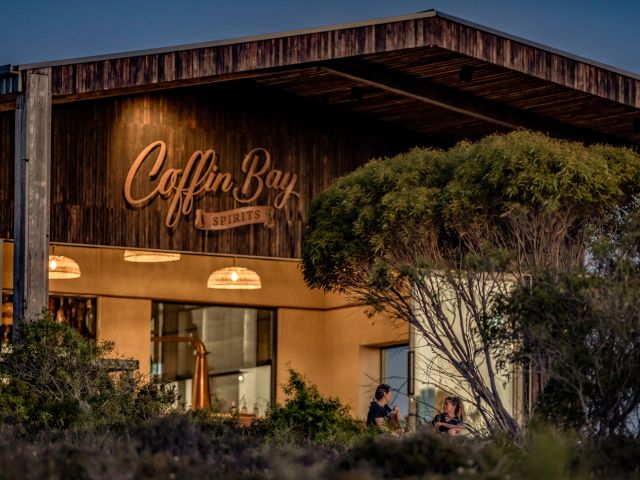
Coffin Bay Spirits was officially opened in 2021 by owners Ben and Caro Deslandes.
Inspired by the region’s raw natural beauty and unique vegetation, local couple Ben and Caro Deslandes began experimenting with gin distillery in 2020. What started out as a fun hobby quickly evolved into something much bigger, leading to the official opening of Coffin Bay Spirits in 2021.
Hidden in a small pocket of Coffin Bay National Park on roughly 200 hectares of bushland, it’s the sort of place you’d breeze right past if you didn’t know about it.
This doesn’t bother the couple too much; the distillery is more of a passion project than a commercial venture. Ben and Caro never chased the crowds – but once their bottles hit shelves, the crowds found them anyway.
Each bottle is infused with hand-foraged local seaweed.
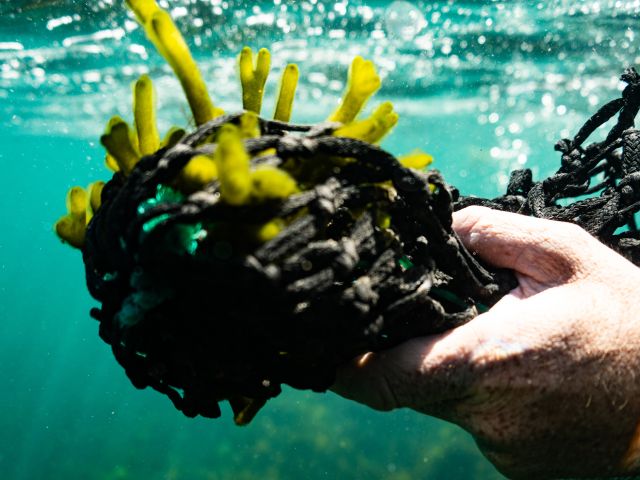
You see, the spirits produced here aren’t just inspired by the ocean; they’re made from it. Using a specialised fishing licence, the team – Ben, in particular – freedives for seaweed right off the national park’s shoreline. They collect fresh samples from eight different seaweed families, which are infused in the distillery’s four signature gins.
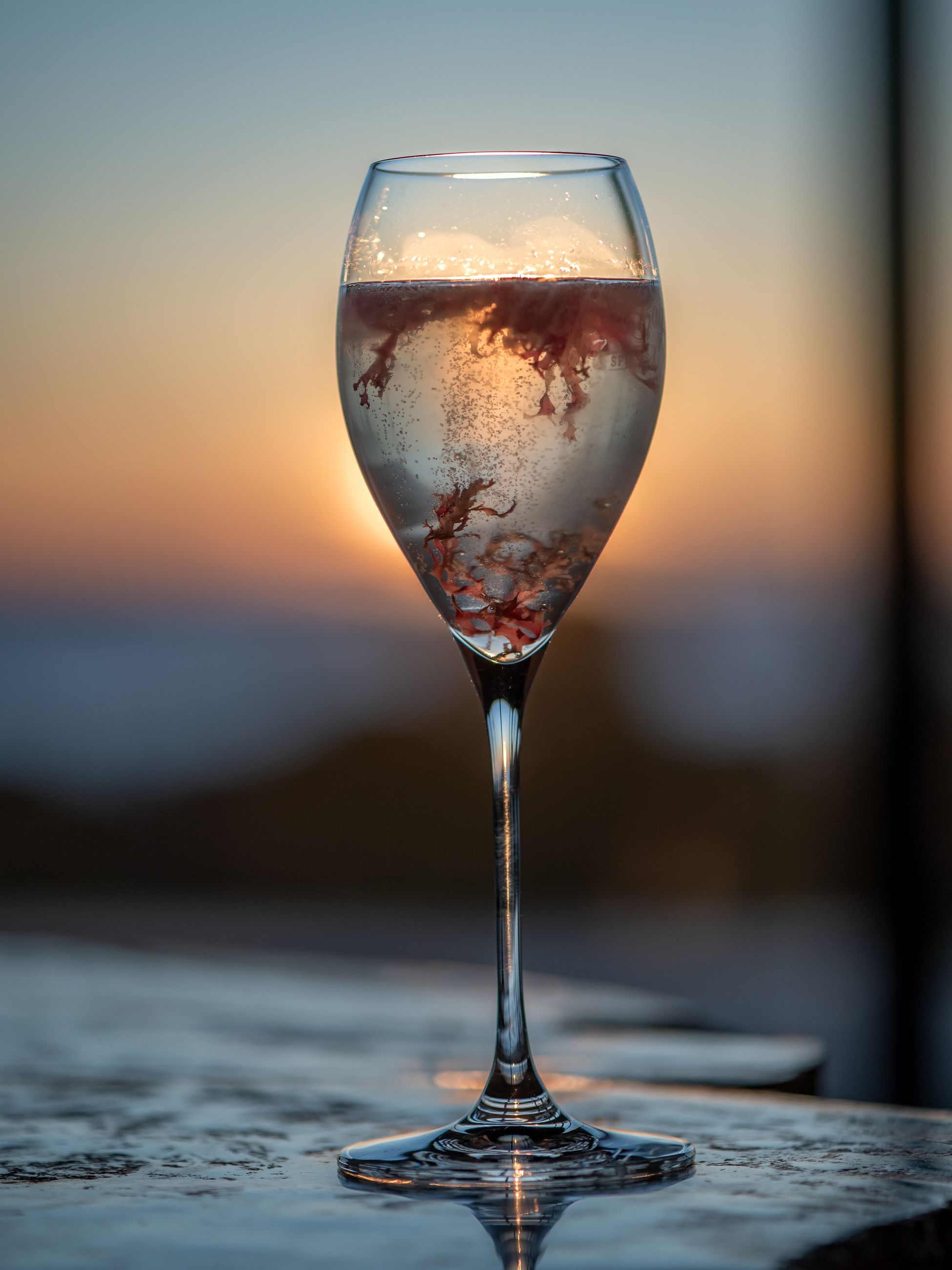
Samples from eight different seaweed families are used.
The Rare Coastal Gin is softened by locally foraged native juniper.
Expect a lingering sweetness from the Nitre Berry Gin.
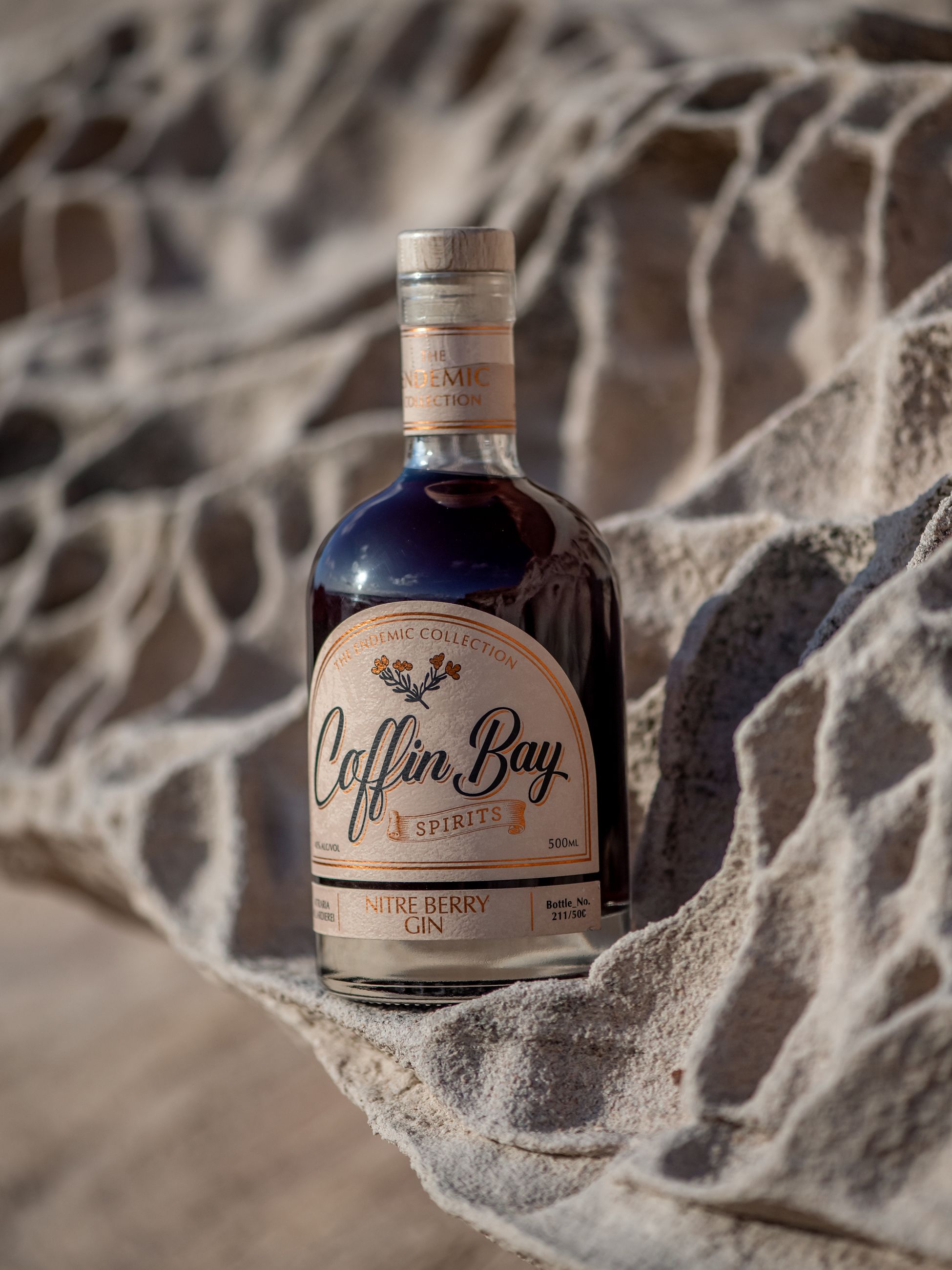
The Nitre Berry Gin leans in gently, with a focus on sweet red fruit and a whisper of brine, while the Bush Blossom Gin is made with locally foraged natives, creating a more botanical profile.
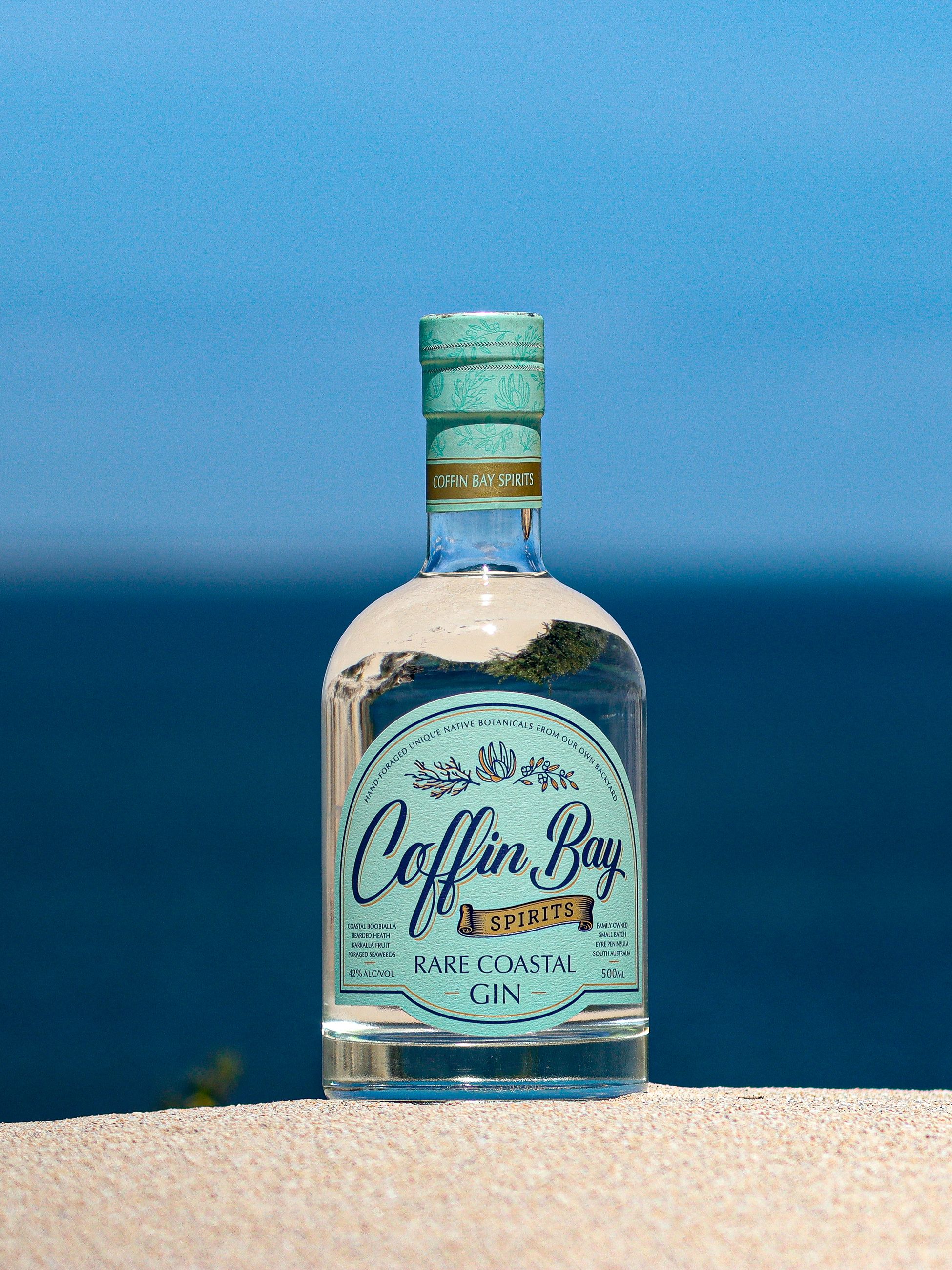
Although softened by native juniper, the Rare Coastal Gin promises a true taste of the sea. The High Tide Gin embraces it completely, delivering an ‘oceanic mineral burst’ with an earthy black-pepper warmth.
Weekly travel news, experiences insider tips, offers, and more.
A new experience in Coffin Bay
Since its conception, Coffin Bay Spirits has mostly operated behind closed doors. But in a moment of quiet reverence, small groups are now being accepted for exclusive tours and tastings.
Available by appointment only, the new Wild Spirits – A Seaweed & Botanical Exploration experience offers a rare glimpse inside the distillery and its workings of wizardry, all backdropped by pristine coastal bushland.
An exclusive tasting session includes fresh seafood paired with Coffin Bay cocktails.
Guests will be led through two tasting sessions. The first introduces your palate to the wild seaweed varieties and botanical plant species used to infuse the spirits, the second pairs a flight of specialty gin-based cocktails with local delicacies made from the same ingredients.
The three-hour tour, priced at $170 per adult, also includes transportation to and from Coffin Bay’s town centre. But watch this space. Ben and Caro Deslandes continue to work hard behind the scenes, with more exciting developments expected in the months ahead. We’ll cheers to that.
Coffin Bay Spirits is stocked widely across South Australia, or can be purchased directly online.
Want to see more stories from Australian Traveller in your Google search results?
Tick the box next to "Australian Traveller". That's it.
Taylah Darnell is Australian Traveller's Writer & Producer. She has been passionate about writing since she learnt to read, spending many hours either lost in the pages of books or attempting to write her own. This life-long love of words inspired her to study a Bachelor of Communication majoring in Creative Writing at the University of Technology Sydney, where she completed two editorial internships. She began her full-time career in publishing at Ocean Media before scoring her dream job with Australian Traveller. Now as Writer & Producer, Taylah passionately works across both digital platforms and print titles. When she's not wielding a red pen over magazine proofs, you can find Taylah among the aisles of a second-hand bookshop, following a good nature trail or cheering on her EPL team at 3am. While she's keen to check out places like Scotland and North America, her favourite place to explore will always be her homeland.
Monarto Safari Resort’s new Safari Lodge delivers so much more than a memorable stay; it’s packed full of unforgettable moments.
Just a year after the 78-room Monarto Safari Resort opened, the new Safari Lodge brings a more intimate and exclusive overnight African safari experience to Australia just outside of Adelaide. But just how similar is it to an African safari?
Consider these pinch-me moments I had during my stay and decide for yourself.
1. Cheetah sightings at check-in
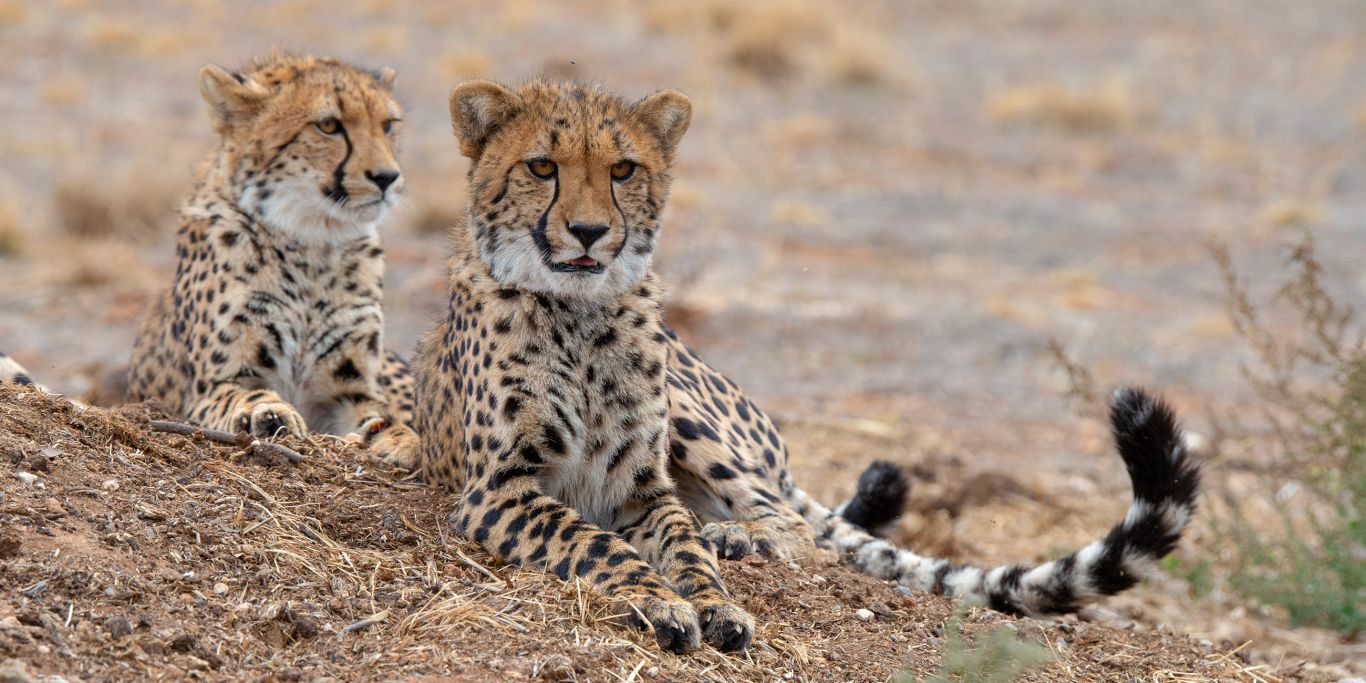
Spot cheetahs before you even check in.
Safari Lodge is set within the Wild Africa precinct of the expansive, open-range Monarto Safari Park. I expected to see animals, but I didn’t expect to see two cheetahs stalking the fenceline just behind my tent at check-in.
I cross the paddock to get a closer look. Both are now perched like a sphinx on a hill overlooking the 20 premium tents that make up Safari Lodge. I stand here, locked in place, waiting to see if they make a move. After 10 minutes like this, I turn to get settled into the tent but throw a final look in their direction; they’ve slinked back down, now barely visible in the grass. I’m sure I’ll be dreaming about this encounter later tonight.
2. Sipping champagne as a giraffe sips from a waterhole
Enjoy champagne while meeting the locals. (Credit: Katie Carlin)
The all-inclusive stay includes a 2.5-hour Sunset Safari that takes guests into the Wild Africa precinct onboard a purpose-built Safari Land Cruiser for a chance to see free-roaming herds of African animals up close.
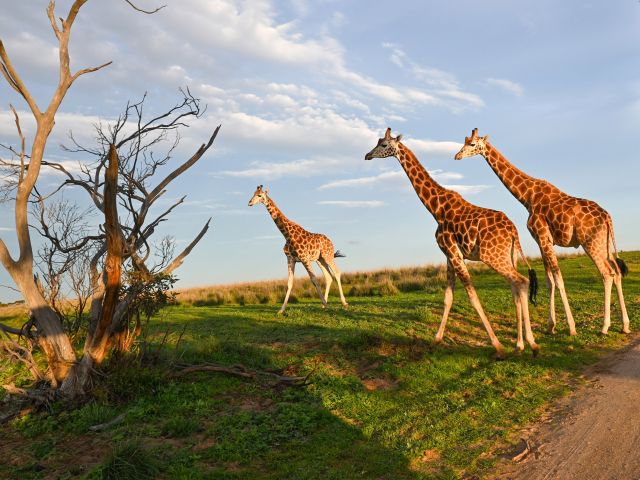
The safari drive culminates in a champagne and canapé stop in a fenced and sheltered viewing area of the precinct. A chance to watch the sun set as animals gather around one of the many waterholes. And we’re in luck! Two giraffes are stripping leaves from a nearby tree as three white rhinos graze to my right. One giraffe starts galloping, in that funny head-bobbing way giraffes do, to the water’s edge. It splays its legs and bends its long neck down to start slurping up water. I find giraffes endlessly entertaining, and sipping champagne while watching the scene play out is the icing on the cake.
3. A rain shower with views of a waterhole where African animals gather
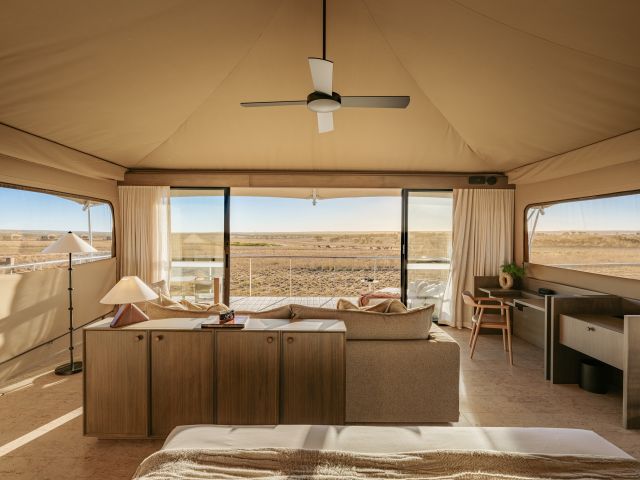
Enjoy views from the King Safari Tent.
I am staying in tent 17, one of the best positioned tents for animal encounters, due to its proximity to the waterhole. Not only does the spacious 71-square-metre King Safari Tent feature a king bed, lounge area, separate dressing room with kitchenette, coffee machine, kettle and fully stocked mini bar, and ensuite bathroom. But you can even glimpse the waterhole from the rain shower. It’s thoughtful details like this that keep you connected to the safari experience no matter where you are located.
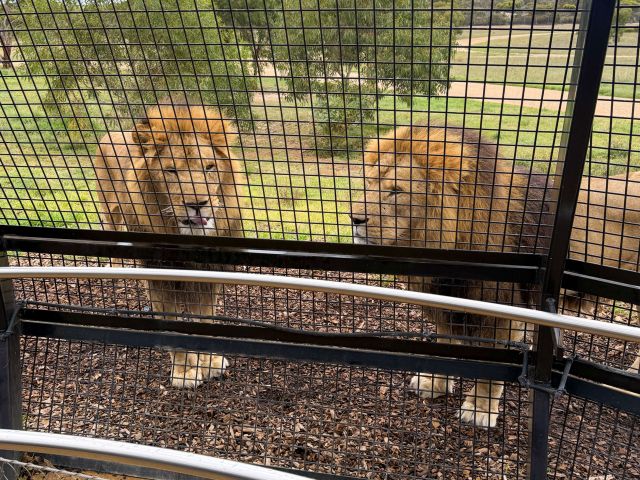
4. Feeding lions from within a caged dome
Step into the Lion 360 experience. (Credit: Katie Carlin)
Monarto Safari Park isn’t a zoo. Set across 1500 hectares of South Australian bushland, it’s an expansive safari experience. It’s been designed to support complex social groupings, natural behaviours and long-term species management. Entry is included for guests, but I’ve decided to upgrade my experience with tickets to Lion 360.
Senior Keeper Rachel Hemming herds 15 of us into a domed cage for the unique lion feeding experience. She leads Monarto’s care and conservation breeding programs for their iconic big cats. “Make sure you don’t get too close to the edge of the cage; the lions like to mark their territory,” she warns.
She starts making cat-like calls to Kubwa, Kashka and Kito, the three male lions lazing somewhere out of sight behind the tree line in the distance. The promise of food eventually lures the lions over. I’m in awe of their size as they pace back and forth, pausing to take the meat as it’s fed to them via tongs.
In her excitement, one lady has inched too close; a lion takes aim and hits his mark before she realises her mistake. I see her leaving the gift shop with a new jacket not long after the tour ends.
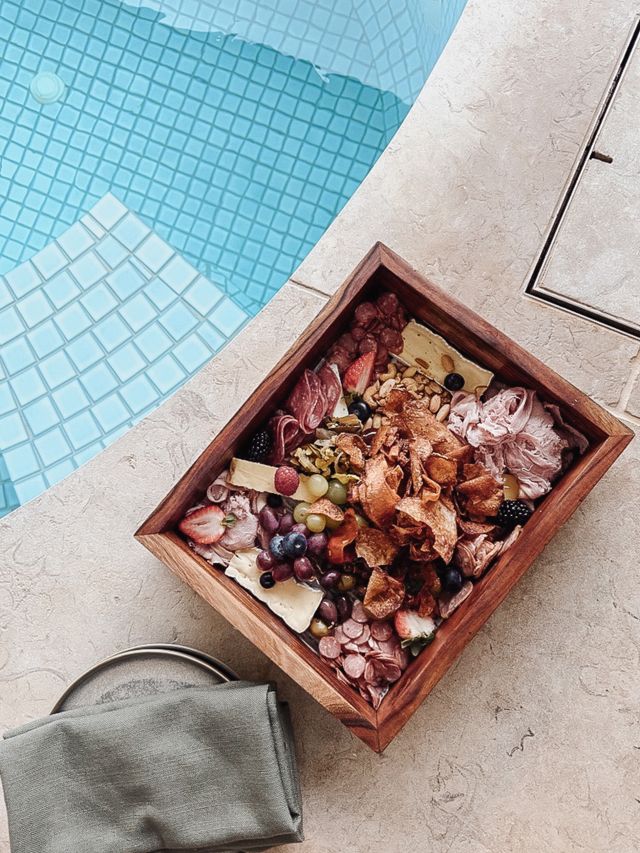
5. A swim in a private plunge pool with a floating charcuterie board
Tuck into a poolside treat. (Credit: Katie Carlin)
The Safari Lodge reception is also home to a restaurant and bar, heated swimming pool and several private plunge pools available to book. After a morning spent at Monarto Safari Park, a dip in one of the private plunge pools sounds too good to skip.
I change into my swimmers and make my way to the lodge. A generous charcuterie board arrives shortly after I slip into the pool. I’m told floating trays are already on order, but picking at the selection of cheeses, meats, nuts and fruit while perched on the edge sipping champagne is just as indulgent as it is having it float in the water. I never make it to the gym or pickleball court beside the lodge, but I have no regrets.
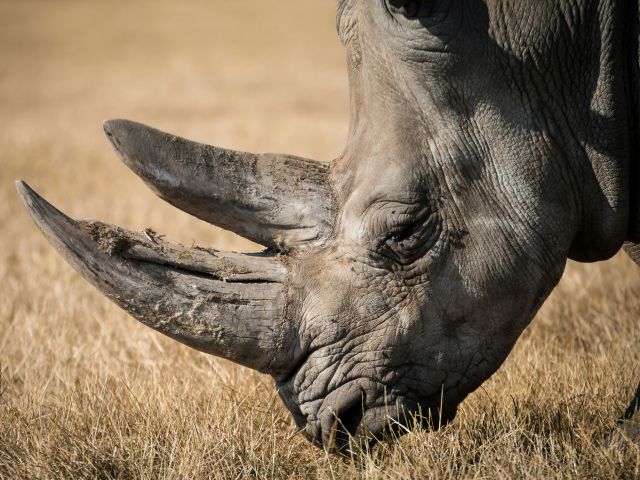
6. A front-row seat to a male rhino rejected by two females
Watch a rhino’s unlucky day. (Credit: Lucas Alexander)
Louis Tonkin, our Wild Africa Tour host, is giddy with excitement when he spots the three white rhinos on our Sunset Safari drive. He has an inkling that we’re about to get a show.
He pulls to the side and tells us what terrible eyesight white rhinos have, struggling to spot a motionless animal or object even from a short distance. However, they make up for it with acute hearing and an incredible sense of smell. Which explains why the larger male rhino is methodically creeping towards the two disinterested females grazing metres in front of him, then suddenly freezing on the spot. He’s hoping one will be open to mating with him. He takes another wary shuffle forward and suddenly the smaller of the two turns and charges towards him, butting him hard with her head. It’s a firm no. The male, denied, sheepishly backs away.
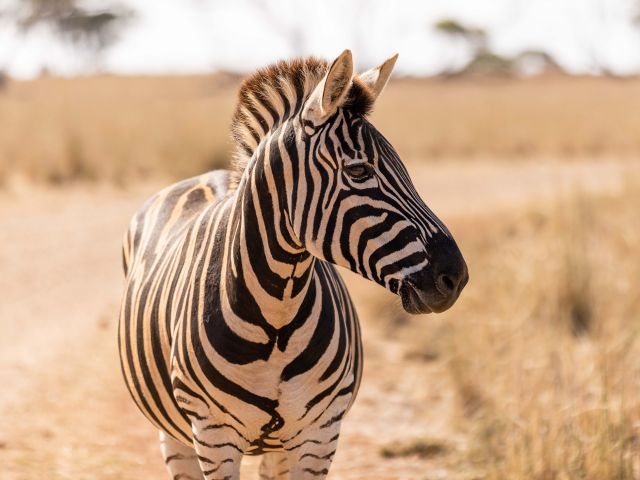
7. Watching a dazzle of zebra from the comfort of a luxury safari tent
Wildlife encounters abound.
Rain clouds loom, and the wind is howling, but thankfully it hasn’t deterred the zebras. I’m brewing a cup of Monarto’s Serengé-T – a vanilla rooibos blended with Daintree black tea and butterfly pea flower when I spot them. Six zebras are prancing across the plains for a drink at the waterhole. I watch their antics from the deck of my King Safari Tent, wrapped in a merino blanket made by Australian-owned Grampians Good Co. and marvel at the fact I get a front-row show to these wild animals.
After they disappear from view, I sit with the sketch pad and pencils I find in the cupboard and start drawing some of my most memorable animal encounters from the weekend – starting with the two hippos I saw ravenously munching on grass at dusk as we made our way out of the Wild Africa precinct last night. This really is as close to an authentic safari experience as you can get outside of Africa.