Once a humble sheep farm established in the 19th century, Louth Island is now the site of an opulent eco-conscious property that’s redefining Australia’s luxury accommodation landscape.
Since first opening its doors in 2023, Rumi on Louth has expanded in carefully crafted stages, each more impressive than the last. And now, with the unveiling of its brand-new cabins, the resort is poised to elevate the experience once again.
The current accommodation options
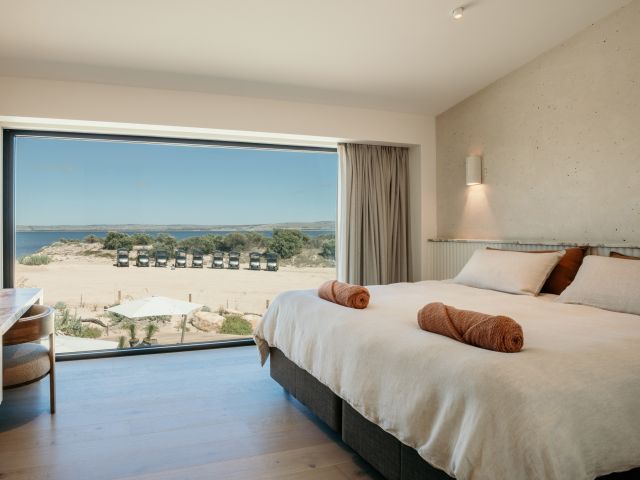
While the future is looking particularly bright for guests of Rumi on Louth, the current accommodation options are nothing to sneeze at. Presently, the resort boasts a one-bedroom ocean view suite with an open-plan kitchenette, in-suite bar, en suite with rain shower and king-size bed.
Wake up to views of the sea from your one-bedroom suite.
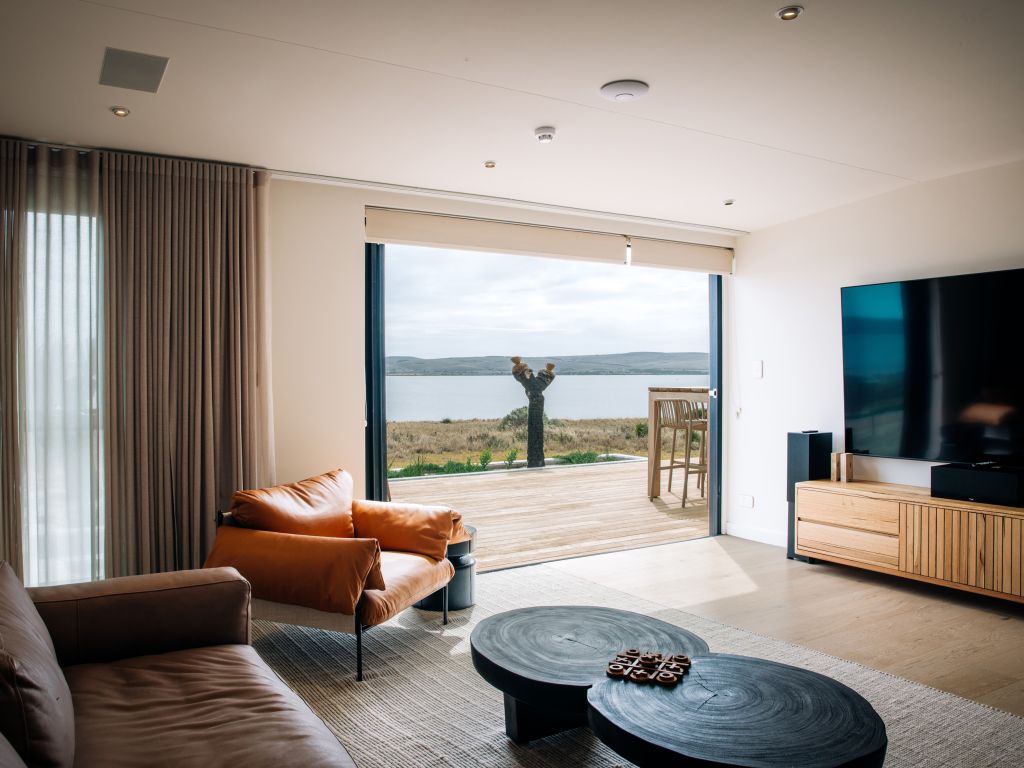
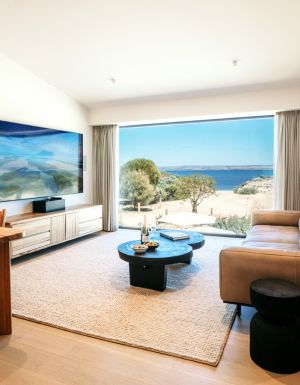
There are also four ocean view king rooms available, each offering rain showers, king-size beds and in-room amenities like coffee machines and 65-inch flatscreens. No matter what room you stay in, you’ll be treated to floor-to-ceiling windows that soak in uninterrupted ocean views across the pristine Spencer Gulf.
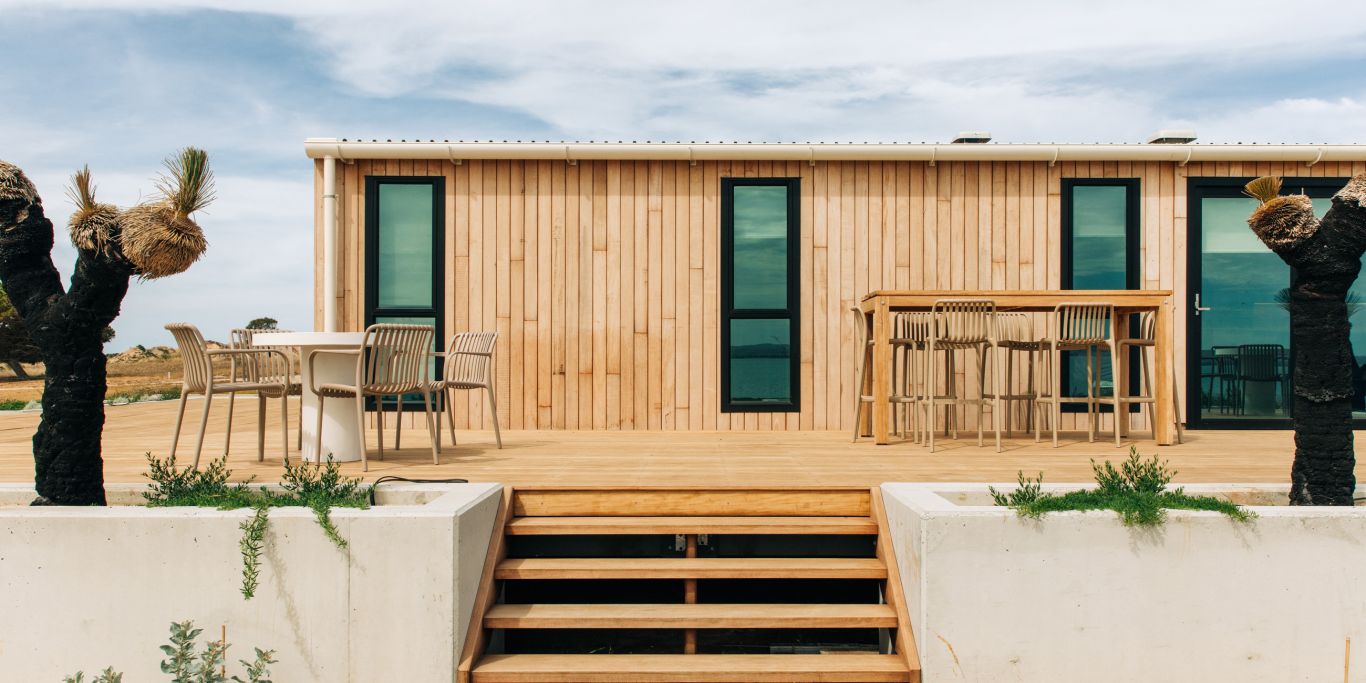
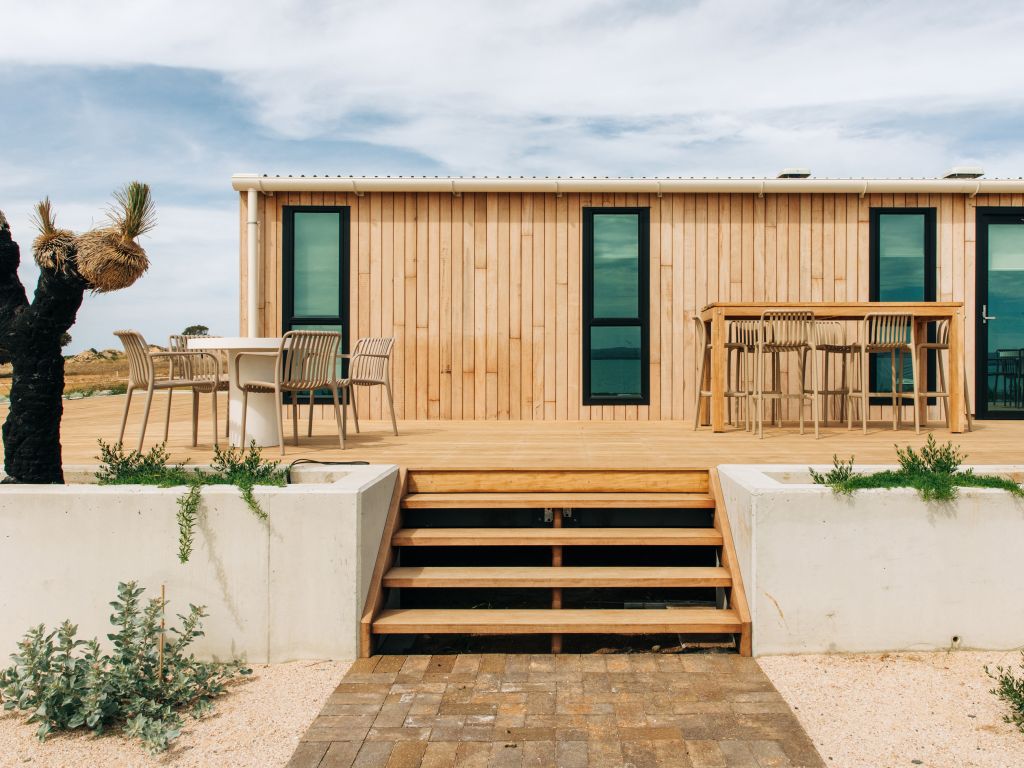
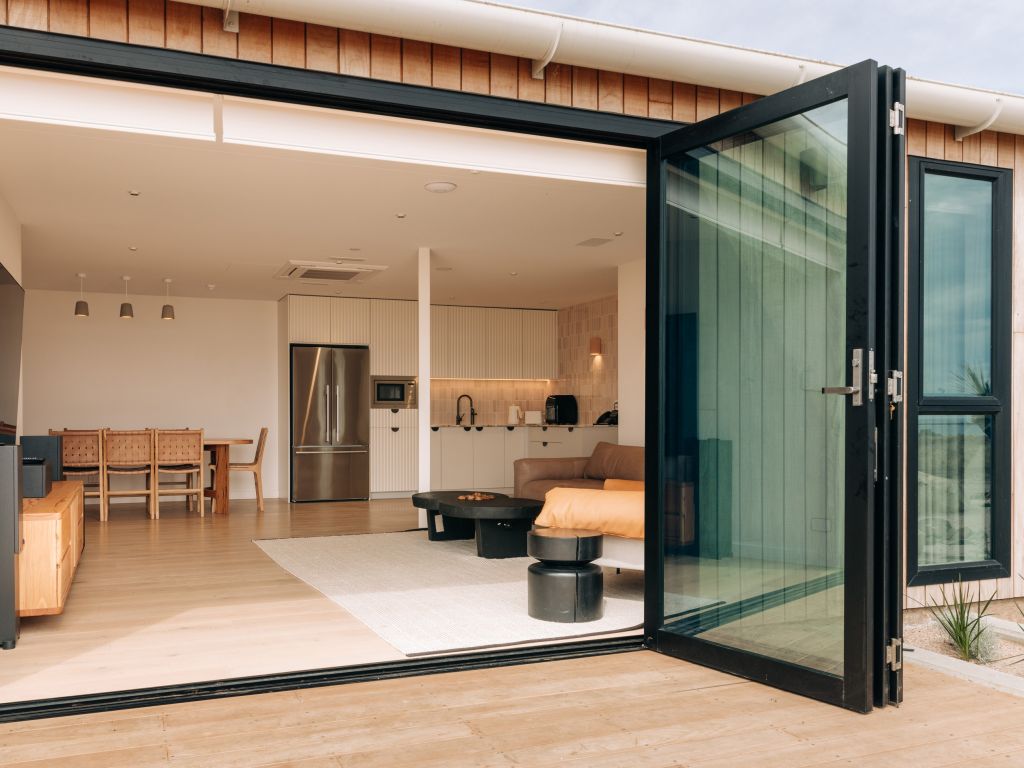
For larger groups, the gorgeous private retreat is the ideal escape. It features one queen-size and eight king-single rooms, two bathrooms, a fully equipped kitchen, spacious living area, split-system air conditioning and large private deck with outdoor furnishings.
Spend time with family and friends on the outdoor deck.
A spacious open-plan design invites the outside in.
The private retreat sleeps up to 10 guests.
Earlier this year, Rumi on Louth’s founder Che Metcalfe also revealed his $20-million plans for 23 earth-sheltered villas and a VIP residence with its own private beach and horizon pool. But clearly, that was just the beginning.
The new cabins
Just when you thought it couldn’t get more impressive, another chapter begins. South Australian entrepreneur and former CEO of Uniti Group, Che Metcalfe, who bought Louth Island in 2021, has just announced additional accommodation for the eco-resort.
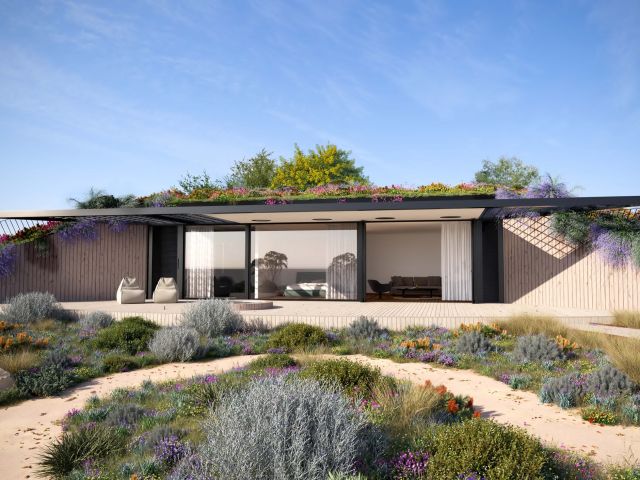
The new cabins will join 23 private earth-sheltered villas.
Rumi on Louth will add 22 new ocean view cabins to its portfolio during its next phase of development, with hot tubs and a tennis court to match. While not a lot is known about the specific design of these new cabins or how they will differ from the existing rooms and upcoming villas, Metcalfe’s track record hints at something special. In adherence to its core ethos, the rooms will be fully off-grid and sustainable, too.
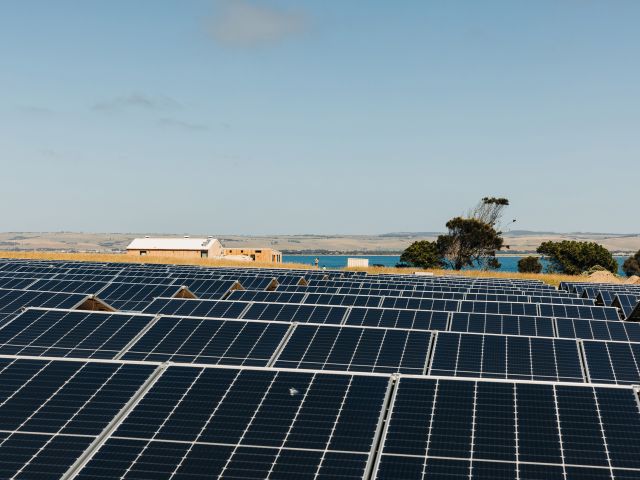
Rumi on Louth is completely powered by solar energy.
Rumi on Louth is completely powered by solar energy, equipped with advanced compost/recycling systems and even has its own desalination plant. The addition of chicken coops and vegetable gardens will also help the eco-resort on its mission to restore and revegetate Louth Island.
This forward-thinking approach has already landed the resort among Australia’s best eco-retreats, so guests can enjoy their stay knowing it won’t leave an environmental footprint.
The rest of the resort
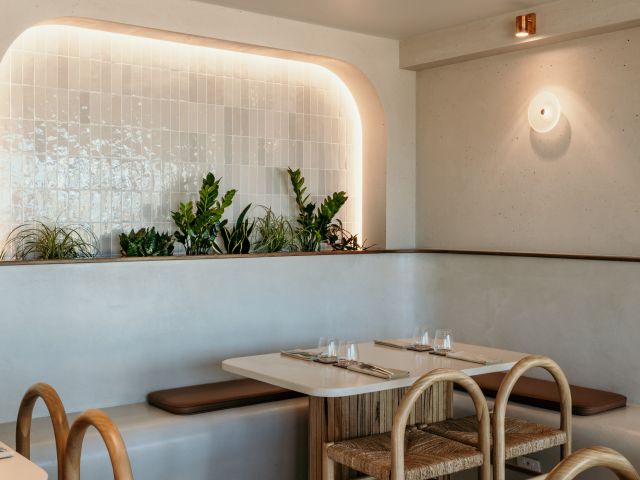
If you can tear yourself away from your room, there’s plenty to keep you occupied across the 135-hectare property. Current guests can indulge at the onsite day spa, dine at the two-hatted Samphire restaurant and partake in a variety of signature experiences.
Dine on fresh local produce at two-hatted Samphire restaurant.
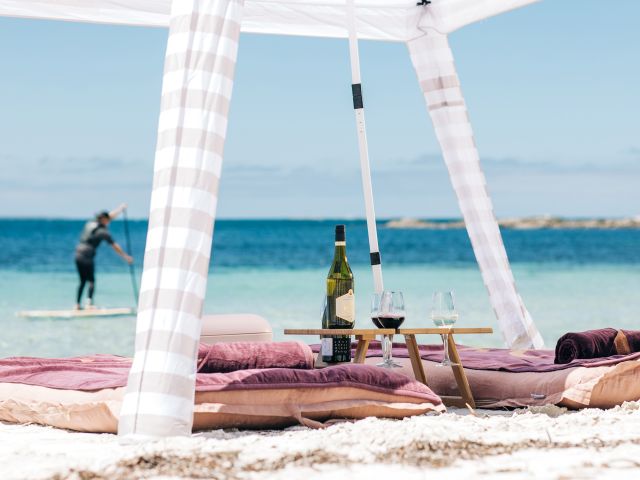
From dreamy beach picnics and cooking masterclasses to catamaran cruises and kayak fishing, you’re spoilt for choice. Or simply wile away the day at Louth Island’s stunning secluded beach.
When plans were revealed for Rumi’s earth-sheltered villas at the start of 2025, an extensive blueprint for new resort-style facilities came with it. Think pickleball courts, a Japanese-style onsen and a five-star restaurant, plunge pools, saunas and private cabanas, as well as a map of walking trails around the island.
Enjoy a private cabana on the beach.
The details
Rumi on Louth is situated on Louth Island, just a few kilometres off the coast of Port Lincoln in South Australia’s Eyre Peninsula. It is completely self-sufficient, off-grid and sustainable, with conservation and regeneration at its heart.
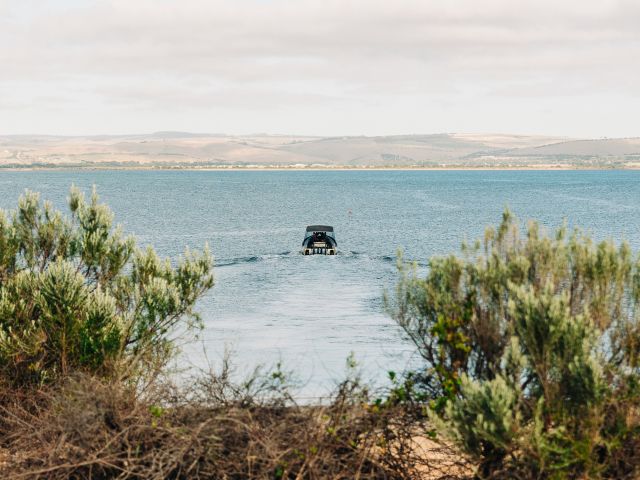
The resort is only accessible by boat – guests will be picked up from Port Lincoln Airport and transported to the resort via its amphibious water vessel, Sealegs. Day visitors are also welcome, but transport to the jetty for pick up must be arranged independently.
Louth Island is only accessible via boat transfer.
Reservations are open now , with room prices varying from $630 per night in an ocean view king room to $945 per night for the one-bedroom ocean view suite. The private retreat can be booked from $2500 per night with a minimum stay of two nights.
No date of completion has been confirmed for the second phase of development, but with the green light granted, construction is now moving ahead. Watch this space!
Weekly travel news, experiences insider tips, offers, and more.
Taylah Darnell is Australian Traveller's Writer & Producer. She has been passionate about writing since she learnt to read, spending many hours either lost in the pages of books or attempting to write her own. This life-long love of words inspired her to study a Bachelor of Communication majoring in Creative Writing at the University of Technology Sydney, where she completed two editorial internships. She began her full-time career in publishing at Ocean Media before scoring her dream job with Australian Traveller. Now as Writer & Producer, Taylah passionately works across both digital platforms and print titles. When she's not wielding a red pen over magazine proofs, you can find Taylah among the aisles of a second-hand bookshop, following a good nature trail or cheering on her EPL team at 3am. While she's keen to visit places like Norway and New Zealand, her favourite place to explore will forever be her homeland.
Big skies and otherworldly landscapes are the hallmarks of Australia. Discovering them in-depth becomes easier with the experts.
Australia’s extraordinary landscapes make this vast continent like no other place on Earth, offering an unforgettable feast for the senses as you traverse deserts, cruise on vast inland lakes and dine under star-studded skies. What makes this land special is the people you’ll meet along the way, and the chance to forge a deep connection with the country and its people. The new AAT Kings small-group tours focus on the incredible experiences available in remote places that might otherwise seem daunting.
With an average of 16 guests and a maximum of 24, the tours offer intimate access to the best Australia has to offer, with special behind-the-scenes encounters led by knowledgeable experts.
1. Tasmania and Flinders Island Explorer
Fly over beautiful Flinders Island as part of a tour of Tasmania. (Image: Luke Tscharke)
Escape the tourist trail in north-eastern Tasmania while still seeing everything the island state has to offer. From coastal villages to bucolic rural scenery, the six-day Tasmania and Flinders Island Explorer tour offers world-class food and wine, with the bonus of a flight to Flinders Island.
From Launceston, the tour winds through the verdant Tamar Valley and includes a stop at Fork It Farm , where guests are given insight into sustainable farming while snacking on a house-made charcuterie platter paired with Tasmanian wines.
Fly by private plane to secluded Flinders Island, uncovering pristine beaches and savouring local seafood and wine. Explore the main settlement and learn about the history of Settlement Point and Wybalenna before soaking up views of the island and Bass Strait and exploring part of Strzelecki National Park . From there, it’s another scenic flight to Bicheno, flying down the east coast of Tasmania and across the stunning Bay of Fires and Wineglass Bay (a taste of what’s to come by land).
Other highlights include the UNESCO World Heritage-listed Brickendon Estate , still run by the same family since its founding in 1824, where the property’s convict history will be revealed.
In Devonport, a heritage train ride will track alongside the Don River to Coles Beach before returning to learn more about Tasmania’s railway history and vintage locomotives at Don River Railway .
2. South Australian Outback Adventure
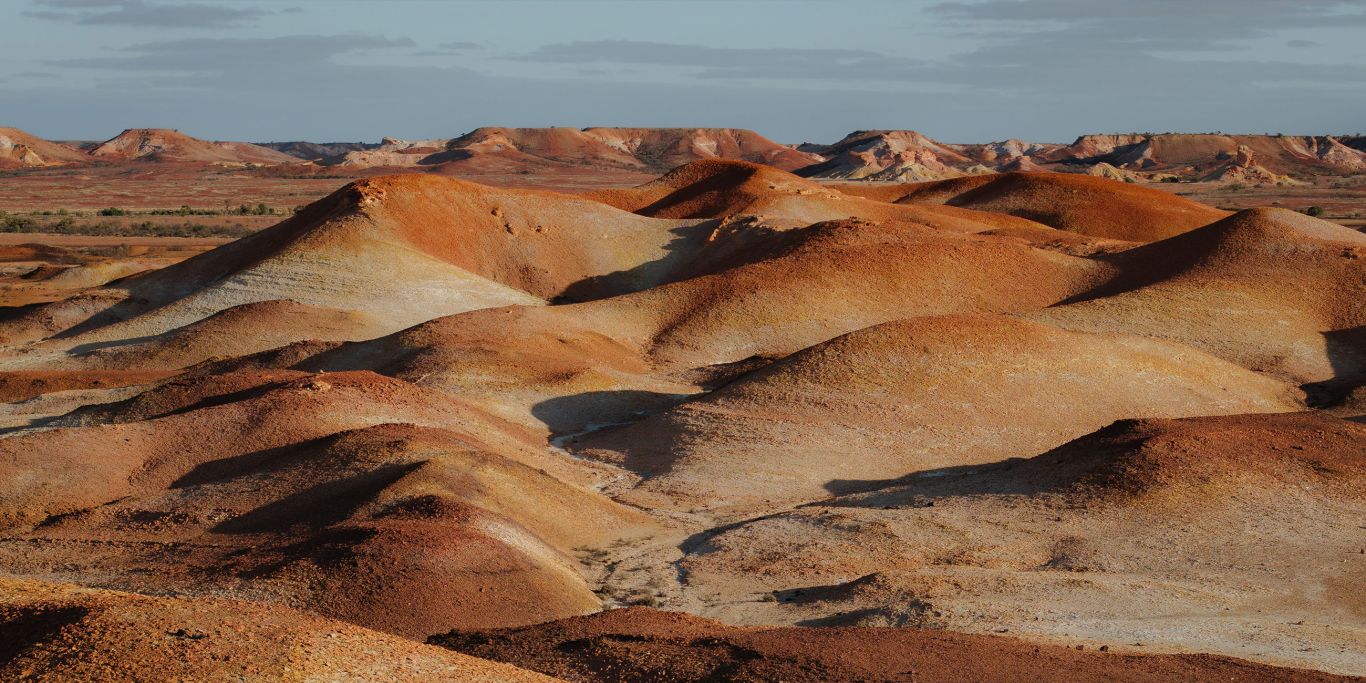
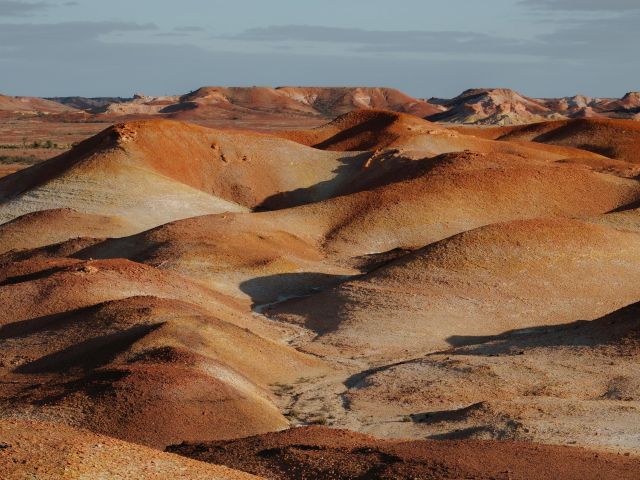
Fly over the Anna Creek Painted Hills. (Image: Emile Ristevski)
From Adelaide, the highlights of the eight-day South Australian Outback Adventure tour open up the rugged grandeur of the Flinders Ranges, Wilpena Pound and Arkaroola. Home to the Adnyamathanha people for tens of thousands of years, the natural beauty and wide open spaces of this remote region unfold as you explore from both land and air.
Looking to the skies for a new way to experience South Australia’s outback, a scenic flight over the striking outcrops of the colourful Anna Creek Painted Hills and the shimmering saltpan of Kati Thanda-Lake Eyre is an eye-opener like no other.
Wilpena Pound Resort, owned and managed by the Indigenous community, is a haven in the midst of Ikara-Flinders Ranges National Park . It’s worth the hike to enjoy sweeping views over the natural amphitheatre before your journey continues through dramatic gorges, where you may spot endangered yellow-footed rock-wallabies.
At the award-winning Arkaroola Wilderness Sanctuary, dive deep into the region’s billion-year-old geological history with an expert guide as you tackle the steep ascent of the Ridgetop Track in an open-air 4WD. When the sun goes down, look up at the dazzling wonders of the Milky Way in this International Dark Sky Sanctuary.
3. Broome and the Kimberley Highlights
See the iconic Bungle Bungle Ranges from the air. (Image: Tourism WA)
From Broome’s sparkling beaches to the red dirt of Kununurra, the Kimberley region is one of Australia’s most extraordinary and unforgettable places. It’s a region of contrasts, beginning with multicultural Broome and the history of pearl divers.
Kick off your Broome and the Kimberley Highlights experience with a tour of Broome led by a local Aboriginal guide. You’ll learn about 40,000 years of culture as you explore historic landmarks, discover bush foods and medicinal plants and enjoy a private didgeridoo performance.
Learn about Broome’s rich pearling history at Willie Creek Pearl Farm , on the banks of a turquoise tidal estuary that provides the perfect environment for growing the South Sea pearls for which Broome is world-renowned. Then cruise the calm waters to see the oyster farm before a masterclass that reveals the secrets of the pearl industry.
As you continue your discovery of the Kimberley, fly over the dramatic striped domes of the Bungle Bungle Range, the Argyle Diamond Mine and gorgeous Lake Argyle, Western Australia’s largest freshwater body of water. Take a sunset cruise on the lake, which is dotted with more than 70 islands and is a birdwatcher’s paradise. The water teems with freshwater crocodiles, barramundi, bream and cod.
Complete your seven-day exploration of the Kimberley in Kununurra with a local Aboriginal guide to hear Dreamtime stories and wander through the ‘mini bungles’ of Mirima National Park.
4. Outback Contrasts
Expand your knowledge at Karrke Aboriginal Cultural Experience. (Image: Tourism NT/ ArchieSartracom)
From Alice Springs, the six-day Outback Contrasts adventure includes the wonders of Uluru, Kata Tjuta and Kings Canyon, offering premium accommodation and exceptional experiences. Ancient rock art, creation stories and the spiritual essence of the land will be revealed as you discover some of Australia’s most iconic landmarks.
A highlight of your stay in Alice Springs will be meeting chef Rayleen Brown, who shares her knowledge of Aboriginal native foods with a tasting of the many flavours of Central Australia’s wild harvest bush tucker. More culinary indulgence will follow at Discovery Resorts – Kings Canyon in the heart of Watarrka National Park, where you’ll enjoy a degustation menu and paired fine wines under the desert moon.
After a sunrise walk on the rim of Kings Canyon, head off to the Wanmarra community to learn about the Luritja and Pertame people’s spiritual connection to the land at Karrke Aboriginal Cultural Experience. Crossing desert scenes, you’ll arrive at Uluru and end the day watching the setting sun’s changing palette on the ancient landscape.
More awe-inspiring landscapes will be revealed as you wander between Kata Tjuta’s tallest domes in Walpa Gorge and explore the rugged beauty of Simpsons Gap in the West MacDonnell Ranges.