Top Towns for 2022: Robe is a the perfect holiday idyll all year round

hero media
Fleur Bainger writes a love letter to her lifelong holiday escape, the South Australian coastal town of Robe – no. 36 on your list of Top 50 Aussie Towns.

Find the complete list of the Top 50 Aussie Towns here.

You know croissants are important to a small town when no less than three artisan bakers serve its 1542 residents. Robe, on South Australia’s limestone-clawed coast, takes its flaky French pastries seriously – they’re usually sold out before noon.

Demand may have something to do with the 15,000 visitors it greets each summer, though I suspect locals are generally at the front of the queue. Well-placed Robe is about 335 kilometres from Adelaide, 520 kilometres from Melbourne and only a 40-minute drive from the cattle farm where I grew up.

Seasonal highlights in Robe

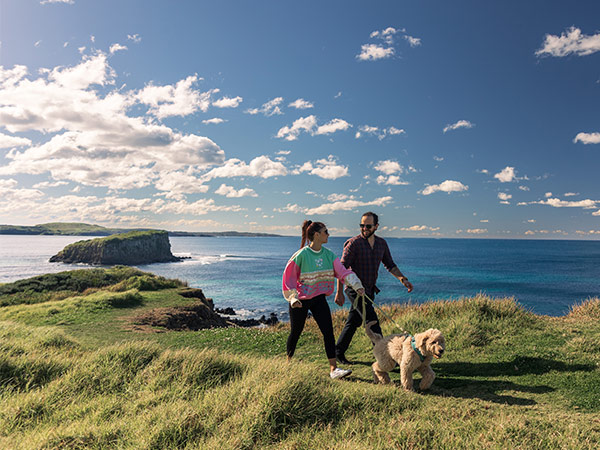
It was my family’s holiday idyll, loved across every season; a place to run uncontrollably down sand dunes, to walk for miles along spirit level-flat beach and to boogie board in gently frothing white water until our hands turned blue and our feet lost feeling.
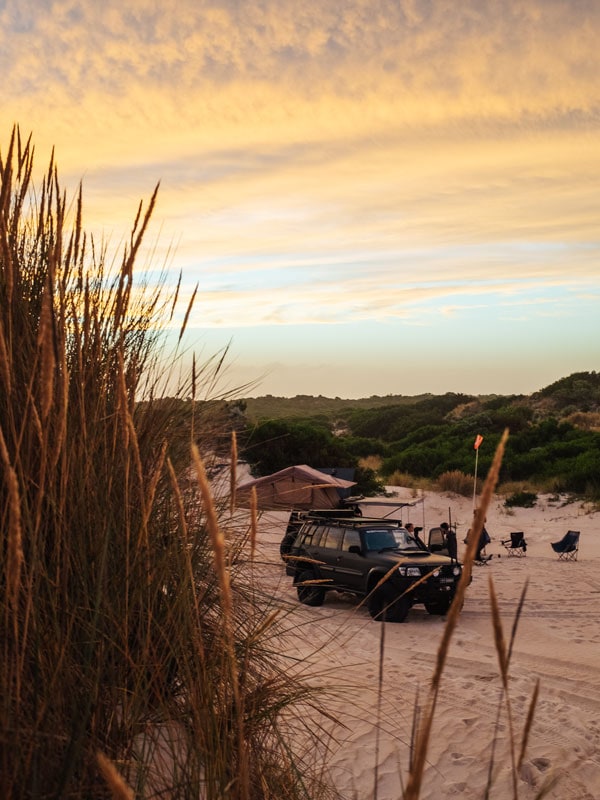
Driving Long Beach Robe
Long is the operative
word to describe Long Beach. (Image: Josh Geelan)

Wintertime

For a beachy destination, Robe can be cold, particularly in the ocean. In winter, roaring waves carve cliffs in the dunes – once, the water surged up the beach and engulfed us on a sandy evening stroll.

My dad scrambled free, but my siblings and I copped the icy, direct from-the-Antarctic ocean right up past our shoulders. It was a shock, but the enthralling sense of energy has never left me.

Springtime

Spring is a time for thawing. Coastal wildflowers peep through swaying khaki-green succulents and grasses, winking at the reviving sunshine. Sunsets seem to compete, each evening a richer, deeper saturation of crimson bleeding into fuchsia as the minutes tick by.

Summertime

Summer is when Robe becomes an extrovert, its wine bars, cafes, boutiques and two pubs thronging with holidaymakers who oscillate between the main street and the many beaches rimming the rugged peninsula the town sits on.

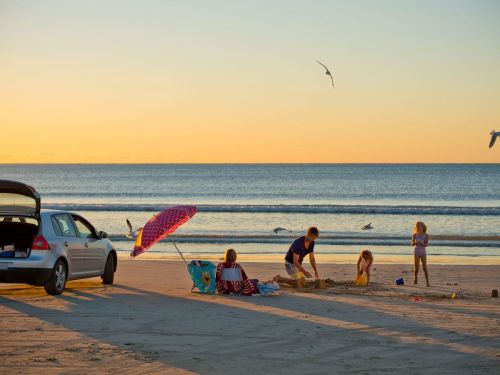
Aptly named Long Beach draws the biggest crowds. Stretching for 14 kilometres and open to cars, it’s a magnet for families who set up beach cricket and shade shelters, often staying until they need headlights to return to base.
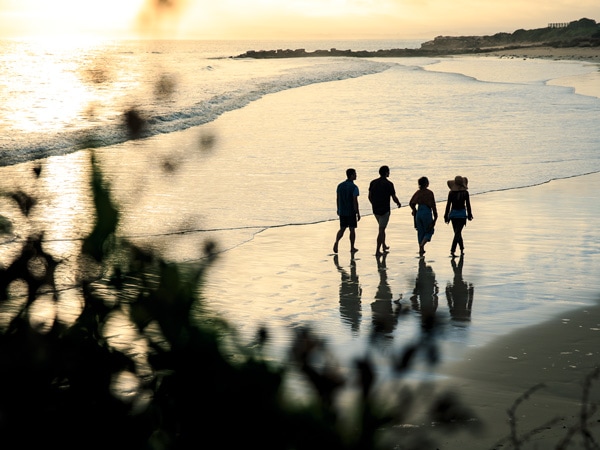
Long Beach Robe SA
Stroll along Long Beach in the summertime. (Image: South Australian Tourism Commission)

Autumn

I’ve lost count of the hours I’ve spent there. Despite living in Western Australia, I return to Robe each year, now with my own children. Visiting in autumnal April, we are astonished to see a change in the charming town centre, characterised by its row of cream, limestone buildings dating to the 1850s.

Year-round attractions

It seems the COVID shutdown gave Robe time to polish itself into an Instagrammable haven of smallgoods stores, hipster-chic cafes and heritage-listed shops strung with bunting – and not just any bunting.

Cape Dombey Obelisk

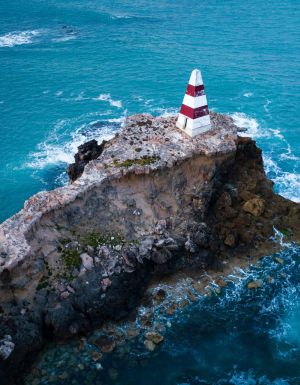
This kind is fashioned with the town’s icon, a circa-1855, red-and-white striped monument known as the Cape Dombey Obelisk – a place I visit without fail, to marvel at its ever-receding limestone platform that’s gradually being ravaged by the ocean.
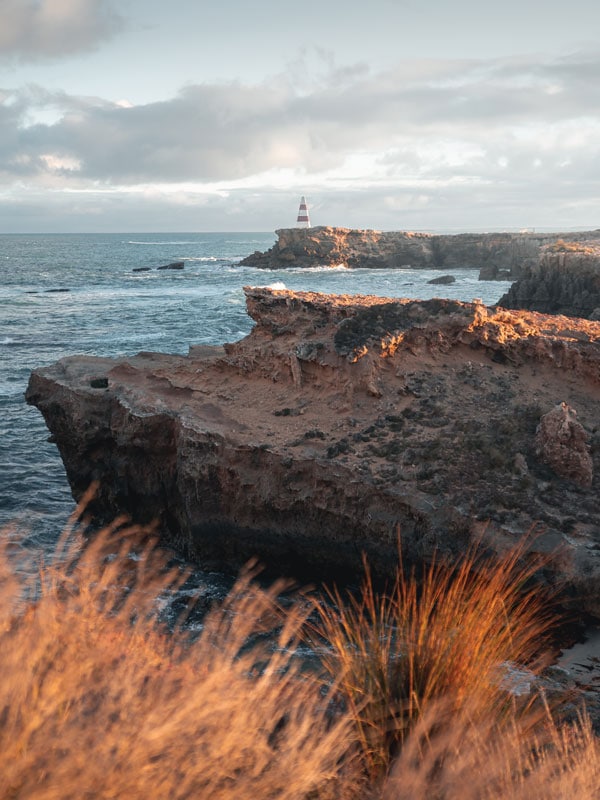
Cape Dombey Obelisk
The Insta-famous Cape Dombey Obelisk , constructed in 1855. (Image: Thomas Cowey)

Woodsoak Wines

A string of miniature obelisks hang above wine barrels that serve as leaning posts at Woodsoak Wines ’ convivial cellar door; people cluster outside the corner property, wine glass in hand and conversation on the lips.

An antique wooden bar is rolled out to the courtyard each day, and three of the 10 wines on offer are named after the owners’ children. You can’t help but want to be there.

The Drift Cafe

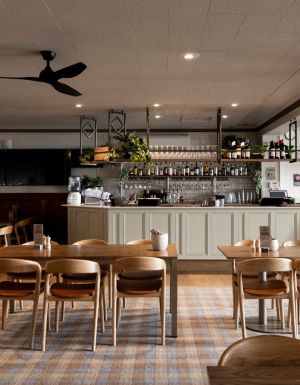
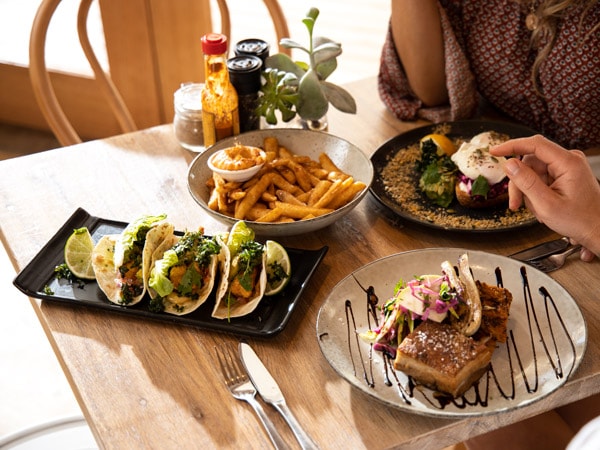
It’s a similar vibe up the road, at Drift Cafe , where the sourdough from next door’s baked goods haven, Rise of Robe, is served with eggs and avocado among mid-century stonework and whitewashed beams.
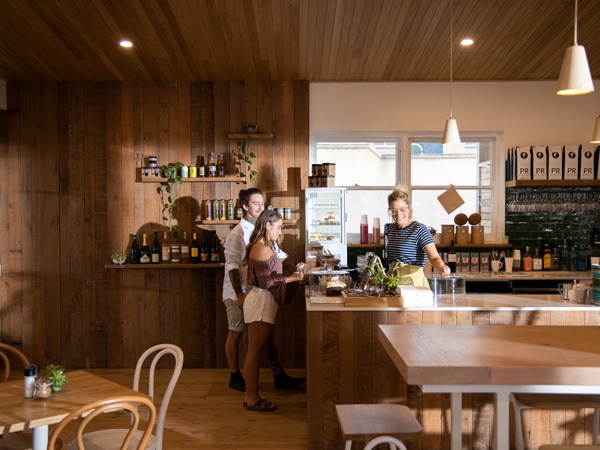
Inside Drift Cafe Robe SA
Inside the Drift Cafe in Robe. (Image: South Australian Tourism Commission)
Food at Drift Cafe Robe SA
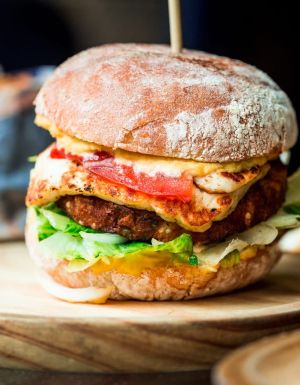
Serving cafe staples like tacos and fries. (Image: South Australian Tourism Commission)

Karrata Wine Store

A sky-blue kombi is parked in the driveway, its rear window lifted to reveal an espresso machine pumping out takeaways for passers-by. A few steps away, the Karatta Wine Store doubles as a tasting house and art gallery. Like Woodsoak, it’s family-owned, sourcing grapes from vineyards patchworking the countryside just out of town.
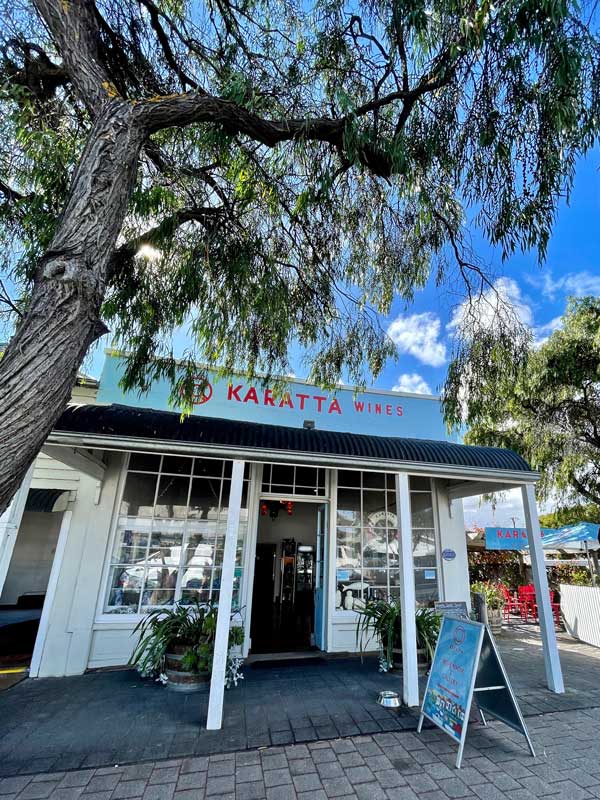
Karatta Wines Robe
Karatta Wines doubles as a tasting house and wine store. (Image: Fleur Bainger)

The Caledonian Hotel

Another nearby watering hole, The Caledonian Hotel serves local drops in its beer garden and dark wood, English-style interiors that have been loved for 160 years. Fondly known as ‘The Caly’, it hosts live music and fills to bursting point between Christmas and New Year’s Eve.
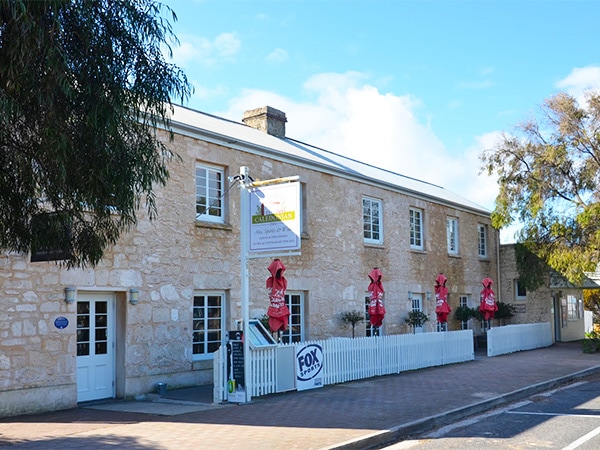
Caledonian Inn
The historic Caledonian Inn was first built in 1858 by Scotsman Peter McQueen.

Nature highlights

Having little kids, I’m now less barfly and more nature fan. Together, we cross the esplanade bridge over an outlet that links ocean to wetlands.
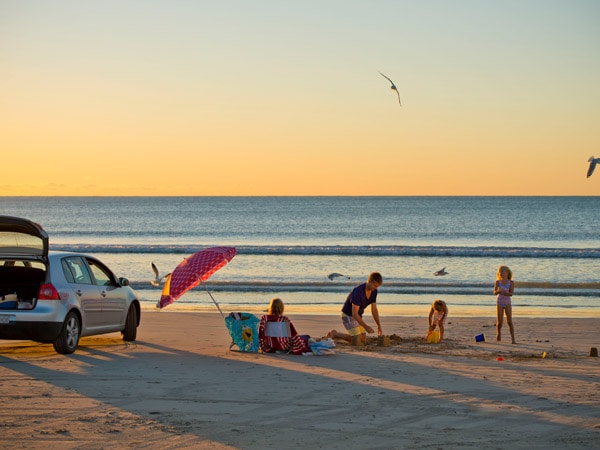
Long Beach Robe SA
Robe offers much in the way of natural delights. (Image: South Australian Tourism Commission/Adam Bruzzone)

We search for fragile white crabs and watch feathery green seagrasses wave in the current. Tracing the rise and fall of Robe’s limestone ridge on one of the many paved walking trails, we dart into pine thickets and search for resident seals who pop up in the sometimes turquoise, often teal-hued bay.

Snixley

Before we leave, we follow our curiosity into a new streetwear shop – seemingly incongruous in this town of stone, linen and seashells. It’s run by a local artist who creates the garments’ surf, skate and skull designs under the brand Snixley .

I recognise her – Hadley Johnson – as the daughter of the man who gave me my first job, at what was once the busiest gallery-restaurant in Robe. It was famous for its cinnamon scrolls that no other operator has ever managed to fully replicate (many have tried).

I was 16 and a terrible waitress, but I had a ball. We buy T-shirts, one with a Robe-o-saurus painted in the Obelisk’s colours. It’s become my son’s favourite. And with that, another generation falls for Robe.

Explore more of Robe in our travel guide or find out which other towns made it into your Top 50.
Fleur Bainger
Fleur Bainger is a freelance travel writer and journalism mentor who has been contributing to Australian Traveller since 2009! The thrill of discovering new, hidden and surprising things is what ignites her. She gets a buzz from sharing these adventures with readers, so their travels can be equally transformative.
See all articles

This luxe trawler tour is redefining Victoria’s seafood experience

Victoria’s ‘mussel capital’ is the source of exceptional shellfish used by top chefs far and wide. Step aboard a beautifully refurbished trawler to see how these plump and juicy bivalves are sustainably cultivated.

A curtain is slowly winched from the placid, teal waters just off Portarlington , like a floating garland beside our boat. The ropes heave with blue mussels, the star attraction of our tour. But as we reach to pluck our own, it’s quickly clear they’re not alone; a mass of weird and wonderful creatures has colonised the ropes, turning them into a living tapestry. ‘Fairy’ oysters, jelly-like sea squirts, and tiny, wriggling skeleton shrimp all inhabit this underwater ecosystem.

We prize our bivalve bounty from the ropes, and minutes later the mussels arrive split on a platter. The plump orange morsels are served raw, ready to be spritzed with wedges of lemon and a lick of chilli as we gaze out over the bay. They’re briny, tender and faintly sweet. “This wasn’t originally part of the tour,” explains Connie Trathen, who doubles as the boat’s cook, deckhand and guide. “But a chef [who came onboard] wanted to taste the mussels raw first, and it’s now become one of the key features.”

A humble trawler turned Hamptons-style dreamboat

inspecting bivalve bounty from the ropes
Inspecting the bounty. (Image: Visit Victoria/Hannyn Shiggins)

It’s a crisp, calm winter’s day, and the sun is pouring down upon Valerie, a restored Huon pine workhorse that was first launched in January 1980. In a previous life she trawled the turbulent Bass Strait. These days she takes jaunts into Port Phillip Bay under the helm of Lance Wiffen, a fourth-generation Bellarine farmer, and the owner of Portarlington Mussel Tours . While Lance has been involved in the fishing industry for 30-plus years, the company’s tour boat only debuted in 2023.

holding Portarlington mussels
See how these plump and juicy bivalves are sustainably cultivated.

It took more than three years to transform the former shark trawler into a dreamy, Hamptons-esque vessel, with little expense spared. Think muted green suede banquettes, white-washed walls, Breton-striped bench cushions, hardwood tables, bouquets of homegrown dahlias, and woollen blankets sourced from Waverley Mills, Australia’s oldest working textile mill. It’s intimate, too, welcoming 12 guests at most. And yet there’s nothing pretentious about the experience – just warm, down-to-earth Aussie hospitality.

As we cruise out, we crack open a bottle of local bubbles and nibble on the most beautifully curated cheese platter, adorned with seashells and grey saltbush picked from the water’s edge that very morning. Australasian gannets soar overhead, and I’m told it’s not uncommon for guests to spot the odd seal, pod of dolphins, or even the occasional little penguin.

The sustainable secret behind Victoria’s best mussels

blue mussels off Portarlington
Blue mussels sourced just off Portarlington.

Connie and Lance both extol the virtues of mussels. They’re delicious. A lean source of protein and packed with omega-3 fatty acids, vitamin B12, iron, selenium, and zinc. They’re cooked in a flash (Connie steams our fresh harvest with cider and onion jam). And they’re also widely regarded as one of the most sustainable foods in the world.

Portarlington mussels with lemon and chilli
Mussels served with lemon and chilli.

“Aquaculture is [often] seen as destructive, so a lot of our guests are really surprised about how environmentally friendly and sustainable our industry is,” Lance says. “[Our mussels] would filter 1.4 billion litres of water a day,” he adds, explaining how mussels remove excess nitrogen and phosphorus from the water. “And through biomineralisation, we lock carbon into mussel shells.”

a hand holding a Portarlington mussel
Mussels are a sustainable food.

Despite their glowing list of accolades, these molluscs have long been seen as the oysters’ poorer cousins. “It was a really slow start,” explains Lance, who says that in the early days of his career, “you could not sell mussels in Victoria”.

But word has slowly caught on. Chefs as globally acclaimed as Attica’s Ben Shewry and even René Redzepi of Noma, Denmark, have travelled to these very waters just to try the shellfish at the source, sharing only the highest praise, and using Lance’s mussels in their restaurants.

guests sampling Portarlington mussels onboard
Sampling the goods onboard. (Image: Visit Victoria/Hannyn Shiggins)

According to Lance there’s one obvious reason why the cool depths of Portarlington outshine other locations for mussel farming. “The water quality is second to none,” he says, noting how other regions are frequently rocked by harvest closures due to poor water quality. “We grow, without a doubt, some of the best shellfish in the world.” And with Lance’s bold claims backed up by some of the industry’s greatest names, perhaps it won’t be much longer until more Aussies uncover the appeal of Portarlington’s mussels.