hero media

The best camping and glamping on Phillip Island

There’s a plethora of different camping and glamping options on Phillip Island – here we explore some of the Bass Coast isle’s best.

Family favourite Phillip Island has long lured holidaymakers to its shores with the promise of sea, sand, surf and (sometimes) sun. Plot your escape to this summer playground with our guide to the best Phillip Island camping and glamping spots, most of which are pet-friendly outside of peak season to boot.

The Sheltered Glamping Co
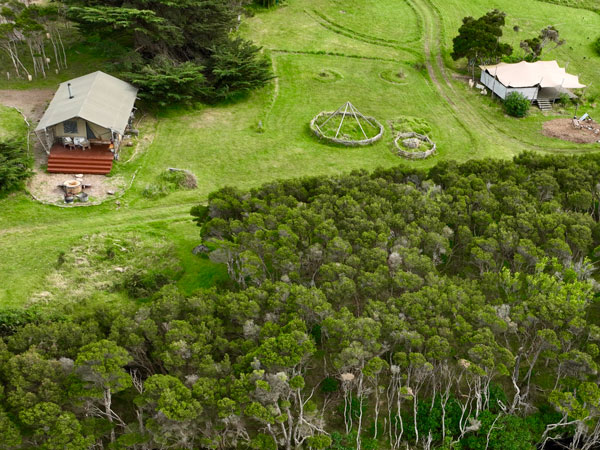
an aerial view of The Sheltered Glamping Co, Phillip Island
Stay in an elevated tent surrounded by epic scenery. (Image: The Sheltered Glamping Co)

You won’t be left wanting with a stay at one of The Sheltered Glamping Co’s souped-up tents. The eco-conscious operator’s canvas bell tents come equipped with queen-sized beds, lighting, a heater, speakers, USB ports, power points, a kettle and a range of teas and coffee, plus access to a private outdoor heated shower and composting toilet, and a communal day tent.

Or you can opt for its super spacious, fully furnished safari tent, known as Emperor, home to a wood-fired hot tub that sits under the stars, an indoor wood-burning fireplace, a four-poster queen-sized bed and a king-sized bed hidden in a nook; it also has a fully equipped kitchen and Weber barbecue. Pitched on a tranquil and remote pocket of the island, you’ll find wallabies and echidnas roaming freely in these parts.

Address: Ventnor

NRMA Phillip Island Holiday Park
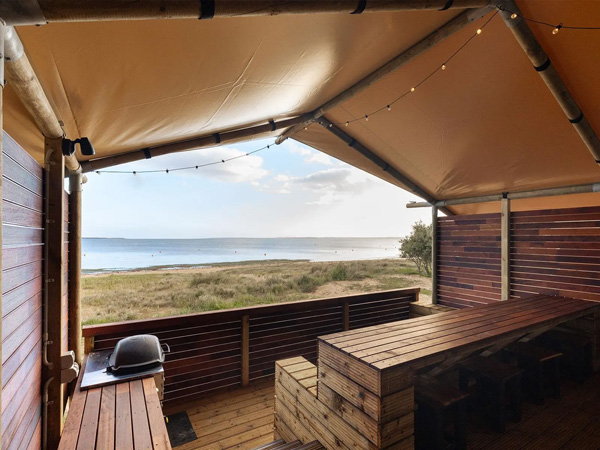
scenic sea views from a tent at NRMA Phillip Island Holiday Park
Soak up seaside serenity at NRMA Phillip Island Holiday Park. (Image: Supplied)

Not only is this NRMA Phillip Island Holiday Park situated just metres from the sea – with some of its powered camping sites located right on the waterfront – but it’s also only a 15-minute walk from the thick of the action in Cowes.

The pet- and family-friendly park is known to keep its facilities immaculately clean, and it has a few to offer: from a kid’s playground to a communal wood-fired pizza oven and fire pit, a barbecue area, a recreation room with arcade games and a TV, and even a herb garden that guests can use.

Glamping is also on offer here. The park’s handful of safari tents are just steps from Cowes Beach, delivering unobstructed sea views. And there’s perhaps no spot better to enjoy them from than the solitude of your own private, partially sheltered outdoor clawfoot bathtub. Other features include an electric fireplace, an en suite bathroom, and an outdoor deck with a barbecue.

Address: 164 Church St, Cowes

Need tips, more detail or itinerary ideas tailored to you? Ask AT.

AI Prompt

BIG4 Ingenia Holidays Phillip Island
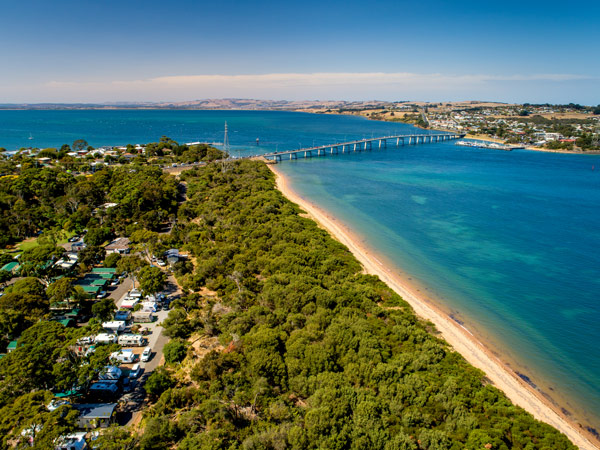
an aerial beach view of BIG4 Ingenia Holidays Phillip Island
BIG4 Ingenia Holidays Phillip Island offers direct beach access. (Image: Supplied)

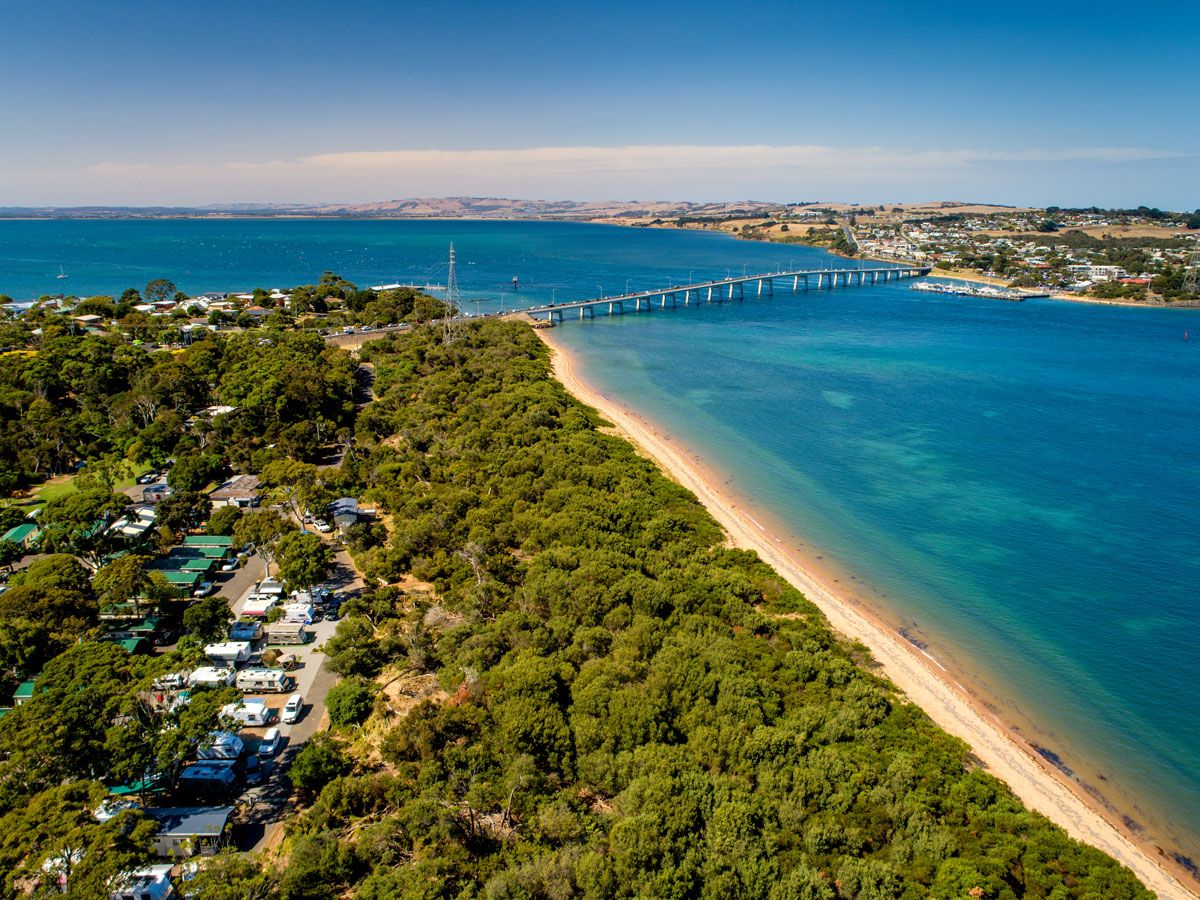
Located at the far western edge of the isle, just minutes from the bridge that connects Phillip Island with the mainland, and adjacent to the sprawling bushland of the Phillip Island Coastal Reserve, this Ingenia Holidays park is great for those who want to get away from it all. There’s also direct access to one of Phillip Island’s many beaches. If you’re craving a bit more civilisation, the shops, cafes and restaurants of Newhaven lie just 500 metres away; or you can walk across the bridge itself, to spend the morning or evening exploring the bigger mainland town of San Remo.

In terms of facilities, you’ll find all the usual suspects here: an adventure playground, a basketball ring, a games room, a TV and recreation room, a modern camp kitchen and undercover electric barbecues. But over and above that, the BIG4 Ingenia Holidays Phillip Island also provides a seasonal outdoor cinema, a jumping pillow, and pedal cars for hire.

Address: 24 Old Bridge Dr, Newhaven

Amaroo Park Phillip Island

The holiday park located perhaps the closest to Cowes, just two blocks from the main street, Amaroo is in a prime position for those who like to be slap-bang in the centre of things. Unlike many of the other holiday parks on the island, this one boasts its own solar-heated saltwater outdoor pool, surrounded by chairs and loungers. A quiet site, with fewer facilities catering directly to kids than other parks, Amaroo is arguably aimed more at couples and friends, or those with older children rather than little ones.

Address: 97 Church St, Cowes

Weekly travel news, experiences
insider tips, offers, and more.

Anchor Belle
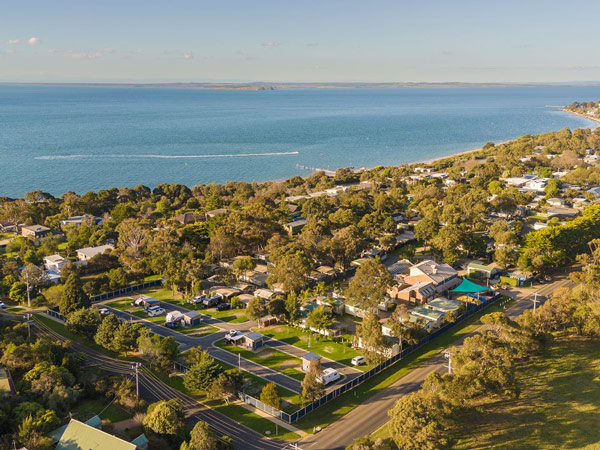
an aerial view of Anchor Belle, Phillip Island camping spot
Anchor Belle is just a 100-metre stroll from the beach.

Located just on the edge of Cowes, and only 100 metres from the beach, family-owned and operated Anchor Belle ticks a lot of boxes and proves a big hit with kids: there’s an indoor heated swimming pool that’s perfect for Victoria’s unpredictable weather, plus a jumping cushion, a multi-purpose ball court, a playground, a recreation room, and a games room. Adults, meanwhile, will love the gas pizza oven, the park’s two hectares of greenery and bushland, the shady grassed sites, the accommodating and amiable staff, the clean facilities, and the good water pressure in the showers.

Address: 272 Church St, Cowes

Discover the best things to do on Phillip Island

Want to see more stories from Australian Traveller in your Google search results?

  1. Click here to set Australian Traveller as a preferred source.
  2. Tick the box next to "Australian Traveller". That's it.
Chloe Cann
Chloe Cann is an award-winning freelance travel and food writer, born in England, based in Melbourne and Roman by adoption. Since honing her skills at City St George's, University of London with a master's degree in journalism, she's been writing almost exclusively about travel for more than a decade, and has worked in-house at newspapers and travel magazines in London, Phnom Penh, Sydney and Melbourne. Through a mixture of work and pleasure, she's been fortunate enough to visit 80 countries to date, though there are many more that she is itching to reach. While the strength of a region's food scene tends to dictate the location of her next trip, she can be equally swayed by the promise of interesting landscapes and offbeat experiences. And with a small person now in tow, travel looks a little different these days, but it remains at the front of her mind.
View profile and articles

This luxe trawler tour is redefining Victoria’s seafood experience

    Chloe Cann Chloe Cann
    Victoria’s ‘mussel capital’ is the source of exceptional shellfish used by top chefs far and wide. Step aboard a beautifully refurbished trawler to see how these plump and juicy bivalves are sustainably cultivated.

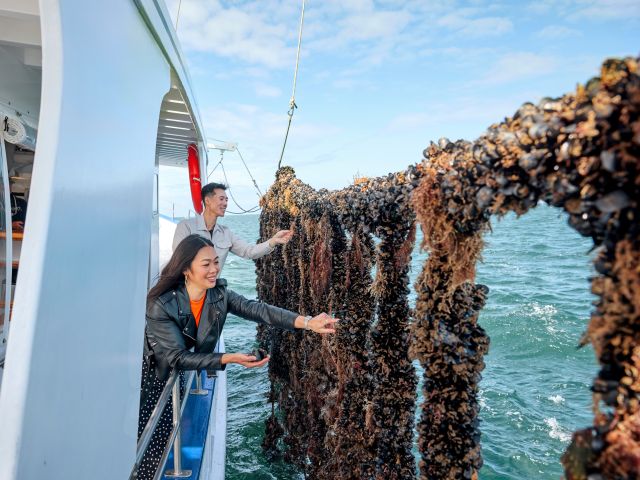
    A curtain is slowly winched from the placid, teal waters just off Portarlington, like a floating garland beside our boat. The ropes heave with blue mussels, the star attraction of our tour. But as we reach to pluck our own, it’s quickly clear they’re not alone; a mass of weird and wonderful creatures has colonised the ropes, turning them into a living tapestry. ‘Fairy’ oysters, jelly-like sea squirts, and tiny, wriggling skeleton shrimp all inhabit this underwater ecosystem.

    We prize our bivalve bounty from the ropes, and minutes later the mussels arrive split on a platter. The plump orange morsels are served raw, ready to be spritzed with wedges of lemon and a lick of chilli as we gaze out over the bay. They’re briny, tender and faintly sweet. “This wasn’t originally part of the tour,” explains Connie Trathen, who doubles as the boat’s cook, deckhand and guide. “But a chef [who came onboard] wanted to taste the mussels raw first, and it’s now become one of the key features.”

    A humble trawler turned Hamptons-style dreamboat

    inspecting bivalve bounty from the ropes
    Inspecting the bounty. (Image: Visit Victoria/Hannyn Shiggins)

    It’s a crisp, calm winter’s day, and the sun is pouring down upon Valerie, a restored Huon pine workhorse that was first launched in January 1980. In a previous life she trawled the turbulent Bass Strait. These days she takes jaunts into Port Phillip Bay under the helm of Lance Wiffen, a fourth-generation Bellarine farmer, and the owner of Portarlington Mussel Tours. While Lance has been involved in the fishing industry for 30-plus years, the company’s tour boat only debuted in 2023.

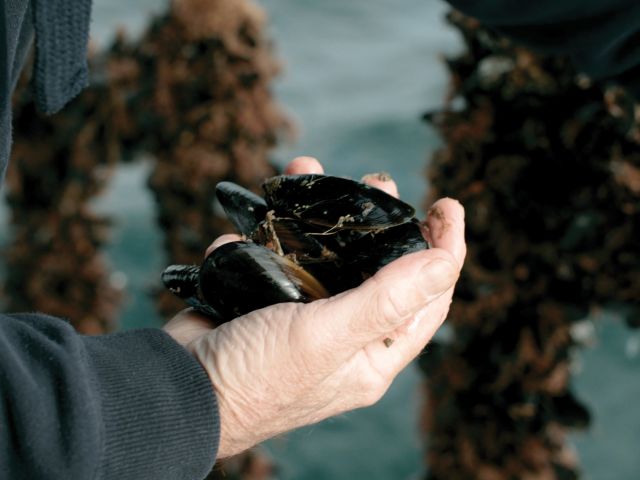
    holding Portarlington mussels
    See how these plump and juicy bivalves are sustainably cultivated.

    It took more than three years to transform the former shark trawler into a dreamy, Hamptons-esque vessel, with little expense spared. Think muted green suede banquettes, white-washed walls, Breton-striped bench cushions, hardwood tables, bouquets of homegrown dahlias, and woollen blankets sourced from Waverley Mills, Australia’s oldest working textile mill. It’s intimate, too, welcoming 12 guests at most. And yet there’s nothing pretentious about the experience – just warm, down-to-earth Aussie hospitality.

    As we cruise out, we crack open a bottle of local bubbles and nibble on the most beautifully curated cheese platter, adorned with seashells and grey saltbush picked from the water’s edge that very morning. Australasian gannets soar overhead, and I’m told it’s not uncommon for guests to spot the odd seal, pod of dolphins, or even the occasional little penguin.

    The sustainable secret behind Victoria’s best mussels

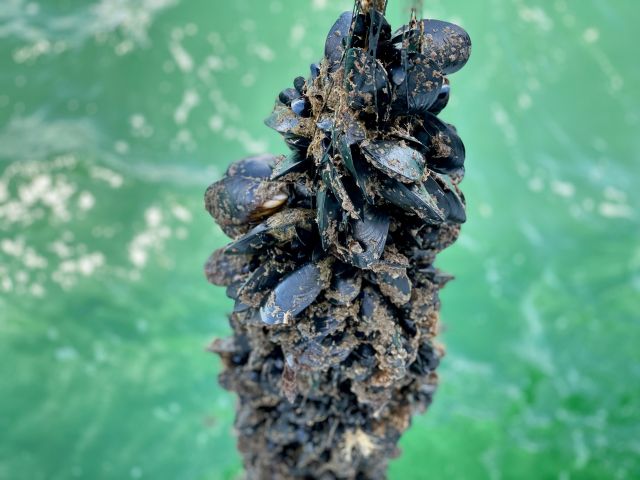
    blue mussels off Portarlington
    Blue mussels sourced just off Portarlington.

    Connie and Lance both extol the virtues of mussels. They’re delicious. A lean source of protein and packed with omega-3 fatty acids, vitamin B12, iron, selenium, and zinc. They’re cooked in a flash (Connie steams our fresh harvest with cider and onion jam). And they’re also widely regarded as one of the most sustainable foods in the world.

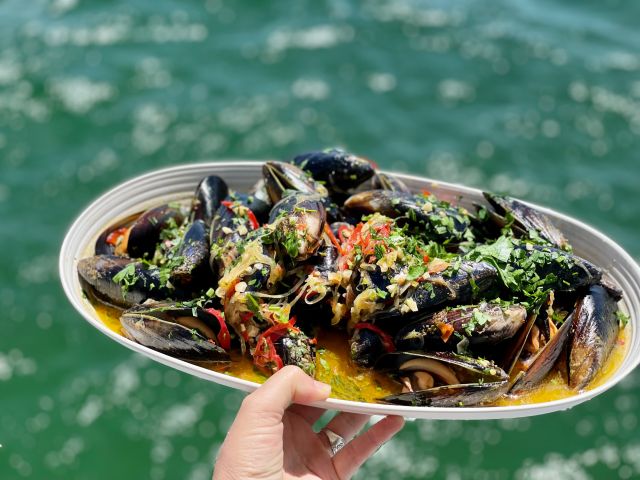
    Portarlington mussels with lemon and chilli
    Mussels served with lemon and chilli.

    “Aquaculture is [often] seen as destructive, so a lot of our guests are really surprised about how environmentally friendly and sustainable our industry is,” Lance says. “[Our mussels] would filter 1.4 billion litres of water a day,” he adds, explaining how mussels remove excess nitrogen and phosphorus from the water. “And through biomineralisation, we lock carbon into mussel shells.”

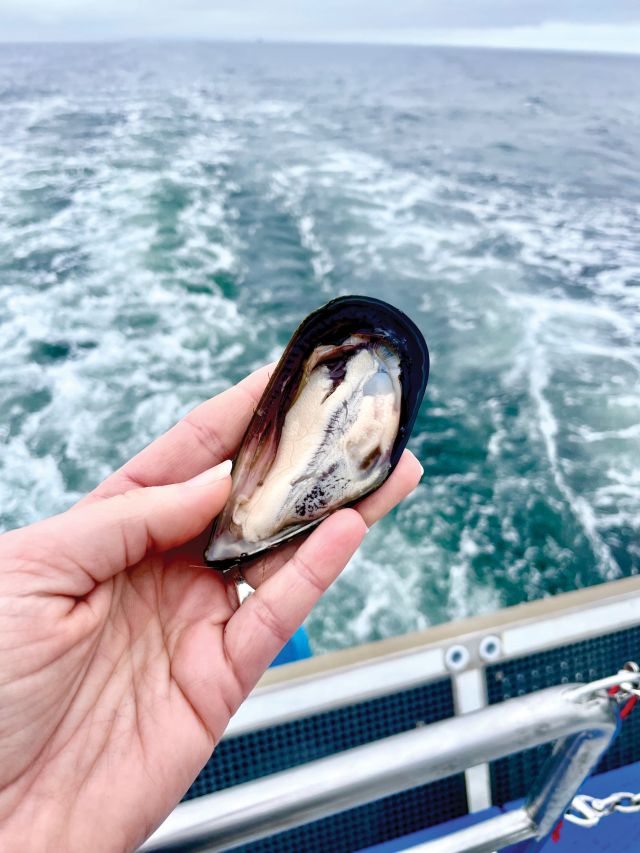
    a hand holding a Portarlington mussel
    Mussels are a sustainable food.

    Despite their glowing list of accolades, these molluscs have long been seen as the oysters’ poorer cousins. “It was a really slow start,” explains Lance, who says that in the early days of his career, “you could not sell mussels in Victoria”.

    But word has slowly caught on. Chefs as globally acclaimed as Attica’s Ben Shewry and even René Redzepi of Noma, Denmark, have travelled to these very waters just to try the shellfish at the source, sharing only the highest praise, and using Lance’s mussels in their restaurants.

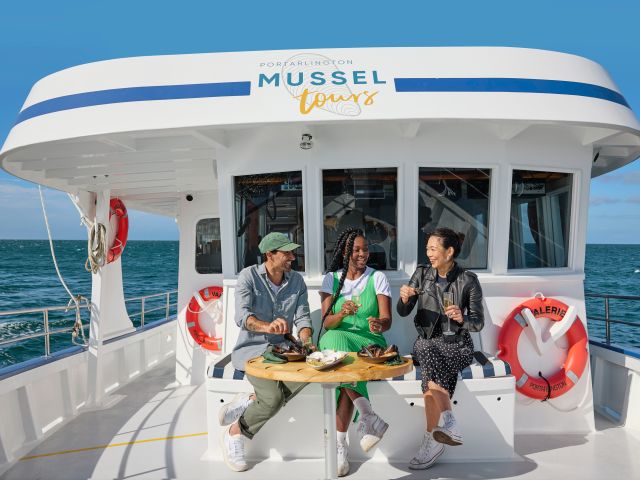
    guests sampling Portarlington mussels onboard
    Sampling the goods onboard. (Image: Visit Victoria/Hannyn Shiggins)

    According to Lance there’s one obvious reason why the cool depths of Portarlington outshine other locations for mussel farming. “The water quality is second to none,” he says, noting how other regions are frequently rocked by harvest closures due to poor water quality. “We grow, without a doubt, some of the best shellfish in the world.” And with Lance’s bold claims backed up by some of the industry’s greatest names, perhaps it won’t be much longer until more Aussies uncover the appeal of Portarlington’s mussels.