hero media

Best things to do on Phillip Island: Fish and chips, wine and penguins

From wine tasting to surfing, country walks and penguin spotting, this little corner of Gippsland has a lot to offer.

A seaside hotspot, Phillip Island has long been popular with holidaymaking families and international tourists, but there’s plenty more to this Bass Coast isle than just sun, sand, ice cream and penguins. Read on for our top seven things to do on Phillip Island.

1. Indulge in a wine tasting (and beer)
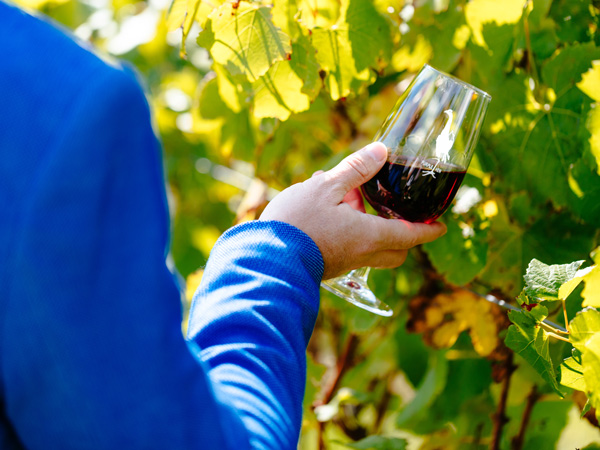
a hand holding a glass of wine at Purple Hen vineyard, Phillip Island
The idyllic Purple Hen vineyard produces premium cool-climate wines. (Image: Visit Victoria)

This little pocket of Gippsland is home to two cool-climate wineries with cellar doors. Going strong since 1993, Phillip Island Winery isn’t just some tourist trap: it produces a range of popular reds and whites (sauvignon blanc, chardonnay, merlot, cabernet sauvignon and pinot noir) and is also host to a gorgeous little boutique that dispenses fresh local produce as well as flowers, sourdough, cookbooks, candles and wine. You can dine here too.

Known for its pinot noir and shiraz, but with plenty of whites and sparkling on offer too, Purple Hen Wines is in a scenic spot. Take your time on a tasting at one of the tables inside, admiring the view from the floor-to-ceiling windows, or grab a glass (or bottle) of your favourite drop to enjoy one of the picnic tables outside on the grass.

Beer lovers aren’t left out of the equation either. In the main town of Cowes lies independent, sustainable and family-run taphouse Ocean Reach Brewing: come for a tasting paddle and stay for the burgers.

2. Watch the Penguin Parade
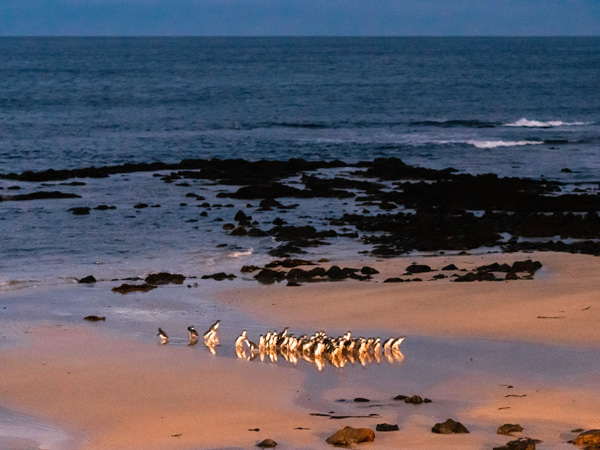
the penguin parade on Phillip Island
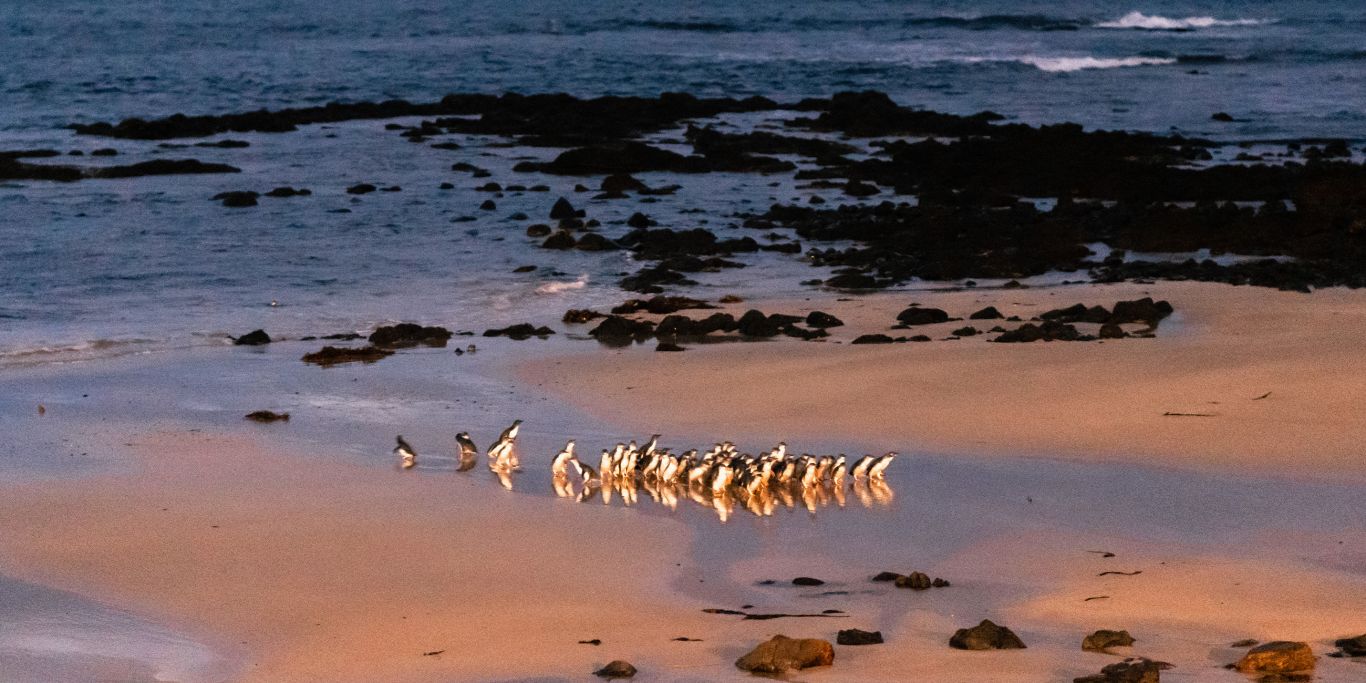
Phillip Island is a proud home to the world’s largest Little Penguin colony. (Image: Visit Victoria)

Perhaps Phillip Island’s most iconic and enduring attraction, the Penguin Parade is the home of the largest Little Penguin colony in the world, drawing in kids, animal lovers and tourists alike. Watch legions of the flightless birds waddle out of the surf and onto the shore before heading up to their burrows, arriving like clockwork at sunset every night. Tiered seating overlooks the picturesque Summerlands Beach, and there’s an underground viewing area too. Arrive early and exploit the interactive activities and wealth of information supplied at the attraction’s visitors’ centre.

Need tips, more detail or itinerary ideas tailored to you? Ask AT.

AI Prompt

3. Take a leisurely country walk
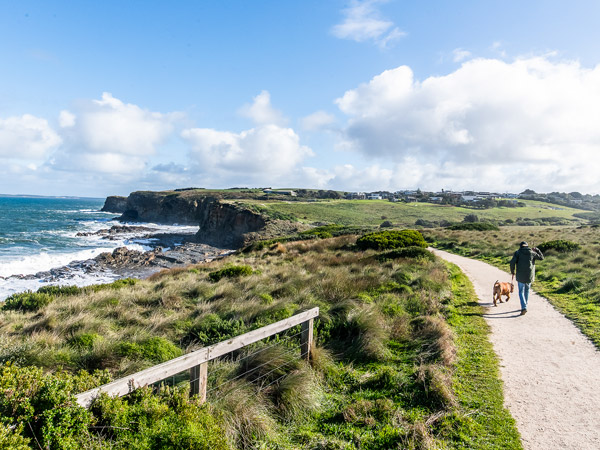
a man walking with his dog along the George Bass Coastal Walk, Phillip Island
Traverse the clifftop trail along the George Bass Coastal Walk. (Image: Visit Victoria)

There’s a multitude of country walks to enjoy on this Bass Coast isle, many exploiting the rugged coastline views. Venture up to Cape Woolamai, the highest point on the island, from where you can gorge on 360-degree views of San Remo, Kilcunda and beyond. Take the Kitty Miller Bay Walk that leads to the rusted remains of a shipwreck. Waltz around Churchill Island, and you’ll likely encounter some highland cattle. Or hit one of the Conservation Hill And Rhyll Inlet Walks, home to the southernmost mangroves in the world.

4. Hit the surf
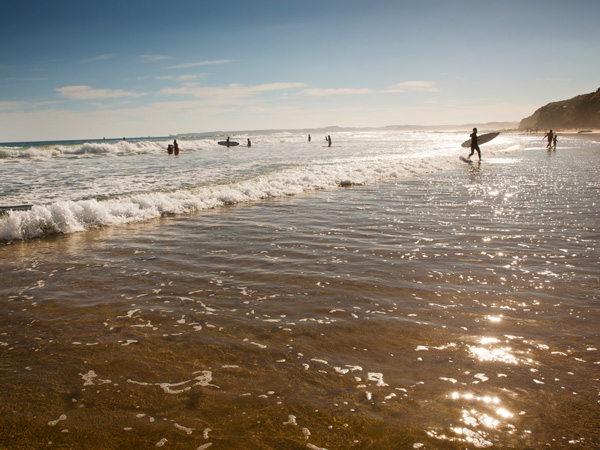
surfers at Surf Beach, Phillip Island.
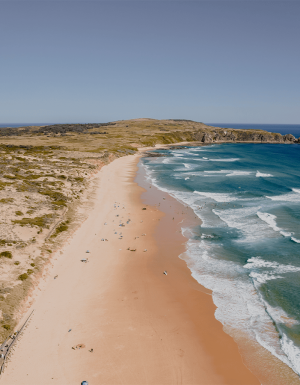
Surf’s up on Phillip Island. (Image: Visit Victoria)

Home to Victoria’s first National Surfing Reserve, Phillip Island is a bit of a surfer’s paradise. A number of different surf schools operate out of family-friendly Smiths Beach, with its moderate and consistent swells, including Girls on Board, Island Surfboards and Archy Surf. But the beach is also home to ‘Express Point’, a barrelling reef break known in some surfing circles as the island’s premier wave. More experienced surfers might want to make for the world-class beach breaks of Woolamai, or Cat Bay’s left- and right-hand reef breaks.

5. Jump on a boat and spot some seals
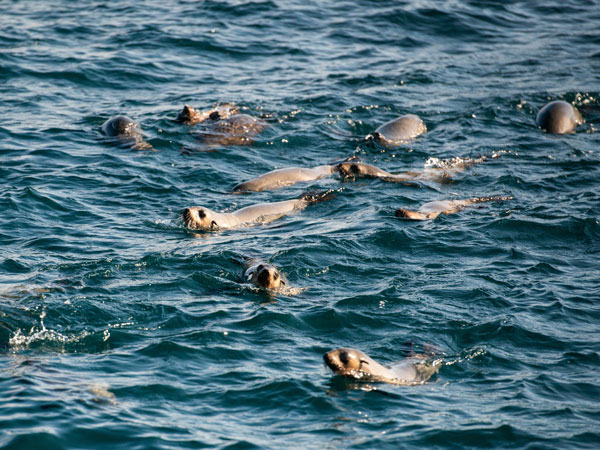
seals swimming in the sea, Phillip Island
Seal Rocks is home to more than 25,000 fur seals. (Image: Visit Victoria)

Did you know Phillip Island is home to Australia’s largest fur seal colony? Pay a visit to this community of furry fellas with eco-friendly local operator Wildlife Coast Cruises. The company’s two-hour trip will take you within metres of the seals, which regularly approach the boat for a closer look, and on average, daytrippers will see more than 5,000 up-close, not to mention seabirds and pods of dolphins, if you’re lucky.

If you’re in the market for something a touch more high-octane, then give Ocean Adventures a call. You’ll speed along the island’s coastline on either a jet boat or thundercat, exploring the granite cliffs and caves of Cape Woolamai along the way.

Weekly travel news, experiences
insider tips, offers, and more.

6. Get your catch of the day
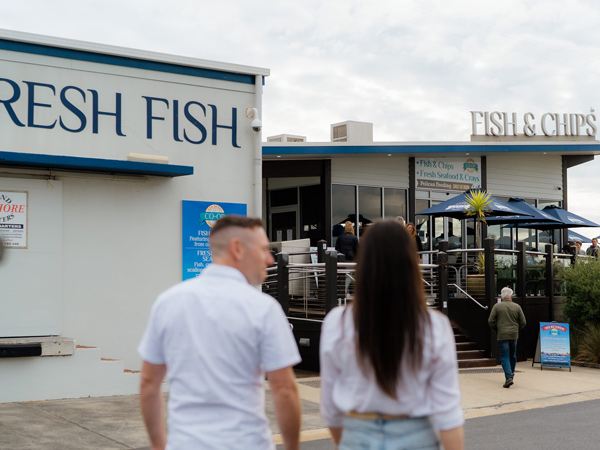
a couple heading to San Remo Fisherman's Cooperative
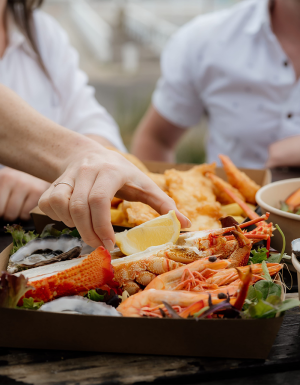
Make a beeline for the best fish and chips in town at San Remo Fisherman’s Cooperative. (Image: Visit Victoria)

From jetties and beaches to boat charters, there are plenty of opportunities to cast a line of this little isle, with local anglers routinely catching flathead, snapper, whiting, garfish, salmon, shark and squid. Try Reel Obsession, T-Cat Fishing Charters, or The Island Charter Boat for a day out on the water. And if you don’t have much success then don’t fret: you can pick up super fresh fish from the professionals at San Remo Fisherman’s Cooperative anyway.

7. Rev up your adrenaline
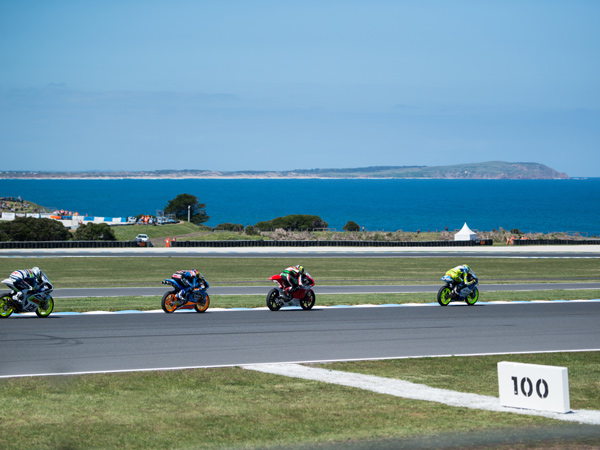
motorcycles racing at the Australian Motorcycle Grand Prix, Phillip Island
Witness the heart-racing Australian Motorcycle Grand Prix. (Image: Visit Victoria)

Phillip Island is known for hosting the Australian Motorcycle Grand Prix, and the World Superbike Championship too, but that doesn’t mean petrolheads have to time their visit to coincide with the MotoGP. Rock up at any time of year and you can still take a guided circuit tour, which gives you access to race control, the media centre and the winner’s podium. Or stroll through the History of Motorsport Display. Or buckle up and race around Australia’s largest four-lane GP, at the Phillip Island Grand Prix Circuit Visitor Centre, which is home to a 760-metre scale replica of the Phillip Island Grand Prix Circuit, overlooking the Bass Strait.

Family-friendly activities

Penguin Parade and boat trips aside, there are a number of activities to entertain families on the island. Chief among them is Phillip Island Wildlife Park, where kangaroos, wallabies, emus, cassowaries, wombats, and koalas roam. Its grounds are spread across a whopping 60 acres and offer up-close encounters. A highlight for many visitors is the opportunity to hand-feed and pat kangaroos.

Those who have an affinity for koalas should head for the Koala Conservation Reserve, where treetop boardwalks wind through the Aussie bush. Guided tours are also on offer, promising a deeper insight into the lives of these sleep-loving creatures.

Older kids might get a kick out of the experiences at A Maze’N Things, such as mini golf, 3D mazes and a high ropes course.

Discover the best accommodation on Phillip Island

Want to see more stories from Australian Traveller in your Google search results?

  1. Click here to set Australian Traveller as a preferred source.
  2. Tick the box next to "Australian Traveller". That's it.
Chloe Cann
Chloe Cann is an award-winning freelance travel and food writer, born in England, based in Melbourne and Roman by adoption. Since honing her skills at City St George's, University of London with a master's degree in journalism, she's been writing almost exclusively about travel for more than a decade, and has worked in-house at newspapers and travel magazines in London, Phnom Penh, Sydney and Melbourne. Through a mixture of work and pleasure, she's been fortunate enough to visit 80 countries to date, though there are many more that she is itching to reach. While the strength of a region's food scene tends to dictate the location of her next trip, she can be equally swayed by the promise of interesting landscapes and offbeat experiences. And with a small person now in tow, travel looks a little different these days, but it remains at the front of her mind.
View profile and articles
hero media

7 ways to switch off and reconnect with nature in Albury Wodonga

Credit: Destination NSW

    Kate Bettes Kate Bettes
    Switch the hustle and bustle for a weekend of birdsong and greenery on the border.

    Straddling the Murray River where New South Wales meets Victoria, Albury Wodonga is just hours by car or train (or even a quick flight) from many major cities, but it feels a million miles away from the everyday.

    Here, you’ll find a blend of relaxed country lifestyle and modern city amenities, where a booming culinary scene and vibrant arts offerings meet a rich Indigenous history and stunning natural vistas. Spend time amongst river red gums, wildlife-filled wetlands and winding waterways.

    Ready to roll on the river? Here’s where to begin.

    1. Birdwatch in Wonga Wetlands

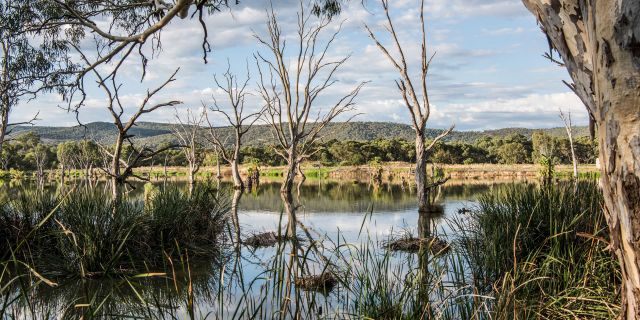
    The scenic Wonga Wetlands along the Wagirra Trail and Yindyamarra Sculpture Walk, West Albury.
    Walk along Wonga Wetlands, looking for local birdlife. (Credit: Destination NSW)

    It might be close to Albury’s CBD, but Wonga Wetlands feels a watery world away. This former grazing land has been restored to 80 hectares of lagoons, billabongs and river red gums, and you can now wander three kilometres of walking trails as you spot cormorants, spoonbills, egrets and sacred kingfishers. More than 170 bird species call the wetlands home, thanks to the Murray’s cycle of flooding and drying, so pack a picnic, settle in at a bird hide, and pull out those binoculars.

    2. Explore the Murray River

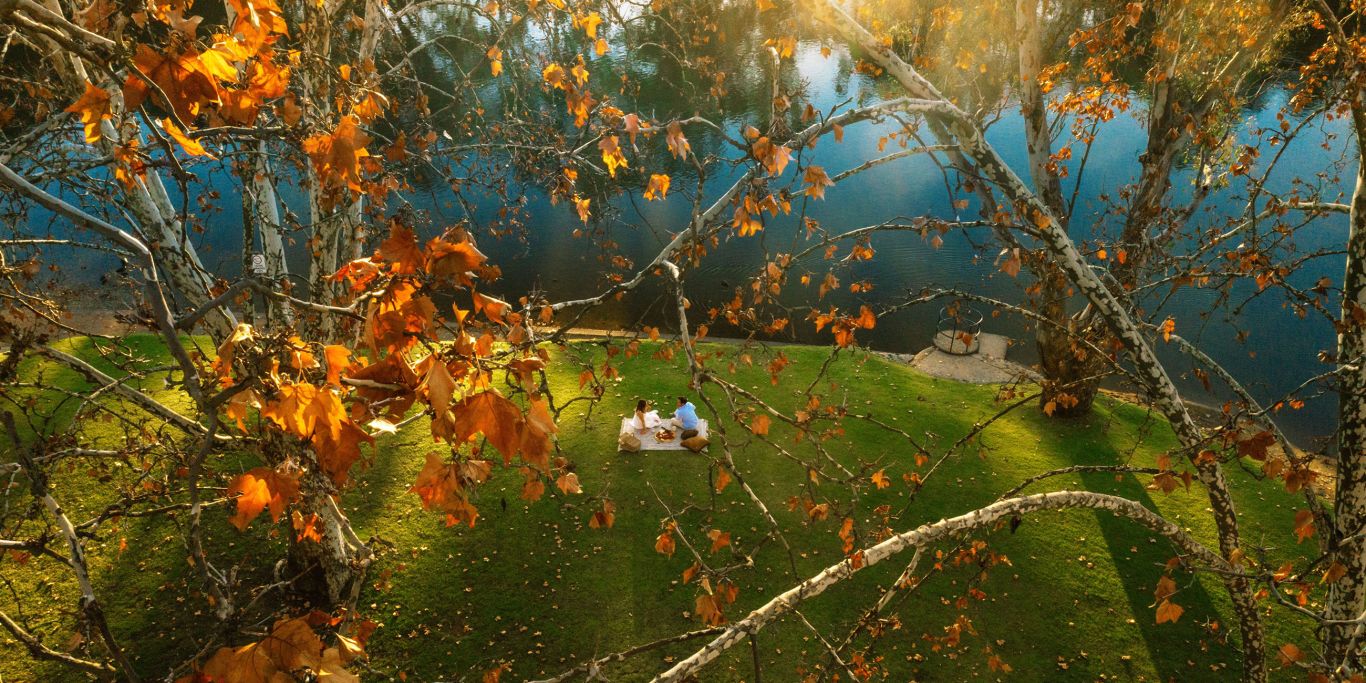
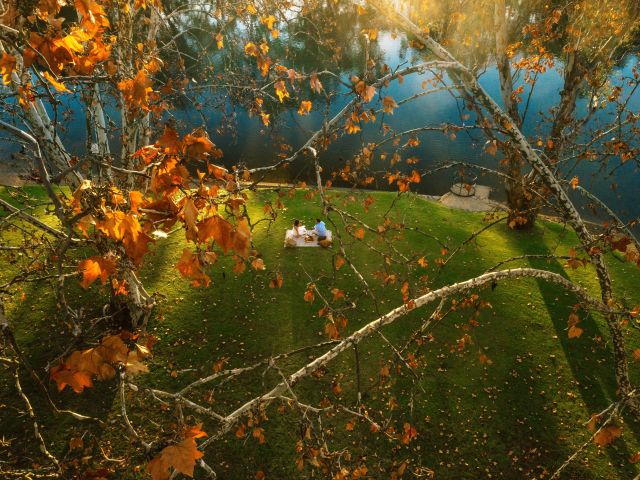
    picnicers in Noreuil Park albury wodonga nature autumn
    Take a picnic to enjoy in Noreuil Park. (Credit: Destination NSW)

    The Murray River runs between Albury and Wodonga, where locals swap desks and deadlines for shaded riverbanks. Less than a kilometre from Albury’s CBD sits Noreuil Park, the city’s favourite stretch of riverfront. Cool off on the famous loop float, hire a kayak, launch a stand-up paddleboard or cast a line.

    Afterwards, chuck a rug on the lawn under a plane tree, fire up one of the free barbecues and watch the water as you munch on some Murray cod.

    3. Take a sculpture walk

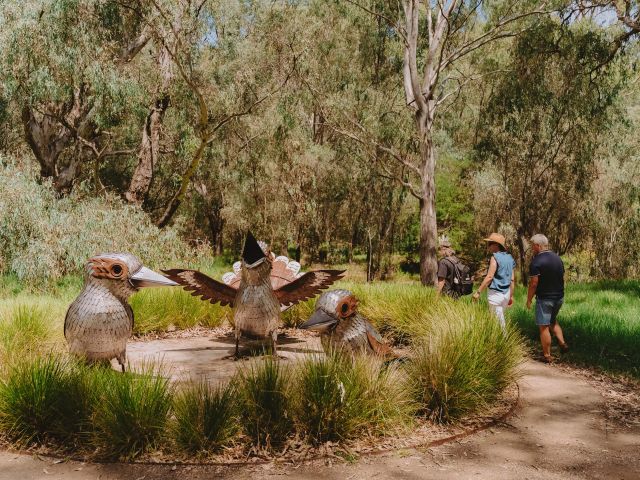
    Albury Wodonga Yindyamarra Sculpture Walk
    See the art along the Yindyamarra Sculpture Walk.

    Albury Wodonga’s three sculpture trails showcase the Murray through First Nations tales on foot or by bike. Along the Yindyamarra Sculpture Walk, 15 contemporary Aboriginal artworks celebrate kinship and Country. The Crossing Place Trail passes the Wodonga Scar Tree, where local Indigenous people once harvested bark to craft canoes, and the Gateway Island trail tells you how the Murray sustained First Nations people for millennia.

    4. Get moving on local tracks and trails

    bike rider on albury wodonga nature trails
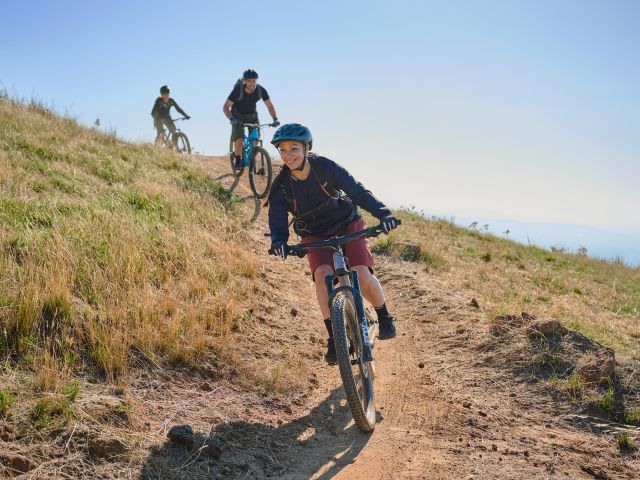
    Take your bike to Hunchback Mountain Bike Park.

    More than 100 kilometres of trails cross Albury Wodonga’s hills, reserves and riverbanks. Mountain bikers can tackle the championship-calibre descents of Nail Can Hill, weaving through eucalyptus forest where the rare crimson spider orchid blooms, or hone their skills at Hunchback Mountain Bike Park‘s 29 graded trails.

    Keen to explore on foot? Huon Hill makes the sore legs worth it, with lookouts across Lake Hume and the Kiewa Valley, while McFarlanes Hill meanders through stringybark woodland and rocky outcrops.

    For a slower pace, the 44-kilometre High Country Rail Trail hugs the shores of Lake Hume, crossing the red-pillared Sandy Creek Bridge before rolling into Tallangatta.

    5. Check into restorative stays

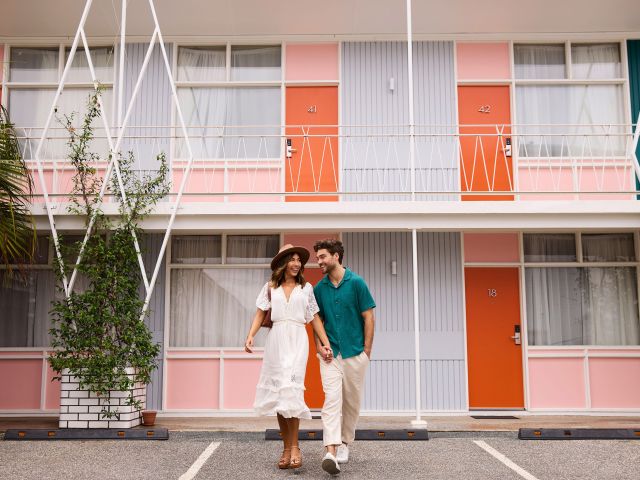
    Couple standing outside the retro inspired Astor Hotel Motel in Albury
    Check into one of Albury Wodonga’s over 60 accommodation options. (Credit: Destination NSW)

    Some moments call for a boutique hotel. Others call for backing the caravan up beside the lake. Whether you’ve spent the day splashing in the Murray, furiously clocking kilometres on the bike trails or entertaining kids in playgrounds at the water’s edge, there’s somewhere to lay your head.

    From motels shaded by river red gums to lakeside holiday parks and boutique hotels, Albury Wodonga’s 60-plus accommodation options mean you’re never far from a morning walk along the Murray or dinner on Dean Street. But be warned: book ahead. You might not be the only one craving a weekend by the Murray, especially in the school holidays.

    6. Enjoy delicious dining options

    yardbird restaurant
    Enjoy incredible meals in Albury Wodonga.

    Every paddle, bushwalk and bike trail deserves a proper meal afterwards. Once you’ve swapped out your damp swimmers or your dusty trainers and start to sniff out a feed, you’ll quickly discover you’re surrounded by one of Australia’s richest agricultural regions.

    Unsurprisingly, Albury Wodonga’s dining scene is all about that Riverina produce. We’re talking Murray cod (of course) but also premium local beef from the valleys, olive oil from nearby groves, cool-climate wines and European-style cheeses.

    The restaurants, wine bars and breweries around Dean Street and Junction Square are all within easy reach, serving everything from modern Australian and Mediterranean to Thai, Vietnamese, Italian and classic wood-fired steakhouse fare. Looking for a riverside brunch? A comforting bowl of dumplings on a winter evening? Or up the ante with the vibrant flavours of Europe? Whatever the craving, there’s a table waiting.

    7. Get out on Lake Hume

    lake hume at sunset in albury wodonga nature
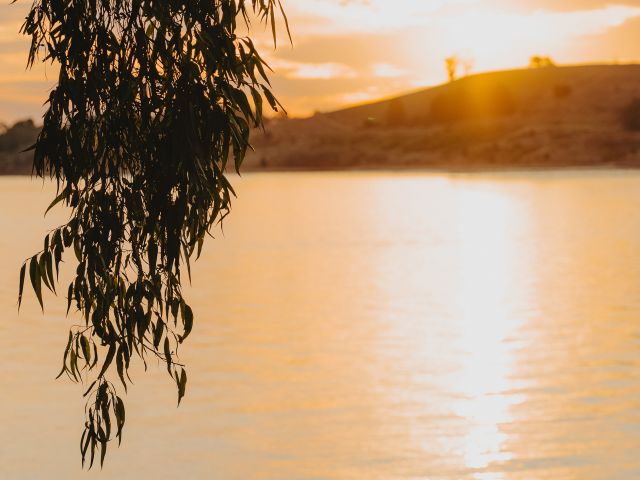
    Be sure to stay for a Lake Hume sunset.

    When you’re ready to dial up the solitude, trade the river for a veritable inland sea: Lake Hume. Just 15 minutes from Albury and Wodonga, it’s one of Australia’s largest water storage reservoirs. In other words, there’s plenty of space to swim, paddle and stake out a patch of shoreline all to yourself.

    Take the long way through Riverina farmland, stopping at the dam wall to appreciate just how enormous Lake Hume is. Cast a line for Murray cod, rainbow trout, golden perch or redfin and unpack a bag of bakery treats beneath the trees before launching a kayak into the vastness.

    Afterwards, stop by the Bonegilla Migrant Experience, where the remaining accommodation blocks tell the stories of more than 320,000 post-war migrants who passed through between 1947 and 1971. Give yourself time to walk through the preserved camp, stopping to digest the photographs, personal stories and artworks that reveal what it meant for residents to begin a new life at the edge of the world.

    Even if you’re exhausted, stay until twilight. The sunset is about to put on a hell of a leaving show for you.

    Start planning your escape into nature at visitalburywodonga.com.