The best wildlife experiences in Broome

 By
hero media
Here’s what to look out for in Broome when you want to get really wild.

Broome is unlike anywhere else in the world. It’s at least 2000 kilometres from the nearest capital city, bordered by the aquamarine waters of the Indian Ocean and the creeks and mangroves of Roebuck Bay.


Living among this exceptional landscape is a breadth of varied wildlife. A visit to Broome will bring you face-to-face with some of the rarest (and most adorable) fauna in the country – including some species that are completely unique to the region.


From snub fin dolphins to blue-tongue lizards, let us introduce you to the best wildlife experiences in Broome.

Whale watching

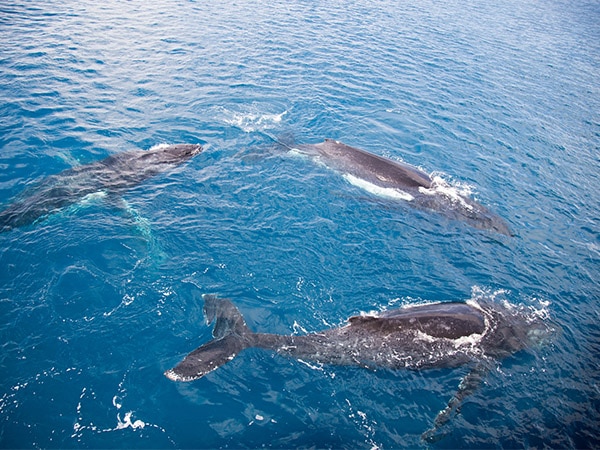
Prepare to witness the largest whale migration in the southern hemisphere. It’s estimated that around 40,000 humpback whales travel along pockets of WA’s coastline (also referred to as the humpback whale highway) each year. These giants can grow up to 19 metres in length, weigh up to 40 tonnes, and typically travel in pods.


One of the best areas to spot them is off the nearby Kimberley Coast – specifically within Camden Sound Marine Park. Back in 2013 the state government established this park to protect the largest humpback whale nursery in the world. Within it, the whales give birth in calm, protected waters and build up blubber to prepare for their return journey. You’ll also find pilot whales, pygmy killer whales and snubfin dolphins frolicking in these parts.


Booking a tour with Broome Whale Watching is your best bet at seeing these creatures in the wild. Whale sightings are generally guaranteed between July and September and many cruises have a marine biologist on board to provide all the facts and information you need about the environment and the whales.


Alternatively, see the whales from the air on a scenic flight. While there aren’t any specifically for whale watching, you might get lucky! And you’ll get a great view regardless.
Humpack whales Kimberley
Humpback whales in the warm waters of the Kimberley

Camel Safari

Not much beats a sunset stroll along a spellbindingly beautiful beach. Not much, of course, except for when you’re doing so atop a majestic – and charmingly friendly – mammal.


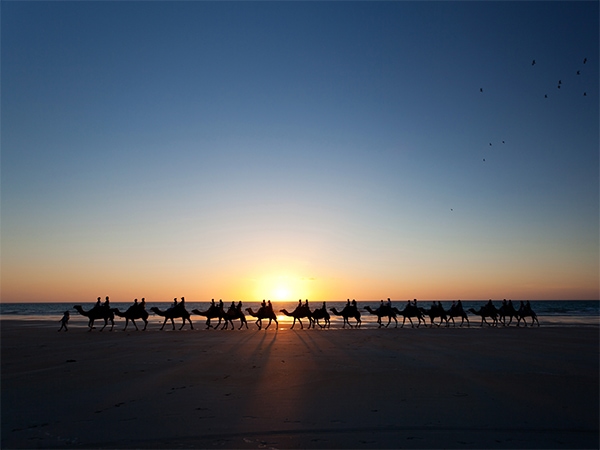
Saddle up on one of the trains of camels wobbling along Cable Beach as the sun sets into the Indian Ocean. Fall in love with the spectacular beach vistas, the softly dropping light, and that famed pace of life they call ‘Broome time’ – to which the camels seem well attuned.


Broome Camel Safaris and Red Sun Camels are the two operators in the area.


Hot tip: book early to avoid disappointment, and check your departure time as it can vary depending on the sunset and the tides. Most importantly, enjoy the ride!
camels sunset Broome
Lucky punters riding on camels at sunset

Australian snub fin dolphin

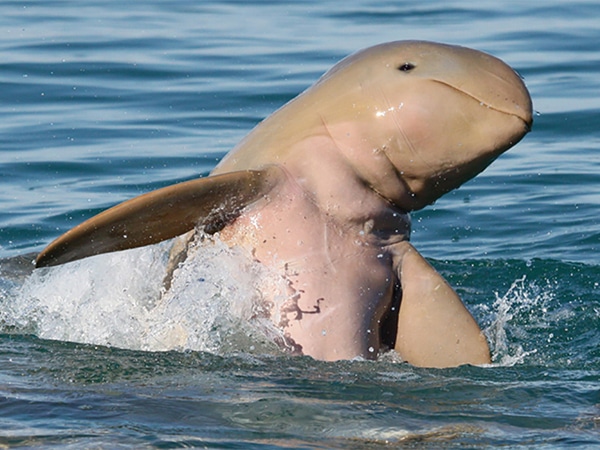
David Attenborough’s documentary crew descended on Broome for three months in 2016 to film the 170-odd snubfin dolphins living in Broome’s turquoise Roebuck Bay. The super rare dolphins – affectionately known as snubbies – have rounded noses and a seemingly permanent smile.


Measuring around two metres in length, the snubfin dolphin is much smaller than the more commonly seen bottlenose, and was only identified as a unique species in 2005. Named for its tiny dorsal fin, this species is a slow-moving marine mammal that also seems to run on Broome Time.


Broome Whale Watching are the only company on the planet to offer this experience all year long. Otherwise, plenty of other operators should guarantee you a sighting or two.
broome snubfin dolphin
The adorable snubfin dolphin is native to Broome

Birdlife

Broome is home to an abundance of dazzling bird species – many of which are native to the region. From the scavenging raptors to the stunning Gouldian finches and elegant shore birds, there really is no better place to discover the secret life of birds than here.


For novices, the Broome Bird Observatory is a great place to begin. Located in West Kimberley, these folks know everything there is to know about local species.


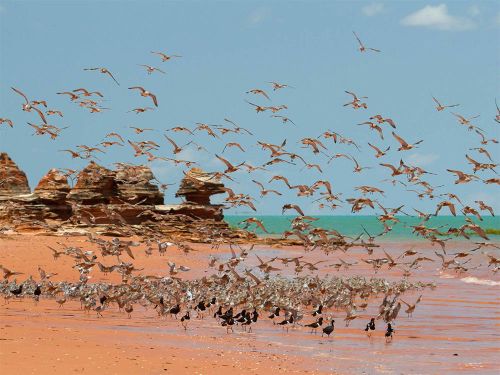
Roebuck Bay is another hot spot. This embayment is located at the base of the Dampier Peninsula, hosting hundreds of thousands of migratory shorebirds who rest and feed here after flying extraordinary distances; some up to 8000 kilometres without landing. Combine the soft sediments, huge tides and shallow coastline and you have the perfect recipe for vast and bountiful intertidal mudflats. These are jam-packed with invertebrate species, which sustain many local and migratory variants.
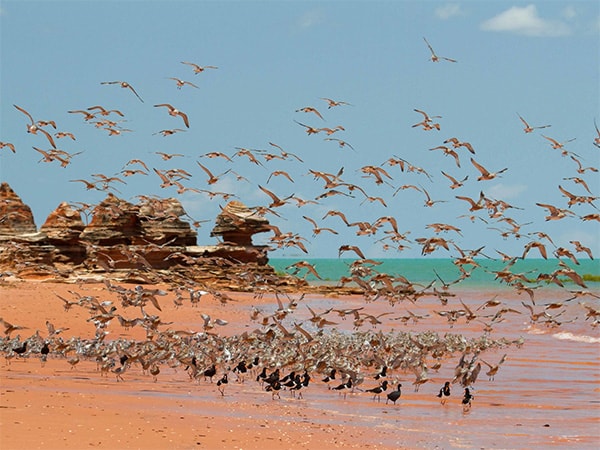
Broome bird species
Broome is home to an abundance of dazzling bird species

Reptiles

On land, keep an eye out for the array of reptiles that call the bush and red dirt home. One of the most common Broome residents is the sand goanna, also known as a Gould’s monitor or racehorse goanna. While large, they are relatively harmless and are often seen scurrying across sealed roads.


The frilled lizard is another common reptile in these parts. They’re great at camouflaging themselves, making them a little tougher to spot while out and about. It’s the same story with blue-tongue lizards and Asian house geckos – so keep your eyes peeled.


Snakes are also found in abundance in and around Broome. There are four families of snakes to look out for; file snakes (one species), pythons (eight species), colubrid snakes (six species) and venomous land snakes (23 species). Some species are more venomous than others, so it’s best to do your research before you arrive.
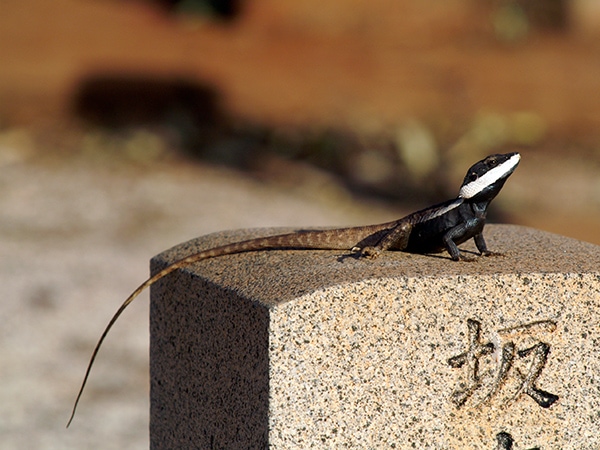
Broome lizard
The white faced Lizard calls Broome home

Dinosaurs

Believe it or not, Broome (and surrounds) was once the prehistoric home of many roaming dinosaurs. To delight your inner palaeontologist head to Gantheaume Point and learn about the various dinosaur species that once stomped around these parts.


If you want to a thrill, Broome Hovercraft offers a hair-raising ‘scenic and prehistoric’ tour. Hold onto your camera while you zoom across the bay to discover perfectly preserved dinosaur tracks.
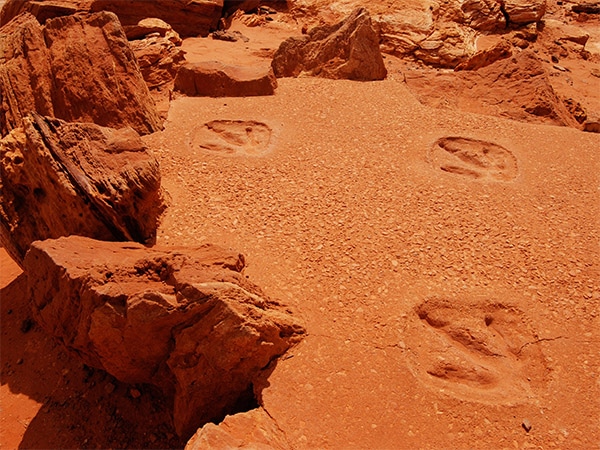
Gantheaume Point Dinosaur footprints
hero media

6 reasons the best way to experience the Kimberley is by cruise

This remote corner of Australia is one of the world’s last frontiers. This is how to see it properly.

Vast, rugged and deeply spiritual, the Kimberley coast in Australia’s North West feels a world away from everyday Australia – and there are countless ways to explore it. But if you want to reach ancient rock art, hidden gorges and lonely waterfalls, it has to be by boat. Whether you’re aboard a nimble expedition vessel or a luxury yacht with all the trimmings, exploring by the water brings exclusive experiences, shows unique views and makes travel easier than any other mode. And that’s just the beginning of Australia’s North West cruises.

The True North Adventure Cruise in between sandstone cliffs.
Adventure starts where the road ends.

1. Discover Broome, and beyond

Explore your launchpad before you set sail: Broome. Here camels and their riders stride along the 22 kilometres of powdery Cable Beach at sunset. That’s just the start.

At Gantheaume Point, red pindan cliffs plunge into the turquoise sea, whose low tide uncovers fossilised dinosaur footprints. Broome’s pearling history runs deep. Japanese, Chinese, Malay and Aboriginal divers once worked these waters, and their legacy lives on in boutiques where South Sea pearls still shine.

If the moon’s right, you may catch the Staircase to the Moon over Roebuck Bay. Or simply kick back with a cold beverage and a film under the stars at Sun Pictures , screening since 1916.

Ride a camel along Cable Beach as the sun sinks into the Indian Ocean, casting golden light across the sand and sea.
Ride a camel along Cable Beach. (Image: Nick Dunn)

2. Unmatched access to The Kimberley

Once you’re onboard, expect a backstage pass to some of the most isolated places on Earth. No roads. No ports. No phone reception.

At Horizontal Falls/ Garaanngaddim, 10-metre tides surge through twin gorges like a natural waterpark ride that’ll make your palms sweat. Then there’s Montgomery Reef/ Yowjab: a giant living platform of coral and seagrass, where the sea pulls back to reveal waterfalls, sea turtles and ospreys.

Up north, King George Falls/ Oomari rage 80 metres down red cliffs. Zodiac boats often nudge in closer so you can feel the spray on your sun-warmed cheeks. You might even fly in to reach Mitchell Falls/ Punamii-unpuu, a four-tiered cascade where you can swim in freshwater pools above the drop.

Come spring, some itineraries veer west to Rowley Shoals: an atoll chain of white sand and reef walls. Then it’s up the winding Prince Regent River to King Cascade/ Maamboolbadda, tumbling over rock terraces, and into a Zodiac to view the Gwion Gwion rock art, whose slender, ochre-painted figures are older than the pyramids.

A cruise drifts beneath King George Falls, where sheer sandstone cliffs frame the thunderous plunge into turquoise waters.
Get closer to the Kimberley than ever before.

3. Taste the Kimberley with onboard hospitality

You might spend your days clambering over slippery rocks or charging past waterfalls. But when you’re back on the water, it’s a different story. Meals are chef-prepared and regionally inspired: grilled barramundi, pearl meat sashimi, mango tarts, and bush tomato chutney. One night it’s barefoot beach barbecues with your shipmates; the next, alfresco dining on the ship.

Small expedition ships each have their own personality, but many carry just 12 to 36 guests, making being out on the water a whole other experience. You might sink into a spa on the foredeck or sip coffee in a lounge while watching crocodiles cruise by. It’s choose-your-own-relaxation, Kimberley style.

4. Expert-led excursions through the Kimberley

These voyages are led by people who know the Kimberley like the back of their sunburnt hand. Attenborough-esque naturalists might gently tap your shoulder to point out rare birds or tell the story beneath a slab of rock. Historians can explain exactly how that rusted World War II relic came to rest here.

If your ship has a helipad, you might chopper straight to a waterfall-fed swimming hole. If not, you’ll still be hopping ashore for that wet landing at a secret creek.

Then come the evenings: songlines shared by Traditional Owners under the stars, or astronomy sessions that link what’s overhead with what’s underfoot and what’s within.

A small group glides through Kimberley’s rugged coastline by boat, passing ancient cliffs.
Explore with naturalists and historians by your side.

5. Relax in luxurious lodgings

Just because you’re off-grid doesn’t mean you have to rough it. These Kimberley vessels are small in size, but mighty in luxury. True North’s ships come with their own helicopters and a no-sea-days policy, so you’re always in the thick of it. Try the luxurious offerings from Ocean Dream Charters for exploration in style. Kimberley Quest offers a fast boat for easy, off-ship adventures. On the larger end of the scale, Coral Expeditions has open-deck bars and curated wine cellars. And then there’s Ponant’s luxury yachts sleek and incredibly stylish French sailing yachts.

A helicopter soars above the sea, with a sleek cruise ship gliding in the distance.
See the Kimberley from sky to shore.

6. The adventure continues with pre- and post-cruise experiences

You’ve already come this far – so, why not go further? Broome makes it easy to ease in before you board, or wind down when your voyage ends, and there is no reason to stop there.

Head an hour and a half south to Eco Beach to stay off-grid and off the clock. Join a Yawuru guide for a mangrove walk or ocean forage. Dive even deeper into Broome’s pearling past at Willie Creek or Cygnet Bay, where divers and craftspeople still pull the seawater-slicked gems from the deep.

If you’re still craving adventure, it’s time to go further. Soar over the Buccaneer Archipelago, or detour inland with a 4WD trip along the Gibb River Road. Book a scenic flight over the Bungle Bungles. Or – because you never know when you’ll be back – do all three.

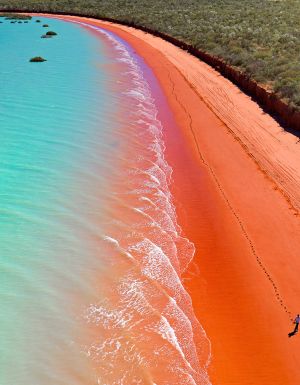
aerial of people walking on eco beach in the kimberley western australia
Stay off grid at Eco Beach. (Image: Tourism WA)

Find out more about your trip to Australia’s North West at australiasnorthwest.com .