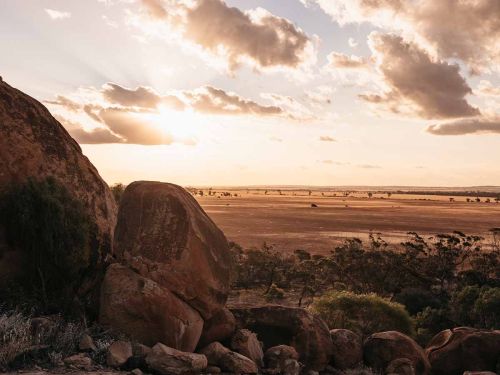
A fertile farming region of red soils, salt lakes and golden crops is having a moment of cultural revival, and the result is a renewed focus inspired by people, place and history.
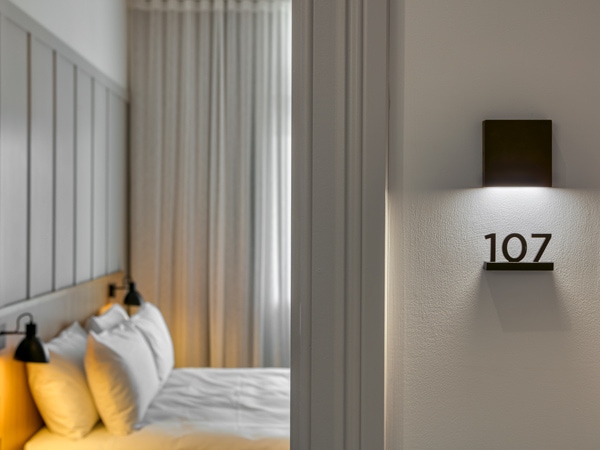
Waking up at Farmers Home Hotel, ensconced in premium linens and the warmth of a sound hotel sleep, one could be almost anywhere. Except, that is, for the distinct sense of place that peers into bleary-eyed view: the small portion of exposed original red brick that dates this grand old building back to 1866; the glimmering eucalyptus treetops that blow gently in the breeze outside; the fresh country air that comes in through the window, bringing welcome news of overnight rain on thirsty Wheatbelt soils. This thoughtfully renovated property, with its boutique luxury styling and modern comforts, is inspired by the best hotels you might’ve stayed anywhere in the world, but it is firmly rooted in the local and takes every opportunity to remind you where you are.
As embodied by the offering at Farmers Home Hotel, which is the follow-up to hotelier and Dôme Group CEO Nigel Oakey’s Premier Mill Hotel in Katanning, Northam is one of the places where it is most obvious that the Wheatbelt – a sometimes overlooked region for tourists seeking a particular level of comfort or quality – is entering an exciting new phase, inspired by people, place and local stories.
The Wheatbelt town of Northam
This Golden Outback town of some 11,000 people sits at the confluence of two meandering rivers, the Avon and the Mortlock and, at just two hours’ drive from Perth, it is both the gateway to the Goldfields and a founding hub of the central and eastern Wheatbelt. Northam is the heart of the first inland district that was opened up for wheat farming in the mid-to-late-1800s, the Victoria Plains. The town benefited from its location along the east-west rail line that serviced the goldfields, with the gold rush of the 1890s funding the first major expansion of the Wheatbelt. The many histories of the area intersect here, those of missionaries, bushrangers, surveyors, farmers, governors, teetotallers, engineers and prospectors, as well as that of the Ballardong Nyoongar people, the area’s Traditional Owners, whose resilience in the face of colonisation is the most definitive and enduring story of all.
These intertwining histories can be followed as they lace through the Wheatbelt. Attractions such as the Golden Pipeline, which runs from Perth’s Mundaring Weir through Meckering, Cunderdin, Tammin, Kellerberrin, Merredin, Westonia and Southern Cross out to Kalgoorlie, provide both a road map and an evocative narrative through which to experience the area from many different perspectives. But such stories are also giving rise to new interpretations that make for richer cultural experiences of place.
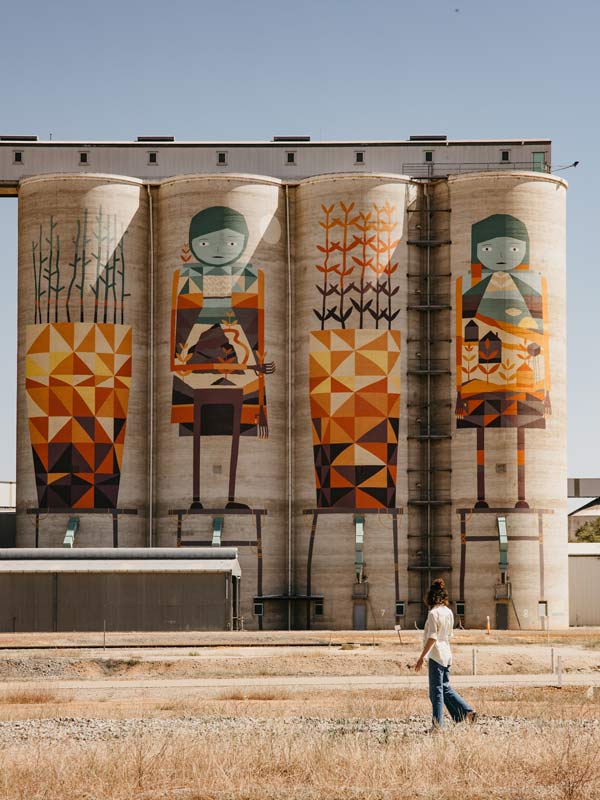
The Public Silo Trail
The Public Silo Trail, an initiative of Perth-based not-for-profit arts organisation FORM, is just one example. In Northam, international artists Phlegm and Hense were commissioned to paint 10 murals on the 38-metre-tall silos at the working CBH grain terminal. FORM has also commissioned public art for the town’s working flour mill – Amok Island’s The Last Swans, which pays tribute to the only white swans living in the wild in Australia, and their home on the banks of the Avon – and a laneway wall off its main street. These works, inspired by local stories uncovered through significant community consultation, have proven to be a hit.
Form CEO Tabitha McMullen says these cultural initiatives provide opportunities for the expression of local identities in regional Western Australia. “Cultural life is such an important part of wellbeing, and regional Western Australia has so many stories to tell," she says. “We are having ongoing conversations across Western Australia, including in the Wheatbelt, about what cultural tourism experiences we can grow and support, so that locals can feel a sense of pride in their community and they can share their cultural identity with visitors. People within Western Australia can go and visit and experience those stories and places, and of course we can bring international visitors."
(Image: Tourism Western Australia)
The allure of seeing the Wheatbelt from above
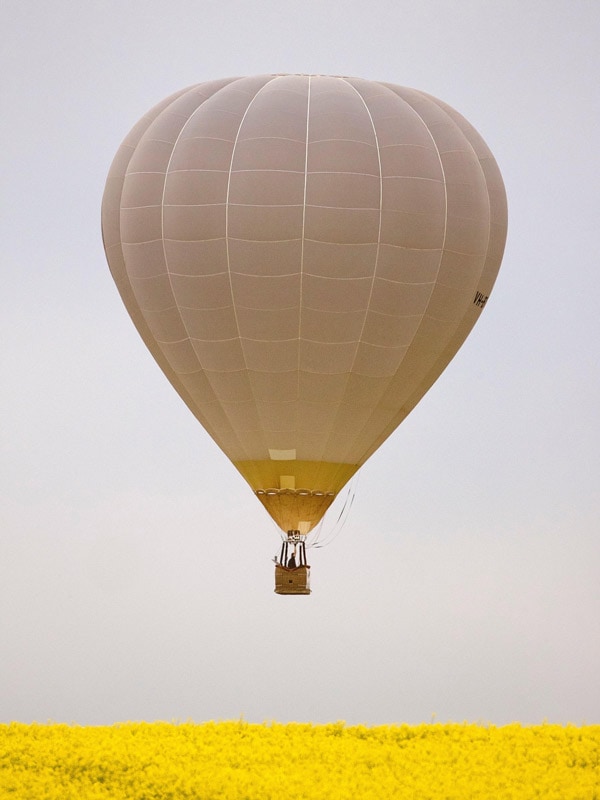
I’m sitting in the Dôme Cafe on the ground floor of the hotel as an eager flock of tourists arrive. It’s a foggy morning, and misty white clouds linger on the curves of the rolling hills outside. The travellers are rugged up: puffer jackets, scarves, beanies. They are getting coffee before a morning hot-air balloon sojourn – a popular offering for which Northam is well known. For a couple of friendly locals seated near me, the group’s entrance signals a reminder the morning is getting on; they take it as their cue to leave and, as they go, they smile to the out-of-towners and promise the clouds will clear ahead of their airborne adventure. I’m not here for a balloon ride, but I do understand the desire to see things from the air. In this place where the horizon always seems to escape you, where the skies are so open and vast and the land so sprawling and uninterrupted you can never fully grasp its extent. it makes sense to want to take it all in from above.
I grew up on a farm just outside the small town of Kondinin, about two hours south-east of Northam. It is surrounded by a lake system. Lakes and water, perhaps strangely for a place often struggling under drought, dominate much of my childhood memory. I remember days spent building rafts from old 40-gallon steel drums and corrugated tin when the lakes were full. My brother and I, and endless visiting friends, would “sail" them out on the lakes that, back then, felt so big.
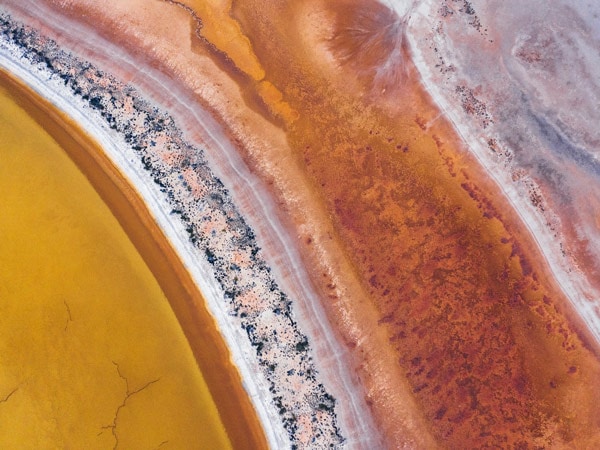
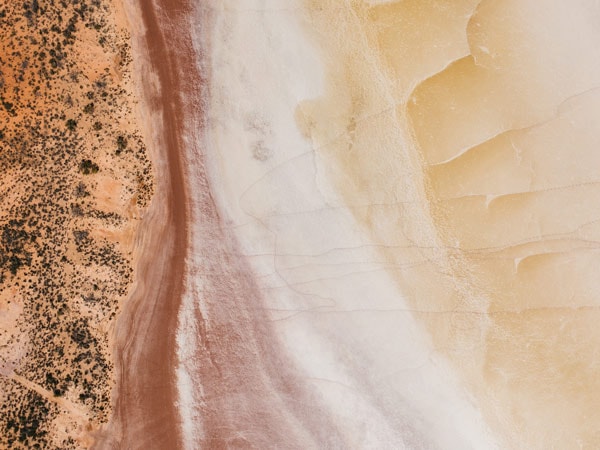
A few years ago, my brother and I started noticing local tourism organisations posting drone photos of salt lakes on Instagram. It was like our secret little spots, so laden with intrigue and the potential for adventure to the young imagination, were hitting the big time. People from the city, and from interstate and overseas, were seeing these incredible images of brightly coloured, sometimes interconnecting circles and wanting to experience this magical landscape for themselves.
Need tips, more detail or itinerary ideas tailored to you? Ask AT.
AI Prompt
Photographing the Wheatbelt from above
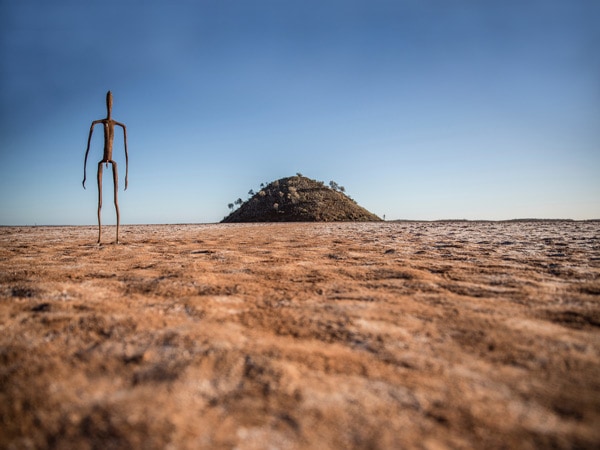
One city dweller who has been drawn to the image of the Wheatbelt from above is Paul Eaton, a drone photographer whose shots frequently end up on the Instagram feeds of the likes of Golden Outback and Pathways to Wave Rock. Eaton’s love of the Wheatbelt started when he was travelling with his young family to Lake Ballard, near Menzies (the site of Antony Gormley’s haunting sculptures), making stops along the way. “We found all these cool little spots," he says. Since then, he’s made frequent trips, using trails recommended by local tourism bodies as guides for his explorations and seeking out new spots by looking on Google Maps as his partner drives. “We just take random detours. There are times we wonder where we’ll end up, but it’s all part of the adventure."
When he first started posting his photos of rural areas, Eaton says the response was exciting. “People see it and they go, ‘Where’s that?’ " He’s passionate about encouraging people to visit the region, and spend money in small country towns. “We’ve got to get people heading east, and if I can be part of that, I’m pretty happy."
The region’s hidden gems
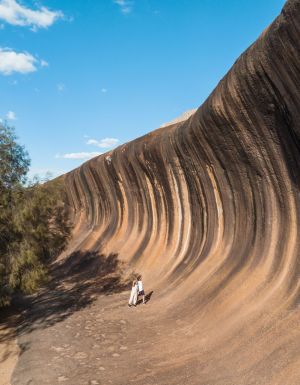
This growing interest is something Sheenagh Collins, a lifelong local of the town of Hyden, has seen firsthand. She is the general manager of the Wave Rock Hotel and owner of the Wave Rock Resort, the latter located on her family farm, first established by her great grandfather in 1924 and still run by her 89-year-old mother Valerie Mouritz. Collins started at the hotel as a waitress on 7 January, 1977, and has been such a mainstay of tourism in the Wheatbelt since that she’s been dubbed a tourist attraction in her own right, hosting farm tours, regaling visitors with endless stories and generally putting Wave Rock, known as Katter Kich to the local First Nations peoples, firmly on the map.
“We’ve been pioneering tourism in that time," Collins says. “When I started out, the new part of the hotel had just been built. Hyden originally didn’t even have a hotel, locals used to drink beer hot off the train. We’ve really built it all from nothing."
The lakes have always been a point of interest, she says. “People who live in the city have never seen anything like the beauty of the salt lakes, and their vastness. People are cooped up in cities; to come out and run across a dry salt lake, and take photos jumping in the air, I think the freedom of that is what attracts them."
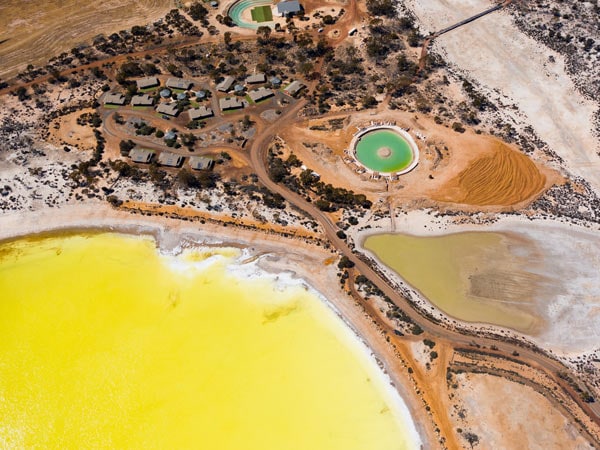
Yet, when Collins and her late husband, former AFL player Denis Collins, built a salt bath next to Lake Magic on their property, complete with limestone walls for safe entry (and more recently wooden bungalows for shade), they weren’t expecting it to be such a hit. “People started coming in droves," Collins says. On social media, the salt bath promises a luxurious getaway that is only made more appealing by its otherwise no-frills surrounds. Such is the charm of the Wheatbelt.
A place of stories
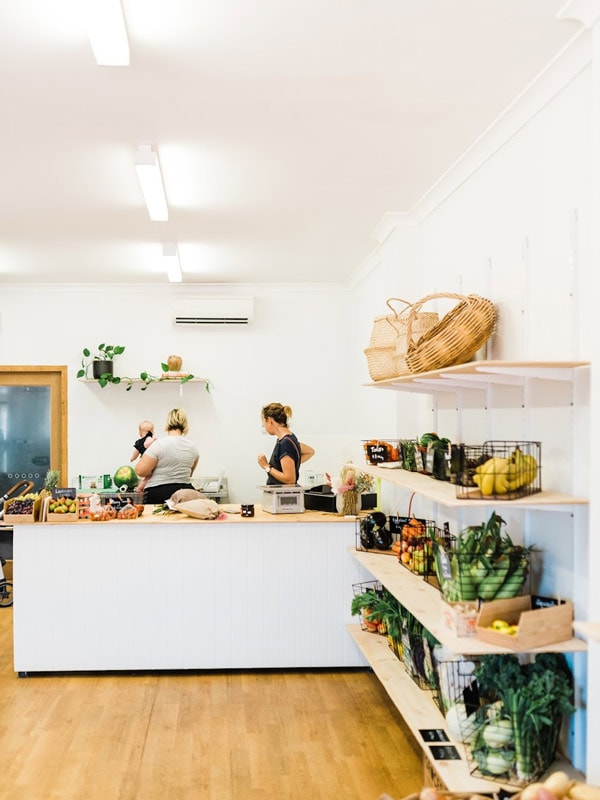
Back up near Northam, the neighbouring town of York offers this same charm in abundance. At Gather York, a small cafe in the town’s old flour mill, which also sells artisan sauces, pasta and ceramics, I enjoy a chai latte and handmade sausage roll while an elderly farmer asks me where I’ve come from and how much rain there’s been there. In the same building there’s an antique collective, run by a number of local makers and collectors who all store and sell their wares here. Woodworker John Boekhout greets me and explains how the space works, showing me his hand-carved spoons (three of which I buy) and offering a few tips on places to visit.
It is precisely these kinds of interactions that make the Wheatbelt what it is: a place of many stories, and enormous evocative potential that is now being captured and expressed more than ever through images, art, culture and boutique experiences. Whether it’s the epic or the everyday that entices, the Wheatbelt is calling. The places we already know, like Wave Rock and the mesmerising salt lakes, are just entry points into an intricate and ancient landscape that invites you to spend time being, and to make your own adventure.
Gone are the days where the Wheatbelt region relied on the gimmicky, if endearing, details of its rural and agricultural identity to lure visitors. It is now embracing the more multidimensional identity that I’ve always known was here. The result for those who visit is a richer cultural experience that makes life a lot more interesting for locals as well.
Weekly travel news, experiences
insider tips, offers, and more.
The Wheatbelt’s best rock sites
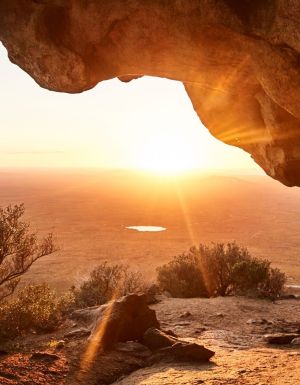
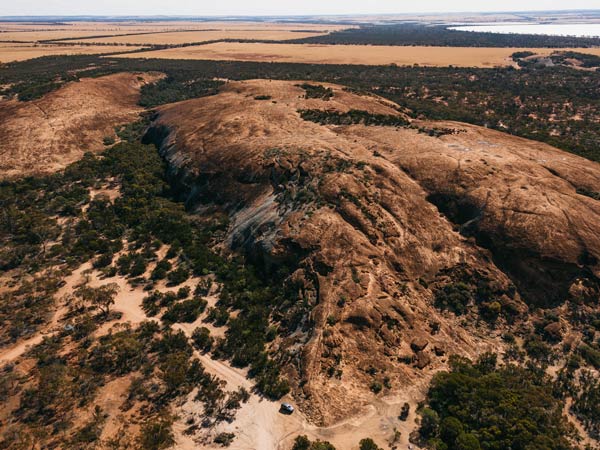
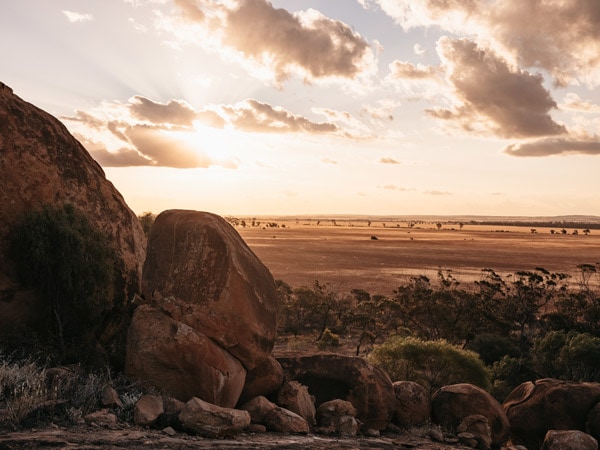
While Wave Rock (Katter Kich) has become a signature sight when traversing the golden expanses of the Wheatbelt, the landscape of the region is scattered with granite outcrops and monoliths that are equally captivating but still fly under the (Instagram) radar. Many can be added to self-drive explorations of the region, creating a giant join-the-dot puzzle.
Elachbutting Rock
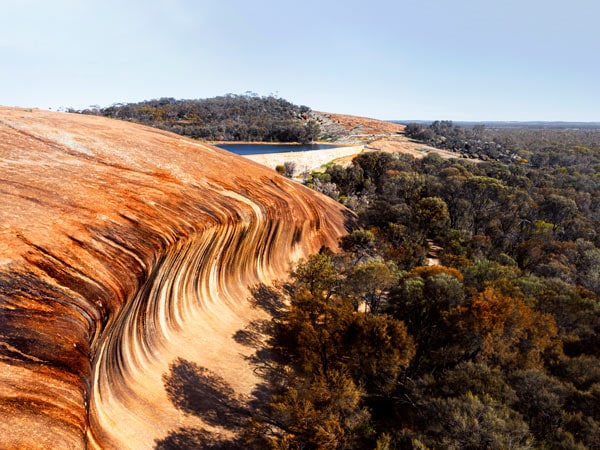
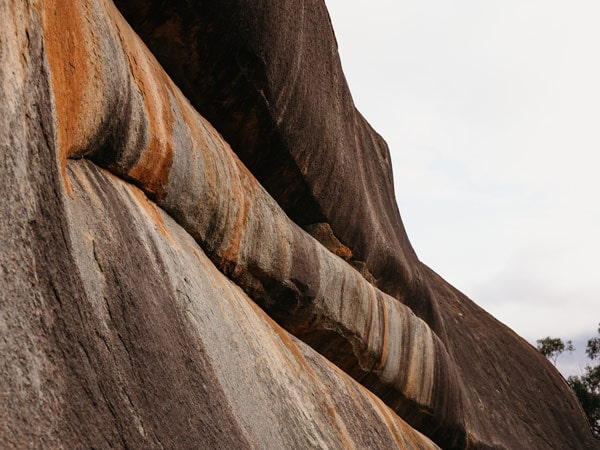
Located 100 kilometres north-east of Westonia, Elachbutting Rock, which is thought to mean ‘that thing standing’ in the language of the local First Nations peoples, is a wave-like granite formation similar to Wave Rock but that also boasts Monty’s Pass, a 30-metre tunnel caused by a rock slide.
Baladjie Rock
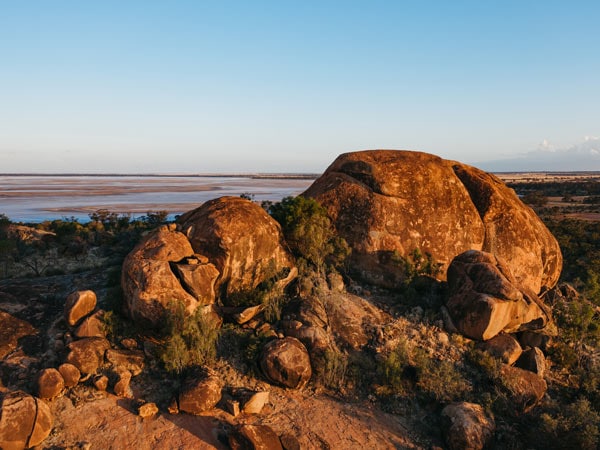
Baladjie Rock, which sits on the southern edge of the equally fascinating Baladjie salt-lake system, north-east of Westonia, is punctuated by caves, overhangs and fractures; climbing to its summit affords stunning views of the surrounding salt lakes.
Beringbooding Rock
Beringbooding Rock overlooks the largest rock water catchment tank in Australia, built in 1937 and holding 2.25 million gallons, and offers up a gravity-defying balancing boulder, a huge gnamma hole (a natural rock cavity that acts as a water tank) and rock art by the local Kalamaia peoples.
Eaglestone Rock
Eaglestone Rock, 20 kilometres north-east of Nungarin, is a granite rock and cave formation abutting Lake Brown where wedge-tailed eagles wheel overhead and time can be spent rock climbing and picnicking.
Jilakin Rock
Making the easy ascent of the sprawling monolith of Jilakin Rock, 20 kilometres east of Kulin, provides infinite views over the pearly white expanse of Jilakin Lake, the ephemeral salt lake at its edges.
Want to see more stories from Australian Traveller in your Google search results?
- Click here to set Australian Traveller as a preferred source.
- Tick the box next to "Australian Traveller". That's it.

Emma Pegrum
View profile and articles