From glamping tents that use solar power to farm stays that don’t cost the Earth, it’s time to book an eco stay in WA.
Quobba Station
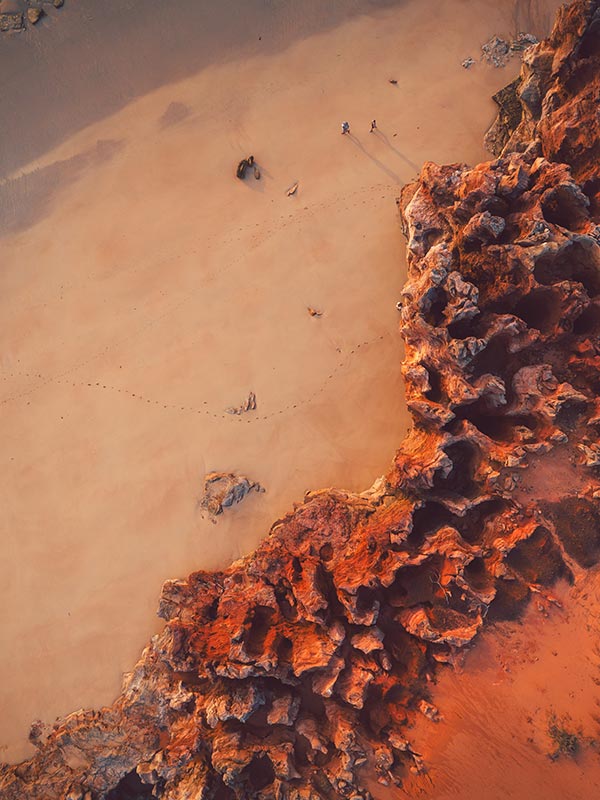
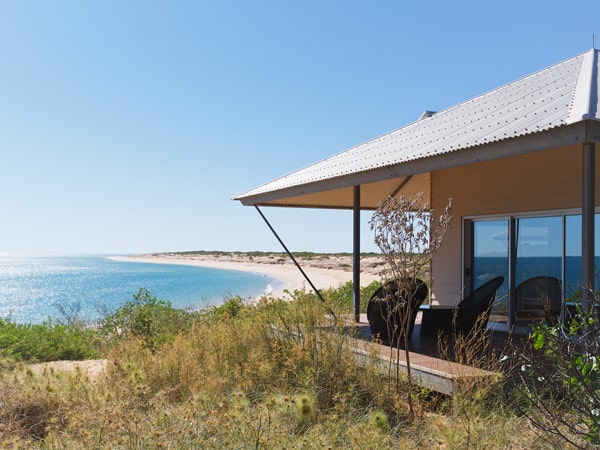
Recycling initiatives, composting, energy-efficient lighting, rainwater tanks and solar panels are just a few of the initiatives that help you tread lightly on the Earth during a stay at Quobba Station , on the southern tip of Ningaloo Marine Park. Whales and whale sharks migrate past the remote eco camp and are easily spotted from the beach or clifftop, where you’ll find five hard-deck safari tents, two of which are luxury retreats. Surfers will also love the property’s low-fi beach shacks, which have uninterrupted views of breaking waves.
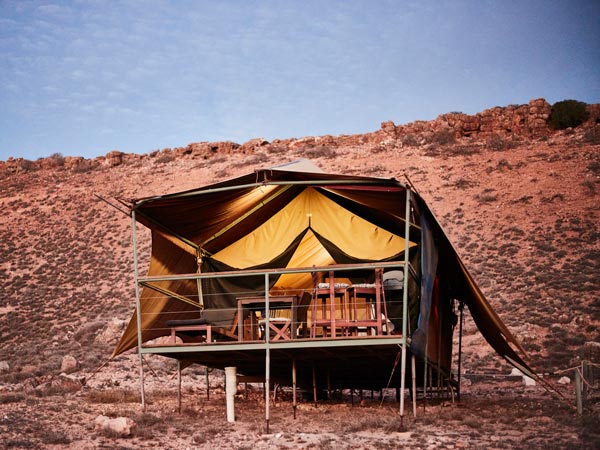
Stay at Quobba Station on the southern tip of Ningaloo Marine Park. (Image: Imogen Caldwell)
Barn Hives
You can test-drive that tree change you’ve been dreaming of at Barn Hives, where you’ll see the farm-to-fork, grape-to-glass philosophy in action. The luxury pods are part of the Barnyard 1978 conservation tourism concept, which includes a fully equipped restaurant, cellar door and honey store. While the Barn Hives tread lightly on the Earth, they are also deeply connected to their surrounds, situated moments from Smiths Beach in the midst of the Margaret River region. The two-storey pods include a fully equipped kitchen, dining area, cosy lounge and outdoor sun deck with barbecue.
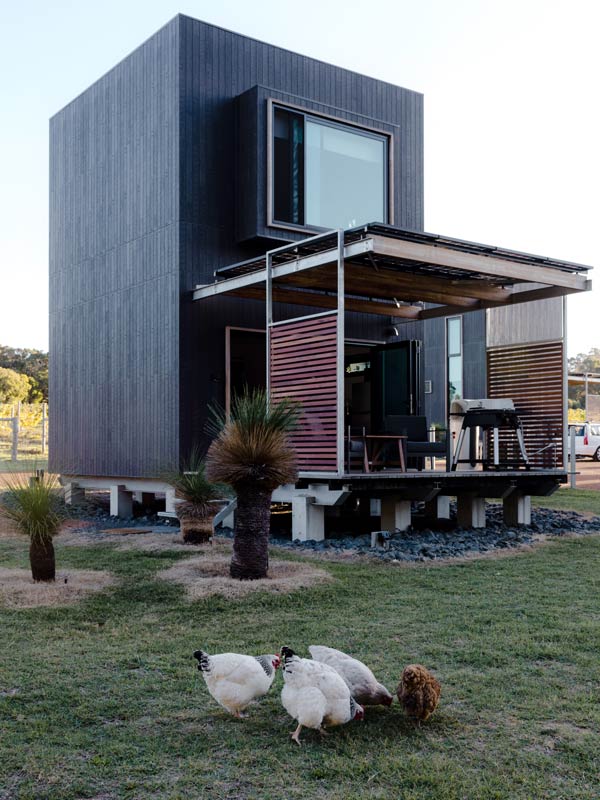
You can test-drive that tree change you’ve been dreaming of at Barn Hives. (Image: Bianca Kate Photography)
Sal Salis Ningaloo Reef
All 16 luxury safari tents at Sal Salis Ningaloo Reef safari camp are perched above the sand to prevent erosion, so you can kick back in good conscience from your hammock overlooking the fringing reef system. There is no Internet at Sal Salis, which encourages guests to connect with nature and each other in the communal lantern-lit lodge to swap stories about their day. Knowing that almost 100 per cent of the camp’s electricity and power is generated by solar makes a stay here even sweeter.
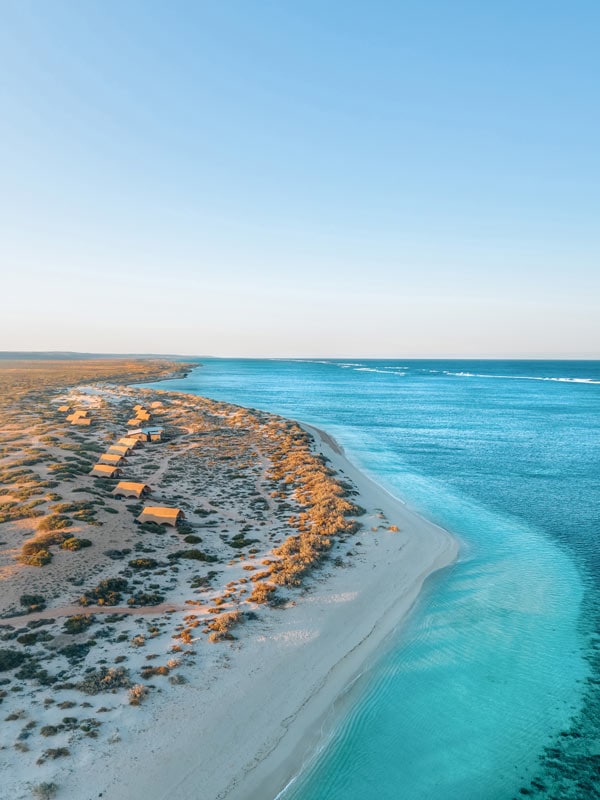
There is no Internet at Sal Salis, which encourages guests to connect with nature and each other.
Petit Eco Cabins
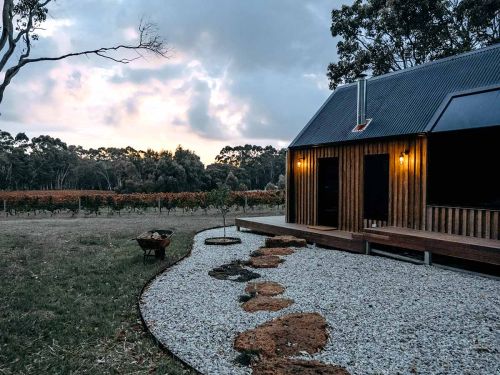
Petit Eco Cabin is positioned in a pretty pocket of Windows Estate, a certified organic vineyard in Yallingup. The 32-square-metre cabin was built from hand-milled jarrah and fitted out with Australian-made fixtures and furnishings, from bespoke glass wall lights by Soktas to custom-made furniture by Timber Grooves and tapware by Consolidated Brass. Enjoy a glass of Windows Estate Syrah in the outdoor antique French bath overlooking the estate’s expansive dam and see the night sky in a new light via the wonderful waterfall window, which cascades over the king-sized bed.
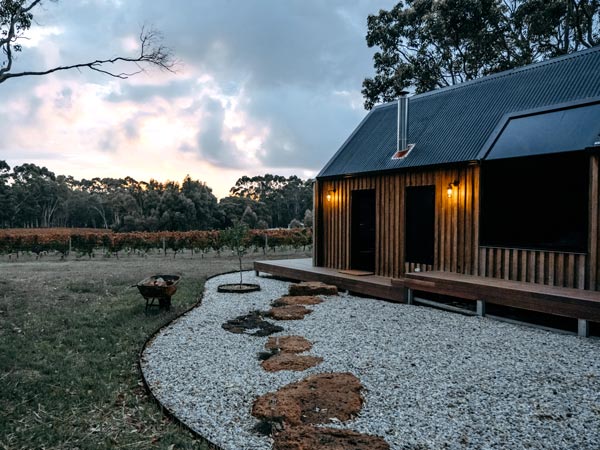
Petit Eco Cabin is positioned in a pretty pocket of Windows Estate, a certified organic vineyard in Yallingup. (Image: Rachel Claire)
Eco Beach Resort
This rustic retreat was designed to leave the smallest footprint possible on the surrounding landscape in Yardoogarra Country, an hour’s drive south of Broome. All up, there are 25 eco villas and 30 safari-style tents at the oceanfront eco resort , which are linked by elevated boardwalks on the pristine Kimberley coastline. The solar-powered resort has bamboo floorboards, composite eco decking, and an energy monitoring system that enables guests to check their own energy consumption. Each villa and tent faces the Indian Ocean and nothing is more luxurious (or environment-focused) than going to sleep to the soundtrack of soothing ocean sounds.
This rustic retreat was designed to leave the smallest footprint possible on the surrounding landscape.
Carla Grossetti avoided accruing a HECS debt by accepting a cadetship with News Corp. at the age of 18. After completing her cadetship at The Cairns Post Carla moved south to accept a position at The Canberra Times before heading off on a jaunt around Canada, the US, Mexico and Central America. During her career as a journalist, Carla has successfully combined her two loves – of writing and travel – and has more than two decades experience switch-footing between digital and print media. Carla’s CV also includes stints at delicious., The Sydney Morning Herald, and The Australian, where she specialises in food and travel. Carla also based herself in the UK where she worked at Conde Nast Traveller, and The Sunday Times’ Travel section before accepting a fulltime role as part of the pioneering digital team at The Guardian UK. Carla and has been freelancing for Australian Traveller for more than a decade, where she works as both a writer and a sub editor.
From thundering waterfalls to ancient Indigenous art, Kimberley’s raw beauty will take your breath away.
Wild, pristine, and shaped by nature, the Kimberley Coast is one of Australia’s most spectacular landscapes. A remote and rugged frontier that remains a bucket list destination for many travellers. Its most breathtaking attractions – including Montgomery Reef, King George Falls and Horizontal Falls – are accessible only by sea or air, making a guided expedition cruise aboard Silversea’s luxury expedition ship, Silver Cloud, the ideal way to explore it.
From its intricate intertidal zones to ancient rock art, extreme tides and rare wildlife found nowhere else in Australia – or the world – this journey offers an unparalleled exploration of one of Earth’s last true wildernesses.
Why Silversea?
Silversea offers a 10-day expedition departing Broome, or an extended 16-day expedition voyage from Indonesia, including landings on the hidden gems of Palopo Sulawesi and Komodo. Accompanied by expert guides and specialists in marine biology, history and geology, guests gain a deeper understanding of the Kimberley’s dramatic landscapes, rich cultural heritage and extraordinary biodiversity.
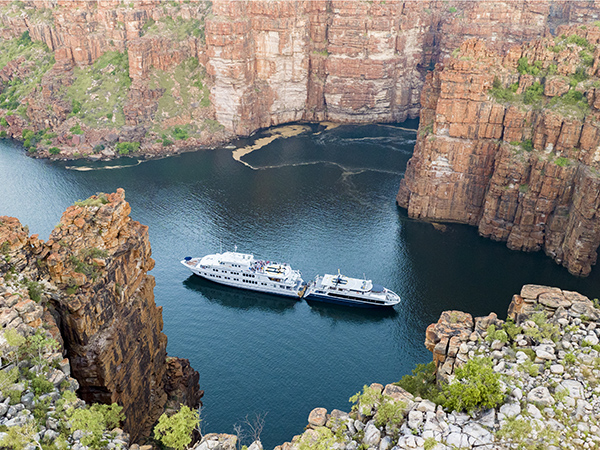
Silversea offers one of the experiential travel industry’s leading crew-to-guest ratios. Along with all-suite accommodation (80 per cent with private verandah), 24-hour butler service, a swimming pool and four dining options. Silver Cloud also has an experienced crew of multilingual expedition guides and specialists in marine biology, history and geology to enhance your Kimberley Experience.
Take a dip in the pool deck.
1. Koolama Bay
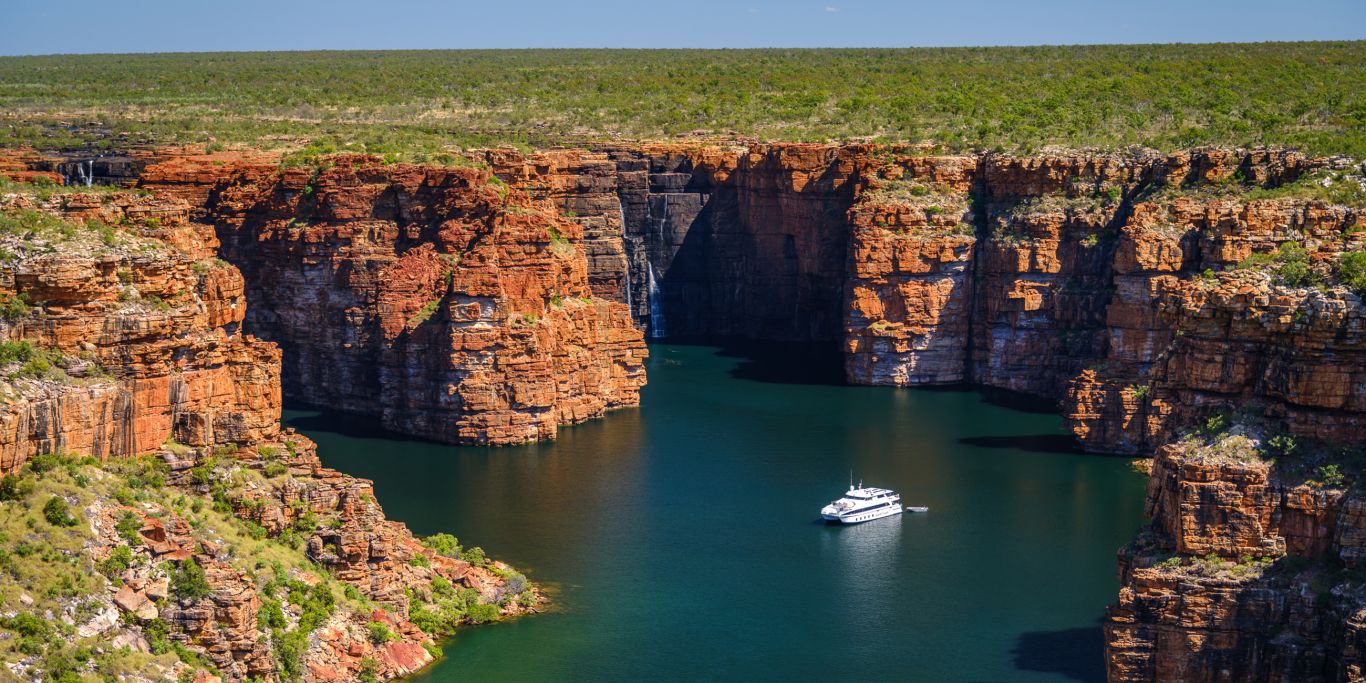
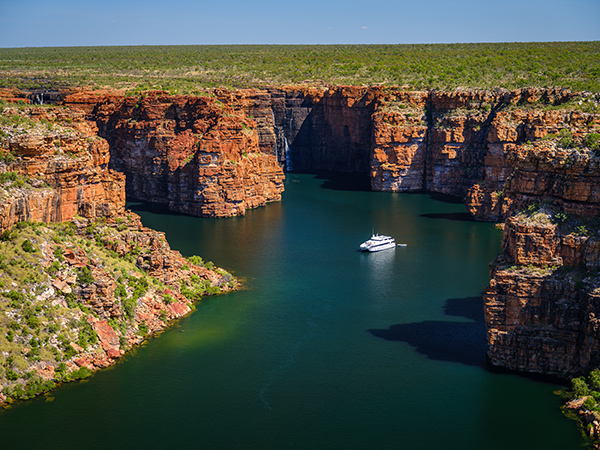
Before visitors see King George Falls, they hear them – a growing rumble in the distance, steady and foreboding as the Zodiac glides through the gorge, the sound echoing off sheer rock formations. At 80 meters tall, the twin cascades carve through the red cliffs, churning the waters below in a spectacular finale – but Koolama Bay holds secrets beyond its striking scenery.
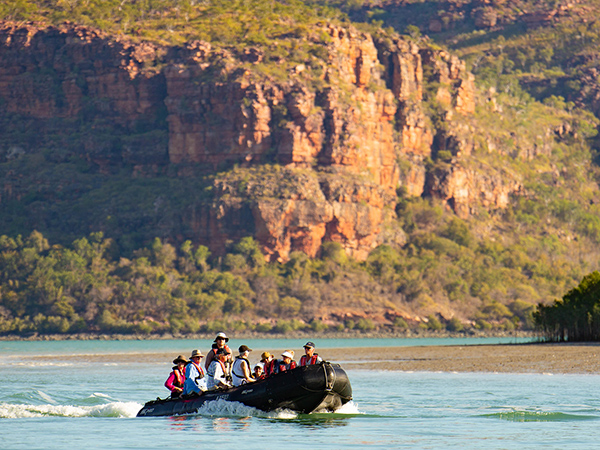
Named after a ship that beached here following an aerial attack by Japanese bombers in World War II, the bay may seem desolate, yet it teems with life. With Silversea’s expert guides on their 10-day Kimberley itinerary, guests gain a sharper eye for its hidden wonders – rock wallabies darting across the cliffs, crocodiles lurking among dense green mangroves, and high above, the silhouette of a bird of prey circling the sky.
Take a shore excursion to see King George Falls.
2. Freshwater Cove / Wijingarra Butt Butt
Connect with Country on a wet landing at Freshwater Cove, also known as Wijingarra Butt Butt. Considered one of the most special experiences on both the 16-day and 10-day Kimberley cruises, Silversea guests are welcomed by the traditional Indigenous custodians of the land, painted with traditional ochre, and invited to take part in a smoking ceremony.
Located on the mainland near Montgomery Reef, Wijingarra Butt Butt holds deep cultural significance to the local Indigenous community. Here, rock formations along the shore represent spiritual ancestors, and guests are guided to a nearby rock overhang filled with ancient art, where traditional owners share the stories and meaning behind these sacred paintings.
Take part in a smoking ceremony. (Image: Tim Faircloth)
3. Vansittart Bay (Jar Island)
Modern history, ancient culture and mystery converge in Vansittart Bay, which is also known as Jar Island. Here, the first thing to catch the eye is the dented, silver fuselage of a World War II-era C-53 plane – a striking relic of the past. Yet, the true cultural treasures lie just a short hike away where two distinct styles of Indigenous rock art – Gwion Gwion and Wandjina – can be found.
The Wandjina figures, deeply connected to Indigenous traditions, stand in stark contrast to the enigmatic Gwion Gwion (Bradshaw) paintings, which date back more than 12,000 years. Significantly different in form and style, the two different styles create a striking juxtaposition, offering a rare glimpse into the region’s rich and complex past.
Explore ancient Gwion Gwion rock art at Vansittart Bay. (Image: Janelle Lugge)
4. Horizontal Falls
Part illusion, part natural phenomenon, the Kimberley’s much-lauded Horizontal Falls aren’t a waterfall, but a tidal and geographic spectacle that visitors have to see to comprehend. Known as Garaanngaddim, the phenomenon occurs when seawater rushes through two narrow gaps- one just twenty metres wide, and the other seven metres in width, between the escarpments of Talbot Bay.
With each tidal shift,the force of the water creates whirlpools, furious currents and the illusion of a horizontal cascade as thousands of gallons of water are pushed and pulled in through the gap every six hours with relentless movement, making this one of the Kimberley ’s most mesmerising natural wonders.
Watch whirlpools and furious currents collide. (Image: Janelle Lugge)
5. Montgomery Reef
As the tide turns in Montgomery Reef, magic happens. With the Kimberley’s legendary tides varying up to ten metres, at low tide the submerged reef almost appears to rise from the depths: exposing up to four metres of the sandstone reef.
The impact is otherworldly: as the water drains, waterfalls cascade on either side of the channel,turtles left exposed scramble and dive, and fish leap in search of sanctuary in shallow pools. Meanwhile, the dinner bell rings for the migratory seabirds dugongs, reef sharks and dolphins that scavenge and feast in the area.
Using zodiacs, guests cruise through one of the world’s most significant inshore reef systems navigated by experienced guides, exploring the most intricate and fascinating parts of a 300-square-kilometre-wide biodiversity hotspot.
Witness seabirds, dolphins and reef sharks on the hunt.
6. Mitchell Falls by Helicopter
Experiencing the Kimberley by sea allows you to feel the power of the tides, but travelling by helicopter reveals the sandstone tapestry of the Kimberley, a landscape geologists believe is over 1.8 billion years old.
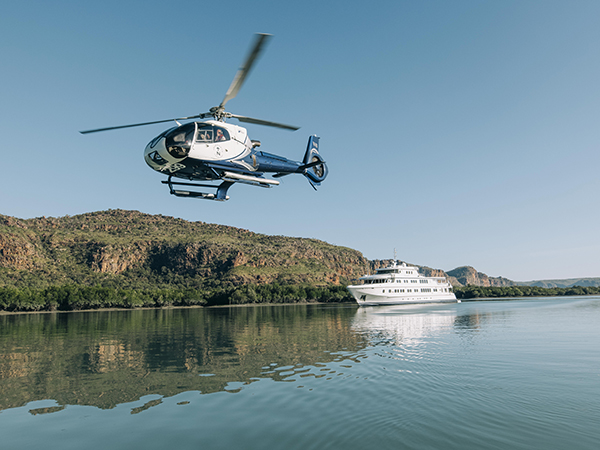
One of Silversea’s most popular optional excursions, guests who opt to fly into the interior from the onboard helipad soar up above the rust-coloured landscape of the Mitchell plateau, taking in one of Australia’s most scenic waterfalls: Mitchell Falls, a series of four emerald-coloured pools gently cascades into each other, before plunging down to the river below.
Seeing the landscape from above reveals a landscape weaved and shaped by the power of the freshwater wet season, juxtaposed to the constant lapping of the relentless and powerful tide on the coast.
See emerald pools cascade into the river below. (Image: Tim Faircloth)
7. Indigenous Art Caves, Wandjina Art
The Kimberley Region of Western Australia is home to some of the most striking and significant
Indigenous rock art in Australia. Dotted throughout the landscape are caves, cliffs and rock overhangs depicting the striking, ethereal image of Wandjina, the rainmaker spirit and creation being central to many of the Dreamtime stories in this region.
Some of the paintings are regularly repainted by traditional custodians, while others are believed to be over 4,000 years old. Each artwork serves as both a cultural record and a living connection to the past, offering a rare opportunity to engage with the enduring traditions of the Kimberley’s Indigenous communities.
Walk among cultural records preserved in stone. (Image: Tim Faircloth)