8 Canberra museums with important stories to tell

hero media
Add these landmark Canberra museums to the top of your cultural hit list in the nation’s capital.

Canberra museums are some of the most boundary-pushing in the country. If you know anything about Australia’s capital, it’s probably that it’s the epicentre of Australian history, culture and politics. With the Australian War Memorial and National Library making up just two of 12 major culture centres in Canberra, it’s considered a hub of both history and leadership.

The landmark attractions offer everything from insights into the time when dinosaurs roamed the earth to a war memorial that honours Australia’s battle for our freedom. Drop those pins on Google Maps and pinball between the following A-list institutions during your next trip to Kamberri/Canberra.

1. National Dinosaur Museum

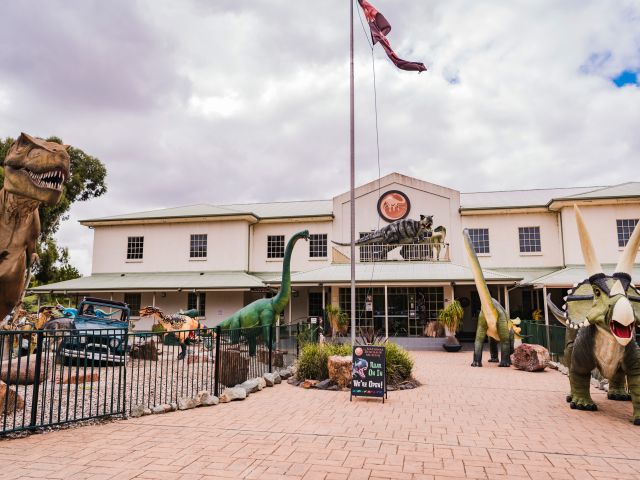
There are a lot of great reasons to visit the ACT. The National Dinosaur Museum  is one of them. It’s considered one of Canberra’s best museums with one of the largest permanent collections of interactive dinosaurs in Australia, 23 complete skeletons and more than 300 displays of individual fossils.

the front entrance of the National Dinosaur Museum, Canberra
The museum is for dinosaur lovers and anyone curious about the history of life on Earth. (Image: Tourism Australia)

Enhance your children’s appreciation of reptiles from the Mesozoic era when you take them to the National Dinosaur Museum. But the museum is not just about dinosaurs: it is aimed at anyone curious about the history of life on Earth. Budding palaeontologists will appreciate the trove of skulls, skeletons, replica models, fossils and interactive animatronic dinosaurs in the collection.

dino statues at National Dinosaur Museum, Canberra
The National Dinosaur Museum has an enormous collection of interactive dinosaurs. (Image: VisitCanberra)

Address: 6 Gold Creek Rd, Nicholls

2. Museum of Australian Democracy at Old Parliament House
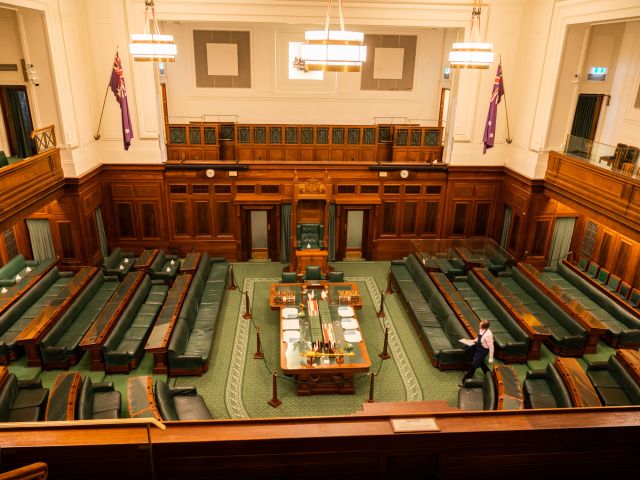
Old Parliament House  is like a film set from the 1980s. This Canberra museum does a fine job as a set piece because it did play a leading role in Australian politics as the home of the Federal Parliament between 1927 and 1988.  The Museum of Australian Democracy now occupies the Old Parliament House, and it’s worth taking a 45-minute tour to understand the historical and social value of the building.

flag poles in front of the Museum of Australian Democracy, Canberra
Enter the portals of our political past at the Museum of Australian Democracy. (Image: Tourism Australia)

Expect amusing anecdotes from experienced officers who touch on the inspiring speeches that took place at this Canberra museum. And steer you toward rooms that present like portals into our political past. Stay and play as part of The Chifley Experience at Hotel Kurrajong, which includes a MoAD tour and is one of the best places to stay in Canberra.

the Old Parliament House at the Museum of Australian Democracy, Canberra
The Museum of Australian Democracy now occupies the Old Parliament House. (Image: VisitCanberra)

Address: 18 King George Terrace, Parkes

3. Canberra Railway Museum

Canberra Railway Museum  celebrates the golden age of rail travel. The national capital has a long history with the railways that were built to connect Canberra to the rest of the country.

a train on display at Canberra Railway Museum
Step back in time to Canberra’s railway history. (Image: E Rohling)

Learn all about the locomotives and carriages that were the preferred mode of transport for politicians who were toing and froing from parliament.

the dining inside a train at Canberra Railway Museum
Hop aboard a steam locomotive at Canberra Railway Museum. (Image: A Trappes)

Forget Thomas the Tank Engine. Head here to teach your kids about the passage of time onboard a steam locomotive that brought the first train to Canberra in 1914. Or gauge how the style of the sleeping car evolved from a lavish 1901 Pullman to the stylish Art Deco Southern Aurora.

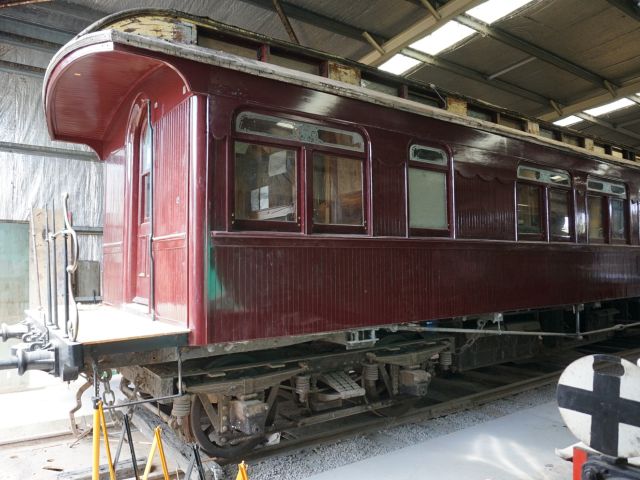
an old train carriage at Canberra Railway Museum
See old locomotives and carriages at the Canberra Railway Museum. (Image: E Rohling)

Address: 2 Geijera Place, Fyshwick, ACT

4. Australian War Memorial

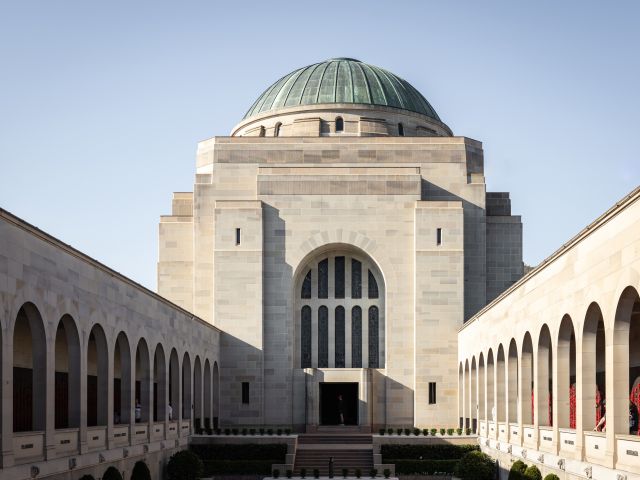
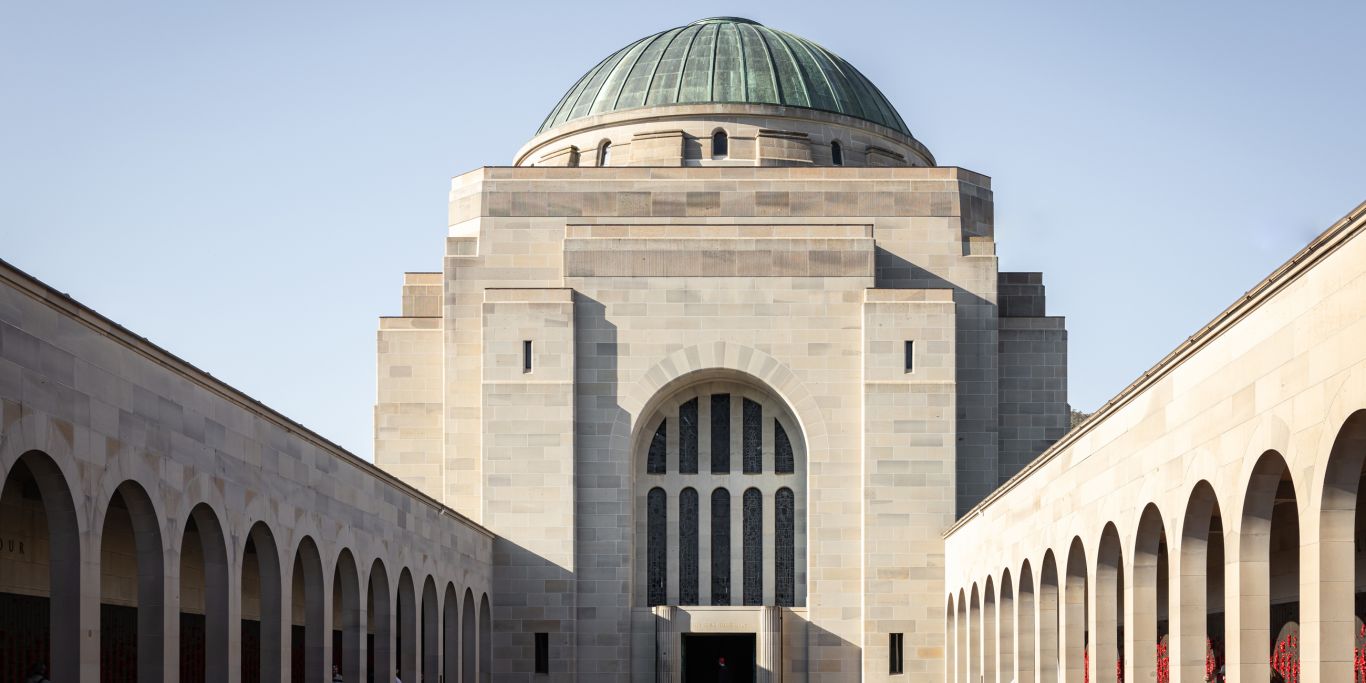
The Australian War Memorial  (AWM) is a shrine, archive and museum where visitors can explore and reflect on Australia’s experience in war. The sweeping, poppy-strewn Roll of Honour is a profound example of this: it bears the names of more than 103,000 fallen members of the Australian armed forces, showcasing the consequences of war all too clearly.

the front facade of Australian War Memorial, Canberra
Visit the newly reimagined Australian War Memorial Museum. (Image: VisitCanberra)

The Memorial is rolling out staged improvements designed to broaden its impact on visitors keen to learn about the how, where and why behind Australia’s involvement in the conflict and its enduring impact on our society.

visitors exploring the Australian War Memorial, Canberra
Explore and reflect on Australia’s experience in war. (Image: VisitCanberra)

This blending of military history and personal stories is what the AWM does so well. Expect more exhibitions, objects and artefacts as well as narratives of war and peacekeeping at the newly reimagined museum.

a look inside the Australian War Memorial, Canberra
Visitors can explore and reflect on Australia’s experience in war. (Image: VisitCanberra)

Address: Treloar Cres, Campbell, ACT

5. National Film and Sound Archive

Canberra’s National Film and Sound Archive of Australia  (NFSA) is dedicated to the preservation and documentation of both motion pictures and recorded sounds. The NFSA contains archival footage, recordings from some of the country’s most prodigious talents as well as memorabilia that celebrates the rich history of Australian cinema.
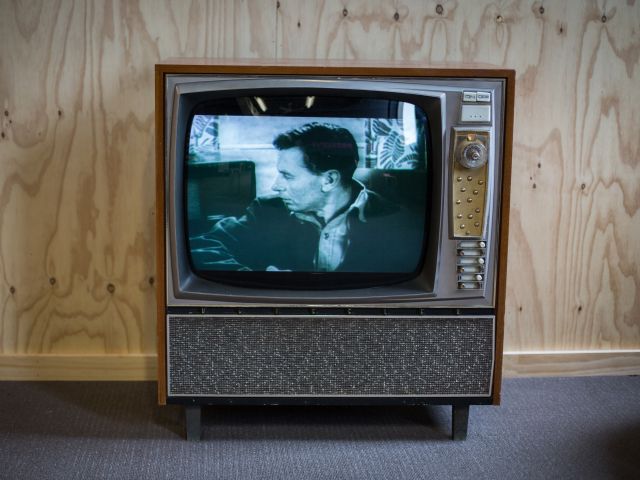
the entrance of the National Film and Sound Archive, Canberra
NFSA is dedicated to Australian cinema. (Image: National Film and Sound Archive)

The heritage-listed building in Acton is a national institution. Movie buffs will love wandering through the grand old building to see rare memorabilia, props, and footage and audio-visual collections.

a group tour at the National Film and Sound Archive, Canberra
Wander through the National Film and Sound Archive for some serious movie history. (Image: Tourism Australia)

The vast collection includes news film footage of the first Mardi Gras in Sydney, costumes from Australian films and more than 4 million items indexed in curated collections.

rare film memorabilia at the National Film and Sound Archive, Canberra
See rare memorabilia, props, and footage and audio-visual collections. (Image: VisitCanberra)

Address: McCoy Cct, Acton, ACT (just a 10-minute walk from the city)

6. National Museum of Australia

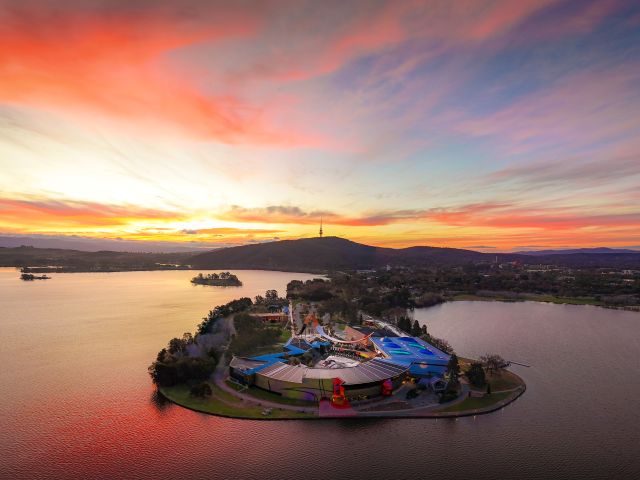
The National Museum of Australia (NMA)  building forms its own landscape of themes and colours. Located on its own peninsula, it is out there and polarising in that utterly Australian, love-it-or-hate-it Vegemite sort of way.

the colourful exterior of National Museum of Australia, Canberra
NMA forms its own landscape of themes and colours. (Image: VisitCanberra)

Don’t miss the extensive First Australians gallery which lays bare the spectrum of multiple, evolving views about Aboriginal Australia.

the exterior of National Museum of Australia, Canberra
Be in awe of NMA’s stunning architecture. (Image: VisitCanberra)

You’ll want to exit via the gift shop here, too. It’s one of the best around for finding idiosyncratic pressies, from vintage balms to a Yoda-in-a-top-hat dinnerware set.

a dinosaur fossil display at the National Museum of Australia, Canberra
See dino fossils on display at the National Museum of Australia. (Image: VisitCanberra)

Address: Lawson Cres, Acton

7. National Library of Australia

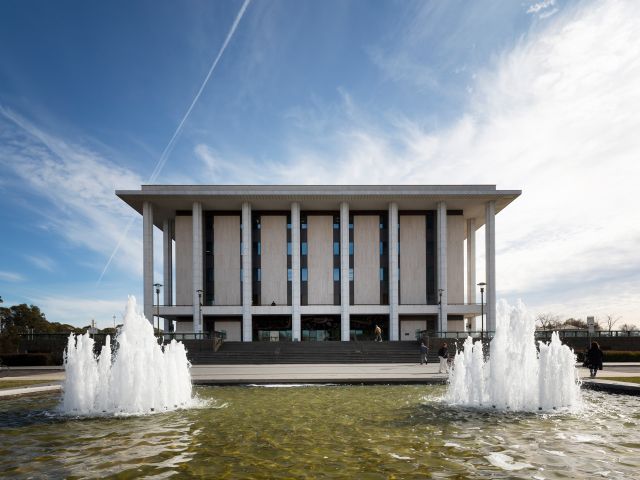
Reflecting on an interesting book, glass of Canberra Riesling in hand, is not what you’d expect to be doing in a library. But then, the National Library of Australia (NLA)  does quite a few ‘un-library’ things. There is an eclectic range of great cafes for breakfast and brunch in Canberra. But not all of them have literary leanings. Bookmark Bookplate Cafe for that reason.

people wandering the bookshelves inside the National Library of Australia, Canberra
The Treasures Gallery houses endless quirky bits and pieces to unearth. (Image: VisitCanberra)

This Canberra institution is one of the few genuine destination libraries in the world: part book temple, part gallery and part architectural curiosity. The Treasures Gallery houses endless quirky bits and pieces to unearth, from Olympic torches to ancient maps, furniture and Beethoven’s life mask. You can check-in for at least a couple of hours here without even picking up a book.

visitors looking at the displays inside the National Library of Australia, Canberra
The National Library of Australia is a book temple and gallery in one. (Image: VisitCanberra)

Address: Parkes Pl W, Canberra

8. Questacon

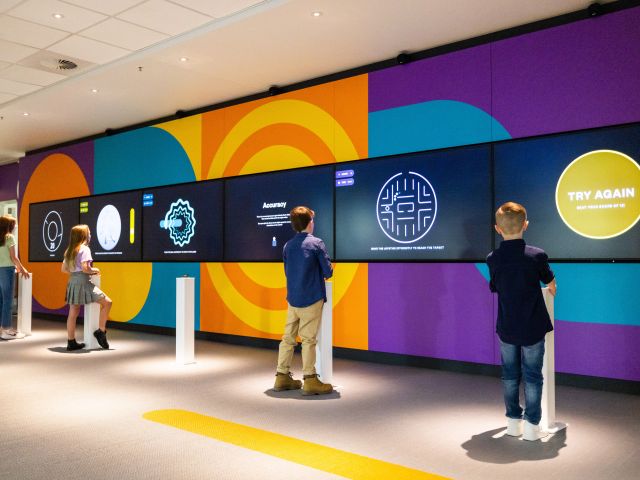
Questacon is one of Canberra’s No. 1 family attractions. The National Science and Technology Centre has mastered the art of creating interactive exhibitions. The quest for Questacon  is to create a brighter future by engaging young minds to think about science, technology and innovation.

guests in colourful costumes blowing up steam at Questacon
Questacon is one of Canberra’s No. 1 family attractions. (Image: VisitCanberra)

There is a special learn and play centre that helps to spark curiosity in kids. Here, children listen to inspired stories about science and innovation, make a stethoscope, put a fridge magnet to test and learn all about heat and insulation. The Spectacular Science Shows uses humour to present the magic of science and technology.

guests entering an interactive exhibit at Questacon
Let the interactive exhibits spark your curiosity. (Image: VisitCanberra)

Address: Questacon, Ngunawal Country, King Edward Terrace, Canberra, ACT

9. The Royal Australian Mint

The multi-award-winning Royal Australian Mint has reopened after extensive renovations. The cultural attraction is both a working factory and Commonwealth Heritage site. Visitors can mint their own coin, and explore interactive exhibitions.

a mother and son heading to The Royal Australian Mint, Canberra
Visit the multi-award-winning Royal Australian Mint. (Image: VisitCanberra)

Collectors take note: the stunning commemorative 50th Anniversary of Countdown coin is now available to purchase.

a family watching an interactive video at The Royal Australian Mint, Canberra
The Royal Australian Mint is both a working factory and a Commonwealth Heritage site. (Image: VisitCanberra)

The National Coin Collection is not just for collectors. But the RAM might just inspire a new generation of numismatists to start squirrelling away their Australian coins. Learn about the history of coin collecting, see commemorative coins made of gold and silver and antique coins that nod to nostalgia.

visitors sitting down inside The Royal Australian Mint, Canberra
Explore interactive exhibitions at The Royal Australian Mint. (Image: VisitCanberra)

Address: Denison Street, Deakin

10. National Archives of Australia

There’s plenty to see and do at the National Archives of Australia . It’s like flicking through memories banked by the nation over centuries. Highlights within the heritage-listed space include the interactive digital wall, and exhibitions that trace decisions that have helped to shape the nation.

Don’t miss the large gallery of photographs gleaned from the collection of past and present prime ministers. Research geeks can get help with their projects by booking ahead to view archives in the Research Centre. The collection includes records from the Australian government as well as information about immigration, the environment and the arts.

Address: Kings Avenue, Parkes

Discover the best restaurants in Canberra.

Carla Grossetti
Carla Grossetti avoided accruing a HECS debt by accepting a cadetship with News Corp. at the age of 18. After completing her cadetship at The Cairns Post Carla moved south to accept a position at The Canberra Times before heading off on a jaunt around Canada, the US, Mexico and Central America. During her career as a journalist, Carla has successfully combined her two loves – of writing and travel – and has more than two decades experience switch-footing between digital and print media. Carla’s CV also includes stints at delicious., The Sydney Morning Herald, and The Australian, where she specialises in food and travel. Carla also based herself in the UK where she worked at Conde Nast Traveller, and The Sunday Times’ Travel section before accepting a fulltime role as part of the pioneering digital team at The Guardian UK. Carla and has been freelancing for Australian Traveller for more than a decade, where she works as both a writer and a sub editor.
See all articles
hero media

3 wild corners of Australia that let you reconnect with nature (in comfort)

The country’s rawest places offer some of its most transformative, restorative experiences.

Australia offers sublime opportunities to disappear into the ancient, untouched wilderness, worlds away from modern stress. Wild Bush Luxury offers a collection of experiences that are a portal into the continent’s wildest, most undiscovered landscapes, from wide floodplains to vast savannas, where the only distractions are birdsong, frog calls, curious wallabies and the daily drama of sunset. With a focus on conservation and Indigenous knowledge, these all-inclusive experiences allow guests to slow down and quiet their minds for intimate encounters with the natural world.

1. Bamurru Plains

safari tent at Bamurru Plains wild bush luxury
Let nature take front row.

In the remote Top End, just outside Kakadu National Park on the fringes of the spectacular Mary River floodplains, you’ll find Bamurru Plains , a peerless Australian safari camp. After a quick air transfer from Darwin to the camp’s private airstrip, you’ll be whisked away via 4WD to a vivid natural wonderland of shimmering floodplains, red earth, herds of peacefully grazing water buffalo and 236 bird species (Bamurru means magpie goose to the Gagadju people).

Accommodations consist of 10 mesh-walled bungalows and two luxe stilted retreats where guests enjoy panoramic, up-close views that invite them into their rightful place in the landscape (and binoculars to see it even better). Being an off-grid experience designed to help guests disconnect, the only distractions are birdsongs, frog calls, curious wallabies, the occasional crocodile sighting and the daily drama of the spectacular golden sunset.

It’s a place where nature’s vastness rises to the level of the spiritual, and Bamurru’s understated, stylish,  largely solar-powered lodgings are designed to minimise human impact and let nature take front row.  Guests relax in comfort with plush linens, an open bar, communal tables that allow for spontaneous connections and curated dining experiences from the in-house chef using local ingredients and bush-inspired cooking methods.

Bamurru Plains airboat tour
Zoom across the floodplains. (Image: Adam Gibson)

It’s a restorative backdrop for days spent zooming across the mist-covered floodplains in an airboat, birding with expert guides, taking an open-sided safari drive or river cruise through croc country. Spend time at the Hide, a treehouse-like platform that’s perfect for wildlife spotting.

In fact, nature is so powerful here that Bamurru Plains closes entirely during the peak monsoon season (October to April), when the floodplains reclaim the land and life teems unseen beneath the water. Yet Wild Bush Luxury’s ethos continues year-round through its other experiences around Australia – each designed to immerse travellers in a distinct Australian wilderness at its most alive and untouched.

2. Maria Island Walk

woman on a headland of Maria Island Walk
Maria Island Walk offers sweeping coastal scenes.

Off Tasmania’s rugged east coast, the iconic Maria Island Walk is an intimate four-day journey through one of the country’s most hauntingly beautiful and unpopulated national parks, encompassing pristine beaches, convict-era ruins, and wildlife sightings galore. Accessible only by a small ferry, Maria Island feels like a place reclaimed by nature, which is exactly what it is: a penal settlement later used for farms and industry that finally became a national park in 1972.

These days, the island is known as ‘Tasmania’s Noah’s Ark’ and its only human inhabitants are park rangers. It’s a place where wombats amble through grassy meadows, wallabies graze beside empty beaches, dolphins splash in clear water just offshore and Tasmanian devils – successfully reintroduced in 2012 after near-extinction on the mainland – roam free and healthy.

Each day unfolds in an unhurried rhythm: trails through coastal eucalyptus forests or along white-sand bays, plateaus with sweeping ocean views, quiet coves perfect for swimming. Midway through the journey, you’ll explore Darlington, a remarkably preserved 19th-century convict settlement whose ruins tell stories of human ambition at the edge of the known world.

At night, sleep beneath a canopy of stars in eco-wilderness camps – after relaxing with Tasmanian wine and locally-sourced meals, and swapping stories with your fellow trekkers by candlelight.

3. Arkaba

two people standing next to a 4wd in Arkaba
Explore Arkaba on foot or on four wheels.

For a bush immersion with more of an outback flavour, Arkaba offers a completely different type of experience. A former sheep station and historic homestead in South Australia’s striking Flinders Ranges that has been reimagined as a 63,000-acre private wildlife conservancy. It’s now patrolled mainly by kangaroos and emus.

Small-scale tourism (the homestead has just five ensuite guestrooms) helps support rewilding projects, and guests become an essential part of the conservation journey. Days begin with sunrise hikes through ancient sandstone ridges or guided drives into the ranges to spot yellow-footed rock-wallabies. And end with sundowners on a private ridgetop watching the Elder Range glow vibrant shades of gold, crimson and violet as the air cools and time stands still.

Here, you can join conservation activities like tracking native species or learning about Arkaba’s pioneering feral-animal eradication projects, then unwind with chef-prepared dinners served alfresco on the veranda of the homestead, which is both rustic and refined. The highlight? Following Arkaba Walk, a thriving outback wilderness where emus wander and fields of wildflowers grow.

It’s an unforgettable immersion in Australia’s vast inland beauty, a place where the land’s deep and complicated history – and astounding resilience – leave their quiet imprint long after you return home. In a world where genuine awe is rare, Wild Bush Luxury offers a return to what matters most in the untamed beauty of Australia’s wilderness.

Disconnect from the grind and reconnect with nature when you book with at wildbushluxury.com