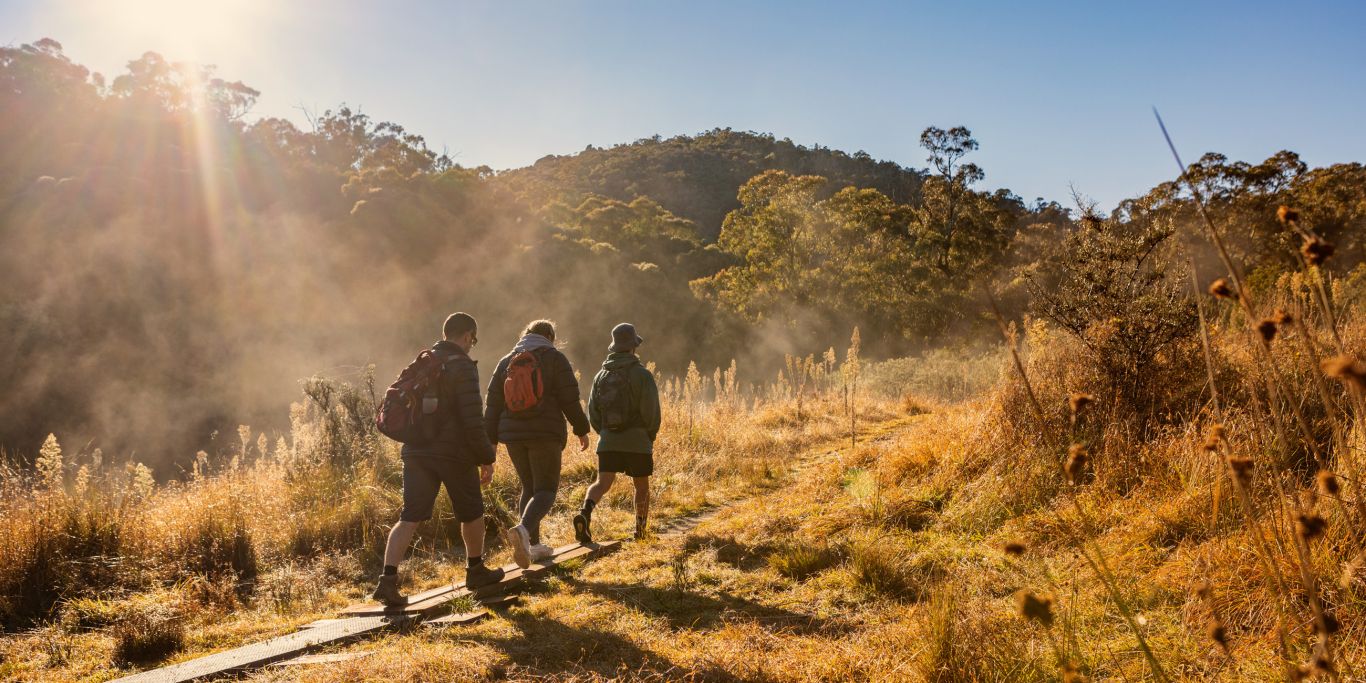

If you’re looking to lift your spirits and your heart rate, here are 14 of Canberra’s best walks, the most wondrous wanderings for a bespoke weekend in the exhilarating ACT outdoors.
Is Canberra just one big national park? Local photographer Damian Breach certainly thought so, and it’ll sure seem that way once you traipse around the best walks in Canberra. Not only is Canberra the seat of power in Australia, but it’s also the bush capital with a typical Australian outback that encompasses all the iconic wildlife and sights that’ll leave you breathless. The only way to experience all of this is to tackle the many walking trails around Canberra, not just the ones around Lake Burley Griffin.
Whenever I head down from Sydney to Canberra, nature is usually the first thing on my mind. The stillness you get out here feels different to the contemplative walks that sit outside Melbourne and ring around Sydney. It really feels like remote forest bathing out here, even if you’re only 10 minutes from the CBD.
I’ve listed all the information you need for each of these routes so you can know if they are suitable for you and your needs. Make sure to pay attention to the unique sights listed for each, giving you a bit of a treasure map to help make these Canberra walks that much more rewarding.
Canberra’s Epic Centenary Trail
1. Canberra Centenary Trail
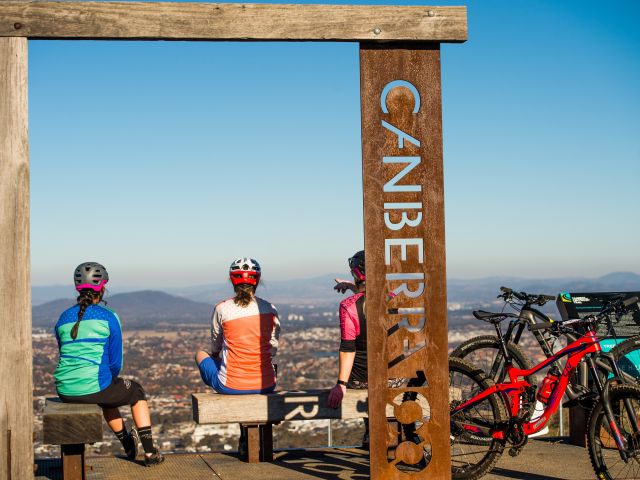
The mighty Centenary Trail is the ultimate Canberra walk, offering the most comprehensive coverage of our nation’s capital by brushing the NSW border and passing several landscapes before dipping into the Murrumbidgee to the south.
You’ll pass the Parliament House, various nooks and crannies perfect for picnics in Canberra, and a whole heap of wilderness. Not only is the accessible point-to-point trail a great way to see the entire city in one fell swoop, but the walk is also enriching, considering it’s 154 kilometres long.
You’ll need to tackle this epic Canberra walk over multiple days to conquer the entire Centenary Trail. However, most people will break it up into shorter walks, with three main marked trails that are also on this guide to the best Canberra walks.
I’ve never had the time to complete the full trail, but most people do it in sections anyway. If you only have time to do one of the sections, the Murrumbidgee Discovery Track is the way to go for most people as it combines incredible views and approachable trails with some challenging sections for a bit of excitement. Plus, it’s a great way to practice so you can then have a go at famous Canberra walks like the Gibraltar Peak Trail and Mount Tennent Trail.
Distance: 154-kilometres one-way
Time: Multi-day hike
Difficulty: Grade 2
Terrain: The trail is designed to be accessible to both walkers and cyclists, so most of it is smooth and well-maintained except for the slight challenge of the Murrumbidgee Discovery Track.
Tips: You’ll be sharing these trails with cyclists, so always be conscious of others and keep to the left.
Must-see sights: Enjoy the steady climb up parts of Black Mountain and look out for both Mount Ainslie and Mount Majura.
2. Murrumbidgee Discovery Track
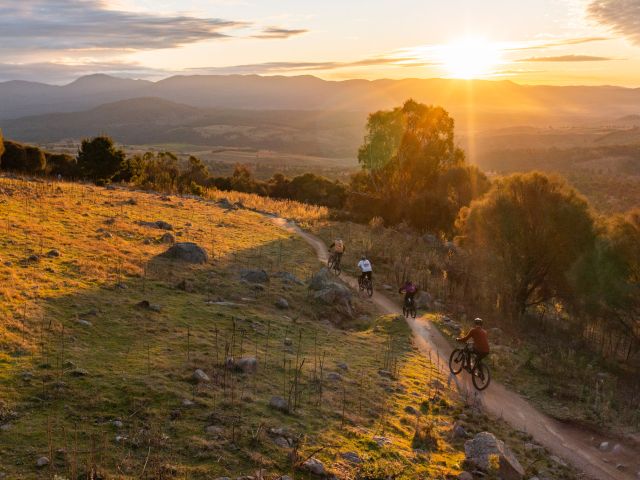
You’ll find the Murrumbidgee Discovery Track at the southern end of the Canberra Centenary Trail, starting at the end of Kamblah Pool Road near Gleneagles. The well-signposted walking trail is one of the best walks in Canberra for enthusiasts, taking keen hikers through rolling fields and diverse bushland from Point Hut Crossing to Casuarina Sands.
Mountain bikers love this section of the trail, given its proximity to Stromlo Forest Park. But there’s enough space for everyone on the 26-kilometre trail. It should take you just under seven hours to complete the trail, which can be accessed at either end. However, do allow for longer as there are plenty of sights along the way, as well as places to stop for a picnic or swim.
Distance: 26.2-kilometres one-way
Time: 7 hours
Difficulty: Grade 3
Terrain: There’s an elevation gain of 663 metres so some hiking experience is preferable.
Tips: Bring your swimmers and take a dip at Kambah Pool or just start the trail here for a shorter option. Dogs are not permitted on this trail.
Must-see sights: The trail is popular for bird watchers so keep your eye out for wildlife while also admiring the beauty of Casuarina Sands and Pine Island.
3. One Tree Hill
One Tree Hill is the friendliest and most manageable section of the Canberra Centenary Trail. It should take just over two hours to complete, although the terrain can be moderately challenging so make sure to work in plenty of rest stops along the way.
Start near Hall, Australian Capital Territory at the crossroads of Hall and Hoskin streets. Leave the pups at home – dogs aren’t permitted – and enjoy the gentle incline as you pass the hidden One Tree Lookout (great for city views) and spy the impressive Brindabella mountain range in the distance.
Distance: 8.4 kilometres one-way
Time: 2 hours
Difficulty: Grade 2
Terrain: There’s an elevation gain of 237 metres but the trail is well-marked and very gentle.
Tips: Stop by One Tree Lookout and admire a view of Canberra that many visitors don’t get to see.
Must-see sights: Again, One Tree Lookout is essential but you’ll also need to keep an eye out for wildlife – the trail is popular for birdwatching – and take some time to appreciate the Brindabella mountain range.
4. National Arboretum Loop
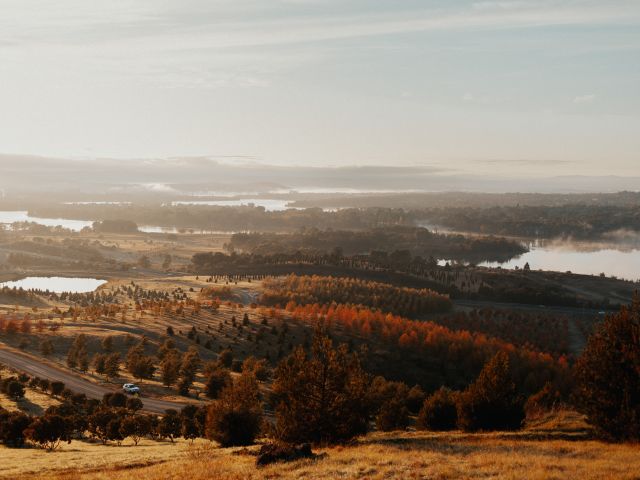
The easiest section of the Canberra Centenary Trail starts at Forest Drive in Weston Creek. The 11.1-kilometre loop rings around Canberra’s iconic National Arboretum, taking just under three hours to complete.
You’ll be sharing this Canberra walk with birdwatchers, hikers and mountain bikers, but many paths break off around the stunning tourist attraction, so it’s easy to find peace.
A popular sub-path is the 1.1-kilometre Himalayan Cedars Walk: a pastoral stroll that’ll take you far away from any hint of city life. I tend to veer towards that if the National Arboretum trail is too busy, which is often the case on weekends.
Distance: 11.1-kilometre loop
Time: 3 hours
Difficulty: Grade 2
Terrain: Gentle, smooth terrain with an elevation gain of 221 metres
Tips: This is the only section of the Centenary Trail where dogs are allowed, but do make sure they are on a leash.
Must-see sights: The 250-acre National Arboretum is staggering with 44,000 rare and endangered trees just north of Lake Burley Griffin.
Best Walks Around Lake Burley Griffin
5. Lake Burley Griffin Loop
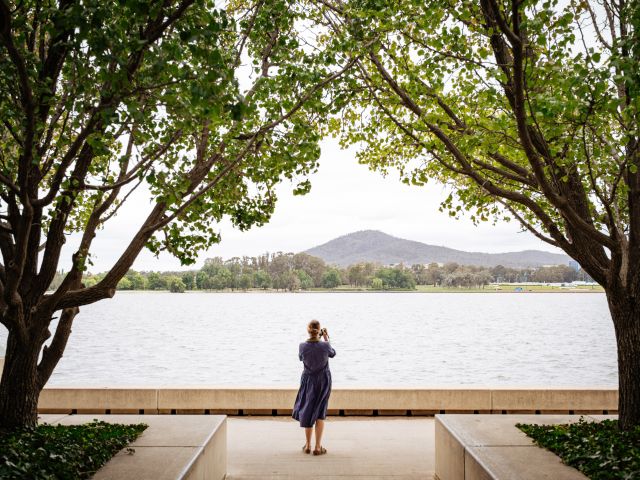
Carve out just over four hours of your day and tackle the pristine Lake Burley Griffin Loop. This 19.8-kilometre loop trail is approachable, leisurely and dog-friendly (as long as your fur friend is on a leash).
Conquer this loop, and you’ll have taken in the entirety of Canberra’s incredible artificial lake, which has been a definitive feature of our nation’s capital since 1963.
The mostly flat trail is very popular for birding, hiking and road biking, so be aware that you’ll be sharing the path with plenty of others at all hours of the day. Yet when it’s quiet, there are few things to do near Canberra CBD that feel as rewarding, especially if you’re up bright and early to see the sun streak across the water.
Distance: 19.8 kilometres
Time: 4 hours 20 minutes
Difficulty: Grade 2
Terrain: Gentle, smooth terrain with an elevation gain of 259 metres
Tips: Break off the trail when you reach Black Mountain Peninsula and reward yourself with a treat at the Italianate Cafe Sosta with incredible views of the lake.
Must-see sights: Lake Burley Griffin, of course. You’ll also spot great views of Government House and the immaculate Beijing Garden and Lennox Gardens.
6. The Central Basin

The Central Basin loops between Commonwealth Bridge and Kings Avenue Bridge, offering an easy 5-kilometre walk through serene public spaces with the lake a constant presence.
Start from the National Capital Exhibition and power through the many attractions, historic cottages and natural beauty along the way.
Take a side trip at Reconciliation Place along pathways leading to the National Gallery of Australia, or just admire the beautiful Australians of the Year Walk, made up of various plaques and seats commemorating the most impactful minds in Australian history.
Distance: 5 kilometres
Time: 1 hour
Difficulty: Grade 1
Terrain: A very straightforward section of the Lake Burley Griffin Loop.
Tips: Take some time to explore the many historic cottages you’ll pass along the way.
Must-see sights: Lake Burley Griffin and the great Australians of the Year Walk.
7. Jerrabomberra Wetlands Walk
Head on over to Fyshwick and begin this easy 3.2-kilometre loop. The Jerrabomberra Wetlands has several paths breaking off in all directions, but stay the course and stroll the entire loop. It’s rewarding, moderately challenging and offers some of the best sights in Canberra.
You’ll only need around 40 minutes to complete this popular trail, which attracts all sorts of visitors from birdwatchers and hikers to keen mountain bikers.
The trail, cloistered away on Lake Burley Griffin’s eastern shore, feels like a world apart from Canberra. Yet it’s only a 10-minute drive from some of the city’s most popular spots. That’s why I’ve done this walk more than any others in Canberra, especially since I can start or end it with a cup of fresh joe from Fyshwick’s excellent Ona Coffee House.
Distance: 3.2 kilometres
Time: 40 minutes
Difficulty: Grade 2
Terrain: There are some narrow spots to look out for but with an elevation gain of 33 metres, this is a very easy walk.
Tips: Keep your eyes peeled for over 200 different bird species all chiming in to give your exercise a little soundtrack.
Must-see sights: Kellys Swamp is where you’ll spy most of the birdlife along with frogs, eastern long-neck tortoises and Black Angus cows.
8. Weston Park
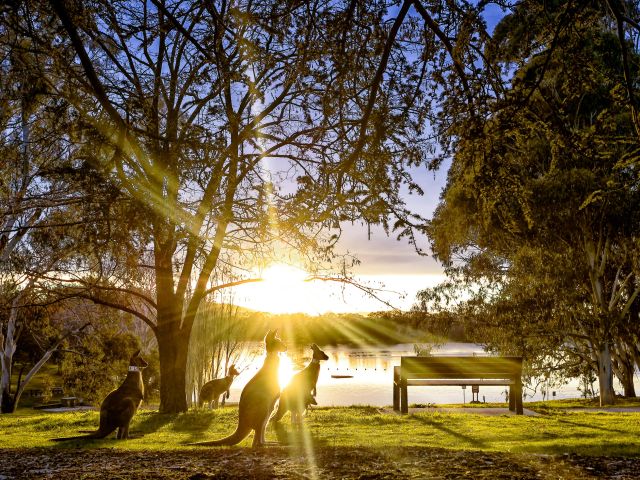
The peaceful Weston Park is located on the south side of Canberra, offering 40 hectares of pristine parklands with many family-friendly features like a water playground and wading pool. Set up shop for the day at the picnic tables and end your stroll with a barbecue.
That’s what most people do in Weston Park, which is why you’ll typically find mostly families taking the easy 45-minute stroll around the edges of the park. You’re only looking at around four kilometres, with the best route from Weston Road car park to West Yarralumula Peninsula.
Distance: 4 kilometres
Time: 45 minutes
Difficulty: Grade 1
Terrain: This is a very flat, easy park stroll right alongside the river.
Tips: Take a detour to the fabulous Yarralumla Nursery with plenty of plant species.
Must-see sights: Take some time to see the sights of Orawa Bay and East Yarralulma Peninsula before doubling back to Karrajoing Point.
Mountain Hikes in Canberra
9. Mount Ainslie Summit Trail
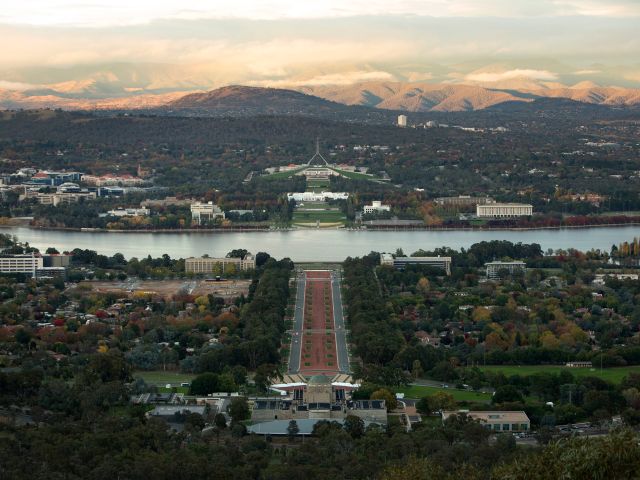
Also known as the Kokoda Track, the Mt Ainslie Summit Trail starts immediately behind the Australian War Memorial near Campbell, taking you through Remembrance Park to a moderately challenging 4.5-kilometre loop that should take about 1.5 hours to complete.
It’s one of the most popular Canberra walks, so be prepared to share the path with many others, as well as on-leash dogs who are more than welcome on the well-maintained trail.
The path can get quite steep as it rises above the Australian War Memorial, winding through a shrubby woodland of scribbly gums. A score of birdsong will follow you all the way up and around, while plenty of other wildlife (maybe even a politician or two) will pop out occasionally.
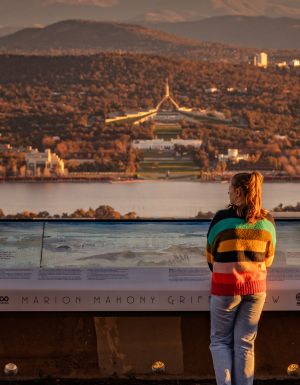
Make sure you make allowances for the view itself. Mount Ainslie’s view directly over Canberra CBD is gorgeously symmetrical and exposes the entirety of this great landscape. Even if you’ve been up here a dozen times, it’s hard to pull yourself away from what is Canberra’s most pointed postcard.
Distance: 4.5 kilometres
Time: 1.5 hours
Difficulty: Grade 2
Terrain: The path can get very steep as you approach the summit but it is very well-maintained and not too challenging.
Tips: Bring your camera because this path offers some of the best views in Canberra.
Must-see sights: Follow the signs for a beautiful memorial to Indigenous soldiers and admire all the plaques commemorating the Kokoda Track. Don’t forget the gorgeous view over the Parliamentary Triangle further up the path.
10. Black Mountain Summit Loop

Look west of the more famous Mount Ainslie, and you’ll spot the equally impressive Black Mountain. The nature reserve at the base of this mountain is flecked with many well-maintained trails like the one-hour Forest Track with plenty of moss, ferns and lichens.
Track the entire 4.7-kilometre loop for an unforgettable ring around Canberra’s best sights, rewarding your 1.5-hour investment with sublime views, abundant wildlife and restorative rainforest ambience.
Distance: 4.7 kilometres
Time: 1.5 hours
Difficulty: Grade 2
Terrain: The path is very steep as you approach Telstra Tower, but well-maintained and very safe.
Tips: Here’s another chance to snap some of the best photos in Canberra.
Must-see sights: The iconic Telstra Tower stands tall on the summit of Black Mountain, giving you a massive waypoint so you’ll never get lost.
11. Australian National Botanic Gardens Main Path Walk
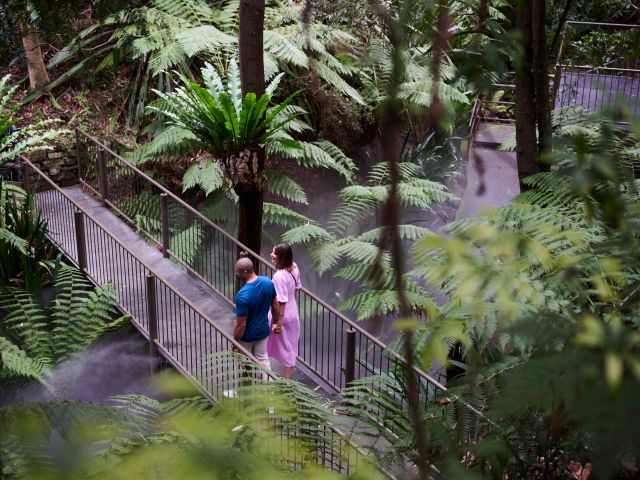
The Australian National Botanic Gardens loop may be the easiest walk in Canberra. It only takes around 20 minutes to complete the 1.3-kilometre loop, which is always kept in top shape and is a great walking trail for families.
The loop begins from the main parking area of the garden, which is where the Black Mountain Summit Loop also starts.
Most people complete both in the same day, with this family-friendly Canberra walk offering a more flat loop taking you through the beautiful Rainforest Gully with ancient conifers and other beautiful plant species.
Distance: 1.3 kilometres
Time: 20 minutes
Difficulty: Grade 1
Terrain: The flat path is very family-friendly and is one of the only wheelchair-accessible walks in Canberra.
Tips: Play a game and try to count the number of plant species you’ll find. You’ll lose count but it’s a fun way to pass the time.
Must-see sights: The Rainforest Gully is one of the most beautiful areas in Canberra.
Best walks just outside of Canberra
12. Gibraltar Peak trail
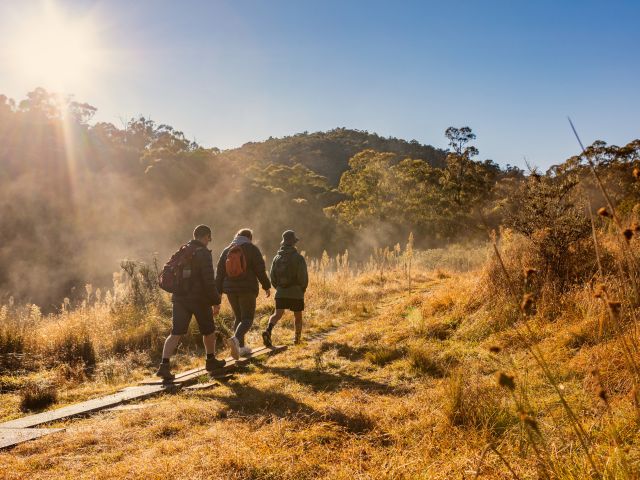
Head to Tidbinbilla Nature Reserve near Tuggeranong to find the popular Gibraltar Peak Trail. You’ll take around 2.5 hours to complete this majestic 8-kilometre out-and-back trail, which is open year-round and is always very well-maintained and very safe.
Make your way up to Gibraltar Peak where you’ll find incredible house-sized boulders, spiky grass trees and barely babbling creeks along the way. Reward yourself with jaw-dropping views once you reach those phallic boulders. It’s one of the best bush walks Canberra has to offer.
Distance: 8 kilometres
Time: 2.5 hours
Difficulty: Grade 2
Terrain: Although the trail can be steep and narrow in some parts, it is well-maintained and signposted so you should have no issues.
Tips: Keep an eye out for the many wildlife that call this reserve’s 14 protected habitats home.
Must-see sights: If you’re stealthy enough, you’ll have some of the best wildlife encounters in Canberra.
13. Mount Tennent Trail
Buried in the heart of Namadgi National Park, Mount Tennent Trail is one of Canberra’s hardest walking trails and a hard-won accomplishment that’ll justify a delicious prize at any one of Canberra’s best restaurants.
Running 13.7 kilometres, the out-and-back trail sits near the suburb of Tharwa and takes just over five hours to complete. It’s a great way to see the best of the 160,000-hectare Namadgi National Park, which straddles the border of Kosciuszko and takes up almost half of the state’s land area.
There are a variety of short and long hikes in the park, but the Mount Tennent Trail is easily the most popular, offering somewhat of a greatest hits – gorgeous alpine meadows, snow gum forests and Indigenous rock art sites.
Distance: 13.7 kilometres
Time: 5 hours
Difficulty: Grade 4
Terrain: The trail can get very steep and narrow with a great variety of landscapes to pass through.
Tips: The Indigenous rock art sites were some of the first to be discovered in the Australian Capital Territory.
Must-See Sights: There is not only an abundance of Canberra wildlife to see, but this trail will give you everything you want from Australian bushland and more. Take in the sights and treat yourself with rest afterwards.
14. Booroomba Rocks trail
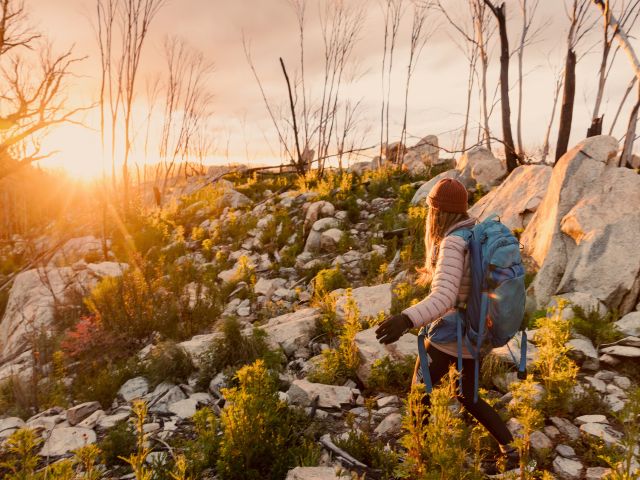
You’ll find Booroomba Rocks in Namadji National Park, earning its reputation as one of Canberra’s most picturesque walks with great views of the Brindabella Range.
Scramble through tall forests and admire the granite cliffs as you track the easy 2.5-kilometre trail, which snakes off from Booroomba Rocks car park. One thing to note is that the trail is very weather-dependent, so don’t take the risk if there’s heavy cloud cover, as you’ll miss all the magic.
Distance: 2.5 kilometres
Time: 40 minutes
Difficulty: Grade 2
Terrain: While the trail can be narrow, as long as the weather is fine then you’re in for a leisurely walk.
Tips: Again, pay close attention to the weather as a lack of visibility really covers the trail’s best bits.
Must-see sights: The inspiring Brindabella Range will guide you along the trail so you’ll never get lost.