An insider’s guide to visiting Floriade 2024 in Canberra

hero media
It’s the most vibrant time of year to visit Canberra, as the flowers bloom and the city comes alive.

Australia’s biggest flower festival occurs every spring in the city of Canberra, where for 30 days across September and October the nation’s capital is awash with colour in celebration of spring.

Floriade 2024 is more than just a flower festival, though – it’s one of the best Aussie events on in September. Each year, Canberra comes alive with entertainment, music, cultural celebrations, food and wine, horticultural workshops, market stalls, art displays and more. Here is everything you need to know about Floriade before visiting.
Floriade in Canberra
Floriade is the brainchild of Christiaan Slotemaker de Bruine.

What is Floriade?

Floriade was the brainchild of Christiaan Slotemaker de Bruine, a landscape architect with the Department of Capital Territory in Canberra. Back in 1986, he was inspired by the famous Keukenhof Garden in The Netherlands and teamed up with horticulturalist and manager of the Commonwealth Garden, Peter Sutton, to create something similar.
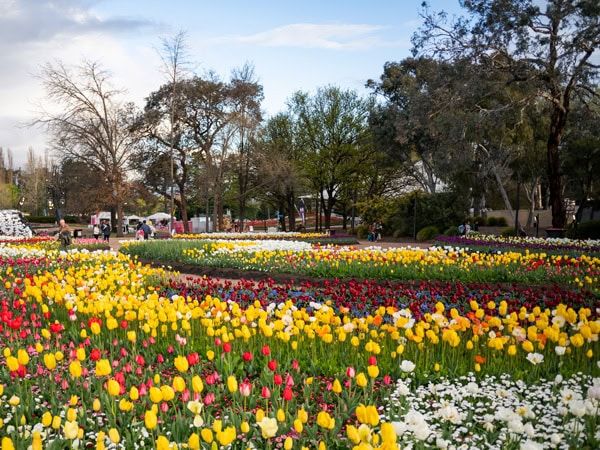
Floriade in Canberra
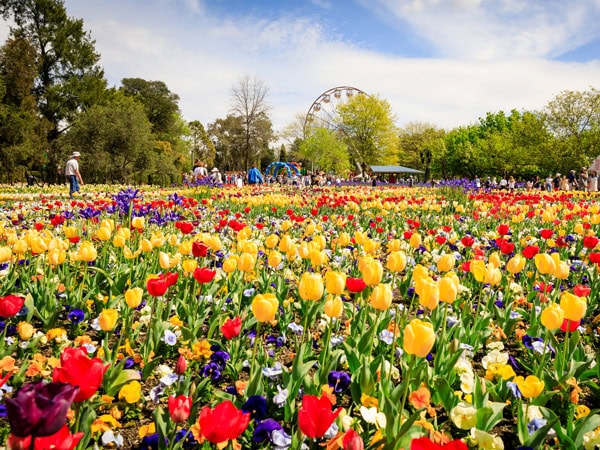
Witness over one million flowers in bloom during Floriade.

The first event was held in 1988 and was intended to be a one-off celebration for Canberra’s 75th birthday. However, it was so popular that it now runs annually. The word “Floriade" is derived from the Latin “floreo", meaning “to be decked or covered with flowers".

Now, it has become the largest flower festival in the southern hemisphere, with over one million flowers blooming each year. The theme for 2024 is ‘Art in Bloom’ and will see the city transform into an explosion of colour for the 37th year running.

When is Floriade?

Floriade is held across 30 days in the months of September and October. In 2024, the festival will run from 14 September until 13 October.

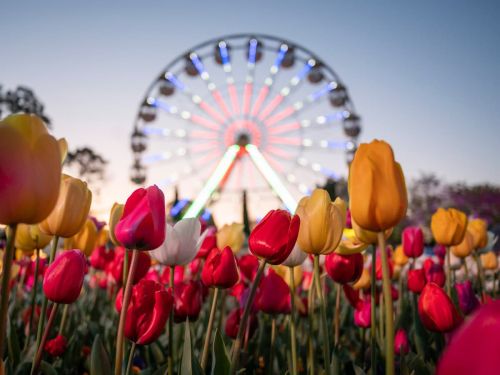
Nightfest is an exciting evening program that runs alongside Floriade for just four nights only, between 3 and 6 October. Come night time, you’ll see the floral displays light up, offering a completely different perspective.
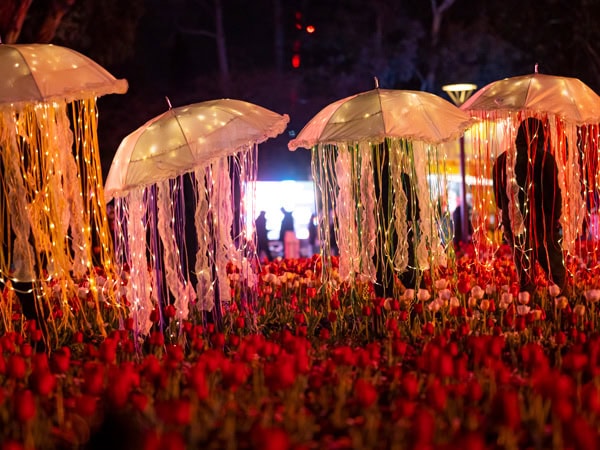
NightFest at Floriade, Canberra
NightFest offers a different perspective for four nights only.

There will also be plenty of live entertainment and food stalls by L’epi Bakery, Agostinis, Papa Deli and Bianco, plus a Bentspoke Brewing Beer Garden. Kiss Bang Cabaret will be taking over the Kazador tent for an adults-only (18+) ticketed show, too.

Within Floriade, there are also some key dates to know about. Dogs’ Day Out is a designated day when visitors can bring their furry friends along to the festival to enjoy the flower fields. It’s held on the final day of Floriade, 13 October. Guests can also look forward to meeting gardening guru Costa Georgiadis on 28 September.
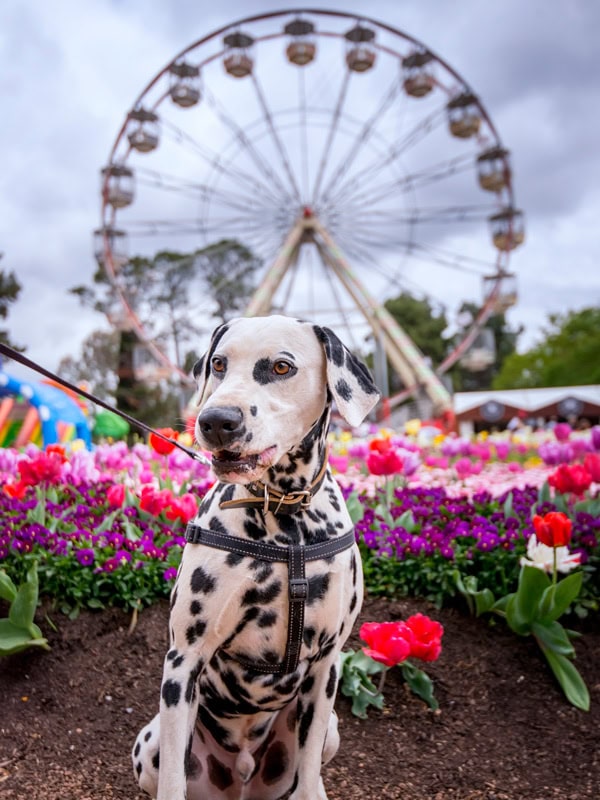
Dogs Day Out at Floriade, Canberra
Furry friends can get amongst the flowers during Dogs’ Day Out.

Another epic event to circle on your program is the Great Big Bulb Dig. Held the day after Floriade closes on 14 October, the dig gives you a chance to take a piece of the festival home.

All funds raised by the dig will go directly to Roundabout Canberra and the Indigenous Marathon Foundation, two local charities chosen by Floriade’s presenting partner, Synergy Group. So buy a bag and get digging – it’s for a good cause!
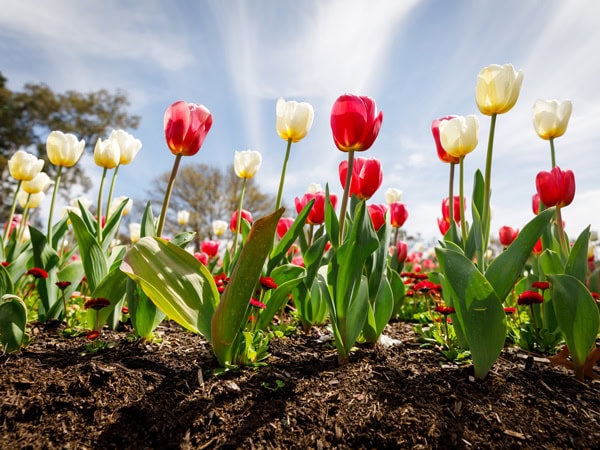
Floriade in Canberra
See how many bulbs you can dig up for a good cause.

Need tips, more detail or itinerary ideas tailored to you? Ask AT.

AI Prompt

How much does Floriade cost?

And here’s the best part – entry to Floriade is free! The festival won’t cost you anything, as it predominantly takes place in Commonwealth Park, a public space in the heart of Canberra. However, some events, like Nightfest, require an entry fee and ticket that can be purchased online.

Gates are open from 9.30 am to 5.30 pm daily, with NightFest running from 6.30 pm to 10.30 pm (during the allotted dates).
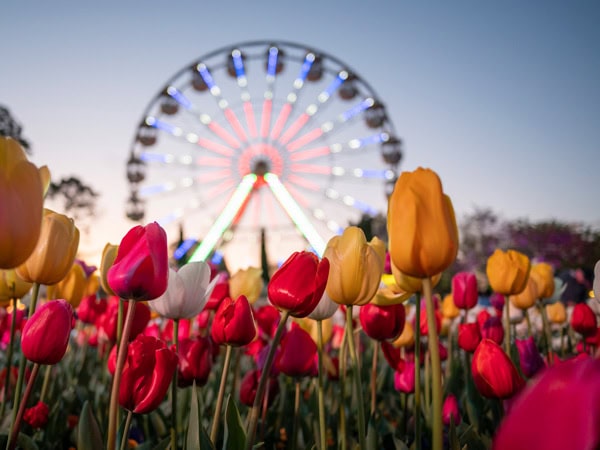
Floriade in Canberra
Floriade is the perfect day out for the whole family.

Is Floriade child-friendly?

Yes, Floriade is definitely child-friendly! In fact, there are plenty of kid-focused events and workshops that will delight all ages. Younger children can get crafty at Floriade Sprouts, while teenagers will love the Teen Oil Painting class.

Don’t miss Gnome Knoll, where kids can paint their own gnome to take home. Or ride the iconic Floriade Ferris Wheel for a birds-eye view. The circus entertainment, magic show and Dr Hubble’s Bubble Show are also great for little ones!

Painting workshop at Floriade in Canberra
There are plenty of workshops for kids of all ages.

Is Floriade accessible?

Floriade aims to be an accessible and inclusive event for everyone. There is a designated sensory hour between 9:30 am and 10:30 am on weekdays, when amplified sounds and stage performances are reduced.

Accessible public transport and onsite parking is also available, as well as mobility scooters, walking frames, wheelchairs and prams for hire. For elderly and mobility impaired attendees, a designated drop-off zone at the front gate is provided.
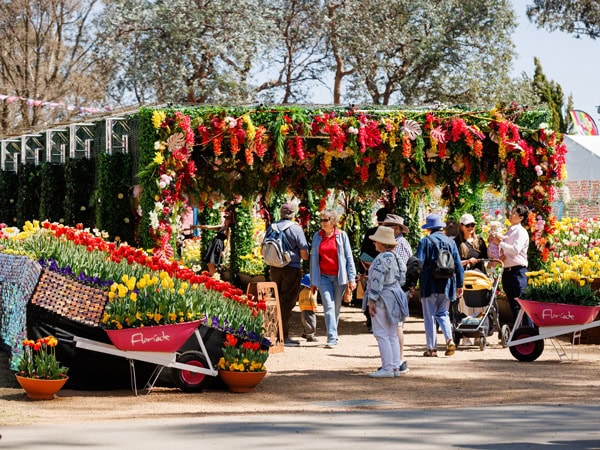
Floriade in Canberra
Wheelchairs, mobility scooters and prams can be hired.

Weekly travel news, experiences
insider tips, offers, and more.

Where should you stay for Floriade?

Floriade’s main celebrations occur in Commonwealth Park, so staying nearby will make your visit a little easier. There are several great accommodation options around the city, from cosy Airbnbs to great caravan parks for camping.

If you’d rather stay in a hotel, check out the lovely Hyatt Hotel Canberra, which is perfect for solo travellers, couples and families. It’s only a 15-minute walk from Floriade too. Due to Canberra’s efficient infrastructure, you can stay in most neighbourhoods within the city and still easily access Commonwealth Park.
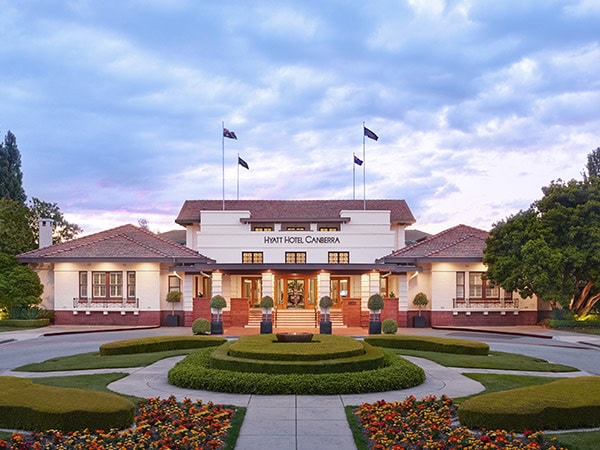
Hyatt Hotel Canberra exterior
Stay at the Hyatt Hotel Canberra.

Getting to Floriade

The best way to get to Floriade is by using public transport or walking from your accommodation. Parking can be difficult at this time of year, so if you can, leave the car and catch the light rail, ferry or bus.

There is a free Floriade shuttle bus that runs to and from Canberra’s CBD each day, with a schedule posted closer to the event. If you do plan to drive, the best parking can be found at the Regatta Point carpark; parking rates may apply.

Check out our Canberra travel guide for more insider travel tips and hidden gems.
Melissa Mason
Melissa Mason is a freelance journalist who loves road tripping and car snacks. Previously holding Editor roles at ELLE, marie claire, Broadsheet and Pedestrian.TV, she now writes travel and lifestyle content for a wealth of Australian titles like SMH, Mamamia and Urban List, as well as copywriting for international brands. Outside of writing, she loves walks with her dog Ted, a great Sunday afternoon with friends, and op shopping. If she could be anywhere right now it would be lounging on a hammock at a tropical resort with a great romantic fantasy book.
View profile and articles
hero media

Unforgettable First Peoples tours and experiences in Victoria

    Angela Saurine Angela Saurine
    From ancient aquaculture systems to sacred rock art shelters, Victoria’s First Peoples cultural experiences offer a powerful connection to one of the world’s oldest living cultures – where every site, story and smoking ceremony invites a deeper understanding of the land beneath your feet. 

    Victoria’s sweeping landscapes hold stories far older than any road map can trace – stories etched into stone, sung through generations and woven into every bend of river and rise of hill. From the lava flows of Budj Bim to the ancient middens of Moyjil/Point Ritchie and the volcanic crater of Tower Hill, the state is home to some of the most significant First Peoples cultural sites in Australia. These places, along with other immersive experiences, offer not only a window into a 60,000-year legacy, but a profound way of understanding Country itself. As more travellers seek connection over checklists, guided tours by Traditional Owners offer respectful, unforgettable insights into a living culture that continues to shape the land and the people who walk it. 

    Budj Bim cultural landscape  

    Budj Bim Cultural Landscape
    Budj Bim Cultural Landscape is on Gunditjmara Country. (Image: Visit Victoria)

    Venture beyond the surf and sand of the Great Ocean Road to discover a deeper story etched into the volcanic landscape. At Budj Bim, ancient aquaculture channels built by the Gunditjmara people to trap, store and harvest kooyang (short-finned eel) reveal one of the world’s oldest living cultures. While you’re in the area, head over to the state-of-the-art Tae Rak Aquaculture Centre, where you can observe the eels in a special tank, wander the shores of Tae Rak (Lake Condah), and enjoy a bite at the Bush Tucker Cafe. Also nearby is Tower Hill, a dormant volcano reborn as a wildlife reserve, offering trails through bushland teeming with emus and koalas. 

    eel tank
    The kooyang (eel) tank at Tae Rak. (Image: Visit Victoria)

    Dumawul Kooyoora Walking Tour 

    Dumawul walkingtour
    Guests are guided through Kooyoora State Park on the Dumawul walking tour. (Image: Visit Victoria)

    Step into a timeless landscape with Dumawul’s guided tour through Kooyoora State Park, around an hour’s drive west of Bendigo in north-central Victoria. Led by Djaara guides, this immersive half-day journey breathes life into Country, weaving together stories, bush tucker and ancient rock art. Known to the Dja Dja Wurrung people as Guyura – the ‘mountain of light’ – this dramatic granite range is rich with cultural and spiritual significance.  The adventure begins with a meet-up at the Bridgewater Hotel on the banks of the Loddon River, before guests are welcomed onto Country with a traditional Smoking Ceremony – a powerful ritual that honours ancestors and cleanses those who walk the land. From there, it’s a gentle wander through rugged outcrops and open bushland, with sweeping vistas unfolding at every turn. Along the way, guides share their knowledge of how the Dja Dja Wurrung peoples have cared for and adapted with this land for generations, offering a rare and moving window into an ancient way of life that continues to thrive today.  

    Kooyoora walking tour
    Knowledge of the Dja Dja Wurrung is shared on the trail. (Image: Visit Victoria)

    Kingfisher Cruises  

    Kingfisher Cruises
    Cruising the Murray with Kingfisher Cruises. (Image: Visit Victoria)

    Glide quietly through the Barmah-Millewa forest – the nation’s largest river red gum ecosystem – on a scenic journey along the Murray River and into the Barmah Lakes with Kingfisher Cruises. Led by passionate guides who share stories of the cultural significance of this ancient landscape, these cruises reveal the stories, totems and traditional knowledge of the Yorta Yorta people. As you navigate narrow waterways and spot native birds, you’ll gain a richer understanding of how First Peoples have lived in harmony with this floodplain for tens of thousands of years. It’s a gentle, immersive experience that leaves a lasting impression – one where every bend in the river carries echoes of culture, connection and Country.  

    wawa biik 

     Taungurung leaders
    Exploring Nagambie with Taungurung leaders. (Image: Visit Victoria)

    Translating to ‘hello, Country’ in the language of the First Nations People and Custodians of the rivers and mountains of Taungurung Country in Central Victoria, wawa biik guides a range of authentic and deeply immersive experiences. Leaving from either Nagambie or Euroa, the tours are woven with ancient stories of the Taungurung, telling how a sustained connection and responsibility ensures the continued health of biik – benefitting the people, animals and plants that live in and around the Goulburn River. During the wawa Nagambie experience, guests participate in a Welcome Smoking Ceremony, and enjoy lunch and conversation with two Taungurung leaders as they cruise through the wetlands of tabilk-tabilk (place of many waterholes). The 4.5-hour tour begins at Tahbilk Winery, which is set in the wetlands of Nagambie on Taungurung Country and collaborates with Taungurung Elders to share knowledge of biik. 

    Bataluk Cultural Trail  

    Bataluk Trail
    Cape Conran on the Bataluk Trail. (Image: Visit Victoria)

    The Bataluk Cultural Trail winds through East Gippsland like a thread stitching past to present, tracing the deep connection between the Gunaikurnai people and their land. Starting at the Knob Reserve in Stratford, visitors walk among scarred trees and ancient stone tools once used for survival and ceremony. At the Den of Nargun near Mitchell River, the earth holds stories of women’s sacred spaces, cloaked in myth and legend. Further along, Legend Rock at Metung tells of greed and consequence, its surface etched with ancient lore. At Cape Conran, shell middens lie scattered like breadcrumbs of history – 10,000 years of gatherings, stories and saltwater songs still echoing in the wind.  

    Healesville Sanctuary  

    echidna at Healesville Sanctuary
    Get up close with a resident echidna at Healesville Sanctuary. (Image: Visit Victoria)

    Set on the historic grounds of Coranderrk Aboriginal Station, Healesville Sanctuary honours the Wurundjeri people of the Kulin Nation through immersive storytelling and connection to Country. Along Wurundjeri Walk, visitors are invited to reflect on the land’s rich First Peoples history, with native plants revealing their traditional uses. Wurundjeri Elder and educator Murrundindi shares culture in-person with the Wominjeka Aboriginal Cultural Experience every Sunday, and most days during Victorian school holidays. Murrundindi’s smoking ceremonies, storytelling and bush tucker knowledge reveal the sacred relationship between people, animals and the environment. Bird-lovers can’t miss the incredible Spirits of the Sky show featuring native birds daily at 12pm and 3pm. 

    The Grampians 

    Rock art at Bunjil Shelter in The Grampians
    Rock art at Bunjil Shelter in The Grampians. (Image: Visit Victoria)

    Known as Gariwerd to Traditional Owners, the Grampians is a place of immense cultural and spiritual significance. This rugged landscape holds more than 80 per cent of Victoria’s known First Peoples rock art, offering a powerful window into the region’s deep heritage. Visitors can respectfully explore five remarkable rock art sites: Billimina and Ngamadjidj in the Wartook Valley, Manja Shelter near Hamilton, Gulgurn Manja shelter near Laharum, and the Bunjil Shelter near Stawell, where the creator spirit is depicted. Each site tells a unique story of connection to Country, shared through ancient handprints, dancing figures and Dreaming narratives etched into stone.