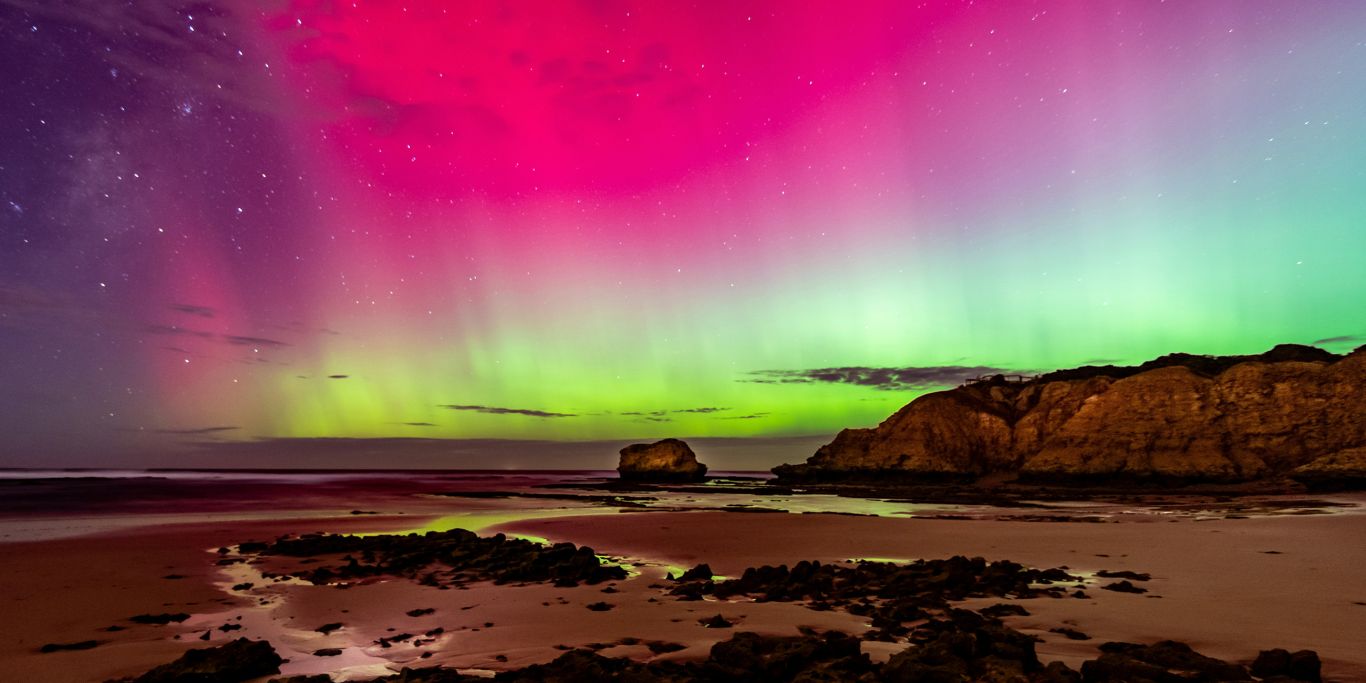

A major solar storm could bring one of the best aurora australis chances of the year.
The southern lights may put on a rare show across Australia tonight, with the Australian Space Weather Forecasting Centre (ASWFC) and international agencies warning of conditions strong enough to spark a vivid aurora australis.
A fast-moving burst of solar material is on track to reach Earth on 9 December. The ASWFC at the Bureau of Meteorology has issued an Aurora Watch, noting that the incoming disturbance is expected to trigger G3 level geomagnetic storming. This strength of activity has the potential to push auroral visibility well beyond Tasmania.
What is the aurora australis?
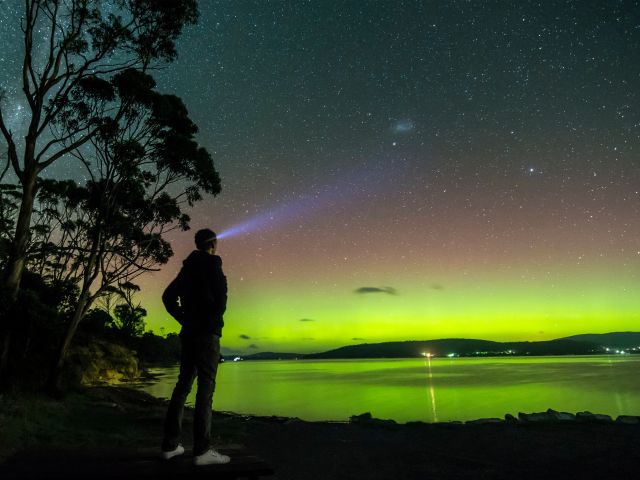
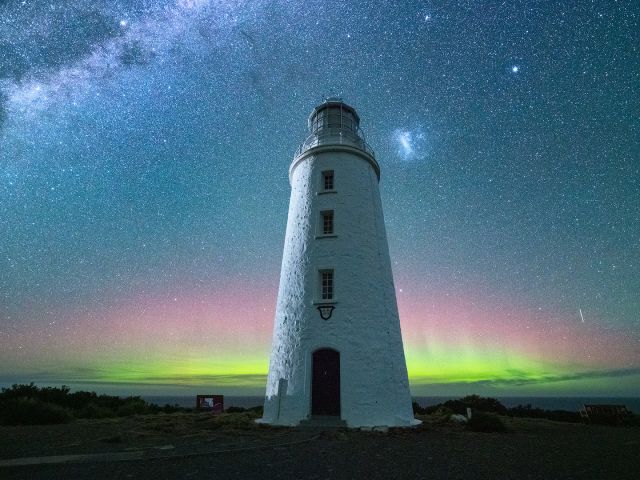
The aurora australis – also known as the southern lights – is one of the most dazzling natural displays visible to the human eye. Put simply, the phenomenon occurs when the sun releases a massive burst of charged particles and magnetic fields into space. These particles are captured and funnelled toward the southern poles by Earth’s magnetic field, colliding with gases in the Earth’s atmosphere. The collisions result in light being emitted and a spectacular natural dancing rainbow ensuing.
The past two years have been particularly good years for viewing the phenomenon.
What the latest forecast says

According to the ASWFC, the Coronal Mass Ejection (CME) is forecast to arrive early on 9 December, with a timing window of plus or minus 12 hours. If the storm develops as expected, visible aurora may be seen from Tasmania along with southern parts of Victoria, South Australia and Western Australia during local night hours.
NOAA is reporting similar conditions , with its own modelling showing a strong CME headed towards Earth. Together, both forecasts point to one of the most promising aurora opportunities of the season.
Where you might see the aurora australis tonight
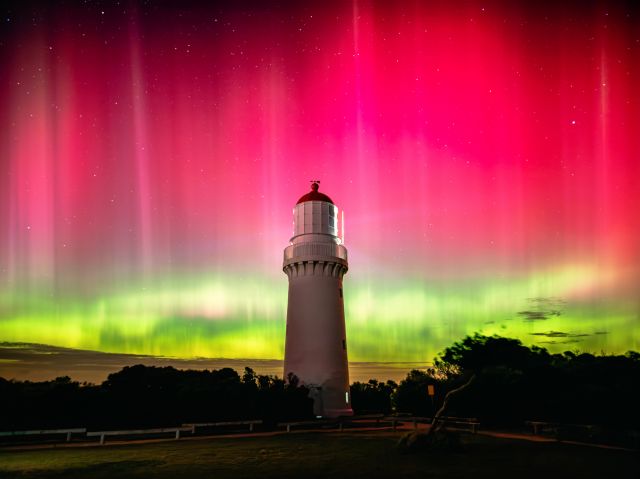
Tasmania is the most likely place to catch a strong display, particularly for those with a south-facing outlook and minimal light pollution. Southern pockets of Victoria, South Australia and WA could also see a glow if the storm intensifies.
To boost your chances, head somewhere with clear skies, low light pollution and a strong view to the south. Beaches, lookouts and dark sky reserves are ideal. And remember, the storm may peak quickly, so being ready early is essential.
When to look up
For the best chance of seeing colour in the sky, step out once darkness has settled. A useful guide is roughly 75 to 95 minutes after sunset on 9 December, when the sky is dark enough and the storm is likely to be active. The timing could shift depending on when the CME makes contact with Earth’s magnetic field, so stay flexible.
Keep an eye on real-time space weather indicators such as the KP index and Bz values . A negative Bz often signals that the magnetic field is opening up in a way that favours aurora activity.
What is causing tonight’s aurora potential
This event stems from a fast-moving CME from an M8.1 solar flare, launched from the active region currently rotating across the sun. Full-halo CMEs are the ones to watch because they expand outward in all directions and are more likely to be directed towards Earth. If tonight’s arrival window holds, we could see the magnetic field energise quickly after impact.
Geomagnetic storms are ranked from G1 to G5. Tonight’s forecast of G3 is considered strong and is known to produce visible aurora in Australia under the right conditions.
A quick reminder
Solar activity is famously unpredictable. Arrival times and intensity levels can shift as the CME moves through space, which means tonight could deliver anything from a subtle green smudge to a full sweep of colour across the sky.
Regardless of how the storm unfolds, tonight’s setup is shaping as a genuine opportunity for Australians to witness the aurora australis without travelling far from home. If the stars align, you might witness the southern lights dancing overhead without needing to board a flight.