hero media

Australia’s ‘least convenient’ airport claims the title again

Credit: Getty Images

One of Australia’s favourite spots for a city break has Australia’s ‘least convenient’ major airport, while a tropical gateway takes top spot.

The holiday is booked, bags packed and you’ve checked in online. But even the most organised of travellers can be undone by the airport. It’s a necessary evil to endure on the way to some of our favourite holiday destinations. Yet some airports are worse than others, as new research from travel insurance comparison service iSelect reveals.

The study ranked 11 major Australian airports based on important convenience factors including parking prices and availability, transport costs, distance from the city centre and passenger numbers.

From rising parking bills to increasingly busy terminals, here’s how the airports compare. Plus, how you can use this information to make the most of your next trip. 

Australia’s least convenient airport has been revealed 

Melbourne might be up there with the most popular spots for a city break, but its airport has landed a less enviable title. And it’s held the title for the second year running. Scoring 2.44 out of 10, it ranks as the least convenient of the 11 airports assessed.

Parking was the main sticking point for travellers. The study found an average weekly parking cost of $412, the highest in the index and a 42 per cent increase on the previous year. 
melbourne airport
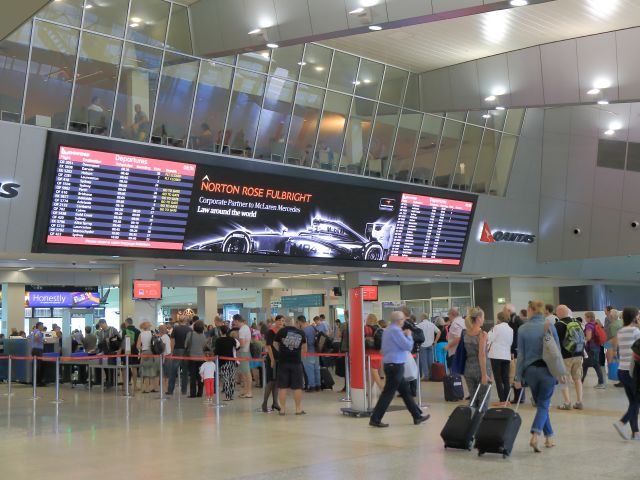
Melbourne Airport has been dubbed Australia’s least convenient airport for the second year running. (Credit: Getty Images)

Melbourne’s airport is also 22.1 kilometres from the CBD. The research puts a taxi journey at $55 to $70 and the single-ticket price for its airport bus option at $25.90. Add more than 100,000 passengers a day, and that’s a lot of travellers to brush up against on any given day.

Brisbane follows in second-last place, scoring 3.11. The average travellers paid to catch public transport or a taxi came in at $48.03, the highest in the study, with weekly parking averages at $234.89, up seven per cent.

The Gold Coast completes the bottom three with a score of 3.67. Weekly parking averages $252.70 following a nine per cent rise, adding another expense to that sunshine escape.

Need tips, more detail or itinerary ideas tailored to you? Ask AT.

AI Prompt

Australia’s most convenient airports

Winning gold at the top of the list, Cairns offers a welcome combination: a short journey into town and costs that haven’t climbed since last year. 

The Great Barrier Reef gateway scores 7.78 out of 10 and sits just 5.7 kilometres from the city centre, the shortest distance in the index. Its average weekly parking bill is $176.67, while the average spent on public transport and taxi options is $20. Both figures are unchanged year on year.

Passenger numbers have also dipped one per cent to an estimated 12,745 a day.
darwin airport
Darwin Airport claimed the silver medal as the second most convenient airport. (Credit: Getty)

Darwin claims second place with 7.11. The research highlights free public bus travel as one advantage, compared with an average taxi fare of $32.50 to the city. At around 5296 daily passengers, it also handles a fraction of the traffic passing through the biggest hubs.

Our humble capital, Canberra, takes third with 6.56. Its average transport cost of $14 is the lowest in the study, while weekly parking comes in just under $200.

These results offer an indication of convenience, rather than a guarantee of a seamless departure. Smaller passenger totals don’t necessarily translate into shorter queues on the day, so make sure you still arrive with plenty of time before boarding to avoid any mishaps.

Weekly travel news, experiences
insider tips, offers, and more.

How to avoid overpaying and overcrowding

If your airport parking bill feels steeper than it used to, the research offers some explanation. Eight of the 11 airports recorded annual increases, led by Melbourne’s 42 per cent jump.

Perth followed with a 16 per cent rise and Adelaide with 13 per cent. Sydney was the only airport to record a fall, down six per cent, although its $323 weekly average remained the second-highest.

happy at the airport
A little planning can make all the difference. (Credit: Getty)

Before you hop in the car, it’s always a smart move to compare a parking quote for your travel dates with the return cost of public transport, taxis or rideshare. For a group, calculate the total fare for everyone travelling. If driving still makes sense economically, compare advance-booking prices across different car parks and allow for any additional shuttle transfer costs if required.

An increase in airport passenger numbers is another reason to plan ahead. Melbourne’s rose three per cent and Darwin’s four per cent, while Cairns recorded a slight decline. Annual averages won’t tell you how busy security will be when you arrive, so follow your airline’s check-in guidance and bake in extra time for the journey, bag drop and screening.

A little extra planning doesn’t always guarantee a seamless journey, but it often means fewer nasty surprises on the day.

Want to see more stories from Australian Traveller in your Google search results?

  1. Click here to set Australian Traveller as a preferred source.
  2. Tick the box next to "Australian Traveller". That's it.
Jessica O'Donnell
Jessica O’Donnell is Evergreen Editor at Australian Traveller. After nearly seven years in London, she returned to her hometown of Sydney with a fresh appreciation for the places and experiences on her doorstep. Previously Ecommerce Editor at Women’s Health UK, she’s also written for The Telegraph, The Times, Runner’s World and Cosmopolitan in the UK, as well as ELLE and Harper’s BAZAAR Australia. At Australian Traveller, she helps readers plan memorable Australian escapes, from coastal weekends to city stays. When she’s not writing or editing content, you’ll likely find her hunting down Sydney’s best dirty martini or adding to the ever-growing stack of books on her bedside table.
View profile and articles
hero media

Heathcote has evolved into the ultimate eco-escape for foodies

    Margaret Barca Margaret Barca
    From cabins to canvas, craft distillers to destination dining, Heathcote locals reveal their eco-savvy passions in ways that resonate with those seeking to travel lightly. 

    Heathcote, on traditional Taungurung Country in Central Victoria, is synonymous with its garnet-hued shiraz, but wine isn’t the only string to its bow. The town itself is sprinkled with heritage buildings from the gold rush era, and beyond that a growing collection of sustainable gastronomy and eco-friendly escapes. Nearby Bendigo, one of only 65 cities in the world recognised as a UNESCO Creative City and Region of Gastronomy, plates up an astonishing calibre of produce, wine and food for its size. Increasingly the entire region is taking up the challenge, though Heathcote in particular shines with its focus on sustainability. 

    Pink Cliffs GeologicalReserve
    The dramatic landscape of Heathcote’s Pink Cliffs Geological Reserve. (Image: Visit Victoria/Emily Goodfrey)

    The eco-stays bringing sustainability to Heathcote 

    Yellow BoxWood’s safari-style tents
    Yellow Box Wood’s safari-style tents are nestled on 40 hectares of bushland. (Image: Emily Goodfrey)

    Andee and Lisa Davidson spent years working in southern Africa before settling in Heathcote. “We had a vision of how this could be,” explains Andee. “We wanted a retreat, but one that was off-grid and environmentally sustainable.” Now, at Yellow Box Wood, two luxury safari-style tents are at the heart of 40 hectares of rolling hills and native bush, with kangaroos, wallabies, echidnas, goanna and birdlife aplenty. It’s all solar-powered, wood for the fire is mainly fallen timber, and water is collected on the carport roof.  No lack of creature comforts though – en suite with rain shower, espresso coffee maker, comfy seating, wood-burning fire all set to go. There’s also a solar-heated, mineral salt pool in a bush setting, walking tracks, and even a mini bush golf course.  On my visit, I put the vision to the test. Cocooned in the plush four-poster bed I can glimpse the stars, while the heater casts a golden glow on the canvas. In the morning, I wake to a blush-pink sunrise, kangaroos feeding and a soundtrack of magpies.

    Mt Ida Eco Cabin
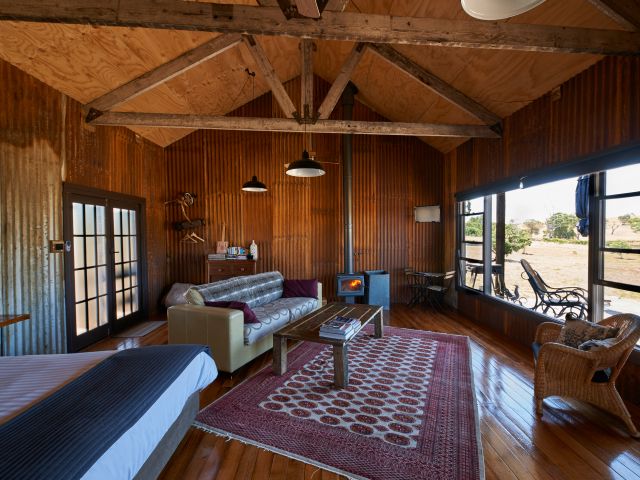
    Mt Ida Eco Cabin is rustic and simple but oozes comfort. (Image: Graham Hosking)

    If a tent is not your style, Stephen and Cally Trompp’s carbon-neutral Mt Ida Eco Cabin might entice with its generous deck and farmland views.   Inside the cabin, corrugated iron walls as rusty as a shearing shed, gleaming (recycled) floorboards, timber truss ceiling (crafted by Stephen), wood-fired heater and an old-school turntable with a pile of vinyls to spin. It’s fun, and a little boho. “Everything is recycled. The cabin takes maximum advantage of the sun in winter. It’s all solar-powered. Don’t panic, though,” says Stephen, “you can still charge your phone and get 4G reception!” Settle into an Adirondack chair on the deck or pedal off on a mountain bike to suss out the wineries.  

    A taste of Spain in Central Victoria 

    Three Dams Estate
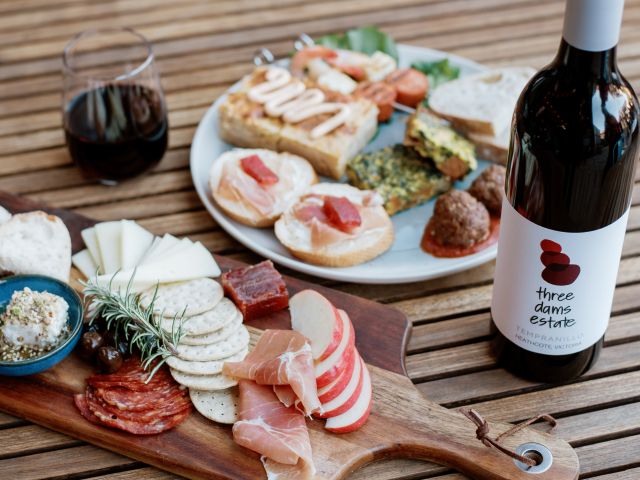
    Three Dams Estate make Spanish-style wine.

    Another person with a vision is Evan Pritchard at his Three Dams Estate where the wines reflect his deep love of Spain and of Spanish-style grapes, such as tempranillo. Afternoons in the ‘wine shed’ or cantina are matched with music (flamenco is a favourite), Spanish bites from tapas to paella (with Evan on the pans!) and views to Mount Alexander. Sustainability is also a passion. “You don’t need to buy anything. We decided to be off-grid from the start, but it is a lifestyle change,” he says. “You need to think about it and be careful.” Everything here is recycled, reassembled, refurbished. Evan has an electric car (with solar-powered charger), solar-power for the winery, and even a jaunty little electric tractor/forklift. “I love the idea of all the things you can do using the sun.” Sipping a crisp rosado (a Spanish rosé) with Evan in the sunshine, I couldn’t agree more. 

    The vineyard redefining sustainable winemaking 

    Silver Spoon winery
    The Silverspoon Estate winery is completely off-grid. (Image: Graham Hosking)

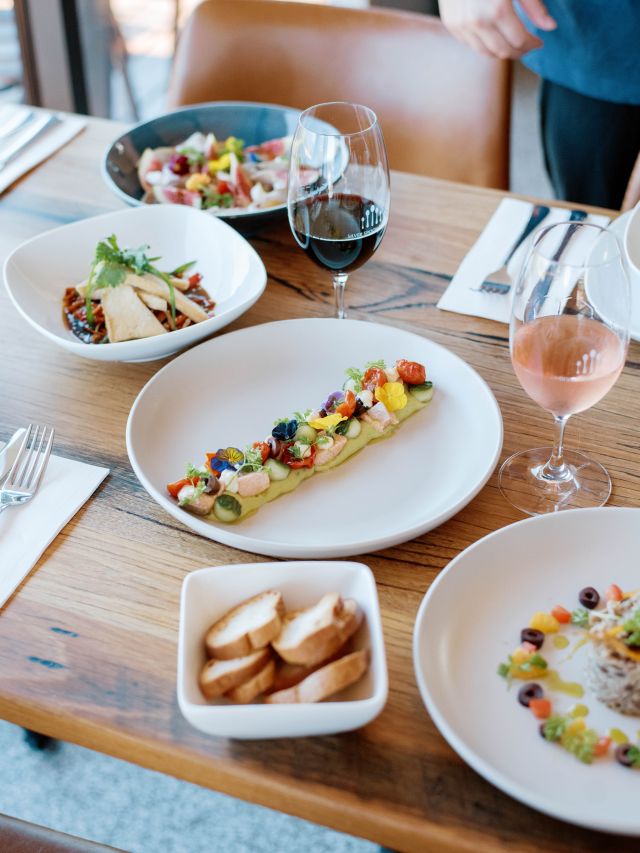
    On the other side of Heathcote, Silver Spoon Estate demonstrates sustainability on a more extensive scale. Tracie and Peter Young’s winery, cellar door, award-winning restaurant and their own house are all solar-powered and off the grid. Sustainability is intrinsic to everything they do.  The property sprawls across 100 hectares, with 20 hectares under vine – shiraz, viognier, grenache, tempranillo. As the climate has changed, so too has the approach. These are dry-grown vineyards. “We prune for drought. That means lower yields but more intense flavours,” says Peter.  The fine-dining restaurant offers sweeping views, a wood-burning fire and a deck for languid lunches. Head chef Ben Hong sources regional, sustainable ingredients and weaves estate wines into the menu – think crispy wild mushroom arancini, viognier-infused chicken breast.   

    Silver Spoon’s award-winning restaurant
    Silver Spoon’s award-winning restaurant.

    Heathcote’s other hidden gems 

    Heathcote Wine Hub
    Heathcote Wine Hub is housed in a 1855-built timber church.

    Not all local wineries have a cellar door, but I find local treasures at the Heathcote Wine Hub, a petite 1855 timber church in the main street, lovingly returned to life by Karen Robertson and Carey Moncrieff.  “Carey is a scrounger,” says Karen. “He doesn’t throw a single thing away.” He does, however, craft things into something quite special. Heritage floors, light-filtering lancet windows and shelves of regional wines create the perfect ambience for wine tasting. Or order a glass and linger over a cheese platter.  

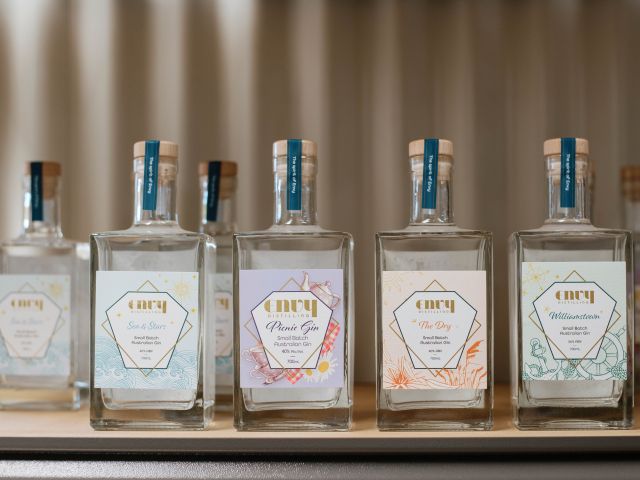
    Heathcote is not all wine, of course. Nathan Wheat and partner Vanessa Curtis run Envy Distilling with a committed sustainable ethic – and a serious love of gin. Their small-batch distillery produces grape-based gin, and soon brandy. Distilled water is reused in an ingenious cooling system. All waste is treated on site. They buy excess wine from winemakers to distil and buy recycled barrels. “Distilling with the sun,” as Nathan says. Each Envy gin has its own story. Spicy, award-winning The Dry, is designed to capture the region’s dry, rugged nature. Pull up a stool at the bar (reclaimed timbers and tiles, of course), order a Gin Flight, or kick back with a cocktail and let Nathan share his eco journey.   

    Envy gins
    Sample gins at small-batch distillery Envy.

    A traveller’s checklist 

    Getting there

    It’s less than two hours’ drive from Melbourne. The scenic route we take goes past Sunbury, then along a splendid country road through Romsey and the magic, boulder-strewn landscape of Lancefield. Watch for kangaroos on the road! 

    Staying there

    Go off-grid in style at Yellow Box Wood for glamping or try Mt Ida Eco Cabin for a couple’s weekend hideaway. 

    Eating there

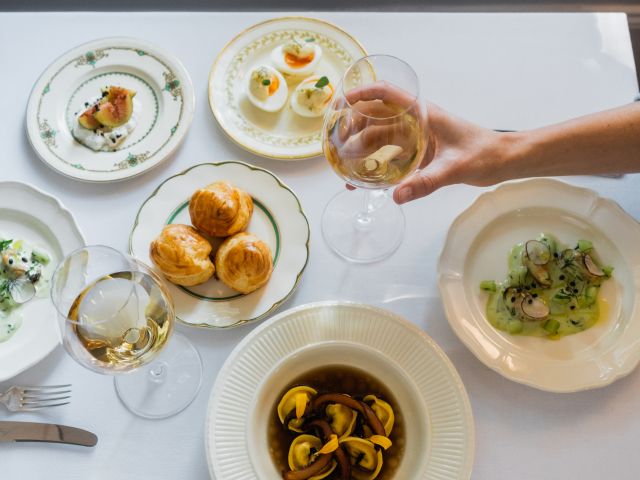
    French dishes at Chauncy
    Award-winning French restaurant Chauncy.

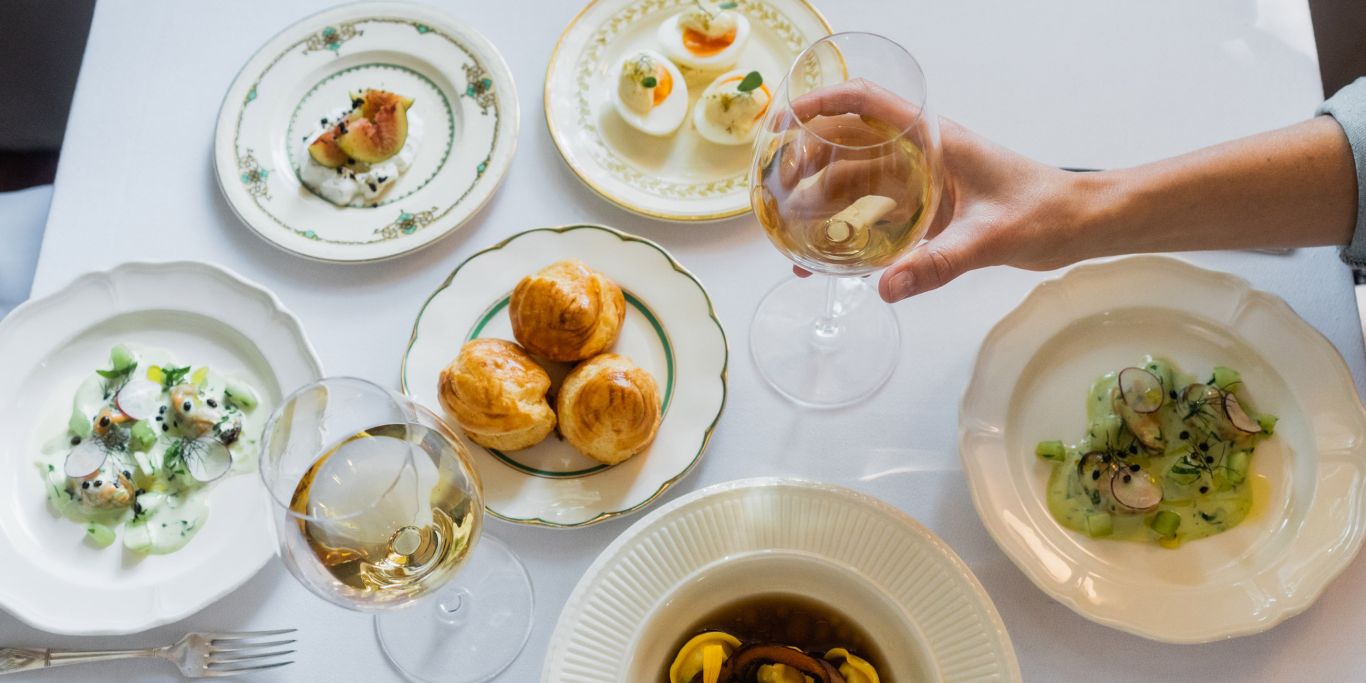
    At award-winning Chauncy, French chef Louis Naepels and sommelier wife Tess Murray have created a tiny, elegant pocket of rural France. Meticulously restored 1850s sandstone building, sun-drenched dining room, impeccable service, a menu suffused with local flavours and thoughtful wine pairings.  

    Fodder is both cafe and social hub. Chef Mo Pun and sister Lalita serve classic Aussie breakfast-to-lunch fare, though their Nepalese heritage sneaks through. 

    Playing there

    Sanguine Estate
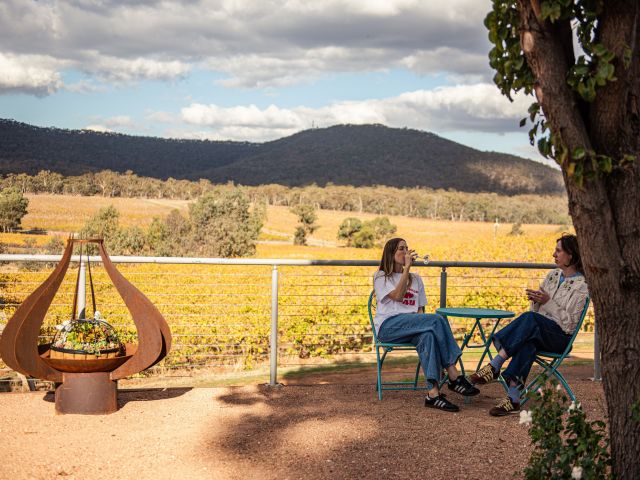
    Sip on wines among the vines at Sanguine Estate. (Image: Visit Victoria/Emily Godfrey)

    Sanguine Estate’s cellar door and terrace overlook bucolic vineyards. Its award-winning, dry-grown wines include the distinctive D’Orsa Blanc dessert wine, reflecting the family’s Swiss-Italian heritage. Order a charcuterie board and stay a while. Keep it carbon neutral by cycling some (or all) of the 50-kilometre O’Keefe Rail Trail to Bendigo.  

    At Bridgeward Grove, learn about the property’s Old Mission Grove heritage olive trees, do a sommelier olive oil tasting, and stock up on sustainably grown olives and oil. Explore the unique landscape, wildflowers and wildlife of pink cliffs geological reserve.