hero media

The secret pink cliffs of Victoria you need to see to believe

A little slice of paradise – but make it pink.

Victoria’s gold rush left plenty behind – an economic boom, population growth and a rich history that lives on today. But perhaps its most surprising legacy is the Pink Cliffs Geological Reserve. Carved out by mining and reclaimed by nature, these pastel-hued formations are one of the country’s best-kept secrets.

A quick history of the Pink Cliffs

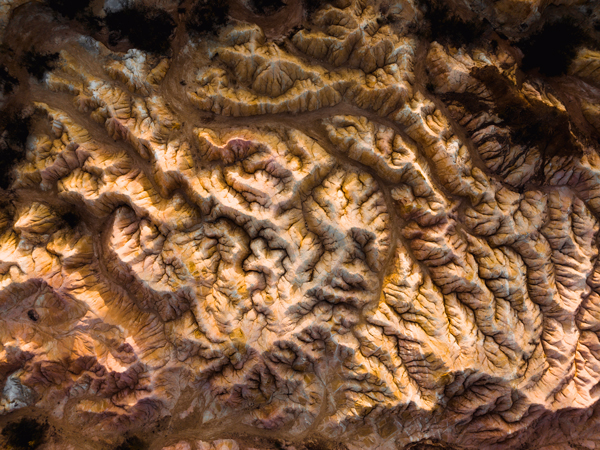
Back in the 1880s, gold miners descended on the rural Victorian town of Heathcote, following news of an untapped alluvial goldfield. To access its riches, hydraulic sluicing was carried out across the site, a mining technique that uses high-pressure jets of water to blast away large chunks of earth.
The Pink Cliffs Geological Reserve in Heathcote, Vic
Extensive hydraulic sluicing resulted in a carved-out landscape. (Image: Visit Victoria)

Hydraulic sluicing has since been recognised as a method that wreaks serious environmental havoc. But it’s also the reason this land looks the way it does today – a 30-hectare vista of mini gorges and cliffs, dotted with native flora that has found life in its ravaged crevices. Now known as the Pink Cliffs Geological Reserve, the site is listed on the Victorian Heritage Register and identified as a Terrestrial and Inland Waters Protected Area by the state government.

Why is it called the Pink Cliffs Geological Reserve?

As humans often do, we managed to find beauty in the midst of destruction. And while many tourists visit the reserve to learn about its gold-rush history, it’s become popular for another reason entirely.
The Pink Cliffs Geological Reserve in Heathcote, Vic
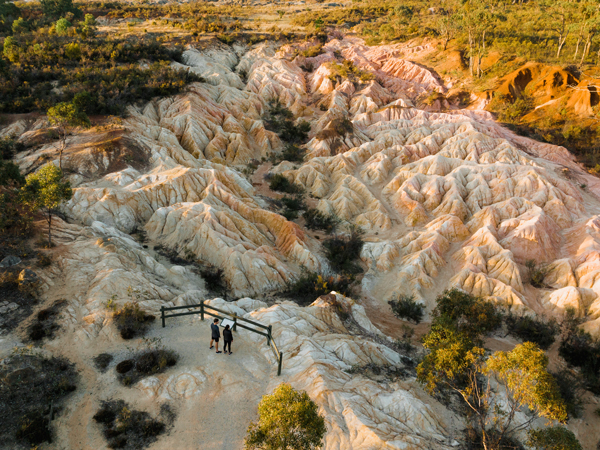
The site has since become popular for its pink-hued cliffs. (Image: Visit Victoria)

Yes, plenty of gold was found here. But the Pink Cliffs Geological Reserve is also rich in smooth ironstone and a naturally occurring pink clay. The powder-like texture of the clay, combined with the distinctive volcanic appearance of the ironstone, creates a lunar-like landscape reminiscent of a sunrise in summer.

Similar to places like Uluṟu and Mungo National Park, the formations reflect the sun’s rays to create a constantly changing canvas of colour – shades of orange and pink that dance and dip across the site. The cliffs and gorges seem otherworldly, more like the blushing canyons of Mars than country Victoria.

Need tips, more detail or itinerary ideas tailored to you? Ask AT.

AI Prompt

A day-tripper’s guide to the Pink Cliffs

The Pink Cliffs Geological Reserve is easy to experience within a day, making it the perfect pit stop on a classic Victorian road trip. For those coming from Melbourne, it’ll take you roughly 1.5 hours, while nearby Bendigo is only a 35-minute drive away.

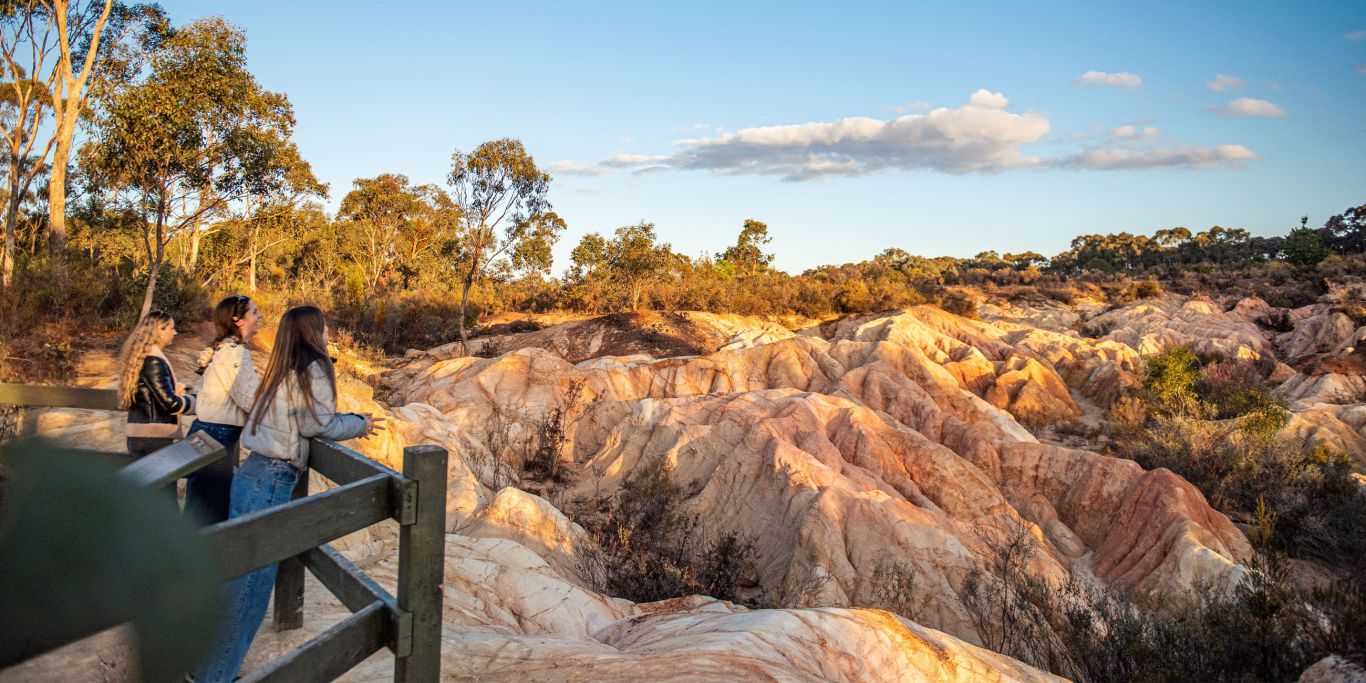
Once you’ve arrived, take the easy 30-minute loop from the car park, which weaves through eucalypt forests and past educational information signs. There are multiple viewing platforms along the way that showcase the pink peaks and volcanic-like gorges from different perspectives, so don’t forget your camera!
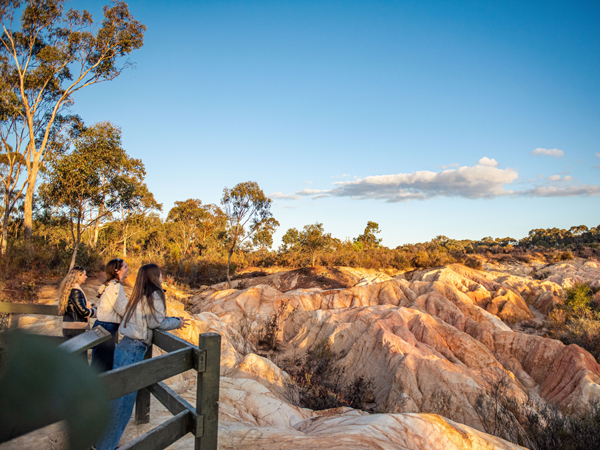
The Pink Cliffs Geological Reserve in Heathcote, Vic
Admire the geological wonder from multiple viewing platforms. (Image: Visit Victoria)

While the reserve is an absolute highlight, this picturesque pocket of Victoria has plenty more to offer visitors. Oenophiles should head to one of the region’s vineyards, like Silver Spoon Estate, for an afternoon tipple. If you’re more of a hophead, check out nearby Tooborac Brewery. For more natural beauty, hit the walking trails of Heathcote-Graytown National Park or make the 20-minute drive to Lake Eppalock for a refreshing dip. Craving more colour? Be sure to add Australia’s pink lakes to your bucket list too!

If you’re short on time, don’t sweat it – the Pink Cliffs Geological Reserve is worth the trip alone. Just remember to stick to all designated pathways and avoid touching anything beyond the fences. This fragile landscape has endured enough – let’s protect it for generations yet to come.

Want to see more stories from Australian Traveller in your Google search results?

  1. Click here to set Australian Traveller as a preferred source.
  2. Tick the box next to "Australian Traveller". That's it.
Taylah Darnell
Taylah Darnell is Australian Traveller's Writer & Producer. She has been passionate about writing since she learnt to read, spending many hours either lost in the pages of books or attempting to write her own. This life-long love of words inspired her to study a Bachelor of Communication majoring in Creative Writing at the University of Technology Sydney, where she completed two editorial internships. She began her full-time career in publishing at Ocean Media before scoring her dream job with Australian Traveller. Now as Writer & Producer, Taylah passionately works across both digital platforms and print titles. When she's not wielding a red pen over magazine proofs, you can find Taylah among the aisles of a second-hand bookshop, following a good nature trail or cheering on her EPL team at 3am. While she's keen to check out places like Scotland and North America, her favourite place to explore will always be her homeland.
View profile and articles
hero media

Film lovers need to add these Victorian theatres to their bucket list

    Ricky French Ricky French
    Theatres have always been a cornerstone of regional Victoria, reflecting the character and history of their local communities.

    From grand, gold rush-era masterpieces to Art Deco wonders to repurposed prisons, we’ve rounded up four of Victoria’s best regional theatres to catch a show at next time you’re travelling through.

    Her Majesty’s Theatre, Ballarat

    Her Majesty’s Theatre, Ballarat 
    Her Majesty’s Theatre in Ballarat has been standing for 150 years. (Image: Michael Pham)

    A monument to the immense gold rush wealth flooding through Ballarat in the second half of the 19th century, Her Majesty’s Theatre (‘Her Maj’ to locals) celebrates its 150th anniversary as the city’s premier performing arts venue this year.

    Built in a classical style and immaculately preserved (thanks largely to a recent $16-million restoration), this Lydiard Street landmark is the oldest continuously operating theatre in mainland Australia, notable for its double balcony and a stage that slopes towards the front, making it one of the most audience-friendly venues in the country to see a show.

    The Capital, Bendigo

    The Capital Theatre, Bendigo
    The Capital in Bendigo was built in 1873 as a Masonic Hall. (Image: Michael Pham)

    Denoted by its distinctive Corinthian columns, more reminiscent of ancient Greece than regional Victoria, The Capital theatre in Bendigo has been through several iterations since the first stone was laid in 1873.

    Originally a Masonic hall, the renaissance revival-style building became a theatre in the 1890s, falling into disrepair for a time during the 1970s, before being restored and reopened (as the Bendigo Regional Arts Centre) in 1991. Today, the 480-seat venue hosts everything from comedy to cabaret to traditional theatre, dance, opera and live music.

     Ulumbarra Theatre, Bendigo

    a look insideBendigo’s Ulumbarra Theatre
    Inside Bendigo’s Ulumbarra Theatre, a former prison. (Image: Michael Pham)

    Bendigo has busted out as a regional performing arts hotspot, so it’s fitting that one of its newest venues is housed within a former prison. Meaning ‘meeting place’ or ‘gather together’ in the language of the local Dja Dja Wurrung people, the $26-million, 950-seat auditorium rose from within the red brick walls of the historic Sandhurst Gaol in 2015.

    It’s an eerie feeling as you approach the imposing granite facade, pass beneath the old gallows and pick up your ticket from the box office occupying a repurposed cell block. With the building playing a main character in the show, this is performative architecture at its finest.

    Rex Theatre, Charlton

    the Rex Theatre in Charlton
    The 1938-built Rex Theatre in Charlton is an Art Deco gem. (Image: Jenny Pollard)

    Regional theatres don’t come more romantic than this Art Deco gem in the river town of Charlton, in north-central Victoria. Built in 1938, the 350-seat community-owned theatre provides an essential entertainment outlet for residents in the Wimmera Mallee region, as well as visitors making the trip up the Calder Highway from Melbourne.

    The volunteer-run venue is the last remaining purpose-built cinema in regional Victoria, and hosts the Charlton Film Festival every February, plus three weekly film screenings (Tuesday, Saturday and Sunday).