The data is in. Here’s when to travel to avoid flight cancellations

hero media
Expedia has revealed the best time to travel to avoid flight cancellations in its 2025 Air Hacks report.

Nothing takes the shine off your holiday faster than a cancelled flight. Feelings of excitement and anticipation quickly evaporate when faced with the task of rearranging your plans last minute to cater to a new departure date or time.

But global travel company Expedia , in collaboration with Airlines Reporting Corporation and the OAG , has stepped in to help. In its recently released 2025 Air Hacks report, which covers a multitude of air travel hacks, it revealed the best times and days to travel to avoid cancellations altogether.

Airport display board showing cancelled flights
Expedia reveals your best bet at avoiding flight cancellations. (Image: Anya Berkut)

So, when should you travel to avoid flight cancellations?

The numbers are in and flight cancellations are at their lowest in February and March, with an average of just 2.5 per cent of flights cancelled. In comparison to January, which sees cancellation rates of 9.4 per cent, these two months are extremely reliable for air travel.

What’s more, the data indicates that flights departing in the late evening, specifically between 9 pm and 3 am, are the least likely to be cancelled. Flights booked between 3 pm and 9 pm have a 43 per cent higher chance of being called off compared to those leaving later in the night.

Stock image of traveller at an airport
February and March are the best months to book.

If you’re also concerned about costs, it’s good to factor in the time of year you’re looking at travelling. January is the cheapest month for economy class; if you’re looking for premium tickets, opt for October. Surprisingly, Saturday has been revealed as the cheapest day of the week to fly, with travellers saving up to 27 per cent compared to Monday departures.

What other hacks did the report reveal?

When it comes to pain points for airline travellers, cancelled flights aren’t the only problem to solve. Thankfully the data reveals several hacks to save you time and money and help you avoid other airport stresses while also hinting at hot travel destinations to consider visiting in 2025 before they peak in popularity.

Stock image of a plane window
Expedia’s report also hints at 2025’s hottest travel trends.

How to save money

Can the day you book make a difference to the cost? The findings say yes! Booking airfares on a Sunday can save you up to 20 per cent. Depart on a Thursday and you could be looking at up to 8 per cent in savings. That money could be better spent in destination.

Booking domestic flights at least six months in advance will save you up to 36 per cent. Securing your ticket two months in advance for an international flight can save you up to 12 per cent. In fact, the further in advance you book, the more expensive it can be. A three-month pre-departure window is ideal for securing the best price for overseas travel.

Stock image of a plane on the runway
Use the three-month pre-departure window when booking international flights.

Expedia also recommends price tracking on its app, which analyses data to show users the best time to book and notifies you when flight prices change. Bundling is another way to save – booking holiday packages (which often include flights, accommodation, car rentals and/or activities) can save you hundreds.

How to save time

Whether you’re going it solo, jetting off with friends or travelling with family, airports can be stress-inducing places. And while there’s not much you can do about customs lines and security checks, Expedia recommends travelling on a Sunday when airports are generally at their least busy. It will save you time as you won’t have crowds to contend with.

Stock images of a man and his child waiting at the airport
Sundays are when most airports are at their quietest.

Trends to look out for

The report names Sydney, Adelaide and Canberra as the hottest places to travel domestically this year. Combine Sydney’s incredible beaches with Adelaide’s foodie scene and Canberra’s never-ending list of things to do and you’ve got the ultimate Aussie itinerary.

When it comes to international destinations, Bali in Indonesia, Thailand’s capital of Bangkok and Los Angeles, USA, are the most popular places among Aussie jet setters. And thanks to new direct flight routes, Expedia predicts Istanbul (non-stop from Sydney with Turkish Airlines ) and Fiji (non-stop from Cairns with Fiji Airways ) will increase in popularity in the year ahead.
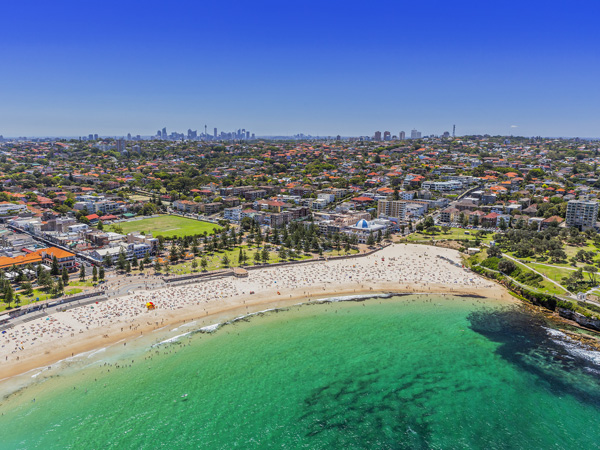
Coogee Beach in Sydney, NSW
Sydney is known for its beautiful beaches. (Image: Destination NSW)
Taylah Darnell
Taylah Darnell is Australian Traveller's Writer & Producer. She has been passionate about writing since she learnt to read, spending many hours either lost in the pages of books or attempting to write her own. This life-long love of words inspired her to study a Bachelor of Communication majoring in Creative Writing at the University of Technology Sydney, where she completed two editorial internships. She began her full-time career in publishing at Ocean Media before scoring her dream job with Australian Traveller. Now as Writer & Producer, Taylah passionately works across both digital platforms and print titles. When she's not wielding a red pen over magazine proofs, you can find Taylah among the aisles of a second-hand bookshop, following a good nature trail or cheering on her EPL team at 3am. While she's keen to visit places like Norway and New Zealand, her favourite place to explore will forever be her homeland.
See all articles

From coast to bush: these are Gippsland’s best hikes

Video credit: Tourism Australia

From coast to mountains, hiking in Gippsland offers a stunning array of landscapes, with trails that take you deep into the region’s heritage.

I step out onto the sand and it cries out underfoot. Kweek! I take another step and there’s another little yelp. Screet! Picking up the pace, the sounds follow me like my shadow, all the way down to the water. It’s obvious how this spot got its name – Squeaky Beach – from the rounded grains of quartz that make the distinctive sounds under pressure.

For many, Wilsons Promontory National Park is the gateway to Gippsland , and the best way to explore it is by walking its network of hiking trails, from coastal gems such as Squeaky Beach through to the bushland, among the wildlife. But it’s still just a taste of what you’ll find on foot in the region.

Venture a bit further into Gippsland and you’ll discover the lakes, the rainforest, and the alpine peaks, each changing with the season and offering summer strolls or winter walks. Just like that squeaky sand, each step along these trails has something to tell you: perhaps a story about an ancient spirit or a pioneering search for fortune.

The best coastal hikes in Gippsland

sunset at Wilsons Promontory National Park
Wilsons Promontory National Park is a sprawling wilderness with many coastal bushland trails. (Image: Mark Watson)

Wilsons Promontory National Park (or ‘The Prom’, as you’ll end up calling it) is an easy three-hour drive from Melbourne, but you might ditch the car when you arrive, with much of the park’s 50,000 hectares accessible only by foot. From the inky water of Tidal River (dyed dark purple by abundant tea trees), I like the easy walks along the coast, among lichen-laden granite boulders, to golden beaches and bays.

a couple on Mount Oberon
Panoramic views from the summit of Mount Oberon. (Image: Everyday Nicky)

The trail to the panoramic views at the summit of Mount Oberon is a bit harder, up steep timber and granite steps, but it’s a popular 6.8-kilometre return. The more remote hikes are found through the open banksia and stringybark woodland of the park’s north, or along the multi-day Southern Circuit , which ranges from about 35 to 52 kilometres, with sunrises and sunsets, kangaroos and cockatoos, and maybe even whales.

a golden sand beach at Wilsons Promontory National Park
Walk ‘The Prom’s’ golden sand beaches. (Image: Tourism Australia/Time Out Australia)

You might also see whales on the George Bass Coastal Walk , even closer to Melbourne on the western edge of Gippsland. This dramatic seven-kilometre trail along the clifftops takes in sweeping views of the wild ocean, occasionally dipping down from grassy green hills to coastal gullies and a secluded beach. It also now links into the Bass Coast Rail Trail for an extra 14 kilometres.

the George Bass Coastal Walk
George Bass Coastal Walk trails for seven kilometres along clifftops. (Image: Visit Victoria/Time Out Australia)

Over at the eastern edge of Gippsland, in Croajingolong National Park, you can wander along the lakeshores beneath koalas and around goannas (I keep my distance since one chased me here!). For those who are even more adventurous, the park is also the starting point for the 100-kilometre Wilderness Coast Walk , usually done over seven days.

the Croajingolong National Park, Gippsland
Wander along the lakeshores in Croajingolong National Park. (Image: Tourism Australia)

The best bush hikes in Gippsland

the Baw Baw National Park
The alpine heath of Baw Baw National Park. (Image: Everyday Nicky)

Deep in the Long Tunnel Extended Gold Mine at Walhalla, mining guide Richard tells me how this small town in the mountains east of Melbourne boomed when prospectors found gold here in 1862. These days, you’ll find most of the town’s treasure – its heritage – above ground, with the Walhalla Tramline Walk a wonderful way to explore it.

Just seven kilometres long, the walk takes you through decades of Gold Rush history, following the original rail trail from lush bushland to the mining sites, and through the charming village of just 20 residents with its wooden cottages and old shopfronts adorned with turn-of-the-century advertising posters. Blazing a trail where trailblazers once opened up the region, this is also the starting point for the 650-kilometre Australian Alps Walking Track.

Nearby, Baw Baw National Park has walks through gnarled snow gums and alpine heaths that show off the colourful wildflowers in summer and the pristine carpet of white in winter. Several trails are perfect for snowshoes, including a 45-minute route from St Gwinear up to vast views across the Latrobe Valley.

Further up into the mountains, the Toorongo and Amphitheatre Falls Loop Walk is an easy 2.2-kilometre path that serenades you with the sound of flowing water as you pass mossy rocks and tree ferns en route to two sets of waterfalls cascading over boulders in the remote wilderness.

The best cultural hikes in Gippsland

the Mitchell River National Park, Gippsland
Hike the Mitchell River National Park. (Image: Parks Victoria/Grace Lewis)

Across a pool in a natural sandstone amphitheatre, deep within a cave behind a waterfall, it’s said the Nargun has its lair. A fierce creature, half human and half stone, that abducts children and can’t be harmed by boomerangs or spears, the story of the Nargun has been told around the campfires of the local Gunaikurnai people for generations.

As a culturally significant place for women, hikers are asked not to go into the Den of Nargun, but a 3.4-kilometre loop walk leads you through a rainforest gully to the entrance where you can feel the powerful atmosphere here in Mitchell River National Park , along Victoria’s largest remaining wild and free-flowing waterway.

the bee-eaters at Mitchell River National Park
Bee-eaters at Mitchell River National Park. (Image: Parks Victoria/Grace Lewis)

The Den of Nargun is part of the Bataluk Cultural Trail , a series of important traditional Gunaikurnai sites through central Gippsland. Another location is Victoria’s largest cave system, Buchan Caves Reserve, with trails to important archaeological sites of human artefacts up to 18,000 years old. The FJ Wilson Interpreted Walk includes the naturally sculpted white limestone steps of the 400-metre-long Federal Cave, while the Granite Pools Walk goes among tall timber and moss-covered gullies.

the ancient rainforest of Tarra-Bulga National Park
The ancient rainforest of Tarra-Bulga National Park. (Image: Josie Withers)

Also important to the Gunaikurnai people is Tarra-Bulga National Park , known for its ancient myrtle beeches and enormous mountain ash trees. Just 40 minutes return, the Tarra Valley Rainforest Walk offers a taste of this verdant landscape, while the Grand Strzelecki Track takes you deep into the lost world of forest giants on an epic 100-kilometre trail rich with tradition.

A traveller’s checklist

Staying there

the WildernessRetreats in The Prom
Wilderness Retreats in The Prom. (Image: Christian Pearson)

Wilderness Retreats in Wilsons Promontory offers glamping-style tents with luxurious queen beds. Star Hotel is a reconstruction of a Gold Rush-era hotel from 1863 in the heart of heritage Walhalla. Caves House is a historic three-bedroom house with views over the Buchan River.

Eating there

the Carrajung Estate, Gippsland
Enjoy a post-hike lunch at Carrajung Estate. (Image: Everyday Nicky)

Kilcunda General Store serves great coffee and meals of local produce at the George Bass Coastal Walk. Alpine Trout Farm is located near Toorongo Falls in Noojee. Fish for your own lunch and barbecue it with the provided cookware.

Carrajung Estate is a short drive from Tarra-Bulga National Park. The winery’s restaurant offers a seasonal menu of regional ingredients and you can stay at The Lodge.

a seafood feast at Carrajung Estate, Gippsland
The table is set for a seafood feast at the estate.

Video credit: Tourism Australia