2 Aussie stays made Conde Nast’s best hotels list – we stayed at both

hero media
The two iconic hotels were the only Australian stays to make the annual list and we’ve stayed at both. Our editors weigh in on their stays.

Condé Nast Traveller’s global editors have revealed their favourite places to stay across the world – and two Australian hotels have made the prestigious Gold List for 2025 . While the list includes some truly extraordinary properties from around the globe, what’s even more exciting is that we’ve stayed at both of the Aussie inclusions!

Here’s a glimpse into what it was like to stay at two of the best Australian hotels, shared through personal stories that bring these remarkable destinations to life.

Lizard Island
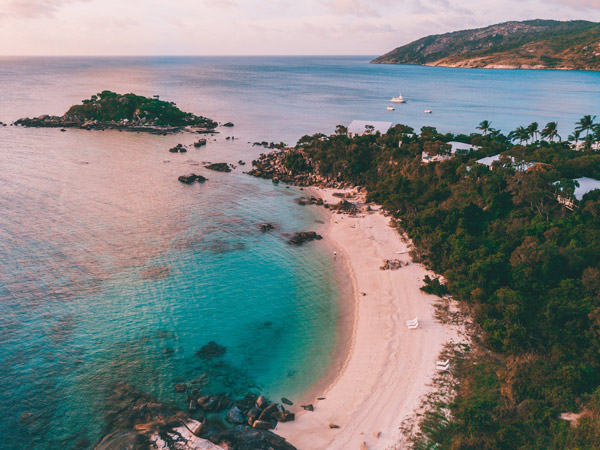
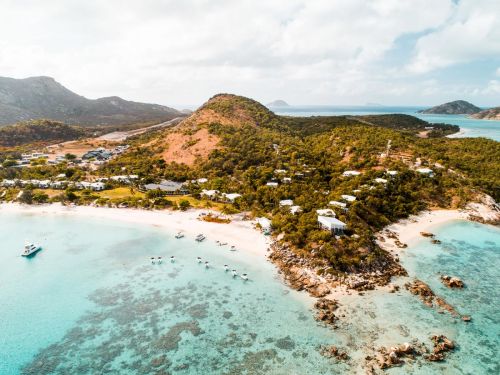
Lizard Island Great Barrier Reef Aerial
Do as much or as little as you like on Lizard Island. (Image: Supplied)

For Australian Traveller’s sub editor, Carla Grossetti, Lizard Island was more than just a luxury getaway – it was a homecoming. Growing up in Cairns, Carla spent her childhood snorkelling on the Great Barrier Reef, so the chance to revisit those waters in the lap of luxury was irresistible.

“You can do as much or as little as you like on Lizard Island. Launch yourself into the underwater environment and swim with turtles, snorkel over a giant clam garden and do your best impression of a starfish in Blue Lagoon," Carla says, who visited the Luxury Lodges of Australia property in 2024.

“The beauty of Lizard Island is that you can pamper yourself at the day spa, meet at the bar for sundowners and enjoy a world-class dining experience overlooking the waterfront," she says.

“I’m not surprised the resort featured on Condé Nast Traveller’s list of Best Hotels in Australia. It’s one of the best places I’ve stayed in the world and is the epitome of barefoot luxury."

Reflecting on her stay, Carla isn’t finished exploring this slice of paradise. “I’m currently manifesting a return visit: I’d like to go back in June to swim with minke whales during their annual migration," she concludes.
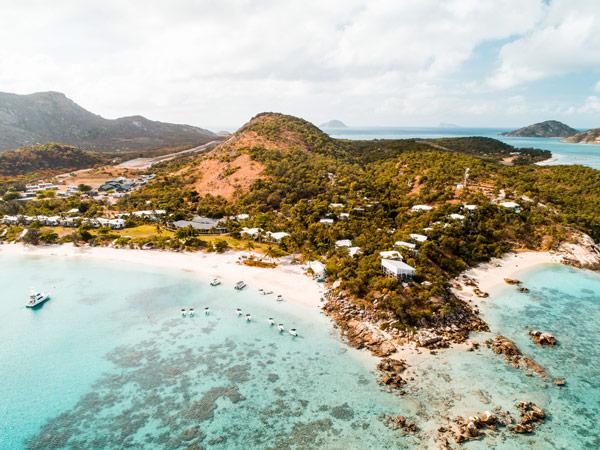
Lizard Island Great Barrier Reef Aerial Casuarina Beach and Blue Lagoon
Lizard Island is the epitome of barefoot luxury. (Image: Ken Butti)

Bullo River Station

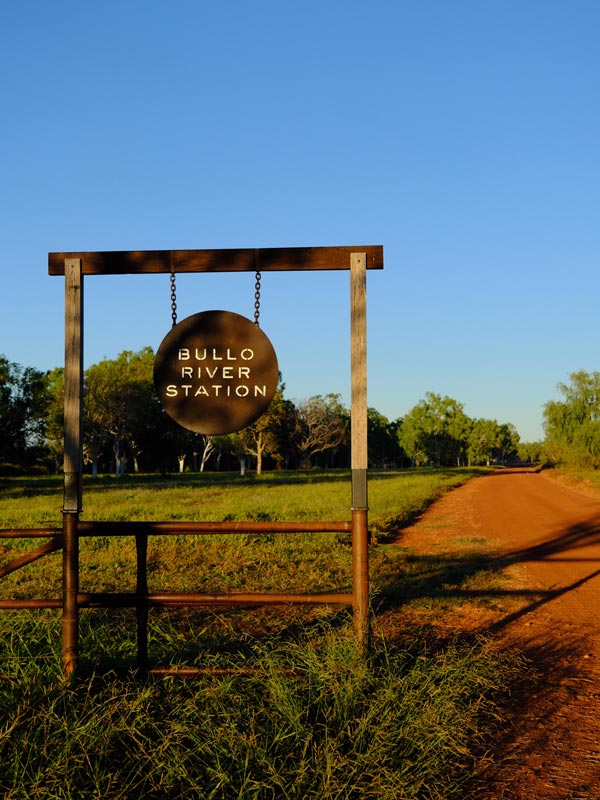
Bullo River Station sign
Bullo River Station is rooted in connection to the land and its stories. (Image: Imogen Eveson)

For Australian Traveller’s print editor, Imogen Eveson, Bullo River Station offered a completely different kind of luxury – one rooted in connection to the land and its stories. Situated on over 160,000 hectares of Miriwoong and Gajirrawoong Country straddling a space between the Top End and the Kimberley, Bullo is a working cattle station (and one of our favourite station stays) that blends pastoral activities with conservation.

“My stay at Bullo River Station was one of the best domestic travel experiences I’ve had," Imogen explains.

“For me, it encapsulated what is distinctive about luxury travel in Australia. Low-key, down-to-earth and relaxed but with every last detail considered and executed flawlessly."

When Imogen visited in June 2024, Bullo River Station had just been announced as the latest member of Luxury Lodges of Australia, a collection of exceptional properties in spectacular locations that each tell a unique Aussie story.
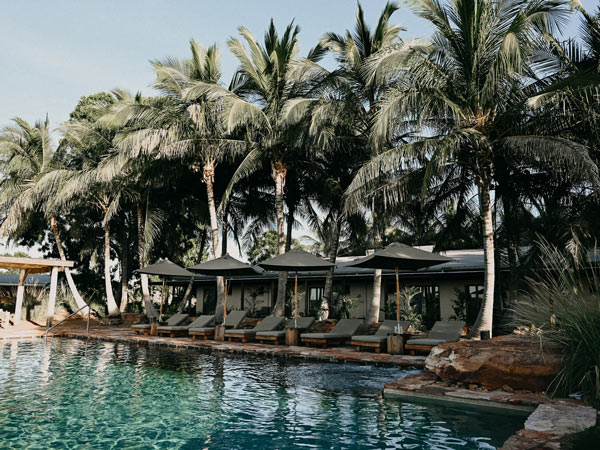
Bullo River Station pool
Bullo River Station joined Luxury Lodges of Australia last year.

Days here are filled with adventure. From waterhole swims and leisurely cruises down the Bullo River to station tours and scenic helicopter flights over a sandstone wilderness carved by waterfalls, gorges and the convergence of two rivers.

“I saw the most stunning sunrise of my life when our chopper pilot landed on a pinnacle overlooking it all," she says.

“Above all, luxury travel in Australia means the luxury of experience. The privilege of access to an extraordinary environment and the opportunity to learn about it from the passionate people charged with protecting it."

Current owners Julian and Alexandra Burt, who bought Bullo in 2017, have set the property on a path towards transformation again with a groundbreaking new approach to land management and a collaboration with the Australian Wildlife Conservancy (AWC). The vision is one where pastoral activities and conservation can thrive side by side, complemented by low-impact tourism that allows you to be totally immersed in the heart and soul of this place.
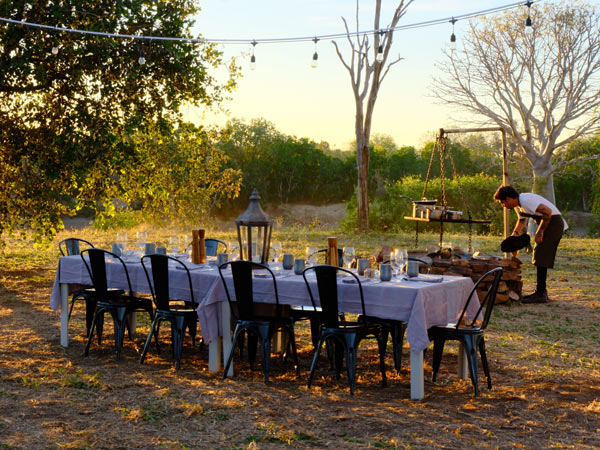
Bullo River Station outdoor dining experience
Days at Bullo River Station are filled with adventure. (Image: Imogen Eveson)

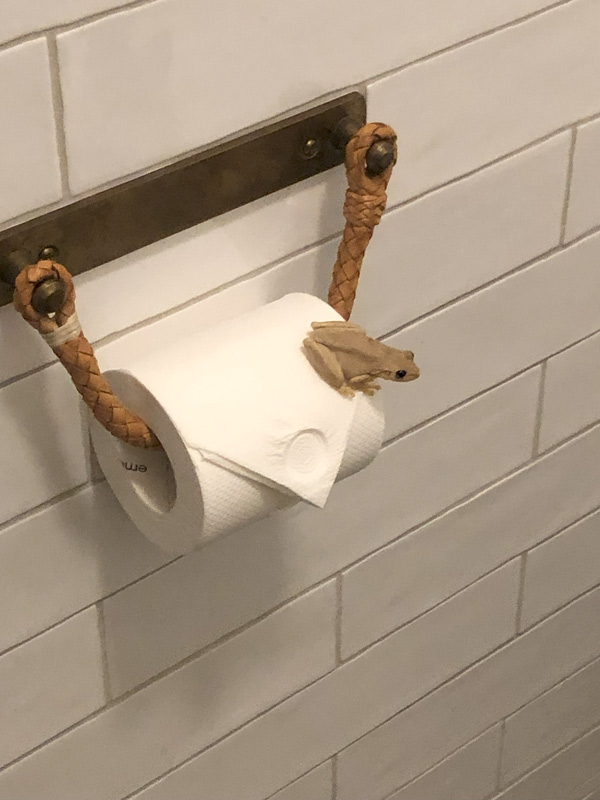
But the charm of Bullo lies in its quirks as much as its grandeur. Imogen recounted a moment of hilarity when her partner discovered a frog in the toilet.

“‘Ah, you’ve got a toilet frog!’ the staff chorused with a casual cheerfulness before instructing us, in such instances, to simply flush the loo and send the tiny tree frogs back where they came from; they are partial to the septic tank and don’t worry – we were assured it doesn’t harm them," Imogen recounts.

“I imagined all the traditional luxury hotels around the world where a commode cameo like this might provoke a freak-out among high-maintenance guests, and love knowing that Bullo is the kind of place that attracts likeminded people ready to throw themselves into the raw experience of it, frogs and all. And that to me feels so wonderfully Australian."
Bullo River Station toilet frog
Lucky the toilet frogs are cute. (Image: Imogen Eveson)
Emily Murphy
Emily Murphy is Australian Traveller's Email & Social Editor, and in her time at the company she has been instrumental in shaping its social media and email presence, and crafting compelling narratives that inspire others to explore Australia's vast landscapes. Her previous role was a journalist at Prime Creative Media and before that she was freelancing in publishing, content creation and digital marketing. When she's not creating scroll-stopping travel content, Em is a devoted 'bun mum' and enjoys spending her spare time by the sea, reading, binge-watching a good TV show and exploring Sydney's vibrant dining scene. Next on her Aussie travel wish list? Tasmania and The Kimberley.
See all articles

From coast to bush: these are Gippsland’s best hikes

Video credit: Tourism Australia

From coast to mountains, hiking in Gippsland offers a stunning array of landscapes, with trails that take you deep into the region’s heritage.

I step out onto the sand and it cries out underfoot. Kweek! I take another step and there’s another little yelp. Screet! Picking up the pace, the sounds follow me like my shadow, all the way down to the water. It’s obvious how this spot got its name – Squeaky Beach – from the rounded grains of quartz that make the distinctive sounds under pressure.

For many, Wilsons Promontory National Park is the gateway to Gippsland , and the best way to explore it is by walking its network of hiking trails, from coastal gems such as Squeaky Beach through to the bushland, among the wildlife. But it’s still just a taste of what you’ll find on foot in the region.

Venture a bit further into Gippsland and you’ll discover the lakes, the rainforest, and the alpine peaks, each changing with the season and offering summer strolls or winter walks. Just like that squeaky sand, each step along these trails has something to tell you: perhaps a story about an ancient spirit or a pioneering search for fortune.

The best coastal hikes in Gippsland

sunset at Wilsons Promontory National Park
Wilsons Promontory National Park is a sprawling wilderness with many coastal bushland trails. (Image: Mark Watson)

Wilsons Promontory National Park (or ‘The Prom’, as you’ll end up calling it) is an easy three-hour drive from Melbourne, but you might ditch the car when you arrive, with much of the park’s 50,000 hectares accessible only by foot. From the inky water of Tidal River (dyed dark purple by abundant tea trees), I like the easy walks along the coast, among lichen-laden granite boulders, to golden beaches and bays.

a couple on Mount Oberon
Panoramic views from the summit of Mount Oberon. (Image: Everyday Nicky)

The trail to the panoramic views at the summit of Mount Oberon is a bit harder, up steep timber and granite steps, but it’s a popular 6.8-kilometre return. The more remote hikes are found through the open banksia and stringybark woodland of the park’s north, or along the multi-day Southern Circuit , which ranges from about 35 to 52 kilometres, with sunrises and sunsets, kangaroos and cockatoos, and maybe even whales.

a golden sand beach at Wilsons Promontory National Park
Walk ‘The Prom’s’ golden sand beaches. (Image: Tourism Australia/Time Out Australia)

You might also see whales on the George Bass Coastal Walk , even closer to Melbourne on the western edge of Gippsland. This dramatic seven-kilometre trail along the clifftops takes in sweeping views of the wild ocean, occasionally dipping down from grassy green hills to coastal gullies and a secluded beach. It also now links into the Bass Coast Rail Trail for an extra 14 kilometres.

the George Bass Coastal Walk
George Bass Coastal Walk trails for seven kilometres along clifftops. (Image: Visit Victoria/Time Out Australia)

Over at the eastern edge of Gippsland, in Croajingolong National Park, you can wander along the lakeshores beneath koalas and around goannas (I keep my distance since one chased me here!). For those who are even more adventurous, the park is also the starting point for the 100-kilometre Wilderness Coast Walk , usually done over seven days.

the Croajingolong National Park, Gippsland
Wander along the lakeshores in Croajingolong National Park. (Image: Tourism Australia)

The best bush hikes in Gippsland

the Baw Baw National Park
The alpine heath of Baw Baw National Park. (Image: Everyday Nicky)

Deep in the Long Tunnel Extended Gold Mine at Walhalla, mining guide Richard tells me how this small town in the mountains east of Melbourne boomed when prospectors found gold here in 1862. These days, you’ll find most of the town’s treasure – its heritage – above ground, with the Walhalla Tramline Walk a wonderful way to explore it.

Just seven kilometres long, the walk takes you through decades of Gold Rush history, following the original rail trail from lush bushland to the mining sites, and through the charming village of just 20 residents with its wooden cottages and old shopfronts adorned with turn-of-the-century advertising posters. Blazing a trail where trailblazers once opened up the region, this is also the starting point for the 650-kilometre Australian Alps Walking Track.

Nearby, Baw Baw National Park has walks through gnarled snow gums and alpine heaths that show off the colourful wildflowers in summer and the pristine carpet of white in winter. Several trails are perfect for snowshoes, including a 45-minute route from St Gwinear up to vast views across the Latrobe Valley.

Further up into the mountains, the Toorongo and Amphitheatre Falls Loop Walk is an easy 2.2-kilometre path that serenades you with the sound of flowing water as you pass mossy rocks and tree ferns en route to two sets of waterfalls cascading over boulders in the remote wilderness.

The best cultural hikes in Gippsland

the Mitchell River National Park, Gippsland
Hike the Mitchell River National Park. (Image: Parks Victoria/Grace Lewis)

Across a pool in a natural sandstone amphitheatre, deep within a cave behind a waterfall, it’s said the Nargun has its lair. A fierce creature, half human and half stone, that abducts children and can’t be harmed by boomerangs or spears, the story of the Nargun has been told around the campfires of the local Gunaikurnai people for generations.

As a culturally significant place for women, hikers are asked not to go into the Den of Nargun, but a 3.4-kilometre loop walk leads you through a rainforest gully to the entrance where you can feel the powerful atmosphere here in Mitchell River National Park , along Victoria’s largest remaining wild and free-flowing waterway.

the bee-eaters at Mitchell River National Park
Bee-eaters at Mitchell River National Park. (Image: Parks Victoria/Grace Lewis)

The Den of Nargun is part of the Bataluk Cultural Trail , a series of important traditional Gunaikurnai sites through central Gippsland. Another location is Victoria’s largest cave system, Buchan Caves Reserve, with trails to important archaeological sites of human artefacts up to 18,000 years old. The FJ Wilson Interpreted Walk includes the naturally sculpted white limestone steps of the 400-metre-long Federal Cave, while the Granite Pools Walk goes among tall timber and moss-covered gullies.

the ancient rainforest of Tarra-Bulga National Park
The ancient rainforest of Tarra-Bulga National Park. (Image: Josie Withers)

Also important to the Gunaikurnai people is Tarra-Bulga National Park , known for its ancient myrtle beeches and enormous mountain ash trees. Just 40 minutes return, the Tarra Valley Rainforest Walk offers a taste of this verdant landscape, while the Grand Strzelecki Track takes you deep into the lost world of forest giants on an epic 100-kilometre trail rich with tradition.

A traveller’s checklist

Staying there

the WildernessRetreats in The Prom
Wilderness Retreats in The Prom. (Image: Christian Pearson)

Wilderness Retreats in Wilsons Promontory offers glamping-style tents with luxurious queen beds. Star Hotel is a reconstruction of a Gold Rush-era hotel from 1863 in the heart of heritage Walhalla. Caves House is a historic three-bedroom house with views over the Buchan River.

Eating there

the Carrajung Estate, Gippsland
Enjoy a post-hike lunch at Carrajung Estate. (Image: Everyday Nicky)

Kilcunda General Store serves great coffee and meals of local produce at the George Bass Coastal Walk. Alpine Trout Farm is located near Toorongo Falls in Noojee. Fish for your own lunch and barbecue it with the provided cookware.

Carrajung Estate is a short drive from Tarra-Bulga National Park. The winery’s restaurant offers a seasonal menu of regional ingredients and you can stay at The Lodge.

a seafood feast at Carrajung Estate, Gippsland
The table is set for a seafood feast at the estate.

Video credit: Tourism Australia