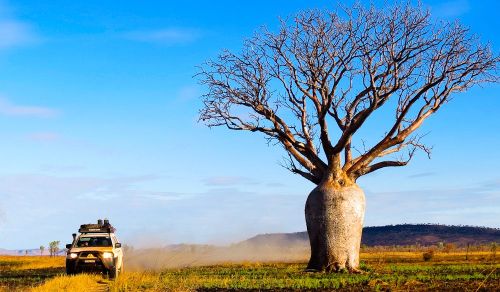
Driving the Big Lap of Australia12 things to know

hero media
Dreaming about driving off into the sunset and doing a big lap of Australia?

Travel writer and photographer Lee Atkinson has just returned from an epic 10-month, 40,000km road trip around the country, and written a book about it (see below). Here are her top 12 road trip travel hacks you need to know before you hit the road.

1. What to drive

You don’t need a 4WD to drive around Australia, but you do need low range gearing to reach some of the most beautiful bits, because the really wild, wondrous places are almost always in out of the way places. If you are towing a van or camper trailer opt for a turbodiesel, because this type of engine works more efficiently than a petrol for towing and diesel is more readily available in remote areas. And go for an automatic, because autos allow you to just stick it in drive and concentrate on other things.

lower tyre pressure
Deep sand means it’s time to lower tyre pressures (photo: Lee Atkinson).

2. To tow or not to tow?

The number one mistake most people make when choosing whether to buy a caravan, motorhome or camper trailer is to think in terms of what it will be like to live in, rather than where they can take it. If you’re planning to spend most of your time on main roads and want to stay in towns or caravan parks, a caravan or motorhome is a great option. But if your idea of a good time is taking the roads less travelled and getting out into national parks and wild places a camper trailer or a roof-top tent is a better choice. Bigger is not always better. There’s an exponential relationship between the size of your caravan or trailer and the extent to which you can get off the beaten track.

3. Before you go…

If you’ve never been outback or off-road before sign up for a 4WD training course. It will teach you how to use the vehicle to its full potential, how to get yourself out of tight spots and, most importantly, how to use recovery gear. Google ‘4WD driver training’. Same goes for towing: not only do you get plenty of time, and traffic-free space, to learn how to manoeuvre and reverse park your vehicle with a caravan or trailer in tow, you’ll also pick up lots of technical and safety information and handy tips. Tow-ed operates courses in most capital cities and regional centres and will lend you a van if you want to learn before you buy.

Colourful campsite Rainbow Cliffs Arnhem Land
Colourful campsite, Rainbow Cliffs, Arnhem Land (photo: Lee Atkinson).

4. What tools do you need?

A basic tool kit should include a jack, jacking plate and wheel replacement tools, spare tyre, fire extinguisher, emergency fuel supplies (if heading off the beaten track), engine oil, coolant, jumper leads and spare radiator hoses and fan belts and the tools you’ll need to replace them – check out YouTube for DIY tips and bush mechanic lessons. Don’t even think about leaving home without ultimate get-out-of-jail repair kit: cable ties, gaffa tape and fencing wire – with these you can fix just about anything.

5. Getting out of trouble

Getting stuck is inevitable when you’re travelling off the beaten track. You can spend a fortune on fancy recovery gear but there are five things you really can’t do without: we took a pair of Maxx Trax ramps, which you put under the wheels when you’re bogged in sand or mud. They give the tyres something to grip and, as a rule, will launch you out of trouble easily. We also had a long-handled shovel for digging and a snatch strap for those moments when all else failed – all we needed then was somebody else to come along to pull us out, but it was never used. The best way to not get bogged in the first place is to drop tyre pressures to 20psi or less, so we also carried a quality air compressor and an accurate pressure gauge.

6. Essential kit

Never travel without a first aid kit and always carry extra drinking water. Mobile phone coverage can be non-existent in the outback. Hire (or buy) a satellite phone so you can call for help if needed. Some tourist information centres in remote areas have sat phones you can hire, or visit Satellite Hire or  Rent a Sat Phone .
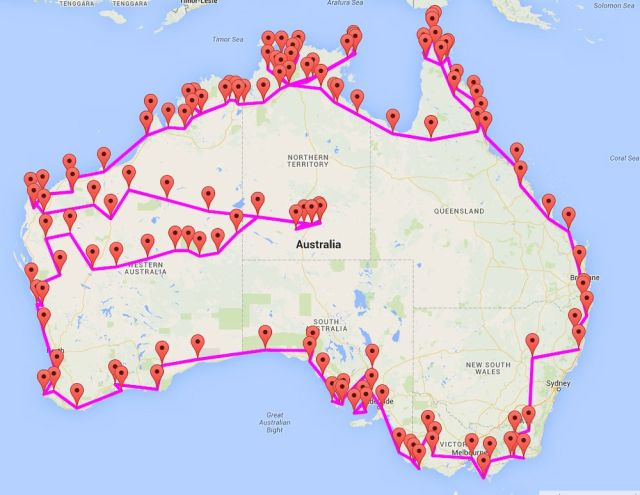
Lee Atkinson's Big Lap map.
Lee Atkinson’s Big Lap map.

7. Map it out

Fighting over which is the right way to go is a major cause of holiday (and marital) breakdown. Don’t rely on the mapping app on your phone – invest in a good GPS. We used Hema Navigator, which features off-road tracks as well as major highways.

8. Keep in touch

These days you can get most of your bills, banks statements etc electronically, which means you can keep the home fires burning relatively easily. Skype is the best thing ever for keeping in touch with friends and family for next to nix. We carried laptops and a 4G mobile wi-fi modem which connects up to 10 devices. Telstra’s the only network that consistently works outside of capital cities.
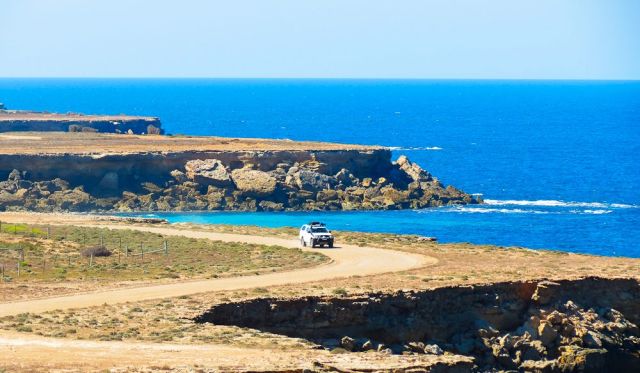
Troubridge Point Yorke Peninsula SA
Coast hugging, Troubridge Point, Yorke Peninsula, SA (photo: Lee Atkinson).

9. Where to go when

Clockwise or anti-clockwise, that’s the million-dollar question when you’re about to head off on the Big Lap. Whether you turn left or right out of your driveway depends on when you go – if it’s summer, head south, if it’s winter, head north or aim for the red centre. The wet season, which cuts roads and closes national parks anywhere north of the Tropic of Capricorn, can be anytime from November through to May, although it (usually) really only starts to rain in mid to late December and can be all over by April.

The back way, Gippsland, (photo: Lee Atkinson),

10. How long will it take?

How long have you got? Know that however long you go for, it won’t be enough – Australia’s a big place and you could spend a lifetime and still not see it all. On the other hand, you’d be amazed at how far you can go in just four weeks. We spent 42 weeks on the road, and didn’t go where most do go, but did go where many people don’t.

11. How much will it cost?

Everyone’s trip is different, depending on what you drive, where you go, where you stay and what you eat and drink. We were in a 4WD and towing an off-road camper trailer. In terms of day-to-day expenses we averaged just under $150 a day, including fuel, camping fees and the occasional night in a pub if the weather was foul, food and alcohol – we probably could have got that down a little if my partner was a better fisherman, and if I’d chosen cheaper wine, but hey, life’s too short!

12. Can I take my dog?

Many caravan parks will accept well-behaved pets on a leash, but always check before you book rather than on arrival. Pets are not allowed in national parks, even for day visits or picnics. If you want to bush camp with pets, choose state forests instead.

You can read all about Lee’s epic road trip in her book, The Big Lap.
The Big Lap by Lee Atkinson

The Big Lap by Lee Atkinson.


“We took the road less travelled whenever we could, camping in national parks and other wild places where few other travellers go," says Atkinson. “We found some truly amazing places and saw some fantastic things, and this book is the result, a showcase of some of the most scenic spots in Australia." Featuring hundreds of beautiful images, the book is the pictorial diary of her journey with detailed captions telling the stories behind the images. The Big Lap costs $35, (including postage), from ozyroadtripper.com.au

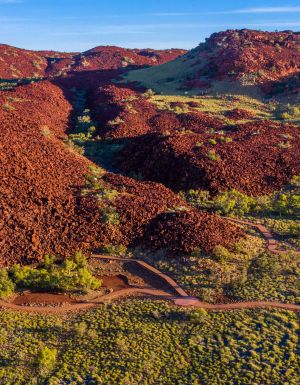
hero media

7 Kimberley experiences that need to be on your bucket list

From thundering waterfalls to ancient Indigenous art, Kimberley’s raw beauty will take your breath away.

Wild, pristine, and shaped by nature, the Kimberley Coast is one of Australia’s most spectacular landscapes. A remote and rugged frontier that remains a bucket list destination for many travellers. Its most breathtaking attractions – including Montgomery Reef, King George Falls and Horizontal Falls – are accessible only by sea or air, making a guided expedition cruise aboard Silversea’s luxury expedition ship, Silver Cloud, the ideal way to explore it.

From its intricate intertidal zones to ancient rock art, extreme tides and rare wildlife found nowhere else in Australia – or the world – this journey offers an unparalleled exploration of one of Earth’s last true wildernesses.

Why Silversea?

Silversea offers a 10-day expedition departing Broome, or an extended 16-day expedition voyage from Indonesia, including landings on the hidden gems of Palopo Sulawesi and Komodo. Accompanied by expert guides and specialists in marine biology, history and geology, guests gain a deeper understanding of the Kimberley’s dramatic landscapes, rich cultural heritage and extraordinary biodiversity.

Silversea offers one of the experiential travel industry’s leading crew-to-guest ratios. Along with all-suite accommodation (80 per cent with private verandah), 24-hour butler service, a swimming pool and four dining options. Silver Cloud also has an experienced crew of multilingual expedition guides and specialists in marine biology, history and geology to enhance your Kimberley Experience.

silversea cruise ship pool deck
Take a dip in the pool deck.

1. Koolama Bay

​​Before visitors see King George Falls, they hear them – a growing rumble in the distance, steady and foreboding as the Zodiac glides through the gorge, the sound echoing off sheer rock formations. At 80 meters tall, the twin cascades carve through the red cliffs, churning the waters below in a spectacular finale – but Koolama Bay holds secrets beyond its striking scenery.

Named after a ship that beached here following an aerial attack by Japanese bombers in World War II, the bay may seem desolate, yet it teems with life. With Silversea’s expert guides on their 10-day Kimberley itinerary, guests gain a sharper eye for its hidden wonders – rock wallabies darting across the cliffs, crocodiles lurking among dense green mangroves, and high above, the silhouette of a bird of prey circling the sky.

King George Falls at koolama bay excursion on Silversea Kimberley Cruise
Take a shore excursion to see King George Falls.

2. Freshwater Cove / Wijingarra Butt Butt

Connect with Country on a wet landing at Freshwater Cove, also known as Wijingarra Butt Butt. Considered one of the most special experiences on both the 16-day and 10-day Kimberley cruises, Silversea guests are welcomed by the traditional Indigenous custodians of the land, painted with traditional ochre, and invited to take part in a smoking ceremony.

Located on the mainland near Montgomery Reef, Wijingarra Butt Butt holds deep cultural significance to the local Indigenous community. Here, rock formations along the shore represent spiritual ancestors, and guests are guided to a nearby rock overhang filled with ancient art, where traditional owners share the stories and meaning behind these sacred paintings.

welcome to country on freshwater cove during silversea kimberley cruise
Take part in a smoking ceremony. (Image: Tim Faircloth)

3. Vansittart Bay (Jar Island)

Modern history, ancient culture and mystery converge in Vansittart Bay, which is also known as Jar Island. Here, the first thing to catch the eye is the dented, silver fuselage of a World War II-era C-53 plane – a striking relic of the past. Yet, the true cultural treasures lie just a short hike away where two distinct styles of Indigenous rock art – Gwion Gwion and Wandjina – can be found.

The Wandjina figures, deeply connected to Indigenous traditions, stand in stark contrast to the enigmatic Gwion Gwion (Bradshaw) paintings, which date back more than 12,000 years. Significantly different in form and style, the two different styles create a striking juxtaposition, offering a rare glimpse into the region’s rich and complex past.

aerial view of Vansittart Bay, See it in you Silversea Kimberley Cruise.
Explore ancient Gwion Gwion rock art at Vansittart Bay. (Image: Janelle Lugge)

4. Horizontal Falls

Part illusion, part natural phenomenon, the Kimberley’s much-lauded Horizontal Falls aren’t a waterfall, but a tidal and geographic spectacle that visitors have to see to comprehend. Known as Garaanngaddim, the phenomenon occurs when seawater rushes through two narrow gaps- one just twenty metres wide, and the other seven metres in width, between the escarpments of Talbot Bay.

With each tidal shift,  the force of the water creates whirlpools, furious currents and the illusion of a horizontal cascade as thousands of gallons of water are pushed and pulled in through the gap every six hours with relentless movement, making this one of the Kimberley ’s most mesmerising natural wonders.

Horizontal Falls are described as "One of the greatest wonders of the natural world". They are formed from a break in-between the McLarty Ranges reaching up to 25m in width. The natural phenomenon is created as seawater builds up faster on one side of the gaps than the other, creating a waterfall up to 5m high on a King tide.
Watch whirlpools and furious currents collide. (Image: Janelle Lugge)

5. Montgomery Reef

As the tide turns in Montgomery Reef, magic happens. With the Kimberley’s legendary tides varying up to ten metres, at low tide the submerged reef almost appears to rise from the depths: exposing up to four metres of the sandstone reef.

The impact is otherworldly: as the water drains, waterfalls cascade on either side of the channel,  turtles left exposed scramble and dive, and fish leap in search of sanctuary in shallow pools. Meanwhile, the dinner bell rings for the migratory seabirds dugongs, reef sharks and dolphins that scavenge and feast in the area.

Using zodiacs, guests cruise through one of the world’s most significant inshore reef systems navigated by experienced guides, exploring the most intricate and fascinating parts of a 300-square-kilometre-wide biodiversity hotspot.

aerial view of boat going along Montgomery Reef
Witness seabirds, dolphins and reef sharks on the hunt.

6. Mitchell Falls by Helicopter

Experiencing the Kimberley by sea allows you to feel the power of the tides, but travelling by helicopter reveals the sandstone tapestry of the Kimberley, a landscape geologists believe is over 1.8 billion years old.

One of Silversea’s most popular optional excursions , guests who opt to fly into the interior from the onboard helipad soar up above the rust-coloured landscape of the Mitchell plateau, taking in one of Australia’s most scenic waterfalls: Mitchell Falls, a series of four emerald-coloured pools gently cascades into each other, before plunging down to the river below.

Seeing the landscape from above reveals a landscape weaved and shaped by the power of the freshwater wet season, juxtaposed to the constant lapping of the relentless and powerful tide on the coast.

aerial view of mitchell falls on silversea helicopter excursion
See emerald pools cascade into the river below. (Image: Tim Faircloth)

7. Indigenous Art Caves, Wandjina Art

The Kimberley Region of Western Australia is home to some of the most striking and significant

Indigenous rock art in Australia. Dotted throughout the landscape are caves, cliffs and rock overhangs depicting the striking, ethereal image of Wandjina, the rainmaker spirit and creation being central to many of the Dreamtime stories in this region.

Some of the paintings are regularly repainted by traditional custodians, while others are believed to be over 4,000 years old. Each artwork serves as both a cultural record and a living connection to the past, offering a rare opportunity to engage with the enduring traditions of the Kimberley’s Indigenous communities.

Freshwater Cover Rock Art the kimberleys
Walk among cultural records preserved in stone. (Image: Tim Faircloth)

See the best of this incredible part of the world on a Silversea Kimberley cruise. Book your 10- or extended 16-day expedition voyage at silversea.com