hero media

How to survive a group trip wage gap

Travelling with a group of people who all make vastly different amounts of money? This is how to stay friends afterwards.

A strange thing happens when you’re lucky enough to have good friends who have been in your life for decades. When you met, in my case in high school – and for many others in university – there was no group trip wage gap because none of you had any money. You’re all squeezing in shifts at a cafe, dodgy clothing store or underground bar between exams just to afford a tiny bedroom in a sharehouse that smells and looks like mould.

At this stage of life, if you plan a holiday, everyone is on the same page: the cheapest hostel bed possible, and obviously, we load up on the free continental breakfast before sneaking some more out in napkins so we can have it for lunch as well.

four friends with arms around each other at a lookout
Budgets change in long friendships. (Image: Helena Lopes)

But now, decades later, we don’t have jobs, we have professions. And like any good rom-com featuring a group of friends, those professions are vastly different: from travel journalist to archaeologist to lawyer to digital commerce. That also means the salary glass ceiling is vastly different, sometimes by as much as $100k or more.

This is an issue that is so delicate in some circles that it can literally end friendships, especially when planning a holiday. Happily, it’s something my friends and I are able to navigate really well, so I thought I’d share our top learnings.

1. Everyone is different, and that’s ok

Money has absolutely nothing to do with personality. It’s not an indication of how hard anyone works, or how smart anyone is, or anything else. In fact, all my friends are hard workers who have hustled in their industries to gain success. But the bottom line is that different industries simply have more or less money to play with.

Society has weird hangups around money, and a shame around not being able to afford something, but that’s silly. Whether you’re the group’s high-earner or low-earner, forget the shame and comparison before you even think about planning a group trip.
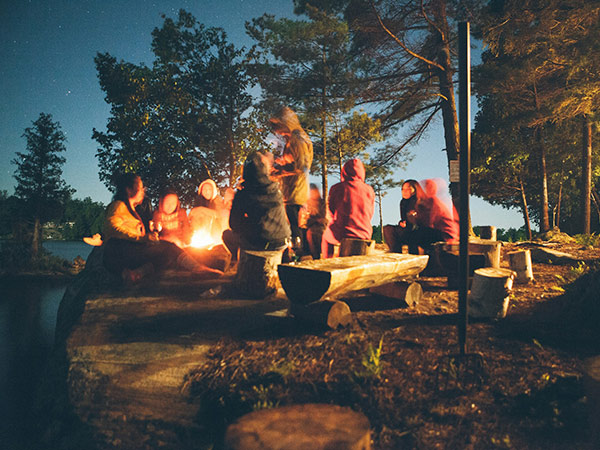
group of friends around a campfire at night
People are one fo two types: campers, and not campers. (Image: Tegan Mierle)

2. Set budgets before you go, and share them

Now that you’ve done step one, work out your budget. Once you have, share it with the group before any planning happens. And don’t assume anyone else’s budget, you may not know what other savings goals or payments their salary is being allocated to besides travel.
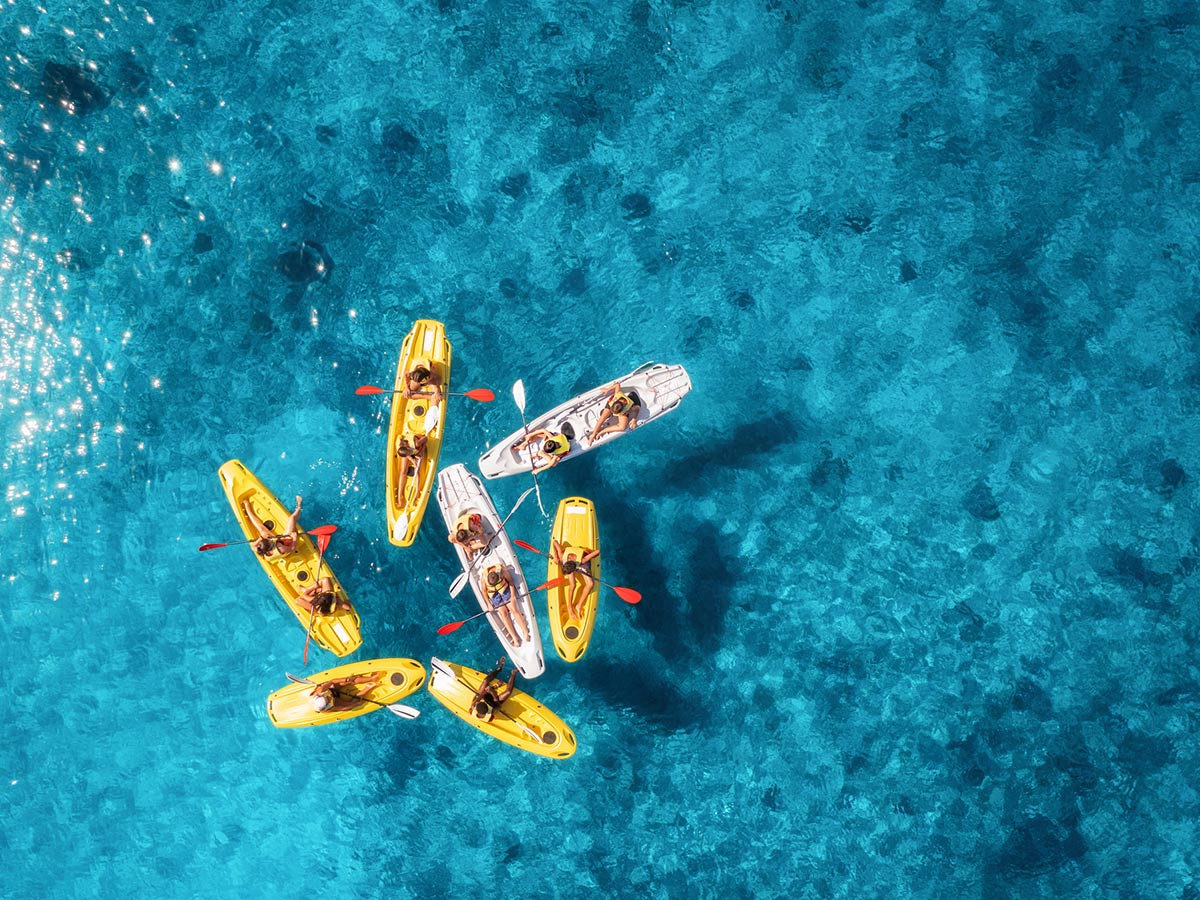
Aerial view of yellow kayaks in blue sea at sunset in summer
Set your budget and expectations, then stick to them. (Image: Getty/ Den Belitsky)

3. Decide the aim of the trip

This might sound silly, but a group trip can be about many things. Maybe it’s a group reunion or quality time to make new memories with old friends. Or maybe it’s a bucket list trip you’ve all been talking about for years. These trips are going to have vastly different outcomes in how they’re put together.

If the point is simply to spend time together, book a holiday rental that everyone can afford to split, and cook your meals at home. Throw in a few board games and a good hike or beach trip, and you’re sorted.

However, if it’s a bucket list trip, then it gets a bit more complicated.
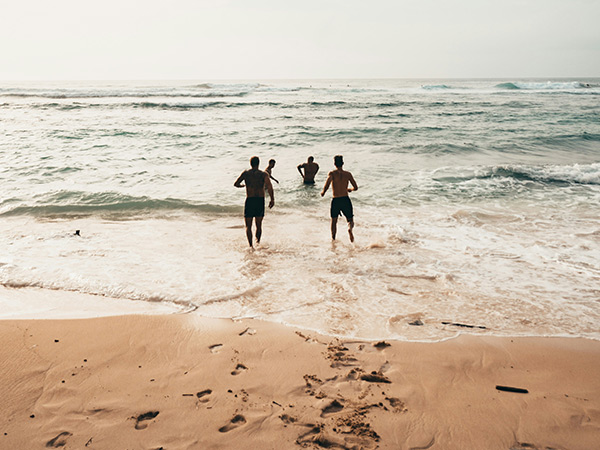
a group of people running into the ocean from a beach
The beach is free. (Image: Oliver Sjostrom)

4. Be prepared to split up

Whether there’s a wage gap in the group or not, this is my number one group travel rule. Everyone places importance on different aspects of travel. Some would spend their final pennies on an incredible meal, while others would eat buttered bread just to afford a high-end experience of their dreams. Add children to the mix, and it all gets even more complicated.

Talk about this before you go, share your non-negotiables, and be ready to plan that time apart as well as when you’ll all come back together to share your experiences. If this is a bucket list trip, everyone deserves to do it their way. And if your non-negotiables happen to overlap, even better.

With backpacks and hiking poles, diverse friends trek together on a sunny day
Hiking isn’t for everyone. (Image: Getty/ Azman L)

5. Use a money tracking app

Even friends with the best intentions sometimes forget how much they owe someone. Save yourself the stress and make everyone download an app like Splitwise . If you put everything in there, the app will do the hard work for you at the end of the trip, and let you know who owes what.
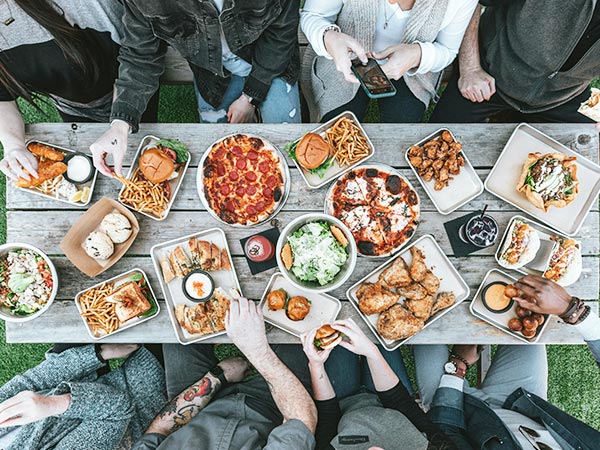
a group of people sitting around a table with food
Whether it’s groceries or fine dining, keep track in an app. (Image: Spencer Davis)

6. Get the money up front

coffee and breakfast at Greenhouse on Flora, Sydney
Be kind, pay your share and help organise. (Image: Greenhouse on Flora)

Having said that, big purchases that are made ahead of time, like accommodation or that splurge dinner on your final night, make everyone transfer their portion of the payment to the booker before it’s booked.

And, for goodness’ sake, be kind and don’t leave all the hard work to the organised friend. Everyone is going on the trip, so everyone should help plan and book.


Group trips can be rowdy. Here’s how to keep everyone in check and get the most from you hotel staff.

Kassia Byrnes
Kassia Byrnes is the Native Content Editor for Australian Traveller and International Traveller. She's come a long way since writing in her diary about family trips to Grandma's. After graduating a BA of Communication from University of Technology Sydney, she has been writing about her travels (and more) professionally for over 10 years for titles like AWOL, News.com.au, Pedestrian.TV, Body + Soul and Punkee. She's addicted to travel but has a terrible sense of direction, so you can usually find her getting lost somewhere new around the world. Luckily, she loves to explore and have new adventures – whether that’s exploring the backstreets, bungee jumping off a bridge or hiking for days. You can follow her adventures on Instagram @probably_kassia.
See all articles

This luxe trawler tour is redefining Victoria’s seafood experience

Victoria’s ‘mussel capital’ is the source of exceptional shellfish used by top chefs far and wide. Step aboard a beautifully refurbished trawler to see how these plump and juicy bivalves are sustainably cultivated.

A curtain is slowly winched from the placid, teal waters just off Portarlington , like a floating garland beside our boat. The ropes heave with blue mussels, the star attraction of our tour. But as we reach to pluck our own, it’s quickly clear they’re not alone; a mass of weird and wonderful creatures has colonised the ropes, turning them into a living tapestry. ‘Fairy’ oysters, jelly-like sea squirts, and tiny, wriggling skeleton shrimp all inhabit this underwater ecosystem.

We prize our bivalve bounty from the ropes, and minutes later the mussels arrive split on a platter. The plump orange morsels are served raw, ready to be spritzed with wedges of lemon and a lick of chilli as we gaze out over the bay. They’re briny, tender and faintly sweet. “This wasn’t originally part of the tour,” explains Connie Trathen, who doubles as the boat’s cook, deckhand and guide. “But a chef [who came onboard] wanted to taste the mussels raw first, and it’s now become one of the key features.”

A humble trawler turned Hamptons-style dreamboat

inspecting bivalve bounty from the ropes
Inspecting the bounty. (Image: Visit Victoria/Hannyn Shiggins)

It’s a crisp, calm winter’s day, and the sun is pouring down upon Valerie, a restored Huon pine workhorse that was first launched in January 1980. In a previous life she trawled the turbulent Bass Strait. These days she takes jaunts into Port Phillip Bay under the helm of Lance Wiffen, a fourth-generation Bellarine farmer, and the owner of Portarlington Mussel Tours . While Lance has been involved in the fishing industry for 30-plus years, the company’s tour boat only debuted in 2023.

holding Portarlington mussels
See how these plump and juicy bivalves are sustainably cultivated.

It took more than three years to transform the former shark trawler into a dreamy, Hamptons-esque vessel, with little expense spared. Think muted green suede banquettes, white-washed walls, Breton-striped bench cushions, hardwood tables, bouquets of homegrown dahlias, and woollen blankets sourced from Waverley Mills, Australia’s oldest working textile mill. It’s intimate, too, welcoming 12 guests at most. And yet there’s nothing pretentious about the experience – just warm, down-to-earth Aussie hospitality.

As we cruise out, we crack open a bottle of local bubbles and nibble on the most beautifully curated cheese platter, adorned with seashells and grey saltbush picked from the water’s edge that very morning. Australasian gannets soar overhead, and I’m told it’s not uncommon for guests to spot the odd seal, pod of dolphins, or even the occasional little penguin.

The sustainable secret behind Victoria’s best mussels

blue mussels off Portarlington
Blue mussels sourced just off Portarlington.

Connie and Lance both extol the virtues of mussels. They’re delicious. A lean source of protein and packed with omega-3 fatty acids, vitamin B12, iron, selenium, and zinc. They’re cooked in a flash (Connie steams our fresh harvest with cider and onion jam). And they’re also widely regarded as one of the most sustainable foods in the world.

Portarlington mussels with lemon and chilli
Mussels served with lemon and chilli.

“Aquaculture is [often] seen as destructive, so a lot of our guests are really surprised about how environmentally friendly and sustainable our industry is,” Lance says. “[Our mussels] would filter 1.4 billion litres of water a day,” he adds, explaining how mussels remove excess nitrogen and phosphorus from the water. “And through biomineralisation, we lock carbon into mussel shells.”

a hand holding a Portarlington mussel
Mussels are a sustainable food.

Despite their glowing list of accolades, these molluscs have long been seen as the oysters’ poorer cousins. “It was a really slow start,” explains Lance, who says that in the early days of his career, “you could not sell mussels in Victoria”.

But word has slowly caught on. Chefs as globally acclaimed as Attica’s Ben Shewry and even René Redzepi of Noma, Denmark, have travelled to these very waters just to try the shellfish at the source, sharing only the highest praise, and using Lance’s mussels in their restaurants.

guests sampling Portarlington mussels onboard
Sampling the goods onboard. (Image: Visit Victoria/Hannyn Shiggins)

According to Lance there’s one obvious reason why the cool depths of Portarlington outshine other locations for mussel farming. “The water quality is second to none,” he says, noting how other regions are frequently rocked by harvest closures due to poor water quality. “We grow, without a doubt, some of the best shellfish in the world.” And with Lance’s bold claims backed up by some of the industry’s greatest names, perhaps it won’t be much longer until more Aussies uncover the appeal of Portarlington’s mussels.