Food, towns and luxe stays: Here’s how travel has changed since 2005

hero media
Let’s take a look back – and forward – to see how travelling Australia has evolved over nearly two decades of exploring our nation.

To mark 100 editions of Australian Traveller, co-founder Quentin Long sat down with Tourism Australia managing director Phillipa Harrison to discuss what has (and has not) changed in travel in Australia from the year the magazine launched in 2005 to today and beyond.
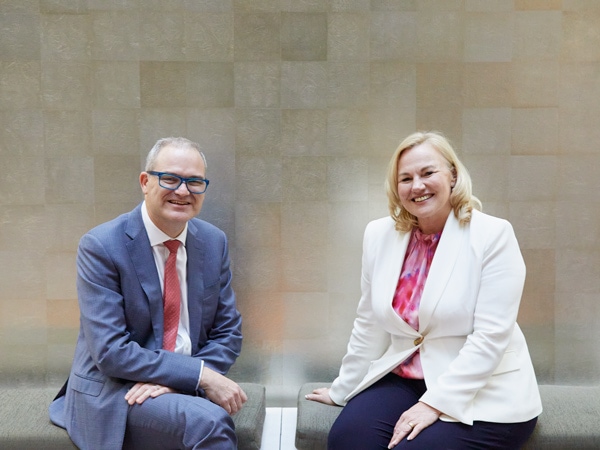
Australian Travellerco-founder Quentin Long and Tourism Australia managing director Phillipa Harrison
Australian Traveller co-founder Quentin Long and Tourism Australia managing director Phillipa Harrison. (Image: Nicky Ryan)

Quentin Long: So, in 2005 I was panicking about launching a new domestic travel media brand. What were you doing?

Phillipa Harrison: I was working for an Accor start-up in the youth hostel space called Base Backpackers. It was capitalising and corporatising the concept of ‘flashpackers’. That was so fun. I was the third employee onboard and we set up 11 hostels in 18 months. And backpacker bars, and a travel agency…

QL: So Jägerbombs at the bar with Pip?

PH: Maybe [laughs].

QL: Do you think Covid has given domestic travellers a greater appreciation for this country? I always hoped it would create a new habit for Aussies. So, for example, instead of going overseas every year, you go every two years.

PH: I do think Australians worked out over Covid that our own backyard is pretty damn special, so I would agree with you. Interestingly though, what appealed to people about Australia 50 years ago and what’s going to appeal to people about Australia in 50 years are similar things… our great natural landscapes… our great food and wine. Actually, 50 years ago, maybe not [laughs]. There’s another big change – food. I remember meeting a German woman who came to Australia in the 1970s and said she could not believe how limited this country was from a food point of view.
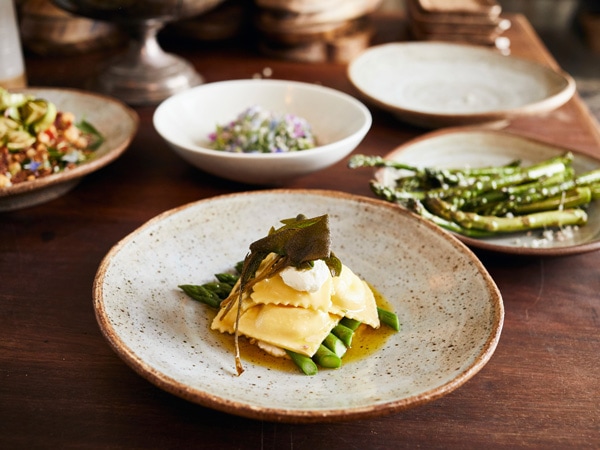
the food at Zin House in Mudgee
The Zin House in Mudgee is emblematic of regional Australia’s dynamic dining scene. (Image: Destination NSW)

QL: [Laughs] I believe you got a hardship allowance if you were a French diplomat posted to Canberra in the 1950s and ’60s. How French. “You have to endure meat and potatoes every meal. Sacre bleu."

PH: Fast-forward to today and we have multicultural cuisine, but we also have this incredible produce and the people who produce it telling stories about the provenance. Our research tells us that travellers are blown away by our food.

QL: Totally. By the way, I reckon it’s hard to have a bad meal in Canberra today. Part of the food story is where it comes from and, for me, regional Australia is the biggest improver since 2005.

PH: You think about going to somewhere like Orange in 2005 versus going there now and you have gourmet meals, great experiences, beautiful boutique accommodation. It really is chalk and cheese and it’s so good to see the regions prospering like that.

QL: Orange is an easy one. And Mudgee’s another easy one.

PH: The whole of regional Victoria is an eater’s paradise. Beechworth, Metung, Daylesford. The Scenic Rim’s done particularly well. Perth is outstanding. The Peak Trail in the Grampians. That is a beautiful collaboration between councils where they linked up a whole trail of 160 kilometres.

The wine regions have always been our successful regions: think Barossa, Margaret River, the Yarra Valley and Hunter. They’re evolving as well with more experiences around the cellar door that were never there before through things like the Ultimate Winery Experiences Australia and, in particular, its ‘Icons’ series.

wine tasting at sunset in Hope Estate
Hope Estate is one of many world-class wineries in the Hunter Valley. (Image: Destination NSW)

QL: The growth in number and quality in luxury product in Australia is remarkable.

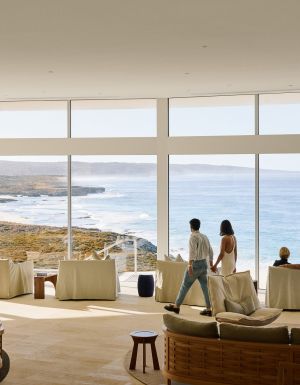
PH: Australia only had a few luxury properties in 2005; Lizard Island Resort, Longitude 131° and El Questro. That was about it. Eleven of the 18 luxury lodges have opened since 2005. So, qualia opened, Southern Ocean Lodge, Saffire Freycinet, Wolgan Valley… So, we now have an incredible range of luxury accommodation and experiences.

QL: We did a project with Tourism Australia in 2007 called the 20 Best Indigenous Tours of Australia in a 32-page magazine. We printed it and supplied the content translated in German. But it was never released in Australia. When I tried to have it distributed with Australian Traveller, there was no budget because: “The research shows that the Australian market is not interested in experiencing Indigenous culture." Today that would definitely not be the case.

PH: Totally. That’s a huge change from 2005. I think the Indigenous tourism offering that we have is much more extensive and immersive. It is run by Indigenous people themselves. It gives them an opportunity to live on Country and keep their culture going.
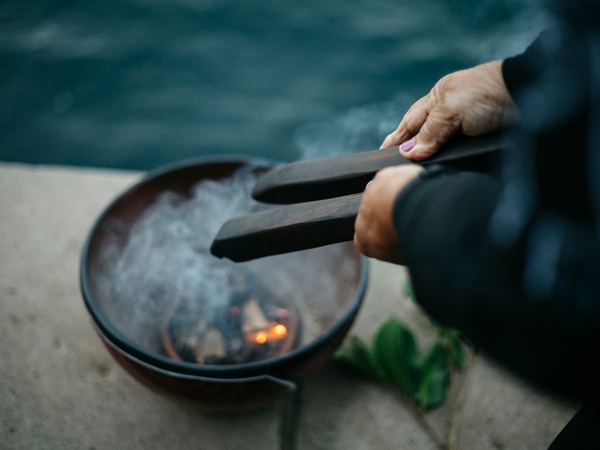
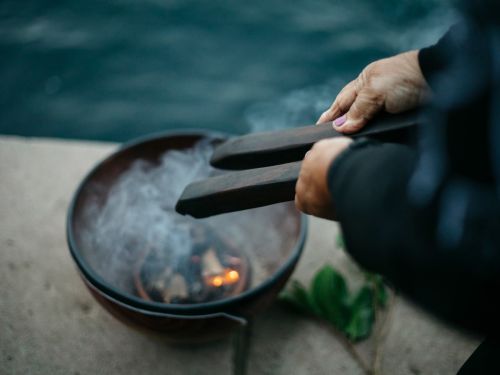
burning incense during an indigenous tour in Australia, Dreamtime Southern X, Sydney
There are now many wonderful Indigenous tour operators, such as Dreamtime Southern X, Sydney, which explore the way First Nations people experience Country. (Image: Destination NSW)

QL: What do you think Indigenous tourism looks like in 20 years?

PH: I hope that as soon as you travel or arrive in Australia, you know that you are on Aboriginal Country. That experience starts at our airports and infiltrates every tourism experience in some way, shape or form for your whole trip.
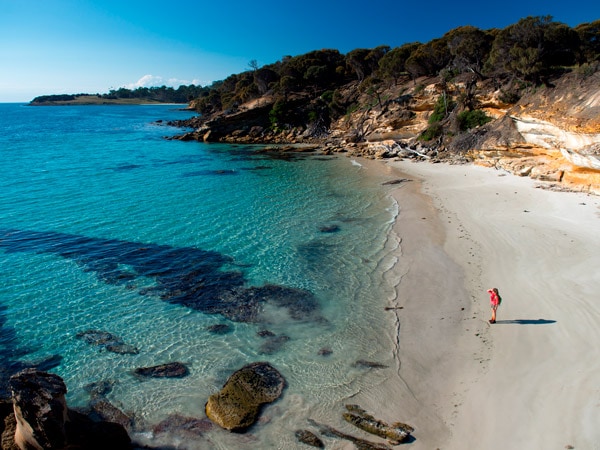
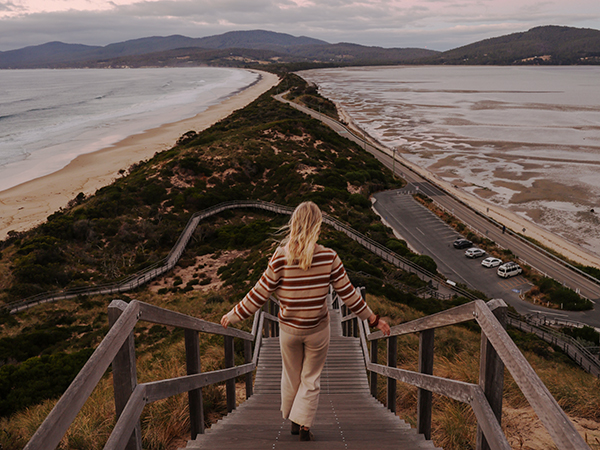
an aerial view of the Maria Island, Tasmania
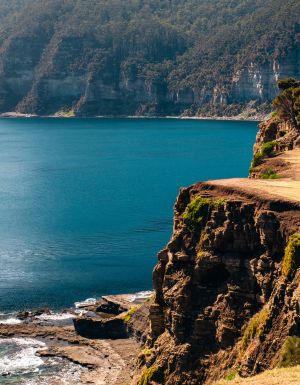
Feel the call of the wild on Maria Island, Tasmania, one of the Great Walks of Australia.

QL: What would you love every Australian to do?

PH: One of the multi-day walks.

QL: Really?

PH: Yeah. I love, love, love them. They slow you down, you’re not zooming past this landscape, you’re immersed in it and you’re just walking really slowly through it. I actually think they’re largely undiscovered, the Great Walks .
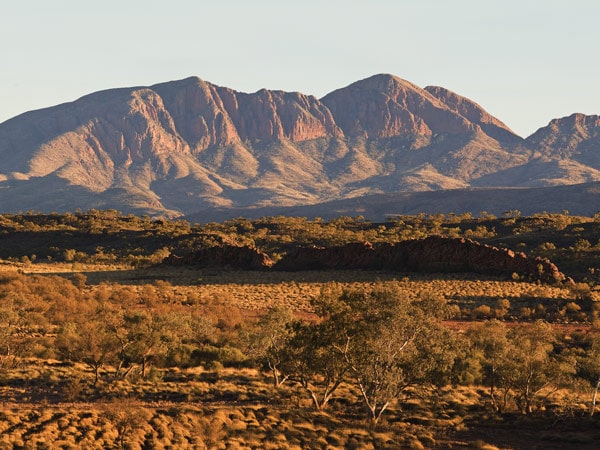
the Larapinta Trail, a great walk in Australia
Trek the Larapinta Trail, another Great Walk, in comfort with Australian Walking Holidays. (Image: Peter Walton)

QL: This leads me to something else. One of the great regrets of my life is I didn’t do the Larapinta Trail before my MS got to the stage where I can’t. So, accessible tourism, I think we’ve come a long way. I heard Paralympic Games champion Dylan Alcott speak at the annual Tourism Australia Destination Australia conference this year and it really highlighted the issue for me. He described how he went to Noosa and saw they had beach mats for his wheelchair, and that was the second time he went to the beach in his life. As an Australian, you go, “Um, whaaaat??? An Australian who has only been to the beach twice…" Final question. If you could click your fingers and change one thing in Australia’s travel landscape, what would it be?

PH: That’s a really good question [laughs]. What would you change?

QL: Uh, honestly… I would change our service culture.

PH: See, I don’t think this is too bad.

QL: It’s not terrible, just inconsistent.

PH: Yeah, OK. Something related to that. I want more people to see tourism as a career, like it is in other countries. I have spent my entire career in tourism and I would love for more Australians to do the same, because it is a great industry to be a part of.

hero media

No time to hibernate: experience the best of winter in NSW

Whales breaching, fires crackling and slow-cooked feasts that make the cold so cosy, one might wish it lasted longer. Winter is no time to stay at home in NSW.

When the mercury drops, winter in NSW comes into its own. Beaches are quieter, the air is crisper and hearty food tastes even better when there’s ice on the windows.

Winter here isn’t for hiding away. It’s for long walks, deep baths, deeper reds and the kind of fireside lounging that feels simultaneously indulgent and entirely deserved after a day of exploring. From whale-watching up north to moodily lit bushwalks and pastry pilgrimages, we’ve mapped out your new favourite season.

a beach winter in nsw
From coastal walks to tasty delights, winter in NSW is a time to get out and about.

The Tweed

In winter, the NSW north coast has a front-row seat to one of nature’s greatest migrations. From May to November, humpbacks cruise past the Tweed coast between Antarctica and the Great Barrier Reef. Spot them from the Cabarita Beach headland or get up closer with a boat cruise.

Inland, find the Tweed Regional Gallery & Margaret Olley Art Centre , which is home to a rotating cast of big-name exhibitions (including Monet).

Later, grab a table at Bistro Livi , where the modern Spanish menu features whipped salt cod on toast and spanner crab with curry butter and spelt flatbread. Stick around to poke through the artist studios and indie boutiques of M|Arts Precinct .

visitors at Tweed Regional Gallery & Margaret Olley Art Centre
Browse the art. (Image: Destination NSW)

The next day, jump aboard the Indigenous Lunch Cruise with Tweed Escapes. You’ll cruise upriver listening to yarns from local Indigenous guides, stop at the Minjungbal Aboriginal Cultural Museum and tuck into lemon myrtle-crusted snapper.

Next, drive out to Farm & Co to pull apart some juicy smoked lamb shoulder with green olive tapenade while gazing out over the macadamia fields and avocado groves of this working farm.

End the day at Mantra on Salt Beach where you’ll enjoy beach access, a heated rock spa and a lagoon pool.

dining room at Bistro Livi
Taste modern Spanish at Bistro Livi.

Blue Mountains

The cold season is hands down the best time to visit the Blue Mountains. Temperatures are perfect – sunny enough for hikes, and crisp enough at night for snuggling up.

For a trip that equally soothes and stirs, start with a meditative meander through the national park’s eucalypts and Australian wildflowers. Brave the steepest passenger railway in the world, Scenic Railway , then hop the Skyway aerial cable car for unrivalled Three Sisters views.

Thaw out at the Japanese Bath House in South Bowenfels. Soak in steamy outdoor onsens filled with natural mineral water and mountain views, wander the rose and zen gardens, or sip hot drinks in the tea house.

group leader at Blue Mountains Stargazing
Rug up for Blue Mountains Stargazing. (Image: Destination NSW)

Afterwards, head to Ates in Blackheath, where everything revolves around a 150-year-old ironbark-fuelled oven – like the wood-roasted duck with nectarines and Szechuan spice. Or visit Tempus Katoomba , which leans experimental and sustainable, serving up dishes like braised fennel with cumin, spiced yogurt and Aleppo pepper.

Rug up and head into the night with Blue Mountains Stargazing . Sessions are guided by astrophysicists, helping you understand what you’re looking at as you look into deep space.

Wrap it all up at Fairmont Resort Blue Mountains – MGallery Collection . There’s a whiskey bar in the basement (and crackling fires that make a dram taste even better), indoor and outdoor pools and a day spa. Kids will love the mirror maze and ice rink, too.

dishes laid out on table at Fairmont Resort Blue Mountains
End the day with delicious meals at Fairmont Resort Blue Mountains. (Image: Destination NSW)

Southern Highlands

Good food and wine by the fire, experienced between sifting through second-hand treasures, is a winter vibe in Bowral.

Start with a lap around Dirty Janes , an antique and vintage market. Recover from your shopping frenzy at Bendooley Book Barn , where floor-to-ceiling shelves and a roaring fire set the tone for an afternoon of red wine or hot coffee.

When it’s time to eat, head to Hickory’s Restaurant & Bar , Peppers Craigieburn Bowral’s onsite restaurant. Try the crispy pork belly with Granny Smith crisps and apple gel, or ocean trout with wakame, lemon gel and pickled radish.

couple looking through Dirty Janes in bowral
Wander the antiques at Dirty Janes. (Image: Destination NSW)

Another option, Onesta Cucina , does Italian with flair. For something more casual (with cocktails), Flour Bar swings between brunch and dinner, with an onsite bakery, over 400 wines and a hidden deli in the old bank vault.

Later, clamber Mt Gibraltar , where trails wind through eucalypt forest to views over Bowral and Mittagong.

Stay at Peppers Craigieburn Bowral , a century-old estate with open fires, elegant lounges and a nine-hole golf course.

woman and her dog winter in nsw at Peppers Craigieburn Bowral
Stay cosy at Peppers Craigieburn Bowral.

Penrith

Shake off winter inertia with an adrenaline boost out in Penrith. Kick things off with a kayak paddle on the Nepean River with Horizon Line, or head to Cables Wake Park , where cold-weather wetsuits take the edge off a wipeout.

For something a bit more cruisy, opt for the Nepean Belle Paddlewheeler for slow-floating views and a hot cuppa.

kayakers on the nepean river in penrith
Head out on the Nepean River. (Image: Destination NSW)

Refuel at Marcel Bar & Bistro , where reimagined European comfort food – like seafood risotto in bisque with little neck clams and Moreton Bay bugs – is king. Then check in at the Pullman Sydney Penrith , the area’s first international five-star hotel, to enjoy your well-earned rest.

Pullman Penrith
Set yourself up at Pullman Penrith.

Start planning your NSW winter getaway at all.com.