Food, towns and luxe stays: Here’s how travel has changed since 2005

hero media
Let’s take a look back – and forward – to see how travelling Australia has evolved over nearly two decades of exploring our nation.

To mark 100 editions of Australian Traveller, co-founder Quentin Long sat down with Tourism Australia managing director Phillipa Harrison to discuss what has (and has not) changed in travel in Australia from the year the magazine launched in 2005 to today and beyond.

Australian Travellerco-founder Quentin Long and Tourism Australia managing director Phillipa Harrison
Australian Traveller co-founder Quentin Long and Tourism Australia managing director Phillipa Harrison. (Image: Nicky Ryan)

Quentin Long: So, in 2005 I was panicking about launching a new domestic travel media brand. What were you doing?

Phillipa Harrison: I was working for an Accor start-up in the youth hostel space called Base Backpackers. It was capitalising and corporatising the concept of ‘flashpackers’. That was so fun. I was the third employee onboard and we set up 11 hostels in 18 months. And backpacker bars, and a travel agency…

QL: So Jägerbombs at the bar with Pip?

PH: Maybe [laughs].

QL: Do you think Covid has given domestic travellers a greater appreciation for this country? I always hoped it would create a new habit for Aussies. So, for example, instead of going overseas every year, you go every two years.

PH: I do think Australians worked out over Covid that our own backyard is pretty damn special, so I would agree with you. Interestingly though, what appealed to people about Australia 50 years ago and what’s going to appeal to people about Australia in 50 years are similar things… our great natural landscapes… our great food and wine. Actually, 50 years ago, maybe not [laughs]. There’s another big change – food. I remember meeting a German woman who came to Australia in the 1970s and said she could not believe how limited this country was from a food point of view.
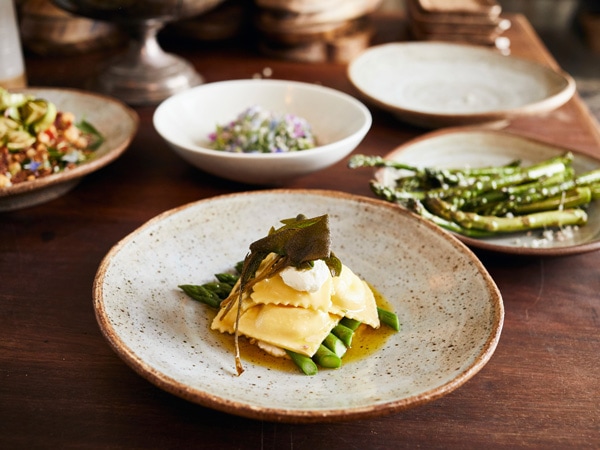
the food at Zin House in Mudgee
The Zin House in Mudgee is emblematic of regional Australia’s dynamic dining scene. (Image: Destination NSW)

QL: [Laughs] I believe you got a hardship allowance if you were a French diplomat posted to Canberra in the 1950s and ’60s. How French. “You have to endure meat and potatoes every meal. Sacre bleu."

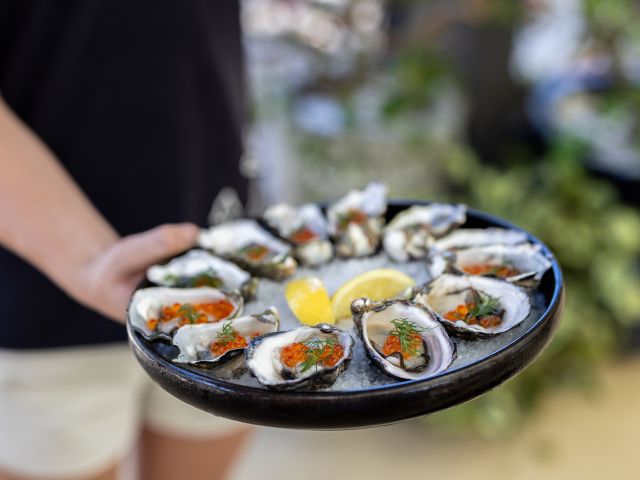
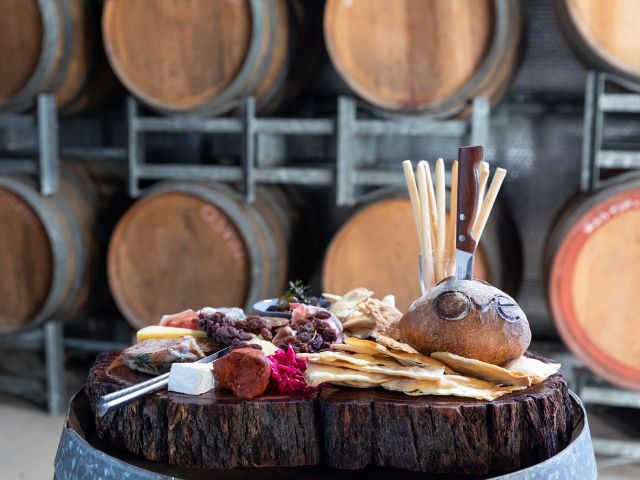
PH: Fast-forward to today and we have multicultural cuisine, but we also have this incredible produce and the people who produce it telling stories about the provenance. Our research tells us that travellers are blown away by our food.

QL: Totally. By the way, I reckon it’s hard to have a bad meal in Canberra today. Part of the food story is where it comes from and, for me, regional Australia is the biggest improver since 2005.

PH: You think about going to somewhere like Orange in 2005 versus going there now and you have gourmet meals, great experiences, beautiful boutique accommodation. It really is chalk and cheese and it’s so good to see the regions prospering like that.

QL: Orange is an easy one. And Mudgee’s another easy one.

PH: The whole of regional Victoria is an eater’s paradise. Beechworth, Metung, Daylesford. The Scenic Rim’s done particularly well. Perth is outstanding. The Peak Trail in the Grampians. That is a beautiful collaboration between councils where they linked up a whole trail of 160 kilometres.

The wine regions have always been our successful regions: think Barossa, Margaret River, the Yarra Valley and Hunter. They’re evolving as well with more experiences around the cellar door that were never there before through things like the Ultimate Winery Experiences Australia and, in particular, its ‘Icons’ series.

wine tasting at sunset in Hope Estate
Hope Estate is one of many world-class wineries in the Hunter Valley. (Image: Destination NSW)

QL: The growth in number and quality in luxury product in Australia is remarkable.

PH: Australia only had a few luxury properties in 2005; Lizard Island Resort, Longitude 131° and El Questro. That was about it. Eleven of the 18 luxury lodges have opened since 2005. So, qualia opened, Southern Ocean Lodge, Saffire Freycinet, Wolgan Valley… So, we now have an incredible range of luxury accommodation and experiences.

QL: We did a project with Tourism Australia in 2007 called the 20 Best Indigenous Tours of Australia in a 32-page magazine. We printed it and supplied the content translated in German. But it was never released in Australia. When I tried to have it distributed with Australian Traveller, there was no budget because: “The research shows that the Australian market is not interested in experiencing Indigenous culture." Today that would definitely not be the case.

PH: Totally. That’s a huge change from 2005. I think the Indigenous tourism offering that we have is much more extensive and immersive. It is run by Indigenous people themselves. It gives them an opportunity to live on Country and keep their culture going.
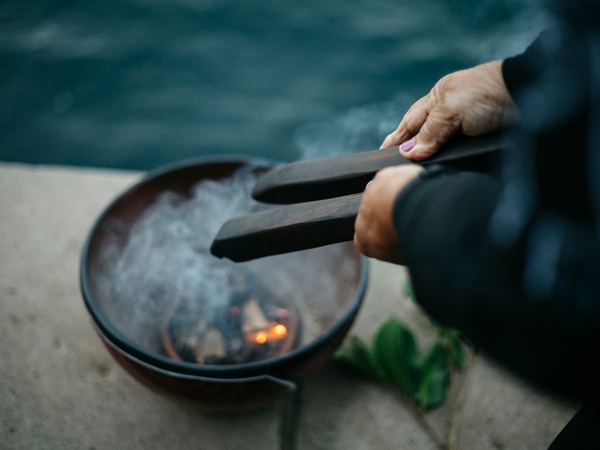
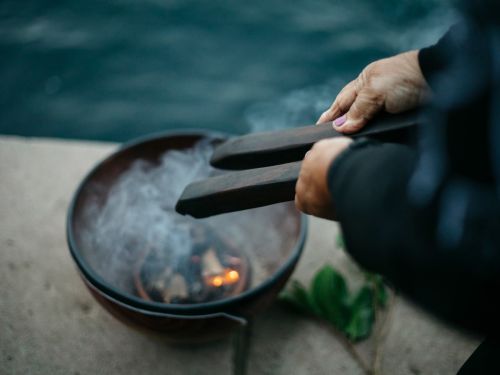
burning incense during an indigenous tour in Australia, Dreamtime Southern X, Sydney
There are now many wonderful Indigenous tour operators, such as Dreamtime Southern X, Sydney, which explore the way First Nations people experience Country. (Image: Destination NSW)

QL: What do you think Indigenous tourism looks like in 20 years?

PH: I hope that as soon as you travel or arrive in Australia, you know that you are on Aboriginal Country. That experience starts at our airports and infiltrates every tourism experience in some way, shape or form for your whole trip.
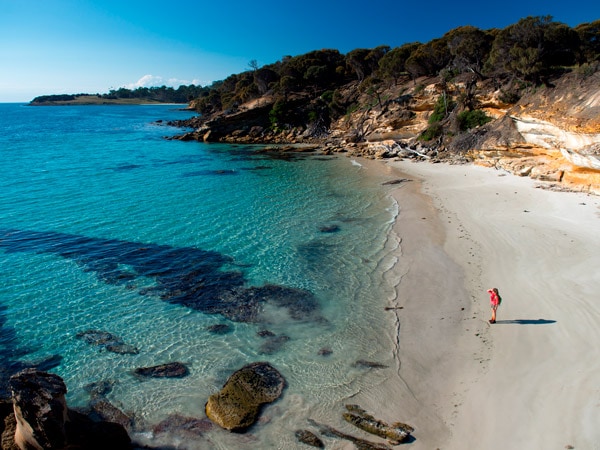
an aerial view of the Maria Island, Tasmania
Feel the call of the wild on Maria Island, Tasmania, one of the Great Walks of Australia.

QL: What would you love every Australian to do?

PH: One of the multi-day walks.

QL: Really?

PH: Yeah. I love, love, love them. They slow you down, you’re not zooming past this landscape, you’re immersed in it and you’re just walking really slowly through it. I actually think they’re largely undiscovered, the Great Walks .

the Larapinta Trail, a great walk in Australia
Trek the Larapinta Trail, another Great Walk, in comfort with Australian Walking Holidays. (Image: Peter Walton)

QL: This leads me to something else. One of the great regrets of my life is I didn’t do the Larapinta Trail before my MS got to the stage where I can’t. So, accessible tourism, I think we’ve come a long way. I heard Paralympic Games champion Dylan Alcott speak at the annual Tourism Australia Destination Australia conference this year and it really highlighted the issue for me. He described how he went to Noosa and saw they had beach mats for his wheelchair, and that was the second time he went to the beach in his life. As an Australian, you go, “Um, whaaaat??? An Australian who has only been to the beach twice…" Final question. If you could click your fingers and change one thing in Australia’s travel landscape, what would it be?

PH: That’s a really good question [laughs]. What would you change?

QL: Uh, honestly… I would change our service culture.

PH: See, I don’t think this is too bad.

QL: It’s not terrible, just inconsistent.

PH: Yeah, OK. Something related to that. I want more people to see tourism as a career, like it is in other countries. I have spent my entire career in tourism and I would love for more Australians to do the same, because it is a great industry to be a part of.

From coast to bush: these are Gippsland’s best hikes

Video credit: Tourism Australia

From coast to mountains, hiking in Gippsland offers a stunning array of landscapes, with trails that take you deep into the region’s heritage.

I step out onto the sand and it cries out underfoot. Kweek! I take another step and there’s another little yelp. Screet! Picking up the pace, the sounds follow me like my shadow, all the way down to the water. It’s obvious how this spot got its name – Squeaky Beach – from the rounded grains of quartz that make the distinctive sounds under pressure.

For many, Wilsons Promontory National Park is the gateway to Gippsland , and the best way to explore it is by walking its network of hiking trails, from coastal gems such as Squeaky Beach through to the bushland, among the wildlife. But it’s still just a taste of what you’ll find on foot in the region.

Venture a bit further into Gippsland and you’ll discover the lakes, the rainforest, and the alpine peaks, each changing with the season and offering summer strolls or winter walks. Just like that squeaky sand, each step along these trails has something to tell you: perhaps a story about an ancient spirit or a pioneering search for fortune.

The best coastal hikes in Gippsland

sunset at Wilsons Promontory National Park
Wilsons Promontory National Park is a sprawling wilderness with many coastal bushland trails. (Image: Mark Watson)

Wilsons Promontory National Park (or ‘The Prom’, as you’ll end up calling it) is an easy three-hour drive from Melbourne, but you might ditch the car when you arrive, with much of the park’s 50,000 hectares accessible only by foot. From the inky water of Tidal River (dyed dark purple by abundant tea trees), I like the easy walks along the coast, among lichen-laden granite boulders, to golden beaches and bays.

a couple on Mount Oberon
Panoramic views from the summit of Mount Oberon. (Image: Everyday Nicky)

The trail to the panoramic views at the summit of Mount Oberon is a bit harder, up steep timber and granite steps, but it’s a popular 6.8-kilometre return. The more remote hikes are found through the open banksia and stringybark woodland of the park’s north, or along the multi-day Southern Circuit , which ranges from about 35 to 52 kilometres, with sunrises and sunsets, kangaroos and cockatoos, and maybe even whales.

a golden sand beach at Wilsons Promontory National Park
Walk ‘The Prom’s’ golden sand beaches. (Image: Tourism Australia/Time Out Australia)

You might also see whales on the George Bass Coastal Walk , even closer to Melbourne on the western edge of Gippsland. This dramatic seven-kilometre trail along the clifftops takes in sweeping views of the wild ocean, occasionally dipping down from grassy green hills to coastal gullies and a secluded beach. It also now links into the Bass Coast Rail Trail for an extra 14 kilometres.

the George Bass Coastal Walk
George Bass Coastal Walk trails for seven kilometres along clifftops. (Image: Visit Victoria/Time Out Australia)

Over at the eastern edge of Gippsland, in Croajingolong National Park, you can wander along the lakeshores beneath koalas and around goannas (I keep my distance since one chased me here!). For those who are even more adventurous, the park is also the starting point for the 100-kilometre Wilderness Coast Walk , usually done over seven days.

the Croajingolong National Park, Gippsland
Wander along the lakeshores in Croajingolong National Park. (Image: Tourism Australia)

The best bush hikes in Gippsland

the Baw Baw National Park
The alpine heath of Baw Baw National Park. (Image: Everyday Nicky)

Deep in the Long Tunnel Extended Gold Mine at Walhalla, mining guide Richard tells me how this small town in the mountains east of Melbourne boomed when prospectors found gold here in 1862. These days, you’ll find most of the town’s treasure – its heritage – above ground, with the Walhalla Tramline Walk a wonderful way to explore it.

Just seven kilometres long, the walk takes you through decades of Gold Rush history, following the original rail trail from lush bushland to the mining sites, and through the charming village of just 20 residents with its wooden cottages and old shopfronts adorned with turn-of-the-century advertising posters. Blazing a trail where trailblazers once opened up the region, this is also the starting point for the 650-kilometre Australian Alps Walking Track.

Nearby, Baw Baw National Park has walks through gnarled snow gums and alpine heaths that show off the colourful wildflowers in summer and the pristine carpet of white in winter. Several trails are perfect for snowshoes, including a 45-minute route from St Gwinear up to vast views across the Latrobe Valley.

Further up into the mountains, the Toorongo and Amphitheatre Falls Loop Walk is an easy 2.2-kilometre path that serenades you with the sound of flowing water as you pass mossy rocks and tree ferns en route to two sets of waterfalls cascading over boulders in the remote wilderness.

The best cultural hikes in Gippsland

the Mitchell River National Park, Gippsland
Hike the Mitchell River National Park. (Image: Parks Victoria/Grace Lewis)

Across a pool in a natural sandstone amphitheatre, deep within a cave behind a waterfall, it’s said the Nargun has its lair. A fierce creature, half human and half stone, that abducts children and can’t be harmed by boomerangs or spears, the story of the Nargun has been told around the campfires of the local Gunaikurnai people for generations.

As a culturally significant place for women, hikers are asked not to go into the Den of Nargun, but a 3.4-kilometre loop walk leads you through a rainforest gully to the entrance where you can feel the powerful atmosphere here in Mitchell River National Park , along Victoria’s largest remaining wild and free-flowing waterway.

the bee-eaters at Mitchell River National Park
Bee-eaters at Mitchell River National Park. (Image: Parks Victoria/Grace Lewis)

The Den of Nargun is part of the Bataluk Cultural Trail , a series of important traditional Gunaikurnai sites through central Gippsland. Another location is Victoria’s largest cave system, Buchan Caves Reserve, with trails to important archaeological sites of human artefacts up to 18,000 years old. The FJ Wilson Interpreted Walk includes the naturally sculpted white limestone steps of the 400-metre-long Federal Cave, while the Granite Pools Walk goes among tall timber and moss-covered gullies.

the ancient rainforest of Tarra-Bulga National Park
The ancient rainforest of Tarra-Bulga National Park. (Image: Josie Withers)

Also important to the Gunaikurnai people is Tarra-Bulga National Park , known for its ancient myrtle beeches and enormous mountain ash trees. Just 40 minutes return, the Tarra Valley Rainforest Walk offers a taste of this verdant landscape, while the Grand Strzelecki Track takes you deep into the lost world of forest giants on an epic 100-kilometre trail rich with tradition.

A traveller’s checklist

Staying there

the WildernessRetreats in The Prom
Wilderness Retreats in The Prom. (Image: Christian Pearson)

Wilderness Retreats in Wilsons Promontory offers glamping-style tents with luxurious queen beds. Star Hotel is a reconstruction of a Gold Rush-era hotel from 1863 in the heart of heritage Walhalla. Caves House is a historic three-bedroom house with views over the Buchan River.

Eating there

the Carrajung Estate, Gippsland
Enjoy a post-hike lunch at Carrajung Estate. (Image: Everyday Nicky)

Kilcunda General Store serves great coffee and meals of local produce at the George Bass Coastal Walk. Alpine Trout Farm is located near Toorongo Falls in Noojee. Fish for your own lunch and barbecue it with the provided cookware.

Carrajung Estate is a short drive from Tarra-Bulga National Park. The winery’s restaurant offers a seasonal menu of regional ingredients and you can stay at The Lodge.

a seafood feast at Carrajung Estate, Gippsland
The table is set for a seafood feast at the estate.

Video credit: Tourism Australia