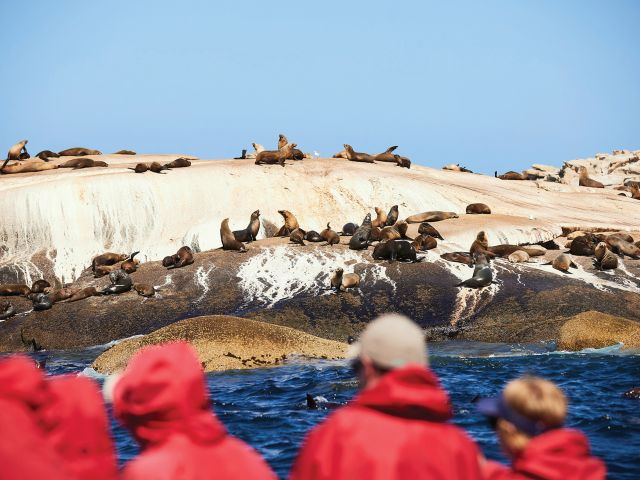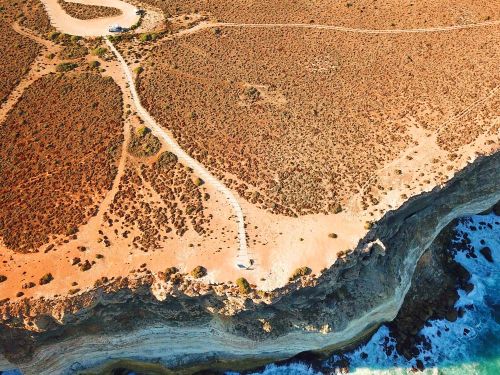
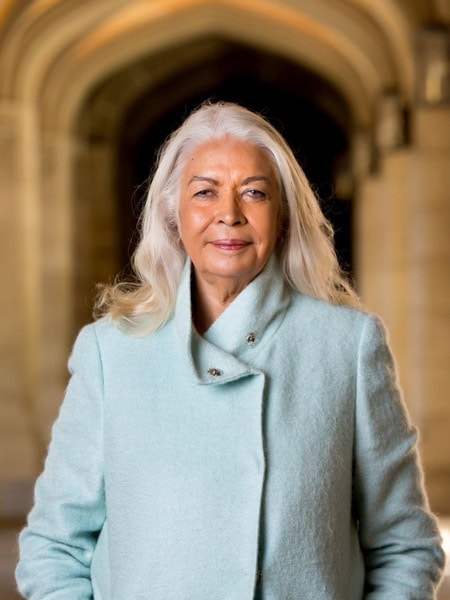
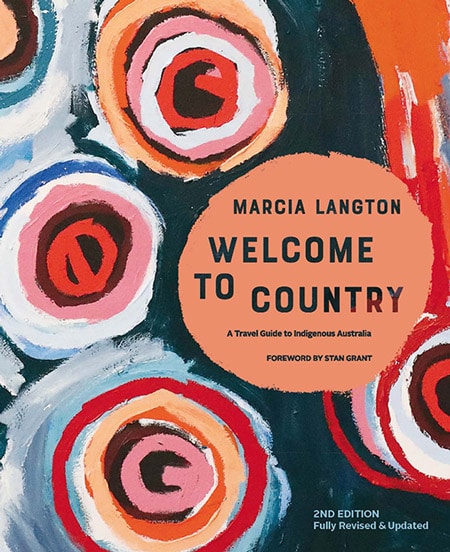
Professor Marcia Langton is one of the country’s most prominent voices on First Nations people and Indigenous culture.
An anthropologist and geographer, Langton contributes to government and non-government policy, and is a strong voice on native title, art and culture, and women’s rights. She received the Officer of the Order of Australia award in 2020. In this extract from the second edition of her book Marcia Langton: Welcome to Country she discusses the extraordinary experience of exploring Indigenous Australia.
The Traditional Owners
Australia is alive with a long history of the Indigenous people, our culture and our presence. Nowhere else in the world can you see and experience the oldest living cultures of humankind. Experiencing Aboriginal and Torres Strait Islander places, tourism adventures, art centres and galleries, guided walks and cultural events will help local and international travellers to find their way through our beautiful lands and waters and make a cultural connection with the people who know it best.
There are two distinctive Indigenous cultural groupings in Australia: Aboriginal people on the mainland and most islands; and Torres Strait Islanders, whose homelands are in the Torres Strait between the northern tip of Queensland and Papua New Guinea. People are believed to have settled on these islands about 20,000 years ago. Aboriginal people have been living on the mainland for at least 65,000 years; archaeologists have uncovered evidence of people living in Arnhem Land in the Northern Territory 65,000 years ago, with ongoing research in other parts of Australia indicating even longer periods.
The Indigenous footprint can be found across the Australian continent and its islands, but it is often invisible until it is pointed out. Once you see the evidence of Aboriginal life, a whole new world opens up. You begin to see the country around you differently. Keen to share their cultural riches, hundreds of Aboriginal people have found ways to invite tourists into their lives, even briefly, to enjoy the experience of being in Aboriginal Country with people who know it best: the Traditional Owners. With deep knowledge of the natural world, they are the ideal guides to show you the extraordinary range of environments across the country.
Sharing Indigenous Australia through tourism
The opportunity for Indigenous Australians to share their experiences and knowledge with tourists opened up when land rights were recognised and Indigenous people became joint managers of large swathes of our Country. Now there are visitors’ centres, museums and festivals in even the most remote places, showcasing the fascinating history and cultures of Indigenous societies.
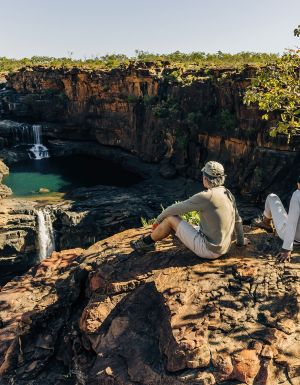
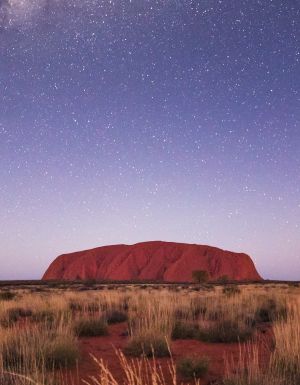
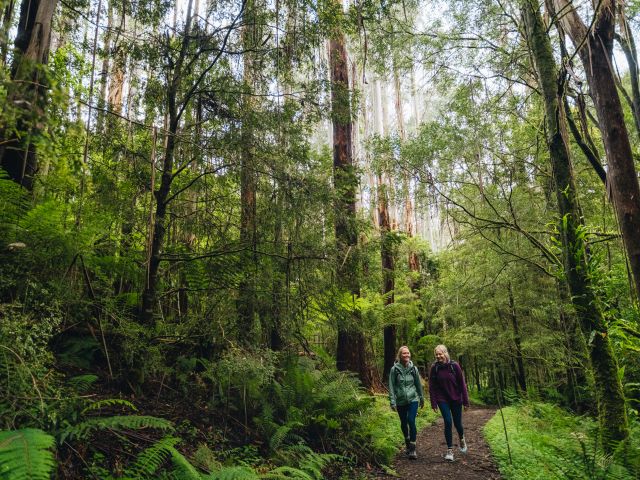
When you are travelling around Indigenous Australia, you will find yourself in extraordinary situations with extraordinary people, whether you are exploring by foot, vehicle, boat, horse or camel; in semi-arid areas such as the Central Desert or the Western Desert; savannah country across north Australia with its many dramatic rock outcrops, escarpments and gorges; or the wet rainforests where fast flowing rivers cascade over the mountain ranges; the forests; the Great Dividing Range in its many forms; on the beaches, islands and reefs; and in the cities and towns.
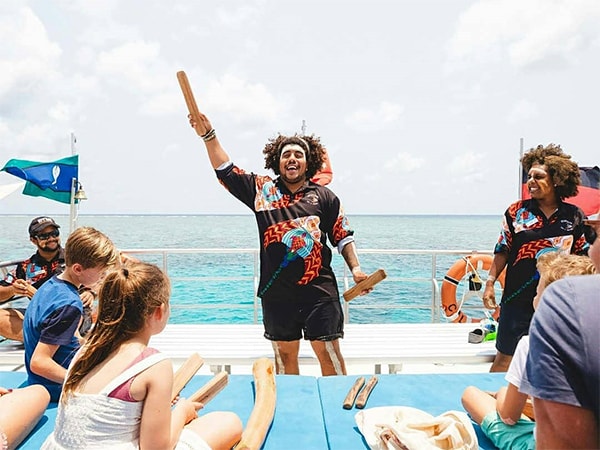
Indigenous people have established cultural and natural tourism businesses and opened up their Country for tourists with great energy, determination and a love of sharing the beauty of their culture and heritage. Also, the benefits of tourism to local Indigenous people are many. In large parts of Indigenous Australia, where there are few other economic opportunities, tourism businesses are a pathway for local families to enjoy the benefits of their unparalleled ancestral heritage.
With their own tourism projects, local people have the opportunity to work on their Country with their family members. They can also teach their own young people as well as tourists about their culture, history and heritage because Indigenous tourism preserves traditional knowledge and involves the younger generations in its continuation. There are surprises, too, for even the most knowledgeable Traditional Owners. While visiting remote parts of their old estates, where threatened populations were protected from introduced predators and land clearances, Traditional Owners have discovered new species of flora and fauna, and surviving pockets of species thought to be extinct.
The Aboriginal domain was reduced to segregated reserves during and after colonisation and the spread of British settlers and their land clearing for farming and grazing across the continent. The growth of Indigenous rights over the last fifty years has resulted in the return of land areas to the Traditional Owners and resumption of the Aboriginal traditions of management. Free once again to steward the land, Aboriginal people are protecting the biodiversity of Country with a range of strategies. Tourism is one of them, and often it is the Aboriginal rangers who take on the task of conserving the environment as well as working as guides for visitors.
Need tips, more detail or itinerary ideas tailored to you? Ask AT.
AI Prompt
We want to be understood by all Australians
Over the last century, Aboriginal and Torres Strait Islander people, like other Australians, have been attracted to the cities and towns from rural and remote areas. Today, the majority of Indigenous people live in towns and cities. The remainder mainly live in small towns, Aboriginal settlements and communities scattered across the country. Even in the largest cities, such as Sydney and Melbourne, Aboriginal people have retained their traditional ownership customs and established tourism ventures to guide visitors across their lands and waters and to understand their culture and history.
Many Australians believe that the only ‘real’ Aboriginal people live in the remote deserts. This is a view based on two centuries of racist ideas that were wrong and should have no place in modern Australia. The official population of Aboriginal and Torres Strait Islander people will reach one million in the next decade. The Aboriginal and Torres Strait Islander peoples want their stories, cultures and history to be understood by all Australians, as well as visitors from overseas, and to be respected. When we see visitors learn about and show respect towards our cultures, histories and arts, a connection is made. This is empowering for our young people.
By building the self-esteem of younger generations of Aboriginal and Torres Strait Islander people through culture, they understand how to survive the racism and discrimination – and importantly refuse to accept the ugly stereotypes – finding their identities, self-worth and futures in our cultural traditions.
We want an understanding of our peoples based in facts, not myths, and to enjoy all the opportunities that Australia offers to other Australians. Offering the experience of visiting our lands, our Countries and sharing our cultures with visitors is one way of overcoming the many misperceptions about us. Learning about the world’s oldest continuous living cultures will help all who come to respect our Country and to learn about our achievements.
The knowledge gained from living on Country
Aboriginal and Torres Strait Islander peoples maintain knowledge traditions with their own philosophies and epistemologies that originated in ancient Australia, tens of thousands of years ago. Many of these knowledge traditions continue today. They have been transmitted from generation to generation by knowledgeable people and taught throughout each person’s lifetime through experience living on Country, learning about the world, the sacred origins of people and traditional estates, their responsibilities for management of the environment, fauna, flora and to the people of the land, and providing for the material needs of their families.
The First Australians conveyed understandings of human nature and the natural world, environmental practices and traditions, medicine and healing, and much more, through their teaching systems and practices, sacred narratives, such as song series or songlines, visual designs, rituals and ceremonies, storytelling and in knowledge used regularly in rich but subtle economic lifeways. These lifeways are both highly localised and also spread regionally according to customs.
For over 200 years, Indigenous Australians have hosted and guided scientists and scientific expeditions seeking to understand the environments, flora, fauna and climate of this continent, as well as the cultures of the Indigenous people themselves. This has resulted in a vast literature of Australian life, but until recently much of it was read only by the experts. A growing number of writers, both Indigenous and other Australians, are now publishing more accessible books to show the wonders of this rich heritage to the world, drawing on the literature, films, audio-visual materials and, increasingly, digital objects about Aboriginal and Torres Strait Islander people and our determination to succeed in keeping our cultures alive and sharing the histories of what happened in Australia in the past.
Our greatest success has been to preserve languages, Indigenous knowledge and land management traditions, and artistic, musical and performance traditions by insisting that we have a right to do so. Now, there is much to share, whereas once few Australians had access to our Country. Our cultures and our own reckoning with history.
Weekly travel news, experiences
insider tips, offers, and more.
Climate change and learning how to respect Country
Most important of all, as all of us face the challenges of climate change and biodiversity loss, learning how to respect Country and to keep our flora, fauna and other species flourishing is best learnt from the stewards of the places you will be introduced to here. They are descendants of the first people to come here at least sixty-five millennia ago.
The Aboriginal history of continuous occupation of this continent over more than sixty-five millennia represents a fifth of the total of human history and the evidence of it should be regarded as a world cultural and scientific treasure. Scientists, ecologists and historians are increasingly recognising this and adding to our knowledge. As researchers and scientists come to terms with these impacts, they have been forced to ask the question, ‘What do Aboriginal and Torres Strait Islander people know about the places they have inhabited for very long periods and the life forms that they have co-habited with during this unimaginably long period of time?’
The changes to our environments that colonisation and expanding populations and urbanisation have caused cannot be sustained without further extinctions of species and loss of environments and their ability to sustain us. Learning how Aboriginal and Torres Strait Islander people created and managed our environments and biodiversity will inspire you to seek greater care of the natural world we inherited from the ancients and preserve it for the future generations of humanity.
Want to see more stories from Australian Traveller in your Google search results?
- Click here to set Australian Traveller as a preferred source.
- Tick the box next to "Australian Traveller". That's it.

Editor
View profile and articles