Australia’s top five animals might not be ‘big’ but they are mighty. And seeing these iconic animals in the wild on beautiful beaches or bush walks is as awe-inspiring as it gets.
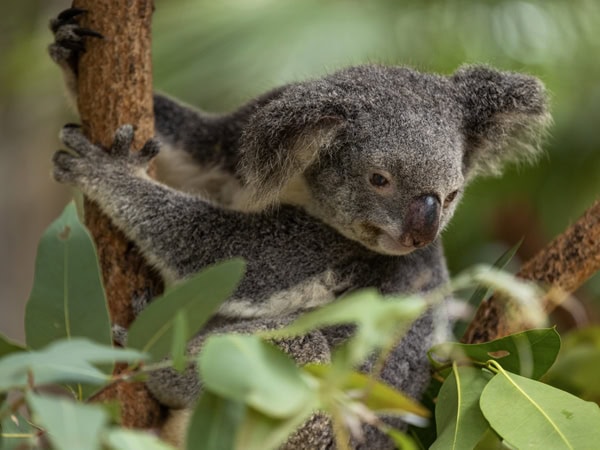
1. Koala, Magnetic Island, Qld
Spot wild koalas high in the veil of branches against a blue sky in the gum trees lining the picturesque Forts Walk. Magnetic Island (Yunbenun) is home to northern Australia’s largest colony of wild koalas.
You can see them here curled up like rolls of carpet, asleep in the crooks of trees. Or moving slowly in single-minded grace to graze on gum leaves. While local star Rod the Cod is a draw for divers visiting Magnetic Island, fans of the Netflix series Izzy’s KoalaWorld will be hoping it’s the herbivorous marsupials making cameos.
Spot wild koalas high in the veil of gum tree branches. (Image: Tourism Australia)
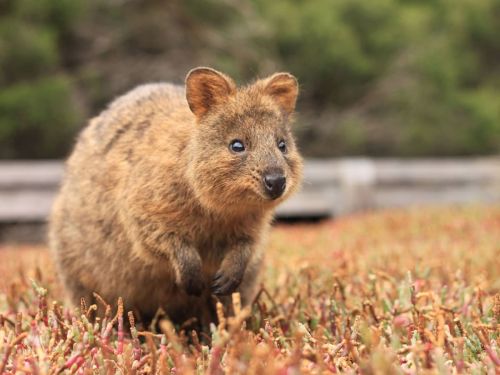
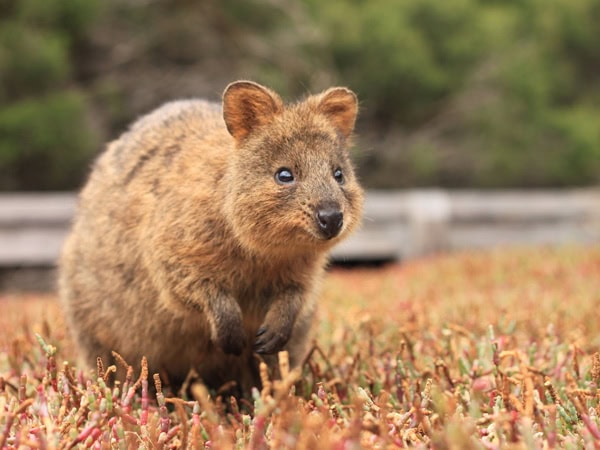
2. Quokka, Rottnest Island, WA
It’s simply not possible to reach peak quokka. The world’s happiest animal remains a beacon for visitors to Wadjemup (Rottnest Island) who come for the cute marsupials and stay for the carefree (and car-free) Rotto vibes.
These adorable animals are only found off the coast of Perth and are best known for becoming a social media sensation, posing with a cute grin for the camera.
The ultimate main character move in 2024 is to go to Rotto and clock a quokka without posting it to your Insta feed. Go on, we dare ya.
Meet the world’s happiest animal on Rottnest Island. (Image: Tourism Australia)
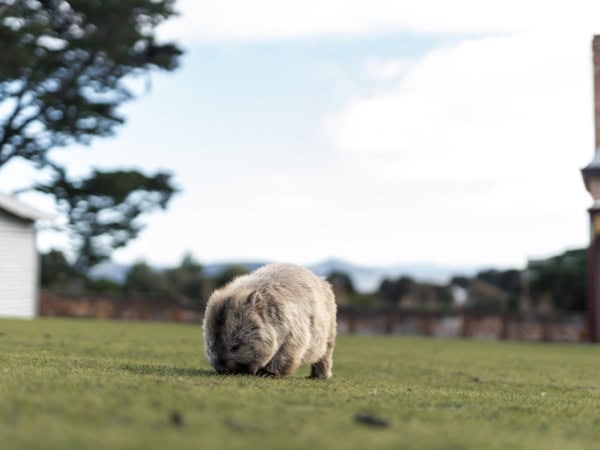
3. Wombat, Maria Island, Tas
Did you know that wombats can sprint up to 40 kilometres an hour? Or that they produce cube-shaped poo?
You will feel like you’re in an episode of BBC’s Planet Earth when wandering around Maria Island’s chiselled landscape looking for the endemic Tasmanian wombat. This species is smaller than its mainland mates and has a diverse habitat that stretches from the coast to the alpine areas of Australia’s most southern state.
Wombat’s are faster than you think… (Image: Tourism Australia)
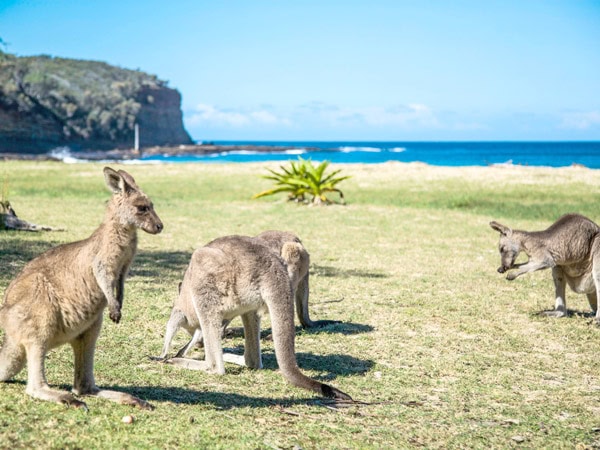
4. Kangaroo, Pebbly Beach, NSW
Spotting roos through the canvas mesh of your tent at Pebbly Beach Campground is as iconic as it gets. It’s easy to spot the resident herbivores hunched over the grass that encircles the beach in Murramarang National Park .
The best time to see kangaroos on NSW’s Pebbly Beach is at dawn and dusk when the sea and the sky become one. Sometimes you will see the macropods using their long muscular tails and hind legs to bound across the sand. Other times you will see a baby Joey cradled in a mother’s pouch.
It’s easy to spot the resident herbivores on Pebbly Beach. (Image: Destination NSW)
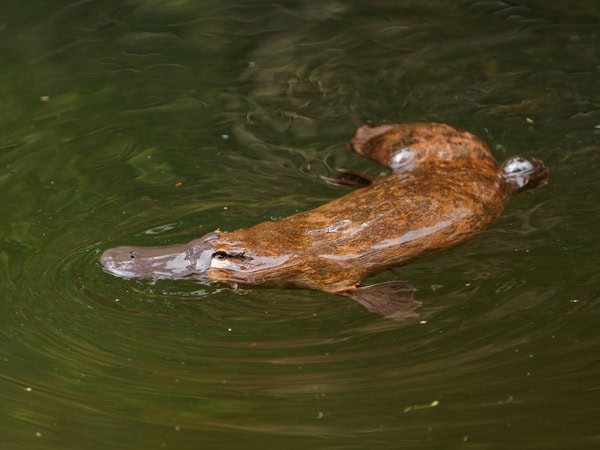
5. Platypus, Great Otway National Park, Vic
When British scientists first saw the platypus in the late 18th century, some of them were said to have thought the specimen was a hoax. Yes, this native Australian monotreme appears most extraordinary, with the beak of a duck seemingly grafted onto the head of a four-legged animal.
It’s one of many reasons why spotting these endangered creatures in Victoria’s Great Otway National Park is such a thrill. While your ecologist guide at Otway Eco Tours can’t guarantee you will see platypuses in the wild on a canoeing tour, they have a 95 per cent success rate.
This native Australian monotreme appears most extraordinary. (Image: Getty Images/phototrip)
Carla Grossetti avoided accruing a HECS debt by accepting a cadetship with News Corp. at the age of 18. After completing her cadetship at The Cairns Post Carla moved south to accept a position at The Canberra Times before heading off on a jaunt around Canada, the US, Mexico and Central America. During her career as a journalist, Carla has successfully combined her two loves – of writing and travel – and has more than two decades experience switch-footing between digital and print media. Carla’s CV also includes stints at delicious., The Sydney Morning Herald, and The Australian, where she specialises in food and travel. Carla also based herself in the UK where she worked at Conde Nast Traveller, and The Sunday Times’ Travel section before accepting a fulltime role as part of the pioneering digital team at The Guardian UK. Carla and has been freelancing for Australian Traveller for more than a decade, where she works as both a writer and a sub editor.
Hobart has quietly become our coolest capital, but the real wonder lies just beyond the city limits.
In the cool shade of Kunyani/ Mt Wellington, Hobart has earned a reputation. Home to culture-defining Dark MOFO, the city blends rugged, raw wilderness and rule-breaking galleries. But, step beyond the thrumming capital’s border and you’ll find a new perspective: historic towns, Jurassic-era cliffs and a UNESCO City of Gastronomy. With ALL Accor as your home away from home, fill your days with epicurean odysseys and wild scenery on the best day trips from Hobart.
Where to stay
Behind every good road trip is the perfect home base. Somewhere central to review your camera roll, make the most of Hobart’s dining scene and relax before setting off again.
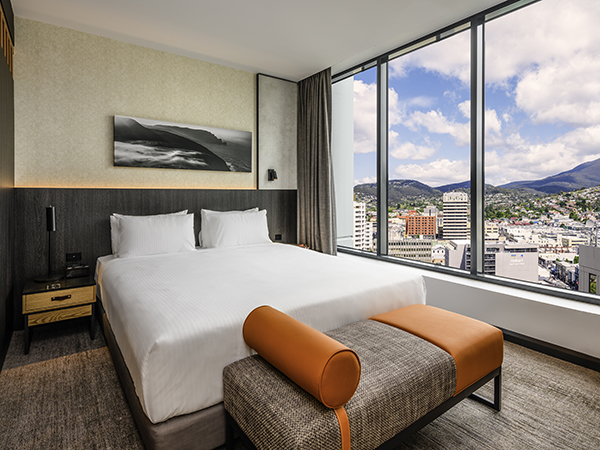
For modern, Tasmanian-inspired design, book a stay at the Movenpick Hotel Hobart. Standing at the Salamanca Markets, look to the Hobart skyline and the award-winning hotel will catch your eye. As the third-tallest building in the CBD, the views across the harbour toward Antarctica are totally unique to your room. Here, end each day at the daily free chocolate hour (plus a free Movenpick ice cream for the little ones).
For a more budget-conscious option, head to the picture book, sandstone buildings of Macquarie Street. Nestled along the buzzing, historic streetscape, you’ll find Tasmania’s biggest hotel: the Ibis Styles. Return home each day to defrost in one of the hotel’s two saunas. Make use of the proximity to MONA, or take an easy stroll to the candy-coloured cottages of Battery Point between your adventures.
Elevate your Hobart stay with sleek style at Mövenpick.
1. Bruny Island
Craggy cliffs and tropical-hued, white sand beaches signal your arrival to Bruny Island/ Lunawanna-Alonnah.
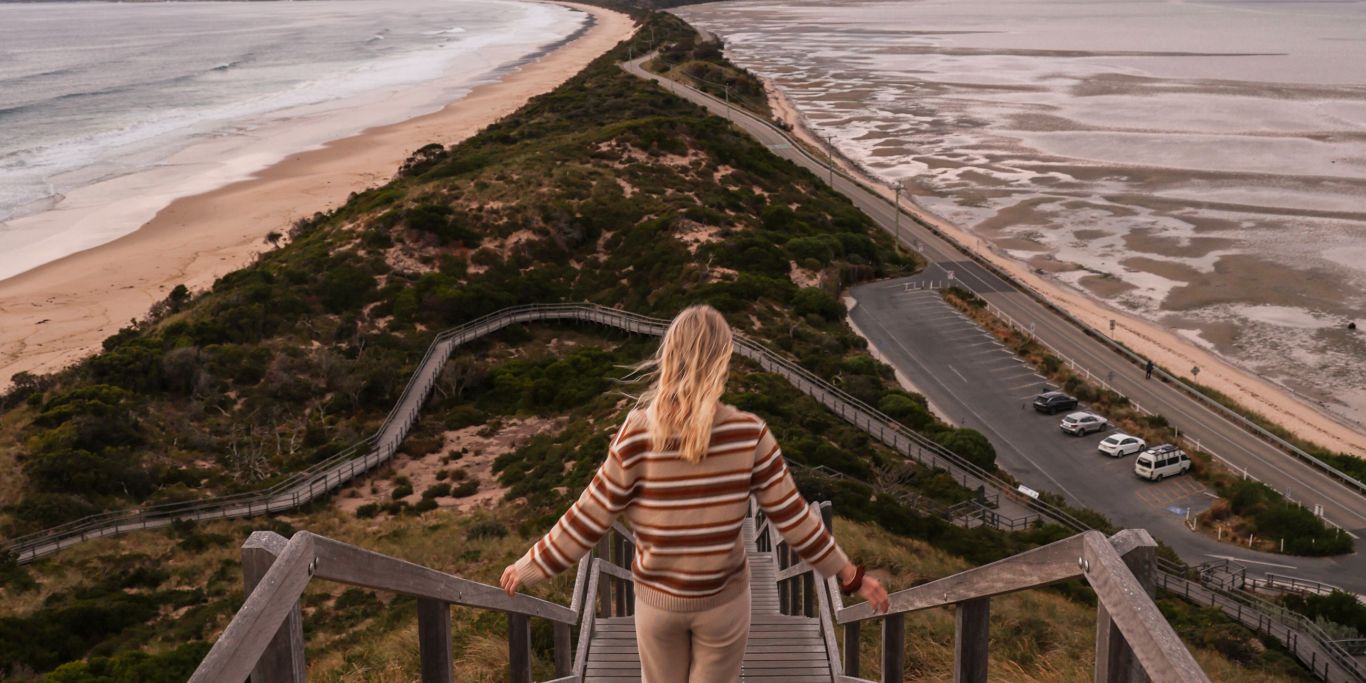
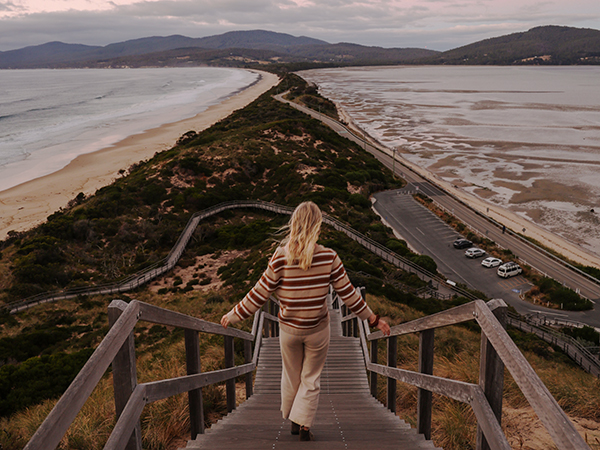
Start your day trip at the island’s most iconic spot, the Neck Game Reserve. Scale the Trunganini steps to gaze out over the teensy stretch of land that juts through the sea connecting the two ends of the island.
Catch a rare glimpse of the white furred wallabies that call Bruny Island home at Adventure Bay. Then, for ocean-fresh oysters, pull into the drive-thru window at Get Shucked. Sample Bruny Island cheese at the cellar door before catching the ferry home with an esky full of local produce.
Begin your adventure with a climb and a view. (Image: Elise Weaver)
2. Mount Wellington
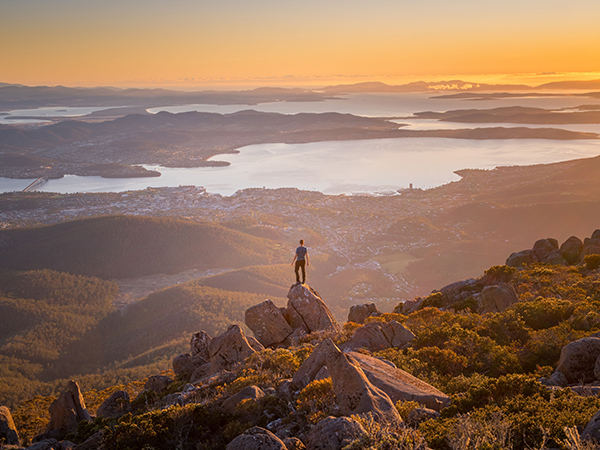
At 1271 metres, Mount Wellington watches protectively over Hobart. Follow the winding road to climb through alpine forest and tufts of snow to reach the summit. Gaze down over Hobart and out to sea, or over your shoulder to the southwestern wilderness.
Reset your adrenaline with a mountain bike ride back down. Or, make like the locals and head into the mountain on foot. Try the hike to the Jurassic-period Organ Pipes which slips under the mountain’s magnificent dolerite cliffs (perfect for families thanks to the trail’s minimal incline).
For a view of Mount Wellington itself, hike nearby Cathedral Rock.
Climb through alpine forest to the summit. (Image: Paul Flemming)
2. Port Arthur
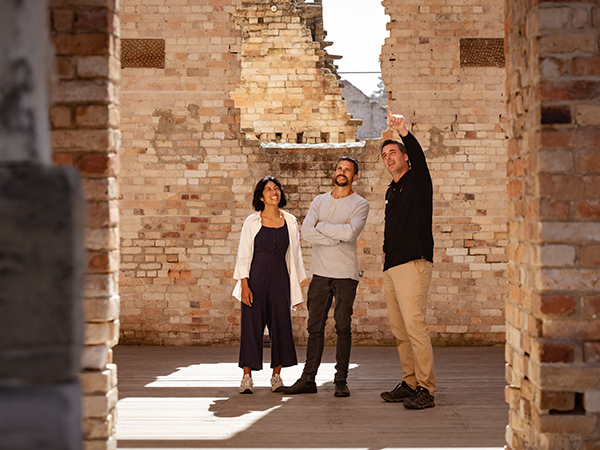
Constructed entirely by convicts, the manicured gardens and penal buildings of Port Arthur offer a day trip that practically hums with history.
The rugged, seagirt location was chosen for its difficult escape conditions. Now, you can cruise the coast below the towering, jagged cliffs of the Tasman National Park or wander the sloping fields of fragrant lavender.
Tickets to Port Arthur include a walking tour and harbour cruise. See the Isle of the Dead where 1000 men are buried in marked and unmarked graves. And Point Puer, Britain’s first prison for children.
Wander convict-built grounds and gardens. (Image: Dearna Bond)
3. Launceston
You’ll find Launceston at the confluence of three rivers after an easy 2.5-hour drive from Hobart. Launceston is a patchwork of old and new. Here, heritage streetscapes meet modern architecture.
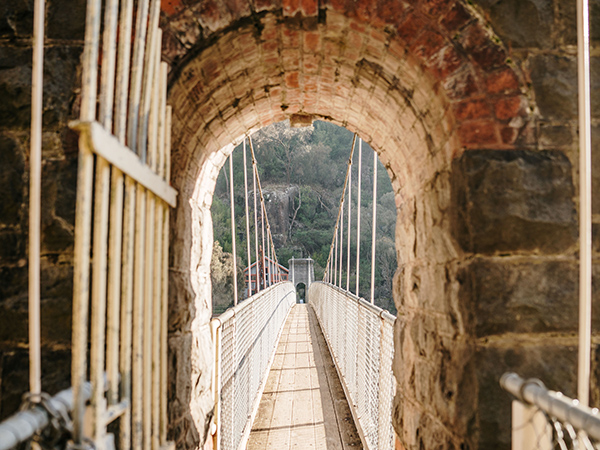
Visit Cataract Gorge, the green, sun-dappled heart of the town and sacred meeting point for Tasmania’s indigenous communities. Pull up at roadside produce stalls that dot the Tamar Valley, or dine out. Launceston is, after all, a UNESCO City of Gastronomy.
Should the local wine scene persuade you, simply extend your time in Launceston at Peppers Silo (but definitely at least stop by the onsite restaurant, Grain of the Silo, for a farm fresh menu) or Mercure Launceston before heading back to Hobart.
Walk the sunlit paths of Cataract Gorge. (Image: Nick H Visuals)
4. Bonorong Wildlife Sanctuary
Take a 35-minute drive from your hotel and you’ll find Bonorong Wildlife Sanctuary. This social enterprise is run by a team of extremely passionate Tasmanians with a mission to look after critically endangered species who have found sanctuary here after facing extinction on the mainland.
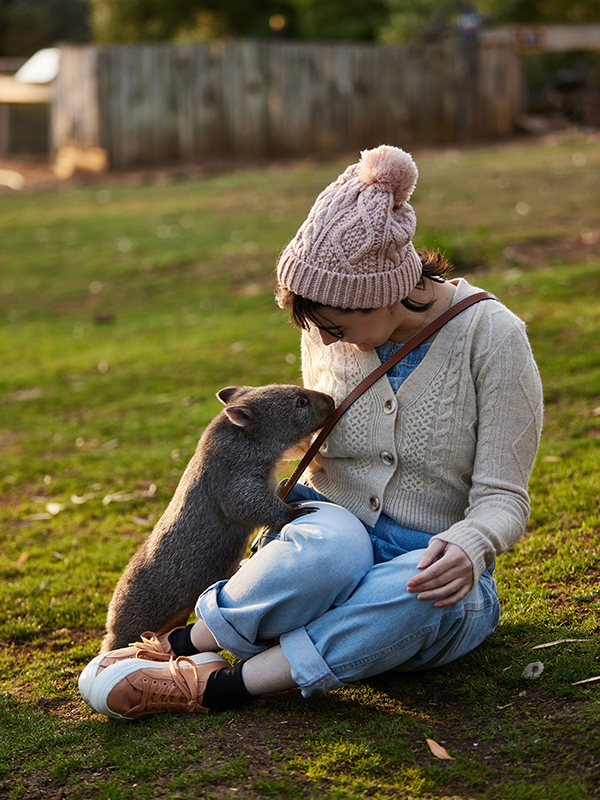
Choose to wander the sanctuary at your own pace or join a guided tour (free with your ticket) to come face to face with Tassie’s most iconic species. Tasmanian Devils, wombats and echidnas are part of the free tour. You can book up close encounters with your favourite animals, too.
Snap a cuddle-worthy encounter. (Image: Tourism Australia)
5. Richmond Village & Coal River Valley
Richmond is a town that belongs in a snow globe. Fifty colonial-era, Georgian buildings have been painstakingly restored and turned into cafes, cosy restaurants and galleries. Visit Richmond Gaol , said to be the home of a prisoner so vile he inspired Charles Dickens to pen Oliver Twist’s Fagin.
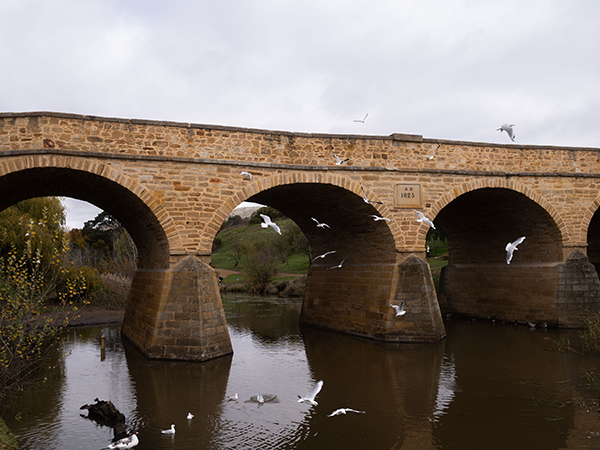
Then, follow the Coal River as it flows past grassy, duckling-dotted knolls and under the iconic Richmond Bridge, the oldest bridge in Australia. From the crest of the bridge, see the oldest Catholic Church in Australia. The river crawls past many cellar doors, perfect for a day of wine tasting.
Trace the river through history and wine country. (Image: Fin Matson)
Plan your trip to Hobart and beyond with ALL Accor at All.com .