hero media

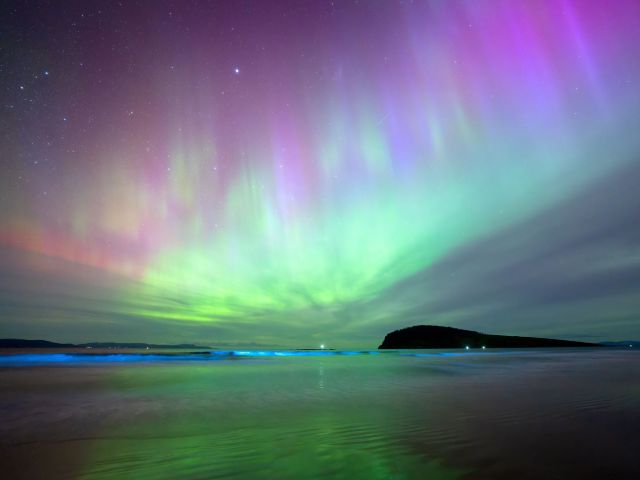
The aurora australis could light up Australian skies tonight

A major solar storm could bring one of the best aurora australis chances of the year.

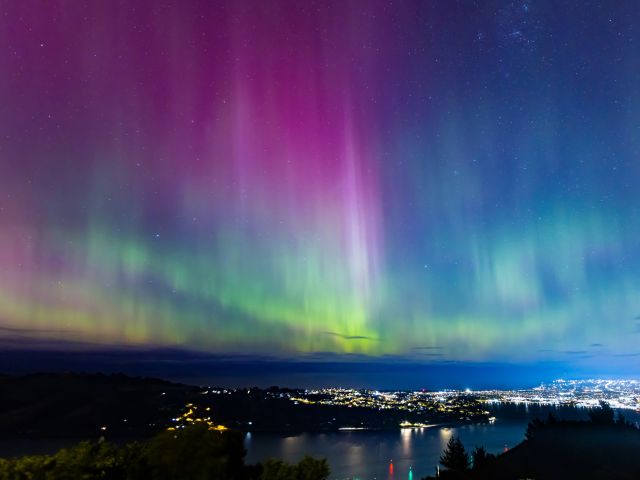
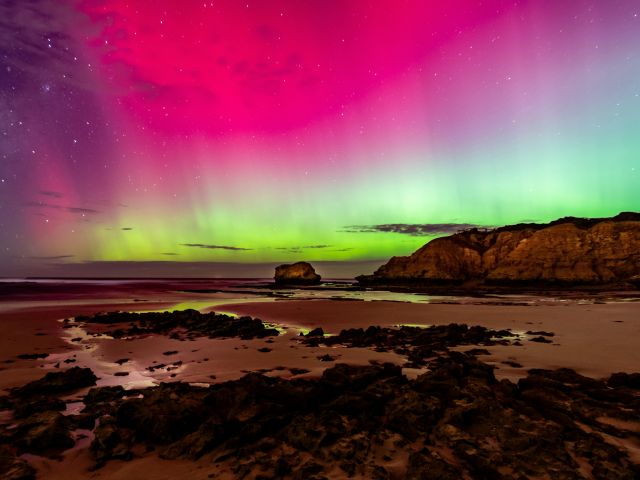
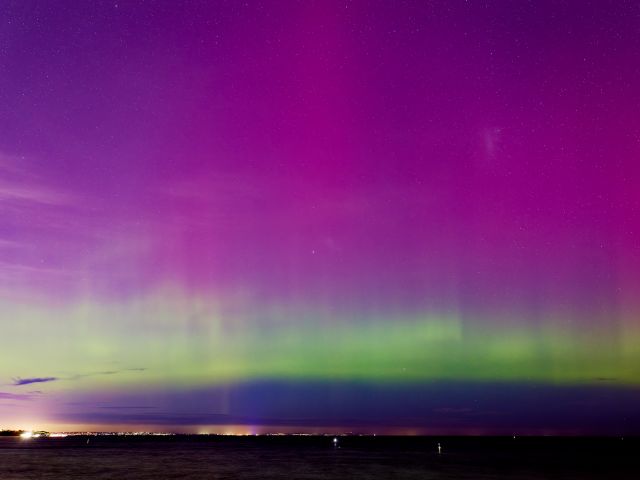
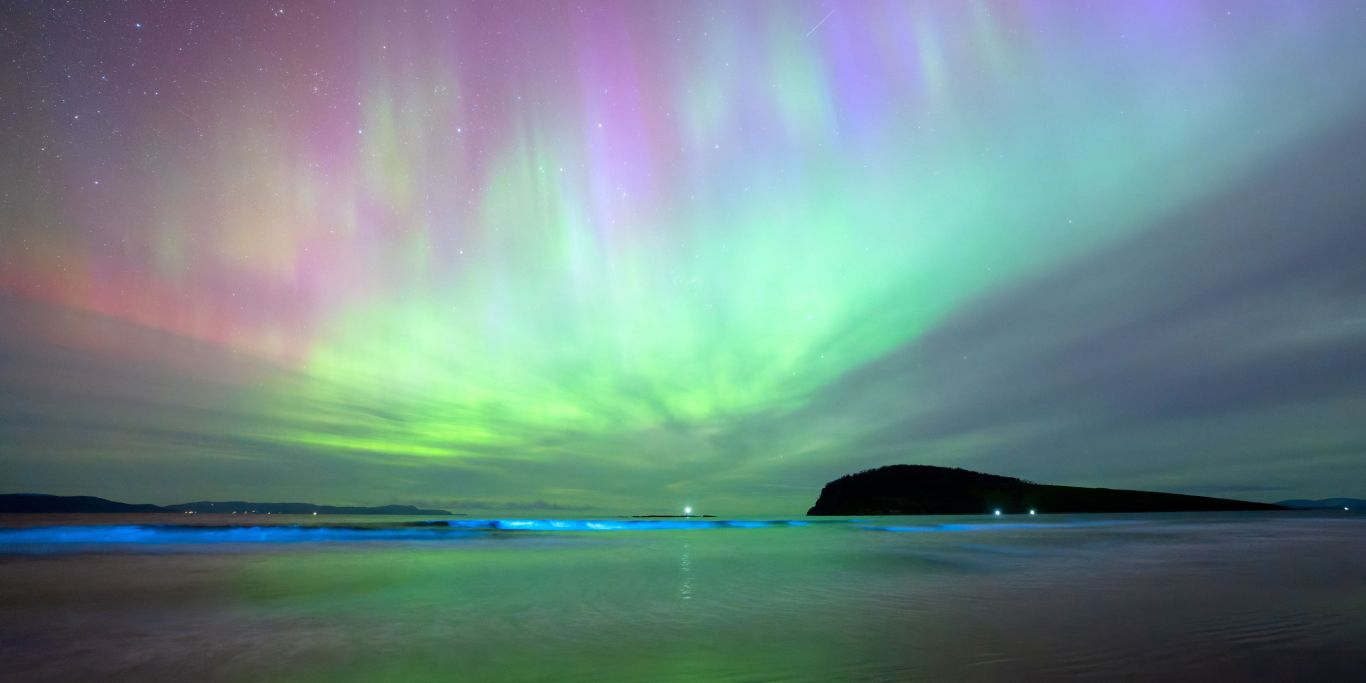
The southern lights may put on a rare show across Australia tonight, with the Australian Space Weather Forecasting Centre (ASWFC) and international agencies warning of conditions strong enough to spark a vivid aurora australis.

A fast-moving burst of solar material is on track to reach Earth on 9 December. The ASWFC at the Bureau of Meteorology has issued an Aurora Watch, noting that the incoming disturbance is expected to trigger G3 level geomagnetic storming. This strength of activity has the potential to push auroral visibility well beyond Tasmania.

What is the aurora australis?

A man with a head torch looking at the Aurora Australis
Tasmania is the best place in Australia to see the spectacle. (Image: Tourism Tasmania)

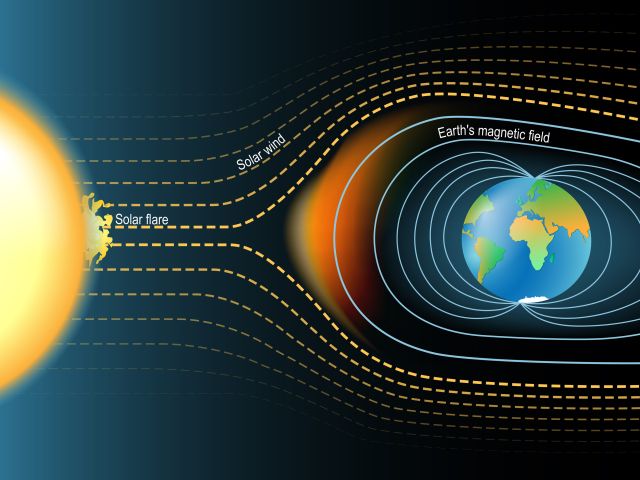
The aurora australis – also known as the southern lights – is one of the most dazzling natural displays visible to the human eye. Put simply, the phenomenon occurs when the sun releases a massive burst of charged particles and magnetic fields into space. These particles are captured and funnelled toward the southern poles by Earth’s magnetic field, colliding with gases in the Earth’s atmosphere. The collisions result in light being emitted and a spectacular natural dancing rainbow ensuing.

The past two years have been particularly good years for viewing the phenomenon.

What the latest forecast says

An Aurora Australis display at night along the coastline
A southern lights display can last minutes to hours. (Image: Unsplash/Graham Holtshausen)

According to the ASWFC, the Coronal Mass Ejection (CME) is forecast to arrive early on 9 December, with a timing window of plus or minus 12 hours. If the storm develops as expected, visible aurora may be seen from Tasmania along with southern parts of Victoria, South Australia and Western Australia during local night hours.

NOAA is reporting similar conditions , with its own modelling showing a strong CME headed towards Earth. Together, both forecasts point to one of the most promising aurora opportunities of the season.

Where you might see the aurora australis tonight

Aurora Australis in Victoria
The aurora australis might be visible in southern pockets of Victoria.

Tasmania is the most likely place to catch a strong display, particularly for those with a south-facing outlook and minimal light pollution. Southern pockets of Victoria, South Australia and WA could also see a glow if the storm intensifies.

To boost your chances, head somewhere with clear skies, low light pollution and a strong view to the south. Beaches, lookouts and dark sky reserves are ideal. And remember, the storm may peak quickly, so being ready early is essential.

When to look up

For the best chance of seeing colour in the sky, step out once darkness has settled. A useful guide is roughly 75 to 95 minutes after sunset on 9 December, when the sky is dark enough and the storm is likely to be active. The timing could shift depending on when the CME makes contact with Earth’s magnetic field, so stay flexible.

Keep an eye on real-time space weather indicators such as the KP index and Bz values . A negative Bz often signals that the magnetic field is opening up in a way that favours aurora activity.

What is causing tonight’s aurora potential

Aurora Australis, Cape Bruny Lighthouse
Tonight’s G3 forecast is known to produce visible aurora in Australia under the right conditions. (Image: Luke Tscharke)

This event stems from a fast-moving CME from an M8.1 solar flare, launched from the active region currently rotating across the sun. Full-halo CMEs are the ones to watch because they expand outward in all directions and are more likely to be directed towards Earth. If tonight’s arrival window holds, we could see the magnetic field energise quickly after impact.

Geomagnetic storms are ranked from G1 to G5. Tonight’s forecast of G3 is considered strong and is known to produce visible aurora in Australia under the right conditions.

A quick reminder

Solar activity is famously unpredictable. Arrival times and intensity levels can shift as the CME moves through space, which means tonight could deliver anything from a subtle green smudge to a full sweep of colour across the sky.

Regardless of how the storm unfolds, tonight’s setup is shaping as a genuine opportunity for Australians to witness the aurora australis without travelling far from home. If the stars align, you might witness the southern lights dancing overhead without needing to board a flight.

Emily Murphy
Emily Murphy is Australian Traveller's Email & Social Editor, and in her time at the company she has been instrumental in shaping its social media and email presence, and crafting compelling narratives that inspire others to explore Australia's vast landscapes. Her previous role was a journalist at Prime Creative Media and before that she was freelancing in publishing, content creation and digital marketing. When she's not creating scroll-stopping travel content, Em is a devoted 'bun mum' and enjoys spending her spare time by the sea, reading, binge-watching a good TV show and exploring Sydney's vibrant dining scene. Next on her Aussie travel wish list? Tasmania and The Kimberley.
See all articles
hero media

Film lovers need to add these Victorian theatres to their bucket list

Theatres have always been a cornerstone of regional Victoria, reflecting the character and history of their local communities.

From grand, gold rush-era masterpieces to Art Deco wonders to repurposed prisons, we’ve rounded up four of Victoria’s best regional theatres to catch a show at next time you’re travelling through.

Her Majesty’s Theatre, Ballarat

Her Majesty’s Theatre, Ballarat 
Her Majesty’s Theatre in Ballarat has been standing for 150 years. (Image: Michael Pham)

A monument to the immense gold rush wealth flooding through Ballarat in the second half of the 19th century, Her Majesty’s Theatre (‘Her Maj’ to locals) celebrates its 150th anniversary as the city’s premier performing arts venue this year.

Built in a classical style and immaculately preserved (thanks largely to a recent $16-million restoration), this Lydiard Street landmark is the oldest continuously operating theatre in mainland Australia, notable for its double balcony and a stage that slopes towards the front, making it one of the most audience-friendly venues in the country to see a show.

The Capital, Bendigo

The Capital Theatre, Bendigo
The Capital in Bendigo was built in 1873 as a Masonic Hall. (Image: Michael Pham)

Denoted by its distinctive Corinthian columns, more reminiscent of ancient Greece than regional Victoria, The Capital theatre in Bendigo has been through several iterations since the first stone was laid in 1873.

Originally a Masonic hall, the renaissance revival-style building became a theatre in the 1890s, falling into disrepair for a time during the 1970s, before being restored and reopened (as the Bendigo Regional Arts Centre) in 1991. Today, the 480-seat venue hosts everything from comedy to cabaret to traditional theatre, dance, opera and live music.

 Ulumbarra Theatre, Bendigo

a look insideBendigo’s Ulumbarra Theatre
Inside Bendigo’s Ulumbarra Theatre, a former prison. (Image: Michael Pham)

Bendigo has busted out as a regional performing arts hotspot, so it’s fitting that one of its newest venues is housed within a former prison. Meaning ‘meeting place’ or ‘gather together’ in the language of the local Dja Dja Wurrung people, the $26-million, 950-seat auditorium rose from within the red brick walls of the historic Sandhurst Gaol in 2015.

It’s an eerie feeling as you approach the imposing granite facade, pass beneath the old gallows and pick up your ticket from the box office occupying a repurposed cell block. With the building playing a main character in the show, this is performative architecture at its finest.

Rex Theatre, Charlton

the Rex Theatre in Charlton
The 1938-built Rex Theatre in Charlton is an Art Deco gem. (Image: Jenny Pollard)

Regional theatres don’t come more romantic than this Art Deco gem in the river town of Charlton, in north-central Victoria. Built in 1938, the 350-seat community-owned theatre provides an essential entertainment outlet for residents in the Wimmera Mallee region, as well as visitors making the trip up the Calder Highway from Melbourne.

The volunteer-run venue is the last remaining purpose-built cinema in regional Victoria, and hosts the Charlton Film Festival every February, plus three weekly film screenings (Tuesday, Saturday and Sunday).