The biggest mistakes to avoid on an outback road trip

hero media
Steve Madgwick has made the outback road trip blunders so you don’t have to…

It’s lucky no one can hear you swear halfway along the Oodnadatta Track. I gingerly shimmy under the stricken Nissan Patrol for my third attempt to jack it up on the soft track. The passenger-side rear tyre has a gaping hole in it, thanks to a sharp rock that must have been lurking under the red dirt.

This was my first ‘real’ middle-of-nowhere outback road trip, last decade. The 4WD had threatened to fall on me twice as I tried to raise it. I hadn’t seen another vehicle in hours. And I knew that even if I did manage to change the wheel before wedge-tailed eagles snacked on my entrails, I would be sans spare tyre for the next few hundred kilometres.
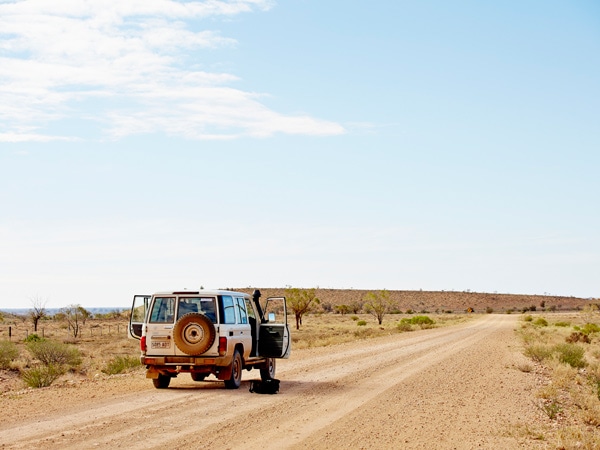
a 4WD driving on the road
Be prepared before you set off with ample provisions and knowledge. (Image: Maxime Coquard)

It’s obvious now that my hour-long obscenity-fest was driven by fear and should have been directed at my own ineptitude, complacency and ill-preparedness instead of inanimate objects. But lessons were learned.

Don’t learn the hard way if you don’t have to

My Oodnadatta Track shemozzle boils down to two factors. Number one: I ignored advice from locals and people who had gone before me. Number two: I began my journey with niggling, unanswered questions.
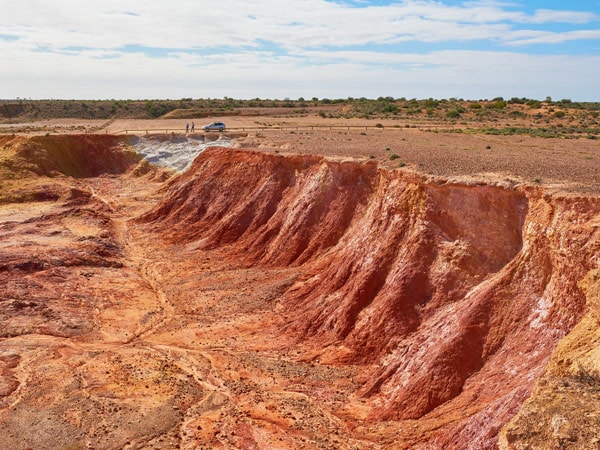
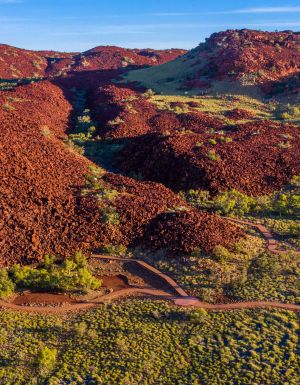
an overhead shot of the Ochre Cliffs, Oodnadatta Track
See the Ochre Cliffs of the Oodnadatta Track. (Image: South Australian Tourism Commission)

If I’d deflated my tyres appropriately for that section of track – as advised by a servo attendant and bush-hotel publican the day before – they would have been much more likely to ‘spread’ than shred.

The 4WD rental company had offered to give me a thorough once-over of the vehicle and its features, but I’d man-bluffed my way through: “I’ll work it out if I need to." (It took me 10 minutes just to find and extract the jack from under a seat.)
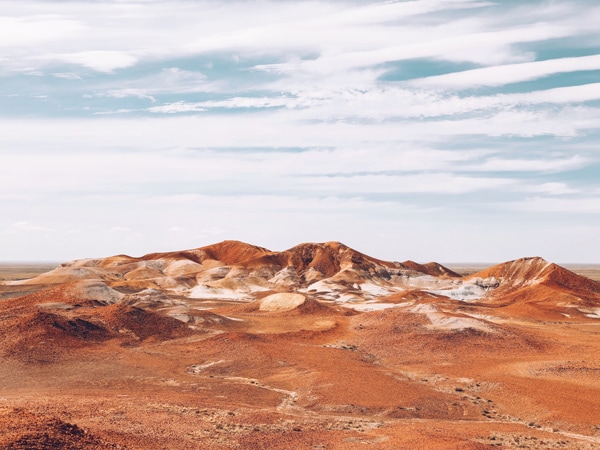
an aerial view of the rugged landscape in outback South Australia
Condition your vehicle before navigating the rough terrain. (Image: South Australian Tourism Commission)

I’d also left Adelaide still wondering to myself if I would need a second spare tyre and tyre pressure gauge. Fail. Fail. Fail. Recently, I applied lessons learned from the Oodnadatta Track and other outback near-misses to my most challenging road trip yet: a 2000-kilometre drive from Adelaide to Birdsville, via the Strzelecki Track and smaller, remote roads.

Coincidentally, I picked up my rental Toyota HiLux from the same place in Adelaide, but this time I owned my ignorance and popped all niggling thought bubbles. Naturally, I’d pre-ordered a second spare wheel and tyre gauge. I’d also rented a satellite phone because I’d had pre-trip daymares about the consequences of taking a simple but life-changing wrong turn and/or rolling the 4WD 500 kilometres from assistance.
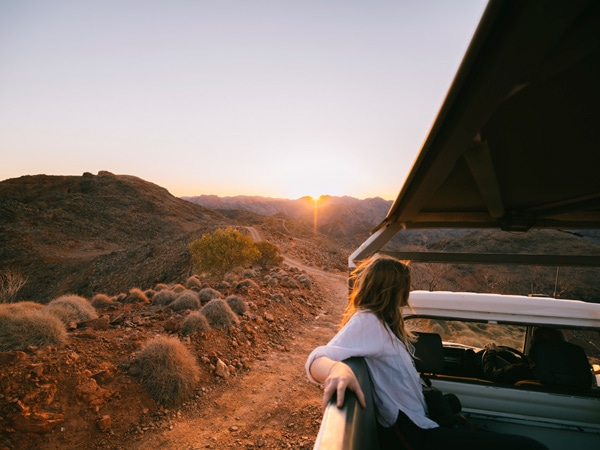
a girl in the car driving along the outback South Australia
Driving the rugged roads of the South Australian outback. (Image: Tourism Australia)

Stock up on old-school maps and a compass

I now treat outback journeys as analog rather than digital experiences. You simply cannot trust the internet to save your frying bacon out in the boondocks, especially if Telstra is not your service provider. Any country boy or girl worth their salt won’t trust Google Maps once the tarmac ends (even pre-downloading the maps).
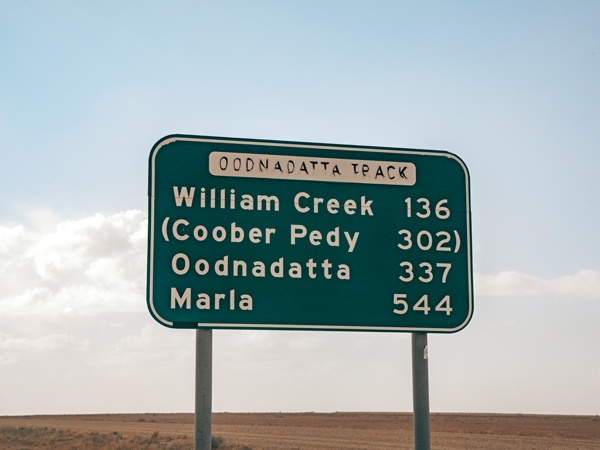
a photo of Oodnadatta Track road sign
It’s a long drive between stops on the Oodnadatta Track. (Image: South Australian Tourism Commission)

Consider buying/hiring a dedicated GPS navigator (Navman, Garmin or Hema, for example) or even stocking up on old-school maps and a compass (and learn how to use them). Deferring to local knowledge extends to chinwagging with oncoming drivers – because they have been where you want to go.
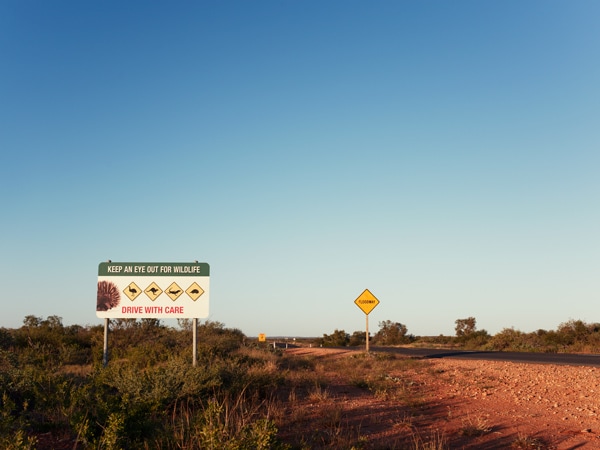
desert road signs in outback South Australia
Prepare for a desert road-trippin’. (Image: Jonathan Cami)

Do your research

On side tracks especially, I stopped and swapped anecdotes on upcoming track conditions, badly signed turn-offs and opening hours of fuel stops (which I’d already researched). I chatted about tyre pressure like pensioners converse about the weather. There are various schools of thought regarding when you should/shouldn’t deflate tyres to reduce the chance of a flat and increase your purchase in sand.

Suffice to say, this should be a well-researched decision that can be re-confirmed with your local peers, just as you drive headlong towards that gnarly sandy section or crawl across that naturally booby-trapped dry creek bed. Ultimately, the best advice I can offer is to read much, much more than just this when planning a jaunt along the Birdsville Track, Gibb River Road et al.

Embrace being a beginner; trawl 4WD blogs and gear review sites; dive deeply into YouTube wormholes on soft-sand driving techniques, tyre-pressure tutorials and low-range gear masterclasses. Never, ever be left wondering, “What does this button do?" You can’t bluff your way out of strife in the outback. But with some solid prep work, any foul-mouthed fool can do it. I am living proof of that.
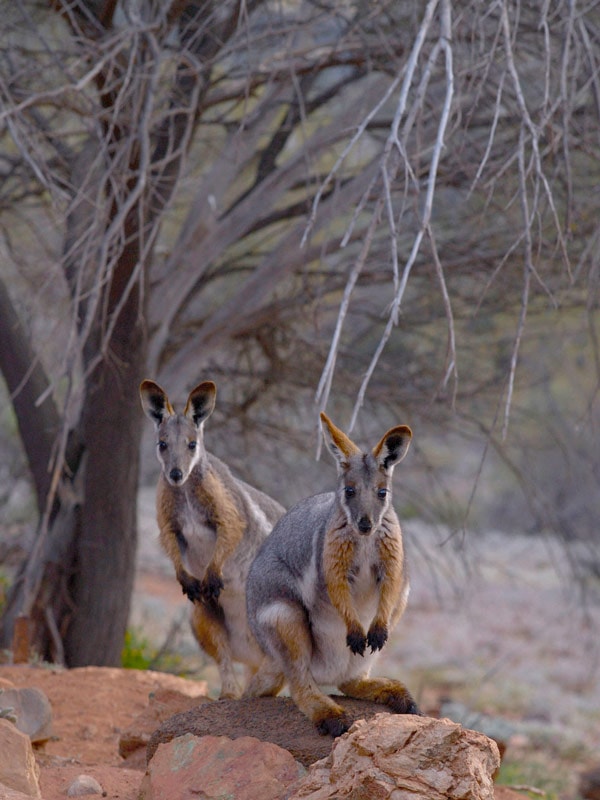
two rock wallabies sitting side by side
The distinctive rock wallabies reside in the outback. (Image: Jonathan Cami)

Last-minute tips and reminders

  • Carry plenty of drinking water (three litres per person per day, as a guide).
  • Buy in bulk beforehand.
  • Check current and recent weather conditions. As a rule, don’t plan outback trips in peak summer or after heavy rain.
  • Never cross a flooding river.
  • Tell someone where you are going and when you’re due to arrive. Update them about sudden itinerary changes.
  • Take your sweet time and drive to the conditions. The outback can quickly turn small mistakes into serious ones.
  • Give road trains a very wide berth, at least for your windscreen’s sake.
  • Pack a ‘what-if ’ kit for longer trips: basic spares, jerry can, first-aid kit etc.
hero media

Your Mandurah guide: art, dining & dolphins await in WA’s coastal gem

Discover the perfect road trip stopover between Perth and wine country.

Western Australia punches above its weight when it comes to coastal hot spots, but no other town or city has seen a tourism boom quite like Mandurah. Named Australia’s Top Tourism Town in 2023 , it’s the relaxed, beachside break you’ve been searching for. And it’s perfectly placed, sitting between Margaret River and Perth, as it’s just a 55-minute drive from Perth’s CBD. Which is why we’ve put together your ultimate Mandurah guide.

Aerial view of Mandurah.
Plan your perfect coastal escape to Australia’s Top Tourism Town of 2023.

The best things to do in Mandurah

Wetlands and rivers, ocean and inlet; Mandurah’s laid-back lifestyle centres around the aquatic. Its waterways cover twice the ground of Sydney Harbour – measuring some 134 square kilometres in total – and form a unique environment for oceanic and estuarine flora and fauna to thrive.

In the city’s estuary lives perhaps the region’s most famed inhabitants – a resident pod of 100 bottlenose dolphins – and the inlet’s silty bottom is home to the prized blue manna crab. Spot the former breaching and playing on an hour-long dolphin cruise through the channels, or try your hand at catching the latter by wading through the estuary’s shallows with a scoop net in hand.

While swimming at the circular Kwillena Gabi Pool, chance encounters with the local wildlife aren’t uncommon. The sheltered estuarine pool takes its name from the traditional custodians of the land, the Bindjareb people, and directly translates to ‘dolphin waters’. Jutting out of the eastern foreshore, it’s enclosed by a ring of net-free floating pontoons, which allow the dolphins to swim freely through the attraction.

If that’s a little too close for comfort, book a kayak tour with Down Under Discoveries . The dolphins have been known to cruise beside the paddle-powered crafts, which are a fun, family-friendly way to explore the city’s inner waterways.

Dolphins swimming in Mandurah.
Watch dolphins glide by as you explore Mandurah.

You don’t have to be on the water to appreciate the coastal city’s aquatic beauty, with 600 kilometres of cycleways and scenic walking trails traversing Mandurah’s estuary, inlet and coast.

Follow the 30-kilometre coastal trail and you’ll come face to face with one of Thomas Dambo’s headline-making ‘Giants of Mandurah  sculptures, Santi Ikto, along the way. There are five sculptures around Mandurah in total, hidden among gum-filled reserves or sitting sentry over the water.

Head to the Mandurah Visitor Centre to pick up a map to pinpoint their exact location and download the traveller’s companion to learn more about the sights along the way. Or join a three-hour e-bike tour from The Bike Kiosk and you’ll stop by two of the giants – Santi Ikto and Yaburgurt Winjan Cirkelstone – as you sightsee central Mandurah.

 The towering Santi Ikto, one of Thomas Dambo’s iconic Giants of Mandurah.
Meet Santi Ikto, one of the legendary Giants of Mandurah.

Where to eat in Mandurah

Mandurah’s culinary scene reflects its laid-back lifestyle, with large, honest meals and locally brewed beer. After visiting Lake Clifton’s 2000-year-old thrombolites, head to the peppermint and gum-shaded beer garden at Thorny Devil Brewery . Tuck into a platter of house-smoked meats and an ale pulled fresh from the tanks. Closer to town and right on the waterfront is Boundary Island Brewery ; here, woodfired pizza, pub-style seafood dishes and easy-drinking brews are centre stage.

On a Murray River Lunch Cruise , the focus is as much on the environment around you as the food you’re filling up on. Help yourself to the colourful salads and freshly cooked meats on the buffet as you meander up the winding, jarrah tree-lined waterway, stopping at the heritage Cooper’s Mill for a quick walking tour along the way.

Keep your eyes trained on the Creery Wetlands as you pass – you’ll spot much of the region’s migratory birdlife, and, as always, might see the playful bottlenose dolphins in the inlet.

The most memorable meals aren’t necessarily always the fanciest, and lunch aboard a self-skippered Mandurah BBQ Boat is a testament to that. All food and beverage prep is left up to you as you cruise through the canals, sausages and steaks sizzling away on the central hot plate.

If seafood is more your kind of fare, board the Wild Seafood Experience , where dolphin cruise meets long table lunch. Eight courses of crab, crayfish and scallops await.

A table filled with plates of crab, crayfish, and scallops.
Dine on the water with eight courses of ocean-fresh fare.

Where to stay in Mandurah

With so many waterways comes abundant waterside stays. Like the self-contained Seashells Mandurah on the shores of Comet Bay. The calm, oceanic outlook from the one-, two- and three-bedroom apartments and villas is as close to Maldivian as Mandurah gets. Families especially enjoy the property, bouncing between the protected cove and the beachfront pool for endless hours of fun.

Seashells Mandurah; on the shores of Comet Bay.
Stay right by the sea.

The Sebel Mandurah , just a hop, skip and jump from the Mandurah Ocean Marina, has a different outlook entirely, overlooking the estuary and lively foreshore on the other side. It’s also within walking distance of the Mandurah Performing Arts Centre , cinema and a swathe of waterfront bars and eateries.

But you can’t get any closer to the water than on a vessel from Mandurah Houseboats . You don’t need a skipper’s ticket to hire one, nor do you need comprehensive boating experience; just a full driver’s license and your undivided attention during the pre-departure tuition will do. Then you’re free to take to the estuaries and tributaries for a few nights of peaceful rest, surrounded by the very element that makes Mandurah so special.

A houseboat cruising in Mandurah along the river
Captain a houseboat to explore Mandurah at your own pace.

Plan your next WA getaway in Mandurah.