Once farmland stripped bare, South Australia’s Arkaba is now a thriving outback wilderness where emus wander and wildflowers grow, and hiking through it can be similarly transformative for your soul.
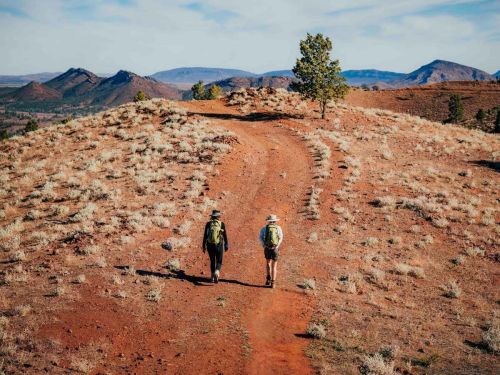
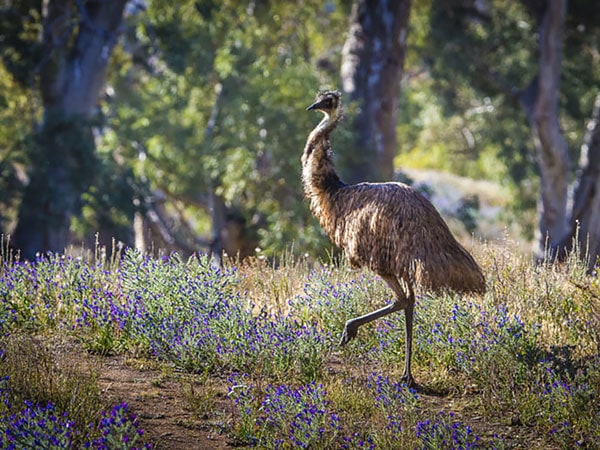
A layer of ochre-coloured dust has already settled on my hiking boots. We have only been walking for what feels like an hour, following the beaten track that meanders into Wilpena Pound/Ikara in the shade of lofty river red gums. We leave behind two emus fossicking in the undergrowth and stop to watch a pair of Mallee ringneck parrots as they flit through the trees like splatters of technicolour paint.
We reach Hills Homestead, a stone house built in the early 1900s by European pastoralists, where we pause for cups of hot tea. I ask our guide, Bruce, how far we have just walked, curious to gauge how difficult the hike ahead of us is going to be. He doesn’t answer my question; instead, he gently offers this piece of advice.
“As humans, we are always trying to reach a goal, but getting to Arkaba was your goal," he says. “Now that you’re here, be present, look up, look around. Let me worry about the rest."
With that in mind, I don’t ask about distance or time again.
The Arkaba Homestead
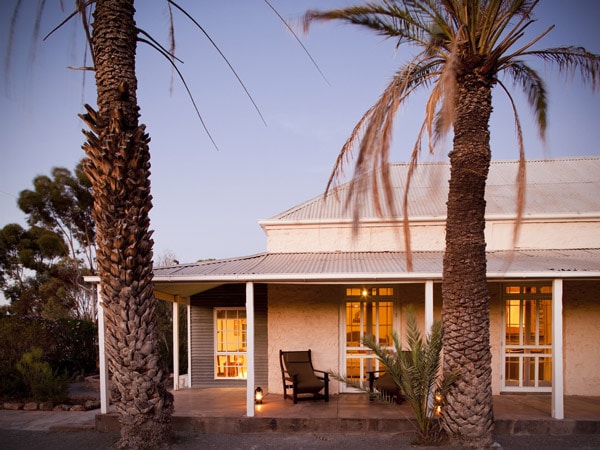
It’s the first morning of a multi-day hike through Ikara-Flinders Ranges as part of Wild Bush Luxury’s Arkaba Walk. A former sheep station turned conservancy, Arkaba is located south of Wilpena Pound/Ikara and comprises 24,000 hectares of private land that has been scrupulously rewilded.
We spent our first night in the property’s 1850s-built homestead, managed by local salt-of-the-earth couple John and Kathy O’Shea – who welcomed us like extended family – and feasted on a three-course dinner prepared by chef Calvin Von Niebel, who had spent time working for Yotam Ottolenghi in the UK.
Dining at Arkaba

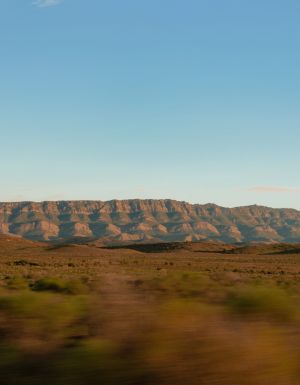
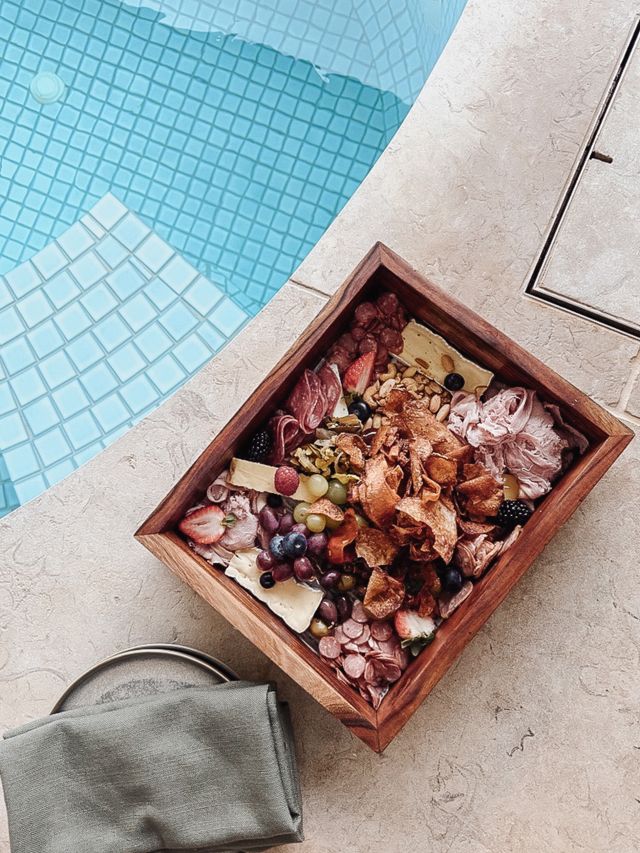
Our menu featured the likes of South Australian beef with miso butter carrots and rustic honey and quince cake with pistachio cream, which we enjoyed on the outdoor verandah, sipping local wine while the sky turned shades of mauve and clouds swirled like fairy-floss over the dramatic Elder Range in the distance.
The wild and remote Arkaba walk begins
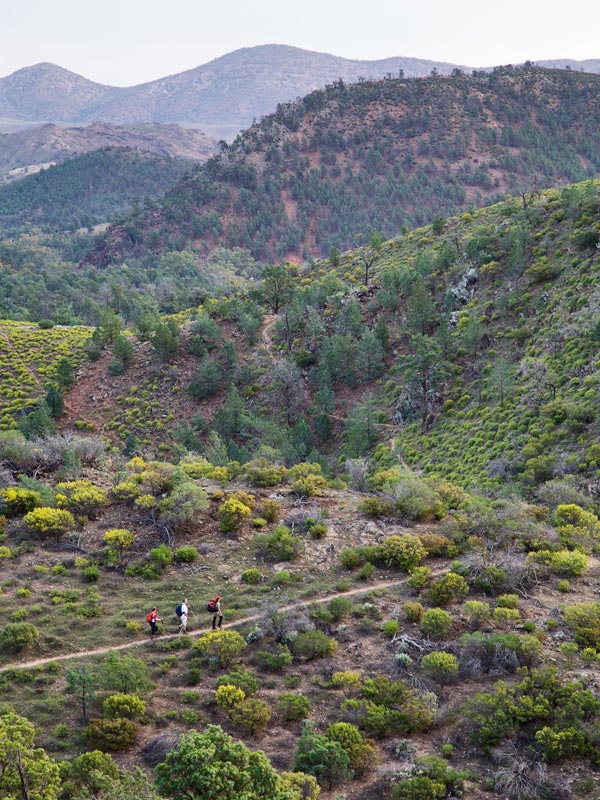
We left the homestead this morning and bid farewell to the house staff – and mobile phone reception – with only our day packs, while the rest of our luggage is transported to the bush camp. Though we are trekking into wild and remote land, we are very comfortably equipped, with a gourmet lunch and ample water, a lightweight camp chair, a fly net and hiking poles – which our group hesitated to bring along initially, but will be thankful for later.
Our most essential accompaniment, though, is our guide Bruce Lawson, who moved here from South Africa two years ago with his Australian wife, Dee. To say Bruce is qualified to lead this hike is a gross understatement. Following a stint in Antarctica as part of his military service, he walked unsupported from Cape Town to Cairo and clocked up more than 20,000 hours over three decades leading wilderness trails through Big Five territory, among other remarkable ventures that often hinge on his passion for conservation.
Need tips, more detail or itinerary ideas tailored to you? Ask AT.
AI Prompt
Crossing Wilpena Pound/Ikara
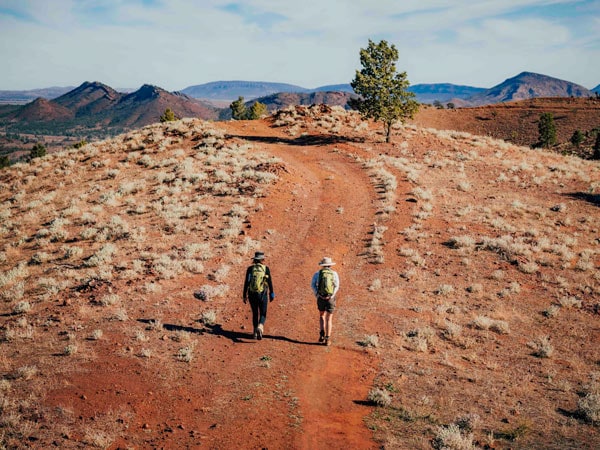
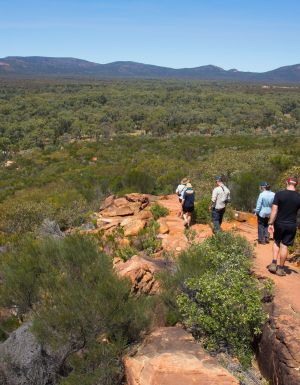
After a short but steep climb up rocky terrain, we stand atop a rim of Wilpena Pound/Ikara. Before us, an unexpected carpet of native flora is cradled within a natural amphitheatre of jagged peaks. Wilpena Pound/Ikara is a remnant valley floor from an ancient mountain range that eroded away over millennia. At 17 kilometres long and eight kilometres wide, it is eight times the size of Uluru.
Wilpena Pound is known as Ikara to the local Adnyamathanha people and was a culturally and spiritually significant place long before Europeans arrived. Believed to have been formed by the bodies of two giant serpents, the storied history of Aboriginal occupation here is evident through ancient rock art dating back 38,000 years.
Bruce points to Bridle Gap, a teeny tiny opening in the Pound across from us. That’s where we will cross into Arkaba later today. I fight the urge to know how far it is in distance as we throw our packs on and move onward with our journey.
Solitude and silence at Bridle Gap
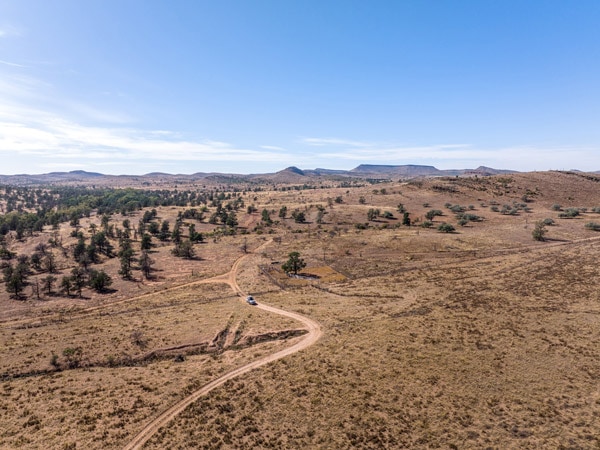
Hours may have passed, filled with lessons on tracking kangaroo prints, lunch where we are spied on by curious emus and chatter between people who didn’t know each other yesterday but now take harmonic steps together through rugged and remote bushland.
At Bridle Gap, we sit atop a rocky outcrop and take a moment of silence to appreciate the painterly scene that unfurls before us. The undulating earth is covered in swathes of vegetation, while the rippled flanks of the Elder Range punctuate the horizon. We are accompanied only by the sound of the breeze blowing through the casuarinas, and a lizard, which pops its head out through a gap in the rocks below my feet before retreating. While we saw other hikers in Wilpena Pound/Ikara, we had this place to ourselves.
Get closer to nature at Black’s Gap Camp
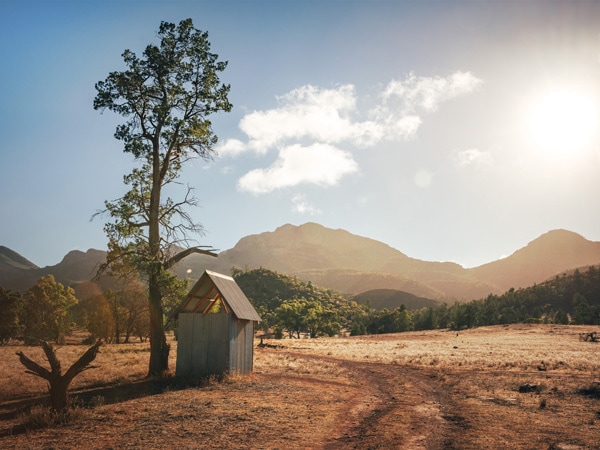
We reach Black’s Gap Camp as the sun begins its slow descent. I fill up a tin bucket with warm water and hoist it up in the shower, a simple open-air hut with no curtain. Just me and the colossal escarpment of Wilpena Pound/Ikara.
After a G&T and another moreish dinner served by Calvin, who works magic in the bush kitchen, we sit together in the dark of the night and look up. Bruce explains the different constellations to us, and we spot two shooting stars blazing a trail across the inky black sky. I’d like to have kept my eyes open to witness more while cosily zipped up in my swag, but I am quickly lulled to sleep by the sounds of nature.
A wildly changing landscape
We set out the next morning, walking through dry riverbeds lined by towering gums and stopping for morning tea with a view of the Elder Range. A staggering 600 million years of geological history can be seen through the stratified multicoloured layers of its flanks. It’s impossible not to capture photos, but I intentionally pause to look around without a lens in front of my face.
We pass by a section of paddock fence that was erected during the 1850s, which is being removed to allow wildlife to roam freely. As Bruce writhes out a stump from its century-old posting, he likens the fence to our disconnection from nature. “This land is being rewilded, but this experience is a way to rewild your spirit, too."
His words echo through my head as we follow the rolling rhythm of the landscape, walking downhill and up to the meditative crunch of dry grass underfoot.
Weekly travel news, experiences
insider tips, offers, and more.
Finding respite at Madge’s Gully
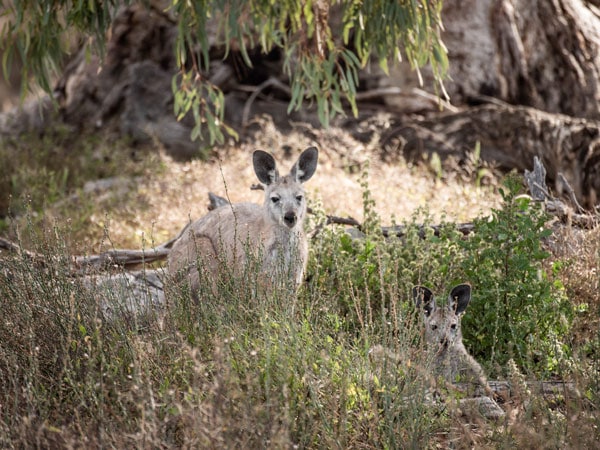
A pair of western grey kangaroos pause as we approach, then bound away under the beating midday sun. We find respite in the shade of Madge’s Gully, where I pull the fly net over my head to keep the perennial pests at bay. Here Bruce shows us how to dig a waterhole, which eventually fills up with water clear enough for us to scoop out with our camping mugs and drink; it’s earthy but potable.
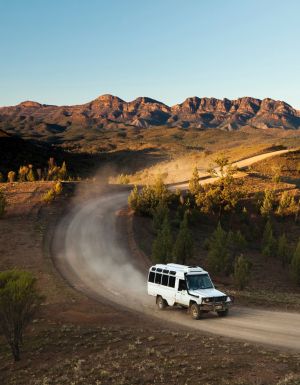
The arid landscape turns green again as we follow Bruce through a valley of native pines to begin our ascent up the Red Range. And it is here that we are thankful we didn’t ditch the hiking poles, as we scramble up a sheer and narrow ridge with loose rocks underfoot. At the top, we look across to where we started the day – now a tiny speck in the distance – and feel elation to know respite is nearby.
Walking downhill towards tonight’s camp, located at the foothills of the Elder Range, I spot a barren landscape in the distance. It’s farmland, Bruce tells us. You can see the Arkaba boundary easily: where the thriving wilderness abruptly ends. We feel a deep appreciation for nature’s resilience as we walk through an abundance of native grass trees; it’s hard to fathom that this land was once the same.
Rising with the sun over the Elder Range
It’s not often I wake willingly before the sun rises. However, on this morning, I lie in my swag and sip a cup of tea as the Elder Range turns a fiery red with the touch of sunlight. A formidable show put on by Mother Nature; it is one of those palpable moments that will be hard to forget.
Before we return to the homestead today, Bruce draws a metaphorical line in the sand to signify how humans step in and out of the wilderness. “Wilderness is something that’s more within than without," he says. “You come out of something like this with the same body, different soul."
The transforming power of going off-grid

Later that day, the pinging from my phone signals reality. And before long, I am back in the hustle of everyday life. That vast Arkaba landscape is firmly in the memory bank along with one small but significant takeaway: be present, look up, look around.
On a map, I can trace my finger roughly over the route we took. I’m still not exactly sure how far I walked, but I can see how far I have come. That evening I roll out a rug on the grass in our backyard and lie down – my six-year-old on one side, my two-year-old on the other – and we look up, patiently waiting for a shooting star.
Conscious traveller: The rewilding of Arkaba
Arkaba was formerly a working sheep station. When Wild Bush Luxury purchased the land in 2009, 150 years of livestock grazing had left it barren, devoid of wildlife and native plants. Wild Bush Luxury has rewilded the property, removing 22 kilometres of fencing and putting in measures to control pests and weeds.
Slowly, the grasses came back, and so too did the wildlife, from roos to lizards to birdlife. At least two per cent of your rate goes back into conservation efforts, including survey work and wildlife monitoring. Guests can contribute to the conservation activities at Arkaba by joining a guide on a special interest tour.
Want to see more stories from Australian Traveller in your Google search results?
- Click here to set Australian Traveller as a preferred source.
- Tick the box next to "Australian Traveller". That's it.