A seasonal guide to fruit picking around Australia

hero media
Picking your own fruit is as fresh as it gets. Have your basket at the ready and make a beeline for the farm gate, because there’s something to pick in every season.

Australia’s wide range of climates means that when it comes to fruit, there’s an incredible array of produce. From the cool, verdant landscapes of Tasmania where sweet berries thrive to the sweltering Queensland sun that ripens juicy tropical fruits like mangos and dragonfruit, fruit picking in Australia is as diverse as it is delicious.


View this post on Instagram


A post shared by Australian Traveller (@austtraveller)

There’s also no greater satisfaction than eating a fruit you’ve picked yourself. Not only is picking your own as fresh as it gets, but it’s an activity that allows you to connect with the landscape and its seasons. Luckily, there’s always something fruiting on our vast continent. So we’ve broken down what to pick and where to pick it in this guide to pick-your-own fruit experiences around Australia.

Summer | Autumn | Winter | Spring

Fruit picking in summer

Cherries and berries

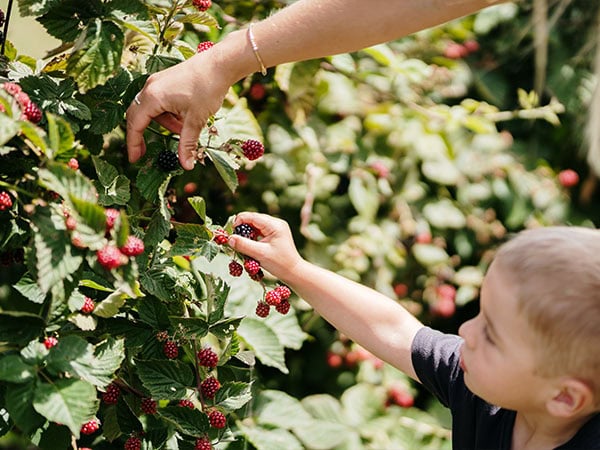
It’s no surprise that the pristine landscapes of Tasmania produce some of the sweetest cherries and berries in Australia. In the summer, cherries, strawberries, blueberries, blackberries and raspberries are all in full swing. Picking your own is a must-do Tassie experience, and there’s an abundance of farm gates and orchards where you can get your hands on fresh, ripe fruit.

For PYO berries, try out family-owned Hillwood Farms near Launceston. Call into Turners Beach Berry Patch near Devonport – and don’t pass up their famous berry ice cream from their farm cafe.
Pick berries in Tasmania
You can pick your own berries at plenty of farms in Tasmania, such as Turners Beach Berry Patch. (Image: Tourism Australia)

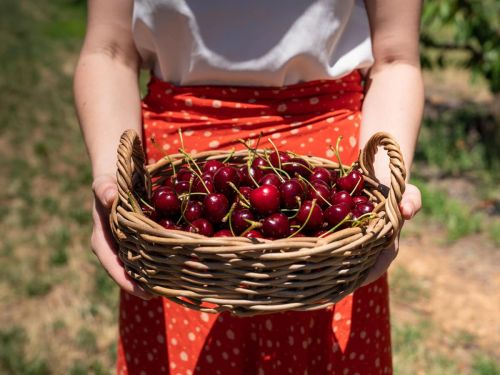
There are lots of cherry orchards clustered around Hobart where you can pluck the ruby-red gems straight from the tree. Check out Oneys Creek Cherries and Plenty Park Fruit Farm, which offers homemade cherry jam at the farm shop.

You’ll also find sweet, juicy cherries all across the tri-state area, too – with Young in Central West NSW especially well-known for its high-quality cherry produce.
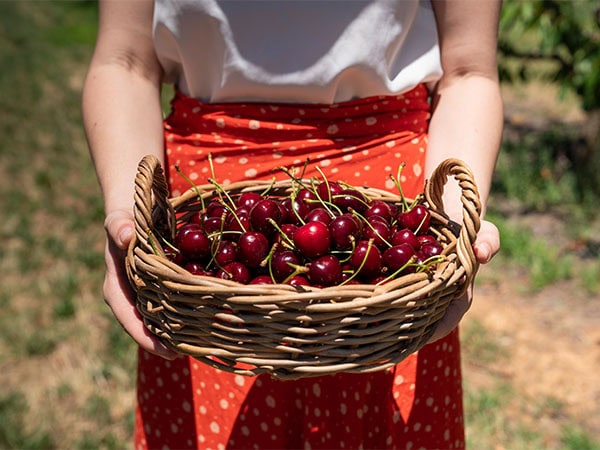
Valley Fresh Cherries in Young NSW
Get the pick of the bunch at Valley Fresh Cherries in Young, NSW. (Image: Destination NSW)

Mangoes and tropical fruits

Nothing signals summer like the syrupy flesh of a mango or the candy-like sweetness of a lychee. In the hottest months of the year, the orchards of Queensland heave with tropical delights ready for the picking. Get your tropical fix at the Longan Farm in Narangba, just 34 kilometres north of Brisbane, where you can pick your own juicy mangoes and ripe longans (a tropical fruit similar to a lychee). Mangos are one of our top Australian foods worth travelling for.
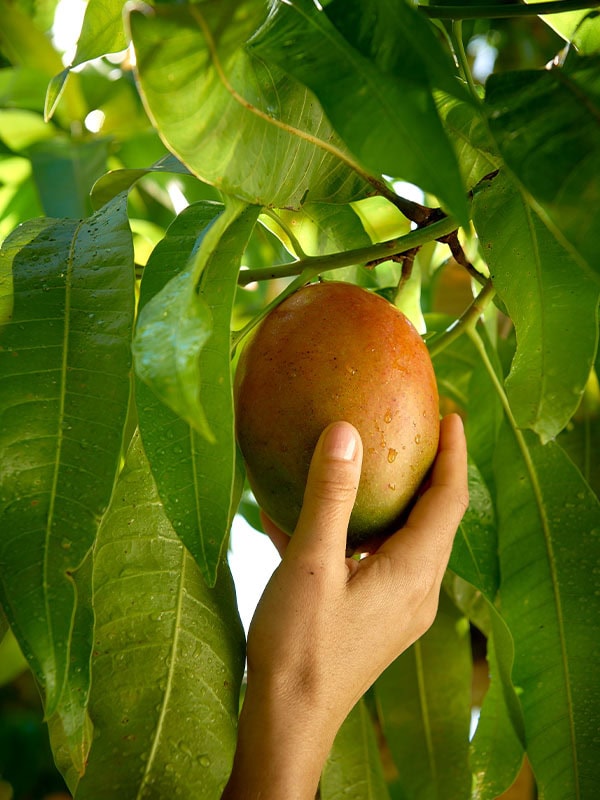
Queensland Mango picking
The hot Queensland sun ripens tropical fruits like mangos to perfection. (Image: Tourism and Events Queensland)

You’ll find lashings of lychees across the state, which you can pick and gorge on at farms like family-run Lush Lychees in South Yaamba, Central Queensland.

For those with an adventurous palate, rare tropical fruits await in North Queensland. Guests at Wildwood Retreat, located on Cape Trib Exotic Fruit Farm​ can walk through the orchards sampling fruity delights such as dragonfruits, mangosteens, rambutans and papayas. Or, pop by for a fruit tour, where you can sample rarities like breadfruit, durians, and pangium edule (football fruit).
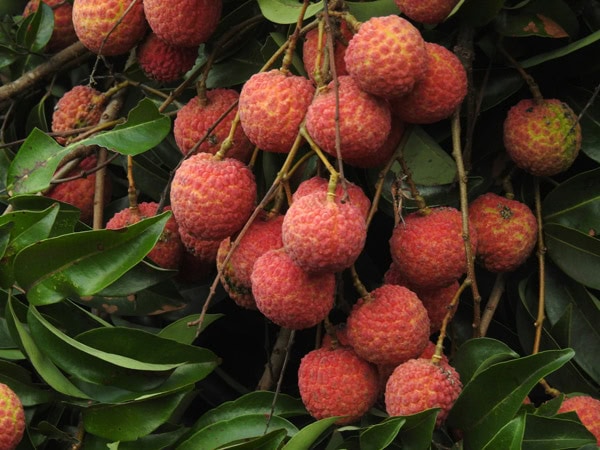
Lychees on tree
Pick and gorge on lychees in Central Queensland.

Peaches and other stonefruits

Everything’s just peachy during stonefruit season in NSW. The hot, dry summers yield sweet, juicy fruits, which are ready to be picked when the mercury’s on the rise. The Peach Farm near Yamba on NSW’s North Coast is an off-grid and pet-friendly fruit farm that offers PYO peaches and nectarines by the bucket. It’s also a campsite, perfect for parking up for a night and watching the farm’s adorable troupe of pet ducks roam around.

Closer to Sydney, Cedar Creek Orchard in Thirlmere is a fruit farm that has been active since the 1940s, and in summer, you’ll find the trees dripping with peaches and juicy nectarines that can be picked.

In the Yarra Valley, you can pick peaches, nectarines, apricots, plums and so much more at family-run, boutique fruit orchard Rayner’s Orchard.
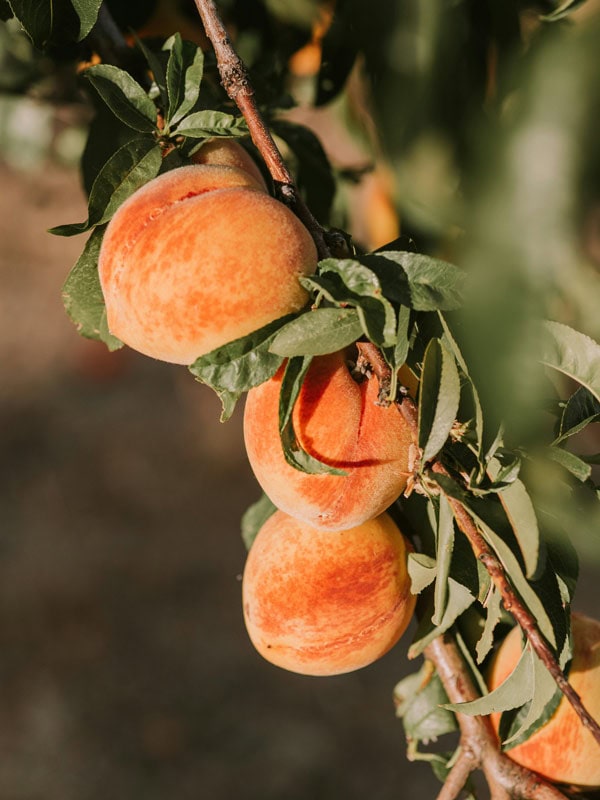
Peaches on a tree
Everything’s just peachy during stonefruit season.

Need tips, more detail or itinerary ideas tailored to you? Ask AT.

AI Prompt

Fruit picking in autumn

Figs

Is there anything better than a soft, jammy fig? As autumn kicks into gear, the fig trees across the country’s south swell with these natural sugar bombs. To pick your own, head to Pot & Still in the Adelaide Hills, a 175-year-old estate and distillery that creates a range of fig-flavoured spirits. After you’ve collected your bounty, head to the onsite fig bar for a fig-inspired tipple.
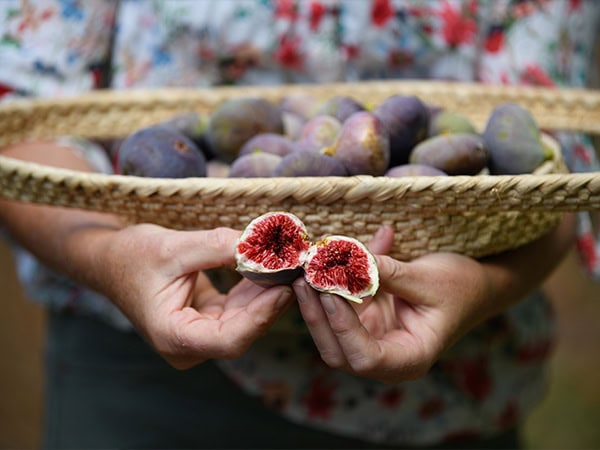
Figs at Glen Ewin Estate
Fig picking at Glen Ewin Estate. The property is owned by fig distillery company, Pot & Still. (Image: Darren Centofanti)

Persimmons

A ripe persimmon is nature’s candy. This vibrant fruit adapts well to many climates but grows well along NSW’s coast. Pick your fill at a number of orchards close to Sydney, such as Cedar Creek Orchard or at the Bilpin Fruit Bowl located in the Greater Blue Mountains Area.
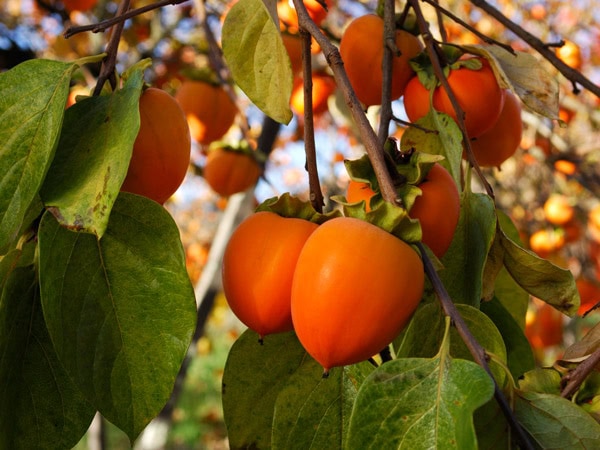
Persimmons on tree
Pick persimmons in autumn. (Image: Getty Images/Gomez David)

Apples

They don’t call Tasmania the Apple Isle for nothing. The southernmost state has been growing apples for 170 years and has a reputation as a producer of some of the country’s best. Picking your own apples in Tasmania is less common than picking cherries and berries, but you’ll still find some smaller farms like Sorrell Fruit Farm that will welcome visitors looking to pick their own.

You can also get your apple fix on the Tasmanian Cider Trail, which connects makers across the state.
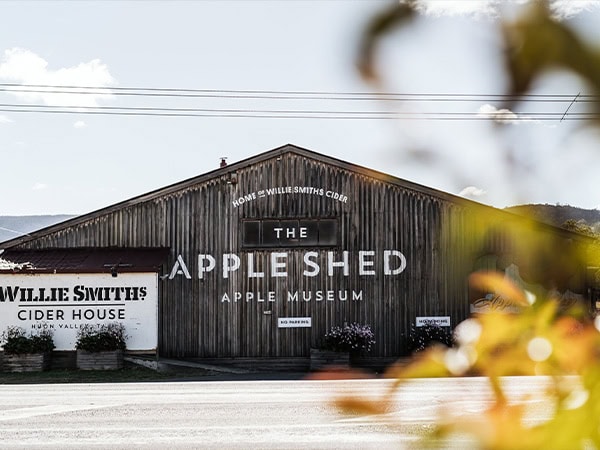
Willie Smith's Apple Shed
Taste crisp Tassie cider at Willie Smith’s Apple Shed. (Image: Stu Gibson)

In NSW, you can get pickin’ at a number of orchards such as TNT Produce in Bilpin which is well-known for its apple produce. It’s a great spot to hunt out a range of delicious apple goodies such as juice, cider or sweet, freshly-baked apple pie. There’s also Glenbernie Orchard in Darkes Forest, where you can kick back at their onsite brewery with a glass of crisp apple cider to cap off a day of picking.
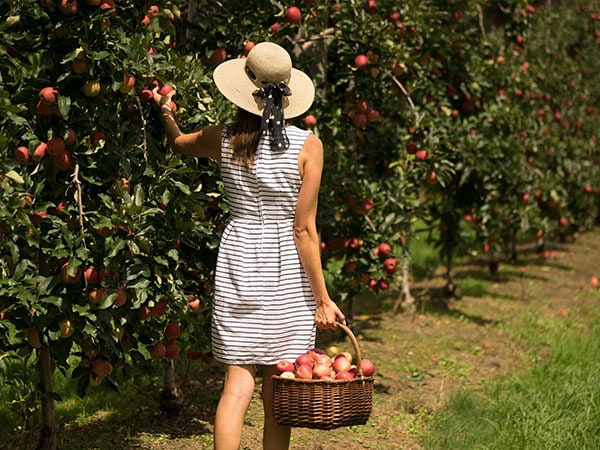
Glenbernie Orchard, Darkes Forest.
Crisp, fresh apples at Glenbernie Orchard in Darkes Forest, NSW. (Image: Dee Kramer Photography)

Pomegranates

The pomegranate is a mythic fruit. Full of hundreds of glistening ruby-like seeds, pomegranates have been an important symbol across many cultures since ancient times. These fruits grow particularly well in Western Australia. Come autumn, you can pick your own at orchards such as Gingin Pomegranates, just over an hour from Perth.
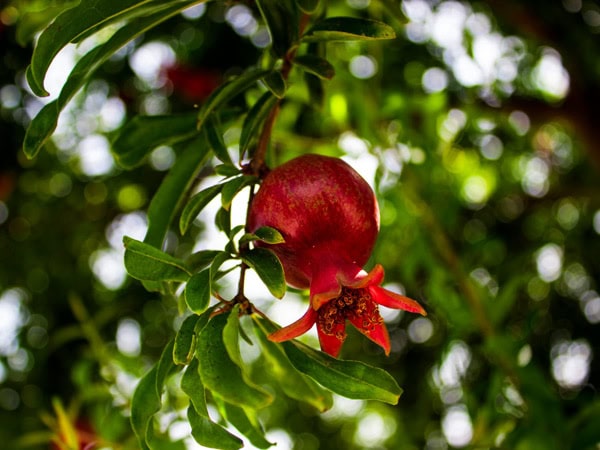
Pomegranate on tree
Pomegranate’s grow particularly well in WA.

Tomatoes

The Italian word for tomato is pomodoro. The word comes from pomo d’oro, literally ‘apple of gold’ – which tells you just how spectacular these fruits are. Whether you’re whipping up a passata or making a fresh garden salad, a freshly picked tomato levels up any meal.

You can get your pick of the bunch at Canoelands Orchard in North Sydney, or Emily Hill Farm in Dewhurst, Victoria. Want the heavy lifting done for you? The farm gate at Ricardos Tomatoes in Port Macquarie has plenty of fresh tomatoes, as well as a range of handmade sauces and chutneys, too.
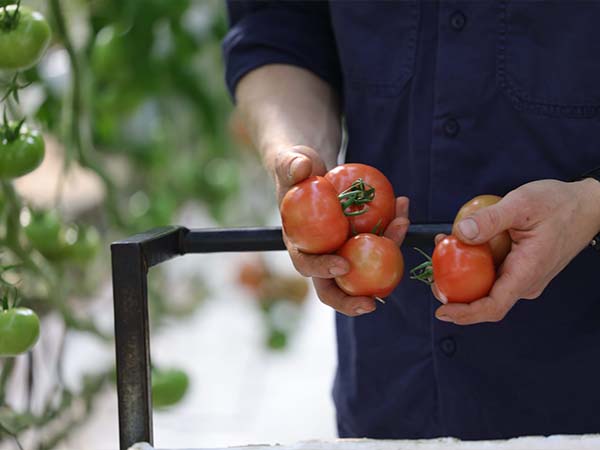
Ricardoes Tomatoes and Strawberries located in Port Macquarie
It doesn’t get fresher than Ricardoes Tomatoes and Strawberries in Port Macquarie, NSW. (Image: Destination NSW)

Pears

Paracombe Premium Perry is a family-owned pear orchard and cidery – pick your own on select days. When you’re done, amble over to the shed door and treat yourself to a crisp, refreshing glass of pear cider. The onsite restaurant also serves up tasty sweet and savoury pear-inspired dishes, like pear and blue cheese pizza.
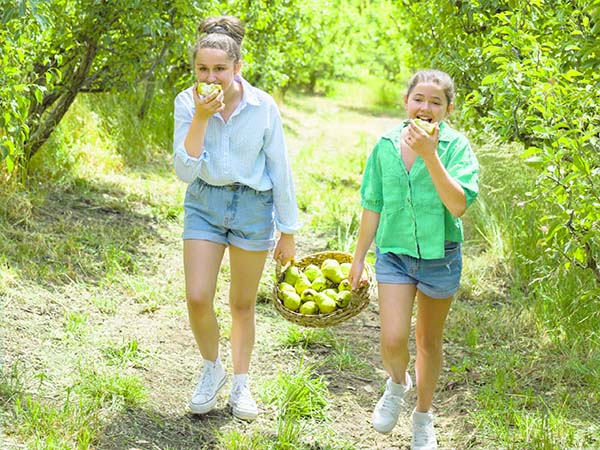
Paracombe Premium Perry
Pick your own pears at Paracombe Premium Perry.

Weekly travel news, experiences
insider tips, offers, and more.

Fruit picking in winter

Macadamias

The delicious macadamia nut is native to north-east NSW and south-east Queensland and has been an important Indigenous bush food for millennia. Gathering these delicious, nutrient-rich nuts is easy: when they are ready, they’ll drop to the ground.

To gather macadamias, head to The Farm and Summerland Farm, both in Byron Bay. Here, you can wander through macadamia orchards, gathering the nuts and cracking them with the nut-cracker provided on the grounds.

In Queensland, check out Macadamias Australia, a family-owned farm in Bundaberg, where visitors can take tours of the orchard to learn the journey of this native Aussie nut from tree to table.
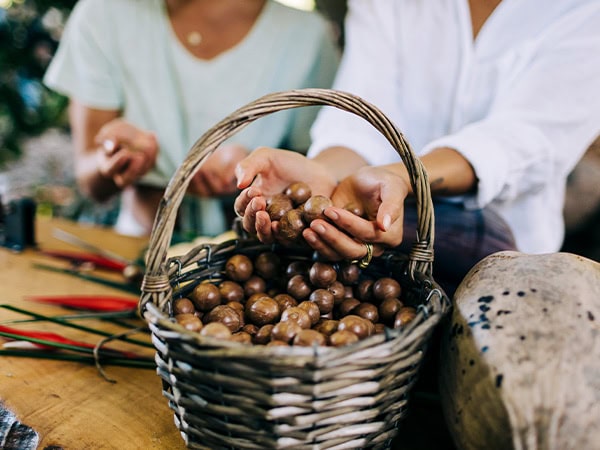
Macadamias being peeled at Tropical Fruit World, Duranbah.
Macadamias being peeled at Tropical Fruit World, Duranbah. The nut is native to NSW and Queensland. (Image: Destination NSW)

Citrus

The zesty fragrance of a citrus tree is sure to cut right through your winter blues. Spend a day among the orange trees gathering the sweet, golden orbs, which fruit during the cooler months. Ford’s Farm on the Central Coast grows lemons, limes, oranges, mandarins and kumquats, and has operated as a Pick Your Own Orchard for more than 22 years. The shed sells homemade jam, chutneys, and oils – as well as coffee to warm you up after a day of picking.
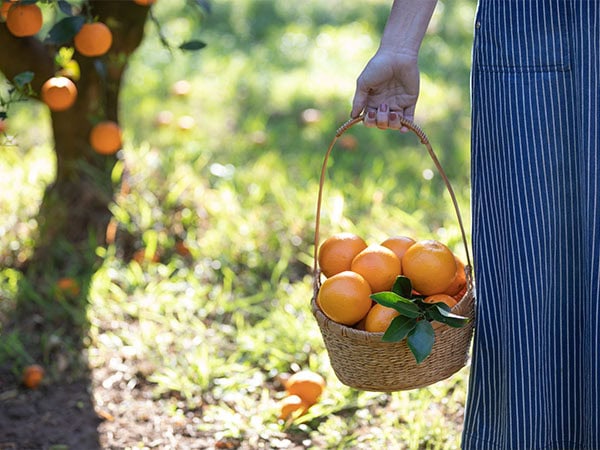
Freshly picked oranges from an orchard in Cornwallis, NSW
Picking oranges in NSW will cut right through your winter blues. (Image: Destination NSW)

Fruit picking in spring

Avocados

Avocados are nature’s butter – creamy, delicious and packed with health benefits. You can bag your very own at orchards like Meliora Farm in Peats Ridge, an avocado and citrus farm that has been growing fruit since 1925.
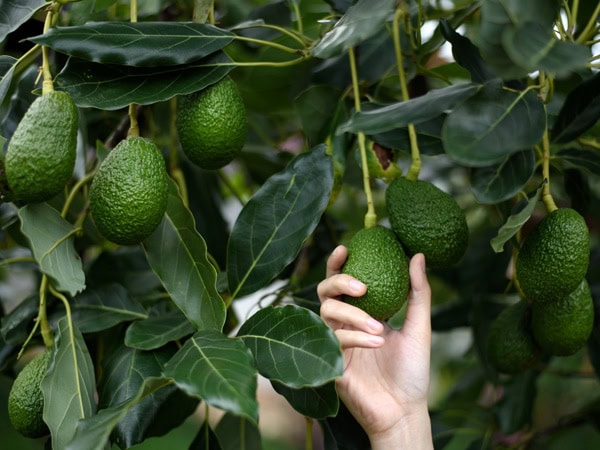
Picking avocados from tree
There’s nothing better than a perfect avocado. (Image: Getty Images/jaboo2foto)

Strawberries

It’s good news for strawberry lovers. These sweet delights are commonly grown across Australia, meaning it’s always strawberry season somewhere. This fruit is mostly associated with the summer, but they are still plentiful in the spring, too.
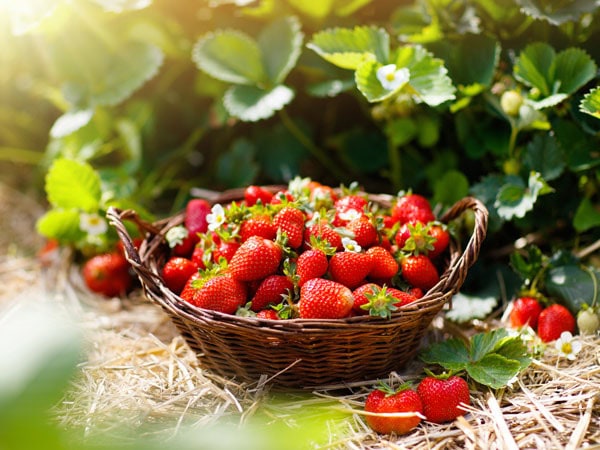
Basket of freshly picked strawberries
It’s always strawberry season somewhere. (Image: Getty Images/FamVeld)

Victoria has over 100 strawberry farms, big and small. Here, the strawberry season typically begins in October, For picking your own, The Big Strawberry in Koonoomoo is a good sport to call in, where you’ll find a cafe, playground and their own strawberry liquor. Tuckerberry Hill Berry Farm on the Bellarine Peninsula also has a produce market and cafe.
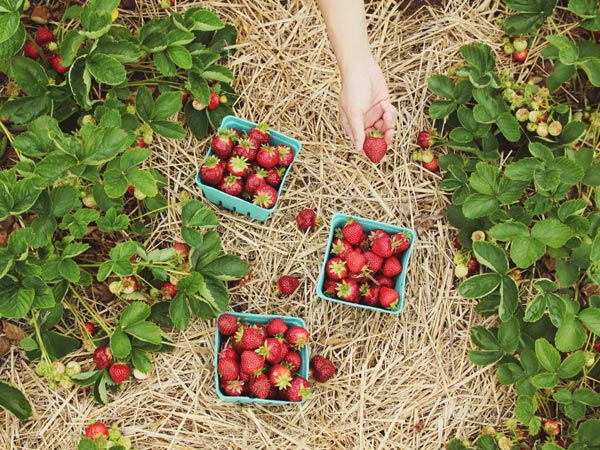
Baskets of freshly picked strawberries
Victoria has over 100 strawberry farms.

South Australia is known for its great fruit-growing conditions, but its grapes tend to get all the glory as it’s home to some of the most esteemed wine regions in the world. But strawberries grow just as well the grapes, with many farms such as Harvest the Fleurieu, just an hour’s drive from Adelaide CBD.
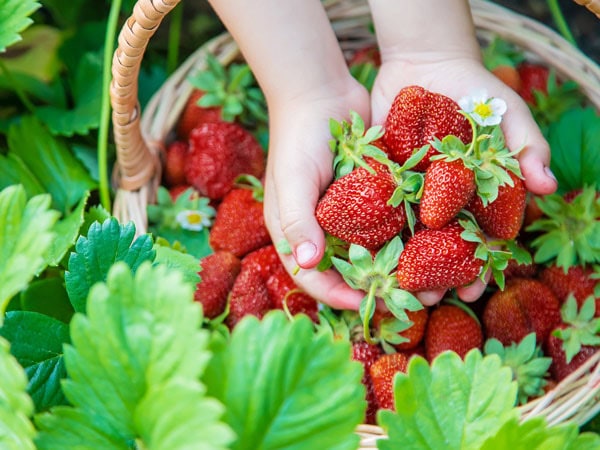
Basket of freshly picked strawberries
Pick your own delicious strawberries. (Image: Getty Images/Yana Tatevosian)

There are plenty of growers in NSW, too, with the Riverina region being a particular highlight. Here, you can get your hands on some delicious strawberry jam, strawberry pie and strawberry ice cream – made fresh using local milk. Closer to Sydney, there’s Berrylicious Strawberries in Thilmere, just an hour’s drive from the CBD.
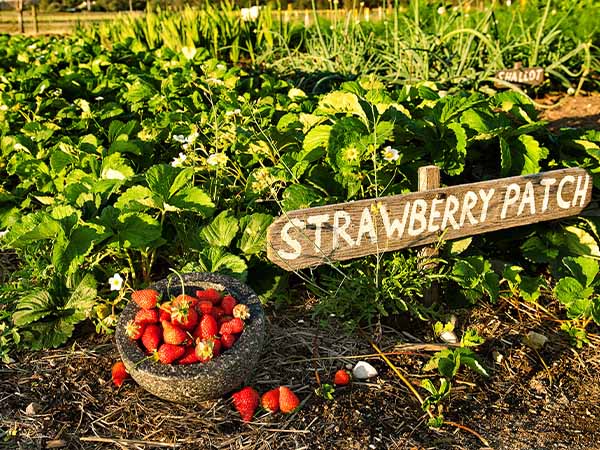
Riverina Strawberries
Strawberries grow well across NSW, Tas, Vic and SA. (Image: Penelope Beveridge; Margan Winery and Restaurant)

Want to see more stories from Australian Traveller in your Google search results?

  1. Click here to set Australian Traveller as a preferred source.
  2. Tick the box next to "Australian Traveller". That's it.
Elizabeth Whitehead
Elizabeth Whitehead is a writer obsessed with all things culture; doesn't matter if it's pop culture or cultures of the world. She graduated with a degree in History from the University of Sydney (after dropping out from Maths). Her bylines span AFAR, Lonely Planet, ELLE, Harper's BAZAAR and Refinery 29. Her work for Australian Traveller was shortlisted for single article of the year at the Mumbrella Publishing Awards 2024. She is very lucky in thrifting, very unlucky in UNO.
View profile and articles
hero media

The Macedon Ranges is Victoria’s best-kept food and wine secret

    Emily McAuliffe Emily McAuliffe
    Located just an hour north-west of Melbourne, the largely undiscovered Macedon Ranges quietly pours some of Australia’s finest cool-climate wines and serves up some of Victoria’s best food.

    Mention the Macedon Ranges and most people will think of day spas and mineral springs around Daylesford, cosy weekends away in the countryside or the famous Hanging Rock (of enigmatic picnic fame). Or they won’t have heard of the Macedon Ranges at all.

    But this cool-climate destination has been inconspicuously building a profile as a high-quality food and wine region and is beginning to draw serious attention from oenophiles and epicureans alike.

    The rise of Macedon Ranges wine

    liquid gold barrels at Kyneton Ridge Estate Winery
    Barrels of liquid gold at Kyneton Ridge Estate Winery. (Image: Chloe Smith Photography)

    With elevations ranging from 300 to 800 metres, Macedon Ranges vineyards are among the highest in the country. This altitude, combined with significant day/night temperature swings, makes for a slow ripening season, in turn nurturing wines that embody elegance and structure. Think crisp chardonnays, subtle yet complex pinot noirs and delicate sparkling wines, along with niche varietals, such as gamay and nebbiolo.

    Despite the region’s natural advantages – which vary from estate to estate, as each site embodies unique terroir depending on its position in relation to the Great Dividing Range, soil make-up and altitude – the Macedon Ranges has remained something of an insider’s secret. Unlike Victoria’s Yarra Valley or Mornington Peninsula, you won’t find large tour buses here and there’s no mass marketing drawing crowds.

    Many of the 40-odd wineries are family-run operations with modest yields, meaning the wineries maintain a personal touch (if you visit a cellar door, you’ll likely chat to the owner or winemaker themselves) and a tight sales circle that often doesn’t go far beyond said cellar door. And that’s part of the charm.

    Though wines from the Macedon Ranges are just starting to gain more widespread recognition in Australia, the first vines were planted in the 1860s, with a handful of operators then setting up business in the 1970s and ’80s. The industry surged again in the 1990s and early 2000s with the entry of wineries, such as Mount Towrong, which has an Italian slant in both its wine and food offering, and Curly Flat, now one of the largest estates.

    Meet the new generation of local winemakers

    the Clydesdale barn at Paramoor.
    The Clydesdale barn at Paramoor. (Image: Chloe Smith Photography)

    Then, within the last 15 years, a new crop of vignerons like Andrew Wood at Kyneton Ridge Estate, whose vineyard in 2024 was the first in the Macedon Ranges to be certified by Sustainable Winegrowing Australia; Geoff Plahn and Samantha Reid at Paramoor, who have an impressive cellar door with a roaring fire and studded leather couches in an old Clydesdale barn; and Ollie Rapson and Renata Morello at Lyons Will, who rapidly expanded a small vineyard to focus on top-shelf riesling, gamay, pinot noir and chardonnay, have taken ownership of local estates.

    Going back to the early days, Llew Knight’s family was one of the pioneers of the 1970s, replacing sheep with vines at Granite Hills when the wool industry dwindled. Knight is proud of the fact that all their wines are made with grapes from their estate, including a light, peppery shiraz (some Macedon wineries purchase fruit from nearby warmer areas, such as Heathcote, particularly to make shiraz) and a European-style grüner veltliner. And, as many other wineries in the region do, he relies on natural acid for balance, rather than an additive, which is often required in warmer regions. “It’s all about understanding and respecting your climate to get the best out of your wines,” he says.

    farm animals atKyneton Ridge Estate
    Curious residents at Kyneton Ridge Estate. (Image: Chloe Smith Photography)

    Throughout the Macedon Ranges, there’s a growing focus on sustainability and natural and low-intervention wines, with producers, such as Brian Martin at Hunter Gatherer making waves in regenerative viticulture. Martin previously worked in senior roles at Australia’s largest sparkling winemaking facility, and now applies that expertise and his own nous to natural, hands‑off, wild-fermented wines, including pét‑nat, riesling and pinot noir. “Wild fermentation brings more complexity,” he says. “Instead of introducing one species of yeast, you can have thousands and they add different characteristics to the wine.”

    the vineyard at Kyneton Ridge Estate Winery
    The estate’s vineyard, where cool-climate grapes are grown. (Image: Chloe Smith Photography)

    Most producers also focus on nurturing their grapes in-field and prune and pick by hand, thus avoiding the introduction of impurities and the need to meddle too much in the winery. “The better the quality of the fruit, the less you have to interfere with the natural winemaking process,” says Wood.

    Given the small yields, there’s also little room for error, meaning producers place immense focus on quality. “You’re never going to compete in the middle [in a small region] – you’ve got to aim for the top,” says Curly Flat owner Jeni Kolkka. “Big wineries try to do things as fast as possible, but we’re in no rush,” adds Troy Walsh, owner and winemaker at Attwoods. “We don’t use commercial yeasts; everything is hand-harvested and everything is bottled here, so we bottle only when we’re ready, not when a big truck arrives.” That’s why, when you do see a Macedon Ranges product on a restaurant wine list, it’s usually towards the pointy end.

    Come for the wine, stay for the food

    pouring sauce onto a dish at Lake HouseDaylesford
    Dining at Lake House Daylesford is a treat. (Image: Chloe Smith Photography)

    If wine is the quiet achiever of the Macedon Ranges, then food is its not-so-secret weapon. In fact, the area has more hatted restaurants than any other region in Victoria. A pioneer of the area’s gourmet food movement is region cheerleader Alla Wolf-Tasker, culinary icon and founder of Daylesford’s Lake House.

    For more than three decades, Wolf-Tasker has championed local producers and helped define what regional fine dining can look like in Australia. Her influence is palpable, not just in the two-hatted Lake House kitchen, but in the broader ethos of the region’s dining scene, as a wave of high-quality restaurants have followed her lead to become true destination diners.

    the Midnight Starling restaurant in Kyneton Ridge Estate Winery
    The hatted Midnight Starling restaurant is located in Kyneton. (Image: Chloe Smith Photography)

    It’s easy to eat well, whether at other hatted restaurants, such as Midnight Starling in the quaint town of Kyneton, or at the wineries themselves, like Le Bouchon at Attwoods, where Walsh is inspired by his time working in France in both his food offering and winemaking.

    The beauty of dining and wine touring in the Macedon Ranges is that it feels intimate and unhurried. You’re likely to meet the winemaker, hear about the trials of the latest vintage firsthand, and taste wines that never make it to city shelves. And that’s worth getting out of the city for – even if it is just an hour down the road.

    dishes on the menu at Midnight Starling
    Delicate dishes on the menu at Midnight Starling. (Image: Chloe Smith Photography)

    A traveller’s checklist

    Staying there

    the accommodation at Cleveland Estate, Macedon Ranges
    Stay at the Cleveland Estate. (Image: Chloe Smith Photography)

    Soak up vineyard views from Cleveland Estate near Lancefield, embrace retro charm at Kyneton Springs Motel or indulge in lakeside luxury at the Lake House.

    Eating there

    Enjoy a four-course menu at the one-hatted Surly Goat in Hepburn Springs, Japanese-inspired fare at Kuzu in Woodend or unpretentious fine dining at Mount Monument, which also has a sculpture park.

    Drinking there

    wine tasting at PassingClouds Winery, Macedon Ranges
    A tasting at Passing Clouds Winery. (Image: Chloe Smith Photography)

    Settle in for a tasting at Boomtown in Castlemaine, sample local drops at the cosy Woodend Cellar & Bar or wine-hop around the many cellar doors, such as Passing Clouds.

    the Boomtown Winery and Cellar Bar signage
    Boomtown Winery and Cellar Bar. (Image: Chloe Smith Photography)

    Playing there

    a scenic river in Castlemaine
    Idyllic scenes at Castlemaine. (Image: Chloe Smith Photography)

    Wander through the seasonal splendour of Forest Glade Gardens, hike to the summit of Hanging Rock, or stroll around the tranquil Sanatorium Lake.

    purple flowers hanging from a tree
    Purple flowers hanging from a tree. (Image: Chloe Smith Photography)