The top Australian food worth travelling for

hero media
Australia is blessed with incredible food and produce. Here are the best that are definitely worth a road trip.

Australians have countless reasons to travel overseas, but when it comes to top-quality produce, is it bragging to say that Australia comes out on top? Well, we don’t want to be accused of false modesty…

From native super fruits to wine that gives the French a run for their money, these are the Australian foods worth travelling for.

1. Barramundi, Darwin, NT

You will find barramundi on menus across Australia, but the barras in the Top End are considered the best. It’s become so popular that once a year, anglers descend on the Northern Territory to catch the ‘million dollar barra,’ which is tagged and released in the waters, ready for enterprising anglers as part of the Million Dollar Fish competition.
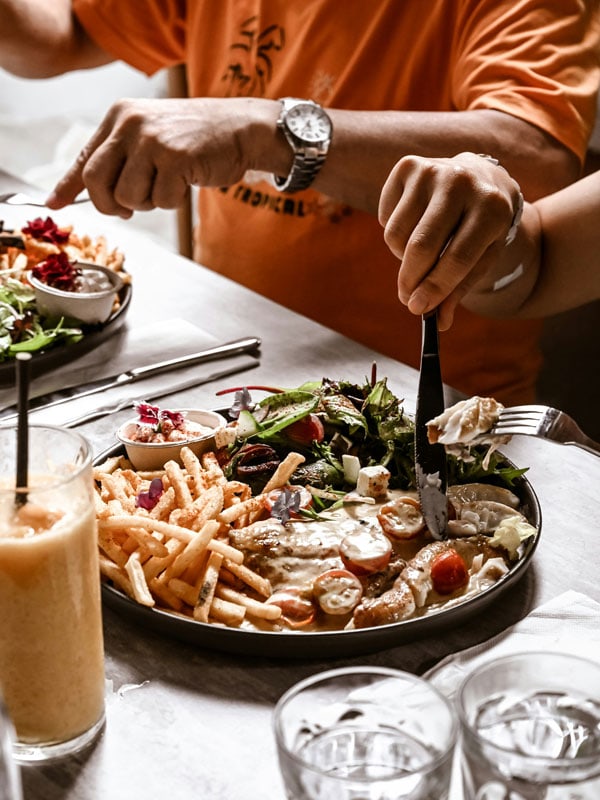
enjoying a Barramundi platter in Darwin
Barramundi in the Top End is considered the best. (Image: Jojo Yuen)

Best season? November to May (wet season).

Where to try? Fin and Tonic on Marina Boulevard in Darwin, NT.

2. Green Ants (gulguk), Arnhem Land, NT

Indigenous Australians have been eating these tiny but fierce insects for millennia. Today, the lemony-coriander seed-tasting treat is gaining momentum among more eaters. Try them in Arnhem Land.
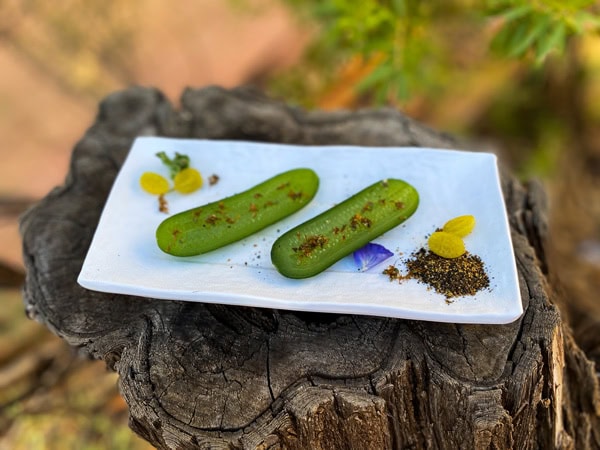
green ants on a plate
Try green ants in Arnhem Land. (Image: Voyages Indigenous Tourism Australia)

Best season? All year round.

Where to try? One of the most famous ant-based products is the green ant gin made by SomethingWild Australia on Larrakia land.

3. Bowen/Kensington Pride Mangoes, Bowen, Qld

Not just the home to the Big Mango! Australia’s most popular breed of the luscious, tropical fruit originated from the Whitsundays town of Bowen. This summer sweet treat is now grown up and down the Queensland coast. Pick your own in the Aussie summer.
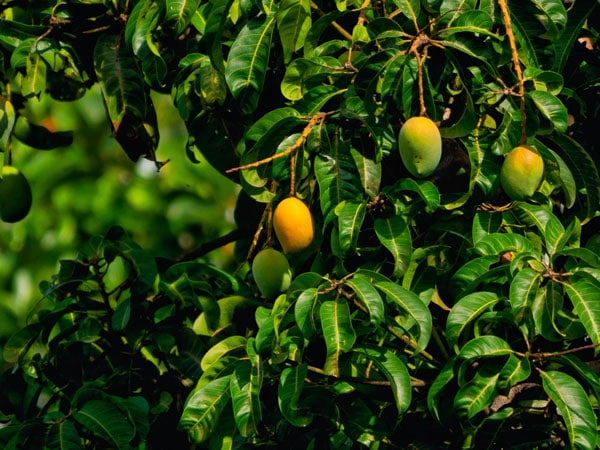
ripe mangoes hanging from a tree
Pick your own mangos. (Image: Rajendra Biswal)

Best season? December to January.

Where to try? Fresh mangoes are everywhere here. If you’re taking a road trip up to Townsville, stop halfway to pick your own at The Frosty Mango on the Bruce Highway, Mutarnee, Qld.

4. Prawns, Gulf Country, Qld and NT

Whether cooked, peeled or chucked carelessly onto the barbecue, one thing is for certain: Aussies love their prawns. The tropical waters of the Gulf of Carpentaria, stretching between Queensland and the Northern Territory, contain enormous, fat banana prawns and some of the biggest tiger prawns in Australia.
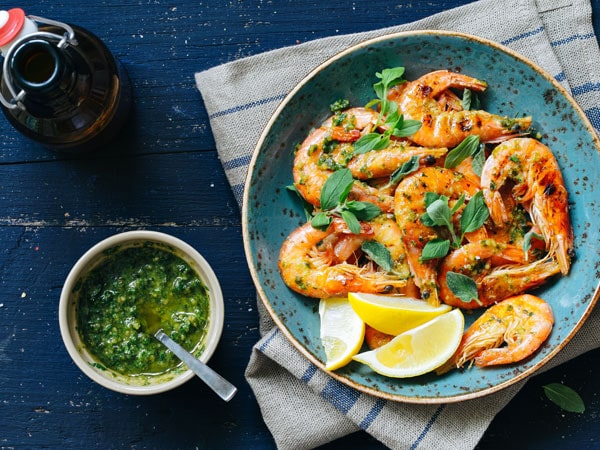
tiger prawns on a plate
Aussies love their prawns. (Image: Getty Images/luchezar)

Best season? Tiger prawns are caught around August to December; banana prawns are best caught September to November and March to May.

Where to try? Take the Savannah Way to the coastal town of Karumba for prawns fresh off the fishing boats.

Need tips, more detail or itinerary ideas tailored to you? Ask AT.

AI Prompt

5. Sydney Rock Oysters, South Coast, NSW

Turns out Australians are quite greedy when it comes to our oysters. Most are sold domestically, and the addiction doesn’t seem to be stopping anytime soon. Mad about the molluscs?

Go on a seafood odyssey down the NSW South Coast. From Nowra to Eden, there are plenty of places to try Australia’s native oyster.
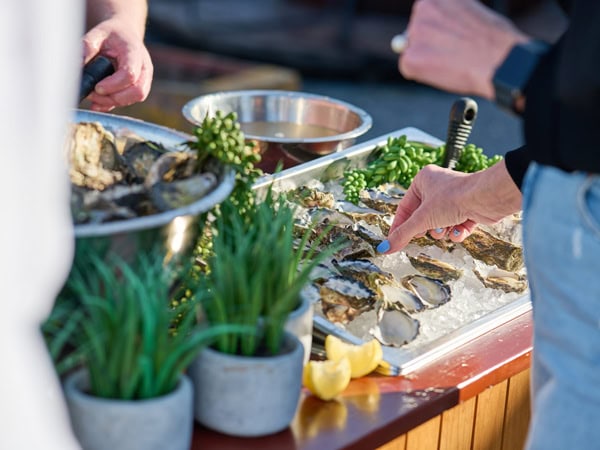
sydney rock oysters being served at Jim Wild's Oysters
Go on a seafood odyssey down the NSW South Coast. (Image: Destination NSW)

Best season? September to March.

Where to try? Jim Wild’s Oyster Shack at Greenwell Point in Shoalhaven is a great pick for Sydney daytrippers.

6. Macadamias, Northern Rivers, NSW

Did you know Australia is the only place in the world where macadamias grow wild? The sweet and rich nuts have been growing here for tens of millions of years. Today, the native Australian macadamia is grown up and down the east coast of NSW, with the rich soils of Byron Bay producing gorgeously fatty mouthfuls that are popular overseas and at home.
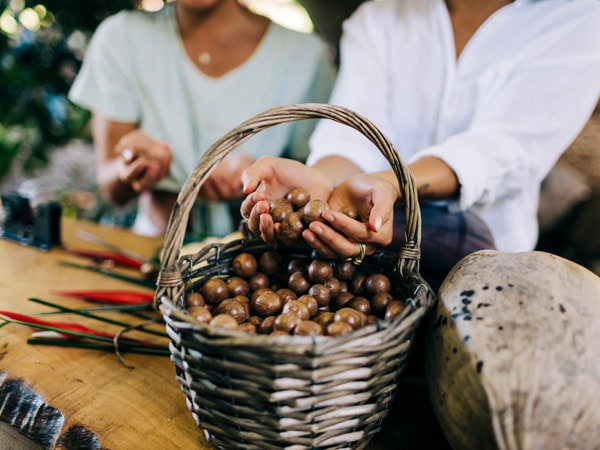
a basket filled with macadamias
Pick some sweet and rich macadamias. (Image: Destination NSW)

Best season? March to August (harvest time).

Where to try? Wander through the macadamia crops during harvest time at The Farm near Byron Bay, NSW.

7. Cheese, Gippsland, Vic

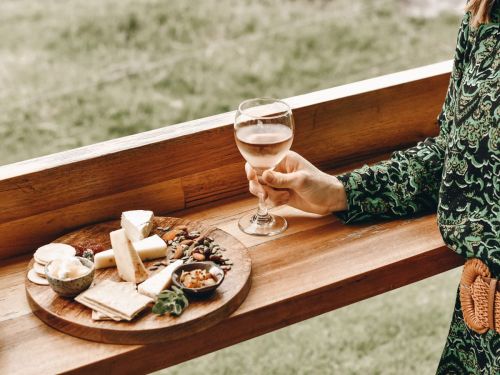
Who wants a charcuterie platter? Our answer will always be a resounding, ‘Yes, cheese!’ Australia has a massive array of gourmet, inventive, and reinvented traditional cheeses.

And it’s down in the rich dairy pastures of Gippsland where the creamy milk is transformed into addictive specialties, like hearty slices of blue-veined cheese.
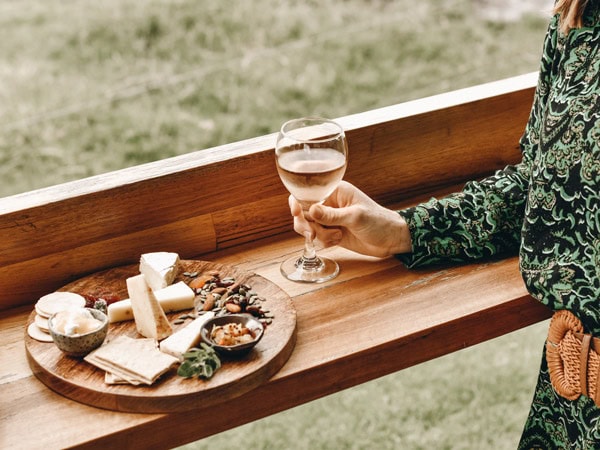
wine and cheese tasting at Bassine Specialty Cheeses
Bassine Specialty Cheeses makes premium artisan cheese.

Best season? Available year-round.

Where to try? Fill up your picnic basket at the Bassine Specialty Cheeses store at 2125 Bass Highway, Glen Forbes, Vic.

8. Samphire, Eyre Peninsula, SA

A quick pop followed by drops of seawater suffusing your mouth. Eating the salty snack of the samphire is oddly addictive. The samphire succulent grows in salty areas around the world, but Australia has its own species that can be found in salt lakes, such as those on the Eyre Peninsula. Try ‘sea asparagus’ on salads, as a side accompaniment to shellfish, or dried and sprinkled as a boost of vitamin C.
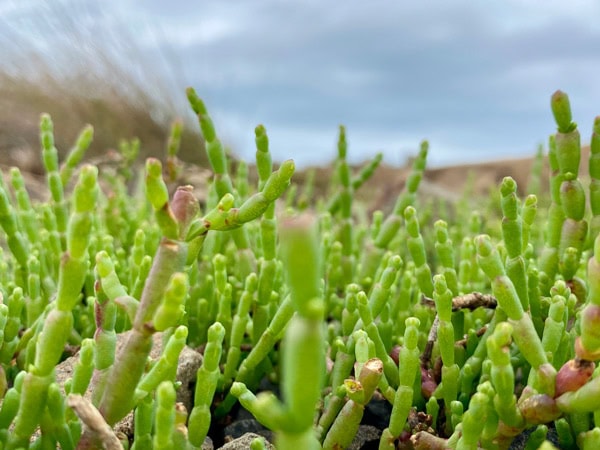
a close-up landscape shot of the samphire succulent
Samphire bursts with salty flavour. (Image: Getty Images via lynnebeclu)

Best season? Summer.

Where to try? Unfortunately, Australian samphire is currently at the ‘look, don’t taste’ foraging level. You can get a big fine for picking it.

Weekly travel news, experiences
insider tips, offers, and more.

9. Kakadu Plum (gubinge), Dampier Peninsula, WA

Another win for those seeking some antioxidant power is the sweet-sour Kakadu plum. The fleshy native fruit is up to six per cent vitamin C and can be found in the Kimberley region, as well as stretching all the way to Cape York.
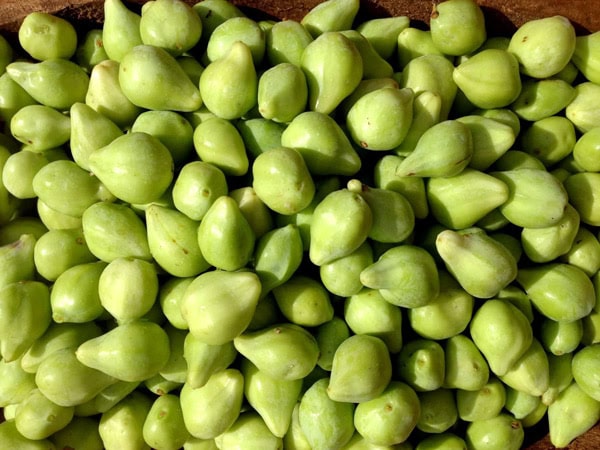
green Kakadu Plum fruits
The sweet-sour Kakadu plum grows in the Kimberley region.

Best season? January to February in Western Australia.

Where to try? Take a bush food tour on Nyul Nyul country with Twin Lakes Cultural Park.

10. Marron, Margaret River, WA

Jet 2500 kilometres south to Margaret River and try the state’s largest freshwater crayfish, which can weigh in at over two kilos. Hairy and smooth marron live in the fresh waters here, but the former are endangered and should not be eaten.

Luckily, other kinds of marron can be grown and harvested on farms during the short summer season, before being dished up with garlic butter.
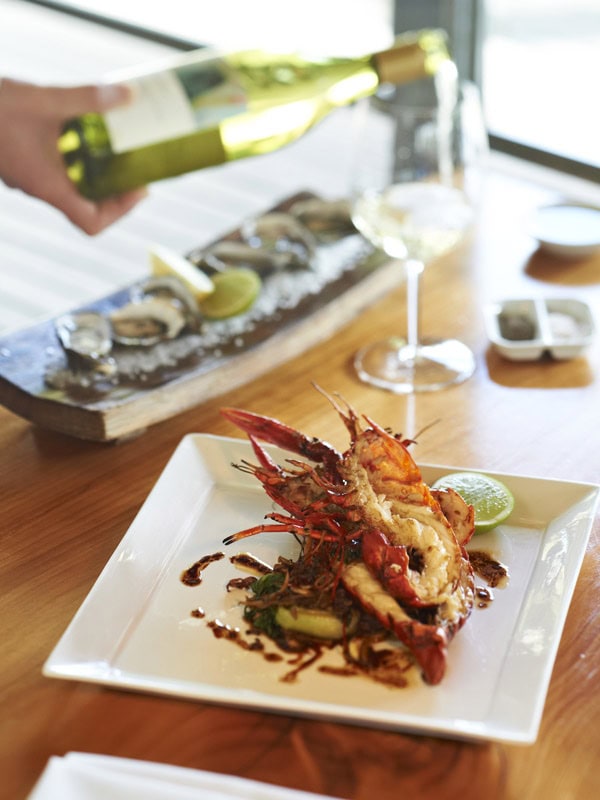
a garlic butter maroon dish on the table
Marron is a must-try in the Margaret River region (Image: Tourism Western Australia)

Best season? January to February.

Where to try? You can tuck into the crayfish during Marron season across restaurants in the Margaret River, like the Voyager Estate.

11. Sparkling wine, Tamar Valley, Tasmania

Australia has half a dozen regions where sparkling wines are produced. But it’s the cool climate of Tasmania’s Tamar Valley that produces French-style drops that have us dropping past Calstock instead of Champagne.

The wines found at the family-owned wineries here are made from pinot noir and chardonnay varieties and are delectable enough to make anyone cheers!
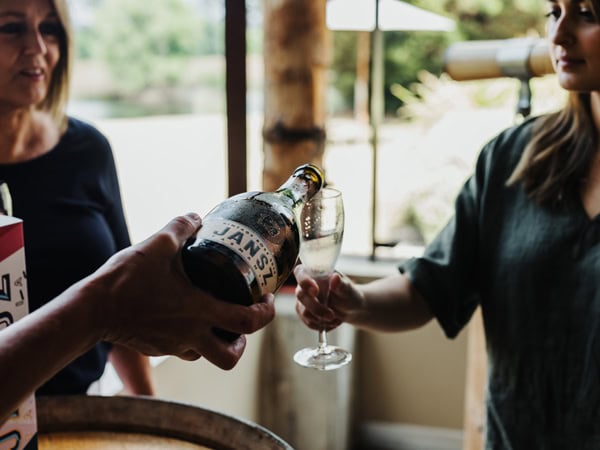
pouring sparkling wine into a glass at Jansz Tasmania
Enjoy a glass of Tasmanian sparkling wine in the Tamar Valley. (Image: Adam Gibson)

Best season? All year round – thank goodness.

Where to try? When it comes to Tamar Valley wineries, it is hard to go wrong. But for sparkling, Jansz Tasmania is a must.

Want to see more stories from Australian Traveller in your Google search results?

  1. Click here to set Australian Traveller as a preferred source.
  2. Tick the box next to "Australian Traveller". That's it.
Kate Bettes
Kate Bettes is a freelance travel writer. Whether having a picnic in Vietnamese jungle with new friends, or partying in the back of a limousine in Hollywood, Kate’s experiences have left her with the sneaking suspicion that the best travel memories happen when you least expect. It’s this feeling - and how to get it - that she loves to write about.
View profile and articles
hero media

Slowing down in Moree: a guide to the Artesian Spa Capital of Australia

(Credit: Destination NSW)

    Kassia Byrnes Kassia Byrnes
    The Artesian Spa Capital of Australia offers the perfect destination to escape the grind and reset.

    The world moves more slowly in Moree, and that’s how it should be. Here, country charm and heritage buildings fill the town’s wide streets. While the surrounding farmland mixes with lush riverways to create a fascinating landscape.

    But the biggest pull? Moree is known as the Artesian Spa Capital of Australia. It’s truly a place to slow down and disconnect, all an easy train ride from Sydney.

    Soak in Moree’s artesian water

    kids at Moree Artesian Aquatic Centre
    Dive in to Moree’s artesian waters.

    Moree is not your typical wellness retreat, replacing pretence with casual and easy. Blessed to be sitting above the Great Artesian Basin, it feeds the town (and surrounding villages) with hot, mineral-rich water. Loaded with minerals like calcium, magnesium, potassium and sulphur, this water is believed to help with skin health, joint function and tissue repair.

    And the town’s crown jewel, Moree Artesian Aquatic Centre, has reopened after extensive upgrades. This state-of-the-art aquatic centre offers accessible facilities with multiple artesian baths of varying temperatures between 38 and 41°C.

    Feel like exploring a little further? About an hour’s drive from Moree, the village of Boomi also offers public access to this same artesian water. Pop into Boomi Artesian Pool to make the most of a 25-metre cold pool, a wading pool and a hot artesian spa pool.

    Just an hour west of Boomi, you’ll also find Mungindi Hot Artesian Pool, another relaxing place to rejuvenate for the afternoon in the mineral-rich water.

    Moree’s best stays

    woman swimming ta Moree Artesian Aquatic Centre
    Stay right by Moree Artesian Aquatic Centre.

    There are several motels within walking distance of the aquatic centre, so you linger longer in its therapeutic waters. A day pass not enough? Really soak in the benefits of Moree at three local stays with their own artesian baths.

    Gwydir Thermal Pools Resort boasts five artesian pools for motel and caravan park guests, ranging in soothing temperatures from 34 to 39 degrees. And that includes a 25-metre lap pool.

    The Phoenix, Artesian Spa Resort & Accommodation features outdoor artesian thermal pools and six indoor artesian spas, all 34 to 42°C, plus regular pools for guests staying in their accommodations.

    While the Artesian Spa Motel matches 46 comfortable budget rooms set across five acres of landscaped grounds, with direct access (for guests) to its own natural artesian hot thermal pool.

    Moree’s location at the crossroads of the Newell and Gwydir Highways makes it the ideal resting place for those road tripping through country NSW. With plenty of accommodation options, including farm stays, quaint bed and breakfasts and affordable motels.

    Delving into nature around Moree

    aerial of moree
    Find plenty of natural beauty in and around Moree. (Credit: Destination NSW)

    Beyond the baths, find calm in Moree’s nature. Soak up the impressive Gwydir River from the peaceful Tareelaroi Weir Recreation Area. Popular with locals, this scenic spot is perfect for fishing, kayaking and picnics. Delve into local history at the Terry Hie Hie Picnic Area – a significant Gamilaroi cultural site. The picnic area is still used today as a ceremonial gathering ground, with educational signage sharing the history of the Gamilaroi People and the mission which used to reside here in the early 20th Century. Follow the Yana-y Warruwi Walking Track to explore the area’s box pine forest.

    Combine nature and culture at the Jellicoe Park Open Spaces Aboriginal Art Trail along the scenic Mehi River Walk. Find artworks from local Indigenous artists across a range of different mediums, like carved logs, engraved and painted sandstone and scar tree paintings.

    A taste of Moree

    meal at Moree Country Club
    Sit down for a tasty meal after a game of golf. (Credit: Destination NSW)

    Taste the best of local cafes as you wander past the Art Deco architecture of Moree’s tree-lined main streets. Join the locals each morning at Brooker Trading Co as they line up for their morning java. Stay for classic breakfast dishes like eggs benedict and Dutch pancakes, or arrive later in the day for a hearty lunch menu. Inside a gorgeous Art Deco building, 61 Balo is another tasty breakfast option, with pet-friendly service. The recently renovated Cafe Omega is another popular stop for fresh, hearty meals – the chicken burger is a particular crowd pleaser – all served with a smile.

    Get inspired as you wander the CBD’s Mural Trail, stopping at some of Moree’s six art galleries along the way. Bank Art Museum is a must-see, housed in the town’s heritage bank building and home to a collection of First Nations art, plus a changing calendar of touring exhibitions.

    Bank Art Museum Moree
    Step inside the gorgeous Bank Art Museum Moree. (Credit: Destination NSW)

    Get active with a round on the beautiful riverside course at Moree Golf Club (and refuel afterwards at the delicious onsite restaurant) or a game of bowls at Moree Services Club’s state-of-the-art facility. Visit on the last weekend of September to join (or watch) Run the Plains, Moree’s annual two-day running festival.

    Known as ‘white gold’ country, Moree is Australia’s most productive agricultural region. Visit from April to September to join a cotton farm tour and get to know one of Moree’s major exports.

    However long you choose to stay, there’s plenty to soak in around Moree.

    Start planning the ultimate escape at visitmoreeplains.com.au.