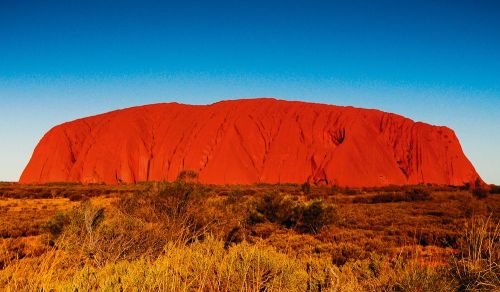
The results of our People’s Choice Awards told us that there are two destinations where Australians really, truly want to be in 2015 (see below), but what comes next? First we hear from you and then Australian Traveller’s editor Georgia Rickard tells you the trends and experiences that she says will affect the way you travel in 2015.
What you want to see in 2015…
Dream experience in 2015: Watching the sun set at Uluru
With the sun slowly retreating below the Northern Territory’s outback horizon, painting the blue sky in shades of ochre, crimson and violet – and arguably Australia’s most iconic landmark Uluru dominating your vision – it’s easy to understand why this was voted number-one dream experience for 2015. Watching this spectacle unfold before your eyes literally feels like you’ve stepped into a dream. Hot tip, book in for the Sounds of Silence dinner at Ayers Rock Resort for $195 per person and enjoy three courses of finely cooked bush tucker as you drink in the spectacle.
Runners Up: 2. Snorkelling the Great Barrier Reef, Qld 3. Swimming with Ningaloo’s whale sharks, WA 4. Cruising the Kimberley, WA 5. Doing the Top End, NT
Dream destination in 2015: Tasmania
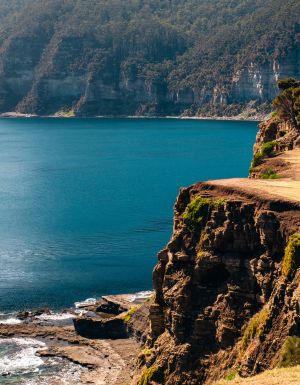
The Bay of Fires, Wineglass Bay, Tamar Valley, Sapphire Freycinet, Cradle Mountain. Just a few reasons why our most southern isle is running through our heads as we drift into dreamland (and we haven’t even mentioned the cities yet). Tasmania has been riding the wave of popularity for the better part of the decade, and with Lonely Planet placing the island number-four on its top 10 destination list for 2015, not to mention Saffire Freycinet’s recent ‘best boutique hotel in the world’ gong, the spotlight won’t be wavering any time soon. Our must-sees in 2015, include the new Pumphouse Point hotel, the four-day ‘Wineglass Bay Sail Walk’ (in the area pictured here), the gourmet delights of Huon Valley and Bruny Island, and, of course, whatever MONA’s doing.
Runners-up: 2. Uluru, NT 3. The Kimberley,WA 4. Kakadu, NT 5.Cape York, Qld 6. The Whitsundays, Qld
Where we think you may end up…
The Gourmet bike trip
We’re all across the gourmet holiday – but what happens when you combine culinary indulgence with a guided walking trip, or high-end cycling tour? These best-of-both-worlds luxury holidays have seen enormous growth in recent years, particularly with the establishment of the Great Walks of Australia and its eight experiences, and now cycling is set to explode in a mainstream way. We’re quite pleased about this – particularly having recently experienced the ‘cycle-thru’ burrito bar and café, along the insanely enjoyable Pedal to Produce cycle route inVictoria’s High Country. Prepare the padded shorts strut.
Themed Glamping
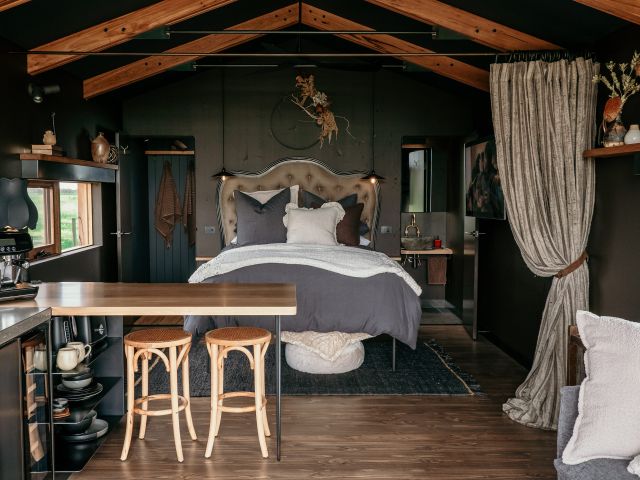
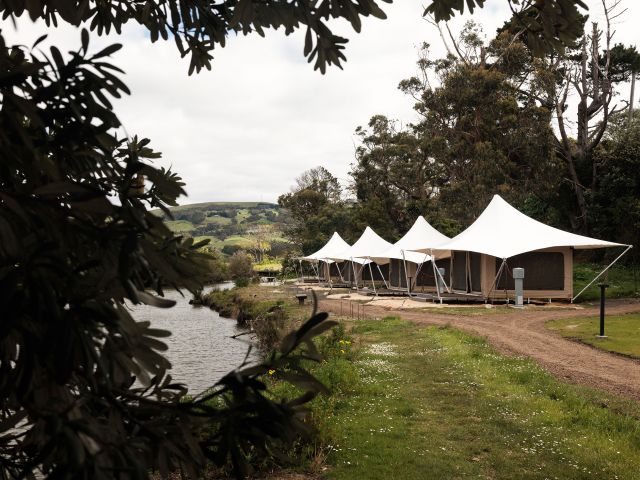
Starry skies and fluffy beds, ‘glamping’, AKA glamorous camping, offers the best of both worlds and don’t Australians know it: the number of glampsites that popped up in 2014 alone has been staggering. From here, we’ll see glamping diversify into specific sub-categories: affordable (think Sydney’s Cockatoo Island); wilderness (Ikara Safari Camp in the Flinders Ranges); indigenous (the Kimberley’s Kooljaman in Cape Leveque), and luxury (possibly best summarised by Longitude 131 at Uluru, or the Maria Island Walk, which mixes back-to-basics wilderness with fine wine, chef-cooked meals and tent-style accommodation).
Rooms with personality
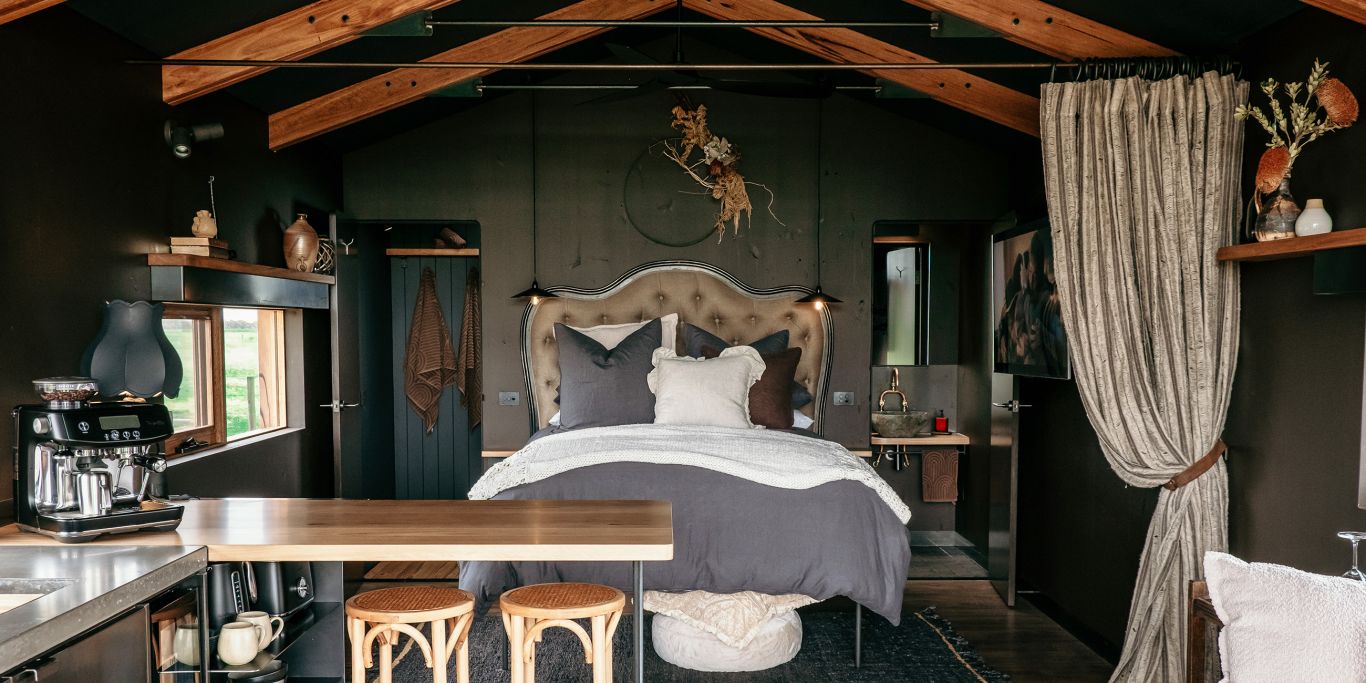
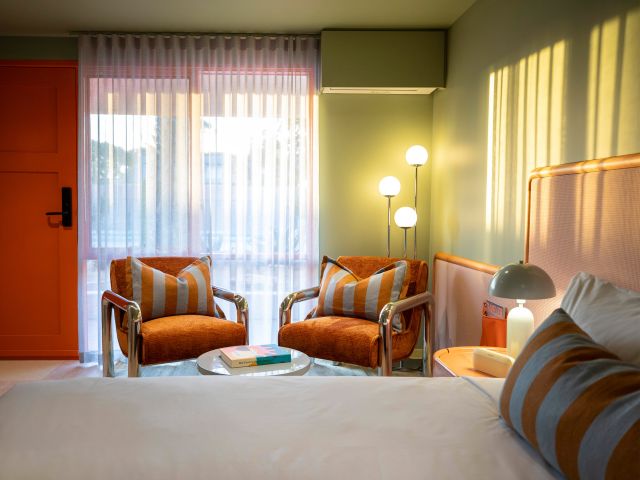
Actually, there is one more glamping category: quirky glamping. From sleeping in a tee pee to staying in a pop-up tent city (check out Daylesford’s ‘Cosy Tents’), we’re lapping up anything offbeat these days, and not just in the glamping arena, either. The success story of whimsical-luxe QT Hotels has proven that there’s a genuine market for luxury travel with a difference. Indeed ‘hotels with quirks’ are taking off in all sectors of the market: Brisbane’s Limes Hotel has a hand-painted feature wall in each room; suites at Adelaide’s Majestic Minima contain unique street art; the entire Art Series Hotel Group is a movement unto itself and even traditional chains are in on the act, with crazy-cool restaurants, pop-up bars and temporary art installations. Next up: individually-styled suites with their own cult followings, and exclusive mini hotels within hotels (think the Club Lounge level on steroids).
Super luxury
Fact: the body lotion in suites at Saffire Freycinet is blue because it contains crushed sapphires. Erstwhile at Wolgan Valley Resort & Spa, each of the rooms comes with its own lap pool. These days, personal butlers, individualised menus and money-can’t-buy-experiences are all on offer atAustralia’s best retreats, and this is just the beginning. With more big-hitting international players entering the Australian market (like One&Only Hayman Island) and a customer base of increasingly sophisticated Australians, super luxury will put average five-measly-star hotels to shame. For those who can afford it, that is.
The road trip
Forget flying: the road trip is having a moment. It’s part of the ‘slow travel’ movement which, just like the slow food movement before it, is a response to the mindlessness of today’s travel culture – a backlash against mass-produced resorts, holiday McMeals, erosion of local culture and the plane trips that take you from A to B without any contextual appreciation. This kind of road tripping isn’t about burning down the freeway, though: it’s about taking the back roads. Stopping at that small village. Striking up conversations. And celebrating the uncomplicated pleasures that made you want to travel in the first place. We’re all for it.
Escapes that enrich us
In keeping with the revival of the road trip, we’re also seeking out experiences that have depth and meaning beyond some good weather and a nice pool. Top of the list are authentic indigenous experiences, educational pilgrimages to sites of environmental significance and guided tours that involve historical learnings, but this movement encompasses any travel experiences that enrich our lives, which means cooking classes, detox retreats and holidays including yoga, surfing, writing, pottery-making are all hot stuff, too.
Tech-driven travel
Take a virtual tour of your hotel room using your Google Glasses. Check in with your Apple Watch, then download the appropriate app and use your watch as your room key. Upload a flattering snap of your stay to social media and nab a discount on the room. Indeed, all things social will continue to drive travel trends – take Airbnb.com, for example, which has spawned dozens of variations including Homestay.com, which allows holiday-makers to rent a room short-term, and Eatwith.com, which allows travellers to have dinner at locals’ homes.
Air safaris
Helicopter safaris, chartered private planes, joy rides and the interstate dash – as air travel becomes cheaper and more ubiquitous, everything from scenic flights to month-long laps of the nation (AKA the ‘air safari’) are set to increase in popularity. We’d say the days when personal helicopters become common aren’t far away, either.
Wildly remote hideaways
Remote wilderness experiences are becoming more popular, and though costs of operation and sheer demand mean prices will remain prohibitively high for the majority of our population, we can expect to see more tourism products pop up in remote locations, like Tasmania’s new Pumphouse Point. On a mainstream level, expect a continued rise in localised wilderness tourism – a camping/caravan renaissance, more wildlife activities including interaction with animals (think swimming with whales, sharks etc) and a return to ‘off-the-grid’ holidays (basic accommodation or reception-free or electricity-free destinations). We won’t go so far as to say that coastal holidays have become passé, but we will suggest that, in the twin rushes to retreat from crowds and seek out new experiences, Australians are more likely to consider travelling inward these days. Hello, regional towns…
Australian cruise routes
Love it or hate it, cruising is full steam ahead in Australia – and we’re getting on board. If you hate the very idea of a big liner (we can’t understand why…), look past them – there’s a surprising array of experiences out there that just can’t be replicated on land, and many are genuinely excellent. Jump on a barge to the tropical Torres Strait Islands, board an expedition ship around the Kimberley, chase minke whales along the northern Great Barrier Reef, or board one of the boutique cruise liners, which have a much higher focus on bespoke experiences (with less people). But more on that in the next issue, maybe – for now, we think you’ve got your hands full.