Australia’s most legendary railway journey gets a makeover

hero media
Celebrating its 95th anniversary with the launch of a Gold Premium travel style, The Ghan’s new look connects to the landscapes it journeys through, bringing transcontinental train travel into the modern era while paying tribute to its history. We explore the evolution of an icon.

We step off the train and into the dark. The desert night is still as we make a beeline towards the bonfire glowing like a beacon in the near distance. Flames lick the cool air as fellow travellers gather round, hot coffee and bacon and egg roll in hand. A sense of anticipation settles as a streak of orange smoulders on the horizon. It burns brighter and the sky shifts from inky dark to a kaleidoscope of colours: green, yellow, pink, lilac.
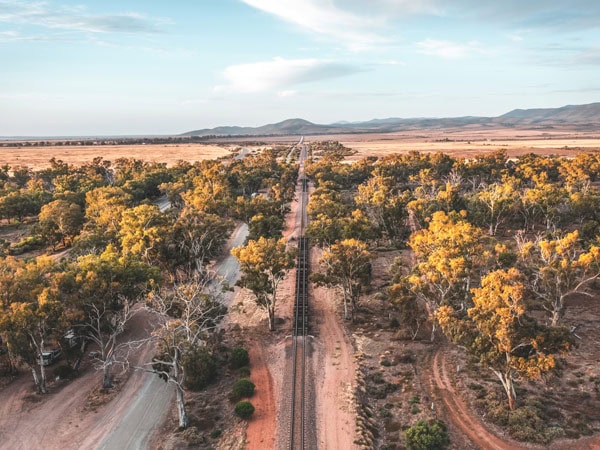
an aerial view of The Ghan railway
The railway stretches for 2979 kilometres through the heart of the country. (Image: Journey Beyond/Hip Photography)

We gaze outwards and wait for the moment the sun springs up above the silhouetted mulga scrub to mark a brand-new day. And it paints in the details of the scene around us: an old middle-of-nowhere railway siding in the South Australian outback marked only by a single tin shed and a sign, Marla. A gleaming silver train livery, bearing that unmistakable camel insignia.
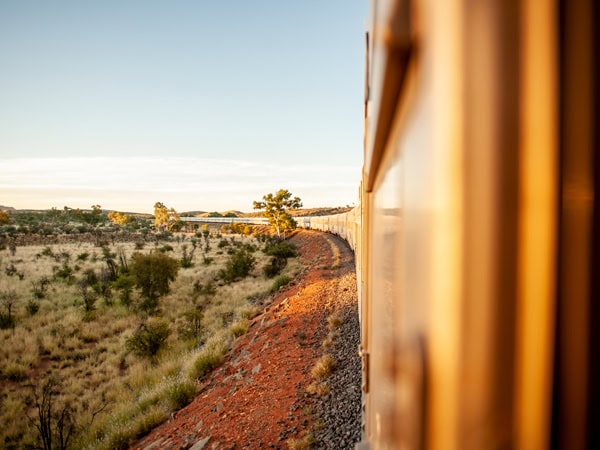
The Ghan travelling through the Red Centre
The Ghan has been travelling through the heart of Australia for almost a century. (Image: Journey Beyond/Hip Photography

It’s our first morning onboard The Ghan when we alight at Marla for this unique outback experience, some 1000 kilometres into the journey and closer to Alice Springs/Mparntwe than our departure point, Adelaide. By sunset the next day we will arrive in Darwin, having travelled 2979 kilometres on Australia’s most legendary railway journey.

But for now, we clamber back onboard and – for a couple of hours while the sun continues to rise in the sky – back into bed. We cross the South Australia/Northern Territory border at 10:06am before heading to the dining carriage for brunch. Outside the window, the country’s interior unspools before us.
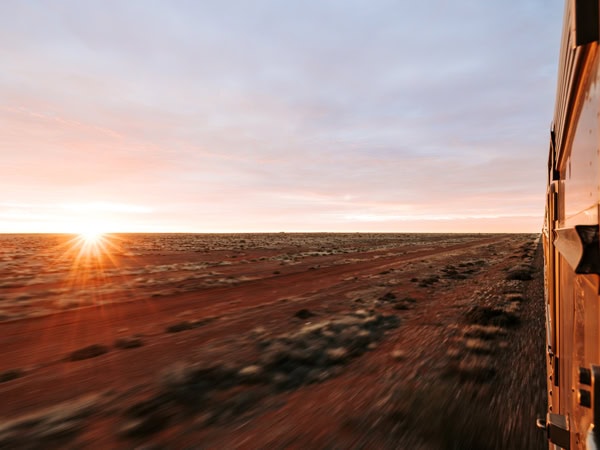
sunset over the Red Centre
The Red Centre rolls by. (Image: Journey Beyond/Christopher Morrison)

A storied history

The Ghan turns 95 this year. On 4 August 1929, the train – then called The Afghan Express – left Adelaide Railway Station. It was farewelled by an excited crowd and headed north along the route of a permanent trail into the Red Centre blazed by the so-called Afghan cameleers more than 150 years ago (these cameleers, brought here in the 1860s to help explore inland Australia, were in fact from several places, including Afghanistan, Kashmir, Persia and the Punjab).

Loaded with 100 passengers and supplies, the steam-hauled train arrived two days later in the remote town of Stuart, later named Alice Springs. And while it was always the plan to connect on to Darwin, it wasn’t until 20 years ago that the last section of rail was finally completed.
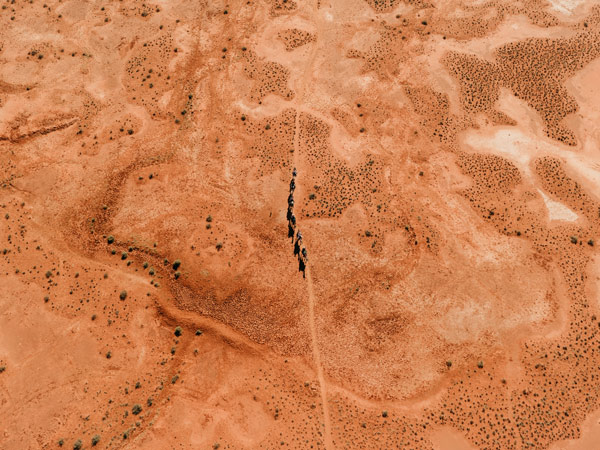
the rust-coloured soil at Alice Springs
Journey past the ancient Alice Springs. (Image: Journey Beyond/Hip Photography)

In the near-century since its inaugural journey, The Ghan has served different functions. During the Second World War, it transported servicemen for training and deployment and during the 1960s and ’70s, its transportation of supplies played a crucial role in helping to grow major industries such as agriculture, transport and mining.

Its later connection to Darwin helped herald a new era of tourism for the Northern Territory. And when flying became cheaper and more convenient, The Ghan needed to reinvent itself again and emerged as the luxury tourism experience we know today. But while these days you can relax into the journey in comfort while nursing a barista-made flat white, it still embodies a frontier spirit that keeps it high on the bucket list of most Australians. And it is still evolving.
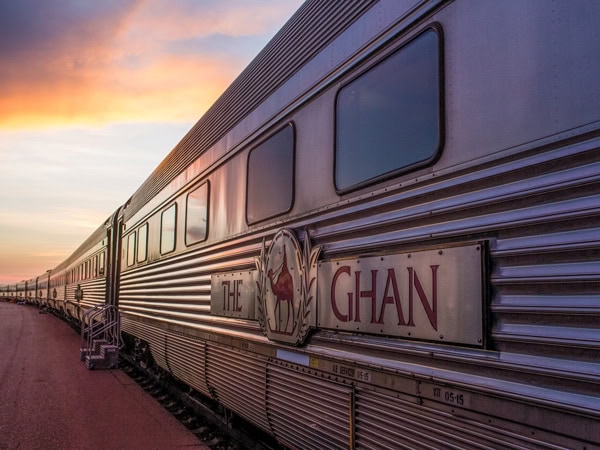
The Ghan at the Darwin Terminal
The Ghan departs from and arrives at the Darwin terminal. (Image: Journey Beyond/Hip Photography)

Evolution of an icon

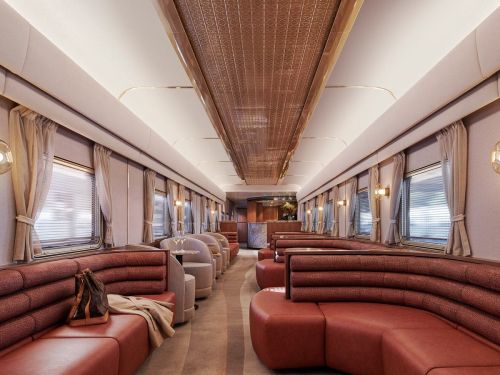
The Ghan has had a makeover in time for its 95th birthday in the form of a Gold Premium service level to complement its existing Gold and Platinum suites and carriages. Passengers travelling in Gold Premium sleep in redesigned contemporary cabins and commune in new-look lounge and restaurant carriages. The feel is cool and contemporary quiet luxury with Art Deco leanings in tribute to The Ghan’s original 1930s carriages.
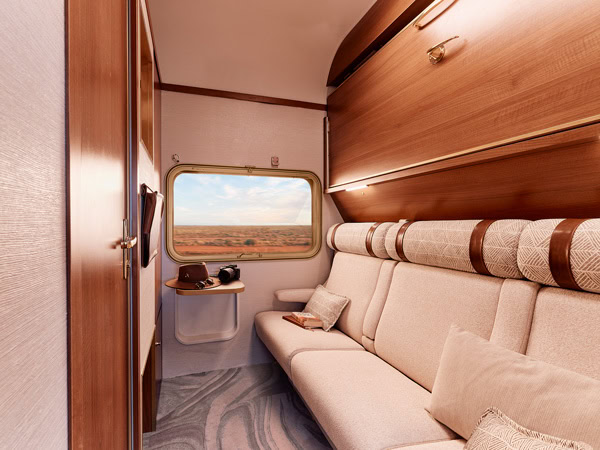
the new Gold Premium twin suite
Sleep in the new-look Gold Premium twin suite. (Image: Journey Beyond/Hip Photography)

Its colour palette – earthy tones of terracotta, walnut timber and stone, elevated with touches such as gold-plated light fittings and polished brass – is drawn from the landscapes we’re travelling through.

Home-grown architecture studio Woods Bagot was briefed to bring the carriages into the modern era while introducing a sense of place to the interior spaces. Respecting the legacy and historical narrative of Australia’s most iconic railway while restoring the glamour of transcontinental rail travel for a new era was key for the design team.
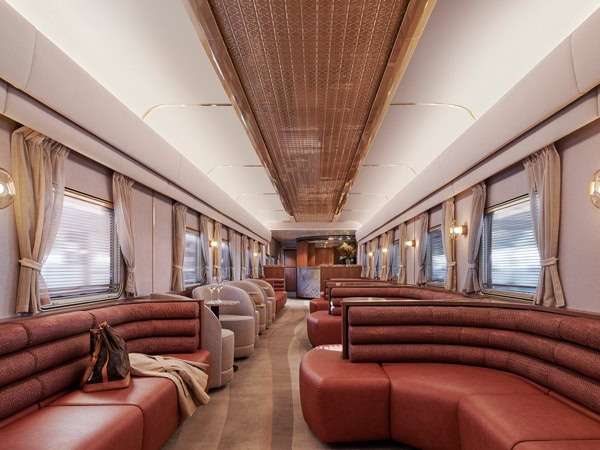
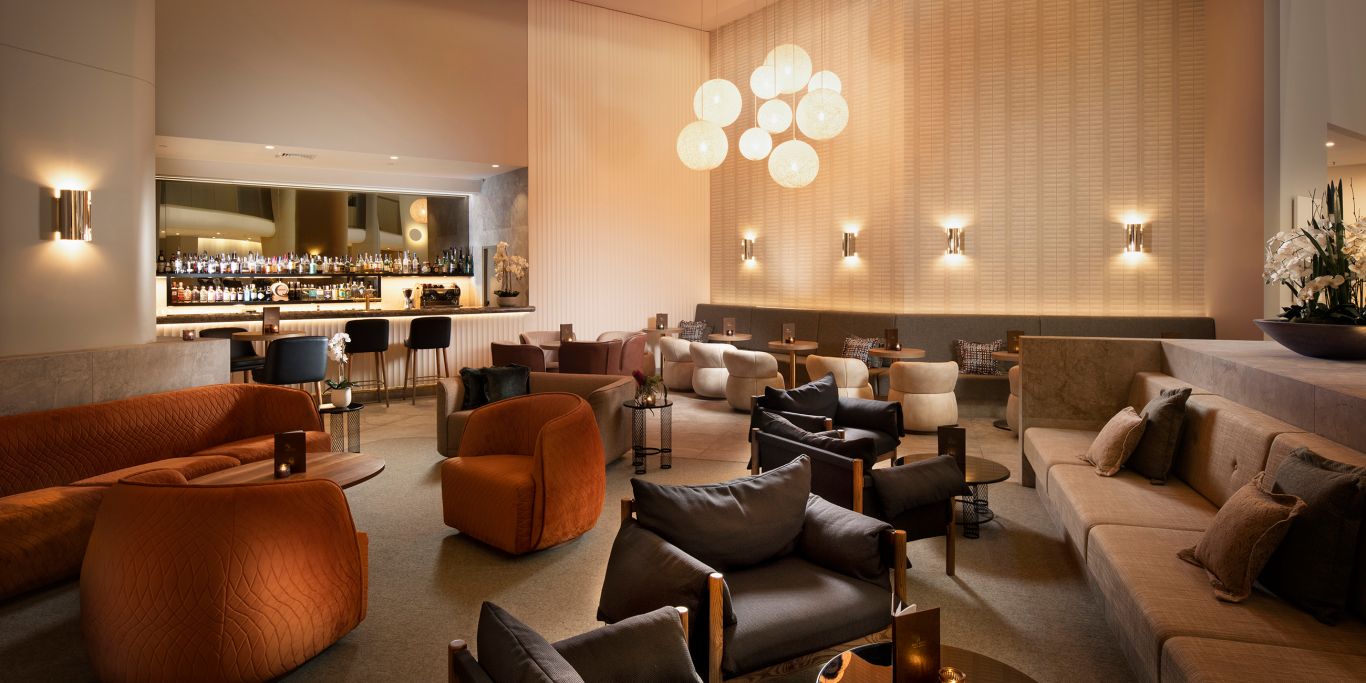
a look inside the Gold Premium Lounge, the Ghan
The Gold Premium Lounge is the central gathering place. (Image: Nicole England)

“The carriages convey the beauty and romance long associated with slow travel, with a design response that is deeply contextual to the history and topography of Australia," says Woods Bagot principal, Rosina Di Maria.

It’s a sustainable design. Where possible, existing features – such as joinery, furniture and materials – have been restored and renewed and natural materials including real stone surfaces and woollen carpets have been employed to reduce the presence of synthetic materials and chemicals. Woods Bagot has also championed local makers and manufacturers.

Original seats have been reupholstered courtesy of Willie Weston, a profit-for-purpose business based in Melbourne that works with First Nations artists to create fabrics and wallpapers; the print chosen for the dining and lounge carriages, Terra by Kathleen Korda of Durrmu Arts in the Top End, creates the foundation of Gold Premium’s earthy palette in its clay tones. And you can’t miss the pièce de résistance: a recreation of the historic pressed-metal ceiling from the first Queen Adelaide dining car, by the artisans – Adelaide Pressed Metals – who crafted the original.

The layered and textural design is understated and pared back. Ultimately, it’s about letting the landscapes sing. “We wanted to honour what was outside of the train, without being too ostentatious inside the train, and create a harmonious connection to landscape," says project leader Bonnie Hamilton. “The most amazing thing is just being able to see the ever-changing landscape. We wanted to enhance that experience by designing a beautiful space for guests to do so."
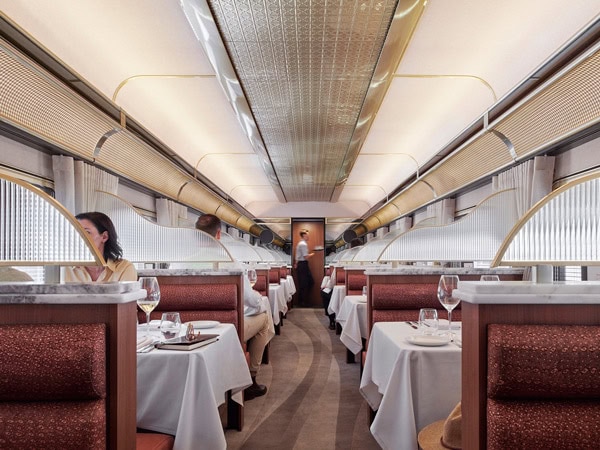
the dining car onboard The Ghan Gold Premium
A new-look dining car sets the stage.

Need tips, more detail or itinerary ideas tailored to you? Ask AT.

AI Prompt

Drawn from the landscape

The Gold Premium colour palette is plucked from Australia’s environment and heritage, referencing the lands the train traverses and the people of those places. Inspired by First Nations landscape artist Albert Namatjira, the interior palette responds to Namatjira’s works, from the silvers of majestic ghost gums to the terracotta tones of the red earth.
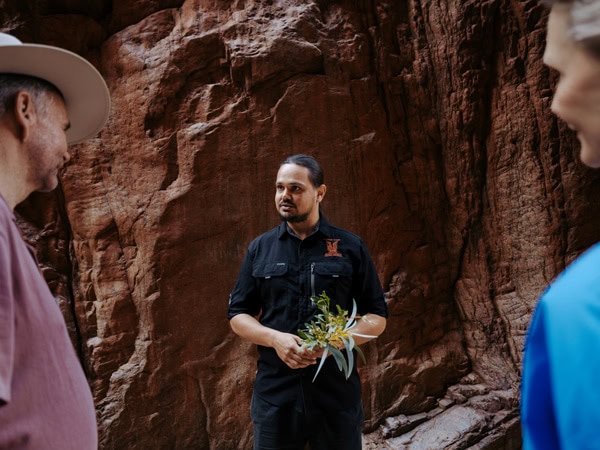
an Off Train Experience in Angkerle Atwatye/Standley Chasm
Opt for an Off Train Experience in Angkerle Atwatye/Standley Chasm. (Image: Journey Beyond/Christopher Morrison)

By early afternoon on our second day, we’re pulling into Alice Springs. My partner and I opt for the Simpsons Gap Discovery Walk to stretch our legs and take in some of the majestic landscapes of West MacDonnell Ranges/Tjoritja.
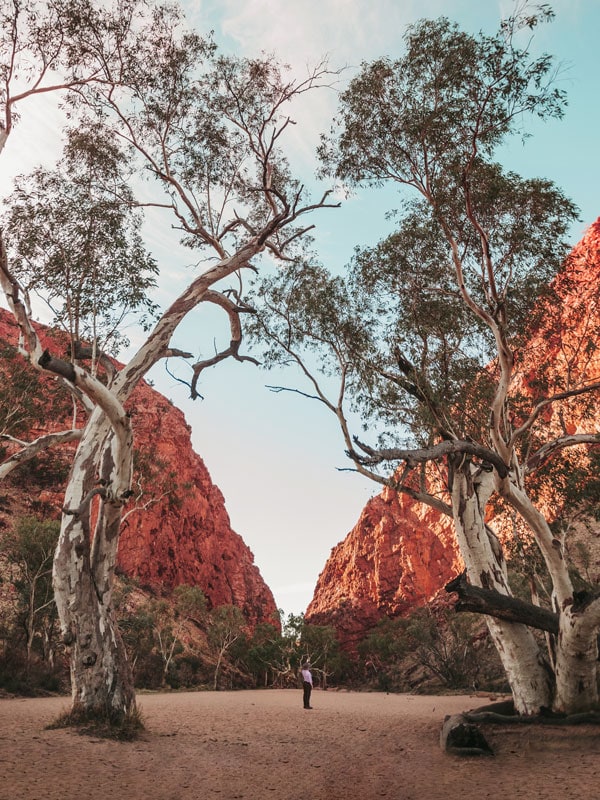
a Simpsons Gap Discovery Walk at West MacDonnell Ranges/Tjoritja
A Simpsons Gap Discovery Walk takes you to the heart of West MacDonnell Ranges/Tjoritja. (Image: Journey Beyond/Hip Photography)

“This is Namatjira Country", says our guide as our group stands at the top of Cassia Hill with a 360-degree view of the surrounding landscape, with its rugged red ridgelines and grey-green scrub.
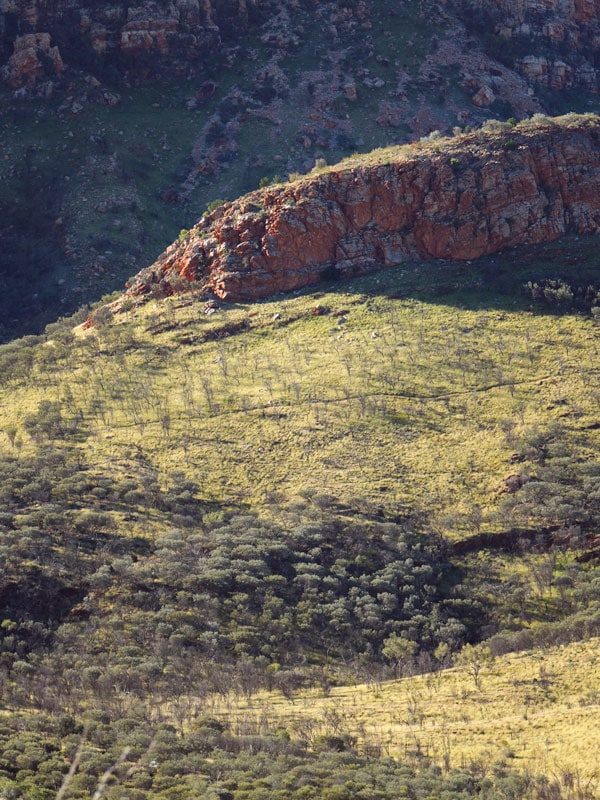
red and green landscape at West MacDonnell Ranges
Beautiful red and green hues in the West MacDonnell Ranges/Tjoritja.

The homelands of the artist lie some 100 kilometres west of here near Hermannsburg/Ntaria. We find ourselves in a panoramic painting. After a walk into Simpsons Gap/Rungutjirpa, we head back to the train in time to watch the sun set through the window over a pre-dinner drink and mingle with other guests in this communal gathering spot.

The journey of the day onboard was as much a part of the design. “The experience varies throughout the day, so your morning experience is going to be different to your night experience," says Hamilton. “And so it was about creating a space that really held passengers, and throughout each of those timeframes too, and made each of those experiences just as beautiful as the next."
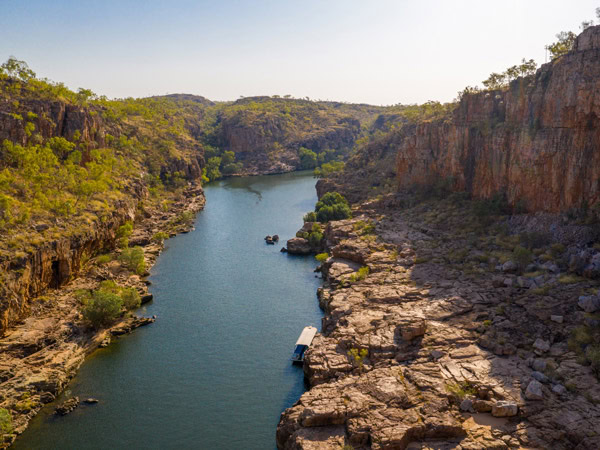
a scenic view of the Nitmiluk Gorge
Explore the Jawoyn-owned Nitmiluk Gorge. (Image: Journey Beyond/Hip Photography)

Mealtimes prove the touchpoints of the journey and another way to draw from the landscape. Menus onboard reflect The Ghan’s promise to deliver guests experiences that are ‘of the place’, says Matthew Snare, food and beverage manager for Journey Beyond, the experiential tourism company that operates The Ghan.

Having spent 10 years honing his craft with Neil Perry at Rockpool before a stint at Qantas, Snare’s background is in research and development. For him, a map of Australia is a palette to work from across all the train journeys in his purview – Indian Pacific, the Great Southern as well as The Ghan – and he is passionate about working with producers all over the country. “Like all of our trains, our menus are inspired by local produce and cultures."

Unique ingredients from the regions the trains travel through are the starting point for Snare’s menus. “Incorporating Australian native ingredients adds texture and interest and also a unique accent as they are used in menus close to the traditional growing regions," he says.
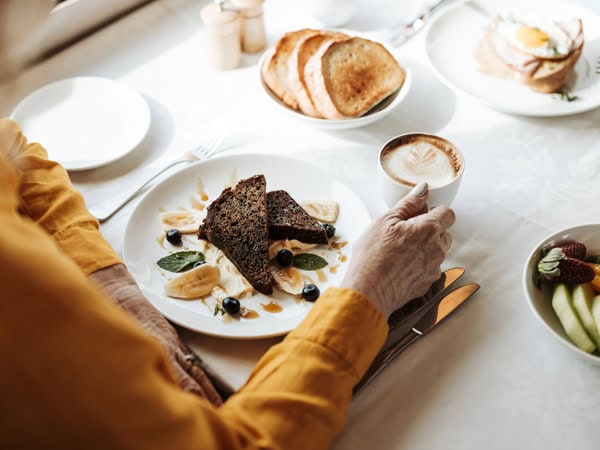
the menu onboard The Ghan Gold Premium class
Menus onboard are influenced by local produce. (Image: Journey Beyond/Christopher Morrison)

Menus are refreshed frequently, incorporating new or seasonal flavours and ingredients as presented to him throughout the year by suppliers. Gold Premium menus were thoughtfully developed in line with the launch of the beautifully refurbished carriages, complemented by premium Australian wines and beverages. Future menu design will explore the health benefits of various native fruits and herbs.

The Ghan travels between Adelaide and Darwin and draws on seafood from the southern waters, such as Spencer Gulf prawns and Coorong mulloway as well as South Australian legumes from the Yorke Peninsula and fresh produce from the Adelaide Plains.

“As we journey past Alice Springs into the sub tropics of the Northern Territory, the menus evolve reflecting that region," says Snare. “Menus will include Humpty Doo saltwater barramundi, crocodile, buffalo braised in a delicious Massaman Thai curry and Katherine mangos. The heat from this region calls for more refreshing, lighter menu offerings on train."
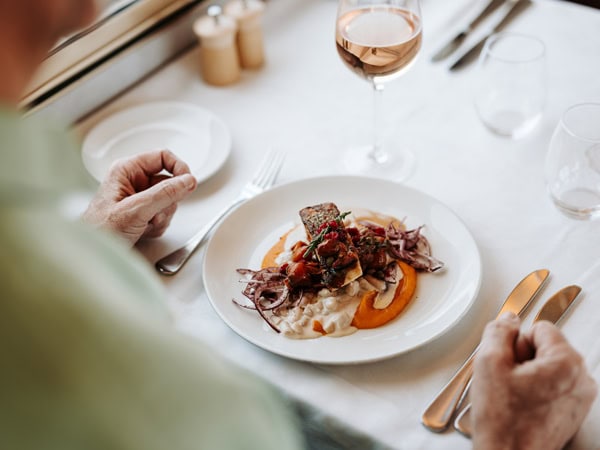
dining onboard The Ghan's Gold Premium class
Dine while you watch the world roll by in Gold Premium. (Image: Journey Beyond/Christopher Morrison)

Weekly travel news, experiences
insider tips, offers, and more.

Connection to Country

On our third day, we feel that heat as we unfurl from the train for our final excursion. We stop at Katherine, in the Northern Territory’s Top End, and sign up for a cruise of Nitmiluk Gorge. The gorge is the jewel in the crown of Nitmiluk National Park. Here, tourism ventures are operated by the Jawoyn people, who are united by a vision to develop economic independence, care for Country and share it with visitors.

We cruise through Nitmiluk’s first two gorges: rocky sandstone cliff faces towering over us, river pandanus dipping its fronds into turquoise waters not yet given the green light for swimming after the wet season and risk of migrating salties. It’s our first taste of the tropics.
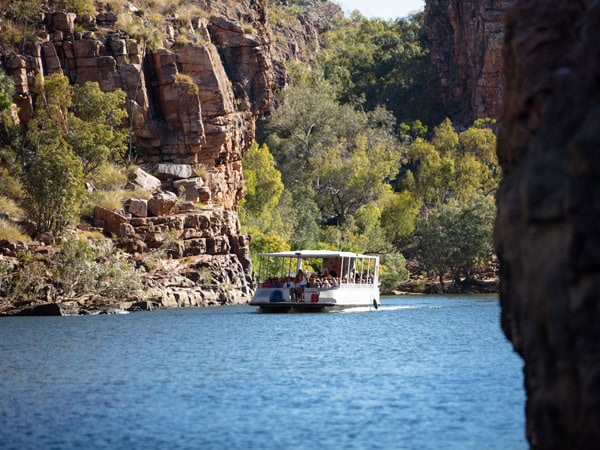
cruising along Nitmiluk Gorge
Cruise through Nitmiluk Gorge.

We roll into Darwin, Australia’s northernmost capital, just a few hours later. It’s the end of an epic transcontinental journey that has taken us through the heart of Australia and connected us to history and the landscape around us across multiple touchpoints.

Next on the horizon, the Gold Premium design is set to be rolled out across the other trains – the Great Southern for its 2024/25 summer season and the Indian Pacific in 2025. The Ghan and its sister trains are an integral part of Australia’s tourism story, and the new design contributes to this sense of place and connection forged for guests throughout the journey “in a more intimate form than just flying over it", says Di Maria.

“We looked at the legacy of The Ghan and made sure that we were bringing in the fold of this layering: of legacy, romanticism, connection to Country and the future of what rail travel is," says Hamilton. “It’s about attracting a wider demographic to rail travel as well, and breathing in new life."
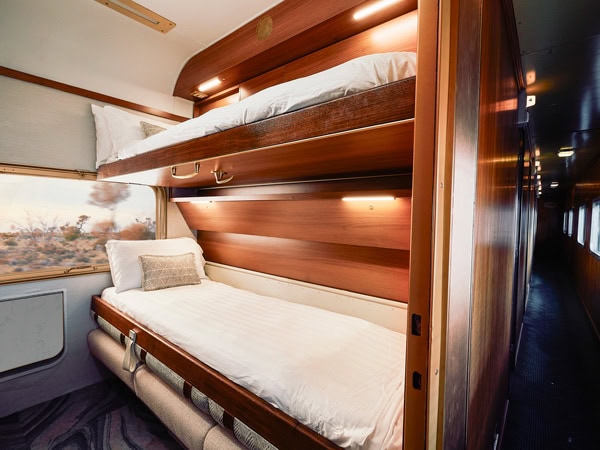
the Gold Premium suite onboard The Ghan
The Gold Premium suite is converted for sleeping. (Image: Journey Beyond/Hip Photography)

A traveller’s checklist

The Ghan travels in both directions between Adelaide/Tarndanya and Darwin/Gulumerrdgen on an all-inclusive two-night journey. Choose from a variety of Off Train Experiences available in Alice Springs/Mparntwe and Katherine. Gold Premium packages start from $3895 twin share.
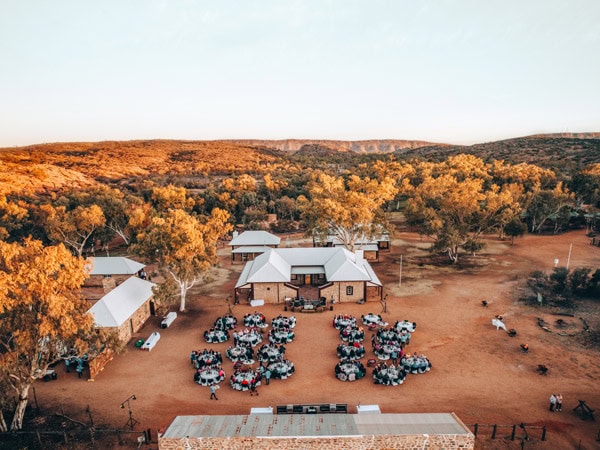
an aerial view of the Alice Springs Telegraph Station
Dinner under the stars at Alice Springs Telegraph Station. (Image: Journey Beyond/Hip Photography)

The Ghan Expedition travels between Darwin and Adelaide over three nights and includes Off Train Experiences in Katherine, Alice Springs, Coober Pedy and Manguri, plus dinner under the stars at historic Alice Springs Telegraph Station. Gold Premium packages start from $5095 twin share.
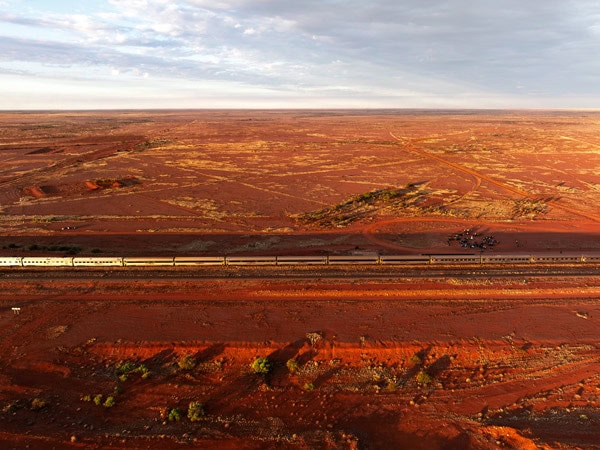
an aerial view of the Manguri rail, The Ghan
Step off the train at Manguri rail siding. (Image: Journey Beyond)

Shorter one-night itineraries between Alice Springs and Darwin/Alice Springs and Adelaide are also available. Extend your journey with a holiday package. The 2025 season includes the Red Centre Spectacular, which combines a trip onboard The Ghan with a seven-night small-group Red Centre tour with Outback Spirit. Or the Top End Explorer, which includes The Ghan with two nights’ touring Kakadu and Litchfield with Outback Spirit.
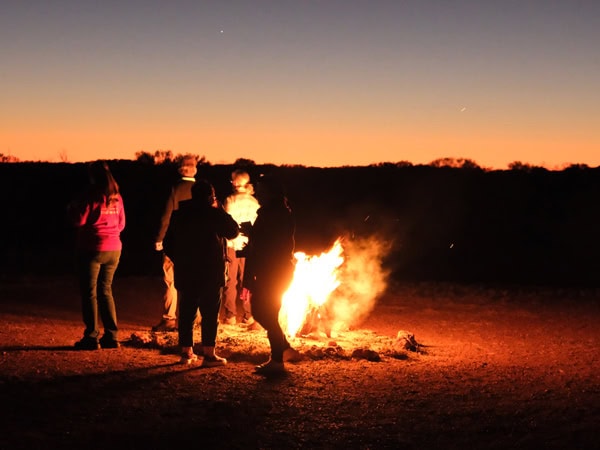
bonfire at Marla
A pre-dawn bonfire at Marla. (Image: Imogen Eveson)

The 14-night Ultimate Territory Tour combines all. Supercharge your itinerary with the addition of a 12-night Arnhem Land Adventure. Or combine your train journey with packages designed to get you acquainted with the cities at either end: Adelaide and nearby Barossa Valley and Darwin with its laid-back vibes and a sensational harbour cruise.
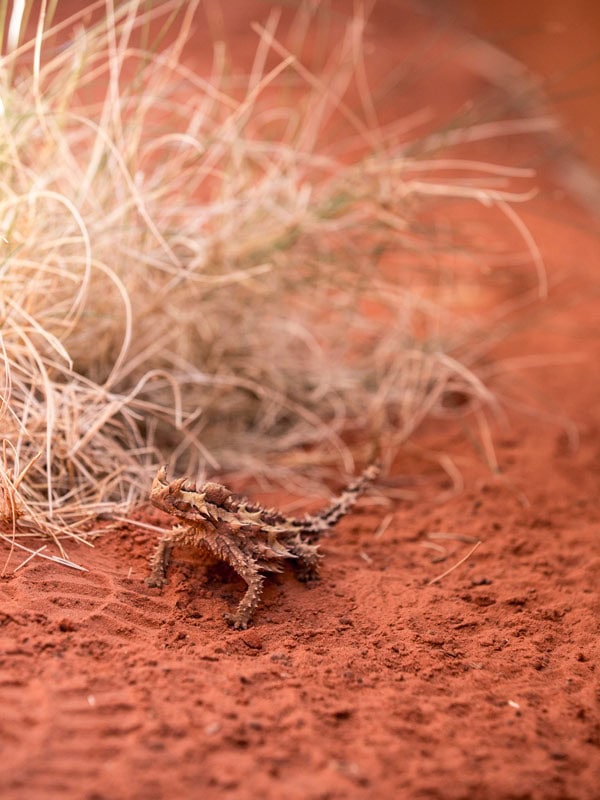
a thorny plant at Alice Springs Desert Park
A thorny devil at Alice Springs Desert Park. (Image: Journey Beyond/Hip Photography)
Imogen Eveson
Imogen Eveson is Australian Traveller’s Print Editor. She was named Editor of the Year at the 2024 Mumbrella Publish Awards and in 2023, was awarded the Cruise Line Industry Association (CLIA) Australia’s Media Award. Before joining Australian Traveller Media as sub-editor in 2017, Imogen wrote for publications including Broadsheet, Russh and SilverKris. She launched her career in London, where she graduated with a BA Hons degree in fashion communication from world-renowned arts and design college Central Saint Martins. She is the author/designer of The Wapping Project on Paper, published by Black Dog Publishing in 2014. Growing up in Glastonbury, home to the largest music and performing arts festival in the world, instilled in Imogen a passion for cultural cross-pollination that finds perfect expression today in shaping Australia’s leading travel titles. Imogen regularly appears as a guest on radio travel segments, including ABC National Nightlife, and is invited to attend global travel expos such as IMM, ILTM, Further East and We Are Africa.
View profile and articles
hero media

Meet the makers shaping Ballarat’s new era of creativity

    Margaret Barca Margaret Barca
    Makers, bakers, artists, chefs, crafters – Ballarat and its surrounds are overflowing with creative spirits. All dedicated to keeping traditional skills alive for a city that is humming with artful energy.

    Modern makers: a new generation of artists and artisans

    “Keeping craft alive is a noble cause,” says Jess Cameron-Wootten, a charming and passionate master leathercrafter and cordwainer, who handmakes traditional leather boots and shoes in Ballarat’s old Gun Cotton Goods Store.

    Ballarat was recognised in 2019 as a UNESCO Creative City of Craft and Folk Art, and today it’s a place where craft traditions converge with contemporary needs. Nothing quite captures this convergence as a visit to Wootten, the workshop and store of Jess Cameron-Wootten and his partner Krystina Menegazzo.

    heritage buildings in Ballarat
    Ballarat’s streets are lined with heritage buildings. (Image: Matt Dunne)

    Jess’s father was an artisan bootmaker, or cordwainer. Now Jess and Krys and their small team of artisans continue the tradition, but with a modern spin. The company’s boots and shoes, made completely from scratch, are renowned for their quality and longevity. Wootten also craft shoes, bags, belts, leather aprons, wallets and more.

    Cosy beanies, gloves, alpaca socks, “unbreakable” shoelaces and various other goods – many from local craftspeople and small-scale makers – fill the shop’s shelves. “We’re always happy to support a mate,” says Jess. “People love to see the workshop and where things are made. Our clients care about quality and sustainability,” Krys comments. The company slogan ‘Made for generations’ says it all.

    Ruby Pilven’s ceramics at Ross Creek Gallery
    Ruby Pilven’s ceramics at Ross Creek Gallery. (Image: Tara Moore)

    For Ruby Pilven, craft is also in the DNA – both her parents were potters and with her latest porcelain ceramics, Ruby’s young daughter has been helping add colour to the glazes. “I grew up watching my parents in the workshop – I’ve always been doing ceramics,” she says, although her Visual Arts degree was in printmaking. That printmaking training comes through particularly in the rich layering of pattern. Her audacious colour, unexpected shapes and sudden pops of 12-carat gold are contemporary, quirky – and joyful.

    You can see Ruby’s handcrafted ceramics, and work by other local and regional artists, at Ross Creek Gallery, a light-filled space surrounded by serene bushland, across from the mudbrick house her parents built in the 1980s. A 10-minute drive from Ballarat, it’s a tangible link to the region’s well-established craft traditions.

    How Ballarat is preserving the past

    artisans making crafts at the Centre for Rare Arts and Forgotten Trades, Ballarat
    The Centre for Rare Arts & Forgotten Trades holds workshops to preserve crafts and skills.

    While tradition is ongoing, there’s a danger that many of these specific type of skills and knowledge are fading as an older generation passes on. Step forward the Centre for Rare Arts and Forgotten Trades.

    The seven purpose-built studios occupy a fabulous modern building adjacent to Sovereign Hill, with state-of-the-art facilities, enormous windows and landscape views across to Warrenheip and Wadawurrung Country.

    artisanal works at the Centre for Rare Arts and Forgotten Trades, Ballarat
    Check out artisanal works at the Centre for Rare Arts and Forgotten Trades.

    Practising artisans run hands-on workshops. Fancy making your own medieval armour? Or trying your hand at blacksmithing, spinning wool, plaiting leather, weaving cane or craft a knife? Book a class and learn how. “It’s about creating awareness and also sharing knowledge and skills before they are lost,” explains Deborah Klein, the centre manager.

    A city steeped in food and flavours

    Chef José Fernandez preparing American streetfood at Pancho
    Chef José Fernandez creates vibrant South American street food at Pancho. (Image: Ballarat Tourism)

    One skill that hasn’t been lost is that of cooking. Ballarat’s burgeoning gastronomy scene runs the gamut from an artisan bakery (the atmospheric 1816 Bakehouse) to cool coffee shops, speakeasy cocktail bars and distilleries to fine-dining venues. But I’m still surprised to find Pancho, José Fernandez’s South American street food restaurant, serving fried cheese tequeños, fiery fish tacos, Argentinian grilled chicken.

    The room is as lively as the food – a whirl of colour filled with gifted and thrifted paintings, photos, tchotchkes (trinkets), plants. There’s a Mexican abuela aesthetic going on here. Even before the music and mezcal kick in, it’s fun. Heads up on the drinks menu – an authentic selection of mezcal, tequila, South American wines and Mexican cerveza.

    a cocktail at Itinerant Spirits, Ballarat
    Enjoy a cocktail at Itinerant Spirits. (Image: Ballarat Tourism)

    The spirit is willing, so after lunch we head towards the gold rush-era Ballarat train station and across the line to the old 1860s Goods Shed for Itinerant Spirits. At one end, a massive German copper still looms behind a wall of glass. The fit-out embraces deep olive-green tones, original bluestone walls, steamer trunks as coffee tables, heritage timber floors, oversized lamp shades and cognac-hued modernist leather seating.

    the Itinerant Spirits Distillery & Cocktail Bar, Ballarat
    The distillery operates from an old goods shed. (Image: Ballarat Tourism)

    Gallivanter Gin, Vansetter Vodka and Wayfarer Whiskey – the key spirits distilled – star at the bar. The spirits are crafted using grains from the Wimmera Mallee region, and native botanicals foraged in the Grampians. Seasonal cocktails are inspired by local people and places (I loved The Headland, inspired by Sovereign Hill and flavoured with old-fashioned raspberry drops). Sample the spirits, and join a cocktail masterclass or a distillery tour. It’s a seductive setting – you’ll likely find yourself ordering a charcuterie platter or pizza as the evening progresses.

    The Ballarat stay combining history and luxury

    one of the rooms at Hotel Vera, Ballarat
    The rooms at Hotel Vera have a contemporary style. (Image: Ballarat Tourism)

    New lives for old buildings keeps history alive. Vera, Ballarat’s boutique five-star hotel, has taken it to the next level: it’s a palimpsest, a subtle layering of early 1900s and 1930s Art Deco architecture with a sleek new wing. There are seven spacious suites, each a dramatically different colour, with designer chairs, blissful bathrooms. High-end pottery and hand-picked artworks imbue the spaces with personality.

    Vera’s intimate, award-winning restaurant, Babae, is subtly theatrical with sheer drapes and gallery lighting, its bespoke timber furniture and brass-edged marble bench setting the stage for food with a sharp regional focus. “We have goat’s cheese from a local supplier, handmade granola from local Vegas & Rose, truffles from nearby Black Cat Truffles, fresh food from our garden, and regional wines,” says joint owner David Cook-Doulton.

    Celebrating the local makers, bakers, growers and producers, and the master chefs who work their magic is all part of the rich tapestry that links Ballarat’s history to its vibrant present.

    A traveller’s checklist

    Getting there

    It’s 90 minutes from Melbourne, either on the Western Freeway, or hop on a V/Line train from Southern Cross Station.

    Staying there

    Hotel Vera is a centrally located Art Deco boutique hotel. Consider Hotel Provincial, which feels like a sleek country house, but with its own restaurant, Lola.

    a contemporary room at Hotel Provincial, Ballarat
    Hotel Provincial has country house vibes.

    Eating there

    dining at Mr Jones, Ballarat
    The table is set at Mr Jones. (Image: Tony Evans/ Visit Victoria)

    Culinary whiz Damien Jones helms Chef’s Hat winner Mr Jones Dining with quiet assurance. His modern Asian food is deceptively simple with deep, intense flavours. Low-key, laid-back ambience, lovely staff, thoughtful wine list.

    Cocktails are definitely a thing in Ballarat. Reynard (fox in French) is foxy indeed, a clubby space with top-notch cocktails and small bites. Grainery Lane is extravagantly OTT with its massive 1880s bar, myriad chandeliers, brass gin still, Asian-inspired food and lavish cocktails.

    dining at Grainery Lane, Ballarat
    Dining at Grainery Lane.

    Playing there

    a laneway filled with artworks in Ballarat
    An artful laneway in the city. (Image: Ballarat Tourism)

    Check out local design legend Travis Price’s wall murals in Hop Lane with its colourful canopy of brollies, or in Main Street. The Art Gallery of Ballarat’s off-site Backspace Gallery showcases early-career artists in a stylish, contemporary space. First Nations-owned and run Perridak Arts connects people to place, bringing together art and crafts in this gallery/shop.

    a woman admiring artworks at Perridak Arts Gallery
    Perridak Arts is a First Nations-run gallery. (Image: Tony Evans)

    The wineries of the Pyrenees are close at hand with their welcoming cellar doors and robust reds. Join a behind-the-scenes tour at the Centre for Gold Rush Collections.

    Dalwhinnie Wines in the Pyrenees
    Dalwhinnie Wines in the Pyrenees.

    Don’t forget the giant bluestone Kryal Castle, ‘the land of adventure’, for a little medieval magic, and not just for the kids: get ready for Highland-style feasting, jousting, even overnight stays.