hero media

Meet the makers shaping Ballarat’s new era of creativity

Makers, bakers, artists, chefs, crafters – Ballarat and its surrounds are overflowing with creative spirits. All dedicated to keeping traditional skills alive for a city that is humming with artful energy.

Modern makers: a new generation of artists and artisans

“Keeping craft alive is a noble cause," says Jess Cameron-Wootten, a charming and passionate master leathercrafter and cordwainer, who handmakes traditional leather boots and shoes in Ballarat’s old Gun Cotton Goods Store.

Ballarat was recognised in 2019 as a UNESCO Creative City of Craft and Folk Art, and today it’s a place where craft traditions converge with contemporary needs. Nothing quite captures this convergence as a visit to Wootten, the workshop and store of Jess Cameron-Wootten and his partner Krystina Menegazzo.
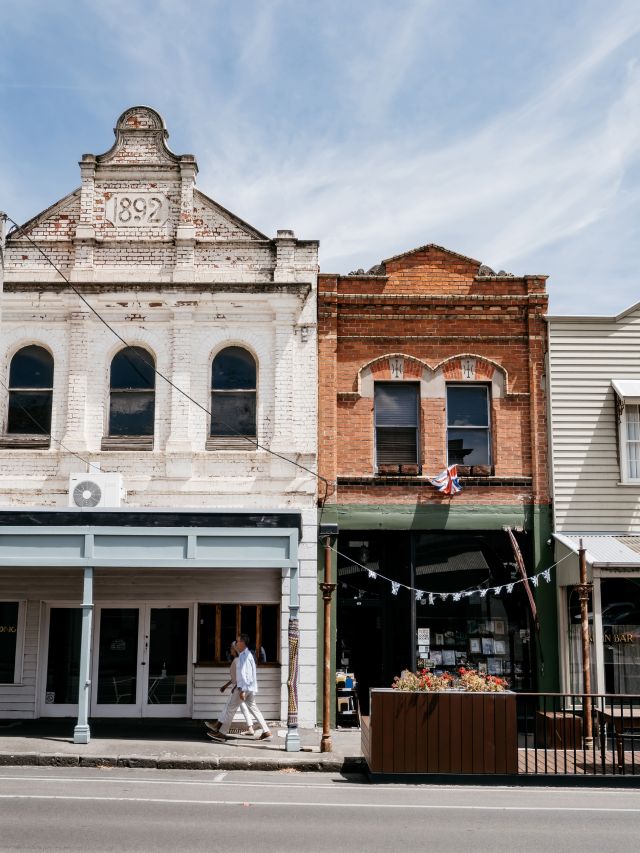
heritage buildings in Ballarat
Ballarat’s streets are lined with heritage buildings. (Image: Matt Dunne)

Jess’s father was an artisan bootmaker, or cordwainer. Now Jess and Krys and their small team of artisans continue the tradition, but with a modern spin. The company’s boots and shoes, made completely from scratch, are renowned for their quality and longevity. Wootten also craft shoes, bags, belts, leather aprons, wallets and more.

Cosy beanies, gloves, alpaca socks, “unbreakable" shoelaces and various other goods – many from local craftspeople and small-scale makers – fill the shop’s shelves. “We’re always happy to support a mate," says Jess. “People love to see the workshop and where things are made. Our clients care about quality and sustainability," Krys comments. The company slogan ‘Made for generations’ says it all.

Ruby Pilven’s ceramics at Ross Creek Gallery
Ruby Pilven’s ceramics at Ross Creek Gallery. (Image: Tara Moore)

For Ruby Pilven, craft is also in the DNA – both her parents were potters and with her latest porcelain ceramics, Ruby’s young daughter has been helping add colour to the glazes. “I grew up watching my parents in the workshop – I’ve always been doing ceramics," she says, although her Visual Arts degree was in printmaking. That printmaking training comes through particularly in the rich layering of pattern. Her audacious colour, unexpected shapes and sudden pops of 12-carat gold are contemporary, quirky – and joyful.

You can see Ruby’s handcrafted ceramics, and work by other local and regional artists, at Ross Creek Gallery, a light-filled space surrounded by serene bushland, across from the mudbrick house her parents built in the 1980s. A 10-minute drive from Ballarat, it’s a tangible link to the region’s well-established craft traditions.

How Ballarat is preserving the past
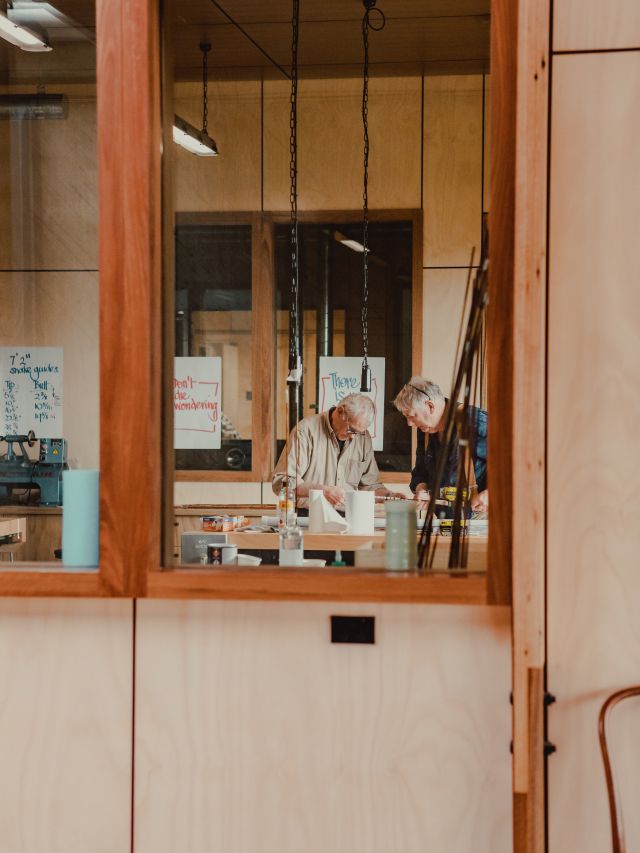
artisans making crafts at the Centre for Rare Arts and Forgotten Trades, Ballarat
The Centre for Rare Arts & Forgotten Trades holds workshops to preserve crafts and skills.

While tradition is ongoing, there’s a danger that many of these specific type of skills and knowledge are fading as an older generation passes on. Step forward the Centre for Rare Arts and Forgotten Trades.

The seven purpose-built studios occupy a fabulous modern building adjacent to Sovereign Hill, with state-of-the-art facilities, enormous windows and landscape views across to Warrenheip and Wadawurrung Country.
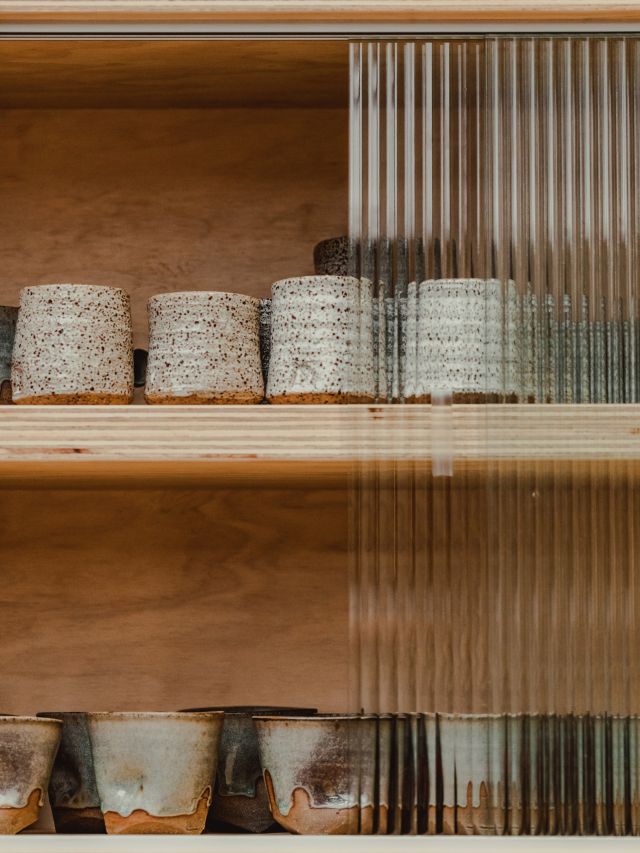
artisanal works at the Centre for Rare Arts and Forgotten Trades, Ballarat
Check out artisanal works at the Centre for Rare Arts and Forgotten Trades.

Practising artisans run hands-on workshops. Fancy making your own medieval armour? Or trying your hand at blacksmithing, spinning wool, plaiting leather, weaving cane or craft a knife? Book a class and learn how. “It’s about creating awareness and also sharing knowledge and skills before they are lost," explains Deborah Klein, the centre manager.

Need tips, more detail or itinerary ideas tailored to you? Ask AT.

AI Prompt

A city steeped in food and flavours
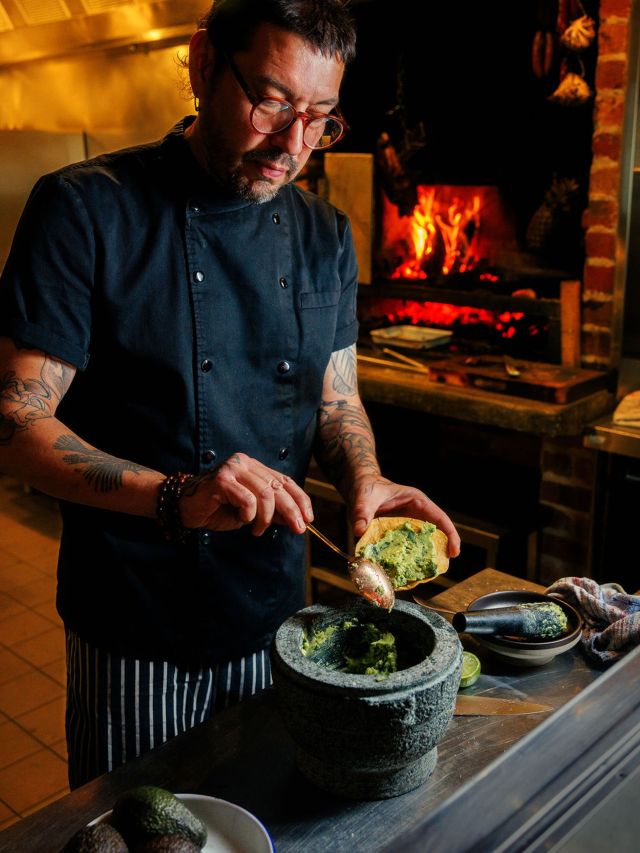
Chef José Fernandez preparing American streetfood at Pancho
Chef José Fernandez creates vibrant South American street food at Pancho. (Image: Ballarat Tourism)

One skill that hasn’t been lost is that of cooking. Ballarat’s burgeoning gastronomy scene runs the gamut from an artisan bakery (the atmospheric 1816 Bakehouse) to cool coffee shops, speakeasy cocktail bars and distilleries to fine-dining venues. But I’m still surprised to find Pancho, José Fernandez’s South American street food restaurant, serving fried cheese tequeños, fiery fish tacos, Argentinian grilled chicken.

The room is as lively as the food – a whirl of colour filled with gifted and thrifted paintings, photos, tchotchkes (trinkets), plants. There’s a Mexican abuela aesthetic going on here. Even before the music and mezcal kick in, it’s fun. Heads up on the drinks menu – an authentic selection of mezcal, tequila, South American wines and Mexican cerveza.
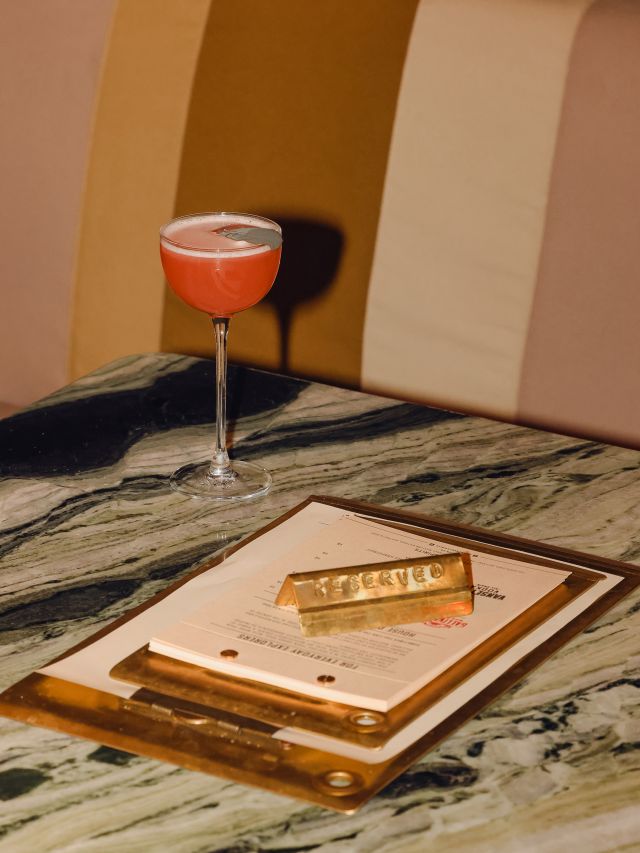
a cocktail at Itinerant Spirits, Ballarat
Enjoy a cocktail at Itinerant Spirits. (Image: Ballarat Tourism)

The spirit is willing, so after lunch we head towards the gold rush-era Ballarat train station and across the line to the old 1860s Goods Shed for Itinerant Spirits. At one end, a massive German copper still looms behind a wall of glass. The fit-out embraces deep olive-green tones, original bluestone walls, steamer trunks as coffee tables, heritage timber floors, oversized lamp shades and cognac-hued modernist leather seating.
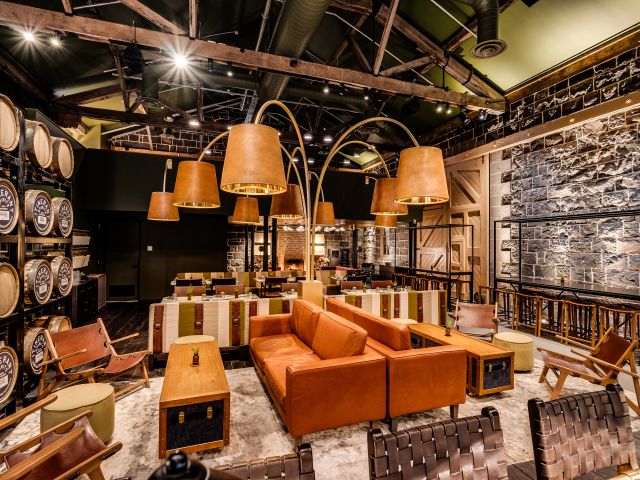
the Itinerant Spirits Distillery & Cocktail Bar, Ballarat
The distillery operates from an old goods shed. (Image: Ballarat Tourism)

Gallivanter Gin, Vansetter Vodka and Wayfarer Whiskey – the key spirits distilled – star at the bar. The spirits are crafted using grains from the Wimmera Mallee region, and native botanicals foraged in the Grampians. Seasonal cocktails are inspired by local people and places (I loved The Headland, inspired by Sovereign Hill and flavoured with old-fashioned raspberry drops). Sample the spirits, and join a cocktail masterclass or a distillery tour. It’s a seductive setting – you’ll likely find yourself ordering a charcuterie platter or pizza as the evening progresses.

The Ballarat stay combining history and luxury
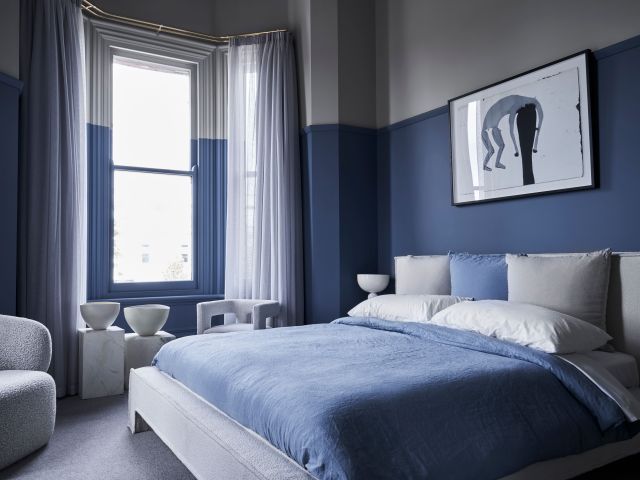
one of the rooms at Hotel Vera, Ballarat
The rooms at Hotel Vera have a contemporary style. (Image: Ballarat Tourism)

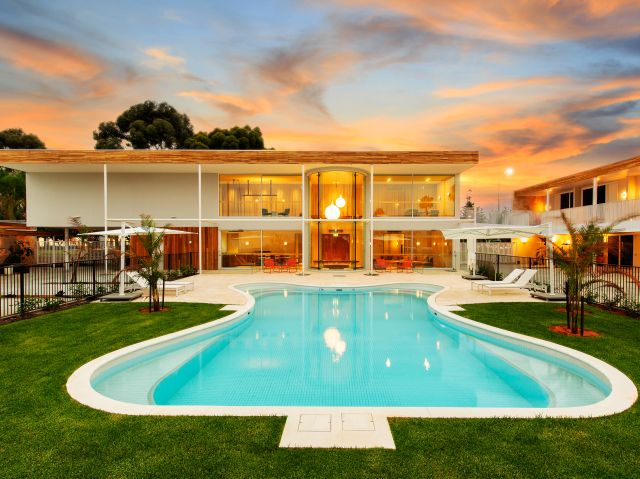
New lives for old buildings keeps history alive. Vera, Ballarat’s boutique five-star hotel, has taken it to the next level: it’s a palimpsest, a subtle layering of early 1900s and 1930s Art Deco architecture with a sleek new wing. There are seven spacious suites, each a dramatically different colour, with designer chairs, blissful bathrooms. High-end pottery and hand-picked artworks imbue the spaces with personality.

Vera’s intimate, award-winning restaurant, Babae, is subtly theatrical with sheer drapes and gallery lighting, its bespoke timber furniture and brass-edged marble bench setting the stage for food with a sharp regional focus. “We have goat’s cheese from a local supplier, handmade granola from local Vegas & Rose, truffles from nearby Black Cat Truffles, fresh food from our garden, and regional wines," says joint owner David Cook-Doulton.

Celebrating the local makers, bakers, growers and producers, and the master chefs who work their magic is all part of the rich tapestry that links Ballarat’s history to its vibrant present.

A traveller’s checklist

Getting there

It’s 90 minutes from Melbourne, either on the Western Freeway, or hop on a V/Line train from Southern Cross Station.

Weekly travel news, experiences
insider tips, offers, and more.

Staying there

Hotel Vera is a centrally located Art Deco boutique hotel. Consider Hotel Provincial, which feels like a sleek country house, but with its own restaurant, Lola.
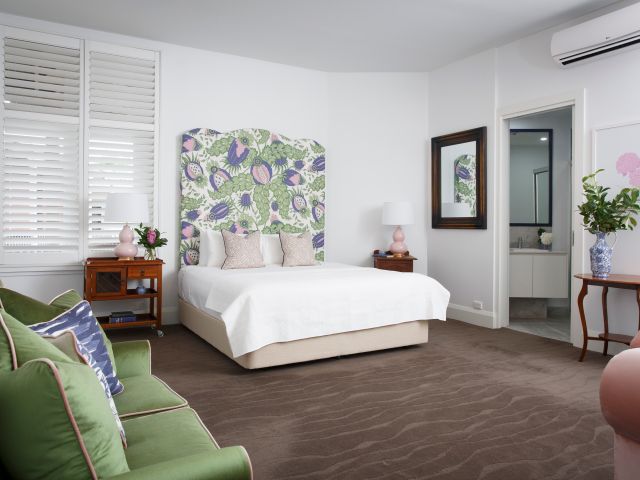
a contemporary room at Hotel Provincial, Ballarat
Hotel Provincial has country house vibes.

Eating there

dining at Mr Jones, Ballarat
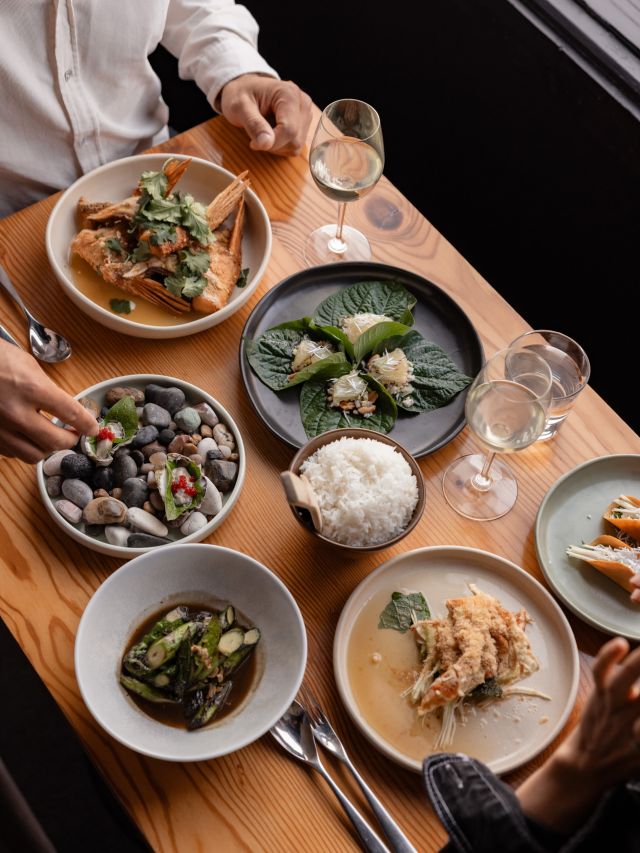
The table is set at Mr Jones. (Image: Tony Evans/ Visit Victoria)

Culinary whiz Damien Jones helms Chef’s Hat winner Mr Jones Dining with quiet assurance. His modern Asian food is deceptively simple with deep, intense flavours. Low-key, laid-back ambience, lovely staff, thoughtful wine list.

Cocktails are definitely a thing in Ballarat. Reynard (fox in French) is foxy indeed, a clubby space with top-notch cocktails and small bites. Grainery Lane is extravagantly OTT with its massive 1880s bar, myriad chandeliers, brass gin still, Asian-inspired food and lavish cocktails.
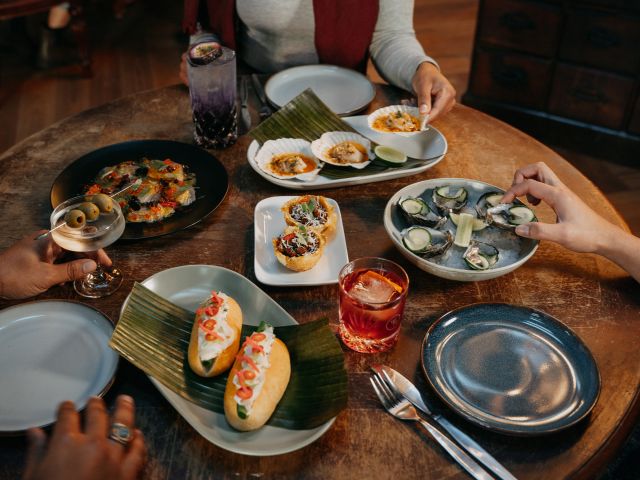
dining at Grainery Lane, Ballarat
Dining at Grainery Lane.

Playing there

a laneway filled with artworks in Ballarat
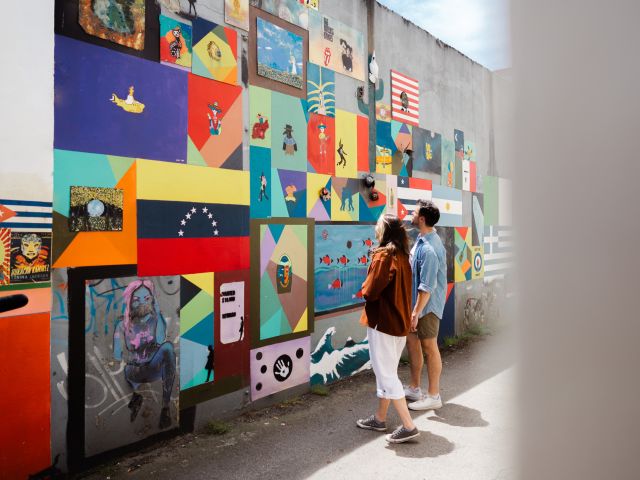
An artful laneway in the city. (Image: Ballarat Tourism)

Check out local design legend Travis Price’s wall murals in Hop Lane with its colourful canopy of brollies, or in Main Street. The Art Gallery of Ballarat’s off-site Backspace Gallery showcases early-career artists in a stylish, contemporary space. First Nations-owned and run Perridak Arts connects people to place, bringing together art and crafts in this gallery/shop.
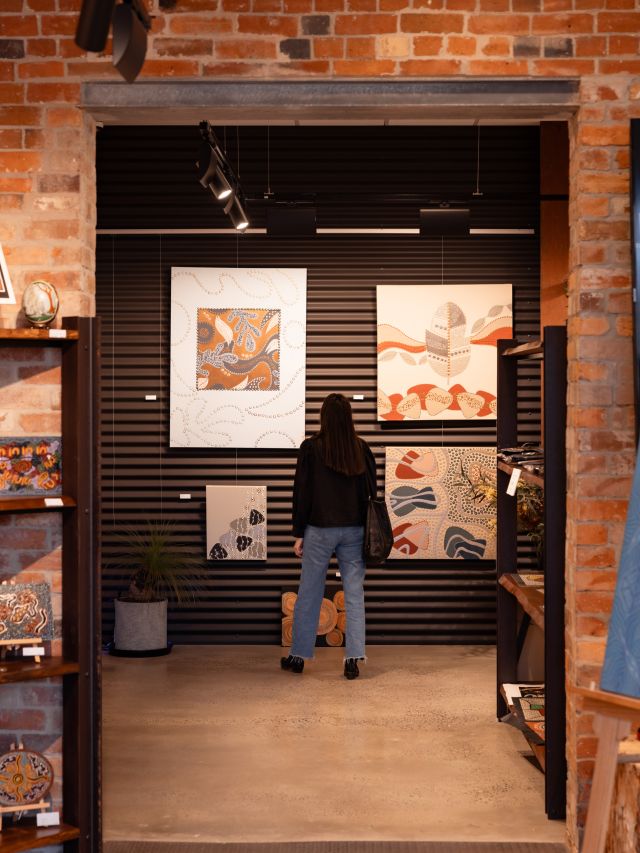
a woman admiring artworks at Perridak Arts Gallery
Perridak Arts is a First Nations-run gallery. (Image: Tony Evans)

The wineries of the Pyrenees are close at hand with their welcoming cellar doors and robust reds. Join a behind-the-scenes tour at the Centre for Gold Rush Collections.
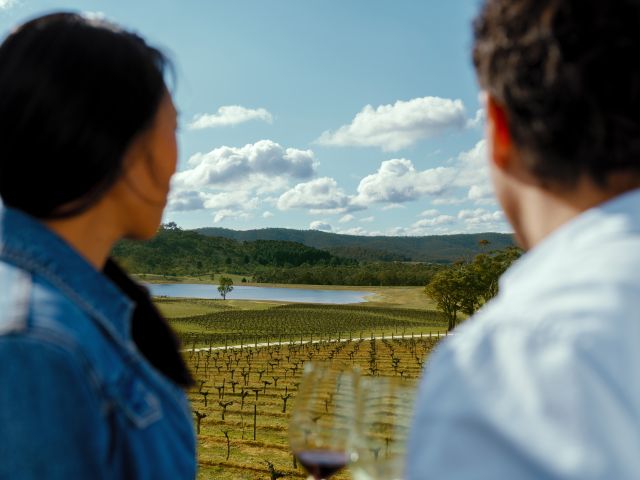
Dalwhinnie Wines in the Pyrenees
Dalwhinnie Wines in the Pyrenees.

Don’t forget the giant bluestone Kryal Castle, ‘the land of adventure’, for a little medieval magic, and not just for the kids: get ready for Highland-style feasting, jousting, even overnight stays.

Want to see more stories from Australian Traveller in your Google search results?

  1. Click here to set Australian Traveller as a preferred source.
  2. Tick the box next to "Australian Traveller". That's it.
Margaret Barca
Margaret is a Melbourne-based writer with serious case of wanderlust, who loves hotels – from high end to quirky off-grid retreats – cutting- edge design, a Campari soda and a banana lounge with an uninterrupted view of the pool. While she loves galleries, museums and the buzz of big cities, she is also often dreaming of Tulum, or the Aeolian Islands.
View profile and articles

This scenic Victorian region is the perfect antidote to city life

    Craig Tansley Craig Tansley

    Video credit: Visit Victoria/Tourism Australia

    The Grampians just might be the ultimate antidote for the metropolis, writes one returning Aussie ready to disconnect from the modern world and reconnect to the Great outdoors.

    There are no kangaroos back in Chicago: they’re all here in the Grampians/Gariwerd. In the heart of the Grampians National Park’s main gateway town, Halls Gap, pods of eastern greys are eating grass beside my parked rental car beneath the stars. Next morning, when I see the backyard of my rented villa on the edge of town for the first time, there are kangaroos feeding beside a slow-moving creek, lined with river red gums.

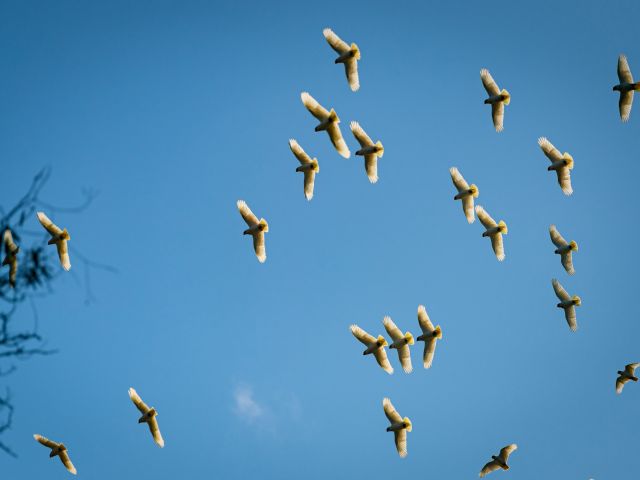
    Five hundred metres up the road, 50 or so of them are eating by the side of the road in a paddock. I pull over to watch and spot three emus. Yellow-tailed black cockatoos fly overhead towards the tall green mountains just beyond town.

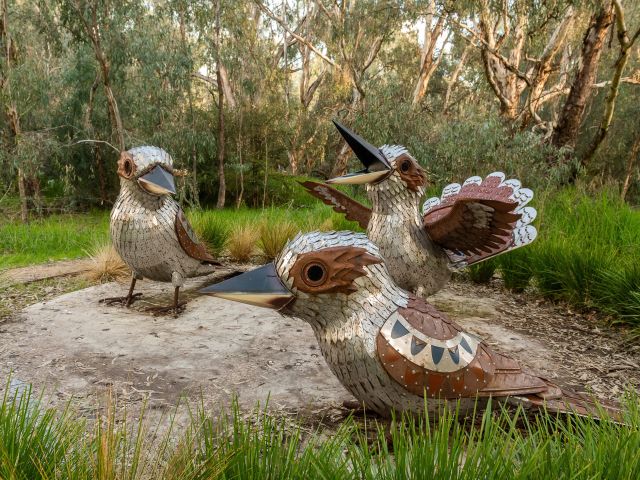
    ‘Kee-ow, keee-oww’… their calls fuse with the maniacal cackle of a kookaburra (or 10). Gawd, how I’ve missed the sound of them. Far above, a wedge-tailed eagle watches, and there you go: the ‘great birds of Australia’ trifecta, all half a kay from the town limits.

    Exchanging city chaos for country calm

    kangaroos near Halls Gap, Grampians National Park
    The park is renowned for its significant diversity of native fauna species. (Image: Visit Victoria/Robert Blackburn)

    I’ve come to the Grampians to disconnect, but the bush offers a connection of its own. This isn’t just any bush, mind you. The Grampians National Park is iconic for many reasons, mostly for its striking sandstone mountains – five ridges run north to south, with abrupt, orange slopes which tumble right into Halls Gap – and for the fact there’s 20,000 years of traditional rock art. Across these mountains there are more than 200 recorded sites to see, created by the Djab Wurrung, Jardwadjali and Gunditjmara peoples. It’s just like our outback… but three hours from Melbourne.

    I’ve come here for a chance at renewal after the chaos of my life in America’s third-largest city, Chicago, where I live for now, at the whim of a relative’s cancer journey. Flying into Melbourne’s airport, it only takes an hour’s drive to feel far away from any concept of suburbia. When I arrive in Halls Gap two hours later, the restaurant I’m eating at clears out entirely by 7:45pm; Chicago already feels a lifetime ago.

    The trails and treasures of the Grampians

    sunrise at Grampians National Park /Gariwerd
    Grampians National Park /Gariwerd covers almost 2000 square kilometres. (Image: Ben Savage)

    Though the national park covers almost 2000 square kilometres, its best-known landmarks are remarkably easy to access. From my carpark here, among the cockatoos and kangaroos on the fringe of Halls Gap, it only takes 60 seconds’ driving time before I’m winding my way up a steep road through rainforest, deep into the mountains.

    Then it’s five minutes more to a carpark that serves as a trailhead for a hike to one of the park’s best vantage points, The Pinnacles. I walk for an hour or so, reacquainting myself with the smells and the sounds of the Aussie bush, before I reach it: a sheer cliff’s edge lookout 500 metres up above Halls Gap.

    walking through a cave, Hollow Mountain
    Overlooking the vast Grampians landscape from Hollow Mountain. (Image: Robert Blackburn)

    There are hikes and there are lookouts and waterfalls all across this part of the park near town. Some are a short stroll from a carpark; others involve long, arduous hikes through forest. The longest is the Grampians Peaks Trail, Victoria’s newest and longest iconic walk, which runs 160 kilometres – the entire length of Grampians National Park.

    Local activities operator Absolute Outdoors shows me glimpses of the trail. The company’s owner, Adrian Manikas, says it’s the best walk he’s done in Australia. He says he’s worked in national parks across the world, but this was the one he wanted to bring his children up in.

    “There’s something about the Grampians,” he says, as he leads me up a path to where there’s wooden platforms for tents, beside a hut looking straight out across western Victoria from a kilometre up in the sky (these are part of the guided hiking options for the trail). “There are things out here that you won’t see anywhere else in Australia.” Last summer, 80 per cent of the park was damaged by bushfire, but Manikas shows me its regrowth, and tells me of the manic effort put in by volunteers from town – with firefighters from all over Australia – to help save Halls Gap.

    wildflowers in Grampians National Park
    Spot wildflowers. (Image: Visit Victoria)

    We drive back down to Halls Gap at dusk to abseil down a mountain under the stars, a few minutes’ walk off the main road into town. We have headlamps, but a full moon is enough to light my way down. It takes blind faith to walk backwards down a mountain into a black void, though the upside is I can’t see the extent of my descent.

    Grampians National Park at sunset
    Grampians National Park at sunset. (Image: Wine Australian)

    The stargazing is ruined by the moon, of course, but you should see how its glow lights up the orange of the sandstone, like in a theme park. When I’m done, I stand on a rocky plateau drinking hot chocolate and listening to the Aussie animals who prefer nighttime. I can see the streets of Halls Gap off in the distance on this Friday night. The restaurants may stay open until 8pm tonight.

    What else is on offer in The Grampians?

    a boat travelling along the Wimmera River inDimboola
    Travelling along the Wimmera River in Dimboola. (Image: Chris McConville)

    You’ll find all sorts of adventures out here – from rock climbing to canoeing to hiking – but there’s more to the Grampians than a couple of thousand square kilometres of trees and mountains. Halls Gap may be known to most people, but what of Pomonal, and Dimboola, and Horsham? Here in the shadow of those big sandstone mountains there are towns and communities most of us don’t know to visit.

    And who knew that the Grampians is home to Victoria’s most underrated wine region? My disconnection this morning comes not in a forest, but in the tasting rooms and winery restaurants of the district. Like Pomonal Estate, barely 10 minutes’ drive east of Halls Gap, where UK-born chef Dean Sibthorp prepares a locally caught barramundi with lentil, pumpkin and finger lime in a restaurant beside the vines at the base of the Grampians. Husband-and-wife team Pep and Adam Atchison tell me stories as they pour their prize wines (shiraz is the hero in these parts).

    dining at Pomonal Estate
    Dine in a restaurant beside vines at Pomonal Estate. (Image: Tourism Australia)

    Three minutes’ drive back down the road, long-time mates Hadyn Black and Darcy Naunton run an eclectic cellar door out of a corrugated iron shed, near downtown Pomonal. The Christmas before last, half the houses in Pomonal burnt down in a bushfire, but these locals are a resilient lot.

    The fires also didn’t stop the construction of the first art centre in Australia dedicated to environmental art in a nature-based precinct a little further down the road (that’s Wama – the National Centre for Environmental Arts), which opened in July. And some of the world’s oldest and rarest grape vines have survived 160 years at Best’s Wines, outside the heritage town of Great Western. There’s plantings here from the year 1868, and there’s wines stored in century-old barrels within 150-year-old tunnels beneath the tasting room. On the other side of town, Seppelt Wines’ roots go back to 1865. They’re both only a 30-minute drive from Halls Gap.

    Salingers of Great Western
    Great Western is a charming heritage town. (Image: Griffin Simm)

    There’s more to explore yet; I drive through tiny historic towns that barely make the map. Still part of the Grampians, they’re as pretty as the mountains behind them: full of late 19th-century/early 20th-century post offices, government offices and bank buildings, converted now to all manner of bric-a-brac stores and cafes.

    The Imaginarium is one, in quirky Dimboola, where I sleep in the manager’s residence of an old National Australia Bank after a gourmet dinner at the local golf club, run by noted chef and teacher, Cat Clarke – a pioneer of modern Indigenous Australian cooking. Just south, I spend an entire afternoon at a winery, Norton Estate Wines, set on rolling calico-coloured hills that make me think of Tuscany, chit-chatting with owners Chris and Sam Spence.

    Being here takes me back two decades, when I lived here for a time. It had all seemed as foreign as if I’d driven to another planet back then (from Sydney/Warrane), but there seemed something inherently and immediately good about this place, like I’d lived here before.

    And it’s the Australian small-town familiarity of the Grampians that offers me connection back to my own country. Even in the better-known Halls Gap, Liz from Kerrie’s Creations knows I like my lattes with soy milk and one sugar. And while I never do get the name of the lady at the local Ampol station, I sure know a lot about her life.

    Kookaburras on a tree
    Kookaburras are one of some 230 bird species. (Image: Darren Donlen)

    You can be a local here in a day; how good is that? In Chicago, I don’t even know who my neighbour is. Though each day at dusk – when the kangaroos gather outside my villa, and the kookaburras and the black cockatoos shout out loud before settling in to sleep – I prefer the quieter connection I get out there in the bush, beneath these orange mountains.

    A traveller’s checklist

    Staying there

    Sleep beside the wildlife on the edge of Halls Gap at Serenity.

    Playing there

    abseiling down Hollow Mountain
    Hollow Mountain is a popular abseiling site.

    Go abseiling under the stars or join a guided hike with Absolute Outdoors. Visit Wama, Australia’s first environmental art centre. Check out Dimboola’s eccentric Imaginarium.

    Eating there

    steak, naan bread and beer at Paper Scissors Rock in Halls Gap
    Paper Scissors Rock in Halls Gap serves a great steak on naan bread.

    Eat world-class cuisine at Pomonal Estate. Dine and stay at much-revered icon Royal Mail Hotel in Dunkeld. The ‘steak on naan’ at Halls Gap brewhouse Paper Scissors Rock, can’t be beat.

    Dunkeld Arboretum in Grampians National Park
    The serene Dunkeld Arboretum.

    For Halls Gap’s best breakfasts head to Livefast Cafe. Sip local wines at Great Western’s historic wineries, Best’s Wines, Seppelt Wines and Norton Estate Wines.

    two glasses of beer at Paper Scissors Rock in Halls Gap
    Sink a cold one at Paper Scissors Rock.