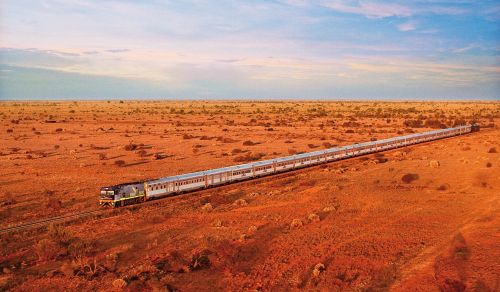
The Ghan versus Indian Pacific – which train to choo-choose?

hero media
The Ghan or Indian Pacific? It’s a tough choice between Australia’s two most epic rail holidays. No fear, Megan Arkinstall (The Ghan) and Steve Madgwick (Indian Pacific) will help you decide which train journey is best for you.

Which route is best for you?

The 2979-kilometre, 54-hour Ghan journey heads straight up the Red Centre from Adelaide to Darwin (and vice versa). It takes three days and two nights north-bound (four days and three nights south-bound).


The 65-hour Indian Pacific trip traverses the continent, from Sydney to Perth (via Adelaide), covering cross sections of many and varied regions including the famed Nullarbor Plain crossing. The 4352-kilometre journey takes three nights and four days.

What’s the physical difference between the two trains?

Besides the signage and livery, very little actually. Adelaide-based Great Southern Rail operates both The Ghan and Indian Pacific so the carriage and restaurant car interiors are identical (a carriage on The Ghan route may be on the Indian Pacific the following week).


The locomotives are different colours – Red for The Ghan, blue and yellow for the Indian Pacific – and external carriage signage is interchangeable.

The question of price – how much?

There are two classes on the trains: Gold and Platinum services. Indian Pacific fares (Sydney-Perth)  start at $2269 (Gold) and $3919 (Platinum). Adelaide to Darwin on The Ghan starts at $1789 (Gold) and $3319 (Platinum) – see Great Southern Rail for fares in the opposite direction.


These are one-way fares so you will need to allow for a return airfare and at least a night’s accommodation at the other end too.


Book six months in advance to get a 20 per cent discount off Gold class.

Where do they stop?

The Indian Pacific stops at Broken Hill in outback NSW (where you have the chance to travel out to the sandstone sculptures of the Living Desert Reserve) and includes either an evening’s side trip to the Barossa Valley (or a walking tour of Adelaide). There are two stops along the Nullarbor; a whistle-stop rest at the tiny town of Cook and a trackside feast at Rawlinna, an expansive and remote sheep station.


A stop-off at the quirky South Australian town of Coober Pedy (south-bound only) has recently been added to The Ghan’s classic Red Centre stop at Alice Springs (where you can go for a camel ride and experience some local indigenous culture) and Katherine, where there is an option for a boat cruise through Katherine Gorge.

The view: Which scenery will I prefer?

The Indian Pacific warms up through the windy, dramatic bush-scape of Sydney’s Blue Mountains and then flashes past tiny towns into the NSW outback. The view turns a little more fecund as the train heads past Adelaide (and near to the Barossa Valley) before the Nullarbor pancake begins. Greenery returns as you coast into Western Australia’s verdant Avon Valley, followed by the ’burbs of Perth.


On The Ghan (from Adelaide) rolling green hills flatten into wine country and farmland, then dry rugged terrain and the jagged peaks on the Flinders Ranges. The rural landscape out this way is marked by abandonment: farming apparatus, crumbling buildings.


Keep an eye out for the small Iron Man monument between Tarcoola and Alice Springs – which marks the one millionth concrete sleeper laid in the track – and Finke River, which depending on season can be just a dry sandy river bed lined by red river gums. By the time the train enters Katherine, lush green foliage intersperses the arid land and then you know you have arrived in the tropics.

Who are your fellow passengers?

Obviously every trip is different, but as a rule there will be more of an Australian contingent aboard the Indian Pacific whereas The Ghan attracts more foreign tourists attracted to the Red Centre outback experience and a taste of indigenous culture.

Gold versus platinum class

Besides cost, the biggest difference between the classes is space (a Platinum cabin is about twice the size of the Gold) – and size can matter over a several-day train journey. The bed in Platinum class can fold into a double whereas in Gold class you get two single fold-downs.


The extra premium of Platinum gets you a larger en-suite (the Gold class one is little snug), bigger windows, free transfers (within 50 kilometres of the terminal), more luggage allowance and access to the Platinum Club Car where there are more comprehensive wine and food options.

The bottom line – Battle of the Highlights

Megan: Alice Springs, a town of extraordinary character and intrinsically Australian landscapes of deep-red dirt and sage-green scrub. Here we enjoyed a trek at Pyndan Camel Tracks with the majestic MacDonnell Ranges as our backdrop.


Steve: Crossing the Nullarbor, indeed the whole country is a highlight in itself. A traditional trackside outback lamb roast dinner under the stars at Rawlinna, a seriously remote sheep station on the Nullarbor, will blow your senses – especially the tastebuds.

 

More details: For more information on The Ghan or the Indian Pacific see Great Southern Rail
hero media

Unforgettable First Peoples tours and experiences in Victoria

From ancient aquaculture systems to sacred rock art shelters, Victoria’s First Peoples cultural experiences offer a powerful connection to one of the world’s oldest living cultures – where every site, story and smoking ceremony invites a deeper understanding of the land beneath your feet. 

Victoria’s sweeping landscapes hold stories far older than any road map can trace – stories etched into stone, sung through generations and woven into every bend of river and rise of hill. From the lava flows of Budj Bim to the ancient middens of Moyjil/Point Ritchie and the volcanic crater of Tower Hill, the state is home to some of the most significant First Peoples cultural sites in Australia. These places, along with other immersive experiences, offer not only a window into a 60,000-year legacy, but a profound way of understanding Country itself. As more travellers seek connection over checklists, guided tours by Traditional Owners offer respectful, unforgettable insights into a living culture that continues to shape the land and the people who walk it. 

Budj Bim cultural landscape  

Budj Bim Cultural Landscape
Budj Bim Cultural Landscape is on Gunditjmara Country. (Image: Visit Victoria)

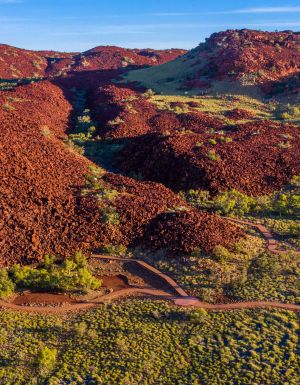
Venture beyond the surf and sand of the Great Ocean Road to discover a deeper story etched into the volcanic landscape. At Budj Bim , ancient aquaculture channels built by the Gunditjmara people to trap, store and harvest kooyang (short-finned eel) reveal one of the world’s oldest living cultures. While you’re in the area, head over to the state-of-the-art Tae Rak Aquaculture Centre, where you can observe the eels in a special tank, wander the shores of Tae Rak (Lake Condah), and enjoy a bite at the Bush Tucker Cafe. Also nearby is Tower Hill, a dormant volcano reborn as a wildlife reserve, offering trails through bushland teeming with emus and koalas. 

eel tank
The kooyang (eel) tank at Tae Rak. (Image: Visit Victoria)

Dumawul Kooyoora Walking Tour 

Dumawul walkingtour
Guests are guided through Kooyoora State Park on the Dumawul walking tour. (Image: Visit Victoria)

Step into a timeless landscape with Dumawul’s guided tour through Kooyoora State Park, around an hour’s drive west of Bendigo in north-central Victoria. Led by Djaara guides, this immersive half-day journey breathes life into Country, weaving together stories, bush tucker and ancient rock art. Known to the Dja Dja Wurrung people as Guyura – the ‘mountain of light’ – this dramatic granite range is rich with cultural and spiritual significance.  The adventure begins with a meet-up at the Bridgewater Hotel on the banks of the Loddon River, before guests are welcomed onto Country with a traditional Smoking Ceremony – a powerful ritual that honours ancestors and cleanses those who walk the land. From there, it’s a gentle wander through rugged outcrops and open bushland, with sweeping vistas unfolding at every turn. Along the way, guides share their knowledge of how the Dja Dja Wurrung peoples have cared for and adapted with this land for generations, offering a rare and moving window into an ancient way of life that continues to thrive today.  

Kooyoora walking tour
Knowledge of the Dja Dja Wurrung is shared on the trail. (Image: Visit Victoria)

Kingfisher Cruises  

Kingfisher Cruises
Cruising the Murray with Kingfisher Cruises. (Image: Visit Victoria)

Glide quietly through the Barmah-Millewa forest – the nation’s largest river red gum ecosystem – on a scenic journey along the Murray River and into the Barmah Lakes with Kingfisher Cruises . Led by passionate guides who share stories of the cultural significance of this ancient landscape, these cruises reveal the stories, totems and traditional knowledge of the Yorta Yorta people. As you navigate narrow waterways and spot native birds, you’ll gain a richer understanding of how First Peoples have lived in harmony with this floodplain for tens of thousands of years. It’s a gentle, immersive experience that leaves a lasting impression – one where every bend in the river carries echoes of culture, connection and Country.  

wawa biik 

 Taungurung leaders
Exploring Nagambie with Taungurung leaders. (Image: Visit Victoria)

Translating to ‘hello, Country’ in the language of the First Nations People and Custodians of the rivers and mountains of Taungurung Country in Central Victoria, wawa biik guides a range of authentic and deeply immersive experiences. Leaving from either Nagambie or Euroa, the tours are woven with ancient stories of the Taungurung, telling how a sustained connection and responsibility ensures the continued health of biik – benefitting the people, animals and plants that live in and around the Goulburn River. During the wawa Nagambie experience, guests participate in a Welcome Smoking Ceremony, and enjoy lunch and conversation with two Taungurung leaders as they cruise through the wetlands of tabilk-tabilk (place of many waterholes). The 4.5-hour tour begins at Tahbilk Winery, which is set in the wetlands of Nagambie on Taungurung Country and collaborates with Taungurung Elders to share knowledge of biik. 

Bataluk Cultural Trail  

Bataluk Trail
Cape Conran on the Bataluk Trail. (Image: Visit Victoria)

The Bataluk Cultural Trail winds through East Gippsland like a thread stitching past to present, tracing the deep connection between the Gunaikurnai people and their land. Starting at the Knob Reserve in Stratford, visitors walk among scarred trees and ancient stone tools once used for survival and ceremony. At the Den of Nargun near Mitchell River, the earth holds stories of women’s sacred spaces, cloaked in myth and legend. Further along, Legend Rock at Metung tells of greed and consequence, its surface etched with ancient lore. At Cape Conran, shell middens lie scattered like breadcrumbs of history – 10,000 years of gatherings, stories and saltwater songs still echoing in the wind.  

Healesville Sanctuary  

echidna at Healesville Sanctuary
Get up close with a resident echidna at Healesville Sanctuary. (Image: Visit Victoria)

Set on the historic grounds of Coranderrk Aboriginal Station, Healesville Sanctuary honours the Wurundjeri people of the Kulin Nation through immersive storytelling and connection to Country. Along Wurundjeri Walk, visitors are invited to reflect on the land’s rich First Peoples history, with native plants revealing their traditional uses. Wurundjeri Elder and educator Murrundindi shares culture in-person with the Wominjeka Aboriginal Cultural Experience every Sunday, and most days during Victorian school holidays. Murrundindi’s smoking ceremonies, storytelling and bush tucker knowledge reveal the sacred relationship between people, animals and the environment. Bird-lovers can’t miss the incredible Spirits of the Sky show featuring native birds daily at 12pm and 3pm. 

The Grampians 

Rock art at Bunjil Shelter in The Grampians
Rock art at Bunjil Shelter in The Grampians. (Image: Visit Victoria)

Known as Gariwerd to Traditional Owners, the Grampians is a place of immense cultural and spiritual significance. This rugged landscape holds more than 80 per cent of Victoria’s known First Peoples rock art, offering a powerful window into the region’s deep heritage. Visitors can respectfully explore five remarkable rock art sites: Billimina and Ngamadjidj in the Wartook Valley, Manja Shelter near Hamilton, Gulgurn Manja shelter near Laharum, and the Bunjil Shelter near Stawell, where the creator spirit is depicted. Each site tells a unique story of connection to Country, shared through ancient handprints, dancing figures and Dreaming narratives etched into stone.