9 ways to embrace slow travel for a truly refreshing break

hero media
Featuring everything from off-grid shacks and luxurious glamping spots to architecturally designed cabins, new book Life Unhurried calls for a slower, more sustainable way of living and travelling. Here, its authors share tips on how to really switch off.

Ready to take it slow? Congratulations! Booking a Slow Stay is the first step in the right direction when it comes to embracing slow travel. How you actually spend your time while there, however, can be a challenge – especially if you’re not used to sitting still or being untethered from technology for more than five minutes.

It might seem ludicrous but the truth is, doing nothing can actually be much harder than churning through a to-do list.

The trick is in being able to switch your focus to quality experiences over quantity, and allowing yourself to savour languid hours and minutes rather than just counting them. Slowing down is a choice, one you can make a little easier by using these tips while you’re away.

1. Switch off your phone (don’t just put it on silent)

Here’s a reality check: the average Aussie spends five and a half hours per day on their phone. We wake to our devices, we spend most of the day on them and then, come night-time, we still can’t stop scrolling (even as the TV blares in the background).

It’s tempting to have your phone with you at all times, but the act of switching it off and putting it out of sight allows spaciousness to return. Days feel longer. Itchy scrolling fingers eventually relax. And you can marvel at the sunset without worrying about capturing it for your Insta stories.

If you can’t bear to go a day without photos, take a camera, but ask yourself what that photo will take you away from experiencing right now, in the moment – the moment you travelled to experience.
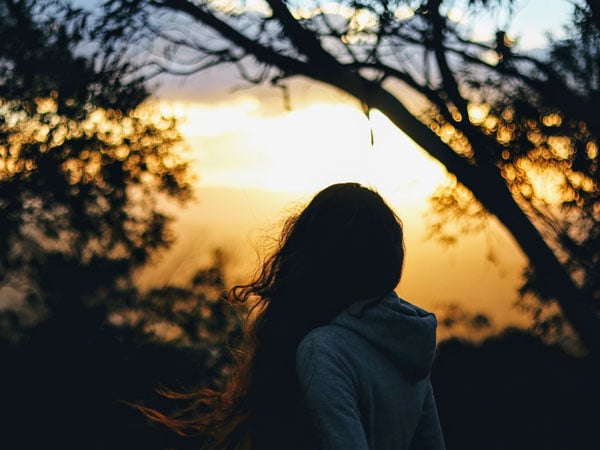
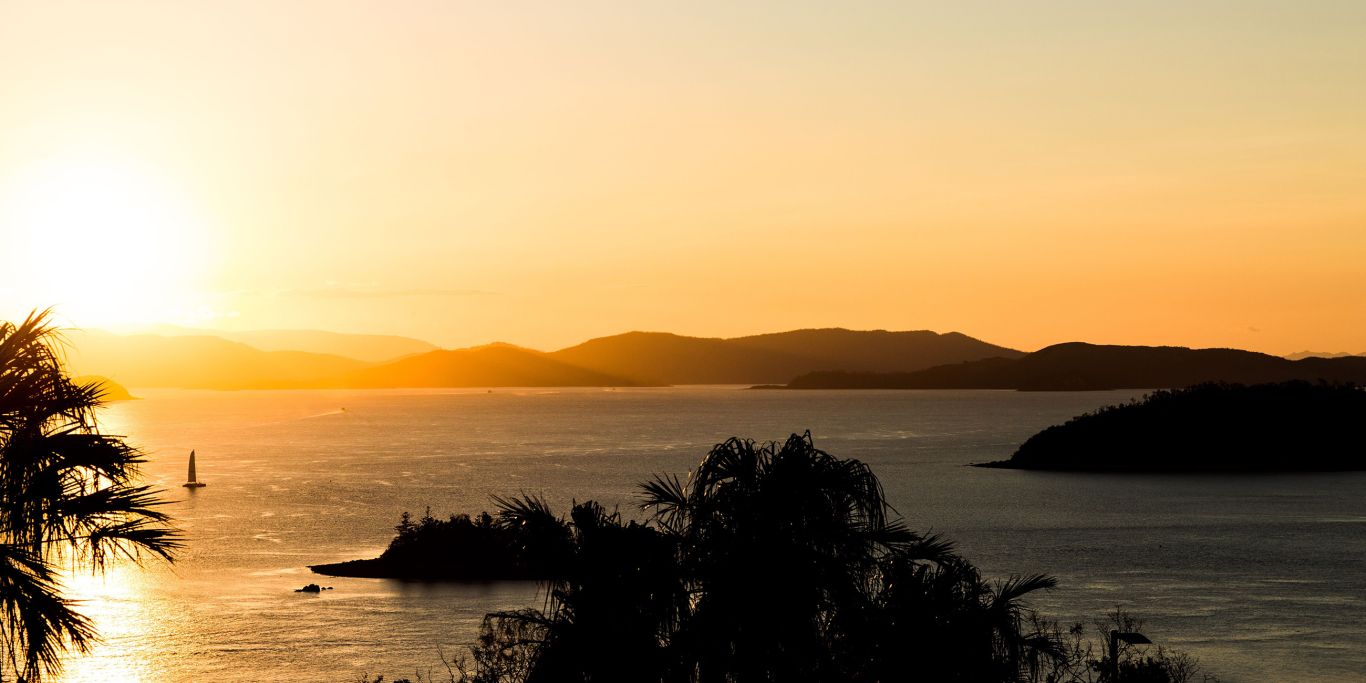
Woman looking at sunset through trees
Stare at a sunset instead of a screen.

2. Leave the laptop at home

No matter how innocent your intentions, if you take your laptop with you, you’re inviting work leakages. Checking emails can wreak havoc on your brainspace for the entire duration of your stay, even if you don’t reply.

Freaking out about the fact your shack doesn’t have wi-fi? Or a TV? Instead of feeling like you can’t possibly go without Netflix, think about what you might gain instead – deeper conversations, time to look up at the stars or into the fire, and delicious deep sleep.
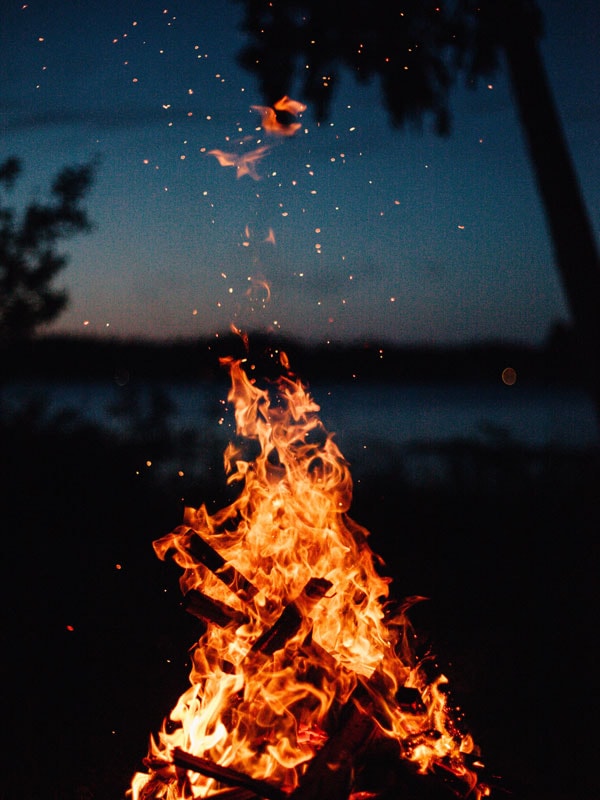
Campfire by lake at dusk
Forget the laptop and spend time soaking up your surroundings.

3. Pack that book you’ve been meaning to read

Even if you consider yourself an avid reader, in ‘real life’ it can be hard to find time to disappear into a book. Pack something you’re really keen to read or choose something from the shelves of your Slow Stay and remember the joy of reading without an agenda.

4. Set aside time to simply sit

It’s a daunting prospect, doing nothing. As the late spiritual leader Thich Nhat Hanh said in his book Planting Seeds, being content with not doing anything is a very deep practice: ‘We all have an energy within us that constantly pushes us to do this or that … If we aren’t doing something, we can’t stand it.’

Start small by sitting in compact spaces of time. Use that time to listen, look, observe. What do you notice? How does it make you feel? Questions will naturally bubble up. And you’ll be amazed at the answers you find in the emptiness.
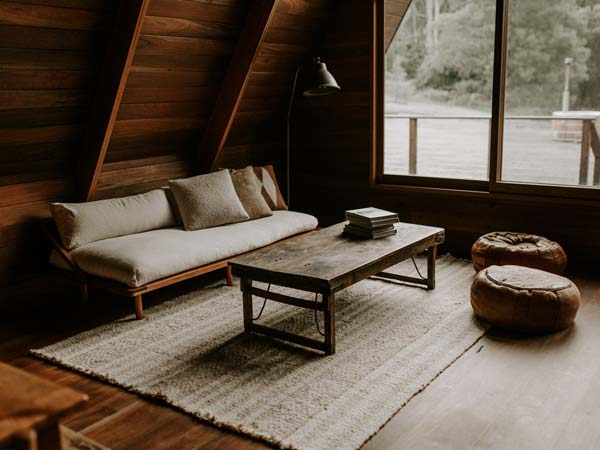
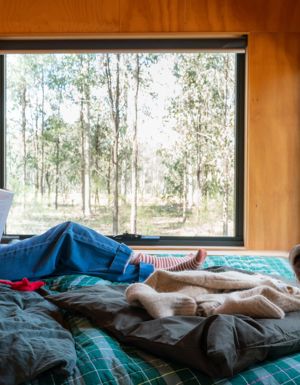
Inside the lounge area of Aframe Kangaroo Valley, NSW
Find a spot to get comfy and observe the outside world. (Image: Aframe Kangaroo Valley, NSW; Courtesy of Life Unhurried)

5. Cook and eat mindfully

When you’re tucked away in a cabin in the bush, you can’t simply head out for dinner or order delivery on your phone. But far from being a burden, the need to cook your own meals can serve as a wonderful gateway to practise mindfulness without realising it.
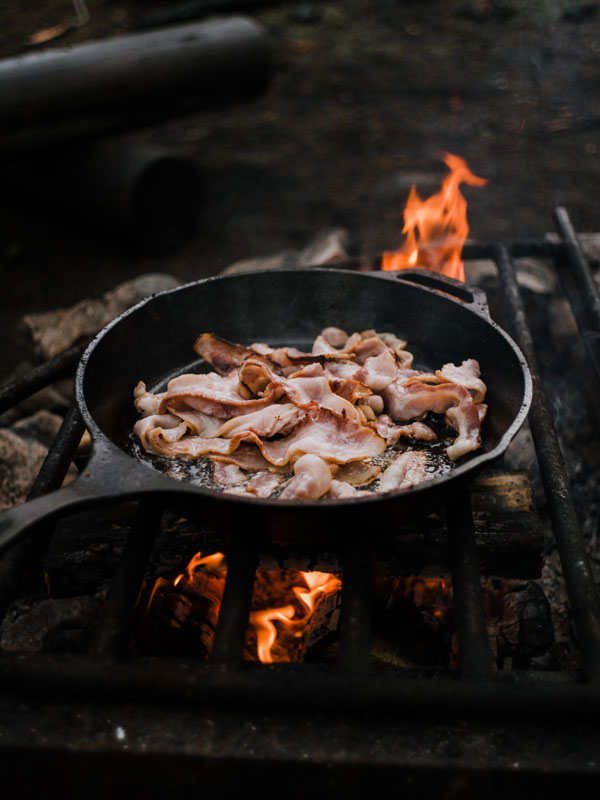
Cooking bacon over coals
Enjoy the ritual of cooking.

Notice the scent as you chop fresh herbs, admire the colour and shapes of the vegetables – perhaps you even picked them from the garden. Sip your wine, listen to music and prepare a simple meal. As you eat, sitting at the table, chew slowly, enjoy the conversation and take note of all your senses.
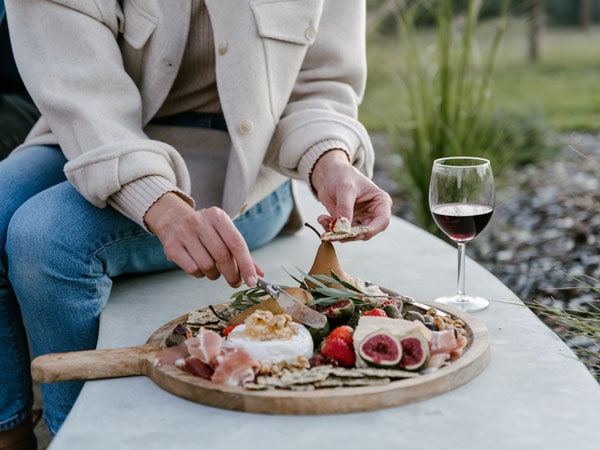
A cheese platter at Upland Farm Denmark WA
Embrace eating mindfully on holiday. (Image: Upland Farm, WA; Hannah Puechmarin)

6. Try forest bathing

The benefits of connecting with nature have been well documented. In Japan they call it shinrin-yoku – ‘forest bathing’ – and it has been proven to reduce blood pressure, improve concentration and memory, and even boost the immune system.

With many of us living in urban environments and spending so much time indoors, nature dosing while on holidays isn’t just an enjoyable way to spend your time and explore the local area, it’s preventative medicine.
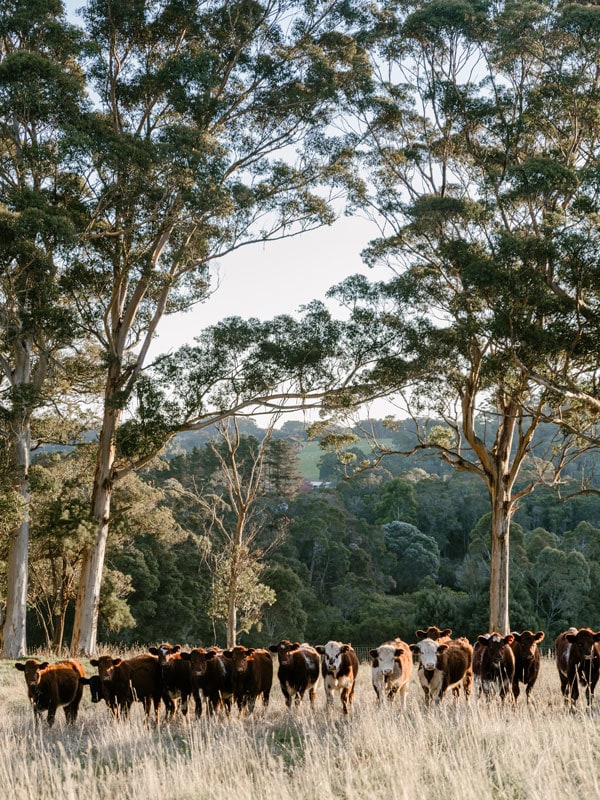
Cows at Upland Farm, WA; Hannah Puechmarin
Get outside and explore your surroundings. ((Image: Upland Farm, WA; Hannah Puechmarin)

7. Practise self-care

‘I’m too busy for self-care’ is the line you tell yourself back home. But here there is time. Stash self-care items in your duffel bag – sheet masks, bath salts, body oil – and enjoy the simple pleasure of anointing yourself. Meditate (try an app like Headspace if you’re new to the practice). Crack open a fresh journal and write a list of things you’re grateful for.
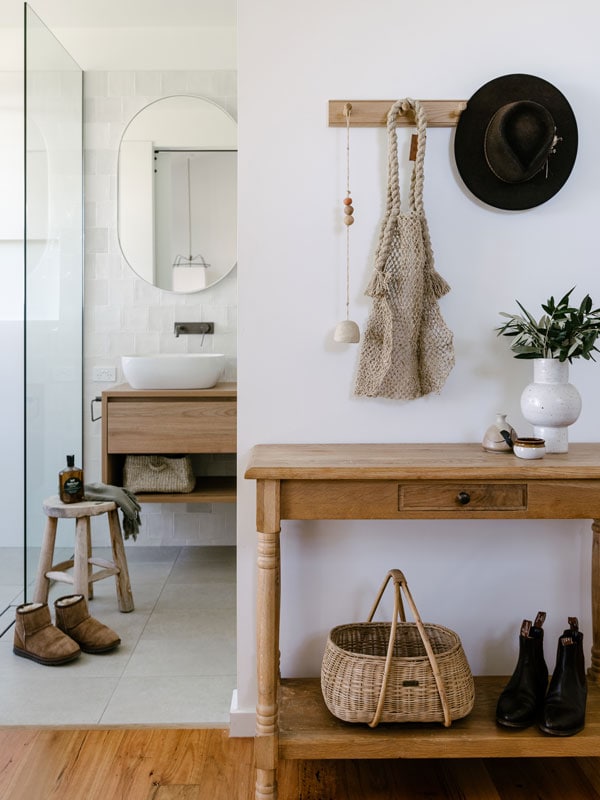
Inside the bathroom at Upland Farm, WA
Take the opportunity to practise self-care. (Image: Upland Farm, WA; Hannah Puechmarin)

8. Appreciate the rituals

There’s a wonderful Buddhist saying along the lines of, ‘Wash the dishes like you were giving the baby Buddha a bath’. It’s about embracing sacredness in the small acts we whiz through in everyday life.

Acts of ritual are embedded in many of the Slow Stays we’ve featured in Life Unhurried. Use the opportunities provided to relish in lighting a fire, playing a vinyl record, picking herbs from the garden, slathering homemade jam on your toast and slowly brewing your morning coffee or tea. In doing so, you can turn the mundane into some of the most memorable moments of the trip.
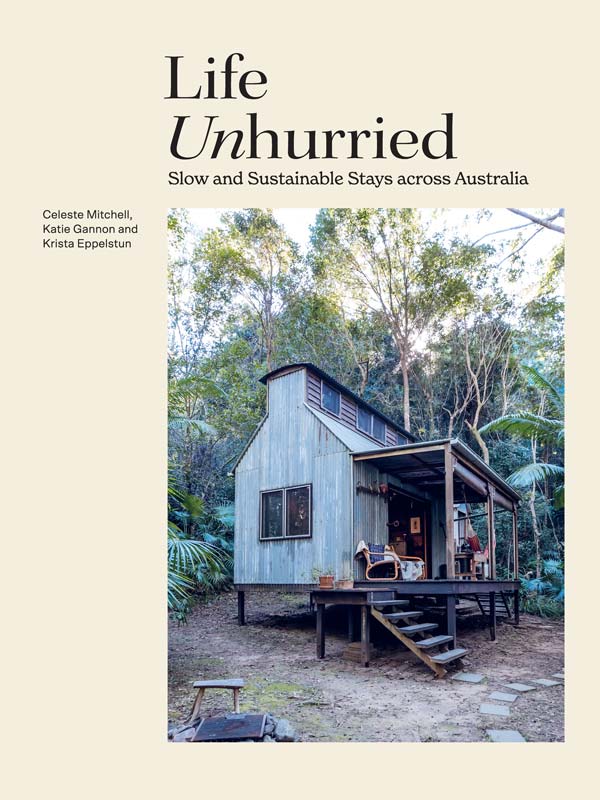
 Life Unhurried by Celeste Mitchell, Katie Gannon and Krista Eppelstun.
Find acts of ritual embedded in many of the Slow Stays featured in Life Unhurried by Celeste Mitchell, Katie Gannon and Krista Eppelstun.

9. Reflect when you return home

Don’t let life drag you back into hurriedness when you check out. Find space at home to reflect on your stay, journal about your experience and talk about it over coffee with friends.

In the same way that the anticipation of a holiday can be almost as intoxicating as the experience itself, so too can the reflection.


This is an edited extract from Life Unhurried by Celeste Mitchell, Katie Gannon and Krista Eppelstun published by Hardie Grant Explore. Available 7 September; RRP $50.

Celeste Mitchell
With visions of hosting Getaway, Celeste Mitchell graduated with a Bachelor of Journalism and entered the hard-hitting world of boy bands, puberty, and fashion, writing for magazines like Girlfriend, Total Girl, CLEO and TV Hits in the early noughties (there was a lot of Twilight references). Since switching gears to full-time freelancer in 2013, focused exclusively on travel, she’s criss-crossed the globe, opened a co-working space, lived in Mexico, and co-founded slow and sustainable site, Life Unhurried. The Sunshine Coast-based author (Life Unhurried & Ultimate Beaches Australia, Hardie Grant) and mum of two regularly pinches herself that she gets to explore new places and ask all the nosy questions she wants in the name of work.
See all articles
hero media

8 experiences to get the most out of Victoria’s Great Ocean Road

Beyond the winding bitumen and coastal views lies another side to Victoria’s most famous route.

There’s something hypnotic about this stretch of Victoria’s coast. Maybe it’s the way the road hugs the ocean so tightly, or how the cliffs catch the sun in colours you can’t name. Or, for local Victorians who drove this route as kids, maybe it’s the memories of winding through the impossibly tall trees as they seemingly guide you on your journey like wooden guardian angels. Most travellers know it for the 12 Apostles, but there are plenty of alternate experiences on the Great Ocean Road equally as worthy of your time.

So, next time you’re in that neck of the woods, park that car, stretch those legs and try these experiences.

1. Discover living culture at Budj Bim

Budj Bim Cultural Landscape Tourism
Walk across the world’s oldest known aquaculture system. (Image: Visit Victoria)

Breakaway Creek’s Budj Bim Cultural Landscape is a masterclass in educational storytelling. Join a guided tour with Budj Bim Cultural Landscape Tourism to walk across the world’s oldest known aquaculture system, where the Gunditjmara people built sophisticated eel traps and stone channels more than 6,000 years ago.

Budj Bim’s aquaculture system predates Egypt’s pyramids by roughly 2,000 years, making it one of the oldest examples of human engineering on Earth. If that’s not enough to get your history-loving family members involved in this road trip, we’re out of ideas.

2. Unwind in the hot springs at Warnambool

woman relaxing at Deep Blue Hot Springs
Let mineral-rich water heal you.

If your legs need a break after a long drive, Deep Blue Hot Springs is your remedy. The geothermal pools sit just metres from the coastline, filled with mineral-rich water that bubbles up from deep underground. Move between open-air baths, waterfall pools and quiet zones made for meditation.

The water in Deep Blue’s geothermal pools comes from an ancient aquifer nearly 850 metres below the Earth’s surface, which, in non-scientific terms, means it’s far more likely to have healing properties than the mineral water you’d find at the supermarket.

3. Take to the air at Princetown

12 Apostles Helicopters flight alternate experiences on the Great Ocean Road
See an icon from a different view.

You may have seen the Twelve Apostles from the trusty viewing platform, but a helicopter flight with 12 Apostles Helicopters shows you just how sprawling and rugged this coastline really is.

The trip covers everything from Port Campbell to London Bridge (not to be confused with the UK’s own), giving you a rare chance to watch waves carving the limestone cliffs from above. It’s worth noting that the limestone stacks of the Twelve Apostles are said to erode by roughly two centimetres each year, so the longer you leave it, the less of the Apostles you’ll see.

4. Step into the past at Flagstaff Hill

Flagstaff Hill Maritime Village and Museum
Visit a time of yore.

Continue the tour through Warnambool at Flagstaff Hill Maritime Village and Museum , a recreated 19th-century port town. Hear stories from the days when shipwrecks were as common as seagulls, with an astounding 180 ships believed to have sunk along the Shipwreck Coast in less than five years.

The night show, complete with lights, sound, and sea spray, brings the coastline’s most dramatic stories to life.

If you’re staying the night, Simon’s Waterfront offers relaxed dining with fresh local seafood and oceanfront views. Order the catch of the day and toast to the sailors who never made it ashore.

5. Learn to surf in Torquay, Lorne, or Anglesea

kid having a lesson with Go Ride A Wave
Learn how to hang 10. (Image: Visit Victoria)

Whether you’ve surfed before or can barely stand on a board, Go Ride A Wave will have you upright in no time. Torquay’s calm beaches are ideal for first-timers, while Lorne and Anglesea bring a bit more energy for those unafraid to get dunked.

Bells Beach, just down the road from Torquay, has even hosted the world’s longest-running professional surfing competition since 1962. So, for those eager to have a gander at pros using surfboards like they’re an additional appendage, the competition usually runs sometime in autumn.

6. Tackle the trails in Forrest

Barwon Flow Trails Otways Flow MTB
Hire a bike and explore MTB trails through the Otways.

Forrest is a haven for mountain bikers thanks to an expansive network of trails through stunning natural scenery. The Forrest trail network has almost 100 kilometres of singletrack across 36 trails, so there’s something for every level of rider. That’s including more than 60 kilometres of purpose-built mountain bike trails winding through the Otways’ dense forest. Cycle through ancient myrtle beech trees and towering tree ferns, with smaller ferns and soft mosses forming a carpet at your feet.

Hire a bike from Forrest MTB Hire and take your pick from easy, scenic rides to more challenging singletracks, such as Red Carpet or Rollercoaster.

7. See wildlife up close in Apollo Bay

bush rat on Wildlife Wonders tour
Get help spotting the locals. (Image: Doug Gimsey)

If spotting koalas and kangaroos in the wild feels like winning the lottery, Wildlife Wonders gives you guaranteed sightings without cages or crowds. Every visit to the sanctuary helps fund the Conservation Ecology Centre which supports endangered species across the Otways, so your business is appreciated by humans and animals alike.

The guided walk takes you through protected Otways habitat where you might spot potoroos (or joey lookalikes for those unfamiliar with a potoroo), wallabies, and sleepy koalas lounging in the trees.

8. Visit the Cape Otway Lightstation

Cape Otway Lightstation
Delve into the tales of Cape Otway Lightstation.

Towering over the sea on a cliff above the Southern Ocean, Cape Otway Lightstation has been guiding ships since 1848. Before the lighthouse was built, Cape Otway was one of the most treacherous points on the Victorian coast, with dozens of shipwrecks occurring in its surrounding waters. Pick the right day, and you may bump into a local willing to tell you about the wreck of Eric the Red .

While at the Cape Otway Lightstation, explore the keeper’s quarters, walk the coastal trails, and take in views that only stop short at the horizon.

And no, contrary to popular belief, the Round the Twist lighthouse is actually located in Split Point, just shy of two hours in the direction of Melbourne. Nothing’s stopping you from embarking on a lighthouse crawl, though.

Plan your next no-stone-unturned journey along this iconic Aussie road at visitgreatoceanroad.org.au.