In a world of increasing franchised flops and cookie-cutter hotels there are interesting and infinitely Instagrammable accommodation alternatives out there. Here are the strangest, yet strangely good places to stay In Australia. Ever considered staying…
1. On a pole
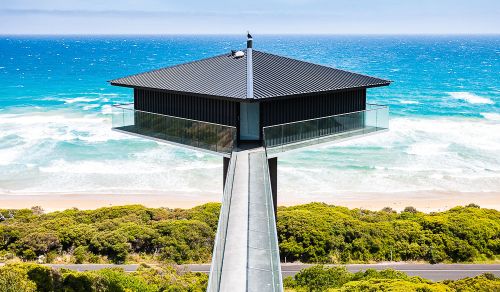
The Pole House has been one of the most photographed holiday homes in Australia since it was built back in 1978. Since then, the sleek Great Ocean Road one-bedder has had an extensive makeover with retractable floor-to-ceiling glass walls and a glass balcony balustrade added ensuring a view down at least Lorne on a clear day.
Life on top of the great pole, 40 metres above Fairhaven Beach, is warm all year round, thanks to a floating fireplace, the star of its seriously sexy interior.
2. In a cave
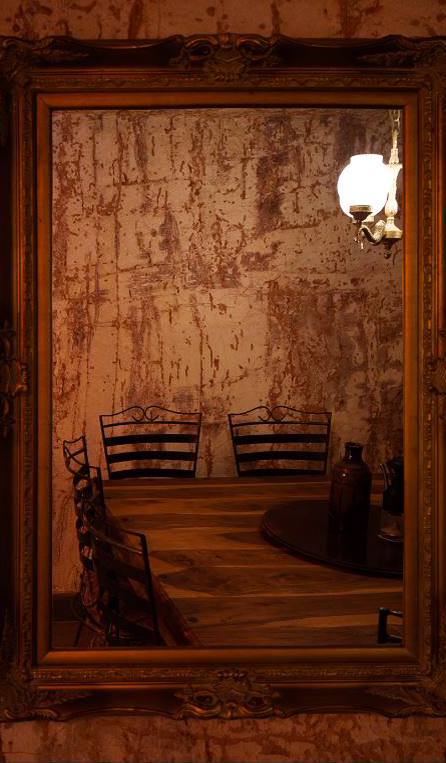
When summer temperatures reach 50 degrees in the Opal-mining, Wild-West town Coober Pedy, don’t dare touch that air-con. There’s a broad range of partially or fully underground dug-outs (old/extended mines or custom dug) on offer that hover around 23 degrees all year around.
The town’s ‘shotel’, The Desert Cave , has 4-star Underground Rooms that aren’t as close-in-around-you as you might think, thanks to effective ventilation. For the claustrophobics in your group, there are some equivalent above-ground digs.
Stays such as the well-appointed and homely furnished Jam B&B give you more of an idea of how locals live, with self-contained 1, 2 and studio rooms available along with a generous shaded communal area complete with cactus nursery and BBQ.
3. In a lighthouse
You’d be surprised just how many people want to live out a lighthouse-keeper fantasy. Meeting this demand are an unexpected number of revamped lighthouses that have popped up as coastal accommodation options.
Perhaps the most delightfully remote of all is Cape Borda lighthouse on Kangaroo Island’s south-west coast. The charming self-contained stone cabin offers solitude and unparalleled wild Southern Ocean vistas.
More roomy is the windswept Montague Island lighthouse keepers’ cottage, nine kilometres off the NSW South Coast town of Narooma. Included are five bedrooms (circa 1881) and your (the island’s) own penguin colony.
More… 5 of Australia’s brightest lighthouse stays.
4. In a tree house
This interpretation of the word ‘tree house’ won’t necessarily tally with your childhood memories of a few pieces of wood dodgily nailed to a backyard tree.
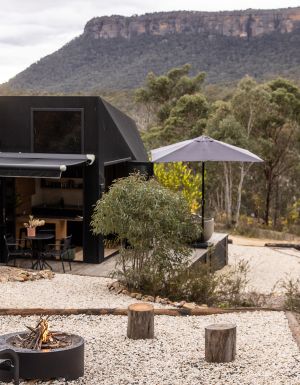
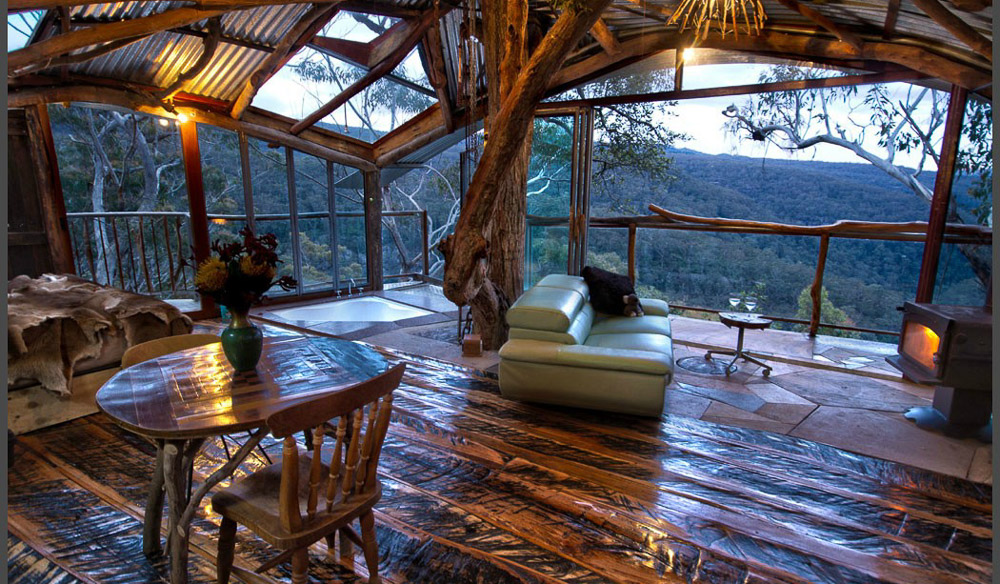
We love the luxe Love Cabins treehouse above Wollemi in the New South Wales Hunter Valley for its fireplace, its kitchen and wall-to floor windows that reveal a beautifully bushy valley view below.
Plenty of exposed wood and rough-hewn floor boards and rafters totally add to the ‘living in a tree’ vibe. Also on the 600-acre property, are the mysteriously named ‘enchanted cave’ and ‘love tee-pee’.
5. In the Air(stream)
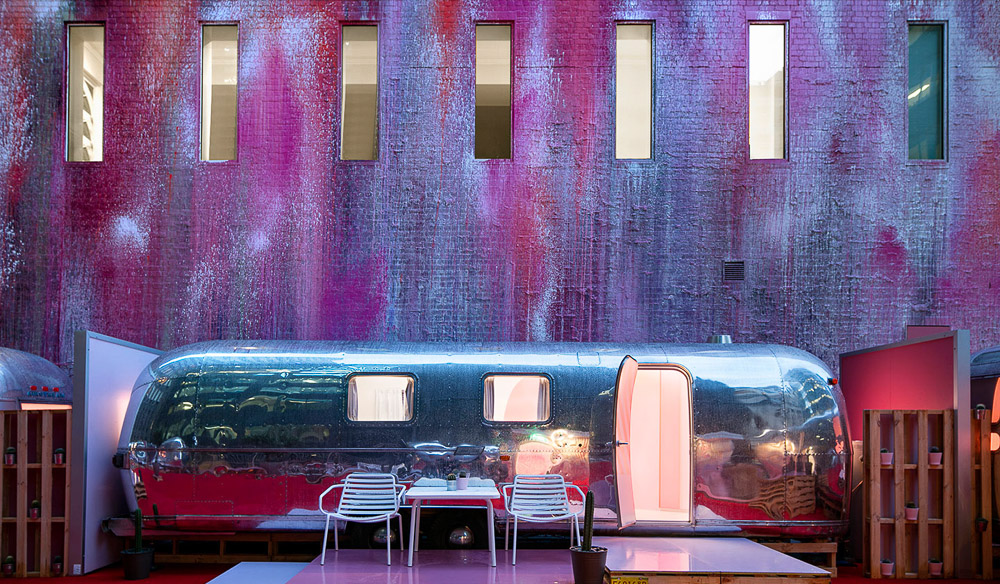
Not to be out-Melbourned, Notel sees Jerome’s tents and raises them five sexy, sleek, super-shiny silver Airstreams in a kitschy trailer park that started life as a car park.
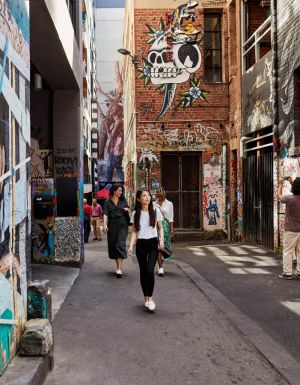
Each 31-foot caravan is surrounded by its own recycled pallet deck, with obligatory single cactus, overlooking abstract art splashed across high walls.
The interior’s ultra-clean white and coral pink lines are interrupted only for a queen-sized bed (with Aura linen) and minimalist but cool accouterments like well-stocked bar fridge and spacious, Malin-and-Goetz stocked ensuite.
You may appreciate the open-air spa after a night out in nearby Flinders Lane too.
7. With the animals
As a kid you must have dreamed of roaming around a zoo at night. Well, someone was listening, given the number of places offering sleepovers now. And we’re not just talking sleeping bags on the floor either.
Canberra’s Jamala Wildlife Lodge gives you in-the-face experience with cheetahs and lions from your room – separated by toughened glass, of course. Its 7-roomed African-themed uShaka Lodge comes complete with its own pool, spa, tropical gardens and a room-length shark tank.
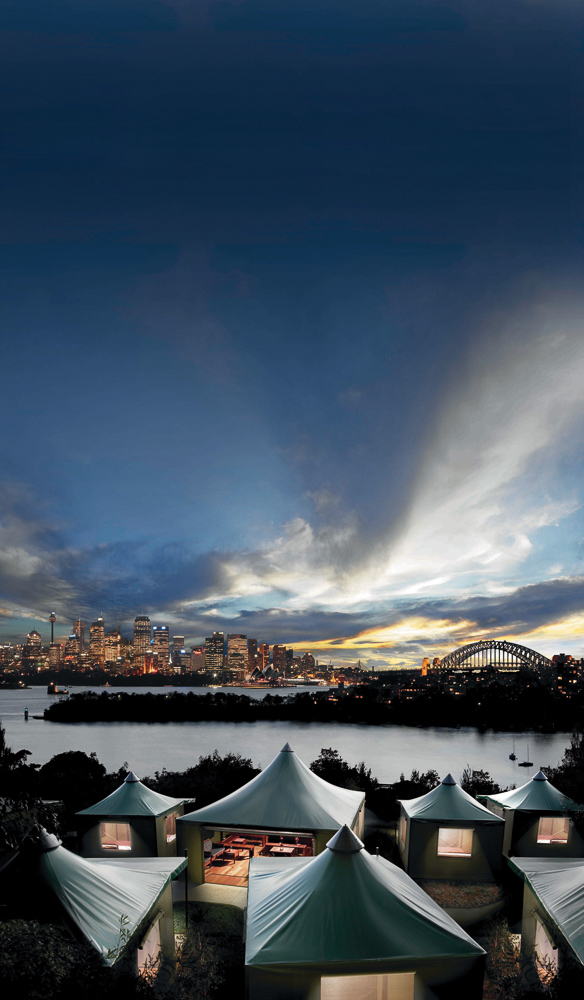
Sydney’s Taronga Zoo claims perhaps the best city glamping views going currently; the harbour and cityscape unfurling before you (from some of the tents). It’s not quite five-star but certainly family-friendly; with wooden floors and comfy beds. The after-hours animal activities will be the fam’s fave.
More… The ‘Big 5’ zoo sleepovers – roar and snores you can’t ignore
8. On a slow (or no-go) train
Do you prefer you train sleepover moving or still? For the former, three nights on the Nullarbor-crossing Indian Pacific or a couple on The Ghan up the Red Centre should sate you.
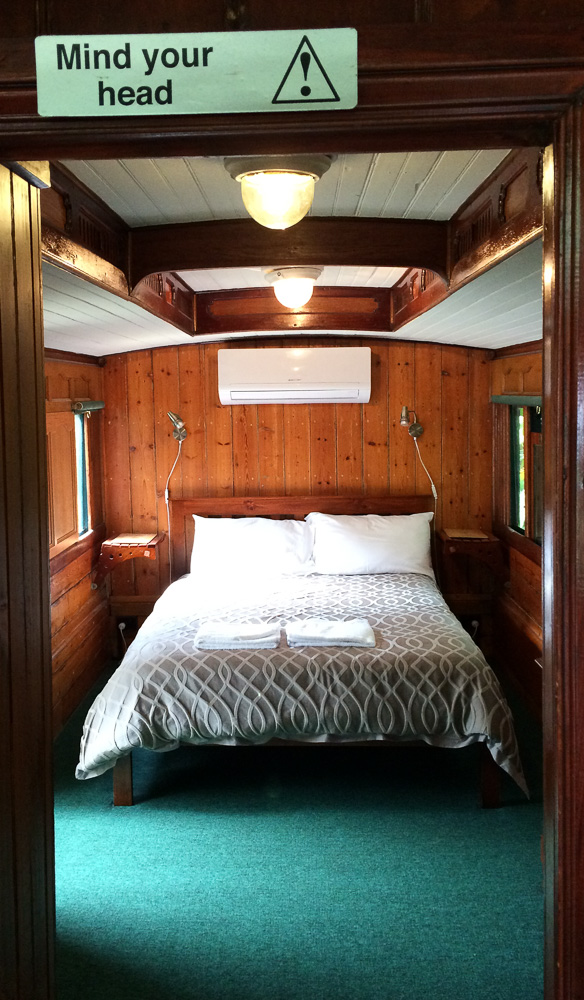
For those who prefer to reflect on the Golden Age of Rail sitting still, check into the Glass House Mountains Eco Lodge’s cosy Victorian rail carriage. Its dark-stained wood and long-gone-green carpet, and separate library carriage, takes you steaming back to the age, while a practical kitchen, modern bathroom and air conditioning keeps you rooted in the 21st Century.
There are plenty of other options around the country; you can stay in a 1917 Caboose at Hanging Rock in Victoria’s High Country, which is set on five acres, perfect for unplugging.
9. On a paddle steamer
If archetypal Australian experiences are your thing, then a wood-fired paddle steamer trip down the Murray River will get your wheels turning. The proud PS Emmylou cruises down river from Echuca with overnight space for 18 guests.
While she looks very 19th century, Emmylou was actually built in the 1980s with most of the creature comforts you’d expect in a retro-steamer. Disembarking for a Murray-side campfire among the redgums is a highlight.
10. In a castle
It’s time to get medieval? Well, at least sleep in a medieval theme park. The kids will lose their stuff at Kryal Castle, a few kilometres east of Ballarat.
Naturally there are a number of royal-named rooms including queen and king suites, all reasonably self-contained with free wi-fi. There’s a medieval village within the castle’s walls, but our bet is the jousting tournaments and sword battle between the knights will keep the young ones’ attention the most.