We are thrilled to introduce you to the brand-new Australian Traveller website.
We have been quietly toiling away behind the scenes since the start of 2025 to bring you a new website. But we haven’t just given it a facelift – we’ve completely reimagined the user experience to make planning your next holiday in Australia easier than ever before.
Ask AT – 20 years of travel expertise at your fingertips
At the heart of the new user experience is Ask AT – an Australian owned, human-powered AI travel tool that will plan your ultimate domestic Aussie holiday for you. Now you can search more than 150 detailed Australian destination guides to give you personalised recommendations in seconds. You can read more about Ask AT here, including how to use it, why we think it is a world first, why it’s different from other AI tools, including why you can trust it.
What else is new?
When we started this journey, you – the reader – were the focus. We wanted to build you a website that allows you to consume expert, tried and tested travel content any way you want. Here is a taste of what else you can find…
Safari in SA? Yep. But not South Africa… South Australia. Get up close with giraffes, rhinos, cheetahs and more – all right here in Australia.
Need tips, more detail or itinerary ideas tailored to you? Ask AT.
AI Prompt
New user features
It’s mobile-first, so searching AustralianTraveller.com on the go will be incredibly easy – and fast!
We’ve simplified the navigation – you can now search the website via Ask AT or the more traditional drop-down menu.
You can explore by experience, destination, accommodation or even “surprise me" if you just want to be inspired.
Australian Traveller’s annual Top 100 lists are now easier to read, with a dedicated index page for all previous lists as well as improved navigation through the 100.
We continue to spotlight our award-winning travel magazine, Australian Traveller, with a dedicated section on the homepage showcasing the latest edition and new travel narratives.
You can manage your subscriptions online – a dedicated spot to easily sign in to your account and manage your print and digital subscriptions.
Weekly travel news, experiences insider tips, offers, and more.
The dune viewing area at Kata Tjuta in the Northern Territory. (Image: Dom Nuttall & Jesso Coleman /Tourism NT)
Spot whales in Queensland's Hervey Bay in mid-July to late October. (Image: Visit Fraser Coast)
The Pink Cliffs Geological Reserve in Heathcote, Victoria. (Image: Visit Victoria)
Iconic views of the Blue Mountains, New South Wales. (Image: Filippo Rivetti Photography)
Witness the Bungle Bungle Range in all its glory in Western Australia. (Image: Tourism Western Australia)
Drink in views of Tasmania's Wineglass Bay. (Image: Tourism Tasmania/Scott Sporleder)
The Sugarloaf, a fascinating geological formation, in South Australia. (Image: Cale Matthews/South Australian Tourism Commission)
The Members’ Hall at the centre of Parliament House in Canberra. (Image: Visit Canberra/Lean Timms)
We will be progressively rolling out a series of new columns. The first will be Hotel Addict, a monthly column profiling the best hotels in Australia, written by our Evergreen Editor Rachael Thompson – a self-confessed hotel addict (she’s already stayed at 20 hotels in Sydney in the past 12 months).
You’ll also have continued access to the same great Australia-wide travel content, written by the team at Australian Travellerand expert contributorson more than 150+ destinations across Australia. If you haven’t already, join our travel community of over 90,000 subscribers and get the latest stories direct to your inbox weekly. Find the link in our footer to sign up.
Enjoy planning your next Aussie getaway on the new and improved AustralianTraveller.com. We hope you love it as much as we do.
Katie Carlin,Head of Content, Australian Traveller Media
Want to see more stories from Australian Traveller in your Google search results?
Tick the box next to "Australian Traveller". That's it.
Katie Carlin is Australian Traveller's Head of Content and when she’s not travelling or behind her computer, she’s hosting a dinner party (likely cooking an Alison Roman recipe), at brunch, working on extending her running k’s, or has her nose buried in a book.
She joined Australian Traveller in 2018 and is responsible for leading the editorial team across print, digital, social, email and native content. Her job is to make sure we create content that connects readers to incredible experiences in Australia and beyond. In addition to sharing her expertise on travel through industry speaking engagements, Katie appears onToday, A Current Affair and various radio segments.
With a BA in Communications majoring in Journalism and a career that has spanned roles at Fairfax Media and Are Media writing for titles such as The Sydney Morning Herald, The Age, and various lifestyle brands, she brings a wealth of experience to her role. Her most impactful trip to date has been swimming with whale sharks on Ningaloo Reef. For her next trip she is longing to experience the romance of train travel – hopefully on The Ghan or Indian Pacific.
From coast to mountains, hiking in Gippsland offers a stunning array of landscapes, with trails that take you deep into the region’s heritage.
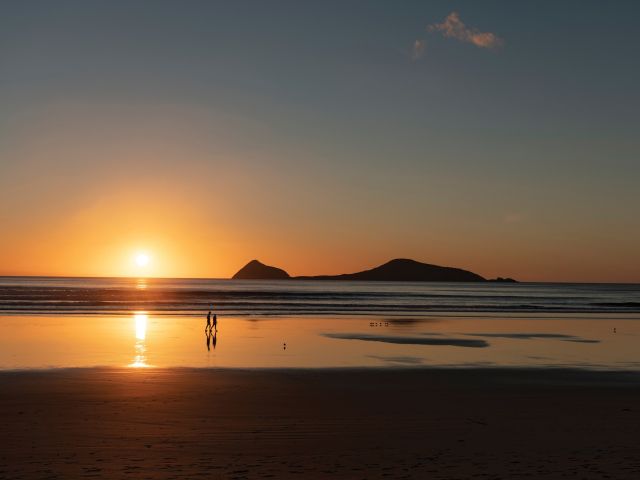
I step out onto the sand and it cries out underfoot. Kweek! I take another step and there’s another little yelp. Screet! Picking up the pace, the sounds follow me like my shadow, all the way down to the water. It’s obvious how this spot got its name – Squeaky Beach – from the rounded grains of quartz that make the distinctive sounds under pressure.
For many, Wilsons Promontory National Park is the gateway to Gippsland, and the best way to explore it is by walking its network of hiking trails, from coastal gems such as Squeaky Beach through to the bushland, among the wildlife. But it’s still just a taste of what you’ll find on foot in the region.
Safari in SA? Yep. But not South Africa… South Australia. Get up close with giraffes, rhinos, cheetahs and more – all right here in Australia.
Venture a bit further into Gippsland and you’ll discover the lakes, the rainforest, and the alpine peaks, each changing with the season and offering summer strolls or winter walks. Just like that squeaky sand, each step along these trails has something to tell you: perhaps a story about an ancient spirit or a pioneering search for fortune.
The best coastal hikes in Gippsland
Wilsons Promontory National Park is a sprawling wilderness with many coastal bushland trails. (Image: Mark Watson)
Wilsons Promontory National Park (or ‘The Prom’, as you’ll end up calling it) is an easy three-hour drive from Melbourne, but you might ditch the car when you arrive, with much of the park’s 50,000 hectares accessible only by foot. From the inky water of Tidal River (dyed dark purple by abundant tea trees), I like the easy walks along the coast, among lichen-laden granite boulders, to golden beaches and bays.
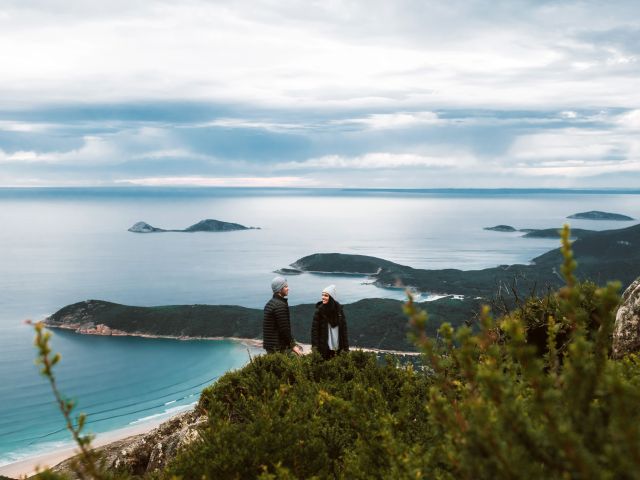
Panoramic views from the summit of Mount Oberon. (Image: Everyday Nicky)
The trail to the panoramic views at the summit of Mount Oberon is a bit harder, up steep timber and granite steps, but it’s a popular 6.8-kilometre return. The more remote hikes are found through the open banksia and stringybark woodland of the park’s north, or along the multi-day Southern Circuit, which ranges from about 35 to 52 kilometres, with sunrises and sunsets, kangaroos and cockatoos, and maybe even whales.
Walk ‘The Prom’s’ golden sand beaches. (Image: Tourism Australia/Time Out Australia)
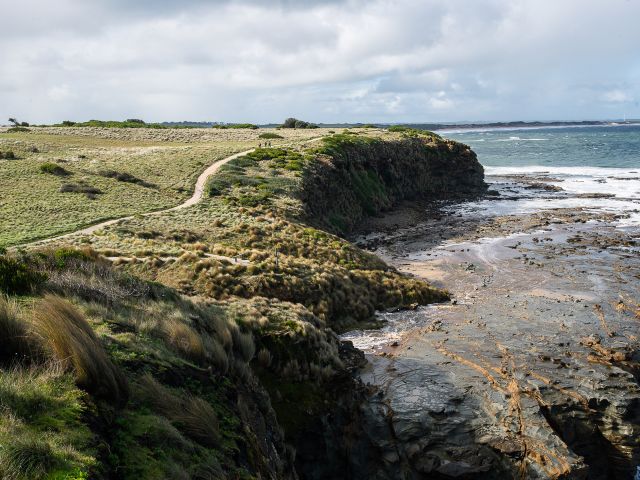
You might also see whales on the George Bass Coastal Walk, even closer to Melbourne on the western edge of Gippsland. This dramatic seven-kilometre trail along the clifftops takes in sweeping views of the wild ocean, occasionally dipping down from grassy green hills to coastal gullies and a secluded beach. It also now links into the Bass Coast Rail Trail for an extra 14 kilometres.
George Bass Coastal Walk trails for seven kilometres along clifftops. (Image: Visit Victoria/Time Out Australia)
Over at the eastern edge of Gippsland, in Croajingolong National Park, you can wander along the lakeshores beneath koalas and around goannas (I keep my distance since one chased me here!). For those who are even more adventurous, the park is also the starting point for the 100-kilometre Wilderness Coast Walk, usually done over seven days.
Wander along the lakeshores in Croajingolong National Park. (Image: Tourism Australia)
The best bush hikes in Gippsland
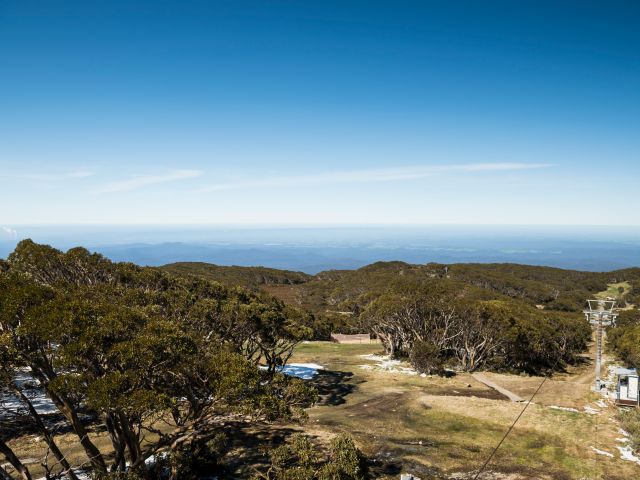
The alpine heath of Baw Baw National Park. (Image: Everyday Nicky)
Deep in the Long Tunnel Extended Gold Mine at Walhalla, mining guide Richard tells me how this small town in the mountains east of Melbourne boomed when prospectors found gold here in 1862. These days, you’ll find most of the town’s treasure – its heritage – above ground, with the Walhalla Tramline Walk a wonderful way to explore it.
Just seven kilometres long, the walk takes you through decades of Gold Rush history, following the original rail trail from lush bushland to the mining sites, and through the charming village of just 20 residents with its wooden cottages and old shopfronts adorned with turn-of-the-century advertising posters. Blazing a trail where trailblazers once opened up the region, this is also the starting point for the 650-kilometre Australian Alps Walking Track.
Nearby, Baw Baw National Park has walks through gnarled snow gums and alpine heaths that show off the colourful wildflowers in summer and the pristine carpet of white in winter. Several trails are perfect for snowshoes, including a 45-minute route from St Gwinear up to vast views across the Latrobe Valley.
Further up into the mountains, the Toorongo and Amphitheatre Falls Loop Walk is an easy 2.2-kilometre path that serenades you with the sound of flowing water as you pass mossy rocks and tree ferns en route to two sets of waterfalls cascading over boulders in the remote wilderness.
The best cultural hikes in Gippsland
Hike the Mitchell River National Park. (Image: Parks Victoria/Grace Lewis)
Across a pool in a natural sandstone amphitheatre, deep within a cave behind a waterfall, it’s said the Nargun has its lair. A fierce creature, half human and half stone, that abducts children and can’t be harmed by boomerangs or spears, the story of the Nargun has been told around the campfires of the local Gunaikurnai people for generations.
As a culturally significant place for women, hikers are asked not to go into the Den of Nargun, but a 3.4-kilometre loop walk leads you through a rainforest gully to the entrance where you can feel the powerful atmosphere here in Mitchell River National Park, along Victoria’s largest remaining wild and free-flowing waterway.
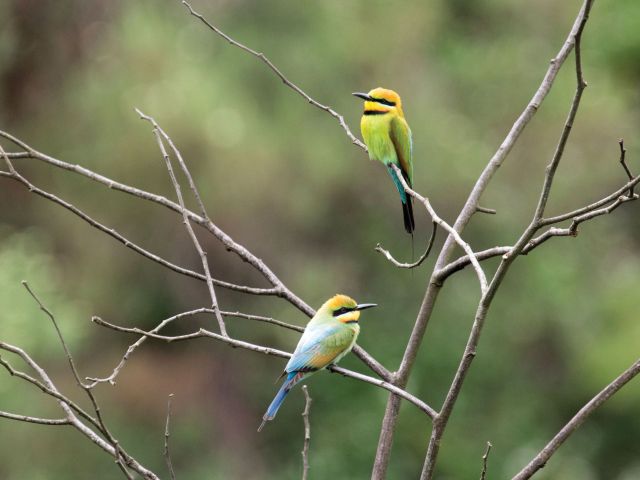
Bee-eaters at Mitchell River National Park. (Image: Parks Victoria/Grace Lewis)
The Den of Nargun is part of the Bataluk Cultural Trail, a series of important traditional Gunaikurnai sites through central Gippsland. Another location is Victoria’s largest cave system, Buchan Caves Reserve, with trails to important archaeological sites of human artefacts up to 18,000 years old. The FJ Wilson Interpreted Walk includes the naturally sculpted white limestone steps of the 400-metre-long Federal Cave, while the Granite Pools Walk goes among tall timber and moss-covered gullies.
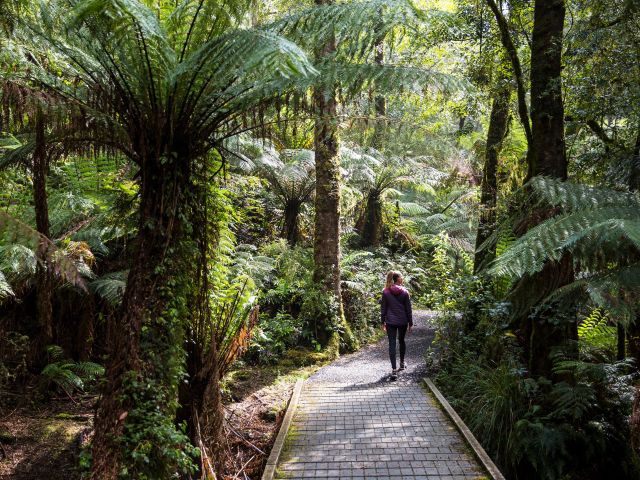
The ancient rainforest of Tarra-Bulga National Park. (Image: Josie Withers)
Also important to the Gunaikurnai people is Tarra-Bulga National Park, known for its ancient myrtle beeches and enormous mountain ash trees. Just 40 minutes return, the Tarra Valley Rainforest Walk offers a taste of this verdant landscape, while the Grand Strzelecki Track takes you deep into the lost world of forest giants on an epic 100-kilometre trail rich with tradition.
A traveller’s checklist
Staying there
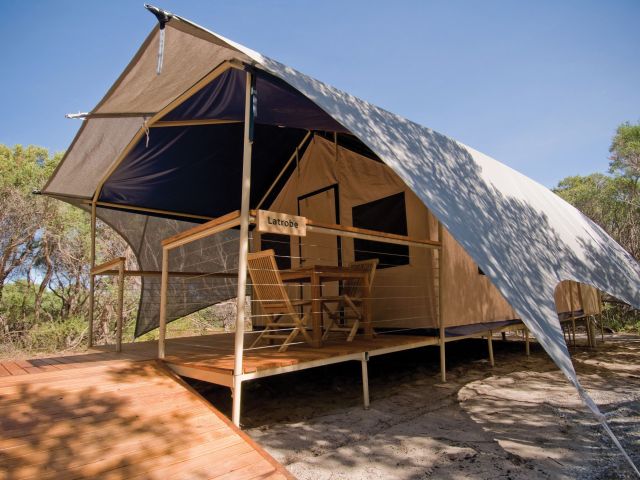
Wilderness Retreats in The Prom. (Image: Christian Pearson)
Wilderness Retreats in Wilsons Promontory offers glamping-style tents with luxurious queen beds. Star Hotel is a reconstruction of a Gold Rush-era hotel from 1863 in the heart of heritage Walhalla. Caves House is a historic three-bedroom house with views over the Buchan River.
Eating there
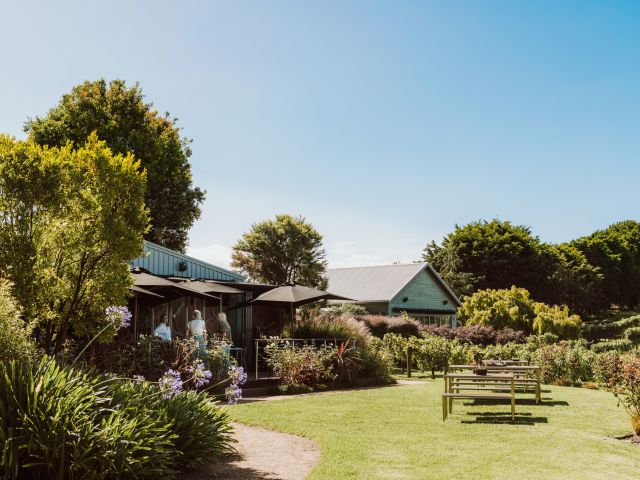
Enjoy a post-hike lunch at Carrajung Estate. (Image: Everyday Nicky)
Kilcunda General Store serves great coffee and meals of local produce at the George Bass Coastal Walk. Alpine Trout Farm is located near Toorongo Falls in Noojee. Fish for your own lunch and barbecue it with the provided cookware.
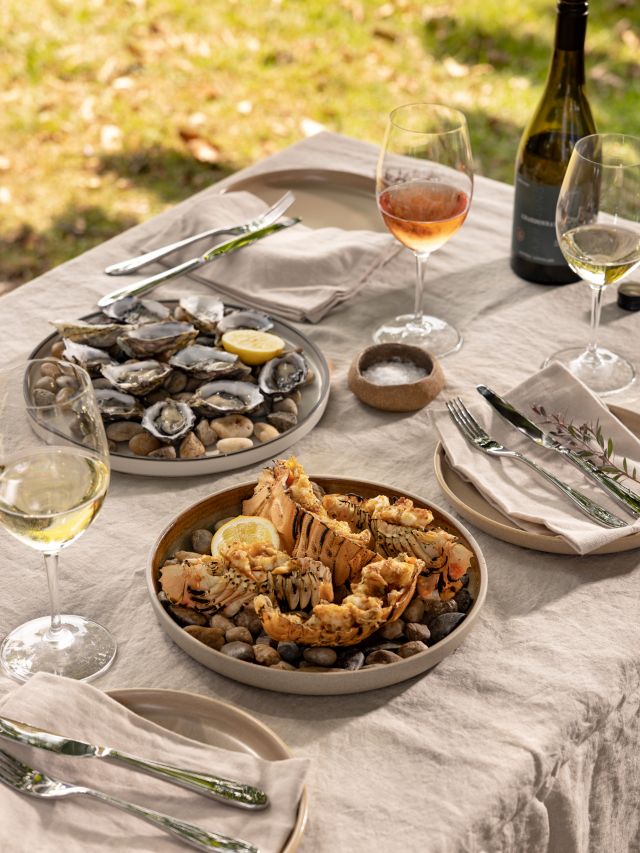
Carrajung Estate is a short drive from Tarra-Bulga National Park. The winery’s restaurant offers a seasonal menu of regional ingredients and you can stay at The Lodge.
The table is set for a seafood feast at the estate.