The World’s 50 Best Beaches list is out – and three Australian beaches have made quite the splash.
Each year, The World’s 50 Best Beaches team surveys thousands of travel experts, asking them to vote for their top beach in the world and explain what makes it special. The team then reviews submissions to compile the final list, considering a unique mix of natural beauty, wildlife presence, remoteness, tranquillity, water accessibility, calm conditions, low crowds, and consistently idyllic weather.
Three Aussie beaches appeared on this year’s list, further showcasing the breathtaking allure of our coastline. Whitehaven Beach and Lucky Bay are also featured on The World’s 50 Best Beaches’ Best of the Best list – a collection of beaches that have previously been ranked No. 1 in The World’s 50 Best Beaches and are considered worthy of continued recognition.
Here are the three Aussie coastal spots that made a splash as some of the best beaches in the world.
#11 Turquoise Bay
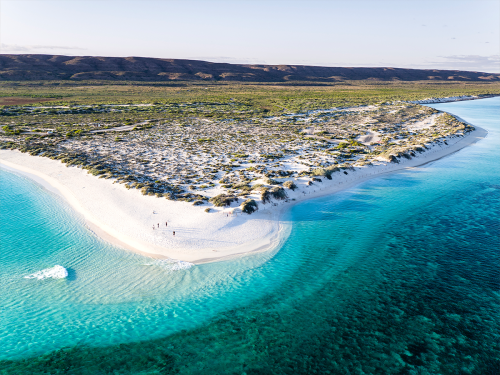
Turquoise Bay is a snorkeller’s paradise. (Image: Tourism Western Australia/@saltywings)
Topping the list of Australian beaches at no.11 is the aptly named Turquoise Bay in Western Australia, located on the traditional lands of the Baiyungu, Thalanyji and Yinigurdira people. Situated near Exmouth in the Ningaloo Marine Park, it’s a snorkeller’s paradise, renowned for its gentle currents that make it ideal for drift snorkelling. Marine life such as fish, turtles, rays and vibrant coral reefs thrive in the bay’s crystal-clear waters, which lap against pristine white sand.
The World’s 50 Best Beaches cited the beach’s incredible wildlife, serenity and natural beauty as key reasons for its high ranking – you won’t find crowds at this untouched piece of coastline.
Visiting Turquoise Bay during the dry season – from April to October – is recommended to see it at its best, with early mornings in April to August offering the calmest waters.
#21 Wharton Beach
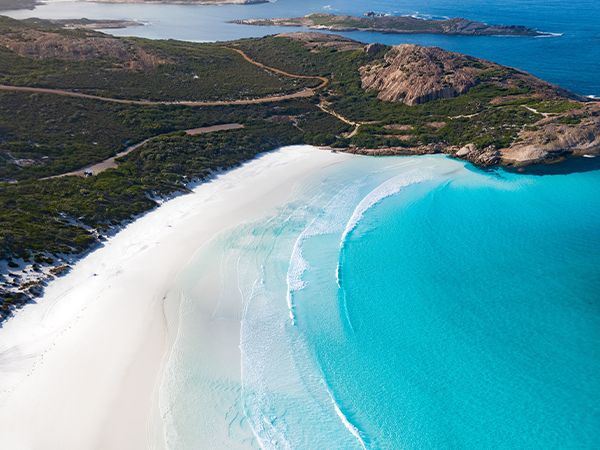
This unspoiled stretch of coast offers easy-to-wade-in waters. (Image: Wirestock)
The second Aussie beach to make the list is another remote Western Australian gem. Wharton Beach is nestled on the other end of the state, an hour’s drive from Esperance in the Duke of Orleans Bay. Sprawling white sand meets sparkling azure water where snorkellers can relish an underwater world teeming with marine life, and surfers can enjoy the rolling waves. The World’s 50 Best Beaches emphasised the lack of crowds and easy-to-wade-in water as reasons for Wharton Beach making the list.
#37 Nudey Beach
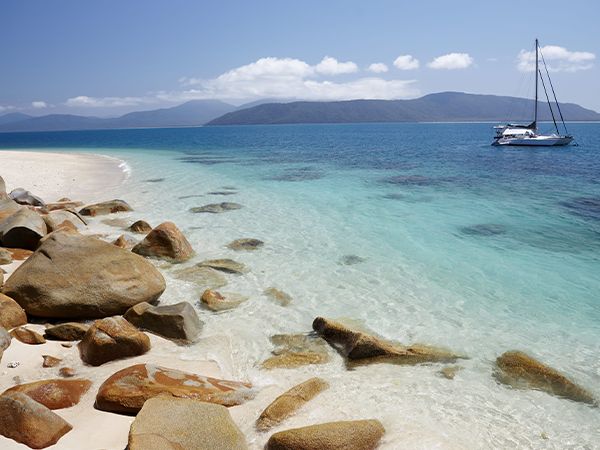
Jewel-toned waters meet a white coral and sand beach. (Image: Tourism Australia)
Despite its name, swimming costumes are in fact required at this tropical paradise. Located on the South-West shores of Fitzroy Island, Nudey Beach boasts shimmering jewel-toned waters and a white coral and sand beach surrounded by lush rainforest. Part of the Great Barrier Reef Marine Park, visitors can enjoy snorkelling off the shore in its year-round warm waters. A 1.2-kilometre walk along a rainforest track leads beachgoers to this hidden gem, which The World’s 50 Best Beaches acknowledged for its untouched beauty, tranquil atmosphere and lack of crowds.
Rachael Thompson is Australian Traveller's Evergreen Editor and a self-proclaimed cheese and Chablis connoisseur. In her role, she creates and manages online content that remains relevant and valuable over time. With a background in publishing and e-commerce in both interior design and travel, Rachael is dedicated to curating engaging content that informs and inspires. She began her career at Belle magazine, then went on to become Senior Content Producer at Homes to Love focusing on Australian House & Garden and Belle, followed by Editor at Bed Threads. Her work has also appeared in Qantas Travel Insider. When she's not writing, editing, or optimising content, Rachael enjoys exploring the city's newest restaurants, bars, and hotels. Next on her Aussie travel wish list are Uluṟu-Kata Tjuṯa National Park and Lord Howe Island.
Wind through fern tunnels, stop for a wine in a tram bar, or chase giant murals across the wheatbelt. These drives and rides prove Victoria’s best stories are found off the straight and narrow.
There’s something unmistakably Australian about a road trip: car packed, playlist on, landscapes shifting. Travelling down the highway toward Healesville, in Victoria’s Yarra Valley , the mountains rise, flanking me on both sides. I feel its embrace, a silent invitation to explore what lies beyond.
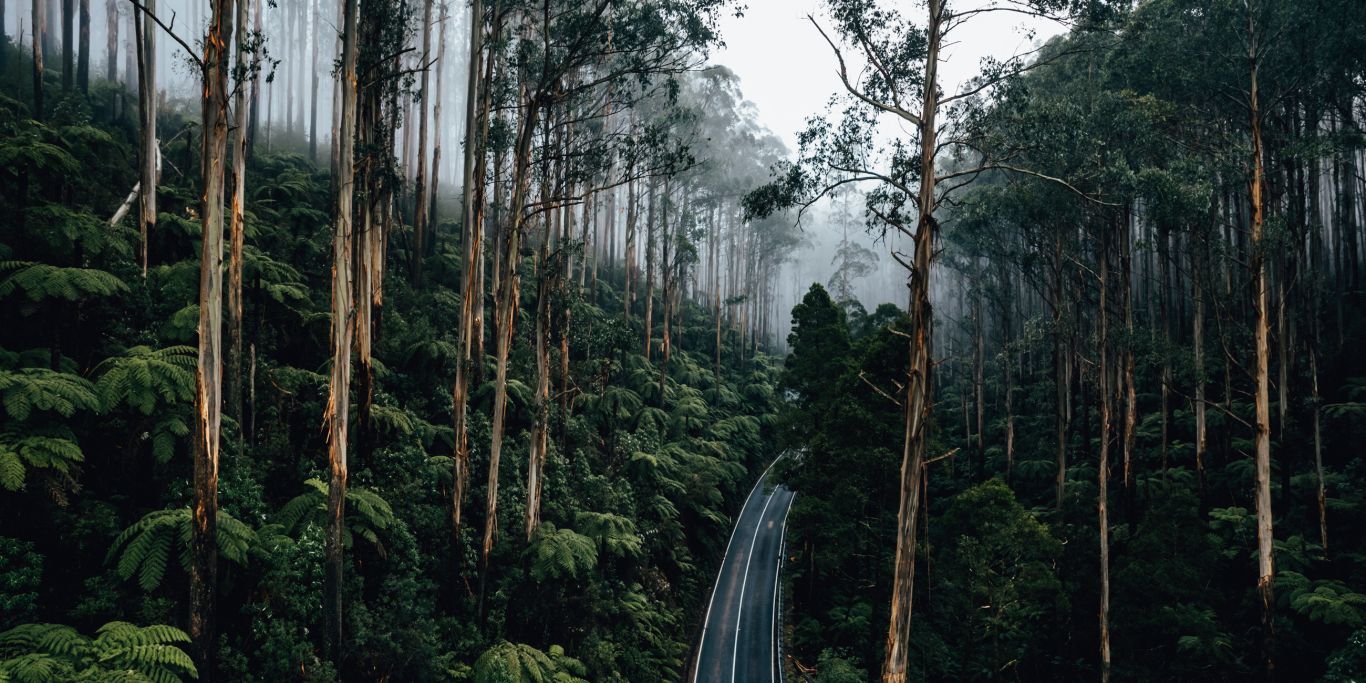
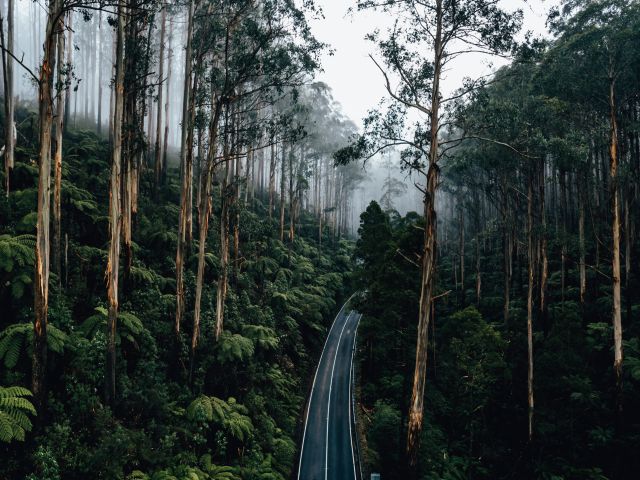
Moss-covered embankments rise on either side, and towering mountain ash trees form a green tunnel overhead. Road signs warn of wombats and cyclists but with giant ferns lining the roadside, the landscape feels prehistoric, as if a dinosaur might suddenly emerge. This, the Black Spur , is one of my favourite road trips.
The Black Spur
Through the forested canopy of The Black Spur drive that winds from Healesville to Narbethong. (Image: Neisha Breen)
The Black Spur is short compared to other Victorian road trips, just 30 kilometres, stretching from Healesville to Narbethong. But what it lacks in distance, it makes up for in scenery. Just outside Healesville, Maroondah Dam offers bushwalks and scenic views. However, if pressed for time, Selover’s Lookout is an easy roadside stop offering uninterrupted views of the dam.
In Narbethong, close to the Marysville’s snowfield, is the Black Spur Inn , a charming double-storey brick hotel that’s been welcoming travellers since 1863. Here, diners cosy up by the roaring fire or gaze through the floor-to-ceiling windows, imagining horse-drawn coaches carrying hopeful gold seekers to the eastern goldfields.
Victoria’s Silo Art Trail
The Silo Art Trail in the Wimmera Mallee region. (Image: Visit Victoria/Anne Morely)
Location: Various towns across the Wimmera Mallee region Duration: More than 200 kilometres / 4–5 hours but best over a minimum of three days
What began as a way to draw travellers back into town bypassed by highways – places such as Nullawil, Sea Lake and Patchewollock – has grown into a celebrated outdoor art movement. The Silo Art Trail now includes 23 silos, each transformed with large-scale mural portraits sharing local stories, celebrating community heroes, Indigenous history, farming life, or regional identity.
The Nullawil silo, for example, is a portrait of a local farmer in a chequered flannelette shirt alongside his loyal kelpie, painted by artist Sam Bates (AKA Smug). And the silos at Albacutya in the Grampians, painted by artist Kitt Bennett, depict her joyful memories of growing up in the countryside. Many of the murals sit right in the heart of small towns, such as Rochester and St Arnaud , making them perfect spots to pause for a country pub meal or something sweet from a local bakery.
Location: Gippsland Duration: Approximately 220 kilometres / 4 hours
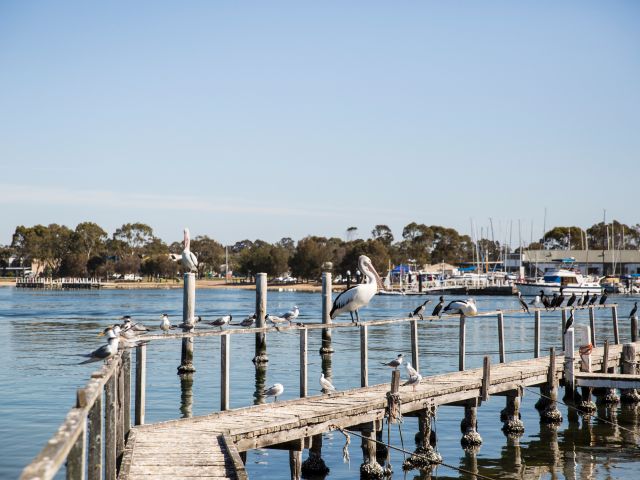
The Gippsland Lakes are a much-loved holiday spot in Victoria, but road-tripping further east reveals much more. Begin in Metung and time your visit with the monthly farmers’ market, or simply linger over lunch on the lawn of the Metung Hotel. Twenty minutes away is Lakes Entrance , where you can watch the fishing boats return with their catch.
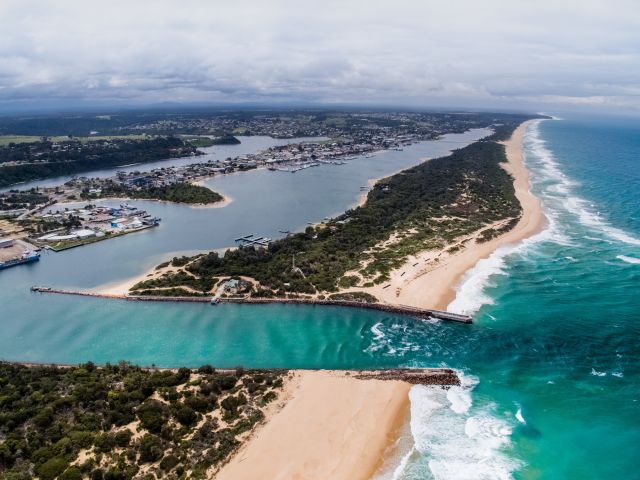
Continue to Marlo, where the Snowy River spills into the sea, and Cape Conran for its many beaches and walks. If needing to stretch your legs, Croajingolong National Park is home to the historic Point Hicks Lighthouse and the Wilderness Coast Walk. Birdwatching and rainforest trails near Bemm River are worth a pit stop before arriving in Mallacoota, where the forest meets the sea.
Great Ocean Road
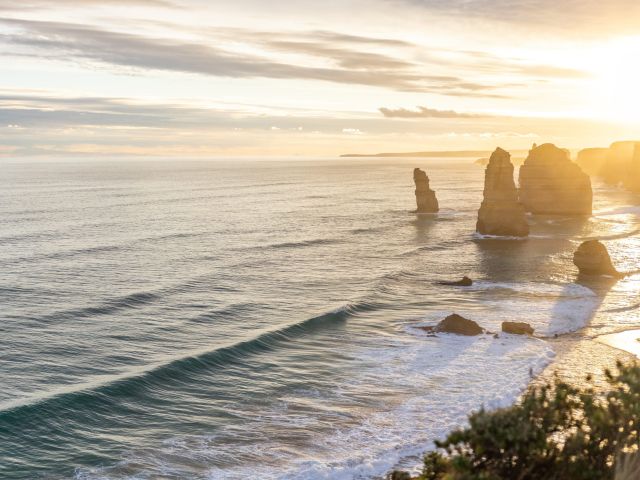
The 12 Apostles on the Great Ocean Road. (Image: Tourism Australia/Two Palms/Harry Pope)
Location: South-west Victoria, from Torquay to Allansford Duration: Approximately 250 kilometres / 4–5 hours but best over a minimum of three days
Victoria’s most famous road trip delivers it all: world-class surf breaks, rainforest walks, clifftop lookouts and wildlife encounters. The journey begins in Torquay, the state’s surf capital, then hugs the coast past Anglesea and Lorne to Apollo Bay, before curving inland through the lush rainforest of the Otways. Stop at Cape Otway Lightstation or take to the treetops at Otway Fly.
Between Cape Otway and Port Campbell lies the most photographed stretch – seven of the Twelve Apostles still standing, alongside the golden cliffs of Loch Ard Gorge. Further west, Warrnambool is a winter whale-watching hotspot, before the road winds to Port Fairy, a charming fishing village of whalers’ cottages, walking trails and offshore seal colonies further along the coast.
Location: Bellarine Peninsula Duration: Approximately 80 kilometres / 2–3 hours
The Bellarine Taste Trail is a feast for the senses, winding through coastal towns, past boutique wineries and artisan producers. It’s a choose-your-own-adventure style trail – simply grab a map and build your own delicious journey.
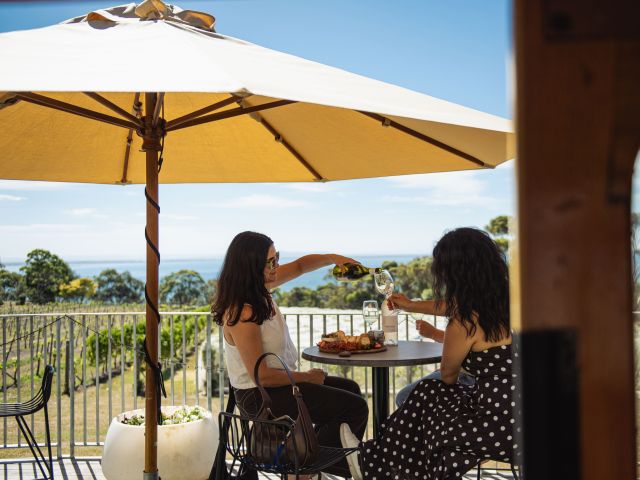
You might wander historic, seafront Queenscliff, sip wine in a converted tram bar at Terindah Estate , sample a locally distilled whisky at The Whiskery in Drydale or pick up a jar of honey at Wattle Grove in Wallington. Seafood lovers can head to Portarlington, famous for its mussels. Eat them fresh at local restaurants or head out on the water with Portarlington Mussel Tours.
O’Keefe Rail Trail – Bendigo to Heathcote
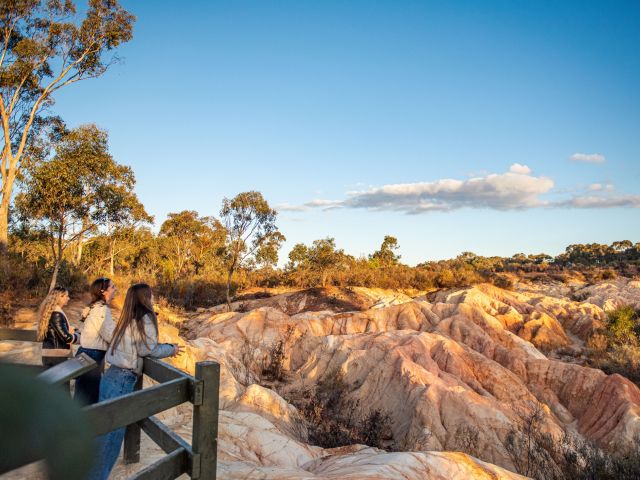
Pink Cliffs Reserve in Heathcote can be seen on the O’Keefe Rail Trail. (Image: Visit Victoria/Emily Godfrey)
Location: Central Victoria Duration: Approximately 50 kilometres / 4 hours cycling
Travellers first journeyed between Heathcote and Bendigo in 1888, when the railway line was built to link the towns. Trains stopped running in 1956, but today the route has a new life as the O’Keefe Rail Trail . The path is mostly level for easy riding, and along the way you’ll cycle past bushland, waterways and reserves. There are plenty of places to picnic, birdwatch, and if you’re lucky, spot a platypus.
The trail is well supported with water stations, bike repair points, shelters, and signage. Axedale makes a great halfway stop, with the pretty Campaspe River Reserve for a rest and local cafes for refuelling. Begin in Heathcote, known for its wineries and cafes, or in Bendigo, which is easily reached by train from Melbourne/Naarm. Shorter sections, such as Heathcote to Axedale, are also popular.
Goldfields Track – Ballarat to Bendigo
Location: Central Victoria Duration: Approximately 210 kilometres / 2–3 days cycling
The Goldfields Track traces a route once so rich in gold it made Melbourne one of the wealthiest cities in the world. Starting at Mt Buninyong, south of Ballarat, the trail leads mountain cyclists and walkers north through Creswick, Daylesford and Castlemaine before finishing in Bendigo. Along the way, you’ll encounter granite outcrops, eucalypt forests, rolling farmland and remnants of the region’s mining past.
As it passes through the lands of the Dja Dja Wurrung and Wadawurrung people, the track shares gold rush history and Indigenous stories brought to life by interpretive signs. Walk or ride the full trail or choose from one of its three distinct sections. With cosy stays, cafes and pubs, it’s easy to mix wilderness with comfort.