Discover the secrets of the Mountains’ natural wonders with this ultimate guide to the best hikes, curated by a local expert.
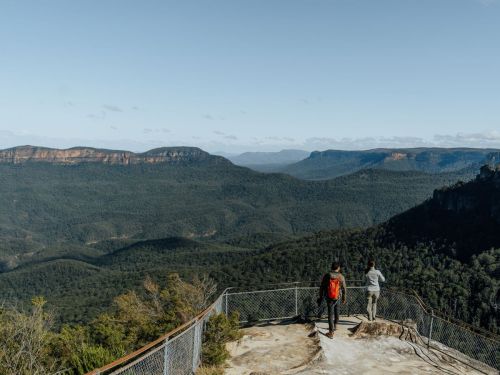
The World Heritage-listed Blue Mountains is home to the most visited national park in all of New South Wales. Stretching across one million hectares, its vast web of walking trails connects you to its immense natural beauty: from soaring sandstone cliffs to precious native wildlife and habitats, quiet rainforested glens to thundering and unceasing waterfalls—this guide will take you to its absolute best.
Upper Mountains
THE GRAND CANYON, BLACKHEATH
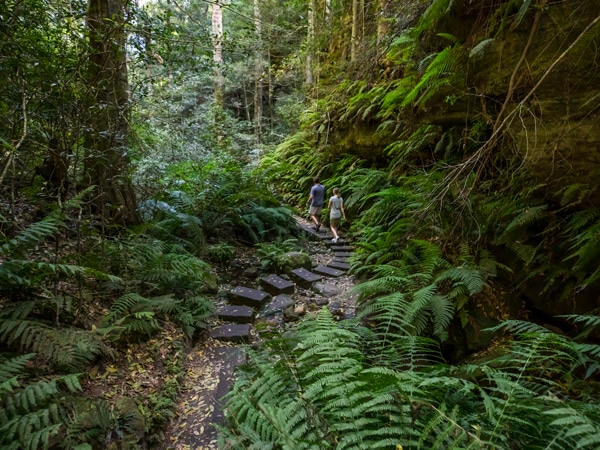
The award-winning Grand Canyon Track draws you down through impossible sandstone cliffs, amid a diverse array of habitats following the sound and pathway of an ancient waterway. It includes more than 1200 thoughtfully laid-out sandstone blocks designed to complement the natural stone and leads you through a surprising tunnel that kids will love.
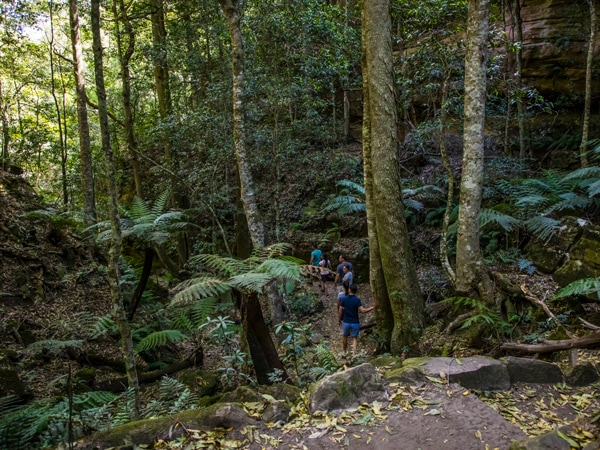
One of the most popular day walks in the Blue Mountains, its thousand shades of green will lure you in and then reward you with dramatic views across the Grose Valley.
Distance: 6.3-kilometre loop
Time: Three to four hours
Difficulty: Grade 3 = some bush-walking experience necessary
Terrain: Well-maintained track, slippery and uneven in parts. Stairs: remember what goes down must come up.
Tips: If you start the loop walk from the Grand Canyon Carpark (which has a toilet) and walk in an anti-clockwise direction towards Neates Glen, you will be rewarded with expansive views from Evans Lookout at the end of your steep ascent.
Must-see sights: Take lunch or snacks and spend some time sitting by the creek listening to this hidden world.
FAIRFAX HERITAGE WALKING TRACK, BLACKHEATH
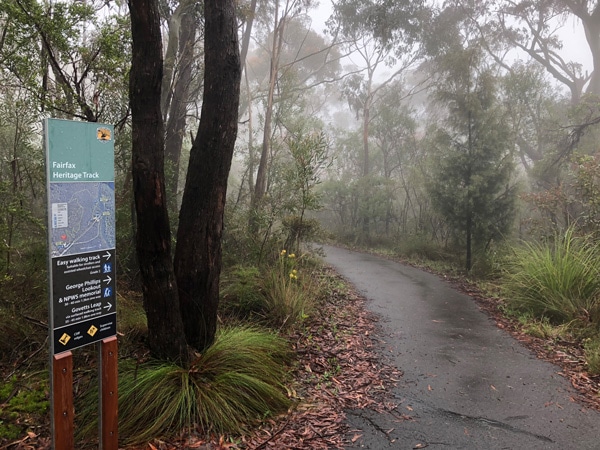
This track is an excellent choice for families wanting to connect young ones with nature, in a gentle, accessible trail guaranteed not to raise a sweat. Starting at the National Parks Visitors Centre, near Govetts Leap lookout, the wheelchair-friendly Fairfax Heritage Walking Track – which is also suitable for kids’ bikes – meanders through eucalypt and heath forest towards jaw-dropping views across the Grose Valley from the George Phillips Lookout and Govetts Leap.
Distance: 1.8 kilometres one way
Time: 30 to 45 minutes
Difficulty: Grade 1 = easy
Terrain: Well-formed and sealed track.
Tips: This walk can be enjoyed all year round, however, you’re guaranteed to see waratahs erupting in flower during October.
Must-see sights: Drop into the National Park Heritage Centre for helpful advice and to see the permanent ‘Outside In’ exhibition. Visitors can also experience the wonders of Claustral Canyon without getting wet with the NPWS virtual reality experience.
PORTERS PASS & COLLIERS CAUSEWAY, BLACKHEATH
Hidden away on the quiet side of Blackheath, the Porters Pass & Colliers Causeway track is popular with locals and rock climbers.
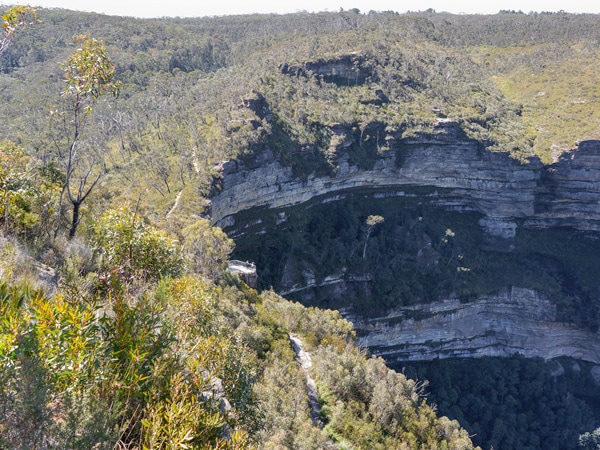
Starting at the Centennial Glen car park, just 1.2 kilometres from Blackheath Station, you’ll descend hand-carved rock steps beside the waterfalls and cascades of Centennial Glen Creek. As the track swings away from the creek, the path leads underneath soaring sandstone cliffs, as views to the Kanimbla Valley open before you. Rainforest gullies, dripping with green life draw you upwards, ascending to the top once again, where well-formed walking tracks and magical views close the loop back to the car.
Distance: 6 kilometres
Time: Four to five hours
Difficulty: Grade 4 = suitable for experienced hikers
Terrain: Uneven and slippery surfaces, natural rock steps
Tips: Start at the end of Centennial Glen Road, where there are toilets
Must-see sights: The views from Fort Rock across Kanimbla Valley
COXS CAVE CIRCUIT, MOUNT VICTORIA
Perfect for teens and those with an adventurous streak, the short Coxs Cave hike leads you away from the Mount Piddington Lookout and into what feels like a secret smugglers cave. Let your imagination go wild as you climb a steep exposed ladder and enter a hidden grotto, wondering about the lives of those who have taken shelter here over thousands of years.
Distance: 1.6 kilometres
Time: One hour
Difficulty: Grade 4
Terrain: Often wet, slippery and overgrown
Tips: Wear shoes you don’t mind getting muddy
VICTORIA FALLS TRACK, MOUNT VICTORIA
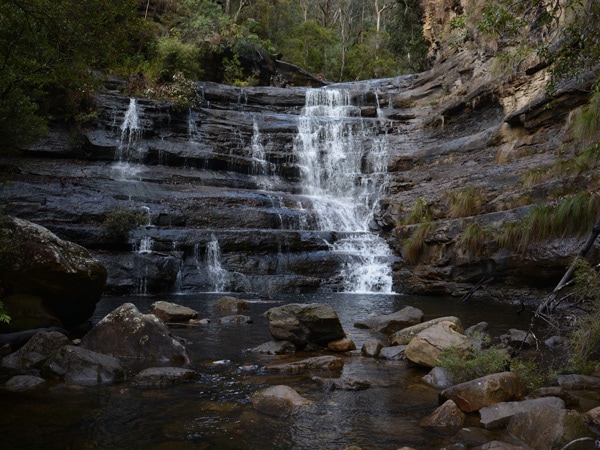
If your knees are feeling strong and you love the idea of scrambling up behind a waterfall or cooling down with a wild swim, drive to Victoria Falls Lookout and descend the well-defined bush track to the Silver Cascades and Victoria Falls. After a refreshing dip, prepare yourself for the lung-busting 300-metre vertical ascent back to the car park.
Distance: Four-kilometre return
Time: Two hours
Difficulty: Grade 3
Terrain: Often wet, slippery and overgrown
Tips: Wear shoes you don’t mind getting muddy and bring your cossie
SIX FOOT TRACK, KATOOMBA TO JENOLAN CAVES
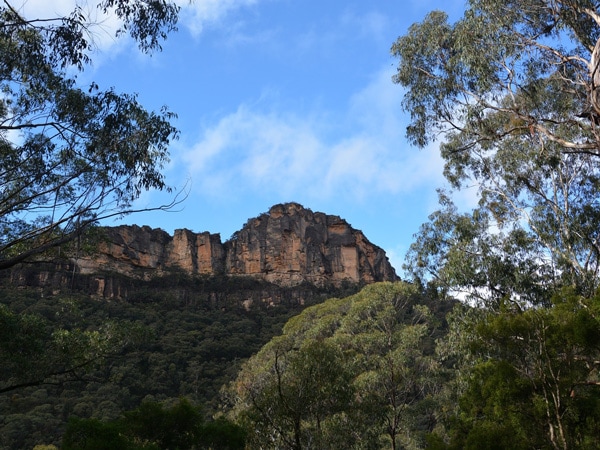
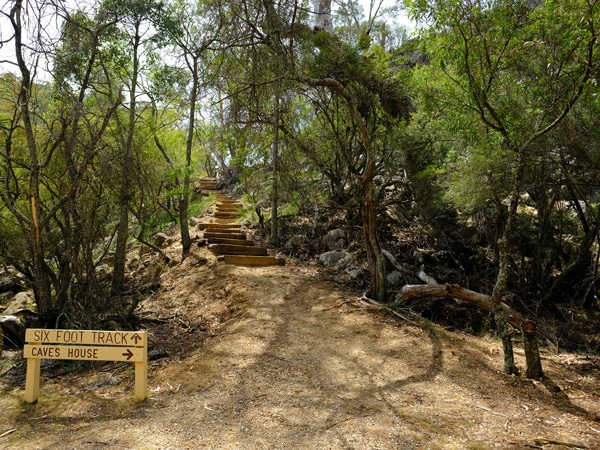
The best known of the Blue Mountains’ multi-day hikes, this classic journey starts in Katoomba, ending three days and 45 kilometres later, at historic Jenolan Caves House. Originally built to be “six foot" wide (for horse and cart) you’ll need to carry all your own equipment (or go with a licenced guide) to tackle this epic historic route.
Distance: 45 kilometres
Time: Three days
Difficulty: Grade 4 = suitable for experienced hikers
Terrain: Established single track and fire trail. Steep ascents and descents.
Tips: Start early each day and avoid walking in summer. Consider staying at Six Foot Track Eco Lodge as an alternative to camping on night one.
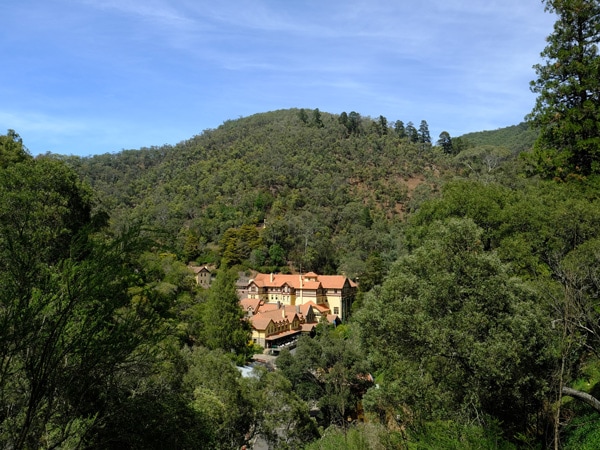
Must-see sights: Stay overnight at Jenolan Caves House (circa 1896) to shower and rest after your adventurous journey. This place oozes old-world charm, while the ancient limestone caves it’s built upon draw you deep into the mysterious underground world. Take a guided tour in one of the show caves to top off your Jenolan experience.
WALLS CAVE, BLACKHEATH
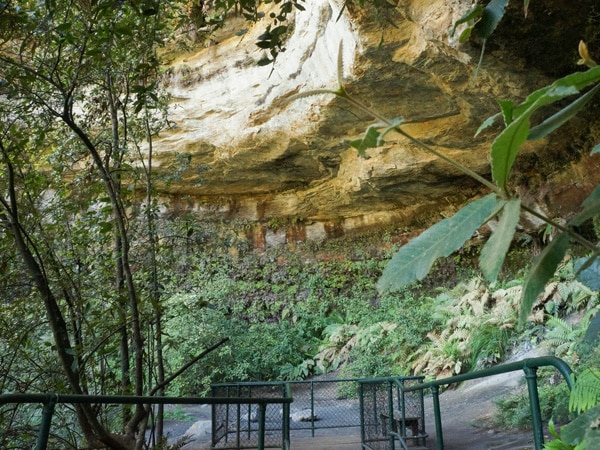
It’s not surprising that you start to speak in whispers as you approach Walls Cave. This site was a significant habitation site for the local Darug people and its hallowed, wave-like sandstone roof feels like an embrace from the past.
Distance: 1.8 kilometres return
Time: 45 minutes
Difficulty: Grade 3
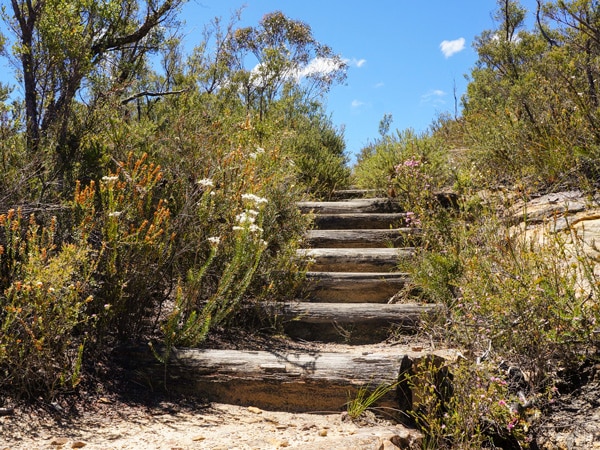
Terrain: Well-maintained stairs and stepping stones
Tips: Stay inside the fence to help protect this heritage site
Must-see sights: If you’re sure-footed on slippery, rough tracks, take the side trip to the right to discover the hidden slot canyon.
Middle Mountains
GRAND CLIFF TOP WALK, WENTWORTH FALLS TO KATOOMBA
If you love the idea of a two-day hike in the Blue Mountains, but don’t want to camp, you’ll be wrapped by the latest addition to NSW National Parks’ 13 Great Walks .
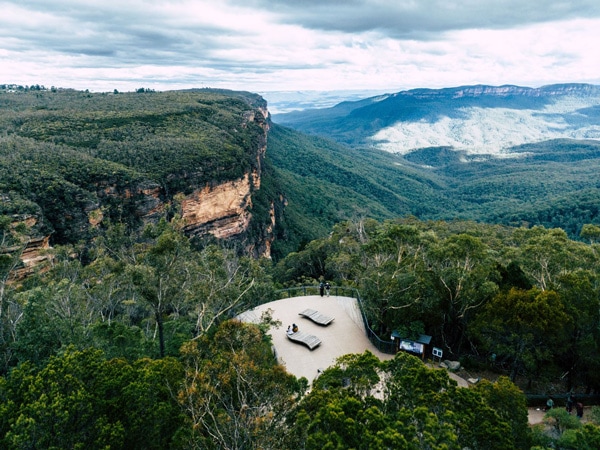
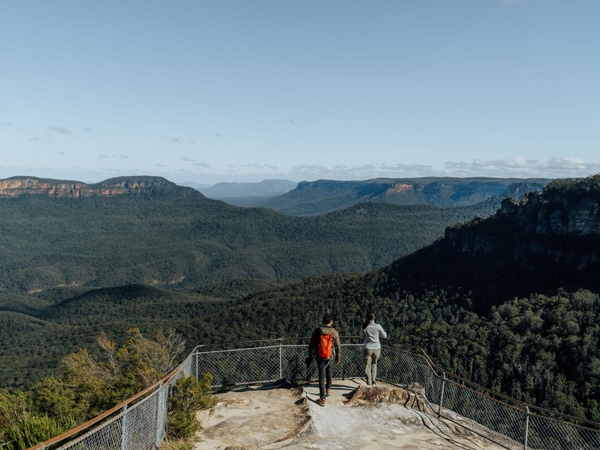
Designed as a village-to-village walk in the European Camino style, this journey stretches 19 kilometres along the Jamison Valley escarpment with vast, yawning views (up to 50 kilometres on a good day) between Wentworth Falls Station and Scenic World at Katoomba.
Pack your PJs and toothbrush with your usual day hike items, then take advantage of local accommodation and eateries in Leura.
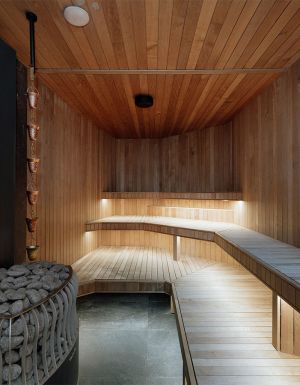
Refuel at one of many great local dining options such as Sparrows for breakfast or sizzling Korean BBQ, Jiggle, for dinner. And if your tired muscles need a salve, you could immerse yourself in a traditional Finnish sauna (and cold plunge) at Blue Mountains Sauna .
Distance: 19 km
Time: 2 days
Difficulty: Grade 3
Terrain: Established single track, natural and landscaped steps
Tips: Best accessed by train to Wentworth Falls station, finishing with the Blue Mountains Explorer Bus or public bus from Scenic World.
Must-see sights: The Pool of Siloam waterfall is the perfect hidden spot for afternoon tea.
LYREBIRD DELL AND POOL OF SILOAM, LEURA
This short loop is perfect for people not wanting to step too far off the beaten track, yet hungry for a sense of wonder amid towering tree ferns, babbling brooks and waterfalls. Starting at Gordon Falls Reserve, (where you’ll find picnic facilities, toilets and a kids’ playground), take the Lone Lyrebird Track towards Lyrebird Dell Picnic Area .
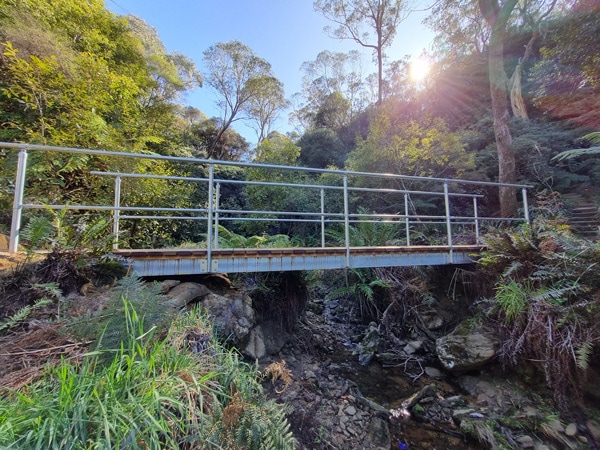
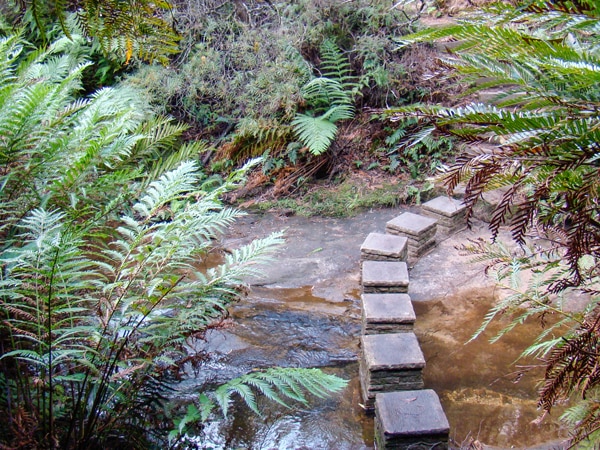
It follows a peaceful creek, passing waterfalls and a historic picnic cave, before leading you down beside the magical Pool of Siloam.
Distance: 1.7-kilometre loop
Time: 45 minutes to 1.5 hrs
Difficulty: Grade 3 = some bush-walking experience necessary
Terrain: An established well-signposted single track that can be a little overgrown at times.
Tips: Take the short side trip down the stairs to the stepping stones of the Pool of Siloam – a popular spot for keen photographers and a great spot for lunch. Don’t forget to take all your rubbish with you.
Must-see sights: The historic picnic cave (with tables) near the top waterfall provides a glimpse back to the 1930s when the Blue Mountains attracted honeymooners and weekenders to, ‘Take the Mountain Air’. It’s still a wonderful spot for a picnic today.
NATURE TRACK, WENTWORTH FALLS
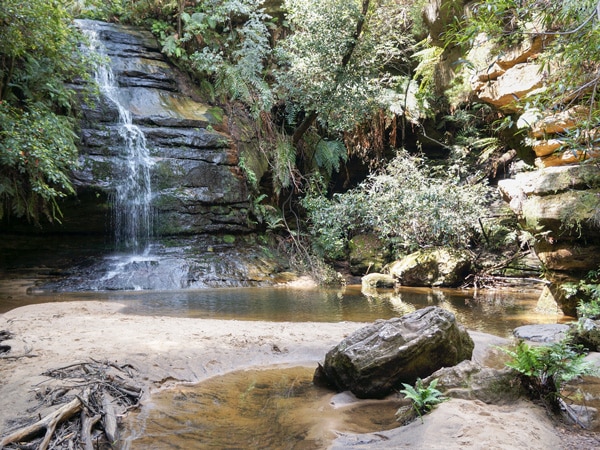
If you’ve got kids who are up for a mild physical challenge (with the promise of a milkshake at the end), the Nature Track Wentworth Falls circuit can include moments of cooling off in mountain creeks, views across enclosed gullies and glimpses into Empress Canyon.
Framed by the constantly changing vegetation of mountain heath, lush fern-filled gullies and ironstone banded cliffs, this walk has a little bit of everything. Peer down over Lillians Bridge and spy canyoners in wetsuits below as you add another activity to your adventurous bucket list .
Distance: 3.3-kilometre loop
Time: 1.5 to 2.5 hours
Difficulty: Grade 3 = some bush-walking experience necessary
Terrain: Established walking track, uneven steps
Tips: Start at the Conservation Hut in Wentworth Falls and finish with a rewarding coffee and cake at the end. On a hot day you’ll be glad you wore your cossie underneath, to cool off in the creeks and pools before climbing back up the hill.
Must-see sights: The diversity of vegetation attracts myriad native birdlife. Take your time and allow moments of quiet to pause and listen for them; Edinburgh Castle Rock is the perfect place for this.
LOCKLEYS PYLON, LEURA
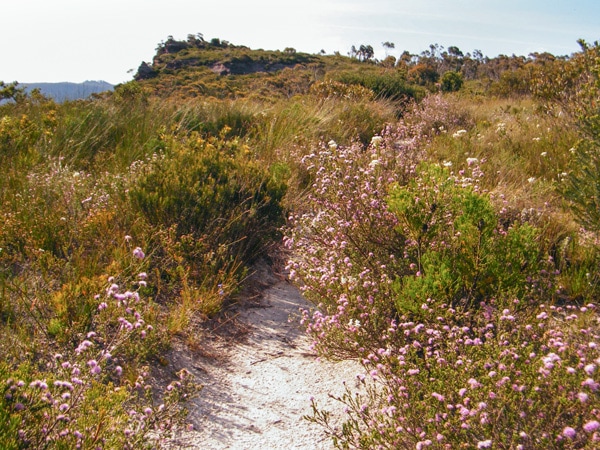
Crossing to the rarely-seen, North side of Leura, you’ll drive out on a fire trail, best accessed by AWD or 4WD vehicle. Heading out from the tiny car park (hint: parking can be tricky on busy weekends) you will venture out along an undulating ridgetop track with demanding views on all sides. As you approach the summit cairn at the end of the track, you’ll be gob-smacked by the top-of-the-world feeling and eagle’s point of view… look hard enough and you might even see a few.
Distance: 7-kilometre return
Time: Two to three hours
Difficulty: Grade 3 = some bush-walking experience necessary
Terrain: Uneven single track
Tips: Avoid after heavy or prolonged rain as the Mount Hay Road may become unpassable.
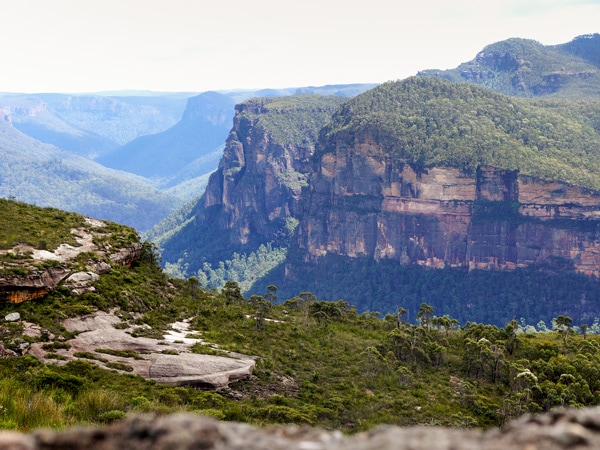
Must-see sights: The ancient sandstone layers of the Grose Gorge carved by water over millions of years.
SOUTH LAWSON WATERFALL CIRCUIT
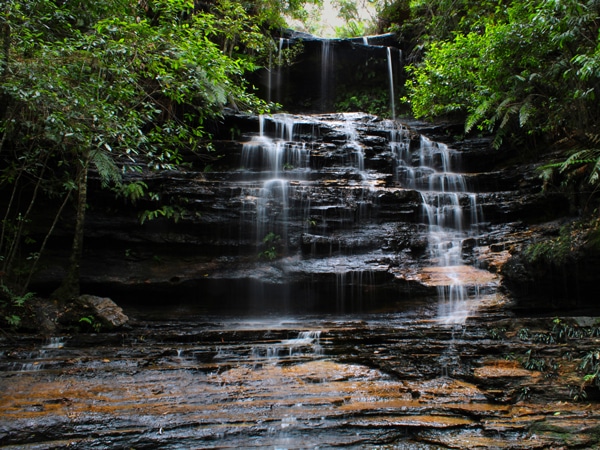
Any landscape photographer worth their salt has heard about this multiple-falls walk in South Lawson Park , which dates back to the 1870s. Today, the three-kilometre track links five picturesque waterfalls on a well-formed track popular with locals as a dog-friendly bushwalk. Before heading down, grab lunch from the Lawson shops, where you’ll find a variety of good cafes, like the social enterprise Ben’s Cafe and Cortado Cafe.
Distance: 3.5-kilometre circuit
Time: Two hours
Difficulty: Grade 2 = easy to moderate
Terrain: Established track, can be wet or slippery in parts
Tips: Start at the trailhead near 95 Honour Avenue, Lawson
Must-see sights: Managed by Blue Mountains City Council, dogs (on leash) are welcome to enjoy this bushwalk with you.
THE EMPIRE PASS TRACK VIA DANTES GLEN, LAWSON
One of Lawson’s local secrets, you’ll find the Empire Pass Track trailhead hidden away beyond the town’s 50-metre outdoor swimming pool. Hugging a small cliff overhang, a short section of steps leads you down to the faerie feel of Dantes Glen, only 15 minutes from the car.
If you’re after a short adventure, you can return from here, or keep walking along the verdant trail to take in St Michaels Falls and Frederica Falls. The full circuit is about five kilometres and follows a delightful creek through a deep oasis of ferns. A great walk with active kids to spark imaginations and dreams.
Distance: 5.1-kilometre loop
Time: 15 minutes to 2.5 hours for the full circuit
Difficulty: Grade 3 = some bush-walking experience necessary
Terrain: Established track, cross the creek on stepping stones, occasionally overgrown.
Tips: Look out for the old ruined tower as you drive through North Lawson to the trailhead. This is what remains of the 1882 Blue Mountain Sanatorium.
Must-see sights: In the warmer months, take your swimmers and spend the afternoon cooling off in one of the region’s best outdoor swimming pools or enjoy the picnic facilities at North Lawson Park.
Lower Mountains
BLUE GUM SWAMP & SHAWS RIDGE TRAIL, SPRINGWOOD/VALLEY HEIGHTS
Suitable for hiking, trail running or mountain biking, this 13-kilometre loop (including an optional side trip to the spectacular Grose Mountain Lookout) scratches all the itches: peaceful giant stands of grandmother trees, a breathless ascent to inflate the lungs, lonely, quiet views across the lesser visited lower Grose River and ancient connections Aboriginal heritage.
Distance: 13-kilometre loop
Time: 3.5 hours for the full circuit
Difficulty: Grade 2 = some bush-walking experience necessary
Terrain: Fire trails and well-formed walking track
Tips: Start early morning for a magical meander along the creek, accompanied by musical birdsong as the sun penetrates the towering Blue Gums.
Must-see sights: The rock platforms near Grose Mountain Lookout tell stories of the oldest living culture with axe-grinding grooves at viewpoints: an incredible ‘office’ to work in.
RED HANDS CAVE, GLENBROOK
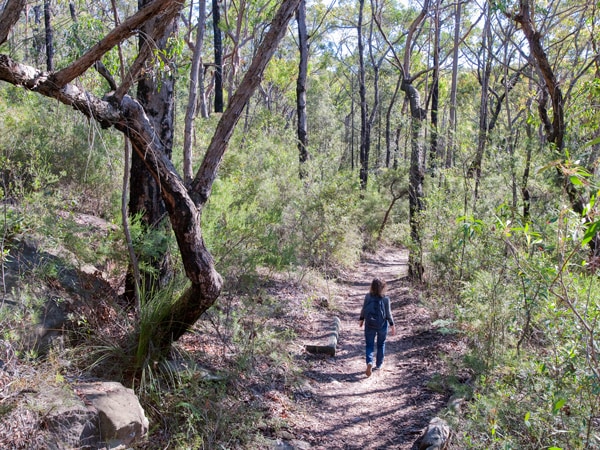
Walk in the footsteps of Aboriginal people and gaze upon some of the best examples of stencil art in the Sydney Basin. This quiet gully is a haven for birds, reflecting the chatter of stories told long ago. The full loop leads you beside Campfire Creek, where you can see axe-grinding grooves and listen to water’s gentle flow on its way to Glenbrook Creek and Jellybean Pool.
Distance: 8-kilometre loop
Time: 30 mins (shortcut) to 2.5 hours for the full circuit
Difficulty: Grade 2
Terrain: Well-formed walking track, some stairs and uneven surfaces
Tips: Cool down afterwards with a swim in Glenbrook Creek by following the signs to the Blue Pool
Must-see sights: You’re sure to spy wallabies, kangaroos and other wildlife in the early morning and late afternoon at nearby Euroka Clearing campground. Why not stay overnight and enjoy more walks the next day?
General tips for hiking in the Blue Mountains
The easiest way to keep safe when hiking is to remember the acronym, TREK .
T = Take what you need
R = Register your intentions (tell someone where you’re going)
E = Emergency communications (mobile phones don’t always work in the gullies, so grab a Personal Locator Beacon if you’re heading somewhere remote)
K = Know your route and stick to it (grab a map and download the helpful NPWS App ).
Blue Mountains lookouts
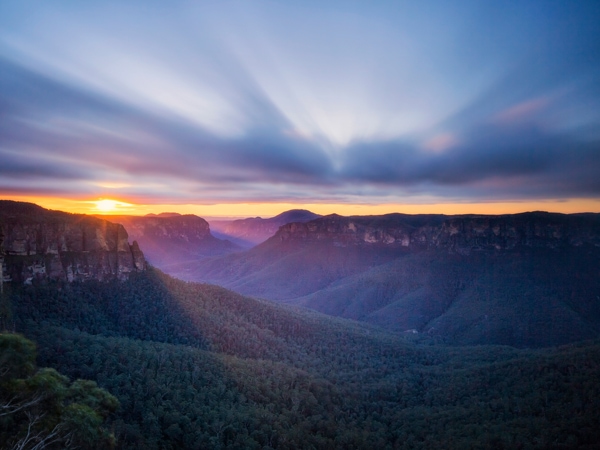
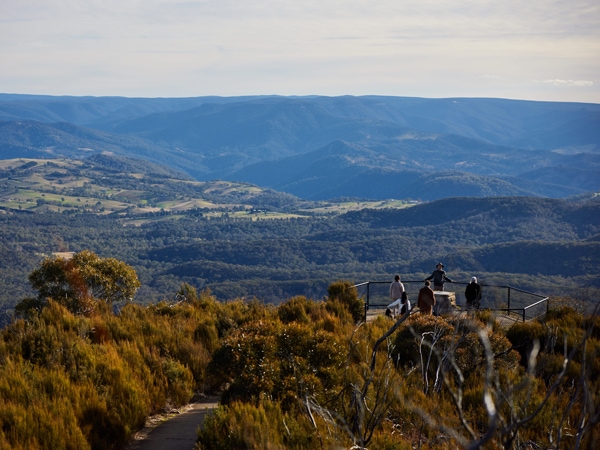
By its very nature—a gradually rising plateau—the Blue Mountains is fringed with dramatic lookouts and viewpoints from almost every angle. With weeks to uncover them, you would still not see them all. By learning the key outlooks and which valleys they sit in judgment over, you can ensure you capture the best from every angle and time of day. We’ve done the heavy lifting for you and narrowed it down to the best of the best.
TO THE NORTH: Grose Valley (Blackheath, Medlow Bath, North Leura)
Anvil Rock (via Perry’s Lookdown Road)
Baltzer Lookout with views to Hanging Rock (accessed via an 11.3 km return hike along a firetrail, at the end of Ridgewell Road)
Govetts Leap (wheelchair accessible)
Evans Lookout (wheelchair accessible)
Mount Banks (via Bells Line of Road)
Walls Lookout (via Bells Line of Road)
TO THE SOUTH WEST: Megalong Valley (Blackheath, Katoomba)
Hargraves Lookout (end of Shipley Road, Blackheath)
Cahills Lookout (Cliff Drive, Katoomba)
Narrowneck Lookout (Cliff Drive, Katoomba)
TO THE SOUTH: Jamison and Kedumba Valleys (Katoomba, Leura)
Cliff View Lookout (Prince Henry Cliff Top Walk, near Scenic World)
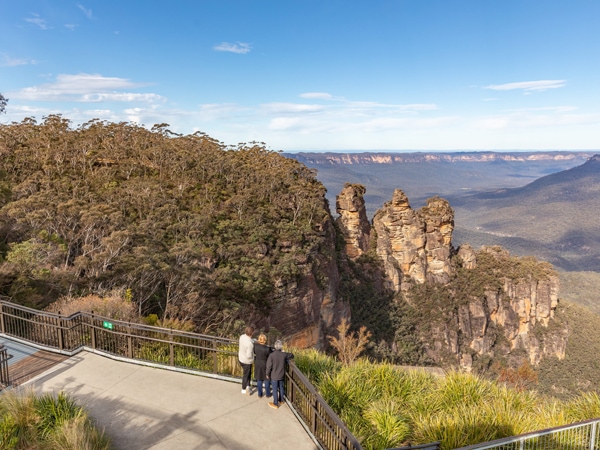
Echo Point (Three Sisters)
Olympian Rock (via Olympian Parade)
Sublime Point (end of Sublime Point Road)
Fletchers Lookout with views of Wentworth Falls (via Wentworth Falls Picnic Area)