Here’s why you need to visit the picture-perfect Mayfield Garden

hero media
A verdant handkerchief of manicured grounds laid out in the NSW Central Tablelands, Mayfield Garden is an exquisite estate of horticultural mastery open to all garden lovers.

Singular in its vision and scale, the privately owned Mayfield Garden in Oberon, is a highlight on any horticulturalist’s hit list. Rambling across 65 hectares, the cool-climate garden is an astonishing example of how a landscape can be tamed and shaped to take new, artful forms.

Once a dry pasture for sheep, this cascade of themed gardenscapes draws multitudes of visitors each year who come to revel in the tranquil scenery and draw inspiration for their own spaces.

Of course, you needn’t be a plant enthusiast to enjoy this curated estate, anyone will enjoy the beauty of the generations-long project and respect the joy it brings. Here’s everything you need to know to plan a visit to the garden.
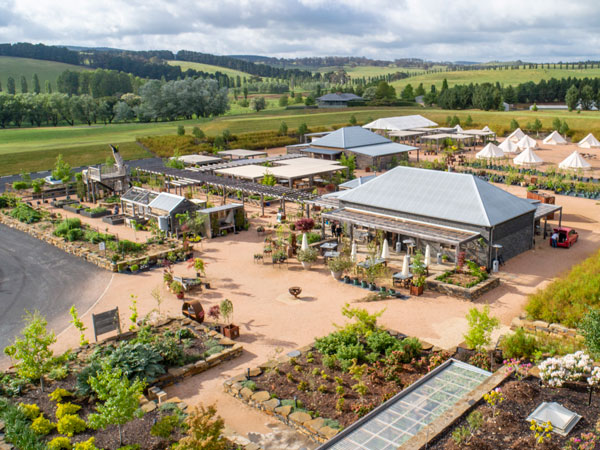
a drone shot of the Mayfield Garden, Oberon
Admire this curated garden estate in Oberon. (Image: Destination NSW)

The backstory of Mayfield Garden

It’s hard to believe that the 65 hectares of lush, sculptured and manicured lawns that make up Mayfield Garden were little more than a barren, rambling sheep farm when first acquired by the Hawkins family in 1984.
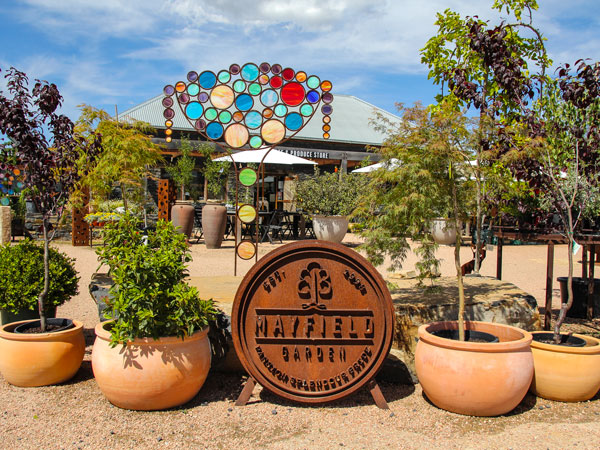
potted plants beside the Mayfield Garden signage
Revel in the tranquil scenery at Mayfield Garden. (Image: Destination NSW)

Initially, the family never intended to create a sprawling horticulturalist’s nirvana of international note here – they simply set out to build a family retreat. But ‘simple’ evidently wasn’t in patriarch, Garrick Hawkins, wheelhouse. Instead, the word spectacular springs to mind.
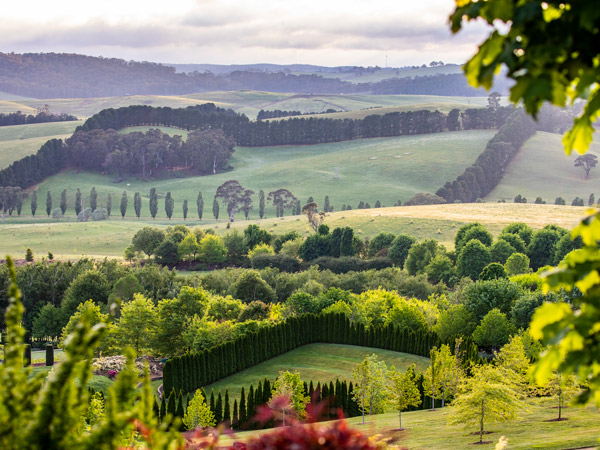
sculptured and manicured lawns in Mayfield Garden
Sculptured and manicured lawns are spread across Mayfield Garden. (Image: Destination NSW)

Beginning with the building of the main lake in 1987, followed by the Chinese pagoda eight years later, then steadily expanding with one beautifully executed landscape feature after another, it became apparent that Mayfield was something to share with the world.
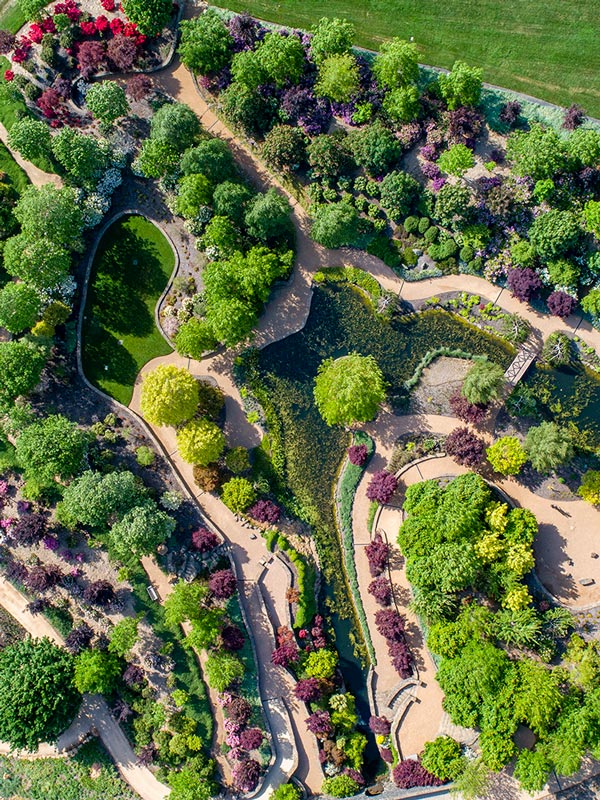
an aerial view of the sculptured gardens in Mayfield
The sculptured gardens are stunning from above. (Image: Destination NSW)

In 2008, the gardens were opened to the public for a charitable event, and once the cat was out of the bag, it was no longer possible to contain it. Eventually, the ever-expanding Mayfield Garden was opened every day of the year (bar two) for people to bask in the splendour of 15 hectares of European-influenced showpiece gardens.
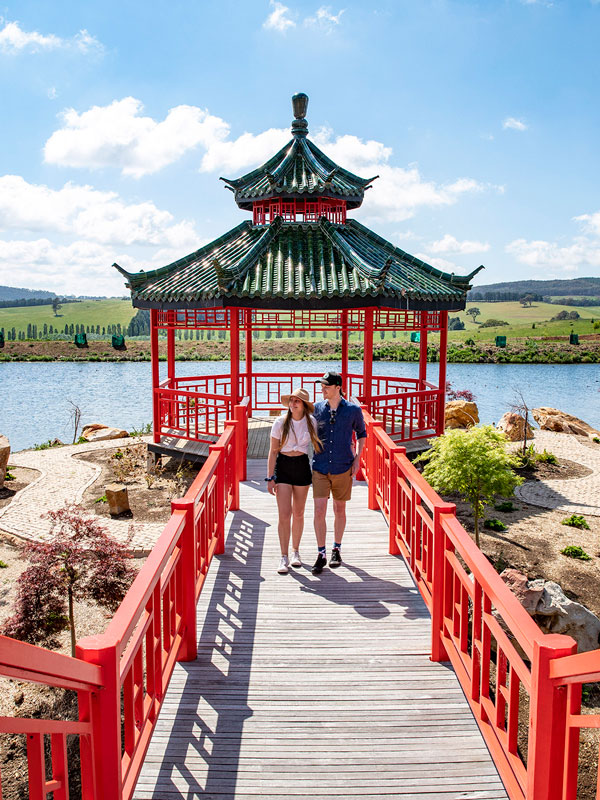
a couple walking along the Chinese Pagoda, Mayfield Garden
The Chinese Pagoda is just one of the garden features. (Image: Destination NSW)

Best things to do at Mayfield Garden

Even if you’re not an avid viewer of Gardening Australia, you’re going to find a profound appreciation for the work and dedication these gardens require. From horticulture and hospitality to marketing and masonry, the estate employs around 50 people to keep the Mayfield in awe-inspiring condition. Keep that in mind as you tour the estate, because you’ll no doubt find yourself exclaiming at the detail of the stonework or the meticulously trimmed hedges.
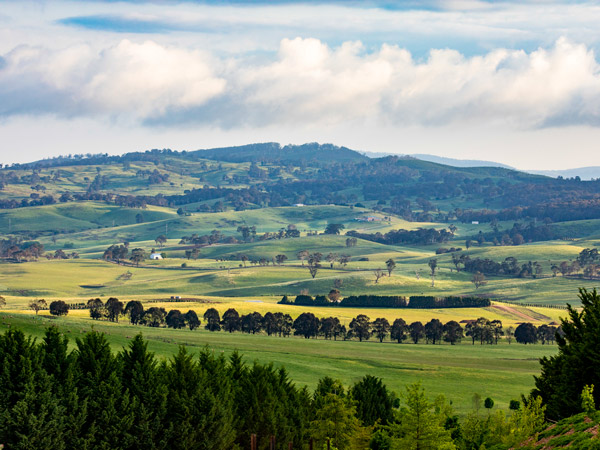
scenic views across Mayfield Garden, Oberon
The 65-hectare private garden is well-preserved. (Image: Destination NSW)

The gardens are divided into two separate parts. First is the public access to Mayfield Garden, open 363 days a year and rambling across 15 hectares. The second is the 50-hectare Hawkins’ Family Estate, which is only open during the four seasonal festivals each year, each running for around three to four weeks.
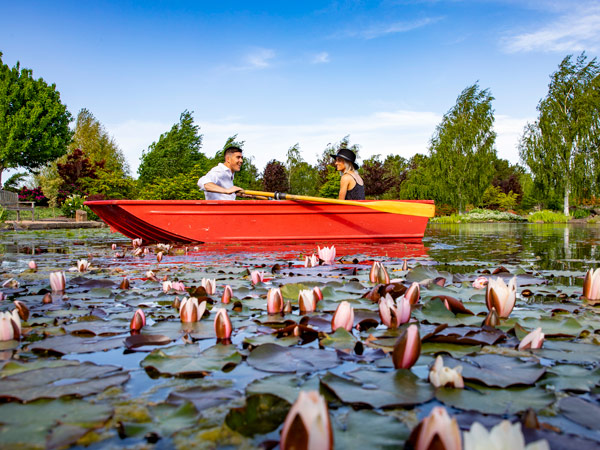
a couple rowing a boat during the Spring Festival in Mayfield Garden
Paddle your way around the lake for a charming romantic date. (Image: Destination NSW)

Begin a day at Mayfield Garden with a coffee in the restaurant, from there a leisurely pace will ensure you take in everything, but be sure you don’t miss the Bluestone Bridge, water garden and the grotto – all non-negotiable. To really soak up the magnitude of the achievement here, head to the Sandstone Gallery for the complete Hawkins Family and Mayfield Garden backstory. The Iron and Stone Arbour and Wisteria Walk are ripe for selfie-snapping and the Valley of the Five Ponds is perfect for a tranquil rest.
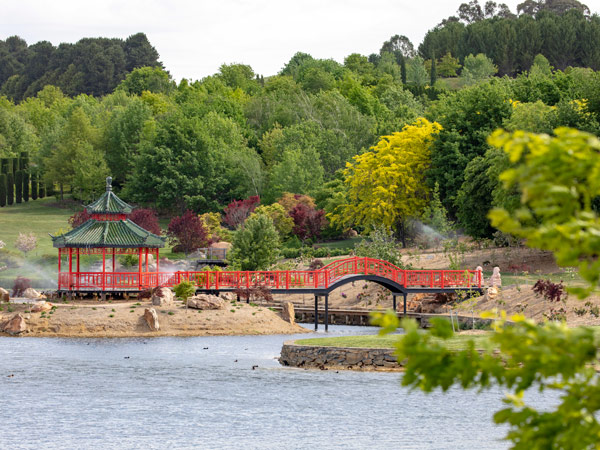
the red bridge in Mayfield Garden, Oberon
You’ll find a little red bridge over a pond. (Image: Destination NSW)

If your visit coincides with a garden festival that unlocks access to the Hawkins’ Private Family Garden, you’ll need to direct yourself to Australia’s largest private box hedge maze. The croquet court and rose garden will have you feeling like you’ve tripped into a Jane Austen dimension, and the Chinese pagoda and Mayfield Lake make for a romantic spot to linger. The newest feature of the garden and the latest must-see is the Herbaceous Border designed by celebrated garden designer Paul Bangay.
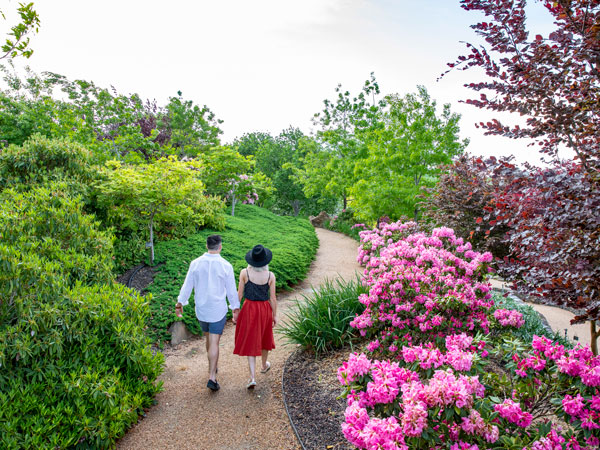
a couple walking along the colourful blooms in Mayfield Garden
Stroll around the colourful blooms in Mayfield Garden. (Image: Destination NSW)

Need tips, more detail or itinerary ideas tailored to you? Ask AT.

AI Prompt

Mayfield Garden restaurant

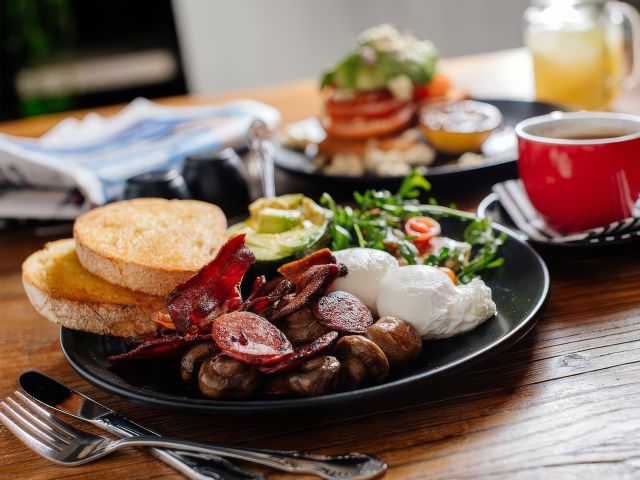
It makes good sense to make proper use of produce from the surrounding regions, thus most dishes at the onsite restaurant are beautifully fresh, seasonally inspired and made with local harvests. Garden-goers can pre-load with breakfast calories for a day roaming the property, pause their tour of the grounds for lunch, or finish the day with a sweet treat.
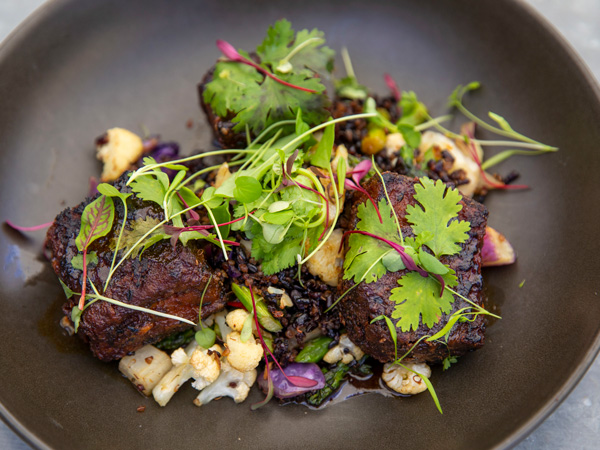
a close-up shot of a dish at Mayfield Garden's Cafe
The garden meals are made with local harvests. (Image: Destination NSW)

Depending on the season, you might be tucking into a warm winter salad, house-made granola or a Rueben sandwich. But with idyllic spots ripe for unfurling a rug under a verdant canopy, you could bypass dining in and, instead, order a picnic box from the restaurant. You can even add a bottle of wine or Champagne if things are headed in a celebratory direction.
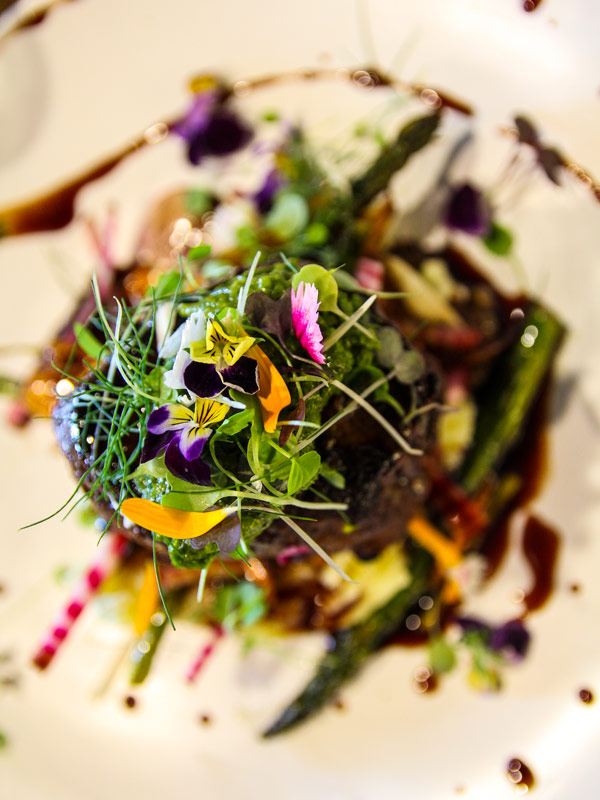
a close-up shot of a dish at Mayfield Garden's Cafe, Oberon
Pop by the Mayfield Garden’s Cafe for healthy greens. (Image: Destination NSW)

The best time to visit Mayfield Garden

A cool-climate garden ensures each season delivers a sensationally different experience, so given the garden is open most days of the year (it’s only closed on Christmas Day and Boxing Day), when you go depends largely on your preference for foliage and blooms.
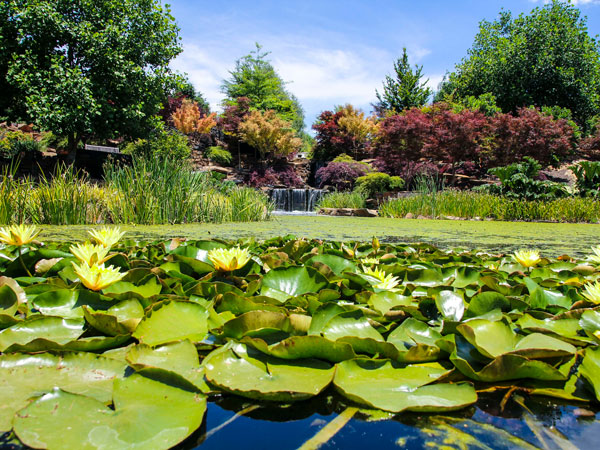
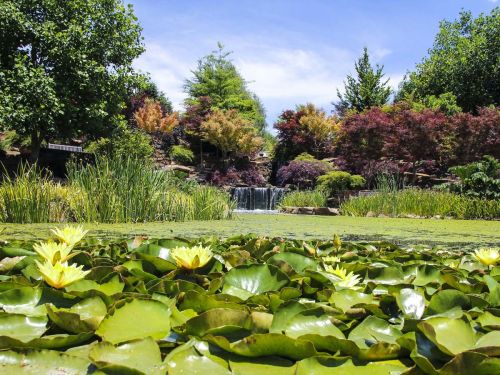
waterlilies in the pond of Mayfield Garden
Marvel at the waterlilies in the pond. (Image: Destination NSW)

In summer, it’s a lovely spot for a picnic under a shady tree and the waterlilies are flowering in the ponds; spring brings a chorus of colourful blooms and tender new leaves; autumn is cool and crisp with deciduous trees providing sunset-coloured canopies; and come winter, the garden is iced in frost and bareboned, but still lovely in its quietude.

However, if you’re keen to free-range through 50 hectares of the Hawkins’ Family Private Garden, you’ll need to coincide your visit with one of the four seasonal festivals.
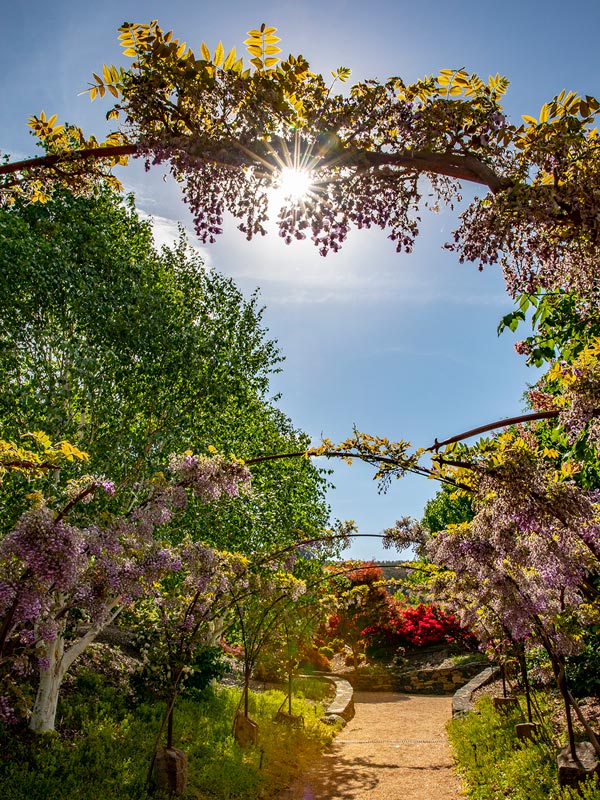
the entrance decorated with flowers at Mayfield Garden, Oberon
Every corner is festooned with flowers. (Image: Destination NSW)

Tickets and entry fees

Keen garden lovers can sprig for an annual membership that includes two-hour garden access, every day for a year (should you wish), for only $40. Otherwise, casual visits that take in 15 hectares of the garden cost $15.
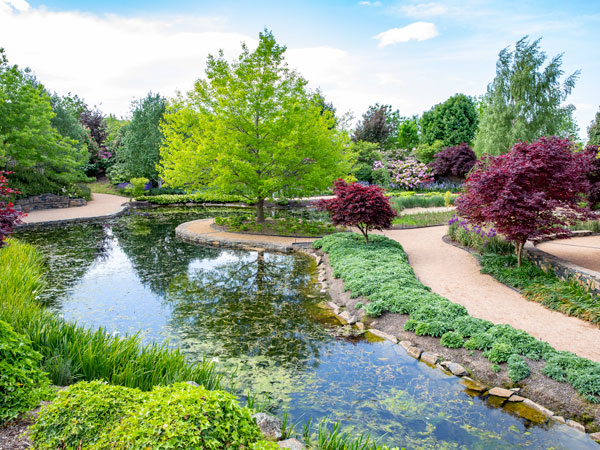
the lush garden setting in Mayfield, Oberon
A visit to the Mayfield Garden is a must for garden lovers. (Image: Destination NSW)

Come the seasonal festivals, for the same price, entry includes access to the 50-hectare Hawkins’ Family Private Garden and extends to five-hour sessions.

Got a gang of flower fanatics? Group tours also cost $15 per person, but come with access to the entire 65 hectares over four hours.
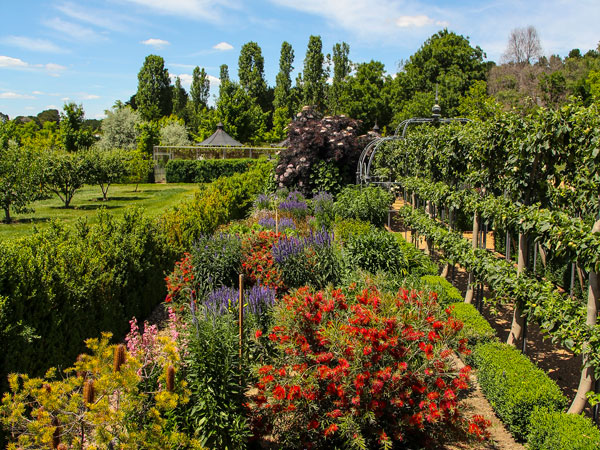
a lush and flower-filled landscape in Mayfield Garden, Oberon
Enjoy a two-hour access to the flower-filled garden. (Image: Destination NSW)

Weekly travel news, experiences
insider tips, offers, and more.

Getting to Mayfield Garden

You’ll find Mayfield Garden just 10 minutes out of town from beautiful Oberon, which is a relatively easy stretch from Sydney, accessed in under three hours along the Great Western Highway.

From Katoomba, it’s a 75-minute drive and it’s 40 minutes from Bathurst. Both Mudgee (north) and Cowra (south west) are two hours’ drive away, while Lithgow is less than an hour away.

driving along the scenic grounds of Mayfield Garden, Oberon
Mayfield Garden is just a short drive away. (Image: Destination NSW)

Mayfield Garden accommodation

There’s no permanent accommodation at Mayfield Garden, however, the onsite glampsite is open a few times a year to coincide with seasonal festivals in spring, summer and autumn. Glamping packages include garden access, luxe tent interiors, a pamper pack and a three-course dinner for two. You can also opt-in for breakfast delivered to your tent, which is pitched by the Obelisk Pond. One night costs $475.
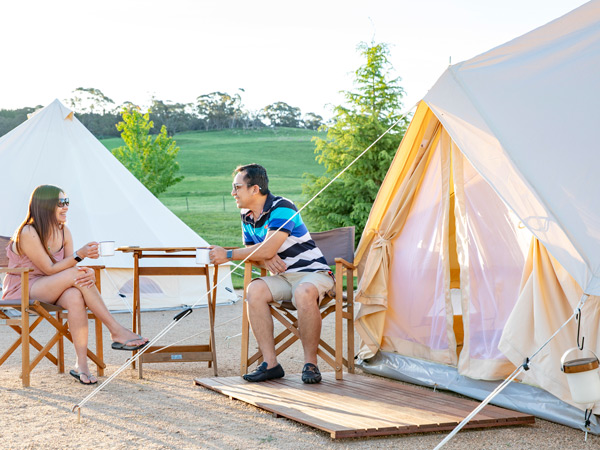
a couple enjoying their coffee outside the glamping tent at Mayfield Garden, Oberon
Settle into a glamping tent and enjoy a three-course dinner for two. (Image: Destination NSW)

Should you miss out on a garden-side glamp, your next closest option for consecutive days roaming Mayfield is to book into accommodation at Oberon. From cosy Beaconsfield Cottage or country chic Little Brundah to the more rustic Abercrombie Caves Campground or the luxe Lake Oberon Estate, there’s something to suit every budding horticulturalist’s budget.
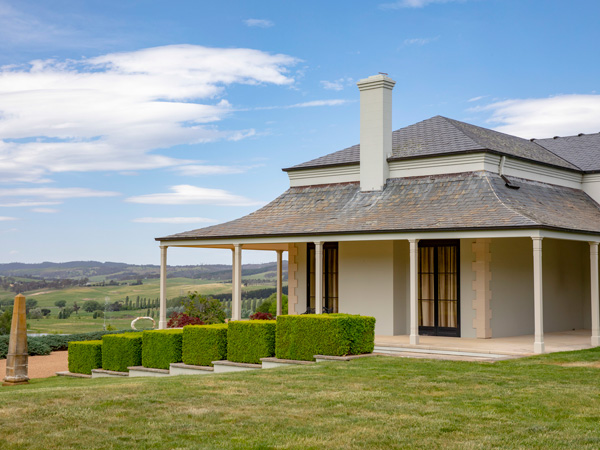
a building surrounded by manicured gardens in Mayfield
Stay amidst well-landscaped gardens in Mayfield. (Image: Destination NSW)

Want to see more stories from Australian Traveller in your Google search results?

  1. Click here to set Australian Traveller as a preferred source.
  2. Tick the box next to "Australian Traveller". That's it.
Lara Picone
Working for many of Australia’s top publications, Lara Picone has had the distinct pleasure of writing, editing and curating content about the finer things in life for more than 15 years. Graduating from Macquarie University with a Bachelor of Arts in Communication, her editorial foundation began at Qantas: The Australian Way magazine, before moving on to learn the fast-paced ropes of a weekly magazine at Sunday Magazine and picking up the art of brand curation at donna hay magazine. Pivoting a near-problematic travel lust into a career move by combining it with storytelling and a curious appetite, her next role was as Deputy Editor of SBS Feast magazine and later Online Editor of SBS Food online. She then stepped into her dream job as Editor of Australian Traveller before becoming Online Editor for both International Traveller and Australian Traveller. Now as a freelancer, Lara always has her passport at-the-ready to take flight on assignment for the Australian Traveller team, as well as for publications such as Qantas Magazine, Escape and The Weekend Australian. As ever, her appetite is the first thing she packs.
View profile and articles
hero media

Slowing down in Moree: a guide to the Artesian Spa Capital of Australia

(Credit: Destination NSW)

    Kassia Byrnes Kassia Byrnes
    The Artesian Spa Capital of Australia offers the perfect destination to escape the grind and reset.

    The world moves more slowly in Moree, and that’s how it should be. Here, country charm and heritage buildings fill the town’s wide streets. While the surrounding farmland mixes with lush riverways to create a fascinating landscape.

    But the biggest pull? Moree is known as the Artesian Spa Capital of Australia. It’s truly a place to slow down and disconnect, all an easy train ride from Sydney.

    Soak in Moree’s artesian water

    kids at Moree Artesian Aquatic Centre
    Dive in to Moree’s artesian waters.

    Moree is not your typical wellness retreat, replacing pretence with casual and easy. Blessed to be sitting above the Great Artesian Basin, it feeds the town (and surrounding villages) with hot, mineral-rich water. Loaded with minerals like calcium, magnesium, potassium and sulphur, this water is believed to help with skin health, joint function and tissue repair.

    And the town’s crown jewel, Moree Artesian Aquatic Centre, has reopened after extensive upgrades. This state-of-the-art aquatic centre offers accessible facilities with multiple artesian baths of varying temperatures between 38 and 41°C.

    Feel like exploring a little further? About an hour’s drive from Moree, the village of Boomi also offers public access to this same artesian water. Pop into Boomi Artesian Pool to make the most of a 25-metre cold pool, a wading pool and a hot artesian spa pool.

    Just an hour west of Boomi, you’ll also find Mungindi Hot Artesian Pool, another relaxing place to rejuvenate for the afternoon in the mineral-rich water.

    Moree’s best stays

    woman swimming ta Moree Artesian Aquatic Centre
    Stay right by Moree Artesian Aquatic Centre.

    There are several motels within walking distance of the aquatic centre, so you linger longer in its therapeutic waters. A day pass not enough? Really soak in the benefits of Moree at three local stays with their own artesian baths.

    Gwydir Thermal Pools Resort boasts five artesian pools for motel and caravan park guests, ranging in soothing temperatures from 34 to 39 degrees. And that includes a 25-metre lap pool.

    The Phoenix, Artesian Spa Resort & Accommodation features outdoor artesian thermal pools and six indoor artesian spas, all 34 to 42°C, plus regular pools for guests staying in their accommodations.

    While the Artesian Spa Motel matches 46 comfortable budget rooms set across five acres of landscaped grounds, with direct access (for guests) to its own natural artesian hot thermal pool.

    Moree’s location at the crossroads of the Newell and Gwydir Highways makes it the ideal resting place for those road tripping through country NSW. With plenty of accommodation options, including farm stays, quaint bed and breakfasts and affordable motels.

    Delving into nature around Moree

    aerial of moree
    Find plenty of natural beauty in and around Moree. (Credit: Destination NSW)

    Beyond the baths, find calm in Moree’s nature. Soak up the impressive Gwydir River from the peaceful Tareelaroi Weir Recreation Area. Popular with locals, this scenic spot is perfect for fishing, kayaking and picnics. Delve into local history at the Terry Hie Hie Picnic Area – a significant Gamilaroi cultural site. The picnic area is still used today as a ceremonial gathering ground, with educational signage sharing the history of the Gamilaroi People and the mission which used to reside here in the early 20th Century. Follow the Yana-y Warruwi Walking Track to explore the area’s box pine forest.

    Combine nature and culture at the Jellicoe Park Open Spaces Aboriginal Art Trail along the scenic Mehi River Walk. Find artworks from local Indigenous artists across a range of different mediums, like carved logs, engraved and painted sandstone and scar tree paintings.

    A taste of Moree

    meal at Moree Country Club
    Sit down for a tasty meal after a game of golf. (Credit: Destination NSW)

    Taste the best of local cafes as you wander past the Art Deco architecture of Moree’s tree-lined main streets. Join the locals each morning at Brooker Trading Co as they line up for their morning java. Stay for classic breakfast dishes like eggs benedict and Dutch pancakes, or arrive later in the day for a hearty lunch menu. Inside a gorgeous Art Deco building, 61 Balo is another tasty breakfast option, with pet-friendly service. The recently renovated Cafe Omega is another popular stop for fresh, hearty meals – the chicken burger is a particular crowd pleaser – all served with a smile.

    Get inspired as you wander the CBD’s Mural Trail, stopping at some of Moree’s six art galleries along the way. Bank Art Museum is a must-see, housed in the town’s heritage bank building and home to a collection of First Nations art, plus a changing calendar of touring exhibitions.

    Bank Art Museum Moree
    Step inside the gorgeous Bank Art Museum Moree. (Credit: Destination NSW)

    Get active with a round on the beautiful riverside course at Moree Golf Club (and refuel afterwards at the delicious onsite restaurant) or a game of bowls at Moree Services Club’s state-of-the-art facility. Visit on the last weekend of September to join (or watch) Run the Plains, Moree’s annual two-day running festival.

    Known as ‘white gold’ country, Moree is Australia’s most productive agricultural region. Visit from April to September to join a cotton farm tour and get to know one of Moree’s major exports.

    However long you choose to stay, there’s plenty to soak in around Moree.

    Start planning the ultimate escape at visitmoreeplains.com.au.