hero media

This spotted gum coastal walk is NSW’s most underrated trail

Swap screens for dreamy coastal scenes on this little-known, 34-kilometre walk along NSW’s spectacular South Coast.

If New Year’s digital detox resolutions have already been dumped, fear not. NSW is home to a raft of beautiful walks that give you every reason to ditch your devices, from the volcanic Tomaree Coastal Walk to the culturally-charged Gidjuum Gulganyi Walk. But the Murramarang South Coast Walk, one of NSW’s ‘Great Walks’, stands apart.

Stretching between Ulladulla and Batemans Bay on the South Coast, the walk is typically completed over three days and is hemmed by spotted gum forests that grow right down to the beach. Rated Grade 4 in terms of difficulty, the reward-to-effort ratio is generous – prepare to traverse sleepy coastal villages that move at blissful snail-paced tempos, pass dramatic rock formations and cross secluded beaches with scintillating waters. 

The walk can be tackled independently or via multi-day, self-guided or guided experience packages. These include pre-booked stays at campgrounds or roofed accommodations and the option to add on transfers.  

What’s special about Murramarang South Coast Walk?
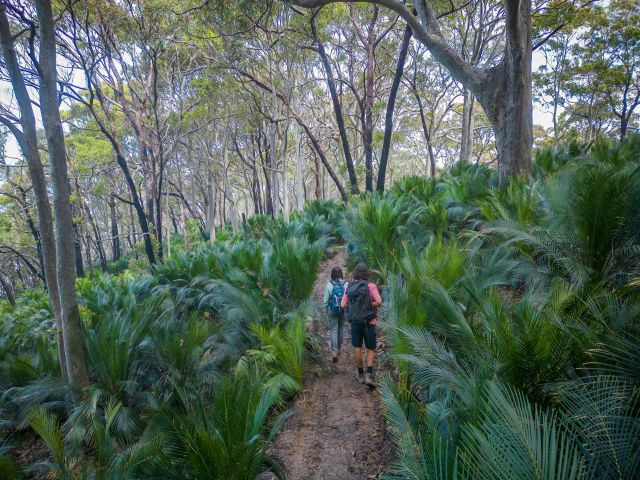
Point Upright, Murramarang South Coast walk
Hiking through vibrant forest near Point Upright. (Image: DCCEEW/John Spencer)

Murramarang National Park offers a rare natural phenomenon you’ll find in few other places in Australia – majestic burrawangs and spotted gum trees that grow right down to the beach. Every summer, the gums’ dimpled bark sheds to reveal mottled cream and grey spots that give the species its name. These beachside forests bring walkers the best of both worlds – the cool shade and birdwatching opportunities (twitchers, look out for lyrebirds and wonga pigeons) of the gum forests, as well as the swimming perks and serene environments of little-known beaches.  

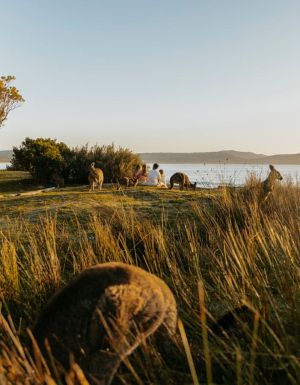
Apart from birds, keep your eyes peeled for abundant local wildlife, including eastern grey kangaroos you’ll find grazing and bounding near beaches and picnic areas – especially around Pebbly Beach. 

The Murramarang South Coast Walk also holds immense cultural significance for the Indigenous Yuin people, who have rich, continuing connections to the lands and waters. The national park is home to the Murramarang Aboriginal Area, which is scattered with middens (ancient waste deposits of stone and shells) and sacred sites that show signs of life dating back thousands of years. 

Murramarang South Coast Walk route
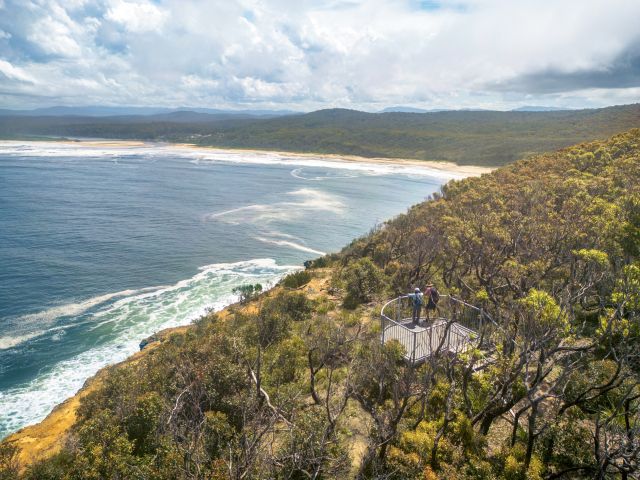
Point Upright lookout, Murramarang
Stunning views from Point Upright lookout. (Image: DCCEEW/John Spencer)

The Murramarang South Coast Walk begins at Pretty Beach near Bawley Point, around three hours’ drive south of Sydney/Warrane or 1.5 hours from Canberra. Hikers trace idyllic, bush-flanked coastline until they reach Pebbly Beach, known for its kangaroos and calm, pristine waters.  

From there, it’s around a one-hour stretch before arriving at Depot Beach, another picturesque swimming and camping spot. Boasting views towards North and South Durras, nearby Point Upright lookout is a must. 
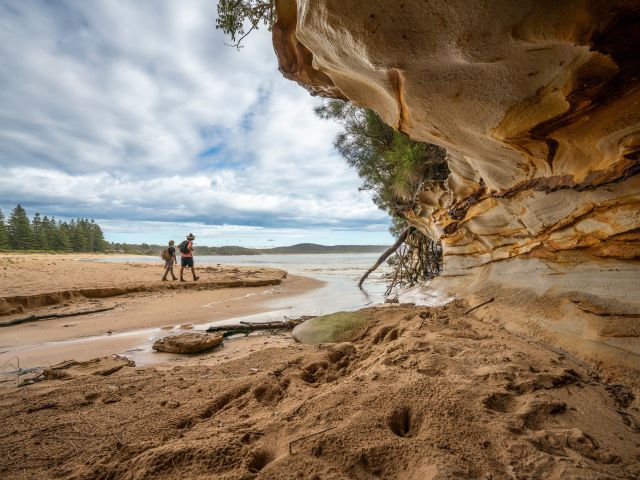
Murramarang South Coast walk near Wasp head
The track takes walkers past wave rock formations near Wasp Head. (Image: DCCEEW/John Spencer)

Continuing south, highlights include panoramic North Head lookout, along with sheltered Yellow Rock Beach that’s blissfully free from crowds. The walk ends at Maloneys Beach in Batemans Bay, also known for its abundant wildlife. 

Of course, it’s possible to complete smaller segments of the walk if you don’t have time to tackle the entire 34 kilometres.  

Need tips, more detail or itinerary ideas tailored to you? Ask AT.

AI Prompt

Where to stay along the Murramarang South Coast Walk
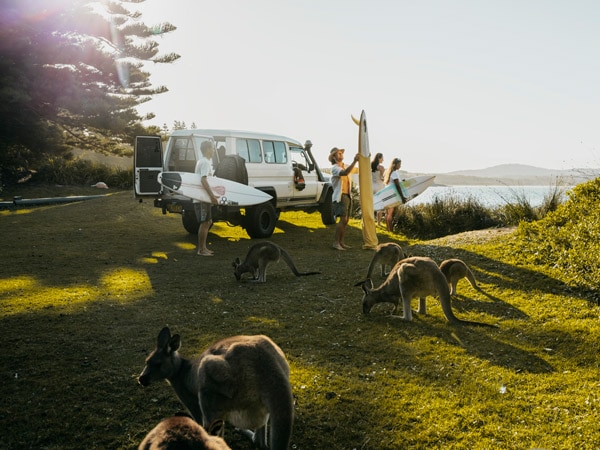
a group of friends getting ready to surf with kangaroos surrounding them at NRMA Murramarang Beachfront Holiday Resort
Meet furry friends at NRMA Murramarang Beachfront Holiday Resort. (Image: Destination NSW)

Need a place to rest your head and regain energy? These campsites and accommodations are located along or near the Murramarang walk. 

  • Pretty Beach campground 
  • Depot Beach campground and cabins  
  • Oaky Beach campground 
  • North Head campground  
  • Yellow Rock Beach House in Murramarang National Park near Batemans Bay has its own private beach and water views from the deck 
  • Judges House is a peaceful coastal cottage with a shady timber deck near Yellow Rock Beach
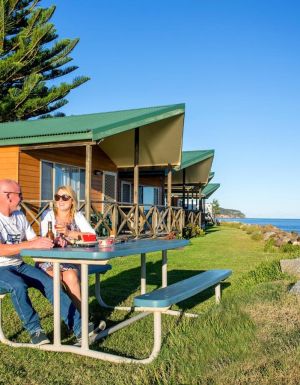
  • NRMA Murramarang Beachfront Holiday Resort offers a variety of accommodation styles, from cabins and villas to glamping and camping
  • Pebbly Beach shacks are rustic, self-contained cabins with direct beach access

Weekly travel news, experiences
insider tips, offers, and more.

Self-guided experiences
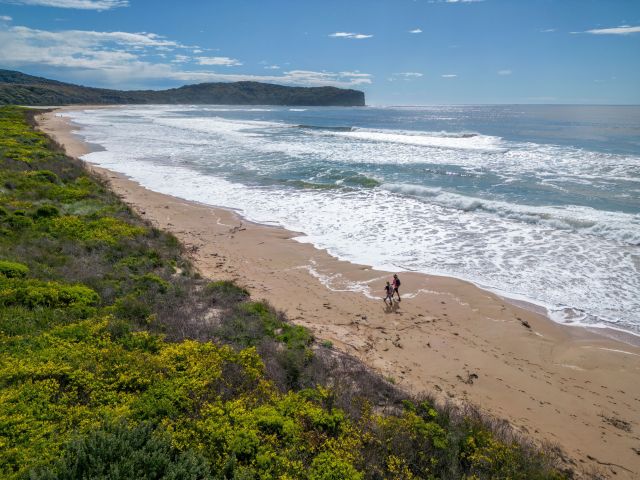
Murramarang South Coast walk Durras lake
Discover coastal beauty near Durras Lake. (Image: DCCEEW/John Spencer)

From March to November, walkers can book a three-day cabin experience, staying overnight in cabins at Depot Beach and South Durras from $670 for up to four people. Alternatively, a four-day camping experience offers three nights of tented accommodation at Pretty Beach, Depot Beach and Oaky Beach from $160 for two people.  

Guided experiences

Those wanting the expertise and company of a guide (along with an extra dose of comfort) can opt for the Region X three-day Murramarang premium journey. The tour includes stays in private villas at Depot Beach and South Durras and starts from $1099 based on a twin share.  

Or, join the four-day Women Want Adventure Murramarang hike for female companionship, secluded camps and a true digital detox, with your sleeping gear and clothing transported to the next camp each day for you. Prices start from $2190 per person. 

Tips

  • Check weather forecasts and information on tides from the Bureau of Meteorology website. 
  • Bring plenty of water and fuelling snacks such as muesli bars 
  • Don’t forget your swimmers! There are plenty of picturesque beaches and secluded bays along the way 
  • Don’t leave food lying out in campgrounds – hungry possums will take advantage of the free meal
Eleanor Edström
Eleanor Edström is Australian Traveller’s Associate Editor. Previously a staff writer at Signature Luxury Travel & Style and Vacations & Travel magazines, she's a curious wordsmith with a penchant for conservation, adventure, the arts and design. She discovered her knack for storytelling much earlier, however – penning mermaid sagas in glitter ink at age seven. Proof that her spelling has since improved, she holds an honours degree in English and philosophy, and a French diploma from the University of Sydney. Off duty, you’ll find her pirouetting between Pilates and ballet classes, or testing her friends’ patience with increasingly obscure vocabulary.
View profile and articles
hero media

Slowing down in Moree: a guide to the Artesian Spa Capital of Australia

(Credit: Destination NSW)

    Kassia Byrnes Kassia Byrnes
    The Artesian Spa Capital of Australia offers the perfect destination to escape the grind and reset.

    The world moves more slowly in Moree, and that’s how it should be. Here, country charm and heritage buildings fill the town’s wide streets. While the surrounding farmland mixes with lush riverways to create a fascinating landscape.

    But the biggest pull? Moree is known as the Artesian Spa Capital of Australia. It’s truly a place to slow down and disconnect, all an easy train ride from Sydney.

    Soak in Moree’s artesian water

    kids at Moree Artesian Aquatic Centre
    Dive in to Moree’s artesian waters.

    Moree is not your typical wellness retreat, replacing pretence with casual and easy. Blessed to be sitting above the Great Artesian Basin, it feeds the town (and surrounding villages) with hot, mineral-rich water. Loaded with minerals like calcium, magnesium, potassium and sulphur, this water is believed to help with skin health, joint function and tissue repair.

    And the town’s crown jewel, Moree Artesian Aquatic Centre, has reopened after extensive upgrades. This state-of-the-art aquatic centre offers accessible facilities with multiple artesian baths of varying temperatures between 38 and 41°C.

    Feel like exploring a little further? About an hour’s drive from Moree, the village of Boomi also offers public access to this same artesian water. Pop into Boomi Artesian Pool to make the most of a 25-metre cold pool, a wading pool and a hot artesian spa pool.

    Just an hour west of Boomi, you’ll also find Mungindi Hot Artesian Pool, another relaxing place to rejuvenate for the afternoon in the mineral-rich water.

    Moree’s best stays

    woman swimming ta Moree Artesian Aquatic Centre
    Stay right by Moree Artesian Aquatic Centre.

    There are several motels within walking distance of the aquatic centre, so you linger longer in its therapeutic waters. A day pass not enough? Really soak in the benefits of Moree at three local stays with their own artesian baths.

    Gwydir Thermal Pools Resort boasts five artesian pools for motel and caravan park guests, ranging in soothing temperatures from 34 to 39 degrees. And that includes a 25-metre lap pool.

    The Phoenix, Artesian Spa Resort & Accommodation features outdoor artesian thermal pools and six indoor artesian spas, all 34 to 42°C, plus regular pools for guests staying in their accommodations.

    While the Artesian Spa Motel matches 46 comfortable budget rooms set across five acres of landscaped grounds, with direct access (for guests) to its own natural artesian hot thermal pool.

    Moree’s location at the crossroads of the Newell and Gwydir Highways makes it the ideal resting place for those road tripping through country NSW. With plenty of accommodation options, including farm stays, quaint bed and breakfasts and affordable motels.

    Delving into nature around Moree

    aerial of moree
    Find plenty of natural beauty in and around Moree. (Credit: Destination NSW)

    Beyond the baths, find calm in Moree’s nature. Soak up the impressive Gwydir River from the peaceful Tareelaroi Weir Recreation Area. Popular with locals, this scenic spot is perfect for fishing, kayaking and picnics. Delve into local history at the Terry Hie Hie Picnic Area – a significant Gamilaroi cultural site. The picnic area is still used today as a ceremonial gathering ground, with educational signage sharing the history of the Gamilaroi People and the mission which used to reside here in the early 20th Century. Follow the Yana-y Warruwi Walking Track to explore the area’s box pine forest.

    Combine nature and culture at the Jellicoe Park Open Spaces Aboriginal Art Trail along the scenic Mehi River Walk. Find artworks from local Indigenous artists across a range of different mediums, like carved logs, engraved and painted sandstone and scar tree paintings.

    A taste of Moree

    meal at Moree Country Club
    Sit down for a tasty meal after a game of golf. (Credit: Destination NSW)

    Taste the best of local cafes as you wander past the Art Deco architecture of Moree’s tree-lined main streets. Join the locals each morning at Brooker Trading Co as they line up for their morning java. Stay for classic breakfast dishes like eggs benedict and Dutch pancakes, or arrive later in the day for a hearty lunch menu. Inside a gorgeous Art Deco building, 61 Balo is another tasty breakfast option, with pet-friendly service. The recently renovated Cafe Omega is another popular stop for fresh, hearty meals – the chicken burger is a particular crowd pleaser – all served with a smile.

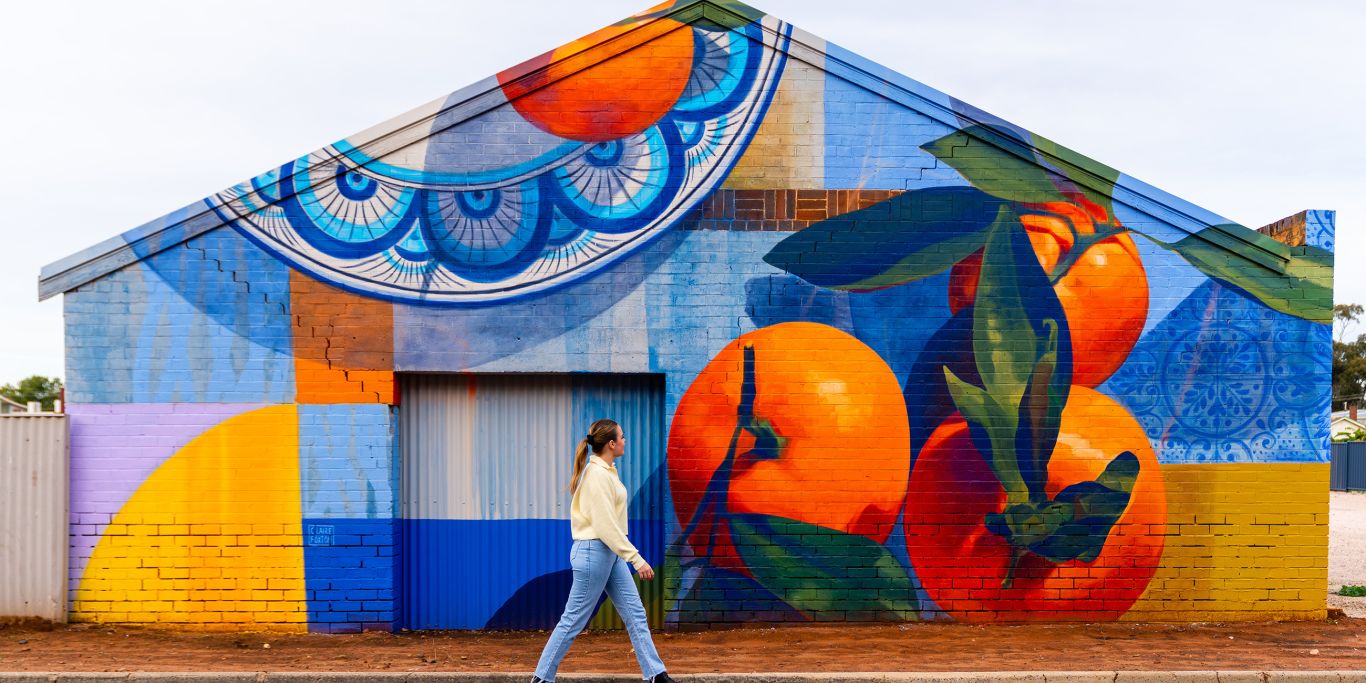
    Get inspired as you wander the CBD’s Mural Trail, stopping at some of Moree’s six art galleries along the way. Bank Art Museum is a must-see, housed in the town’s heritage bank building and home to a collection of First Nations art, plus a changing calendar of touring exhibitions.

    Bank Art Museum Moree
    Step inside the gorgeous Bank Art Museum Moree. (Credit: Destination NSW)

    Get active with a round on the beautiful riverside course at Moree Golf Club (and refuel afterwards at the delicious onsite restaurant) or a game of bowls at Moree Services Club’s state-of-the-art facility. Visit on the last weekend of September to join (or watch) Run the Plains, Moree’s annual two-day running festival.

    Known as ‘white gold’ country, Moree is Australia’s most productive agricultural region. Visit from April to September to join a cotton farm tour and get to know one of Moree’s major exports.

    However long you choose to stay, there’s plenty to soak in around Moree.

    Start planning the ultimate escape at visitmoreeplains.com.au.