hero media

From black swans to bin chickens: this is Australia’s Bird of the Year

It’s a small act with a big impact – your vote matters!

From the unmistakable garble of magpies to the colourful flash of rainbow lorikeets, Australia’s native birds are as vibrant as the country they call home. To spotlight our often-underappreciated Aves, The Guardian and Birdlife Australia have teamed up to bring you the nation’s most charming wildlife competition, and your vote counts.

Australian Bird of the Year explained

Originally launched in 2017 and held every two years since, the Australian Bird of the Year competition is a celebration of our birds, one of the country’s most unique wildlife species. But it also serves a deeper purpose – to highlight the importance of our native bird species and the challenges they face in a rapidly changing environment.
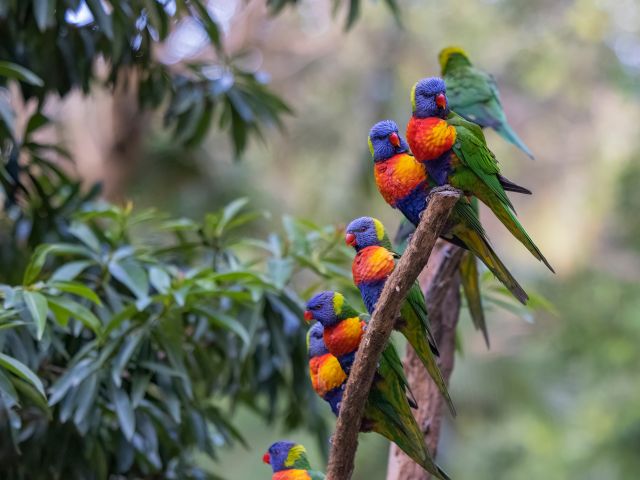
Rainbow lorikeets
Rainbow lorikeets are one of Australia’s most recognisable birds. (Image: Getty/Matthew Starling)

Australia is home to roughly 850 native bird species. A significant portion of those are also endemic, meaning they cannot be found anywhere else on the planet – mainly due to Australia’s geographical isolation.

The troubling news? Under the government’s Environment Protection and Biodiversity Conservation Act 1999 , 22 native bird species are already completely extinct, with 77 classified as vulnerable, more than any other species on the list. Over 65 are listed as endangered and 18 critically endangered, including some of the competition’s nominees.
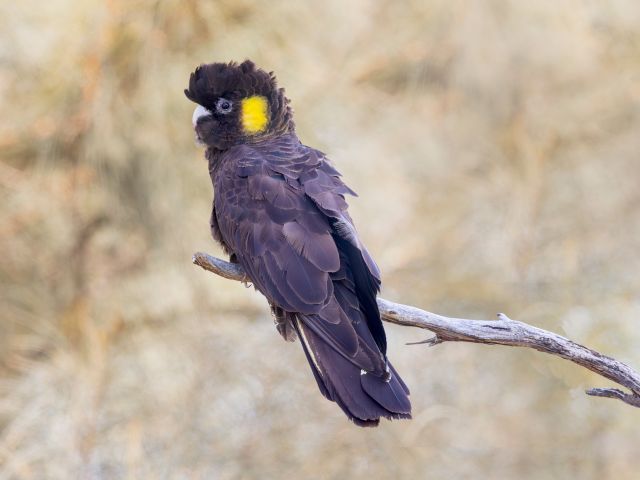
Black cockatoo
The black cockatoo one of 77 species listed as vulnerable. (Image: Getty/Jeremy Edwards)

Take one of the previous Australian Bird of the Year winners. The swift parrot took out top spot in 2023 – and it’s no surprise. The endemic species, usually found in Tasmania, is one of just three migratory parrots on Earth. But it’s also critically endangered, with demographic studies predicting it could be completely extinct as soon as 2031.

Here’s how you can help

We still have time to make a difference, and it really doesn’t take much. If you’re in a position to do so, Birdlife Australia accepts donations, which are funnelled into protecting endangered species, restoring habitats, building conservation partnerships and educating the public. Or you can volunteer your spare time to monitor birds, collect data and repair damaged habitats.
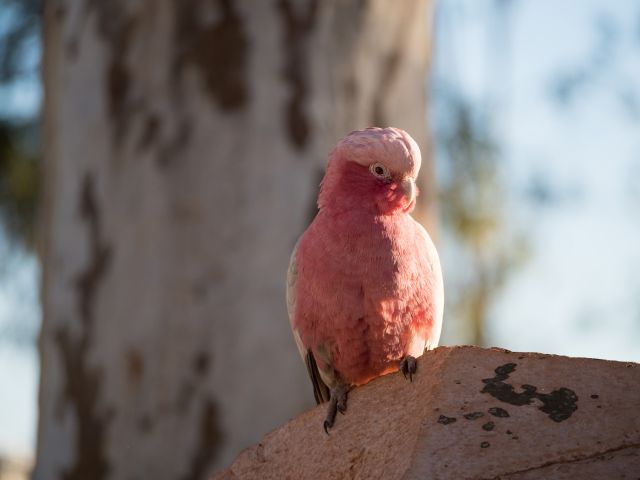
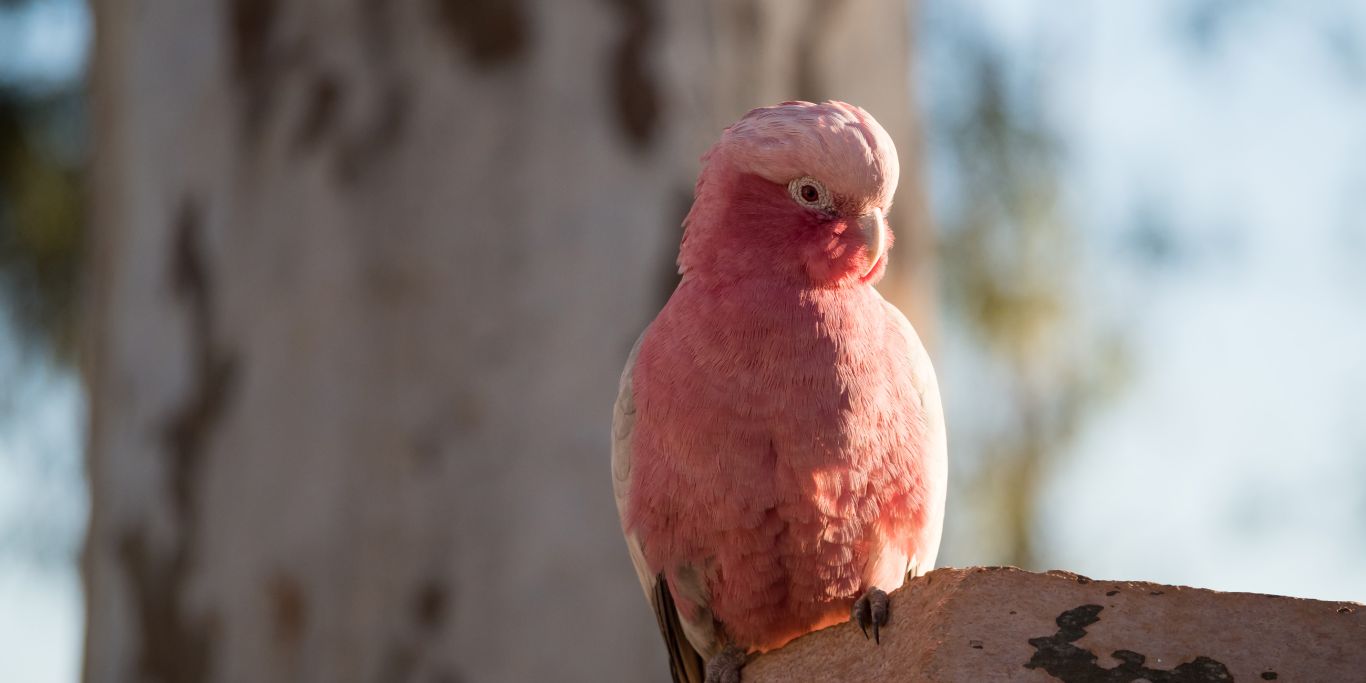
Pink galah
Birdlife Australia helps restore habitats for species like the pink galah. (Image: Getty/Christine Williger)

I get it though, we’re all busy. But just by voting for your favourite Australian Bird of the Year, you’re not only raising awareness, you’re also supporting an organisation that is working hard to save our native birdlife. And even though this year’s competition has closed, you don’t have to miss out. The Australian Bird of the Year is a recurring event and returns in 2027.

So, who won?

In the end, it came down to 10 finalists: the tawny frogmouth, Baudin’s black cockatoo, gang-gang cockatoo, willie wagtail and bush stone-curlew, southern emu-wren, kookaburra, little penguin, spotted pardalote and wedge-tailed eagle. Voting went dark for 24 hours as the final votes were counted. But on Thursday morning, the results were in and the winner revealed – a moment many are calling poetic justice.

Now, drum roll please! The 2025 Australian Bird of the Year is officially the tawny frogmouth! The adorable nocturnal owl narrowly missed out in 2023, coming in second to the swift parrot. And while the competition might be over for another year, the fight to protect Australia’s native birds is only just beginning.
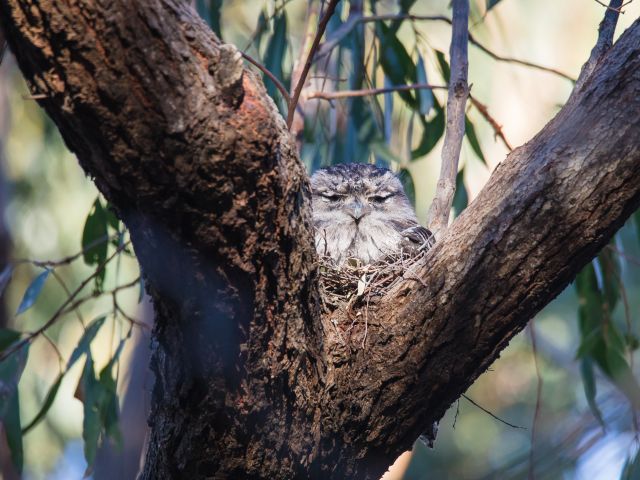
Tawny Frogmouth
The tawny frogmouth is 2025’s Australian Bird of the Year. (Image: Getty/Brayden Standford)
Taylah Darnell
Taylah Darnell is Australian Traveller's Writer & Producer. She has been passionate about writing since she learnt to read, spending many hours either lost in the pages of books or attempting to write her own. This life-long love of words inspired her to study a Bachelor of Communication majoring in Creative Writing at the University of Technology Sydney, where she completed two editorial internships. She began her full-time career in publishing at Ocean Media before scoring her dream job with Australian Traveller. Now as Writer & Producer, Taylah passionately works across both digital platforms and print titles. When she's not wielding a red pen over magazine proofs, you can find Taylah among the aisles of a second-hand bookshop, following a good nature trail or cheering on her EPL team at 3am. While she's keen to visit places like Norway and New Zealand, her favourite place to explore will forever be her homeland.
See all articles
hero media

Look up: The Aurora Australis might be visible tonight

The most severe solar storm of the year is underway.

A powerful solar storm is happening right now, and if you’re in southern Australia, tonight might be your chance to see the colourful display.

According to the Australian Space Weather Forecasting Centre (ASWFC) at the Bureau of Meteorology , a severe geomagnetic storm is underway. They have issued an Aurora Alert, meaning space weather activity is favourable for viewing the spectacle: “Severe geomagnetic storm in progress. Aurora may be observed during local nighttime hours in good observing conditions at regions as far equatorward as middle latitudes.”

According to the ASWFC’s website, Aurora Alerts are issued “when space weather activity favourable for viewing aurora is in progress. When an alert is current, the alert information indicates the latitudinal range in terms of high, middle, low and equatorial regions where aurora may be visible under good observing conditions.”

What is the Aurora Australis?

A man with a head torch looking at the Aurora Australis
Tasmania is the best place in Australia to see the spectacle. (Image: Tourism Tasmania)

The Aurora Australis – also known as the Southern Lights – is one of the most dazzling natural displays visible to the human eye. Put simply, the phenomenon occurs when the sun releases a massive burst of charged particles and magnetic fields into space.  These particles are captured and funnelled toward the southern poles by Earth’s magnetic field, colliding with gases in the Earth’s atmosphere. The collisions result in light being emitted and a spectacular natural dancing rainbow ensuing. 

The past two years have been particularly good years for viewing the phenomenon. 

How to see the Aurora Australis

An Aurora Australis display at night along the coastline
A Southern Lights display can last minutes to hours. (Image: Unsplash/Graham Holtshausen)

Tasmania has historically been the best spot to see the Aurora Australis due to low light pollution and its position closer to the South Pole than mainland Australia. South Arm Peninsula, Bruny Island and Cockle Creek are popular viewing locations on the island.

But the good news is the ASWFC has shared that it’s possible the Aurora Australis could be seen further north, in mid to southern parts of Australia.  

In Victoria, Wilsons Promontory National Park, Point Lonsdale and Phillip Island are favourable locations; in New South Wales, Jervis Bay, Kiama or the Blue Mountains might offer you the glowing display; and in South Australia, the Fleurieu Peninsula, Kangaroo Island and Eyre Peninsula offer excellent southern exposure. 

A Southern Lights display can last minutes to hours, with the best active window typically being between 10pm and 2am.

You can read more about the natural light display in our Southern Lights guide and stay up to date via the Bureau of Meteorology website