hero media

These NSW campgrounds let you leave your gear at home

Credit: Camplify

Nature-lovers in NSW will soon have the option to arrive at camp a lot lighter, thanks to the introduction of supported camping in select campgrounds.

From 1 November, 17 campgrounds in NSW National Parks are giving campers the ability to hire gear that can be delivered, set up, and packed down, right at their campsite. This gives people the best of both worlds: to enjoy a night in nature without the associated headache (and cost) of having to BYO camping kit. 

The select campgrounds can be found across Sydney, the Central Coast, South Coast, Blue Mountains, Southern Ranges, and Central West.

How does supported camping work?

Sixteen campgrounds will support equipment hire via Camplify, an online marketplace that allows individuals to rent their equipped camper trailers, caravans, campervans, and motorhomes to other campers at an owner-set rate. It’s expected the average cost of hiring a caravan will be $165 per night.

Meanwhile, bell tent hire via The Glamping Nomad will return to The Basin Campground where it was available between 2015 and 2024. Prices begin at $380 for two people for a minimum of two nights, with additional camping equipment such as camp chairs, tables, and coolers available to rent at additional cost.

‘Visitors can book their campsite through the usual National Parks and Wildlife Service (NPWS) booking system and then arrange equipment hire directly through the providers’, said NSW National Parks and Wildlife Service Deputy Secretary, Alex Graham. Campers will need to book a site appropriate for the hired gear and share their booking reference number with the supplier. 

Who is supported camping for?
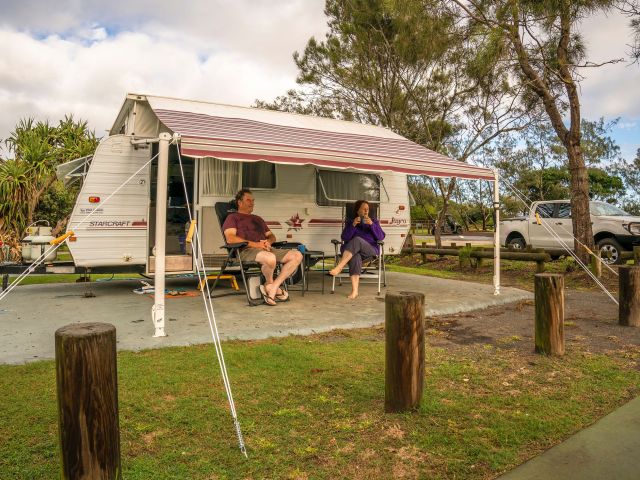
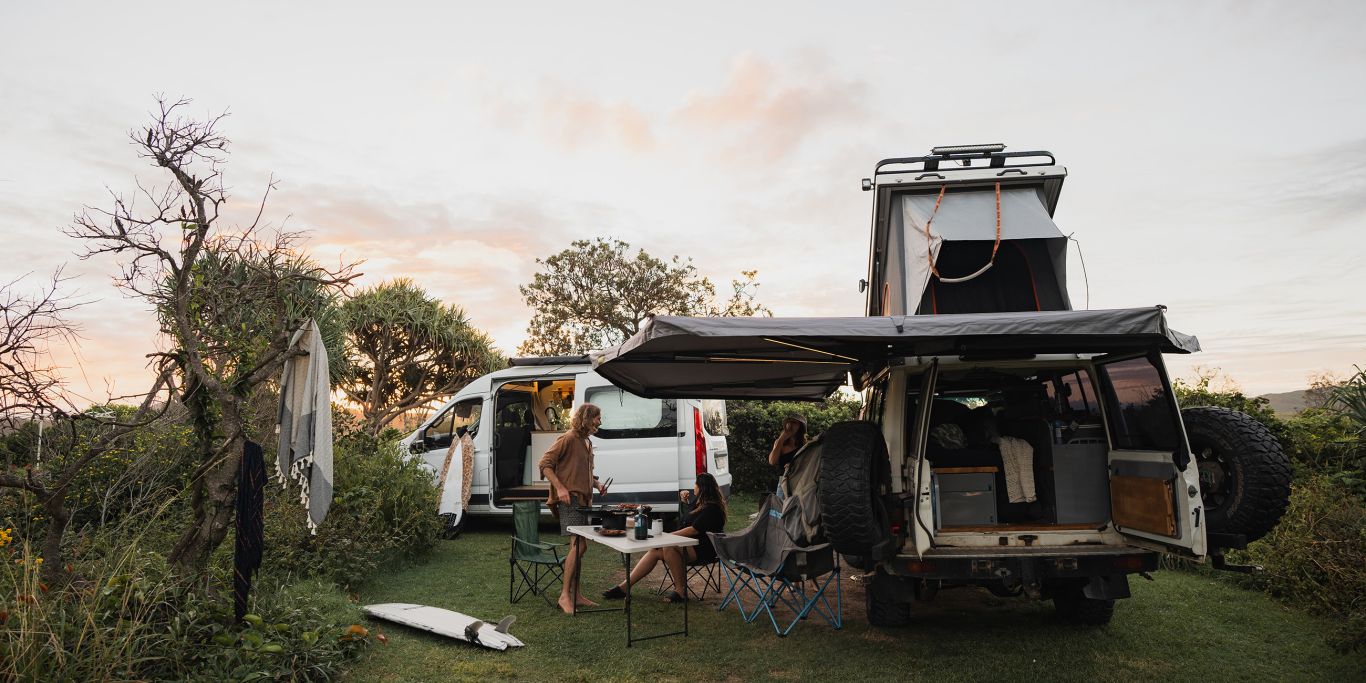
camping set up gear free camping
People who are new to camping can try it out without spending hundreds on the gear. (Credit: NSW National Parks)

Outdoor adventurer Michael Atkinson, AKA Outback Mike, who has drawn attention to changes in NSW National Parks in the past, agrees with the initiative for the most part, saying many people don’t have an appropriate car for towing trailers or caravans. However he questioned whether it was the responsibility of the National Parks and Wildlife Service to provide this service.

‘I don’t feel that national parks need to go out of their way to cater for people like that because I feel there are plenty of other caravan parks’, he said. ‘But if it does get people out there, we do have to look at the benefits – their happiness, their valuation of nature.’ 

Atkinson is also a fan of gear hire as it allows people to try camping as a hobby and assess different arrangements before buying gear for themselves, potentially saving plastic waste from landfill. 

‘I just think of a family that lives in Sydney that wants to go camping and spends $2000 on camping gear. They’ve just created all this extra plastic and waste that sits there and gets chucked out in twenty years time’, Atkinson said. ‘If that can be avoided, that’s good.’

Need tips, more detail or itinerary ideas tailored to you? Ask AT.

AI Prompt

Which campgrounds offer supported camping?
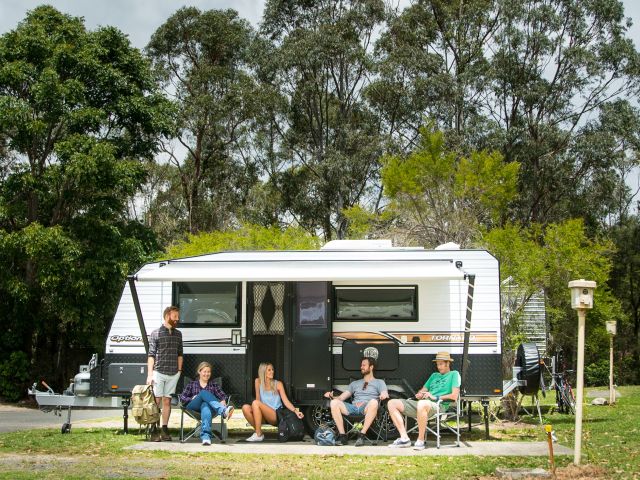
gear free camping camplify
Some of NSW’s most popular camping spots will be offering the service. (Credit: NSW National Parks)

The 17 participating campgrounds are:

  • The Basin Campground in Ku-ring-gai Chase National Park
  • Wombeyan Caves Campground in Wombeyan Karst Conservation Reserve
  • Killalea Campground in Killalea Regional Park
  • Camp Blackman in Warrumbungle National Park
  • Coorongooba Campground in Wollemi National Park
  • Thredbo Diggings Campground in Kosciuszko National Park
  • Dunphys Campground in Blue Mountains National Park
  • Pretty Beach Campground in Murramarang National Park
  • Mill Creek Campground in Dharug National Park
  • Hobart Beach Campground in Bournda National Park
  • Ganguddy-Dunns Swamp Campground in Wollemi National Park
  • Freemans Campground in Munmorah State Conservation Area
  • The Ruins Campground in Booti Booti National Park
  • Abercrombie Caves Campground in Abercrombie Karst Conservation Reserve
  • Depot Beach Campground in Murramarang National Park
  • Picnic Point Campground in Mimosa Rocks National Park
  • Ngarigo Campground in Kosciuszko National Park

‘We’ve carefully selected participating campgrounds by looking at facilities, site suitability, and existing occupancy levels to ensure campgrounds have the capacity to welcome people using hired equipment, while maintaining a great experience for all visitors’, Mr Graham said.

There are no current plans to extend supported camping services to additional campgrounds.

Equal booking access for all campers

In 2025, NPWS originally sought expressions of interest for suppliers to provide supported camping at 23 campgrounds, but reduced this to 17. This was one of several changes from the original plan, including reversing the controversial option to give suppliers the ability to book sites six months in advance of the general public. 

‘As we worked through how the services would operate, we considered feedback about fair access and refined the final approach to ensure all visitors have the same access to campsites’, said Mr Graham.  

Atkinson has praised this change to the plan. ‘It would have incentivised ghost bookings, so this is much fairer’, he said.

Want to see more stories from Australian Traveller in your Google search results?

  1. Click here to set Australian Traveller as a preferred source.
  2. Tick the box next to "Australian Traveller". That's it.
Amy Fairall
Amy Fairall is a freelance adventure and travel writer and former editor of We Are Explorers, where she spent seven years showing Aussies what's worth exploring in their own backyards, while wrangling rogue apostrophes. After five years living in Darwin, Australia's capital city with the most crocs per capita, she now resides on the NSW South Coast (where she can swim freely without worry!). Amy loves exploring her local trails and far away lands in equal measure – so long as she gets a good story out of it or a new piece of the puzzle to add to the growing map in her mind.
View profile and articles
hero media

8 reasons Moree should be on your next road trip itinerary

    Lucy Cousins Lucy Cousins
    Discover what makes this country town the perfect place to slow down, switch off and recharge.

    At first glance, the country town of Moree may look like just another charming highway town, with heritage buildings, a leafy town centre and classic pubs the locals love. However, this regional New South Wales town is Australia’s Artesian Spa Capital, a wellness hub with a rich Indigenous cultural history and a growing reputation as a destination for slow travel.

    Moree is ideally located at the crossroads of the Gwydir and Newell highways (and is also easily reached by train and air), making it a refreshing destination, or stop, on any road trip. And these eight experiences show why.

    1. Taste Moree on a Plate

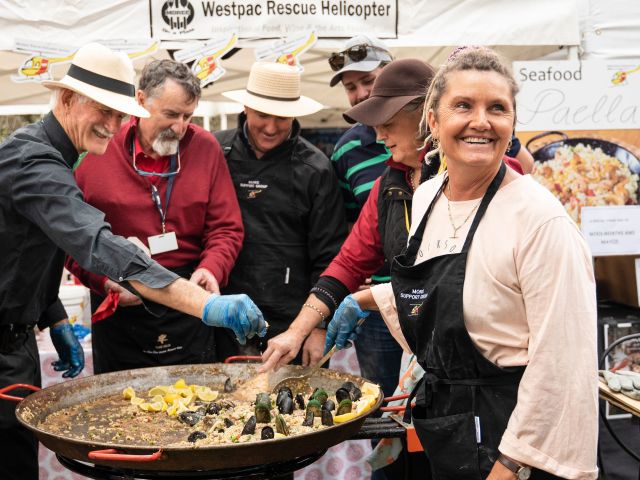
    Westpac Helicopter Rescue Service team with their Seafood Paella at the 2019 Moree on a Plate Festival
    Taste the best of regional produce and culinary talent. (Credit: Destination NSW)

    Time your trip for Mother’s Day weekend in May, and you’ll find yourself in the middle of the popular annual food and wine festival, Moree on a Plate, celebrating regional produce and culinary talent from the region’s fertile plains.

    Browse the stalls and sample olives, pecans, citrus fruits, honey, boutique wines and handmade condiments. You can also enjoy live cooking demonstrations by celebrity chefs, a local barbecue competition, plein-air art, live music and a dedicated children’s activity area.

    2. Experience artesian waters

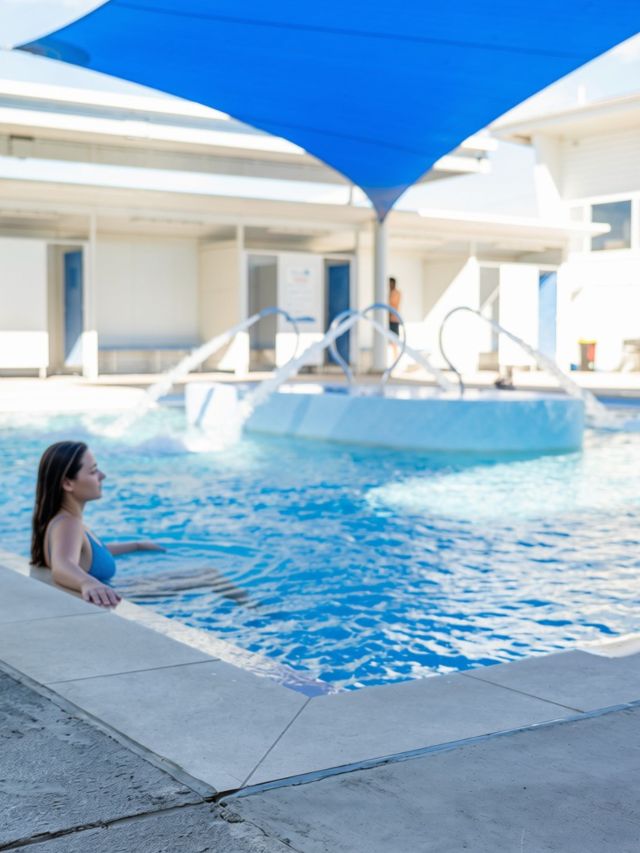
    woman at the Moree Artesian Aquatic Centre
    Chill out in Moree’s famous artesian waters.

    Moree’s famous artesian waters have attracted visitors for over 130 years. First discovered by accident in 1895, this mineral-rich, naturally heated water is drawn from deep within the Great Artesian Basin. Soak and slow down in the recently renovated pools at the Moree Artesian Aquatic Centre, where you can choose between the active pool with massaging water jets or the passive pool for a more relaxing experience.

    For a longer soak, stay at one of the many motels within walking distance of the aquatic centre. Or book a stay with its own artesian pools.

    Gwydir Thermal Pools Motel & Caravan Park has five on-site thermal pools and a broad range of accommodation, while the Phoenix Resort offers both indoor spas and outdoor thermal pools as well as recently upgraded self-contained apartments and motel rooms. Meanwhile, the Artesian Spa Motel is set on five acres of landscaped gardens and features swimming and thermal pools, including an indoor artesian spa and an on-site restaurant.

    3. Enjoy an arty experience

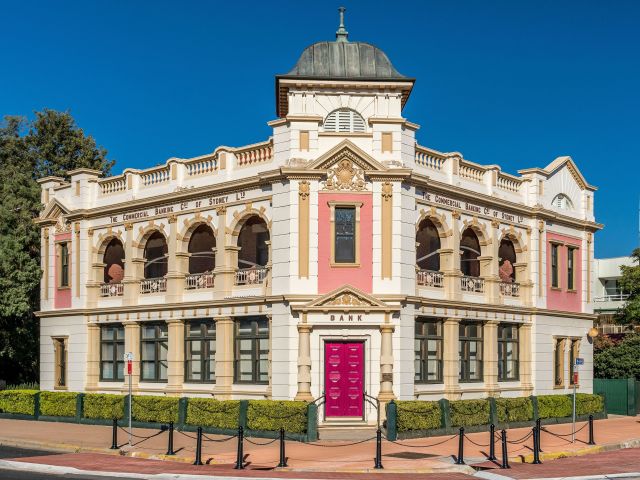
    Bank Art Museum Moree
    Step inside the gorgeous Bank Art Museum Moree. (Credit: Destination NSW)

    To connect with Moree’s artistic side, head to Bank Art Museum Moree (BAMM), an independent contemporary art gallery housed in a beautifully preserved, Federation-era bank dating back to 1910. Inside, a nationally significant collection celebrates the art and culture of the Gamilaroi/Kamilaroi people and other First Nations artists alongside regional Australian art, while changing exhibitions offer something new.

    Follow the Moree Art Mural Trail through the CBD, and you’ll pass large-scale murals and small galleries reflecting stories of the town’s people, history and culture. While you’re exploring this open-air gallery, look out for the eclectic mix of Art Deco and early 20th-century architecture, including the Moree Courthouse and the striking Capitol Theatre facade.

    4. Discover cotton country

    Aerial overlooking cotton farming in progress on the Newport Cotton Farm, Moree
    Learn more about Moree’s cotton industry. (Credit: Destination NSW)

    Surrounded by the black-soil plains of the Gwydir Valley, Moree is at the centre of one of Australia’s major cotton-growing areas. Visit between March and May, and you’ll see fields covered in the distinctive fluffy white cotton bolls being harvested by huge machinery.

    Trace the cotton from paddock to fabric on the Cotton Farm and Gin tour, running from April to September. You’ll visit a cotton farm and a working cotton gin up close, where you’ll see the cotton fibres separated from the seeds. Tours run weekly and include transfers.

    5. Explore the Moree Plains

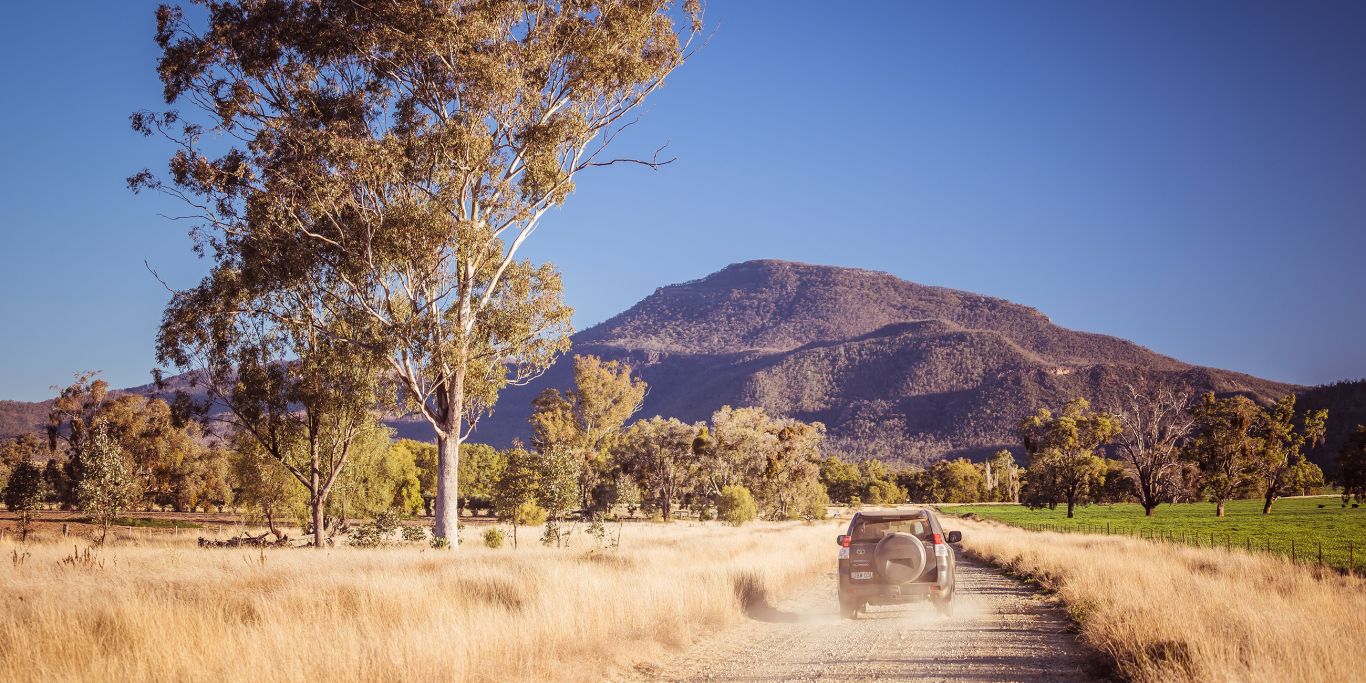
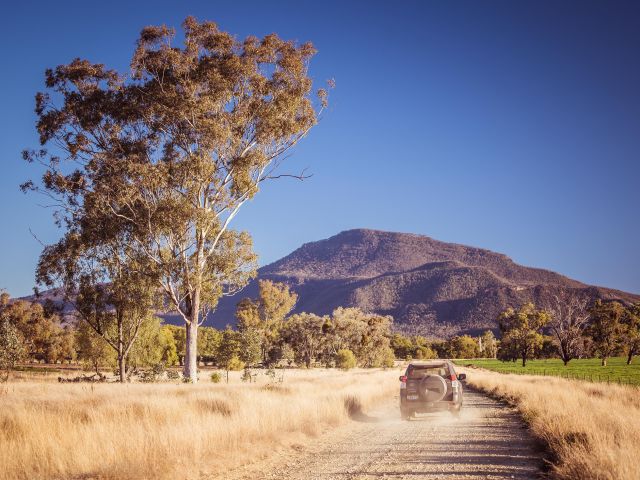
    care driving around moree
    Head out of town to explore the plains.

    Outside of the city centre, Moree is surrounded by charming rural villages dotted around the plains. The quiet village of Boomi, around 90 kilometres north-west of Moree, offers historic early 20th-century architecture, its own artesian thermal waters at the Boomi Artesian Baths and vast outback skies.

    Further west, the pioneer border town of Mungindi straddles the Barwon River between New South Wales and Queensland. Follow the 2.5-kilometre sculpture trail to take in the outdoor public art, and you’ll cross the state border twice.

    6. Relax by the water

    bird at Gwydir Wetlands in moree
    Spot the locals at Gwydir Wetlands.

    Just a short drive away, the peaceful Tareelaroi Weir Recreation Area makes the most of the meandering Gwydir River. Set up camp along the riverside and enjoy picnicking, fishing and swimming.

    A little further afield, the Gwydir Wetlands are home to 75 recorded waterbird species, including brolgas, magpie geese, egrets, spoonbills, ibis and black-necked storks, also known as jabirus. Watchers can settle into the hide at Waterbird Lagoon, or follow a short walking trail through the wetlands, keeping an eye out for rare species.

    7. Immerse in local Indigenous culture

    Terry Hie Hie Aboriginal Area
    Learn about the history of the Gamilaroi People.

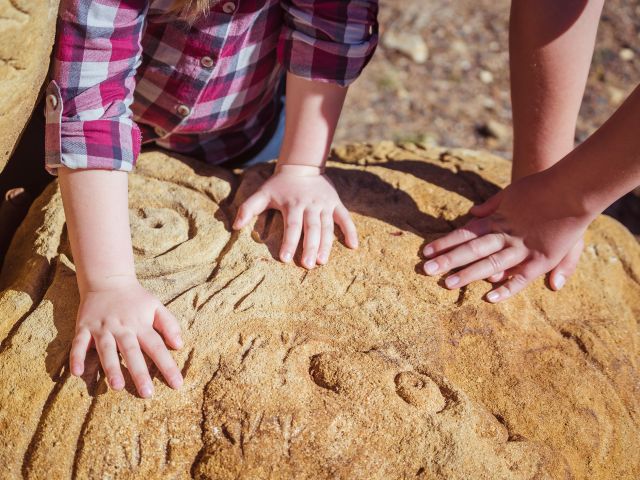
    Moree lies on the traditional lands of the Gamilaroi People, whose connection to the land stretches back thousands of years. Today, visitors can learn about this history at Terry Hie Hie Aboriginal Area, which includes the 3.5 kilometre Yana-y Warruwi Walking Track.

    Back in town, the Open Space Aboriginal Art Trail allows you to enjoy the Mehi River with a free, self-guided public art trail of work from local Indigenous artists and their personal connection to Country. Finish with a visit to the remarkable Dhiiyaan Aboriginal Centre, where more than 110,000 family genealogies are recorded. Browse artefacts, art and over 15,000 photographs. There are also changing exhibitions of historical photographs and local art.

    8. Local cafe culture

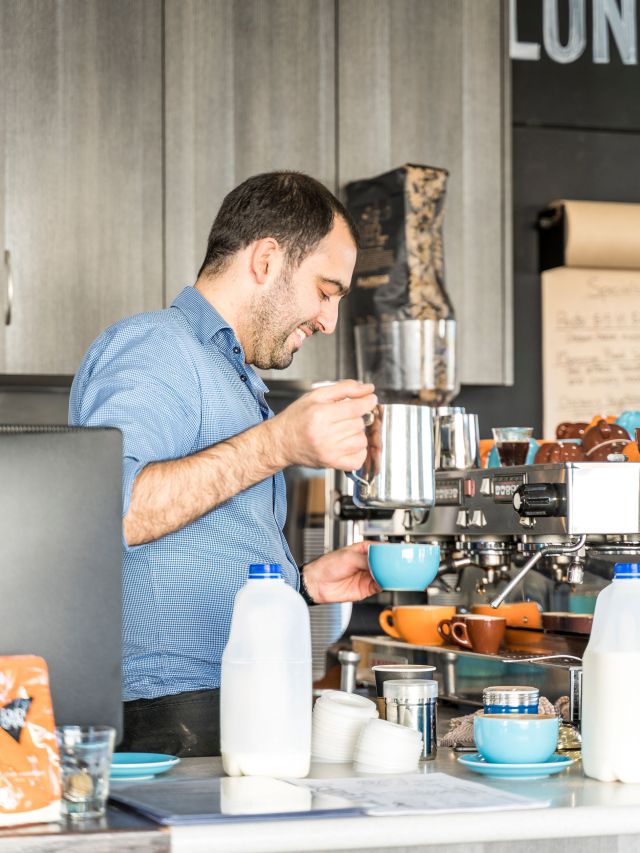
    Barista making a coffee order at 61 Balo Cafe, Moree
    Get amongst’s Moree’s vibrant cafe scene. (Credit: Destination NSW)

    From relaxed country cafes to stylish modern eateries, Moree’s CBD has a surprisingly vibrant foodie scene. There are plenty of spots to choose from for a freshly brewed coffee, long lunch or tasty dinner, featuring menus showcasing local produce and loads of country charm.

    If you’d rather dine in the great outdoors, grab a takeaway coffee or a picnic and head to leafy Jellicoe Park, a riverside oasis just a short walk from the centre of town. Pick a spot under the trees, enjoy the park’s art installations and keep watch for waterbirds along the river.

    Start planning your Moree retreat at visitmoreeplains.com.au.