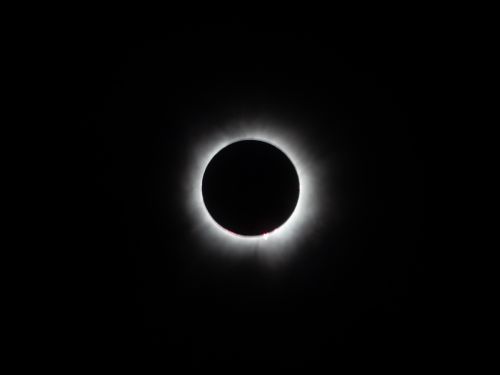
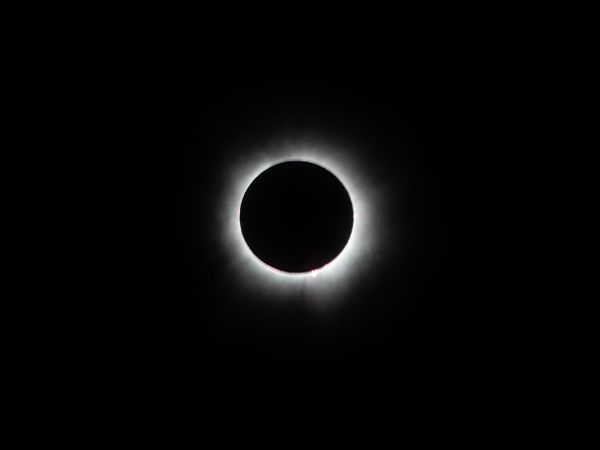
An impending total solar eclipse is passing directly over Sydney. It’ll be the last one for 800 years.
There’s something in the cosmos. Australia is in the midst of a rare streak of solar eclipse activity, with five total eclipses sweeping the country between 2023 and 2038.
For context, only 15 total solar eclipses have touched Australia in the past 200 years, making this a truly extraordinary flurry of activity. And the next one? It’s shaping up to be spectacular, cutting across the belly of the continent and ending with a dramatic finale right over Sydney.
So, Sydneysiders especially, mark your calendars: this will be the last total solar eclipse over the city for another 800 years. No pressure.
When is the solar eclipse?
The next total solar eclipse to pass Sydney is slated for 22 July 2028…the last one for 800 years. (Image: Getty/Joshua Kazemi)
The next total solar eclipse visible from Australia is slated for 22 July 2028. The path of totality will begin in the Kimberley region of WA, sweep across the Northern Territory, outback Queensland, and regional NSW, before passing above Sydney and Wollongong. The last time a total solar eclipse was visible above Sydney? It was 1857 and Australia was in the midst of the Gold Rush. The next time after the upcoming total eclipse? Not until June 3, 2858, more than 800 years!
Where can you see it?
Past eclipses in Australia sometimes barely touch the country. But this upcoming eclipse will dramatically cut across the diagonal of the mainland, offering views of this celestial event to millions.
The path of the total eclipse will start its journey near Kununurra in WA, continue past Tennant Creek and Birdsville, and then pass over Dubbo and Orange before its grand finale above Sydney. Here are the cities where it will be visible:
West Island, Cocos Islands
Flying Fish Cove, Christmas Island
Wyndham, WA
Kununurra, WA
Tennant Creek, NT
Bedourie, Qld
Bourke, NSW
Nyngan, NSW
Dubbo, NSW
Orange, NSW
Wollongong, NSW
Sydney, NSW
Central Coast, NSW
What about Uluṟu?
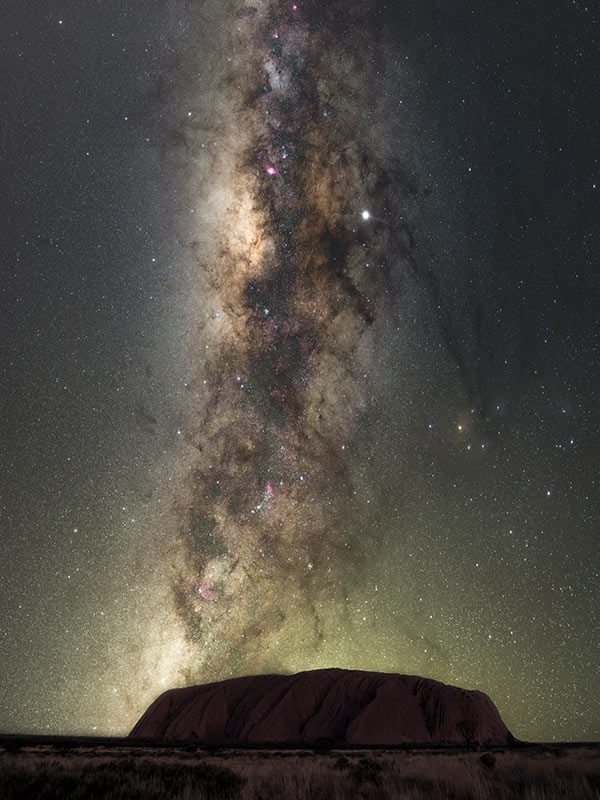
With little to no light pollution, Uluṟu is an incredible place to see the stars in full force. (Image: ourism NT/New Asia Pacific Travel)
If you’ve been dreaming of a trip to Australia’s spiritual heart, this could be one of the most magical times to make it happen. While Uluṟu isn’t directly under the path of totality, it will still see an estimated 88 per cent totality. And the spectacle against the backdrop of the Red Centre will be unforgettable.
Even outside of eclipse season, Uluṟu is one of the country’s best stargazing destinations. You can learn about Indigenous astronomy during star talks, tours, and even dune-top dinners under the Milky Way.
Want to see more stories from Australian Traveller in your Google search results?
Tick the box next to "Australian Traveller". That's it.
Elizabeth Whitehead is a writer obsessed with all things culture; doesn't matter if it's pop culture or cultures of the world. She graduated with a degree in History from the University of Sydney (after dropping out from Maths). Her bylines span AFAR, Lonely Planet, ELLE, Harper's BAZAAR and Refinery 29. Her work for Australian Traveller was shortlisted for single article of the year at the Mumbrella Publishing Awards 2024. She is very lucky in thrifting, very unlucky in UNO.
The outback is calling, and the adventure is made all the easier with this hot new AAT Kings’ tour.
It’s the desert palette of rust-red earth and vast cobalt sky that calls you at first, for where better to get away from it all than the outback? Of course, once you start driving, taking note of all the weathered pubs, dusty tracks and tiny towns held together with humour, resilience and more corrugated iron than ever deemed possible, something else grabs a hold of you: the idea that far from the celebrated icons and landmarks associated with Australia, you’re finally immersed in an authentic slice of local life that few have ever experienced.
Ancient landscapes, proud pastoral histories, ghost towns, culinary powerhouses and a rich Indigenous heritage; there are plenty of facets to life on the land. The best way to experience all of the above with both ease and like-minded friends? AAT Kings’ new Outback New South Wales Adventurer, a 9-day small group tour. This Sydney-return itinerary is designed to connect travellers not only with iconic outback destinations, but with the characters, culture and experiences that bring each place to life.
Highlights? The Adventurer has more than a few, but here are eight to start.
1. Broken Hill
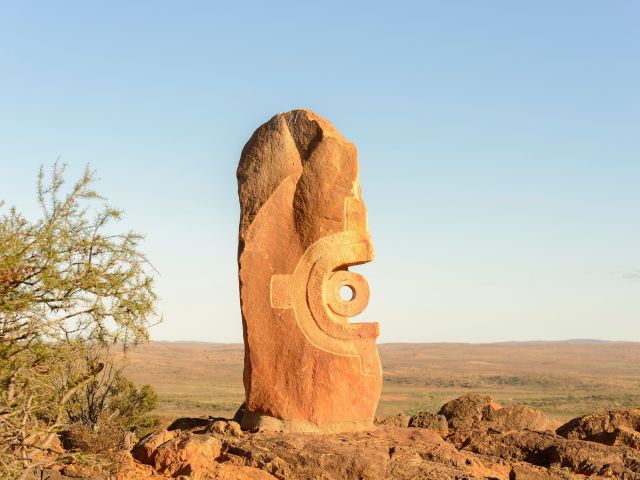
See the striking art at Living Desert and Sculptures. (Credit: Destination NSW)
Welcome to Broken Hill, where mining history, outback eccentricity and a surprisingly rich arts scene unite in a rusty desert landscape. In Australia’s first heritage-listed city, exploration is quickly rewarded. Begin with a guided walking tour taking in the city’s grand Victorian and Art Deco architecture. Later, enjoy visits to both the Broken Hill City Art Gallery and the Living Desert and Sculptures – the perfect place to enjoy the changing colours of an outback sunset. Of course, no visit to Broken Hill is complete without a stop at the historic Palace Hotel Broken Hill, famous for its role in The Adventures of Priscilla, Queen of the Desert. Happily, it makes for the perfect spot for dinner.
2. White Cliffs
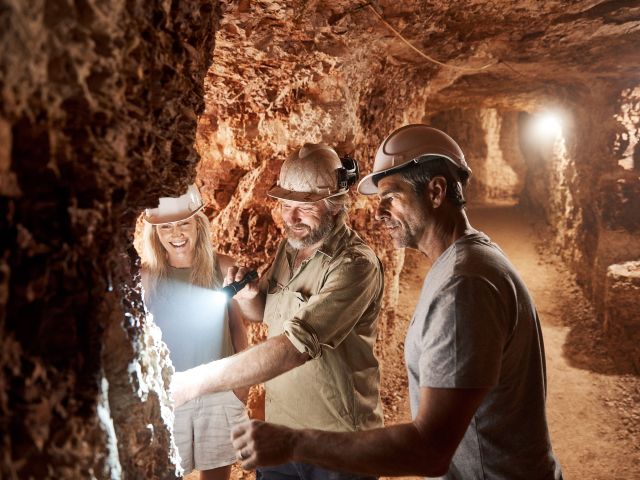
Strap on your hardhat and head underground. (Credit: Destination NSW)
Strap on your hardhat and start spending your imaginary fortunes; White Cliffs, Australia’s oldest commercial opal field, is begging you to come in search of rare pineapple opals. Admittedly, you’re much more likely to find white opals, but the true gems of White Cliffs – where much is built underground to escape the desert heat – are everywhere.
Here, you’ll descend 13.5 metres underground into a working mine to learn about the region’s heritage, and observe how miners continue the search for these prized gemstones. Perhaps you’ll even find a couple yourself?
3. Mungo National Park
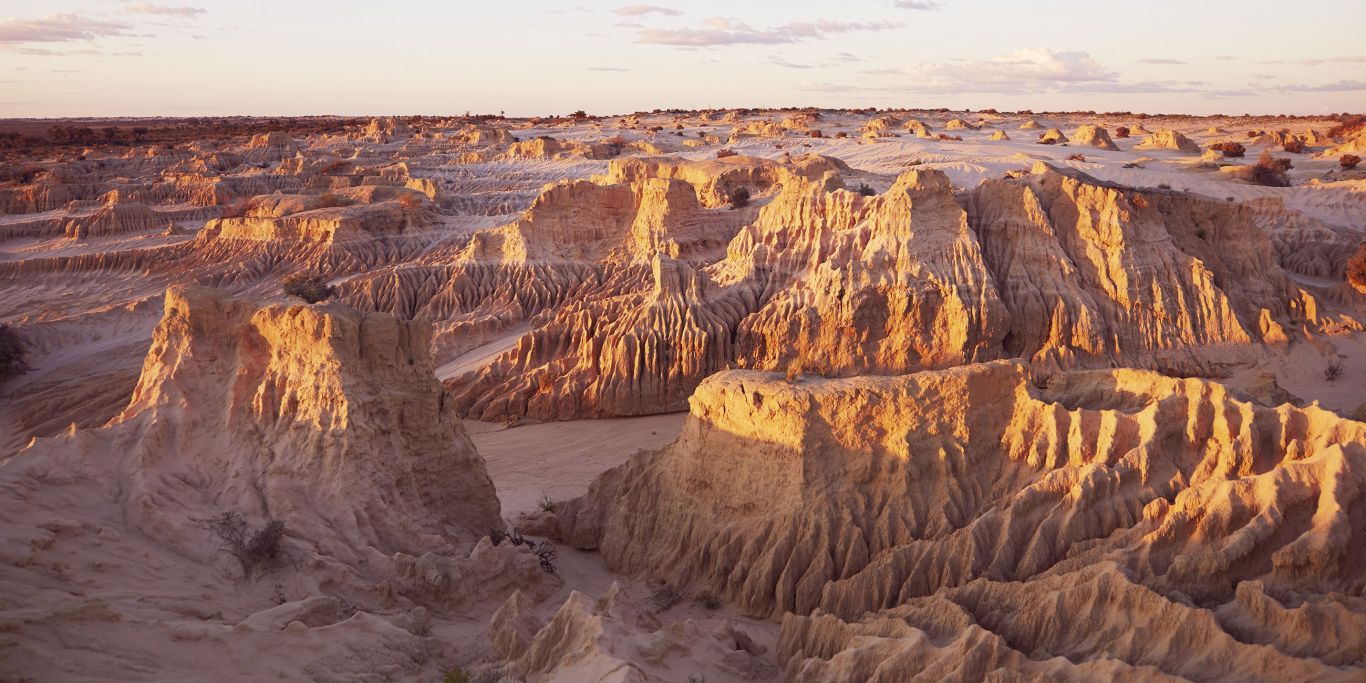
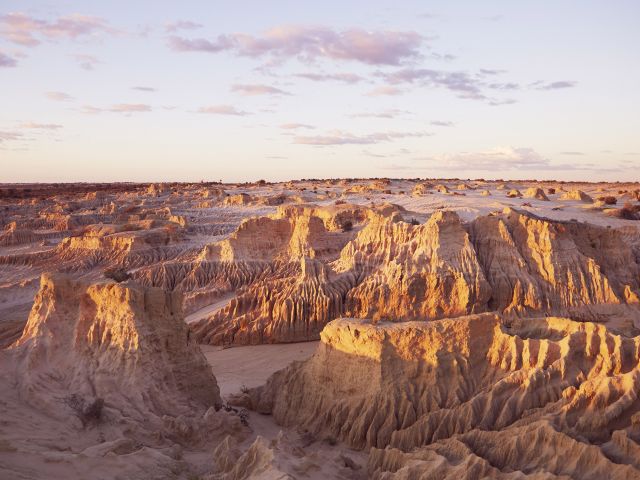
Spend time in the striking, lunar-like landscape of Mungo National Park. (Credit: Destination NSW)
With its lunar-like landscape made up of ancient, dried lake basins and sculpted sand and clay formations, a drive into UNESCO World Heritage-listed Mungo National Park is somehow two things all at once: uniquely Australian with vast outback skies, and somehow otherworldly, as though you’ve been dropped off by spaceship. At its heart lies the iconic Walls of China, a 30-kilometre sand-and-clay lunette shaped by thousands of years of erosion.
Understanding more than 40,000 years of Barkindji, Mutthi Mutthi and Ngiyampaa history begins with a visit to the Visitor Centre, and concludes with a sunset tour led by local Aboriginal guides. A key experience? Learning about the discovery of Mungo Man and Mungo Lady. At 40,000+ years old, these are among the oldest human remains found anywhere in the world.
4. Kinchega National Park
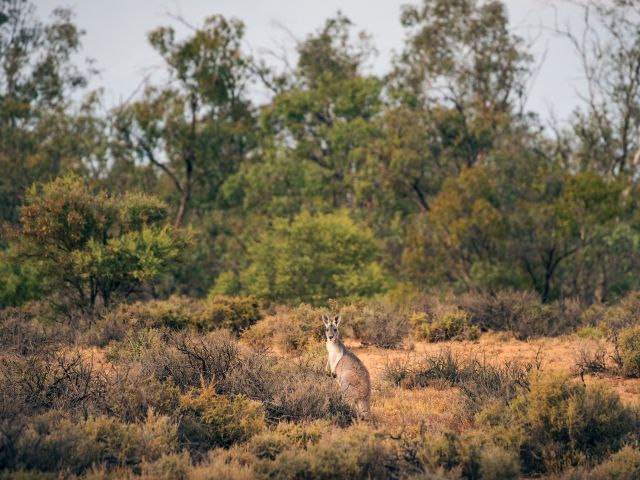
Meet the locals of Kinchega National Park. (Credit: Destination NSW)
Some come to Kinchega National Park for its iconic Darling River landscapes full of birdlife and haunting river red gums; others visit for its rich First Nations and pastoral history. Your visit will encompass all of the above, with a guided tour (part of AAT Kings’ MAKE TRAVEL MATTER Experience) designed to give a deeper understanding of Barkindji cultural heritage, history and traditions.
Walk with local guide David as he shares ancestral knowledge and creation stories, and explains how native plants – through bush food and bush medicine – have sustained Indigenous communities for thousands of years. Then sit back and enjoy those views alongside native tea and sweet treats.
5. Griffith
Treat your tastebuds to ‘the food bowl of Australia’. (Credit: Destination NSW)
How can you say no to a visit to a destination widely regarded as ‘the food bowl of Australia’? Shaped by fertile farmland and home to approximately 75 per cent of New South Wales’ wine grapes, this is a day to roll up your sleeves and enjoy the best gastronomy the state has to offer. Think vineyards, cellar doors, cafes and restaurants largely shaped by its multicultural heart (Griffith is not only home to over 60 nationalities, but has the highest proportion of Italian ancestry anywhere in Australia).
6. Mudgee
Visit some of Mudgee’s best wineries. (Credit: Destination NSW)
Nestled by the Cudgegong River, Mudgee packs a big punch for a heritage country town, having carved a reputation for itself as one of the country’s leading (and award-winning) wine regions, a key epicurean destination, and a regional arts centre growing in both visibility and vibrancy.
Take a moment to enjoy the town’s 19th-century charm before heading to Lowe Family Wine Co. for a guided tasting of organic and biodynamic wine, followed by a relaxed lunch featuring a feast of homegrown and local produce. Will you walk away with bottles of Mudgee’s iconic reds under your arms? It’s a distinct possibility.
7. Silverton
See the living ghost town of Silverton.(Credit: Destination NSW)
A once-booming silver mining hub, the dystopian setting for Mad Max 2, and now a tranquil settlement that’s home to around 50 people; Silverton is considered a living ghost town and remains a sight to behold.
Take time to explore its heritage streets (and perhaps take a look at the quirky Mad Max 2 Museum) and the Silverton Hotel, an iconic outback pub, before a visit to Silverton Gaol & Historical Museum. It’s home to a wealth of colonial artefacts, early mining equipment and stories from the outback’s pioneering past which will serve to anchor you firmly in place.
8. Shear Outback
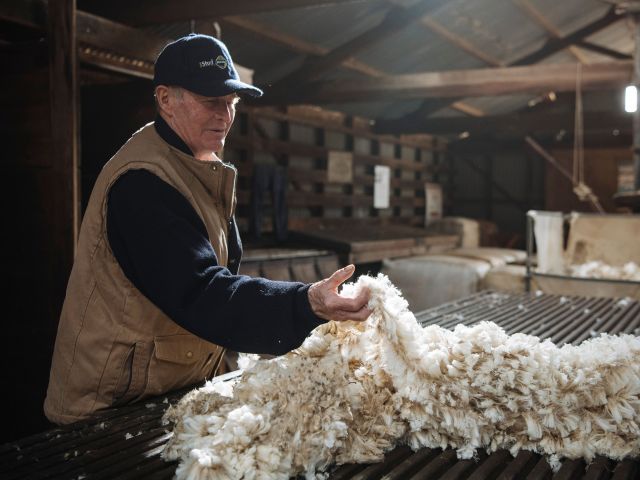
Get a glimpse behind the wool curtain. (Credit: Destination NSW)
If you ever find yourself singing, “click go the shears boys, click, click, click…”, you’ve come to the right place. Shear Outback, an award-winning tourist and education attraction located in Hay, brings to life the traditions and stories of one of the outback’s most enduring industries: sheep shearing.
Here, in the heart of the Riverina, you’ll enjoy live shearing demonstrations, meet the shearers, shedhands, sheepdogs and yes, sheep, who come together to show guests exactly what it takes to provide Australians with all that glorious wool.