The best routes for walking and hiking in Kakadu

Editor By Editor
hero media
Kakadu National Park is a mini-world that’s better explored on foot than on wheels, and better swum inside than feared from the water’s edge. Here are our picks on the best walking and hiking in Kakadu.


I’m lost inside a technicolour canvas. Really lost. And I can’t recall having popped LSD. Before me lies a charcoaled ground. It’s carpeted in burnt sticks and logs. Ahead, fluorescent green regrowth bursts from branches, caramel-toned kangaroo paw drapes at elbow-height and refracted purple light cuts angles in the air.

I’ve been bopped with the beauty gun – as is wont to happen in Kakadu. I gasp, freeze, delight, linger. Until eventually, I lose sight of my walking group.
Walking Maguk Kakadu
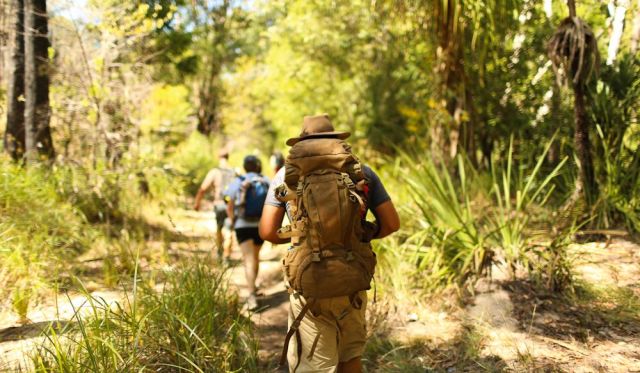
On the march back from Maguk, Kakadu (photo: Jennifer Pinkerton).

“Cooooeee!" I call, channelling a slightly bedraggled and far more ocker Alice in Wonderland. I search for a clearing beyond this enchanted slice of bush. Ten strung-out minutes tick by. I fret, stress and maybe catastrophise a little. Finally, relief slides into view.

Emerging from a thicket of eucalypts, a walker appears in perky pink shorts. It’s Michele, one of our hosts from touring outfit World Expeditions. “Day Two and you’ve already earned the nickname Little Miss Walkabout!" she shouts merrily. My cheeks turn the shade of Michele’s shorts and I gallop over to her, vowing to keep my eyes on the prize for the remainder of the trip.

Along with nine other hikers, I’ve voyaged to Kakadu to explore the bounties of the world’s largest terrestrial national park on foot.

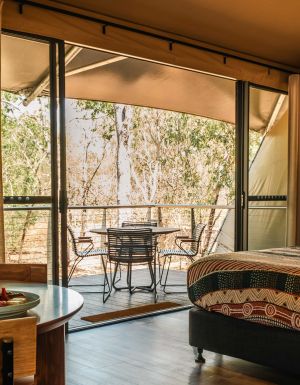
Over five days, we’ll tread 45 kilometres and spend four nights under the stars, sleeping in semi-permanent tents. I’ve visited Kakadu before, but with my own wheels in tow – as is the case for most travellers who venture to this neck of the Top End. In an instant, walking slows the pace to a comfortable and steady heartbeat.

Instead of spinning along Kakadu Highway to park the car, strolling a few hundred metres and going camera crazy at A) a lookout, or B) a swimming spot, the act of walking morphs time into something rather liquid.

I’m experiencing a new level of absorption with my surrounds. There’s space to stop, exhale and notice the little things – which, granted, can land you trouble if you trade in high levels of vagueness.

Meditative contemplation is permitted; however, when we reach the highest point of today’s trail, the 12-kilometre Barkk Sandstone Walk at Nourlangie Rock. While the trek begins in a shady chain of rock art galleries, their floors stamped with salmon-coloured leaves, the trail quickly lifts to a steep ascent. After passing bouquets of pandanus, we emerge at a giant rock shelf.

The rugged stone country around us is ringed with behemoth boulders and cube-shaped towers of grit. The latter resemble Mayan ruins – a sight that continues as we traverse the escarpment, then descend into lusher terrain. Before we do, though, the group silently drinks in this breath-seizing view, each walker claiming their own peaceful place to perch and ponder.

Lunch with ancient art

Over a lunch-time salad platter, which we roll into wraps, guide Dan Rose points out tucked-away rock art. Images of waterbirds, turtles and snakes hint that this area was once close to the sea.

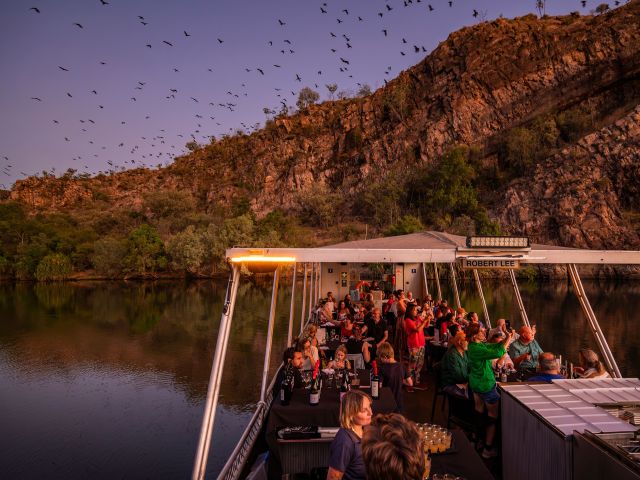
“These paintings are an encyclopaedia of all the dramatic changes Kakadu’s been through, culturally and environmentally," he says. We let the ancient art distract us for a while, before our thoughts turn to the journey ahead, which tonight will continue in the form of a two-hour cruise on Yellow Water Billabong.

The next morning we wake under nets of dappled light to a chorus of singing birds. Today we’ll venture further south to waterhole territory.
 

Maguk Gorge, Kakadu (formerly known as Barramundi Gorge)
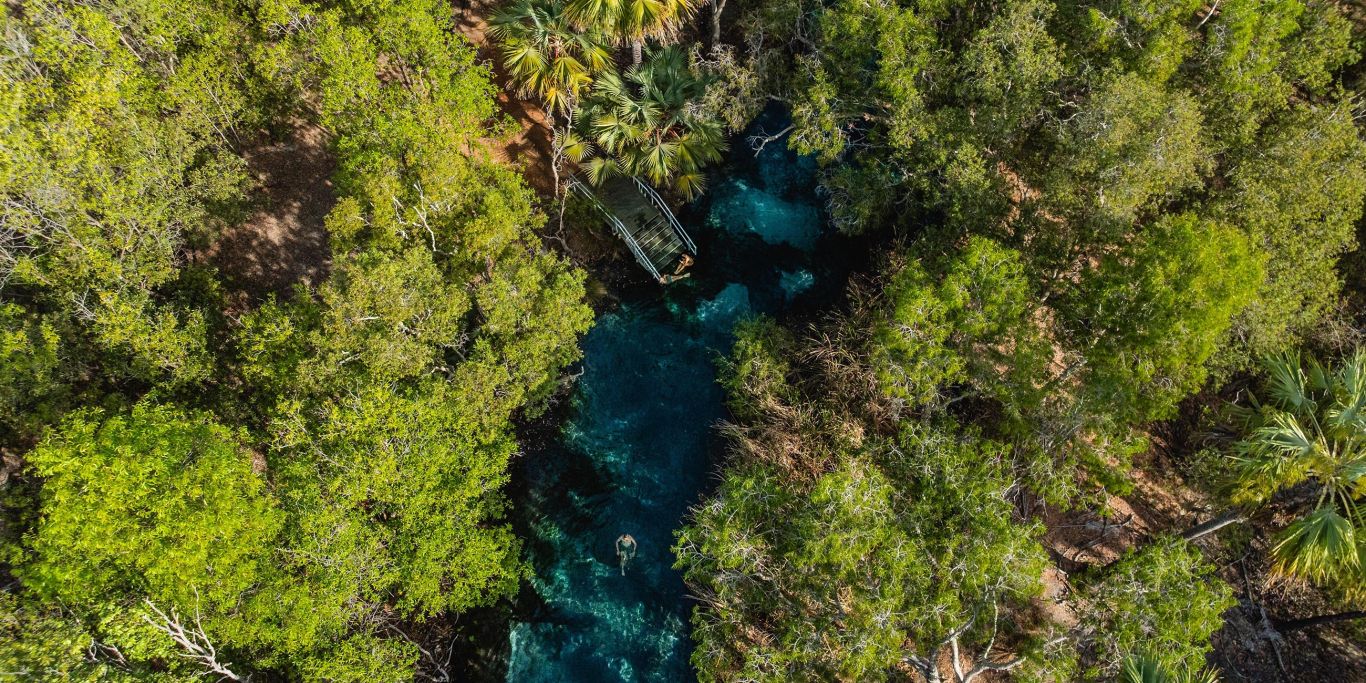
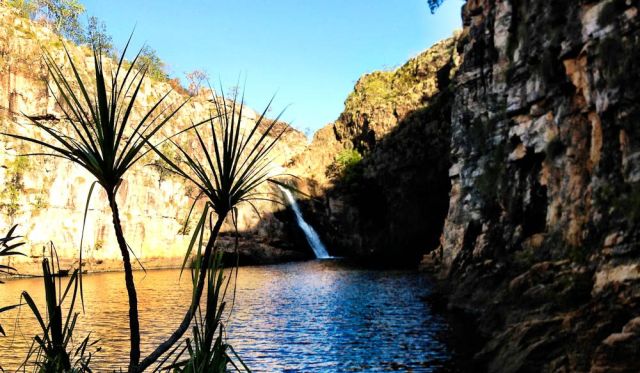
The plunge pool at Maguk Gorge, Kakadu (formerly known as Barramundi Gorge).

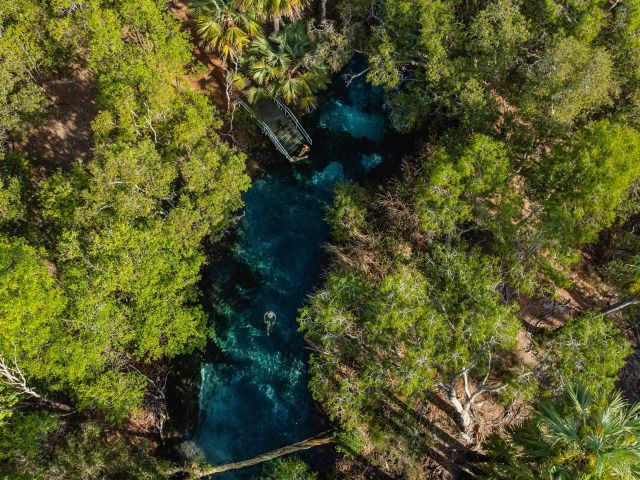
First stop: Maguk. After scrambling over boulders to reach the water’s edge, our group erupts into a squealing frenzy. We sound like a litter of piglets, part thrilled, part spooked. “How do we know this is croc-free?" a voice shrieks. Dan cancels out concerns by wading into the sparkling lagoon. One by one, the rest of us follow. Though before plunging in, some cling to dry land for what seems like a shameful misuse of minutes.

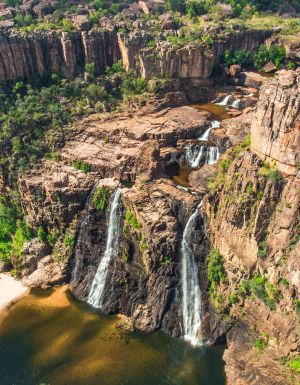
While Maguk’s teal swimming hole, with its towering backdrop of black stone and neat guard of pandanus trees, is hard to beat, this evening’s itinerary throws up paradisiacal rivals. As the sunlight starts to fade, we arrive at Gunlom. Here, a waterfall travels through a copper escarpment, plunging 100 metres to a waterhole below.
Gunlom Falls Kakadu
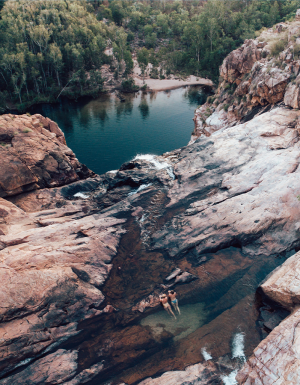
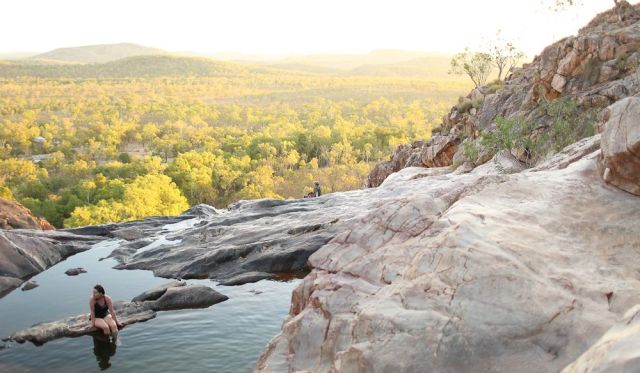
A post-walk soak at Gunlom Falls, Kakadu (photo: Jennifer Pinkerton).

To reach the network of infinity pools perched at the top, you have to work for it. So, with an hour of light remaining, five of us puff a path to the peak. Then, as the sky fades and the rocks blush in the twilight, four begin the descent. “Sure you’ll be right?" one companion asks, before venturing out of sight. “Yep, yep," I reply, eager to nab some alone-time.

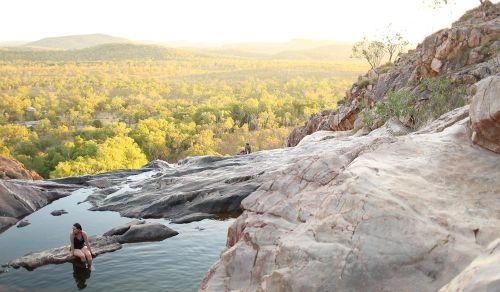
Floating in a pool nearest to the cliff edge, I luxuriate in the thought that Gunlom trumps any hotel pool I’ve visited. Buxom clouds reflect their shapes in the water’s surface and, beyond, an endless quilt of trees shift from green to gold in the dying sun. All this lingering will, of course, cost me further cred with the group. “Heeeeeeeere she is!" sings Dan when, eventually, I skulk back to camp.
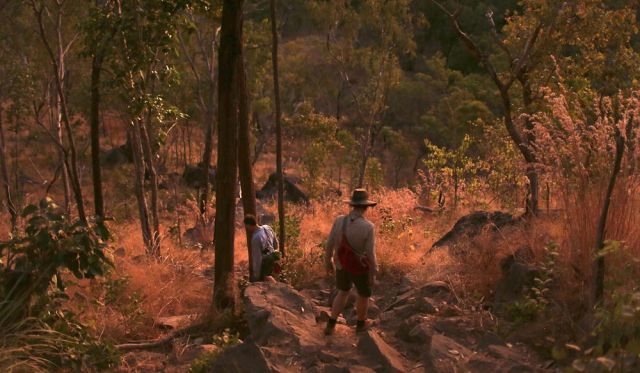
Gunlom Falls Kakadu at dusk
Walking back down from Gunlom Falls, Kakadu, at dusk (photo: Jennifer Pinkerton).

Motor car falls

A new morning dawns in which to prove my bush savvy. We’re trekking the 14-kilometre Yurmikmik Circuit past Motor Car Falls, which draw their name from a mid-century mishap.

A poor bloke, a tin-miner named Paul Allmich, was the first to try to cross this area on wheels, but his Chevrolet tyres sunk deep into the mud, bogging his truck.

We’ll walk the same track followed by his ill-fated Chevy, looping out to Kurrundie Falls, then returning via Motor Car Falls. Upon our arrival at the latter, we unfurl atop a rock to lunch, lounge and peer at the water’s residents – long-armed freshwater shrimp and short-necked turtles.
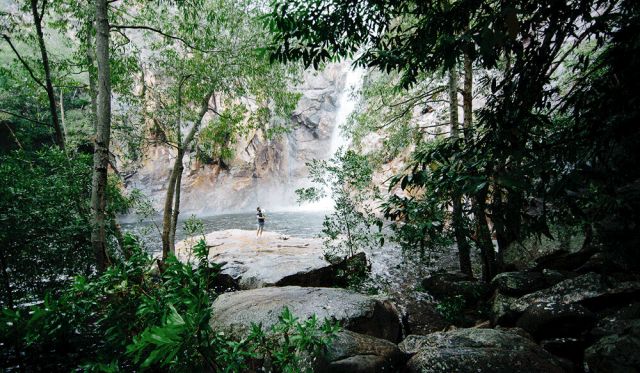
Kakadu wet season national park northern territory
Peering at Motor Car Falls atop a giant boulder (photo: Jennifer Pinkerton).

“Ah look!" cries Michele. From stage left, a lacewing butterfly sashays in our direction. It weaves through her legs. Then, like a rising sheet, a cloud of fellow butterflies ascends from a nearby rock. They’ve been feeding on surface minerals. “This is magic," one walker whispers.

Once more, I feel the beauty gun’s target on my forehead. I gasp, freeze, delight, linger. Until, eventually, I lose sight of all that exists beyond park borders. Walkabouts are OK, I figure, as long as they’re confined to the mind.
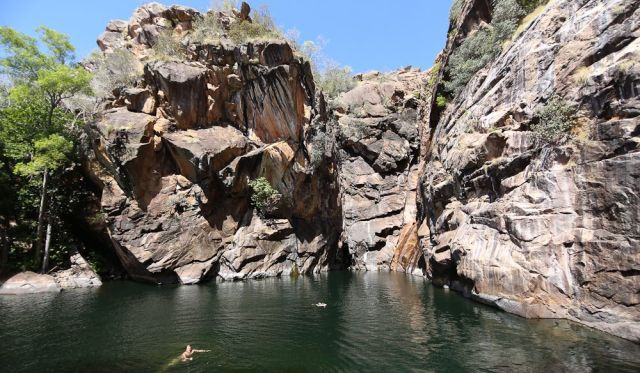
Swim Motor Car Falls Kakadu
Lunchtime swimming at Motor Car Falls in Kakadu National Park (photo: Jenniger Pinkerton).

Some of the group take the opportunity to cool off in the inviting waterhole. Dan, first into the water of course, somewhat breaks the tranquil moment I’m enjoying by splashing water in my direction, startling me with seemingly ice-cool spray. I’m yanked back to Earth.

But considering that grounds me right here in Kakadu, it’s not such a bad place to be. I’m happily fixed inside this tropical terrarium – a mini-world that’s sunning my face, pooling at my feet and dancing in the dry-season breeze.

For more information on Kakadu & things to do in the NT, visit the official Northern Territory website at northernterritory.com

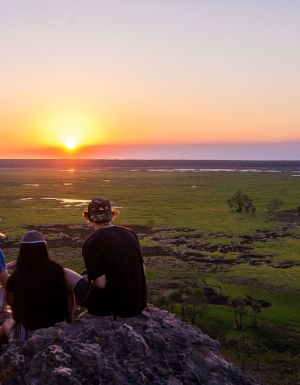
hero media

8 Red Centre locations to explore after seeing the new movie, Kangaroo

Spend a few days visiting the real-life Central Australian locations that inspired the new film everyone is talking about, and discover why Alice Springs is such an important part of Australian culture.

In the credits of the new Australian film Kangaroo , the first name under ‘cast’ should read ‘The Northern Territory ’. Not only is Alice Springs (and the surrounding landscape) integral to the movie itself, but the spiritual heart of Australia and its local Indigenous owners also inform the look and feel of every frame, explains Producer Trisha Morton-Thomas of Brindle Films, who also plays Charlie’s grandmother Gwennie.

“By setting Kangaroo in Alice Springs (Mparntwe), the film embraces how visible Aboriginal people are here, and the living Aboriginal culture that is woven through this community,” she explains.

still from kangarro film
See Kangaroo, then visit the real-life filming locations.

And while shooting in such a sacred part of the Northern Territory required extra planning, it was something the cast and crew were highly invested in.

“There are incredibly significant sacred sites and places of deep cultural stories in the area, that at times are very gender-specific, which we’ve kept out of the production,” she explains. “Even if overhead drone footage captures a sacred site that isn’t meant to be seen by other people outside of that clan, we’ve made sure to omit it from the film.”

If Kangaroo piqued your interest in a Central Australian holiday, we don’t blame you. Read on to discover eight places featured in the movie that you can visit in real life – and get planning. Don’t forget to pack sunscreen and a hat.

1. Alice Springs/ Mparntwe

artist at Many Hands Art Centre
Visit the galleries of Alice Springs, like Many Hands Art Centre. (Image: Tourism NT/ Helen Orr/ Many Hands Art Centre)

The red and dusty streets of the film’s fictional town of Silvergum were filmed on the outskirts of Alice Springs. And, while the art gallery featured in the film is fictional, Alice Springs is a hub of creativity. See the work of local artists at the Araluen Art Centre , Yubu Napa Art Gallery , Iltja Ntjarra (Many Hands) Art Centre and the famous Tjanpi Desert Weavers .

2. The Kangaroo Sanctuary & Kangaroo Rescue Centre

The Kangaroo Sanctuary Alice Springs, the inspiration for the Kangaroo move
Visit the movie’s inspiration at Kangaroo Sanctuary. (Image: Tourism NT/ Kangaroo Sanctuary)

Kangaroo was inspired by the journey of Chris ‘Brolga’ Barns, who founded the now world-renowned Kangaroo Sanctuary based in Alice Springs. For lead actor, Aussie Ryan Corr, the animals were central to the movie, alongside the landscapes.

“The animals in this story were a real calling point for me,” he explains. “What this story tries to tell us about the connection between humans and animals is beautiful.”

To gain a real insight into the fauna and flora of the Red Centre, you can visit the Kangaroo Sanctuary on a sunset tour, where you might even get the chance to hold a baby kangaroo.

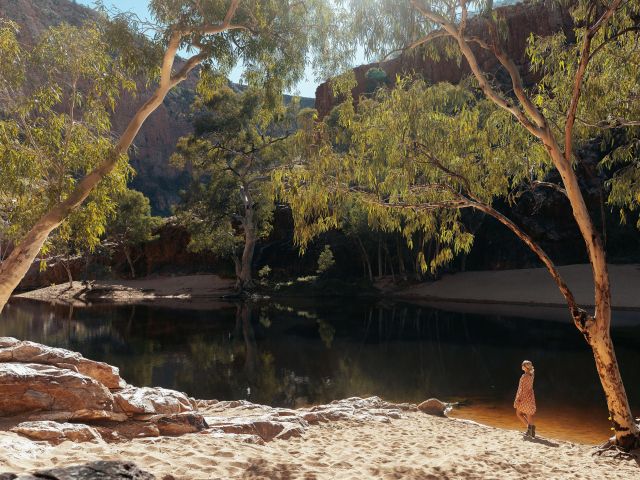
3. Ormiston Gorge

woman walking along the edge of Ormiston Gorge near alice springs
Take a dip in Ormiston Gorge. (Image: Tourism NT/ @domandjesso)

The film captures the raw beauty of the West MacDonnell Ranges, known in the Arrernte language as Tjoritja. This national park is rich in Indigenous culture and stark geological wonders.

Only a 15-minute drive from Alice Springs, Tjoritja offers visitors the chance to camp, hike and swim among ancient landscapes (most attractions are less than a three-hour drive away).

Ormiston Gorge , a cooling oasis in among the red desert sands, is one of the most popular destinations, no doubt because of the permanent swimming hole and towering red cliffs. From here, visitors can also embark on the beautiful Ormiston Pound Walk and the shorter – more accessible – Ghost Gum Walk. Bring your bathers – it’s safe for swimming.

4. Standley Chasm

woman walking through Standley Chasm near alice springs
Wander through Standley Chasm. (Image: Tourism NT)

The 1.2-kilometre walk to nearby Standley Chasm will be a highlight for any visitor as the imposing 40 metre-high chasm walls project strength and ancient wisdom.

Visit at midday to experience the path illumined by the midday sun. Not only will you fill your camera roll with vibrant red images of the gorge and its intoxicating shadows, but you can also camp nearby in a powered or unpowered site so you can watch the brilliance of the desert stars fill the night sky after dusk.

5. Simpsons Gap

three people walking on path through simpsons gap near alice springs
Walk the trails of Simpson’s Gap. (Image: Tourism NT/ Helen Orr)

Closer to Alice Springs, the photogenic Simpsons Gap is the perfect place to spot the endangered Black-footed Rock wallaby near the permanent watering hole. While swimming isn’t permitted, soaking up the sun and views certainly is.

Explore the area’s numerous walking trails, appreciate the soaring cliffs on either side of the ‘gap’ and pick out the shooting locations of Kangaroo in the area.

6. Ellery Creek Big Hole

aerial of Ellery Creek Big Hole near alice springs
Dive into Ellery Creek Big Hole. (Image: Tourism NT/ Tourism Australia)

When it comes to classic Northern Territory landscapes, you can’t go past Ellery Creek Big Hole/ Udepata : tall gum trees sidling up to a refreshing watering hole (fed by the West MacDonnell Ranges and surrounded by rugged red cliffs.

Swim in the cooling waters, hike the cliff tops, watch for birds and even stargaze as you camp here overnight. It’s locations like this that attracted the film’s director Kate Woods to the project.

“It humbles you to be in this environment: it’s so beautiful, so old and so vast,” she explains. “I was thrilled to get a chance to … shoot such a beautiful story in the incredible landscape of the Northern Territory.”

7. Larapinta Drive

aerial of Larapinta Drive into alice springs
Drive along Larapinta Drive. (Image: Tourism NT)

There is no better way to get a feel for how the characters arrived at the fictional Central Australian town of Silvergum than to travel along the iconic state road, Larapinta Drive.

Connecting Alice Springs to the mighty King’s Canyon in the west, via the historic community of Hermannsburg, this road takes in the West MacDonnell National Park, Alice Springs Desert Park and artist Albert Namatjira’s house, among other attractions. Take your time, bring a camera and prepare for numerous stops along the way.

8. Todd River

competitors in Henley on Todd Regatta, alice springs
Join in the fun of the quirky Henley on Todd Regatta. (Image: Tourism NT/ TImparja Creative)

Meandering through Alice Springs like a lazy Western Brown snake, the Todd River is a central part of Alice Springs culture. Known as an ‘intermittent river’, the Todd can go from a dry dusty riverbed to a flowing waterscape in less than 15 minutes after heavy rainfall.

When it’s dry, the famous Henley on Todd Regatta fills the sandy riverbed with handmade ‘boats’ carried by sailors. This is the world’s only dry river boating event, and it’s referenced in the ‘Silvergum Boat Race’ in the movie. Inspired by the real-life event, the characters built quirky “Flintstones-style boats” and competed in teams.

See Kangaroo in cinemas now, and start planning your NT getaway at northernterritory.com.