Gunlom Falls: popular Kakadu site reopens after 6-year closure

hero media
One of Kakadu’s most renowned landmarks has reopened after being closed for nearly six years due to a legal battle.

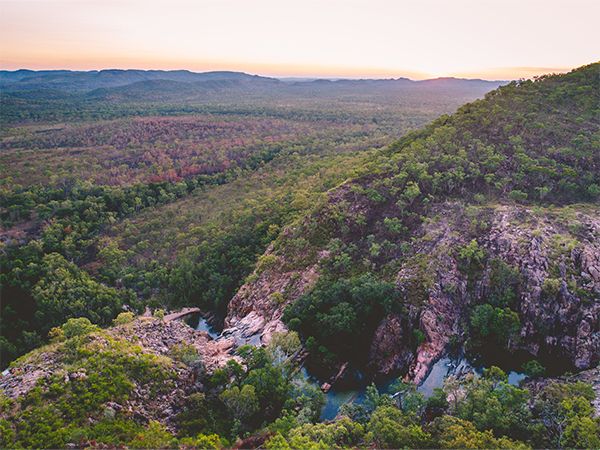
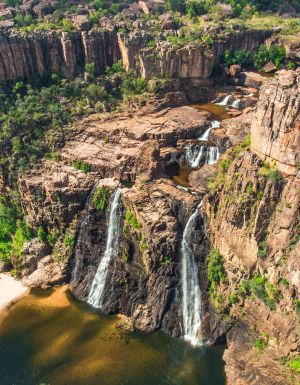
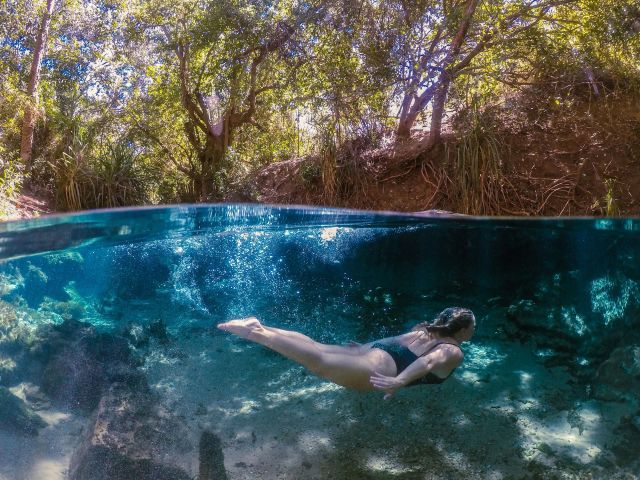
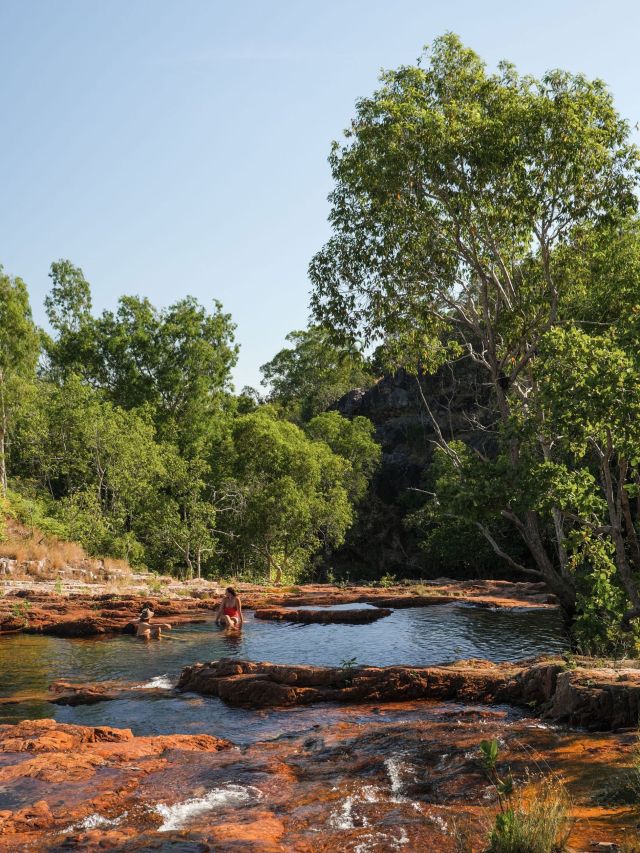
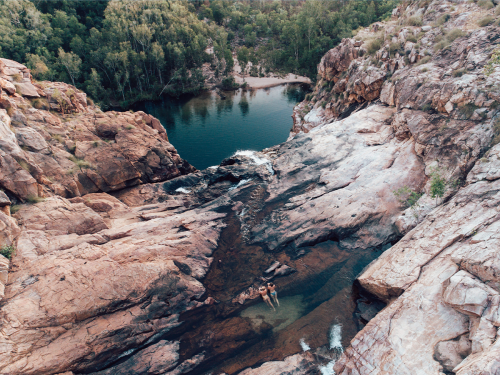
Gunlom Falls is the jewel in the crown of Kakadu National Park. This culturally significant and visually exquisite site has drawn locals and visitors for its cascading 85-metre-tall waterfall and breathtaking pools, which have historically been one of the most popular swimming spots in the region. The top natural infinity pool offers spectacular views across Kakadu National Park, while the bottom pool allows you to swim in the pristine water beneath the cascading waterfall, surrounded by a tranquil sandy beach.

But in 2019, the site closed, and visitors hadn’t been able to take a dip in the pristine pools or take photos at the site featured in the 1986 cult classic Crocodile Dundee since. Until now. The magnificent falls reopened to the public on 4 July 2025. 

Kakadu-born and owner of Lord Safaris, Sab Lord, has over 30 years of experience running private tours across Australia’s Top End. He collaborates with local Aboriginal guides and emphasises the importance of visiting the area for both locals and overseas visitors who want to explore its rich culture and natural beauty. “Normally, Gunlom Falls is always on my private itineraries because it’s such a beautiful location. It’s one of the most unique and exciting places to visit in Kakadu," he said.

It’s also an important cultural site for the local Jawoyn people. Ryan Barrowei, Senior Traditional Owner and Chair of Kakadu National Park Board of Management, highlighted the importance of the area, stating:

“Gunlom is an important place for Jawoyn. This land holds stories about our culture, law, and our history. It is just as important for Jawoyn today as it was in Buwurr times (the Dreamtime). Our most powerful Ancestors, Bulajang, still reside on Jawoyn Country today. According to the Traditional Owners, Bulla – a spirit so powerful, they compare it to Armageddon – rests at Gunlom Falls, at the base of sickness country."

According to the Traditional Owners, Bulla – a spirit so powerful, they compare it to Armageddon – rests at Gunlom Falls, at the base of sickness country.

Gunlom Falls Kakadu National Park
Gunlom Falls is a place of spiritual significance and natural beauty. (Image: Lords Safaris)

Why was Gunlom Falls closed?

In 2019, construction was undertaken for a realignment of a walking track by Parks Australia. The track was designed to improve access and safety for visitors to the iconic top pools of Gunlom Falls, but in doing so, it exposed a sacred Jawoyn men’s site to the public and damaged the area. The area was closed at the request of the Traditional Owners.

Plans for the walkway’s design deviated from what was approved by the Traditional Owners and were conducted without obtaining an authority certificate under the Northern Territory Aboriginal Sacred Sites Act 1989 (NT). The Act is integral for the protection of Aboriginal culture and heritage in the Northern Territory, which prohibits a “person" from carrying out work on or using a “sacred site" without authority.  The Aboriginal Areas Protection Authority (AAPA) charged the Director of National Parks (DNP) with an offence under the Act, which resulted in the matter going to court. 
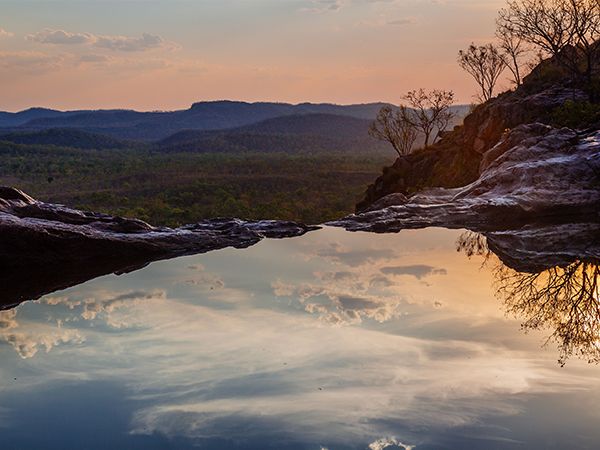
Gunlom Falls Kakadu National Park
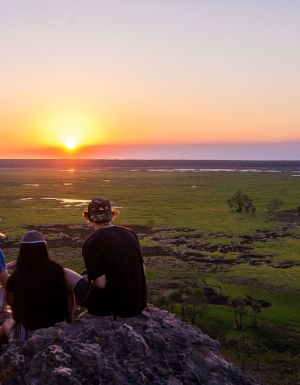
The sunset reflected in the water of the top pool. (Image: Tourism Australia)

In September 2022, the Full Court of the Supreme Court of the Northern Territory rejected the case, ruling at the time that the DNP was immune from liability over sacred site damage. In 2023, the AAPA successfully appealed the decision in the High Court, and the current DNP pleaded guilty. The current DNP, Djungan man Ricky Archer, is the first Indigenous person to hold this position, and while the damage occurred before his tenure, he apologised to the Traditional Owners. In 2024, a unanimous decision by the Full Court of the Supreme Court of the Northern Territory resulted in a $200,000 fine for the damage. 

This case highlights the importance of acknowledging Aboriginal land rights and serves as a reminder to travellers to be respectful when visiting sacred sites. Matthew Ryan, NLC Chair, said in a powerful statement at last year’s hearing, “AAPA and the Traditional Owners have worked really hard over the last five years to recognise Gunlom as a sacred place. Now we can all look to the future of caring for this incredible place."
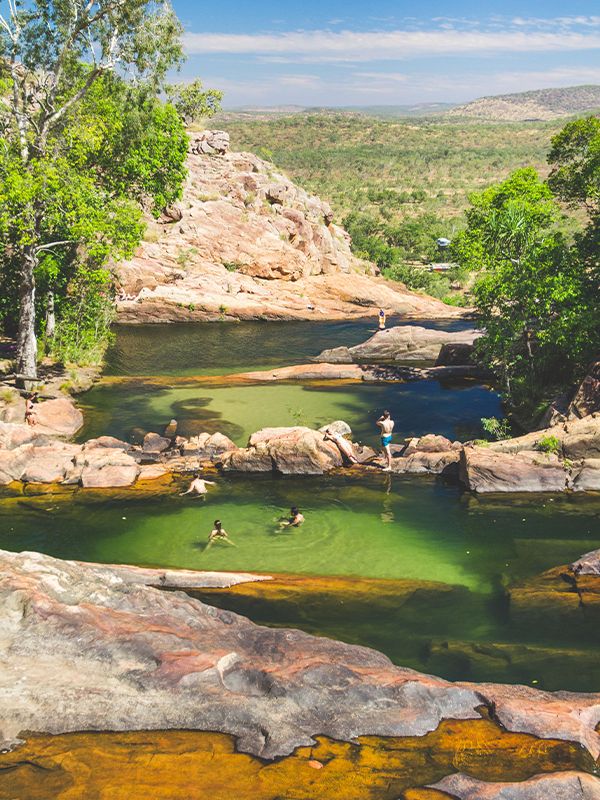
Gunlom Falls Kakadu National Park
Enjoy refreshing dips and breathtaking views. (Image: Lords Safaris)

Need tips, more detail or itinerary ideas tailored to you? Ask AT.

AI Prompt

When is the best time to visit Gunlom Falls?

The best time to visit Gunlom Falls is in the dry season (May to October) when there are better hiking conditions, minimal flooding, and clear, calm waters. According to Sab, the area has very few mosquitoes and is slightly cooler due to its distance from the coastal region, with temperatures being a couple of degrees lower.
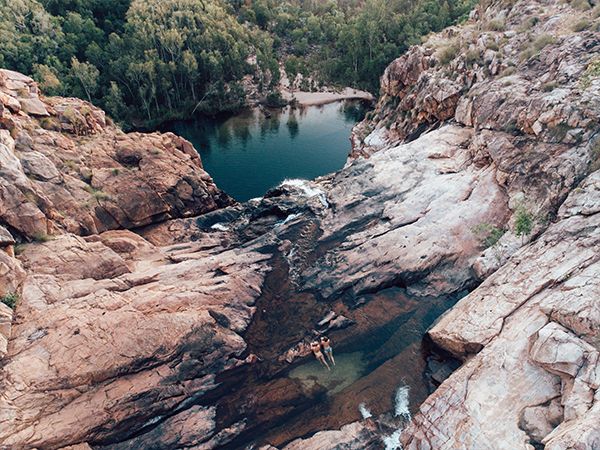
Gunlom Falls Kakadu National Park
Gunlom Falls is projected to reopen in the dry season. (Image: Tourism Australia)

How to get to Gunlom Falls

Visitors can drive from Darwin, which takes approximately three hours via the Stuart and Arnhem highways. If you prefer not to do a self-drive or would like a more immersive experience, tours like those created by Sab will be a great way to gain insight into the area and its history and cultural significance and hear directly from First Nations people. The nearest accommodation is approximately a two-hour drive away at Cooinda Lodge, so the spacious public campground equipped with hot showers and flushing toilets is a popular choice.

Rachael Thompson
Rachael Thompson is Australian Traveller's Evergreen Editor and a self-proclaimed cheese and Chablis connoisseur. In her role, she creates and manages online content that remains relevant and valuable over time. With a background in publishing and e-commerce in both interior design and travel, Rachael is dedicated to curating engaging content that informs and inspires. She began her career at Belle magazine, then went on to become Senior Content Producer at Homes to Love focusing on Australian House & Garden and Belle, followed by Editor at Bed Threads. Her work has also appeared in Qantas Travel Insider. When she's not writing, editing, or optimising content, Rachael enjoys exploring the city's newest restaurants, bars, and hotels. Next on her Aussie travel wish list are Uluṟu-Kata Tjuṯa National Park and Lord Howe Island.
View profile and articles
hero media

Discovering East Arnhem: Australia’s most unique and rewarding corner

    Joanne Millares Joanne Millares

    Hard to reach and harder to forget, East Arnhem offers something rare in modern travel: the chance to slow down and experience Country on its own terms.

    The sky feels bigger in East Arnhem. It stretches wide and uninterrupted above rouged earth, stringybark woodland and beaches so empty they seem to belong to another era. The coastline curves for kilometres without a footprint and the horizon runs on forever.

    For comedian Lou Wall, the scale of the place was the first thing that hit them.

    “The sheer openness,” they say. “The sky feels infinite and the land stretches out endlessly. It’s pretty breathtaking visually.”

    But the physical landscape is only part of the story. The real reward isn’t only the scenery but the shift in perspective the journey brings. Visitors stop trying to tick off the destination and a real engagement takes over.

    “It made me never want to travel again,” Wall jokes. “In that I never wanted to leave East Arnhem.”

    Getting there

    Aerial shot of East Arnhem’s coastline as cars trace the curve of the shore.
    Sail along the remote coastline on an expedition cruise.

    Reaching East Arnhem is part of the adventure. Travellers typically fly into Gove Airport near Nhulunbuy via Darwin or Cairns, or arrive by expedition cruise along the remote coastline. Others make the journey overland along rutted dirt roads that cut through East Arnhem’s small pockets of monsoon forest.

    However you arrive, there’s a distinct feeling of crossing into somewhere different. Permits are required to visit the region, reflecting the fact that this is Yolŋu land where communities and traditional owners maintain deep cultural connections to Country.

    The extra planning becomes part of the experience. By the time visitors arrive, they understand they’re entering a place not just of respect, but also patience and curiosity.

    At one with nature

    East Arnhem’s  landscapes leave a strong imprint. For Wall, one place in particular still lingers in their memory: Ngalarrkpuy, also known as Lonely Beach, near Bawaka Homeland.

    “I genuinely felt like I was living inside an Instagram filter,” they say. “One of the most stunning feats of nature I’ve ever seen. The water was so clear I swear I could see even the fish smiling.”

    Across the region, natural experiences unfold at a slower pace. Fishing, beachcombing and island hopping reveal the rhythm of the coastline. The tides shape daily life and the vastness of the landscape makes even simple moments feel downright cinematic.

    For visitors with limited time, Wall says the Bawaka Homeland experience is unmissable.

    “I just left and I’m already planning when I can get back there.”

    The sense of remoteness is part of the appeal. In a country where many beaches are crowded and well-trodden, East Arnhem’s coastline still feels wonderfully wild.

    Immersing in local culture

    A visitor spends a meaningful moment alongside Yolŋu guides, gaining insight into their deep cultural knowledge and connection to the land.
    Experience authentic moments with the locals.

    Culture is woven through every experience in East Arnhem. Visitors have the opportunity to spend time on Country with Yolŋu guides and knowledge holders who share stories and traditions that have been passed down for generations.

    For Wall, one of the most powerful moments came during a conversation with a Yolŋu elder.

    “I got to meet a traditional elder, Mayalil, in Nhulunbuy,” they say. “Listening to her talk about her home made the land feel alive in ways I couldn’t have imagined.”

    The region is also home to internationally recognised Aboriginal art centres where artists shape works deeply connected to land and family knowledge.

    Music carries the same cultural energy. East Arnhem has produced globally recognised artists such as King Stingray and Baker Boy, blending Yolŋu language, storytelling and contemporary sound.

    Wall experienced this musical spirit first-hand.

    “A jam session around the fire was it for me,” they say. “Letting the deep joy and history of their music wash over me…  and meeting a few of the King Stingray musicians was unreal.”

    These moments of human connection often become the most memorable part of a visit.

    Spotting local wildlife

    An aerial view of the beach shows tiny figures lined up across the white sand, moving as if in a rhythmic dance.
    Step into a world where nature reigns.

    The wildlife of East Arnhem adds another layer to the experience. The region is home to an extraordinary range of animals, from waterbirds and turtles to dugongs, dolphins and the formidable saltwater crocodile.

    Wall admits they didn’t actually spot a croc during their visit.

    “Devastatingly, I didn’t see one,” they laugh. “But with all the stories from the locals I definitely gained a healthy respect for caution.”

    Some of the most memorable wildlife encounters can be surprisingly small., At Banubanu Beach Retreat on Bremer Island, Wall remembers walking along the beach one morning and watching it come alive.

    “As you walk through the sand you see hundreds of crabs scurrying into their holes as you pass by,” they say. “Such a small thing, but it was completely magical.”

    Moments like this reveal the quieter rhythms of East Arnhem, where even the smallest creatures seem to play a part in the landscape.

    Visitors who make the journey soon learn the most important travel tip of all.

    “Go in open-minded with a sense of curiosity,” Wall says. “Be prepared to ditch your plans. The land and the locals will guide you on an adventure no spreadsheets could ever compete with.”

    And most importantly, they add, don’t rush.

    “The land and people deserve your time and attention. You’ll be all the better for slowing down.”

    For more information on visiting East Arnhem, head to eastarnhem.com.au.