Fancy an outback, bush tucker dining experience?

hero media
A Top End dining experience takes the unknown out of native bush foods and comes to life with campfire tales.


With wide sparkling eyes gazing from under his Akubra, Geoff Mark (better known as Marksie) avidly recounts a story as though it’s the first time he’s told anyone. “My grandfather, Bill, was a professional rabbit trapper in Rainbow, Victoria, and my father, Brian, was also a keen bushman," he says as dusk falls behind him. “As a young boy, I earnt pocket money from trapping rabbits, dressing them out and selling them to my neighbours."


A vast, clear sky dotted with countless stars is spread above us, and the warm glow of several campfires flicker in the fading light; it’s an infinitely peaceful night. We’re seated at a long trestle table with three other couples; another table seats two families. Bonnie (one of four adorable rescued wallabies with a penchant for bush tucker) also competes for our attention as she potters around our table, but we’re engrossed in Marksie’s story about how he came to host camp tucker nights up here in Katherine.


Despite some initial reservations, we quickly learn this is not just a well-executed Australiana spectacle for tourists; Marksie has a genuine passion for using native herbs, spices and fruits in cooking, and his journey from rabbit-trapping youngster to a man adept at working with bush foods is a long and interesting one (and one he is remarkable at telling).

His interest in bush ingredients began when he was a young boy surrounded by ‘bush men’, but he says he didn’t have the knowledge to use them properly until a visit to the Northern Territory in the 1970s, when he was in his twenties.


“I got the chance to meet some Aboriginal people, one woman in particular who helped me." [She has passed away so her name cannot be mentioned for cultural reasons.]

Seemingly the secrets of bush food cannot be passed on to just anyone – Indigenous people are, after all, the custodians of bush food and of the knowledge associated with its use – so it took several trips over seven years before she agreed to help him. With elder Indigenous women the experts in this field, Marksie tells us, “I was white and a male. But after returning to Darwin year after year, she eventually let me spend 10 days out bush with her – this changed everything for me."


Years later in 2001, after meeting Katie Young – an Aboriginal woman who has an associate doctorate in tropical horticulture – Marksie moved to Katherine and set up the Stockman’s Camp Tucker experience, during which Katie would conduct bush food demonstrations for his guests. She has since moved to Alice Springs, but 16 years on, Marksie continues these cook-ups along with his wife, Penny, a local midwife and part-time bush tucker assistant.


Penny serves our entrée, which consists of three canapé-style dishes: crocodile and beef sausage roll with bush tomato seasoning and desert quandong sauce; wild barramundi with lemon myrtle and rainforest spice; and camel sausage with mountain pepper and sweet chilli sauce. Jugs of ‘Jungle Juice’, a homemade drink of native mint and forestberry herbs, accompanies the food.


I’ve tasted crocodile before (the sausage roll is delicious), but I hesitate with the camel sausage. After some positive feedback from my fellow diners, I take a bite, hoping it ‘tastes like chicken’ as all foreign meats do. It doesn’t.


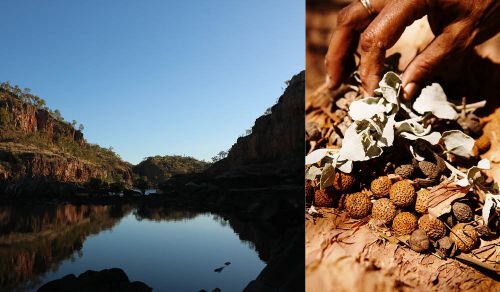
Setting it aside, I appreciate the fruits, herbs and spices used in these dishes – desert quandong, also known as desert peach, a sweet fruit that is tart and high in Vitamin C; lemon myrtle, found on the east coast, similar to zesty lemon verbena; and the aromatic mountain pepper, made from dried berries found in Tasmania and south-east Australia. These uniquely Australian flavours are ironically more exotic to most of us than, say, the south-east Asian dragonfruit, the Central American guava, or the Mexican chipotle.

And it is this unfamiliarity with native food that sparked Marksie’s desire to teach other Australians how it can be used in everyday cooking – and to showcase a beautiful “marriage of white and Indigenous Australian culture" to his many overseas guests.


With a menu that changes to suit what’s in season, around 14 different types of herbs, spices, and fruits are used on any given night – many of which are collected by Marksie himself when he goes bush with local Indigenous ladies who he calls his close friends.


But it’s not just the foraging that’s finicky work. To prepare for every camp tucker dinner, Marksie lights the first fire around 5am and by the time the last guest leaves and clean-up is complete, it’s almost midnight. (I suddenly appreciate my camel sausage a great deal more.) There were around 120 people running similar experiences when he began, but now there are very few: “It is sad to say that many of the old-timers that used to do what I do are no longer with us. It’s a very time-consuming and slow business, so not many people want to take it on," he says.


Yet the growing appreciation for native flavours, their beauty and versatility, has taken bush foods in a whole new direction, and they are appearing increasingly in top-notch restaurants across the country. Hatted establishments such as Sydney’s Billy Kwong and Melbourne’s Vue de Monde, and Adelaide’s Orana have embraced native ingredients on their menus, with respective dishes such as red-braised caramelised wallaby tail; Davidson plum sorbet with sorrel and flowers; and riberry, native juniper, muntrie and mango.


Our main course for the evening is a little more humble, comprising roast beef with native pepper berry; roast potatoes with aniseed myrtle (which has a subtle liquorice flavour); and peas with native mint (originally used by Indigenous Australians for medicinal purposes).

A delicious hot-from-the-camp-oven damper with roasted wattle seeds is served on the side with creamy butter, and we finish the evening with homemade scones, fresh jam and cream, while watching two of the younger diners go head-to-head in a billy spinning competition.


Sure, it’s a far cry from the award-winning fare served under city lights, but the hearty and homely dishes we’ve tasted tonight perfectly complement this very Australian setting under the outback stars. And more importantly, what’s a campfire without a colourful story or two?

Marksie’s outstanding ability to tell a good yarn in between courses, if a little irreverent and exaggerated at times, has us utterly entertained. Indeed, this is a stockman’s dinner after all, where in place of a chef’s hat is a top-notch Akubra.

Getting there:

Marksie’s Stockman’s Camp Tucker is located in the grounds of Top Didj Cultural Experience on Gorge Road, seven kilometres from the Post Office in Katherine, Northern Territory. It runs five nights a week during the dry season and the cost is $80 per adult and $40 per child (two–13 years) for a three-course meal with non-alcoholic Jungle Juice. BYO alcohol. Bookings are required.

For more information on things to do in the NT, visit the official Northern Territory website at northernterritory.com

Megan Arkinstall
Megan Arkinstall is a freelance travel writer who you’ll often find at the beach, bushwalking or boating with her young family. She loves reliving travel memories through writing, whether that be sipping limoncello in a sun-drenched courtyard of Monterosso or swimming with green turtles in the aquamarine waters of Tropical North Queensland.
See all articles
hero media

8 Northern Territory secrets the locals don’t want you to know

Summer transforms the Northern Territory into a lush paradise of colour and life, as a visit during the ‘low-season’ reveals secrets the locals willingly share.

Waterlilies bloom, floodplains are alive with birdlife, waterfalls are gushing, and everywhere the green is dazzling. Summer in the Top End and the Red Centre is a kaleidoscope of unexpected wonders that delight and surprise visitors. Of course, the locals know only too well that the Northern Territory low season is often the best time to see and experience this amazing part of Australia.

Here are some of the reasons why savvy travellers – avoiding the crowds – are discovering a new dimension to the Territory. Remember that you’ll need a Parks Pass to visit national parks.

1. Take a dip in the Florence Falls waterhole

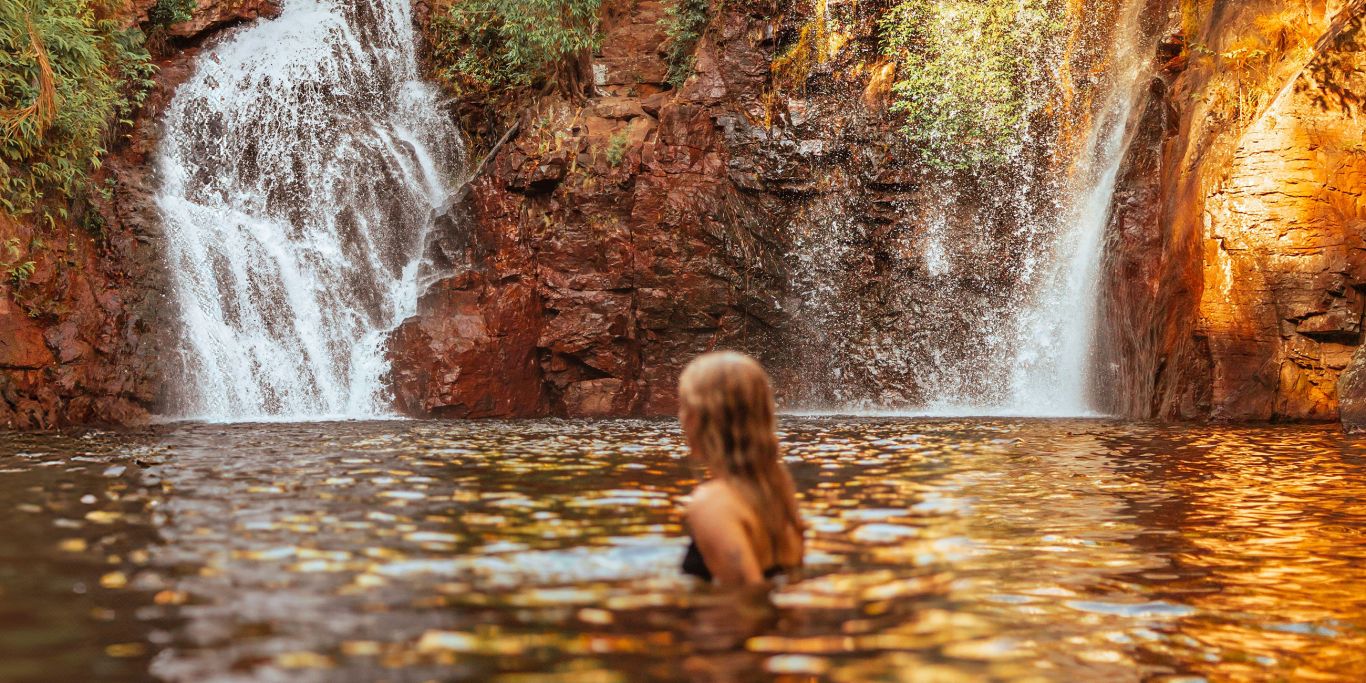
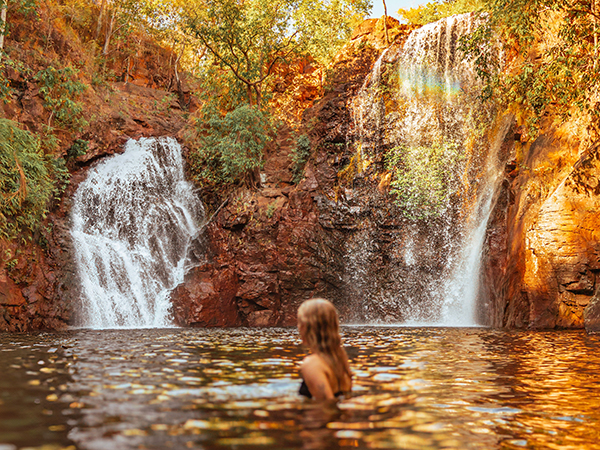
Wander through savanna woodland and monsoon forest to discover the perfect place to cool off – the waterhole at the base of spectacular Florence Falls in the magnificent Litchfield National Park , just 90 minutes’ drive from Darwin. The falls flow year-round but are most spectacular during the summer. Camping is available nearby but bookings are essential and must be made online before you visit.

Surrounded by lush forest, a woman cools off in Florence Falls, just one of many incredible things to do in the Northern Territory.
Cool off beneath the cascading waters of Florence Falls. (Image: Joshua Griffin)

2. Wind down at Buley Rock Hole

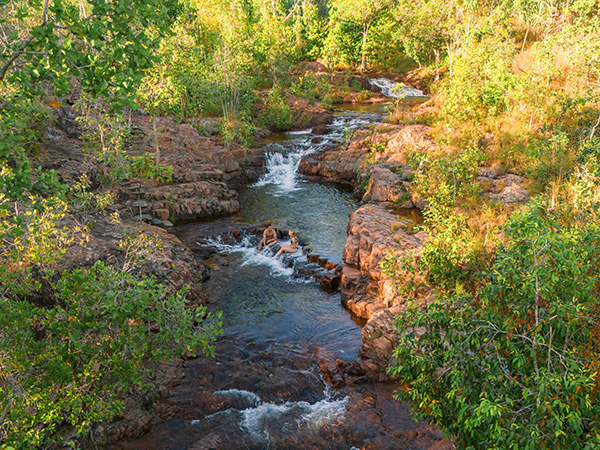
Another popular local swimming spot in Litchfield National Park is Buley Rock Hole , open year-round. This is a great place to wind down after exploring everything the park has to offer, including towering termite mounds. Wade through the rock pools, soak up the scenic bush or just lie back and relax as the cool water rolls over you.

Buley Rockhole, Litchfield National Park
Let the cool water wash over you. (Image: Tourism Australia)

3. Tour the Tiwi Islands

The Tiwi Islands , a scenic 80km flight from Darwin across the narrow Clarence and Dundas Straits, reveal a different side to the Territory, with their own distinctive culture. Take a day tour with Tiwi by Design to visit Bathurst Island and learn about creation stories, the Mission days, World War II history and the islanders’ obsession with AFL!

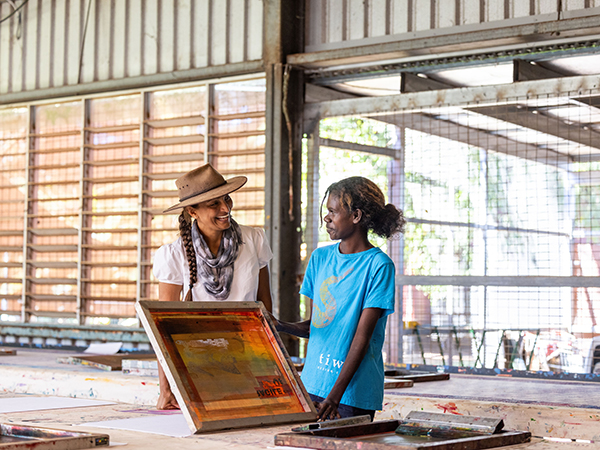
Take a ‘behind-the-scenes’ tour of Tiwi Design’s screen-printing workshop and pick up a great souvenir in the form of art. Choose from contemporary or traditional Tiwi designs and a wide range of work including carvings, paintings, pottery, printmaking, bark paintings and tunga (bark baskets).

A creative moment shared inside Tiwi Design’s screen-printing space.
Take a peek inside Tiwi Design’s screen-printing studio. (Image: Tourism NT)

4. Dine in Darwin

Foodies are spoilt for choice in multi-cultural Darwin. Try Sri Lankan flavours at Ella by Minoli, where Masterchef contestant Minoli De Silva creates delectable dishes, or head to Charlie’s of Darwin for gin-tasting, cocktails and more. Bowls of fragrant laksa, excellent coffee, fresh vegetables and authentic crafts are all part of a weekend visit to Darwin’s Parap Markets , Rapid Creek Markets and the Nightcliff Markets .

Prefer to catch your own dinner? Book a Top End fishing charter to bag a barramundi – and from October register for the annual Million Dollar Fish competition. Hooking one of the tagged barra released each year in waterways across the Territory could win you up to $1 million.

A bowl of Laksa.
Eat your way through multicultural Darwin. (Image: Tourism NT)

5. Up close with Uluṟu

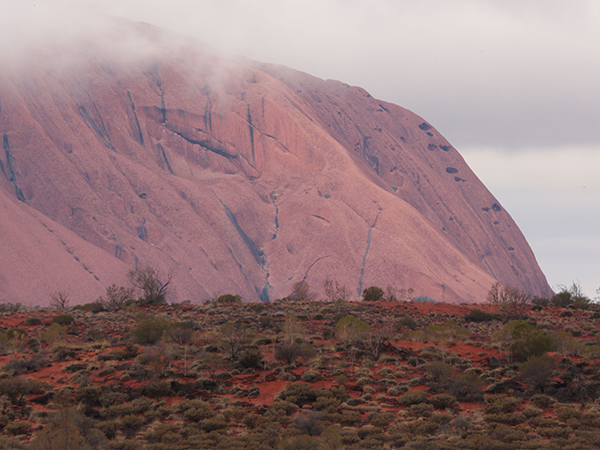
The magnificent monolith Uluṟu is even more magical when the summer rains fall. When it rains on The Rock, the locals come out to watch – consider yourself lucky if that happens when you visit. Waterfalls cascading off the sides of Uluṟu is a sight that relatively few tourists see.

There’s so much to do at Uluṟu, from guided walks to learn the stories of the Aṉangu people and the ancient landscape they live in to scenic flights for a bird’s-eye view or a leisurely walk around the base of Uluṟu. Book ahead to spend the evening wandering through the Field of Light installation by Bruce Munro.

A closer look at Uluru and uncover its ancient stories, sacred sites, and striking natural beauty – one of the most iconic things to do in the Northern Territory.
Discover the details that make Uluṟu truly sacred. (Image: Tourism NT)

6. Drive the Red Centre Way

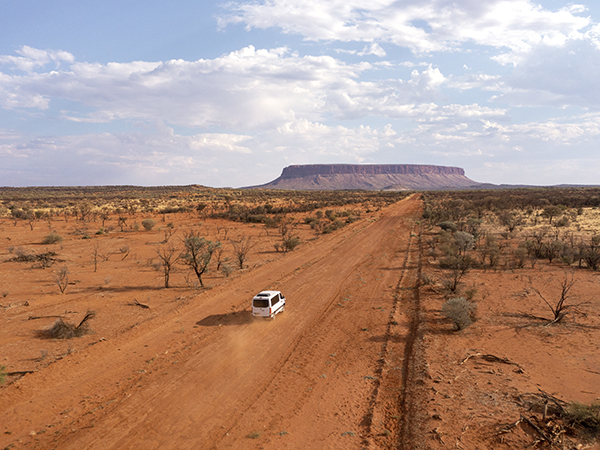
From Alice Springs, take an epic road trip along the Red Centre Way, taking in Uluru and Watarrka National Park, home to the magnificent Kings Canyon. Allow at least a week to drive through the red heart of Australia by 4WD, a little longer on the sealed road by 2WD vehicle, travelling through ochre deserts, palm-lined valleys and dramatic gorges. Stop off at waterholes for a refreshing dip along the way.

Kings Canyon offers hiking options for all levels of fitness, from the three-hour Rim Walk atop soaring sandstone walls to the gentler Kings Creek Walk. Either way, you’ll have breathtaking views.

SEIT Outback Australia is a small group touring specialist offering exciting, adventurous, exclusive and specialised iconic, pioneering and cultural touring in the Red Centre of Australia, giving you the time to learn, absorb and relax in the heart of Australia.<br /><br />This innovative tour company focuses on providing clients with the ultimate interpretive touring experiences with a range of products and customised touring itineraries for small groups and bespoke private charters.<br /><br />The company bases its philosophies from the key words of Spirit, Emotion, Intellect and Task (SEIT).
Drive through Australia’s heart. (Image: Outback Australia Tours)

7. Take a walk at Kata Tjuṯa

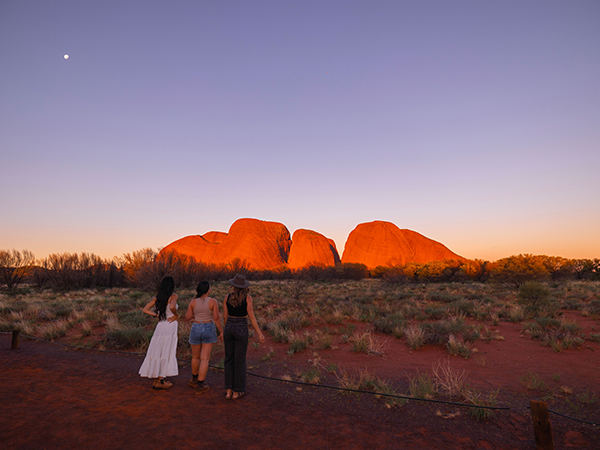
Head out early to tackle the Valley of the Winds Walk at Kata Tjuṯa . This natural wonder, also known as The Olgas, is a labyrinth of soaring ochre domes that glow golden at sunrise and sunset (the walk may be closed during the middle of the day as temperatures rise).

Walking trails range from easy to longer, more difficult tracks. At the Kata Tjuṯa dune viewing area, take in the panoramic view of the domes. The longest of the trails is the Valley of the Winds Walk, a 7.4km circuit that winds between the domes and through creek beds. It’s moderately difficult and steep in places, but offers stunning views – and occasional encounters with kangaroos.

The Valley of the Winds Walk at Kata Tjuta is one of the most awe-inspiring things to do in the Northern Territory, especially at sunrise when the domes glow golden.
Step into the golden light of Kata Tjuṯa. (Image: Tourism NT)

8. Explore Tjoritja/West MacDonnell Ranges

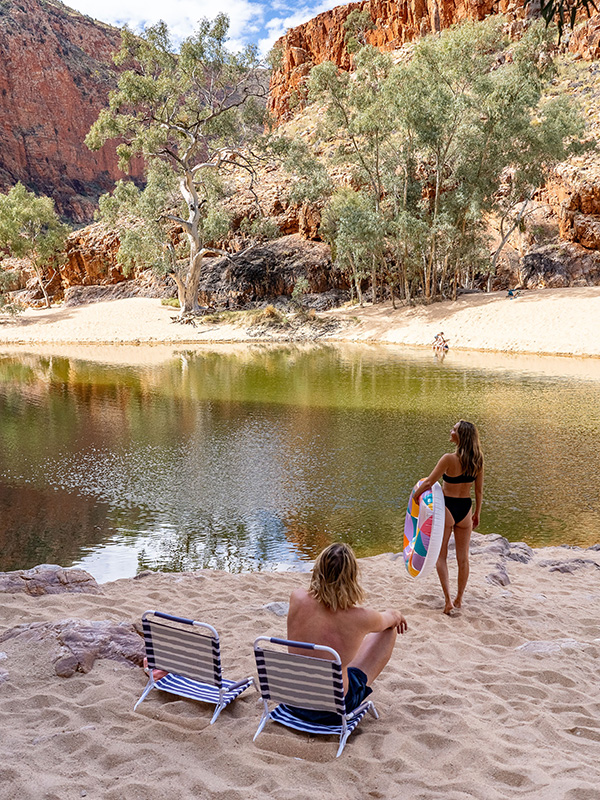
Tjoritja/West MacDonnell National Park lies 135km west of Alice Springs, with many fascinating natural features to beguile visitors. The ‘West Macs’ formations include chasms, gorges and waterholes – take your swimsuit for a dip at Ormiston Gorge waterhole, open year-round. The Ormiston Pound Walk is a three to four-hour circuit that leaves from the visitor centre and loops back along the gorge via the main waterhole. Other places of interest in the park include Simpsons Gap , Standley Chasm , Ellery Creek Big Hole and Glen Helen .

Soaking in the serenity of Ormiston Gorge, these two travellers enjoy one of the most scenic things to do in the Northern Territory.
Take the plunge at Ormiston Gorge waterhole. (Image: Joshua Griffin Litchfield)

Start planning the NT road trip of a lifetime at northernterritory.com