16 unexpected things to do in Alice Springs

hero media
Aboriginal rock art, idyllic waterholes, spectacular sunsets, intriguing history and diverse culture. This is Alice Springs, and it’s filled with an abundance of things to do.

From holding a baby kangaroo wrapped in a pillowcase to hot air ballooning, mountain biking and camel rides, here is your guide to the best things to do in Alice Springs.

1. Kangaroo Sanctuary Alice Springs

Cuddling a joey is the stuff of bucket lists. Luckily, Brolga, aka Chris Barnes, is ready to make your dreams come true at his Kangaroo Sanctuary 20 minutes’ drive from Alice Springs.
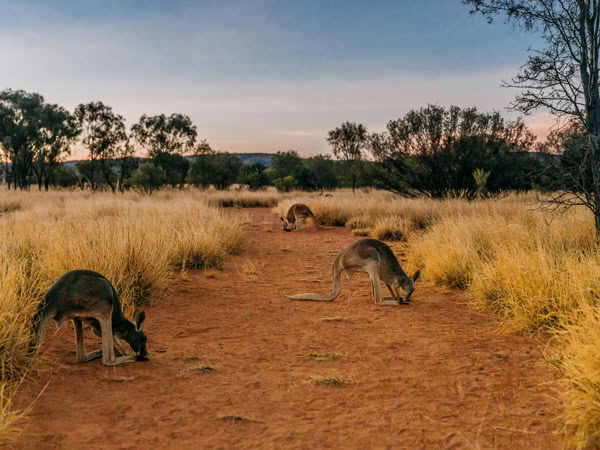
kangaroos spread across The Kangaroo Sanctuary
The sanctuary is home to orphaned joeys and kangaroos. (Image: Tourism NT/Jewels Lynch)

Stroll through bushland and meet the resident mob of rescued orphaned joeys and adult kangaroos as a giant red sun sinks into the desert. Public tours are available here Wednesday, Thursday and Friday, except in the summer, when the facility is closed.
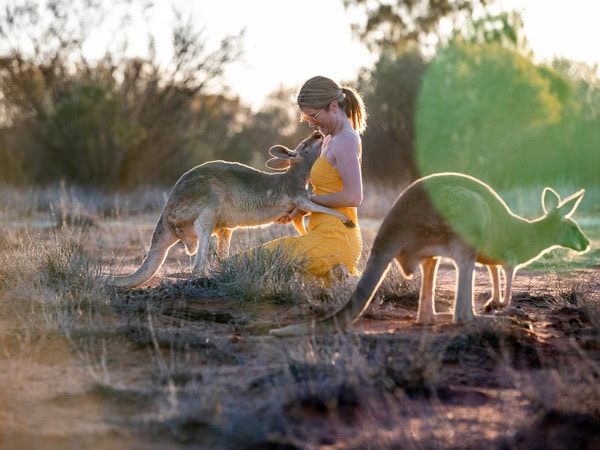
Woman petting a kangaroo at Kangaroo Sanctuary
Tours of the sanctuary run for two hours and offer plenty of opportunities to get acquainted with kangaroos. (Image: Tourism NT/Helen Orr)

2. Alice Springs art galleries

Home to the Arrernte people, Alice Springs is a major hub for Aboriginal art from around Central Australia and boasts numerous art galleries, shops and studios. Araluen Arts Centre contains about 1100 artworks and a large collection of paintings by the great Albert Namatjira.
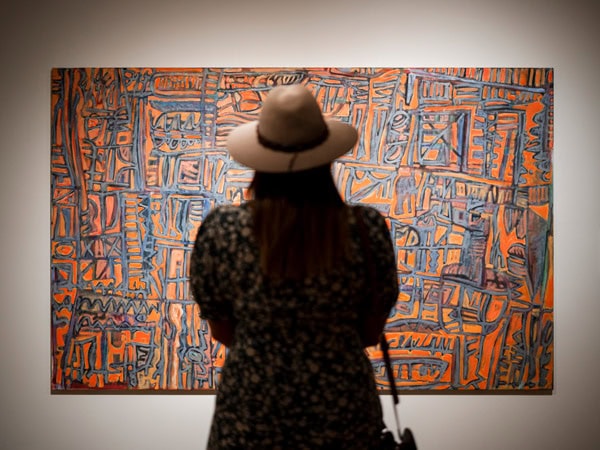
a woman admiring an artwork on display at Araluen Arts Centre
Appreciate the artworks on display at Araluen Arts Centre. (Image: Tourism NT/Shaana McNaught)

Commercial galleries worth a visit include the Indigenous-owned Papunya Tula Gallery in the Todd Mall and the nearby Yubu Napa Gallery and Mbantua Gallery.
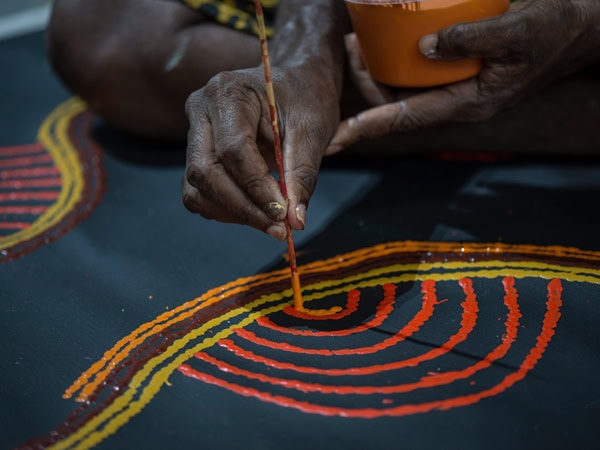
a close-up of a local artist creating an Aboriginal art at Yubu Napa Art Gallery
Yubu Napa Art Gallery exhibits incredible works by Aboriginal artists. (Image: Tourism NT/Shaana McNaught)

Tjanpi Desert Weavers is also a must-visit gallery in Alice Springs. In the gallery space, you’ll find a delightful array of baskets, jewellery and animal sculptures woven by women out on Country. The gallery also functions as a social enterprise, providing opportunities for women’s employment across 26 communities across APY Lands. Stop in to admire the artwork, learn about the project – and maybe even pick up a trinket to take home.
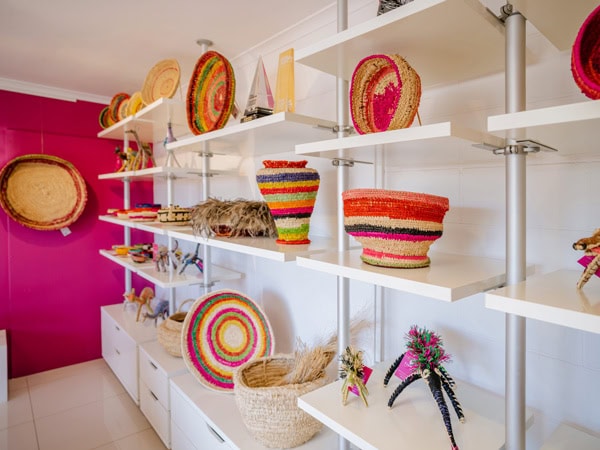
woven baskets on display at Tjanpi Desert Weavers
Tjanpi Desert Weavers showcases baskets and items intricately woven by women out on Country. (Image: Tourism Australia)

3. Alice Springs hot air balloon rides

Wake up before 5am to get a bird’s eye view of the desert on a hot air balloon ride. Outback Ballooning offers half-hour and hour-long flights with guaranteed angelic views over the desert plains.
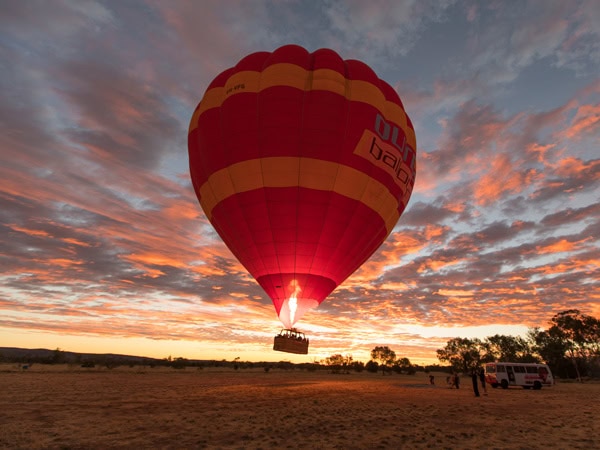
Outback Ballooning in Alice Springs
There’s no better way to watch the sunset in Alice Springs than a hot air balloon ride. (Image: Tourism NT)

If you prefer to stay on terra firma, opt for the hot air balloon chase, where you watch your friends or family take flight before following in a 4WD.
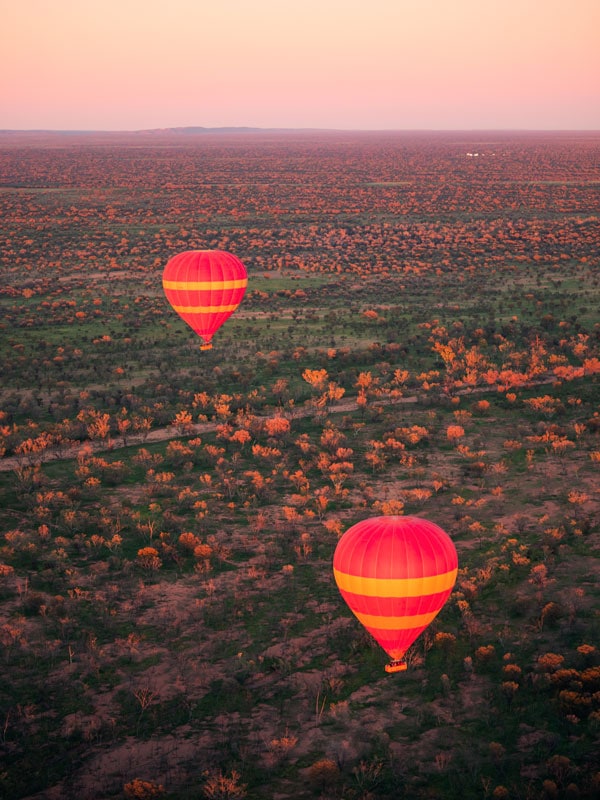
two hot air balloons floating above Alice Springs
Float above the vast and rugged landscapes with Outback Ballooning. (Image: Tourism NT/Daniel Tran)

4. Earth Sanctuary Alice Springs

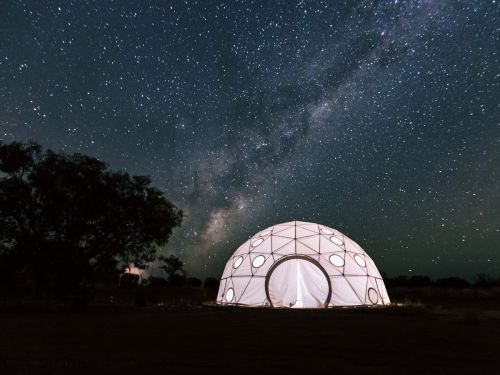
If spotting constellations, super giants and planets is on your bucket list, you’ll want to plan a trip to one of the best stargazing spots in the world.
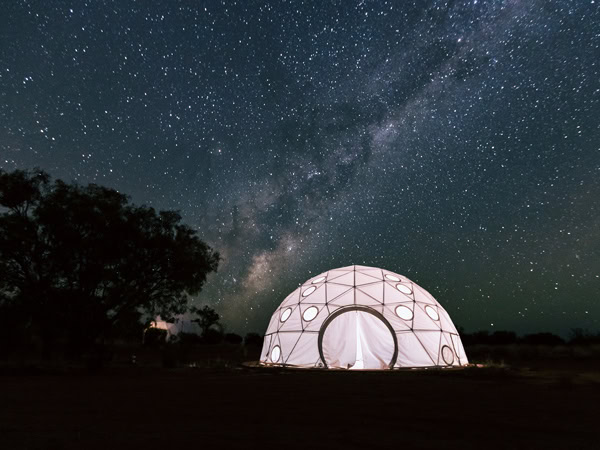
stargazing at the Earth Sanctuary, Alice Springs
Witness the night skies dazzle at the Earth Sanctuary. (Image: Tourism NT/Plenty of Dust)

On the 40-hectare property at Earth Sanctuary the one-hour astronomy tour takes you on a trip through the night sky, where you’ll learn how to navigate using the stars and hear ancient Aboriginal stories interwoven with modern science. You’ll also get to look at the glittering cosmos through deep sky telescopes at the Earth Sanctuary Observatory – a sight that’s bound to reframe your sense of perspective.
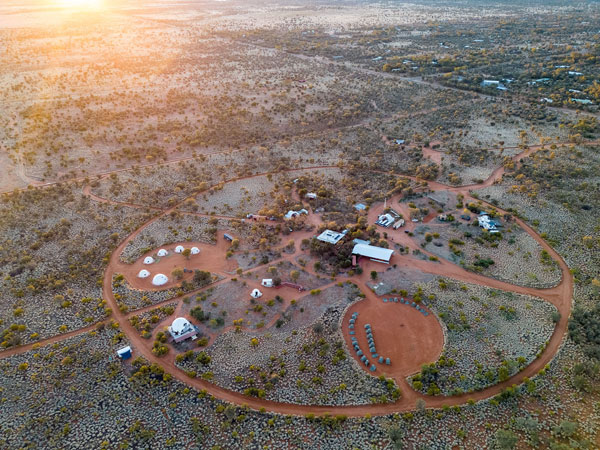
an aerial view of the Earth Sanctuary, Alice Springs
Go camping at the Earth Sanctuary for the best stargazing views. (Image: Tourism NT)

Need tips, more detail or itinerary ideas tailored to you? Ask AT.

AI Prompt

5. Olive Pink Botanic Garden Alice Springs

Just a few minutes’ drive from the Todd Mall, the beautiful Olive Pink Botanic Garden is home to about 2,500 plantings of over 600 species. Take the easy ascent to Annie Meyers Hill for some of the best views of Alice Springs.
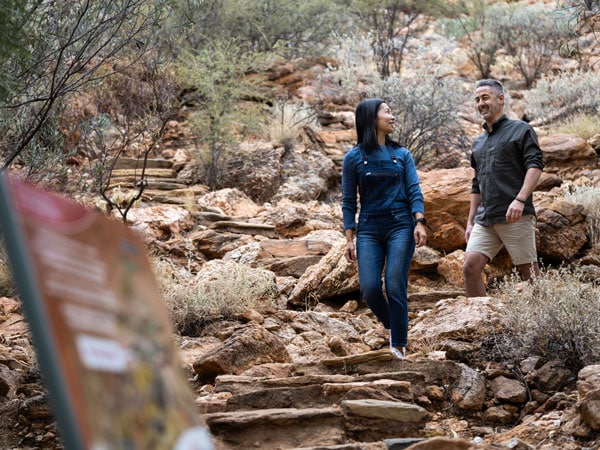
a couple exploring the Olive Pink Botanic Garden
Hike to Annie Myers Hill in Olive Pink Botanic Garden to appreciate the views. (Image: Tourism NT / Shaana McNaught)

For breakfast or lunch, pop into the quaint Bean Tree café for banana pancakes, smashed avo on toast and creamy oat lattes.
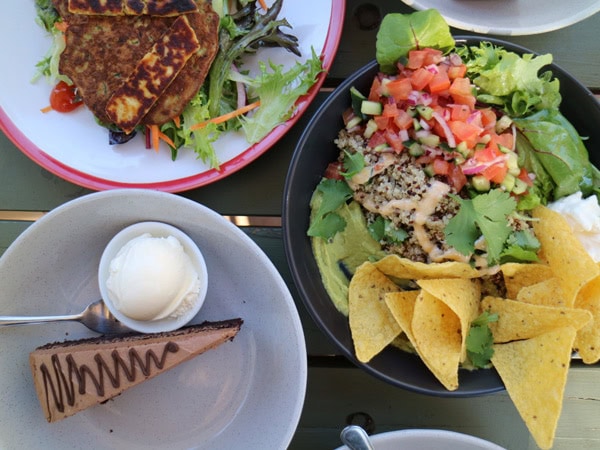
a table-top view of the breakfast menu at Bean Tree café
Start your day with a sweet or savoury option for breakfast at Bean Tree. (Image: Tourism NT/Christopher Nayna)

6. Royal Flying Doctor Service Alice Springs

Housed in Alice Springs’ original Royal Flying Doctor Service base, this centre includes a museum with historic radios, medical equipment and a replica fuselage you can sit in.

Go hi-tech and don a virtual reality headset to experience flying as a patient in the outback. You can also ‘see and hear’ founder John Flynn, who appears as a life-size hologram.
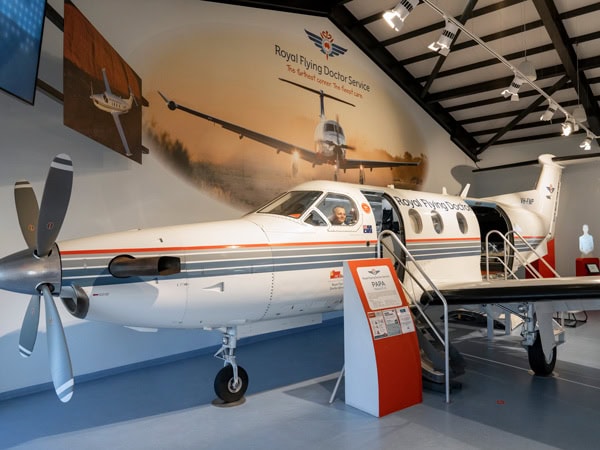
the plane on display at Royal Flying Doctor Service in Alice Springs
Check out the plane replica and the virtual reality headset. (Image: Tourism NT/Shaana McNaught)

7. National Road Transport Museum

From the early days of camel trains to the birth of the Ghan train, you can learn about all things transport in Central Australia at the National Road Transport Museum. If you want to stay longer, there’s a campground with powered and unpowered sites – just beware that the train line runs directly behind the campground and the train horn is a common sound.
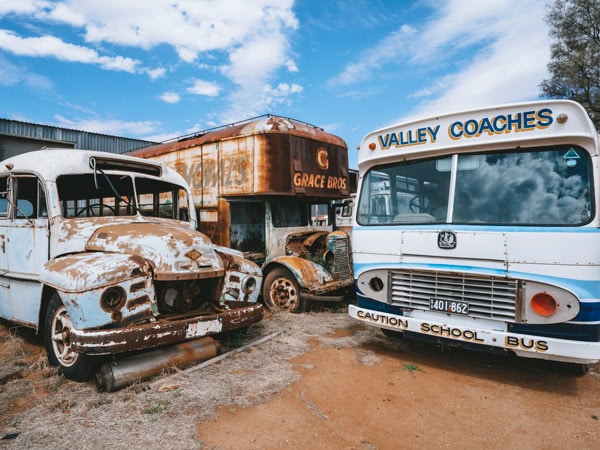
abandoned vehicles at the National Road Transport Museum, Alice Springs
Learn about all things transport at National Road Transport Museum. (Image: Tourism NT/Tourism Australia)

8. Alice Springs camel rides

If you feel like throwing your leg over a camel and setting off into the desert there are several farms that offer tours. Just 20 minutes’ drive from Alice Springs, Pyndan Camel Tracks has one-hour rides at noon, mid-afternoon and sunset. Opt for the sunset tour to see the sky turn from pink to a rich orange and to enjoy a bubbly and bar snacks after the ride.
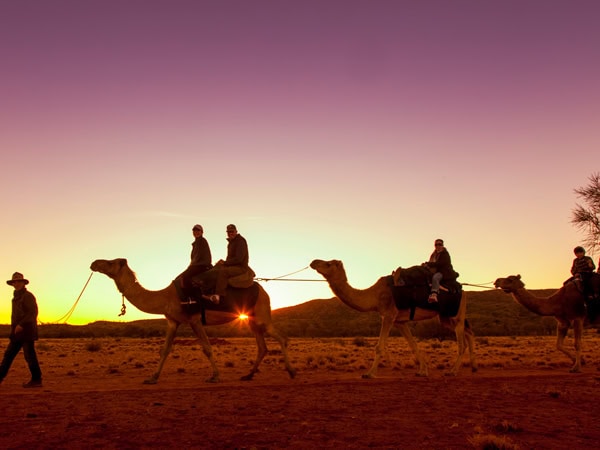
camel rides at sunset, Pyndan Camel Tracks
Ride a camel at sundown. (Image: Tourism NT)

9. Megafauna Central

At Megafauna Central in the Todd Mall you can see life-size replicas of some long-vanished creatures, including the world’s largest bird known as Dromornis and a colossal crocodile species called Baru. It’s part of the Museum of Central Australia, which presents the geological history of the region starting from the big bang and continuing to the present day.

10. Alice Springs Desert Park

Just 10 minutes’ drive from town, Alice Springs Desert Park features a jam-packed list of daily presentations, including talks on dingos, emus, echidnas, plant medicine and red kangaroos.
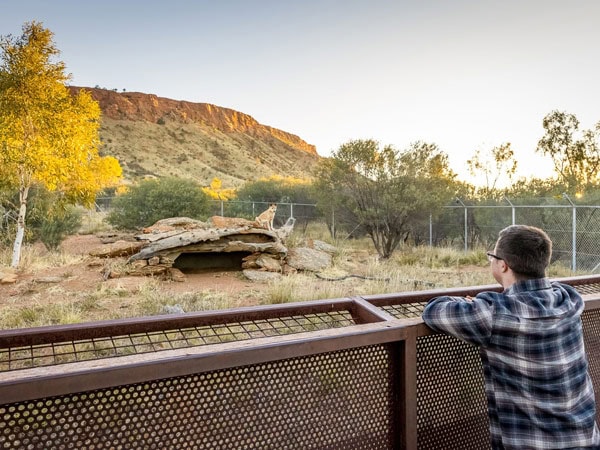
a man admiring a dingo at Alice Springs Desert Park
See a dingo at Alice Springs Desert Park. (Image: Tourism NT/Helen Orr)

Make sure you catch the bird show and grab a free self-guided audio tour to explore the three habitats – woodlands, sand country and desert rivers.
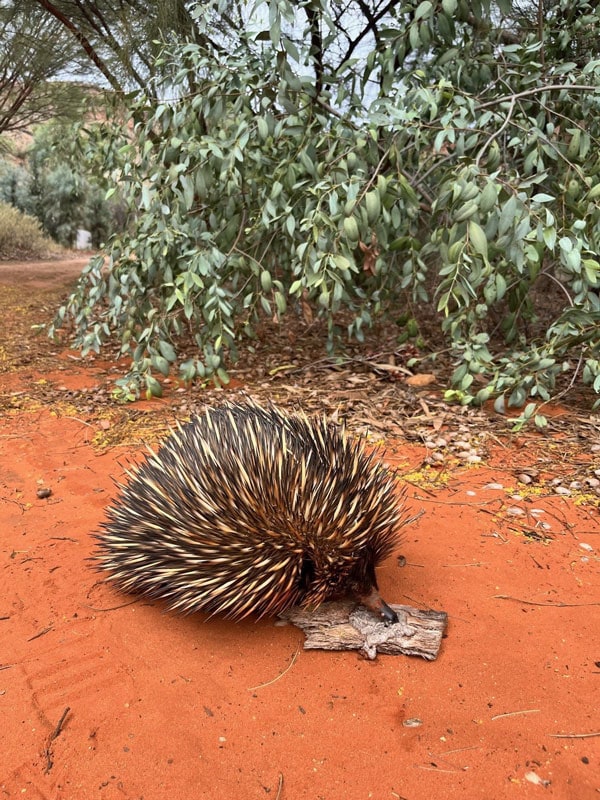
an echidna at Alice Springs Desert Park
Catch the talk on echidnas while you’re there. (Image: Tourism NT)

11. Alice Springs Telegraph Station

Visit the spot where European settlement began in Alice Springs by taking the short drive to the Telegraph Station, Learn how the Telegraph Station was established in 1871 to relay messages between Darwin and Adelaide along the Overland Telegraph Line and walk through the lovely historic stone buildings, which are open for daily tours.
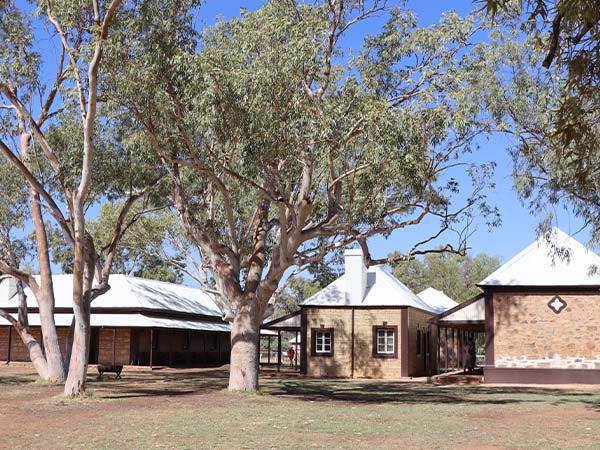
Alice Springs Telegraph station
Visit the historic Alice Springs Telegraph station. (Image: Terry Feuerborn/Flickr)

Weekly travel news, experiences
insider tips, offers, and more.

12. Alice Springs Reptile Centre

Home to over 100 snakes, lizards and crocodiles, Alice Springs Reptile Centre offers educational tours, with talks covering topics such as reptile habitats and how to avoid encounters with snakes in the wild.
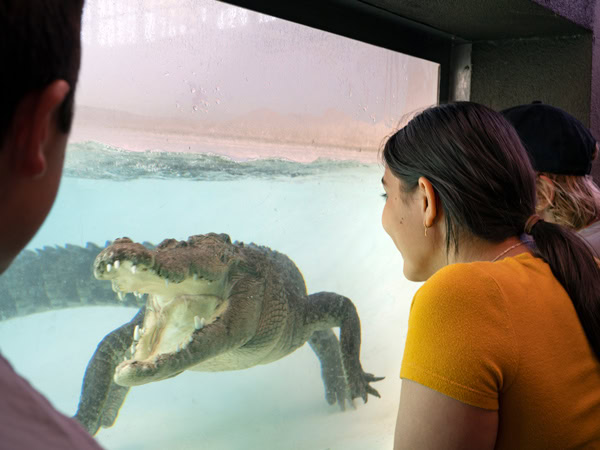
visitors at Alice Springs Reptile Centre while admiring a crocodile in a glass cage
See Terry the saltwater crocodile through the glass. (Image: Tourism NT/Shaana McNaught)

Catch one of the daily shows and don’t forget to grab a selfie with a friendly python.
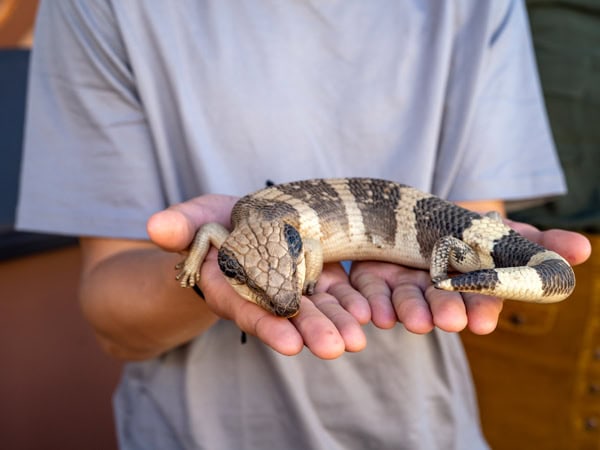
a kid holding a lizard at Alice Springs Reptile Centre
The reptile show will give you an up-close experience. (Image: Tourism NT/Shaana McNaught)

13. Sunrise or sunset at ANZAC Hill

For the early riser, a sunrise at ANZAC Hill will reward you with stunning views of Alice Springs waking up. Sunset is just as sweet from atop the 608-metre hill when a giant orange sun sinks into the vast desert landscape.
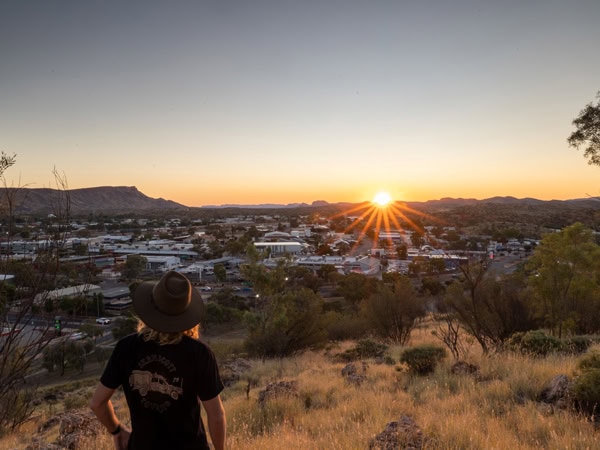
sunset at ANZAC Hill
Climb ANZAC Hill for stellar views. (Image: Tourism NT/Sean Scott)

Close to the centre of Alice Springs, ANZAC Hill landmark serves as a memorial to Australia’s military history and offers a serene spot to reflect on those who fought for the country during the Second World War.
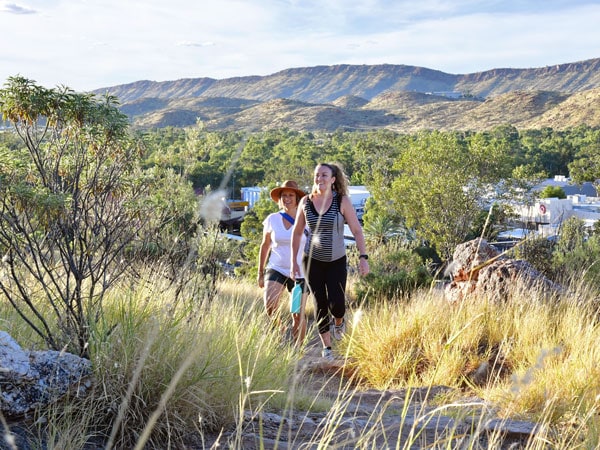
a group of hikers traversing the trail to ANZAC Hill
Traverse the beautiful hiking trail to ANZAC Hill. (Image: Tourism NT/Chloe Erlich)

14. Todd Mall markets

Start the day with a mango smoothie and fresh pastries from the Todd Mall markets, held every Sunday from 9am between March and December. You can peruse plenty of stalls with unique handmade jewellery, postcards and Aboriginal paintings.
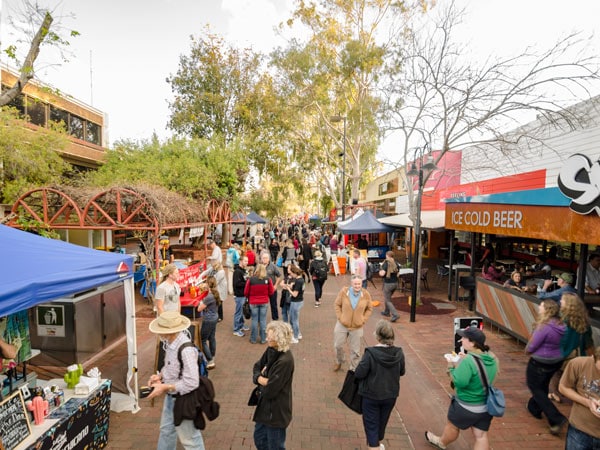
Shoppers at Todd Mall Markets in Alice Springs
Find a local treasure to take home or a treat to eat at the local markets. (Image: Tourism NT)

15. West MacDonnell Ranges

Take a day trip to the West Macs to enjoy some fabulous outback scenery and a cool dip in one of the spectacular waterholes, such as Ellery Creek, Ormiston Gorge, Glen Helen and Redbank Gorge.
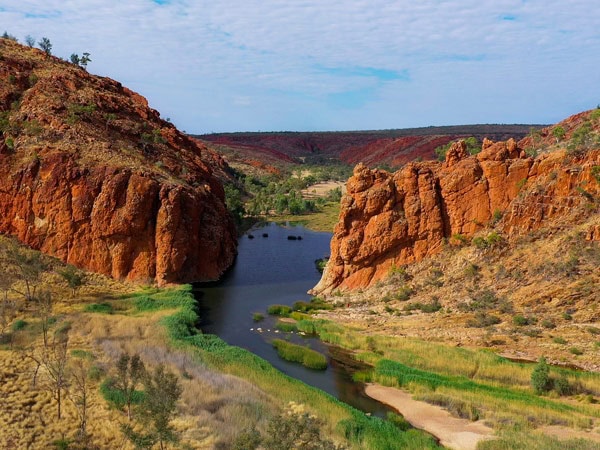
Aerial view of Glen Helen
Find spectacular waterholes at Glen Helen. (Image: Tourism NT/Tourism Australia)

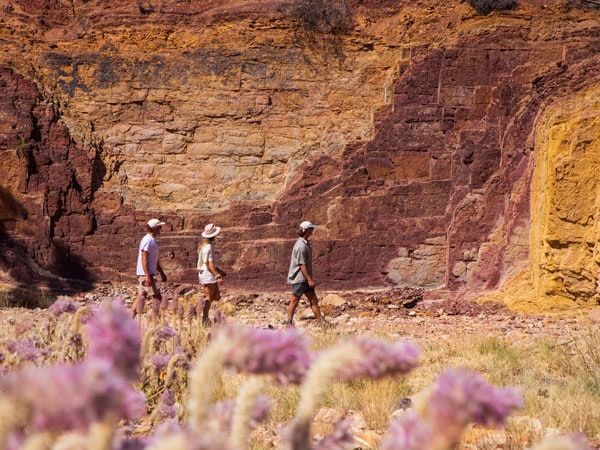
Highlights you shouldn’t miss include the dramatic gorges of Simpsons Gap and Standley Chasm, and the Ochre Pits, a colourful outcrop of ochre on the banks of a sandy creek.
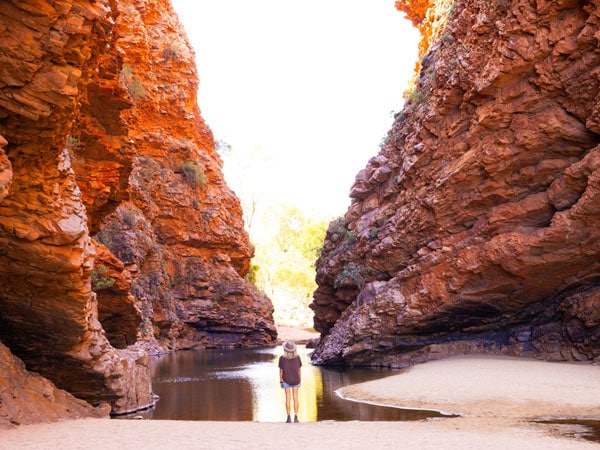
Simpsons Gap near Alice Springs
Simpsons Gap is one of the highlights of exploring West MacDonnell Ranges. (Image: Tourism NT/Sean Scott)
a group of travellers exploring the Ochre Pits
Explore the extraordinary Ochre Pits in the West MacDonnell Ranges. (Image: Tourism NT/The Salty Travellers)

16. East MacDonnell Ranges

Situated 85 kilometres east of Alice Springs and home to the largest ghost gum in Australia, Trephina Gorge is considered the main attraction of the East Macs. Here you’ll find dramatic gorges, ridges and plenty of short walks. If you have a 4WD you can continue a further five kilometres on an unsealed road to take a dip in the John Hayes Rockhole.
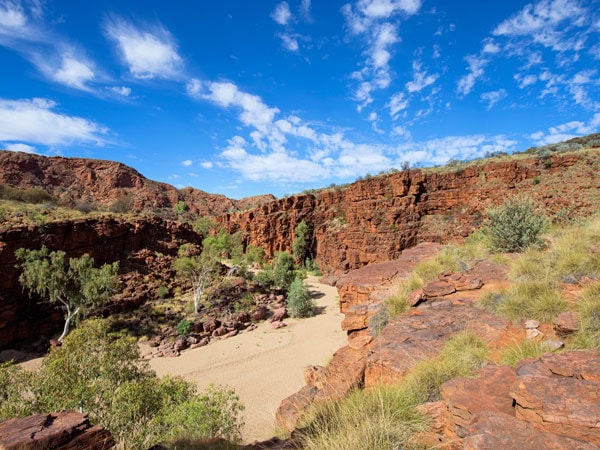
the Trephina Gorge in the East MacDonnell Ranges
Trephina Gorge is the main attraction of the East MacDonnell Ranges. (Image: Tourism NT/Shaana McNaught)

For more incredible ways to explore, read our travel guide to Alice Springs.

Leah McLennan
Leah McLennan is a freelance writer based in Darwin. She was a journalist in Sydney for over a decade and counts her time as travel editor for Australian Associated Press as one of the highlights of her career. From exploring remote campsites in the Top End with her family, to seeking out new art galleries in faraway cities, she’ll grab an adventurous or arty travel experience within her reach.
View profile and articles
hero media

Discovering East Arnhem: Australia’s most unique and rewarding corner

    Joanne Millares Joanne Millares

    Hard to reach and harder to forget, East Arnhem offers something rare in modern travel: the chance to slow down and experience Country on its own terms.

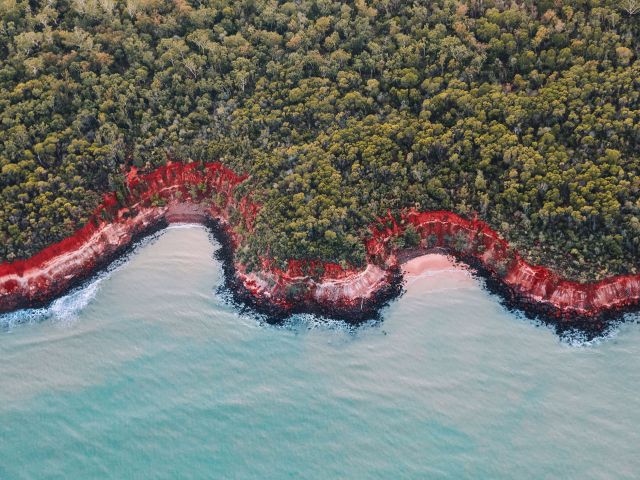
    The sky feels bigger in East Arnhem. It stretches wide and uninterrupted above rouged earth, stringybark woodland and beaches so empty they seem to belong to another era. The coastline curves for kilometres without a footprint and the horizon runs on forever.

    For comedian Lou Wall, the scale of the place was the first thing that hit them.

    “The sheer openness,” they say. “The sky feels infinite and the land stretches out endlessly. It’s pretty breathtaking visually.”

    But the physical landscape is only part of the story. The real reward isn’t only the scenery but the shift in perspective the journey brings. Visitors stop trying to tick off the destination and a real engagement takes over.

    “It made me never want to travel again,” Wall jokes. “In that I never wanted to leave East Arnhem.”

    Getting there

    Aerial shot of East Arnhem’s coastline as cars trace the curve of the shore.
    Sail along the remote coastline on an expedition cruise.

    Reaching East Arnhem is part of the adventure. Travellers typically fly into Gove Airport near Nhulunbuy via Darwin or Cairns, or arrive by expedition cruise along the remote coastline. Others make the journey overland along rutted dirt roads that cut through East Arnhem’s small pockets of monsoon forest.

    However you arrive, there’s a distinct feeling of crossing into somewhere different. Permits are required to visit the region, reflecting the fact that this is Yolŋu land where communities and traditional owners maintain deep cultural connections to Country.

    The extra planning becomes part of the experience. By the time visitors arrive, they understand they’re entering a place not just of respect, but also patience and curiosity.

    At one with nature

    East Arnhem’s  landscapes leave a strong imprint. For Wall, one place in particular still lingers in their memory: Ngalarrkpuy, also known as Lonely Beach, near Bawaka Homeland.

    “I genuinely felt like I was living inside an Instagram filter,” they say. “One of the most stunning feats of nature I’ve ever seen. The water was so clear I swear I could see even the fish smiling.”

    Across the region, natural experiences unfold at a slower pace. Fishing, beachcombing and island hopping reveal the rhythm of the coastline. The tides shape daily life and the vastness of the landscape makes even simple moments feel downright cinematic.

    For visitors with limited time, Wall says the Bawaka Homeland experience is unmissable.

    “I just left and I’m already planning when I can get back there.”

    The sense of remoteness is part of the appeal. In a country where many beaches are crowded and well-trodden, East Arnhem’s coastline still feels wonderfully wild.

    Immersing in local culture

    A visitor spends a meaningful moment alongside Yolŋu guides, gaining insight into their deep cultural knowledge and connection to the land.
    Experience authentic moments with the locals.

    Culture is woven through every experience in East Arnhem. Visitors have the opportunity to spend time on Country with Yolŋu guides and knowledge holders who share stories and traditions that have been passed down for generations.

    For Wall, one of the most powerful moments came during a conversation with a Yolŋu elder.

    “I got to meet a traditional elder, Mayalil, in Nhulunbuy,” they say. “Listening to her talk about her home made the land feel alive in ways I couldn’t have imagined.”

    The region is also home to internationally recognised Aboriginal art centres where artists shape works deeply connected to land and family knowledge.

    Music carries the same cultural energy. East Arnhem has produced globally recognised artists such as King Stingray and Baker Boy, blending Yolŋu language, storytelling and contemporary sound.

    Wall experienced this musical spirit first-hand.

    “A jam session around the fire was it for me,” they say. “Letting the deep joy and history of their music wash over me…  and meeting a few of the King Stingray musicians was unreal.”

    These moments of human connection often become the most memorable part of a visit.

    Spotting local wildlife

    An aerial view of the beach shows tiny figures lined up across the white sand, moving as if in a rhythmic dance.
    Step into a world where nature reigns.

    The wildlife of East Arnhem adds another layer to the experience. The region is home to an extraordinary range of animals, from waterbirds and turtles to dugongs, dolphins and the formidable saltwater crocodile.

    Wall admits they didn’t actually spot a croc during their visit.

    “Devastatingly, I didn’t see one,” they laugh. “But with all the stories from the locals I definitely gained a healthy respect for caution.”

    Some of the most memorable wildlife encounters can be surprisingly small., At Banubanu Beach Retreat on Bremer Island, Wall remembers walking along the beach one morning and watching it come alive.

    “As you walk through the sand you see hundreds of crabs scurrying into their holes as you pass by,” they say. “Such a small thing, but it was completely magical.”

    Moments like this reveal the quieter rhythms of East Arnhem, where even the smallest creatures seem to play a part in the landscape.

    Visitors who make the journey soon learn the most important travel tip of all.

    “Go in open-minded with a sense of curiosity,” Wall says. “Be prepared to ditch your plans. The land and the locals will guide you on an adventure no spreadsheets could ever compete with.”

    And most importantly, they add, don’t rush.

    “The land and people deserve your time and attention. You’ll be all the better for slowing down.”

    For more information on visiting East Arnhem, head to eastarnhem.com.au.