Australian Traveller was part of the first group to join the Uluṟu-Kata Tjuṯa Signature Walk, which delivers an experience like no other.
There’s no shortage of spectacular hiking trails in Australia. But I’m here to make a strong case that the new Uluṟu Kakararra Trail is the most beautiful and significant of them all. The Tasmanian Walking Company, in consultation with Yankunytjatjara and Pitjantjatjara people (Aṉangu), the Country’s Traditional Owners, has launched the Uluṟu-Kata Tjuṯa Signature Walk – a multi-day hike along the trail that traverses Uluṟu-Kata Tjuṯa National Park inthe Northern Territory. Last week, I had the privilege of joining the inaugural test group for the hike – a historic 54-kilometre, five-day journey that, for the first time, allows visitors who are not Traditional Owners to sleep overnight within the park.
What sets this hike apart is that it presents a unique opportunity to walk between two geological wonders, slow down and connect with people, the land and a living culture that spans more than 30,000 years.
What to expect on the Uluṟu-Kata Tjuta Signature Walk
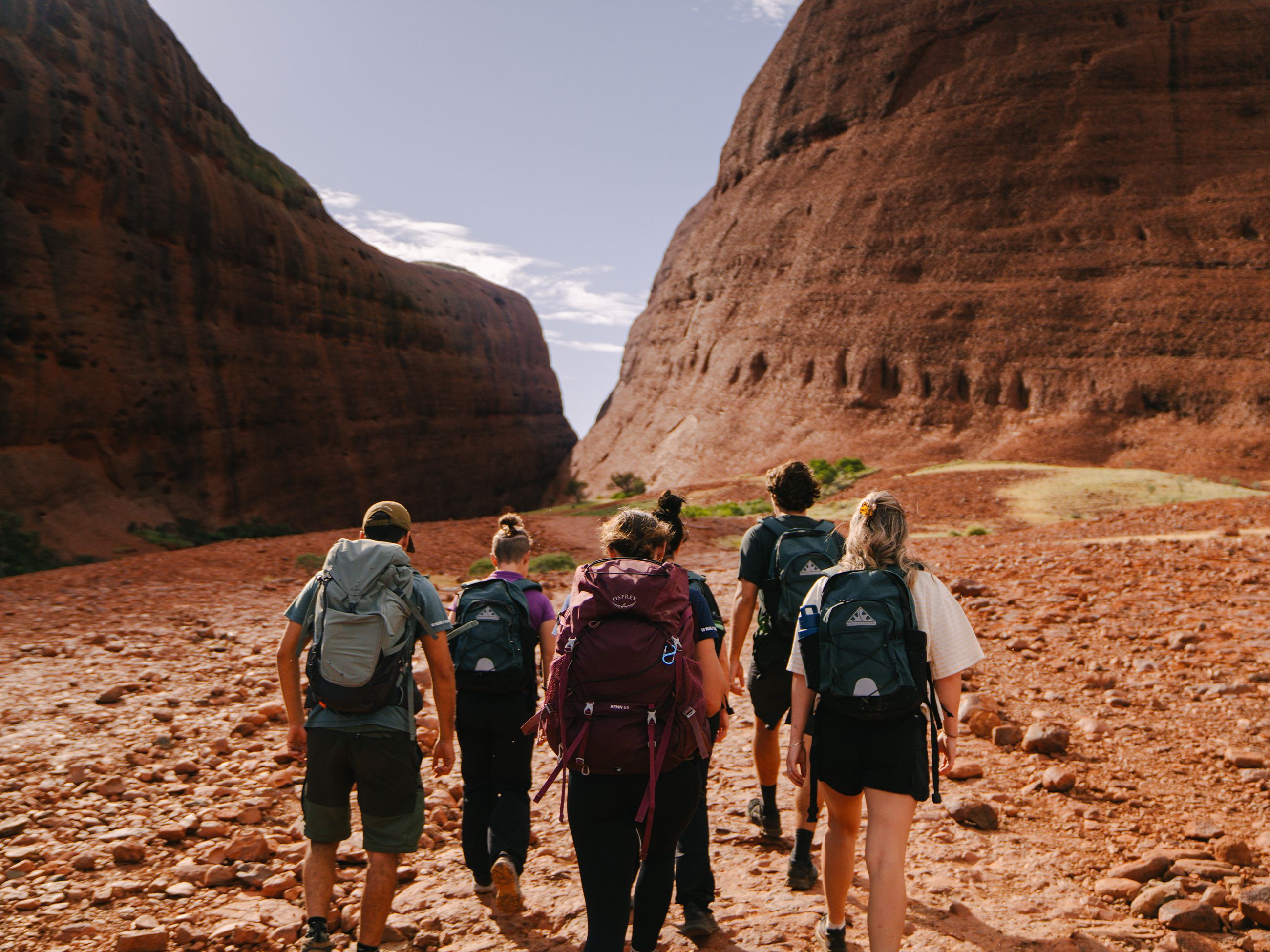
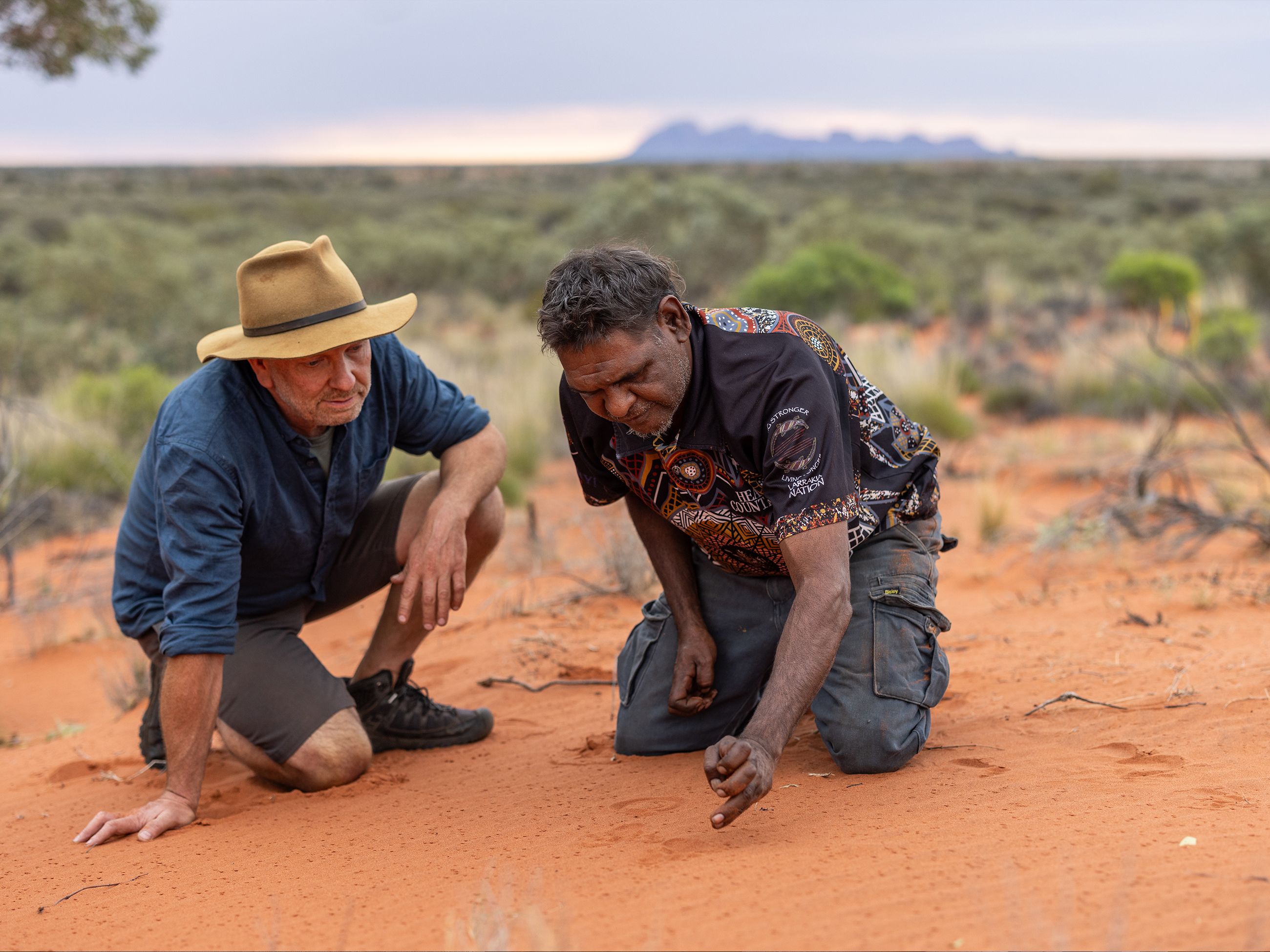
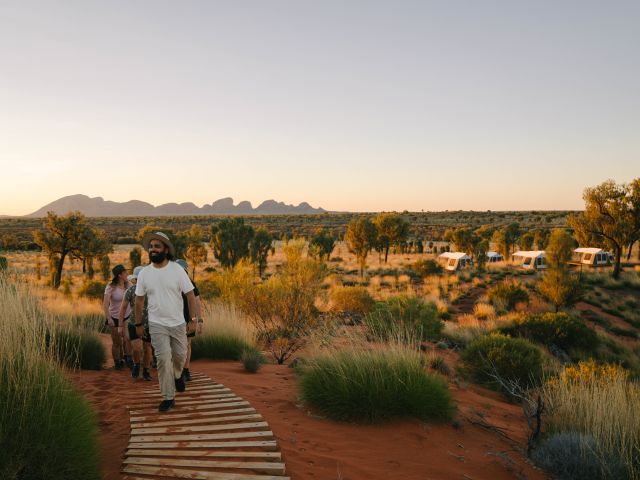
Traverse the Uluṟu Kakararra Trail on Tasmania Walking Company’s Uluṟu-Kata Tjuṯa Signature Walk. (Credit: Tasmanian Walking Company)
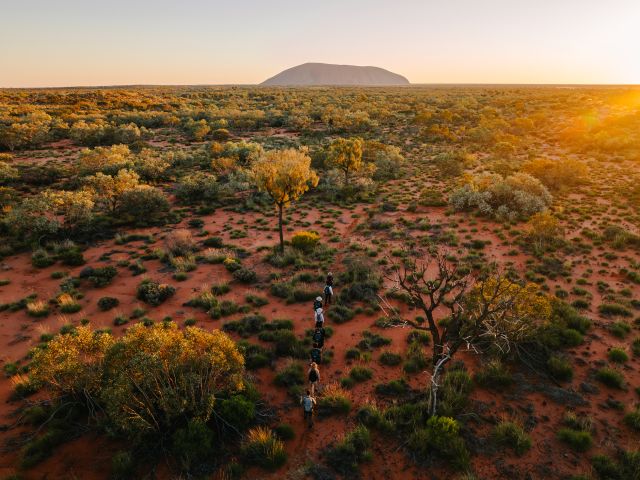
Each day involves traversing the 500-million-year-old landscape along remote tracks with a team of highly experienced guides leading small groups of just 16 people.
Starting near the 36 colossal domes of Kata Tjuṯa, you’re immersed in the desert landscape as soon as your boots hit the red soil. Here you’ll walk the Valley of the Winds, which takes approximately three to four hours to complete across 7.4 kilometres and reveals stunning geological formations and unique flora and fauna. The site is of immense cultural significance to the Aṉangu people, and visitors are discouraged from taking photographs.
The trail stretches 54 kilometres. (Credit: Tasmania Walking Company)
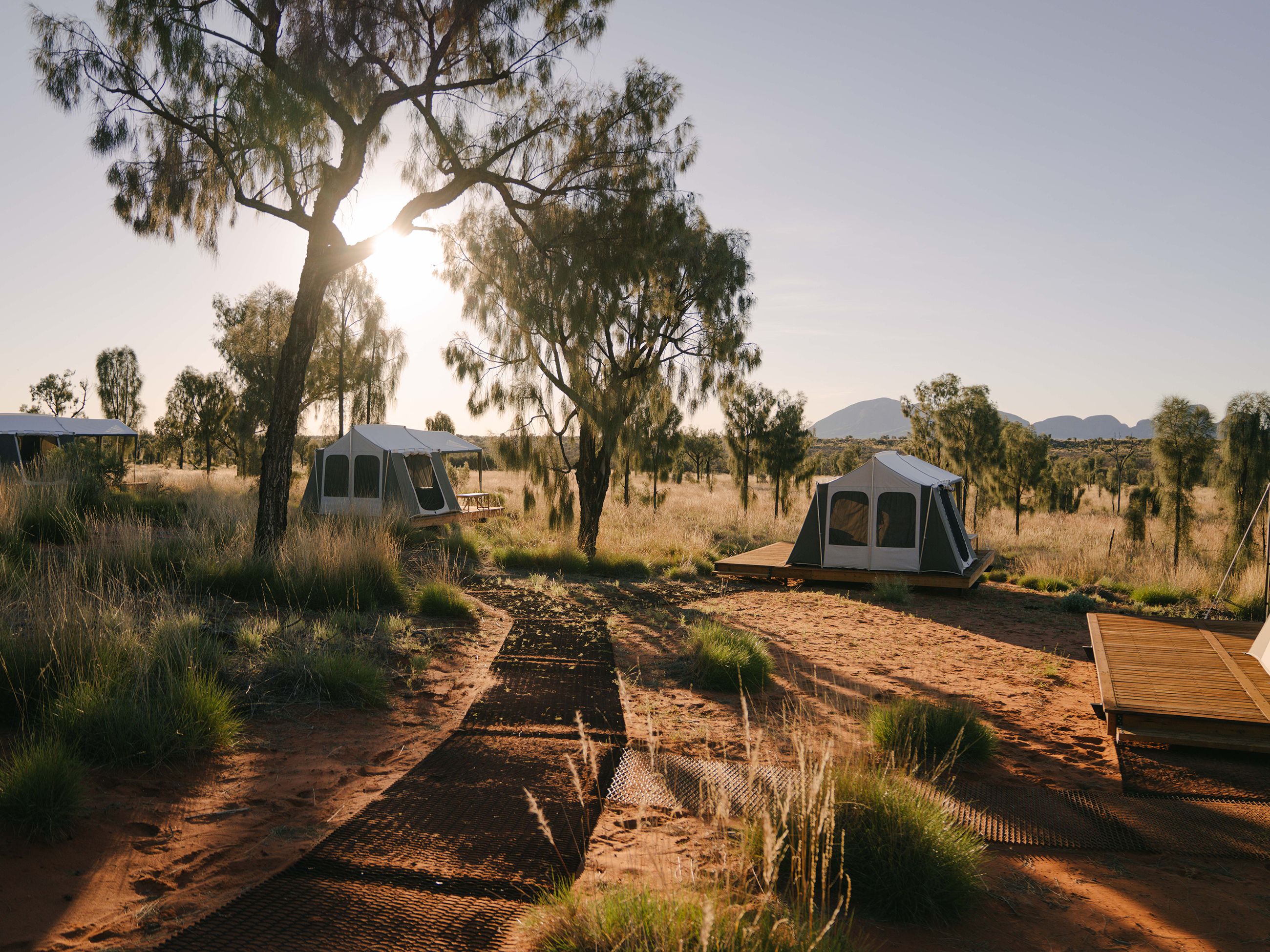
Spend two nights camping under the stars. (Credit: Tasmania Walking Company)
Hear stories that stretch back tens of thousands of years. (Credit: Tasmania Walking Company)
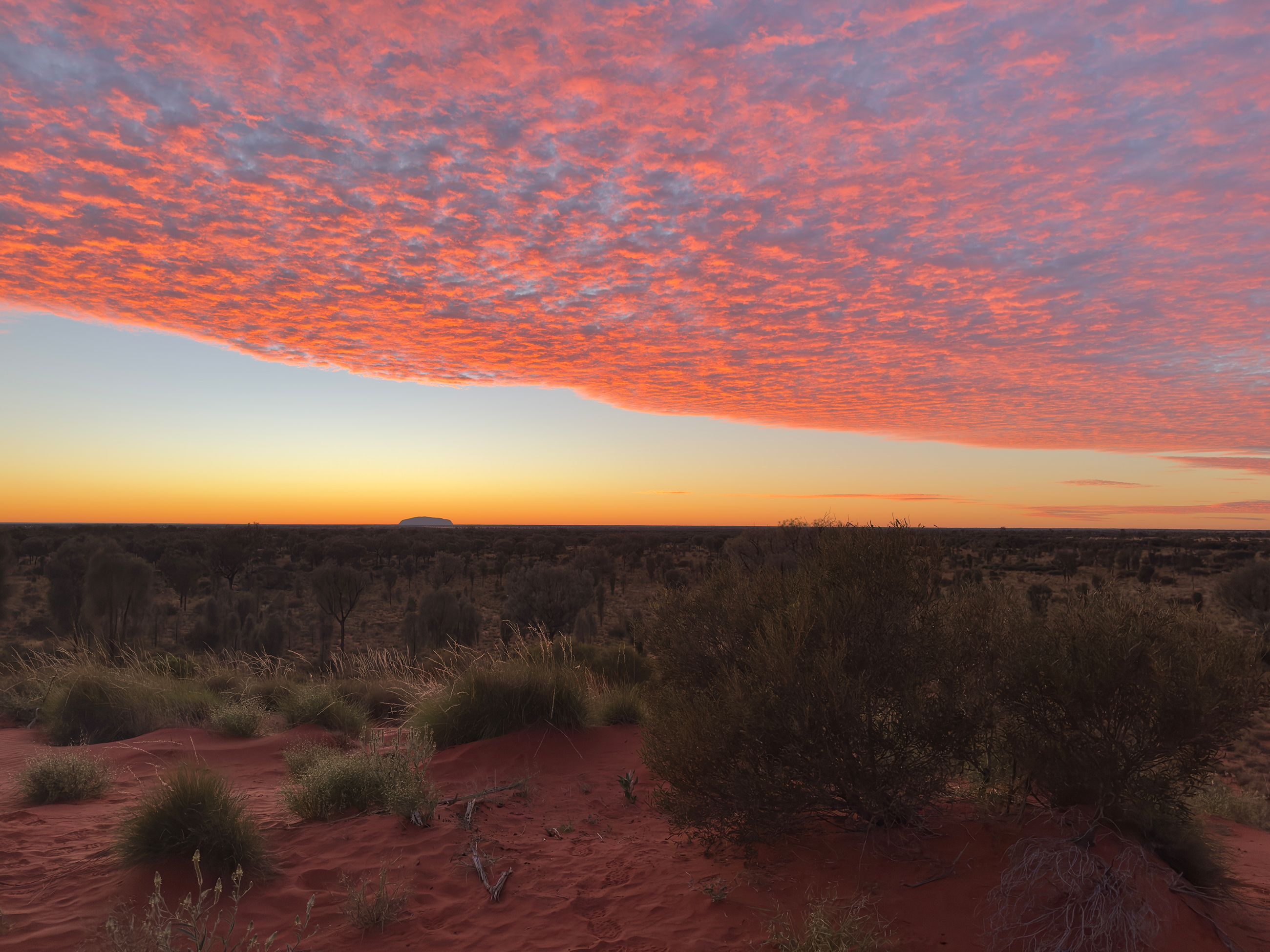
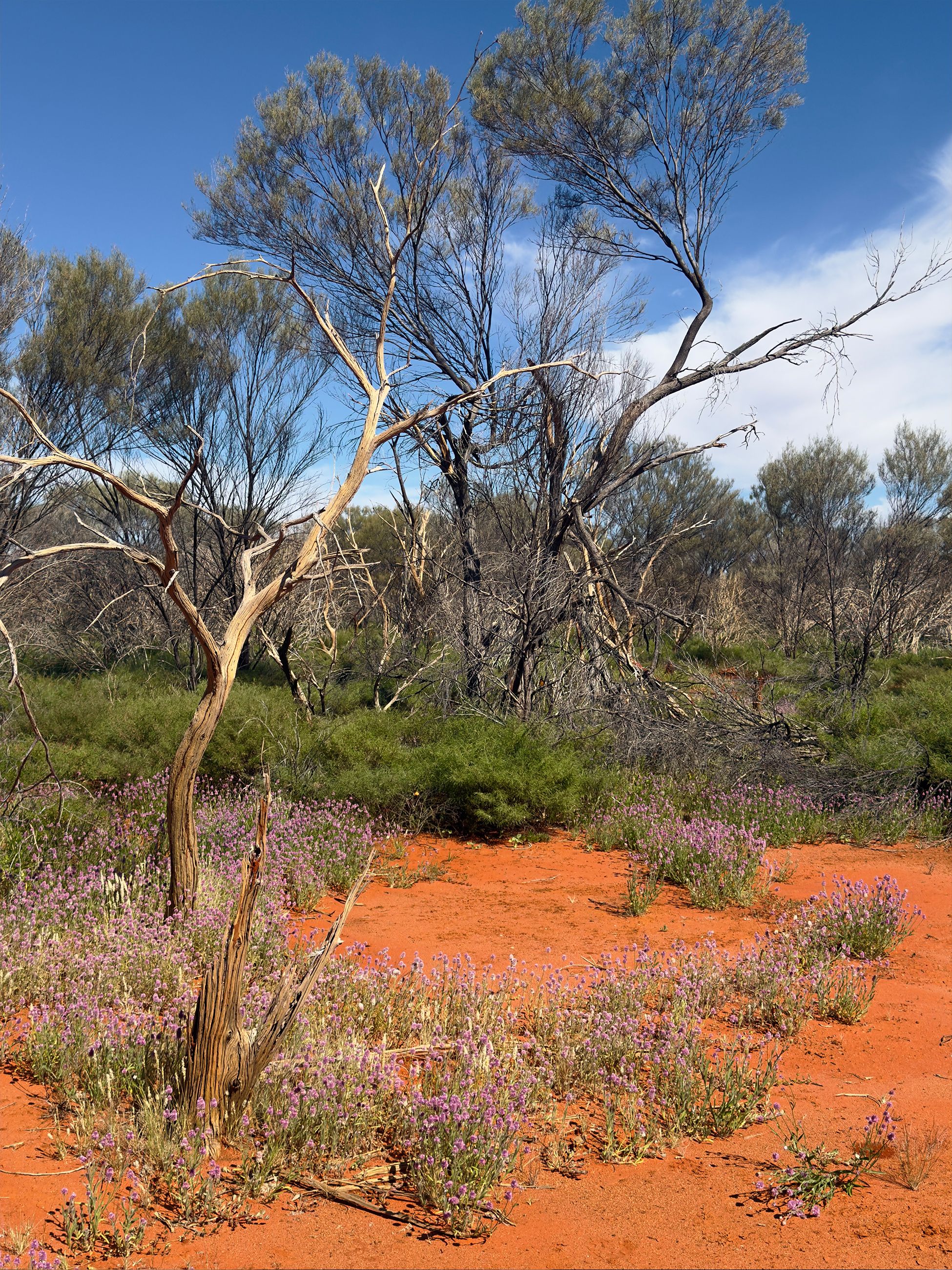
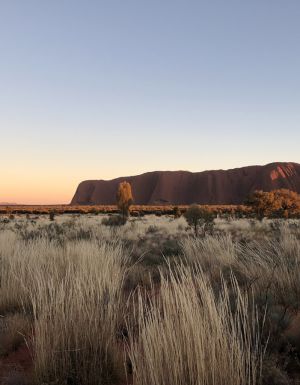
Day two was the group’s favourite day. We rose at 5.30am to walk up a sand dune to catch the sunrise over Uluṟu, the most visually exquisite one I’ve ever seen. Another moment that really struck me was on day three, when, after spending a few hours weaving through spinifex and crossing the red soil, the landscape suddenly shifted to one that was blanketed in mulla mulla, a stunning wildflower with feathery mauve flower heads, which attracted hundreds of butterflies.
The final day of Tasmanian Walking Co’s new hike will end at Uluṟu, arguably Australia’s most iconic landmark. The massive sandstone monument stands at 348 metres high and is estimated to be around 550 million years old. On this day, we also tried our hands at spear throwing and visited the Muṯitjulu Waterhole and Cultural Centre.
Spectacular sunrises and sunsets await. (Credit: Rachael Thompson)
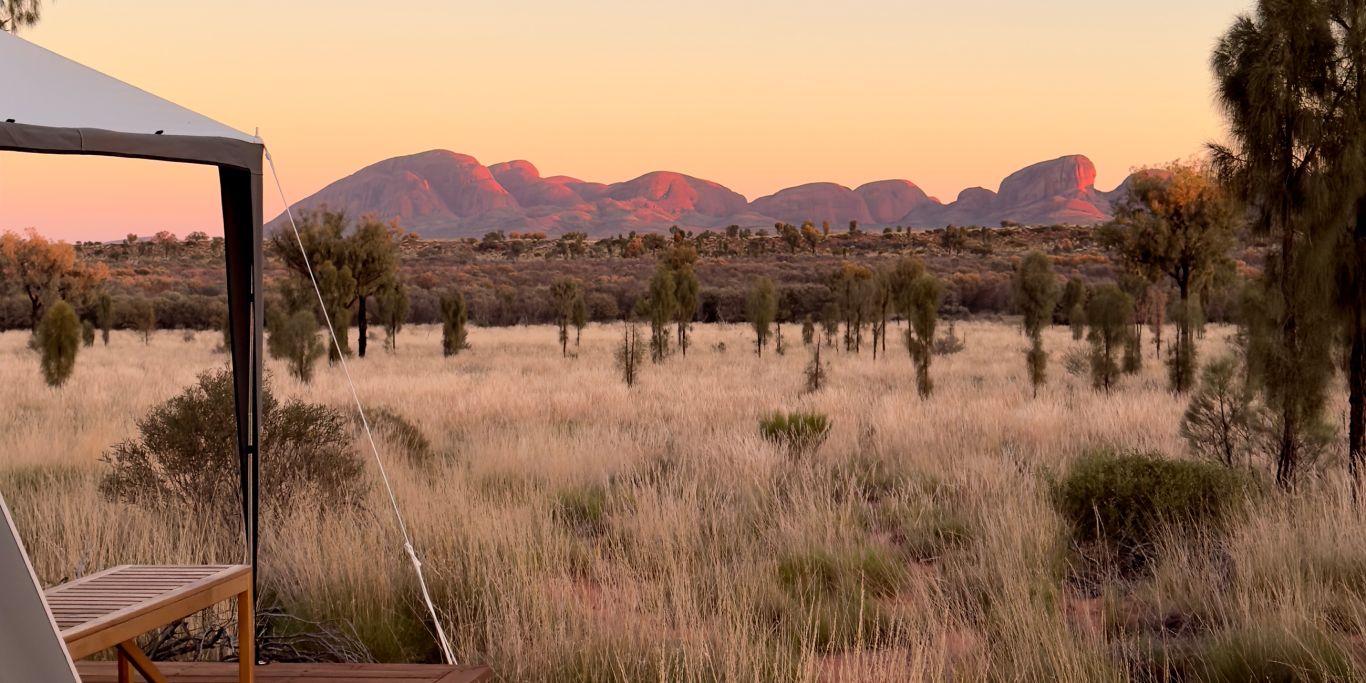
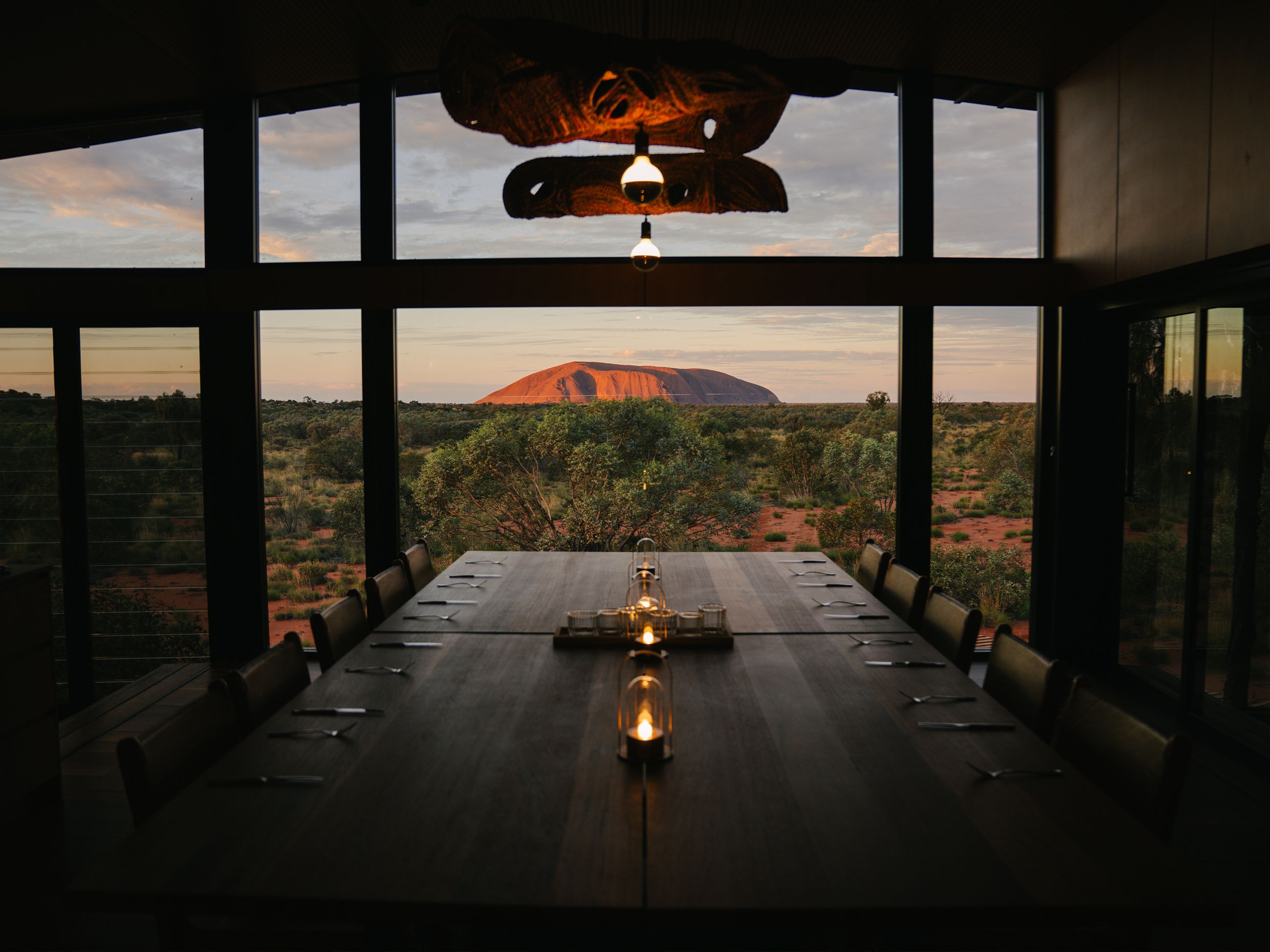
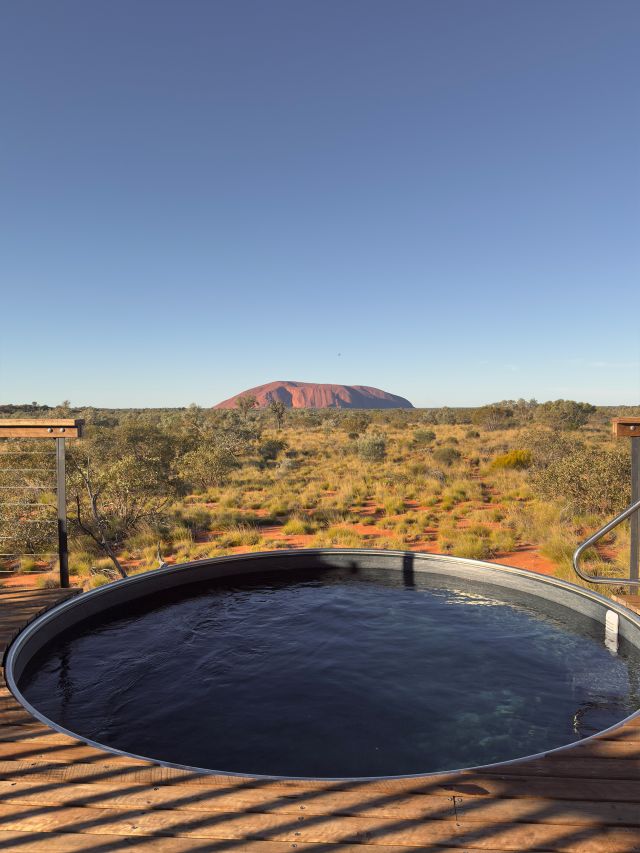
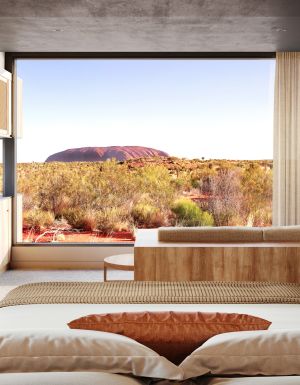
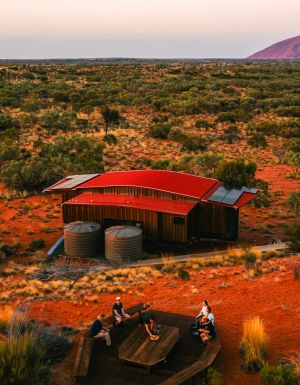
The accommodations take travellers on a journey, with each night better than the last, starting with environmentally sustainable eco camps, followed by a private lodge. The first night is spent at Tjakura Camp, sleeping under the stars in elevated tents fitted with beds overlooking Kata Tjuṯa. A full-size kitchen and entertaining space reminiscent of what you’d find on an African safari is the perfect spot to relax. Night two is spent at Tali Camp, which showcases even more impressive views of Kata Tjuṯa and an indoor entertaining space with air conditioning. The final two nights are spent at the Mala Camp, which features private rooms and bathrooms that overlook Uluṟu, a spa (I highly recommend booking in for a post-walk massage), a saltwater outdoor tub overlooking Uluṟu and an air-conditioned living and dining area.
Each evening, the guides don their aprons and cook up a delicious meal for the group using local produce to enjoy while debriefing the day’s events. Packed breakfast and lunches (think burritos, salads and homemade sourdough) are also prepared to keep you fueled during the day.
Wi-fi along the trail is very limited, which turned out to be a blessing as it helped foster a sense of calm and disconnection from city life I didn’t know I needed. Having the opportunity to slow down, listen to the landscape, and hear stories that stretch back tens of thousands of years was a privilege I will never forget.
Need tips, more detail or itinerary ideas tailored to you? Ask AT.
AI Prompt
Uluṟu-Kata Tjuṯa Lodge features a dining room with a view. (Credit: Tasmanian Walking Company)
Expect hearty, wholesome meals that showcase local produce. (Credit: Tasmanian Walking Company)
Traditional Owner and member of the APY Land Council, Tapaya Edwards, was instrumental in the development of this walk. “This is an important place for healing the spirit," he said. “People will come here and feel the land as they walk through it. The Spirit of the Dreaming will wash over them. The walk is going to blow their mind."
Is the Uluṟu-Kata Tjuṯa Signature Walk ethical?
Tasmanian Walking Company worked closely with the Aṉangu. (Credit: Tasmanian Walking Company)
Developed in consultation with Yankunytjatjara and Pitjantjatjara people (Aṉangu), the Country’s Traditional Owners, including Steering Committee Chair Tapaya Edwards, the Uluṟu-Kata Tjuṯa Signature Walk is as much about people as it is place.
The carbon-neutral experience will create a minimum of 20 positions in the first 10 years of business, with revenue-sharing agreements being fed directly back to local Aṉangu communities. Respect is a guiding tenet throughout, with guests learning about Aṉangu culture and history through Indigenous-led storytelling sessions, educational workshops and lessons in land management practices along the way.
“Millions have stood before Uluṟu, but few have been invited by Aṉangu Owners to move through its landscape like this," said Tasmanian Walking Company co-owner, Brett Godfrey.
Can you join a shorter walk?
Yes. The Tasmanian Walking Company is also offering the Uluṟu-Kata Tjuṯa Lodge Walk – a fully-guided, four-day, 35-kilometre journey along the Uluṟu Kakararra Trail. The walk is designed for first-time walkers and international travellers, with shorter daily distances and one night at Yulara followed by two nights at the Uluṟu-Kata Tjuṯa Lodge.
Weekly travel news, experiences insider tips, offers, and more.
Details
Uluṟu-Kata Tjuṯa Lodge features an outdoor saltwater pool. (Credit: Rachael Thompson)
Pricing: The five-day walk starts from AUD$5395 pp/twin share.
Day 1: Kata Tjuṯa and a guided Valley of the Winds Walk to private Eco Campsite 1 (8.4 kilometres).
Day 2: Arc east across the rolling dunes to Eco Campsite 2 (16.5 kilometres).
Day 3: Continue across desert landscapes with cultural interpretation (16.5 kilometres). Overnight at the Uluṟu-Kata Tjuṯa Lodge.
Day 4: Uluru walks, including Muṯitjulu Waterhole and Cultural Centre (12.3 kilometres) with optional base walk (8 kilometres). Overnight at Uluṟu-Kata Tjuṯa Lodge.
Day 5: Lodge to Ayers Rock Resort (0.8 kilometres) and departure.
Want to see more stories from Australian Traveller in your Google search results?
Tick the box next to "Australian Traveller". That's it.
Rachael Thompson is a freelance travel journalist. With a background in design and travel media, Rachael is dedicated to curating content that is as much informational as it is beautiful. She began her career at Belle magazine, before taking up editorial roles at Homes to Love, Bed Threads and Australian Traveller/International Traveller. When she's not writing, editing or optimising content, Rachael enjoys exploring the city's newest restaurants, bars and hotels. Next on her Aussie travel wish list is Lord Howe Island.
The Northern Territory is made for road trips, and this one hits all the highlights.
Craggy mountain ranges, inviting waterholes, ochre soil: the landscape of the Northern Territory is asking to be explored by road and foot. There are many iconic road trips to choose from here, but none so all-encompassing than the roughly 3000 kilometres of sealed road that make up Explorer’s Way.
Spend 14 days (or more, to really make the most of it) driving this route from Adelaide, hitting the NT near the small settlement of Kulgera before later finishing in Darwin. Along the way, you’ll find nearly all the territory’s most iconic sights.
Discover some of the top highlights that make Explorer’s Way one of Australia’s most incredible road trips.
1. Alice Springs
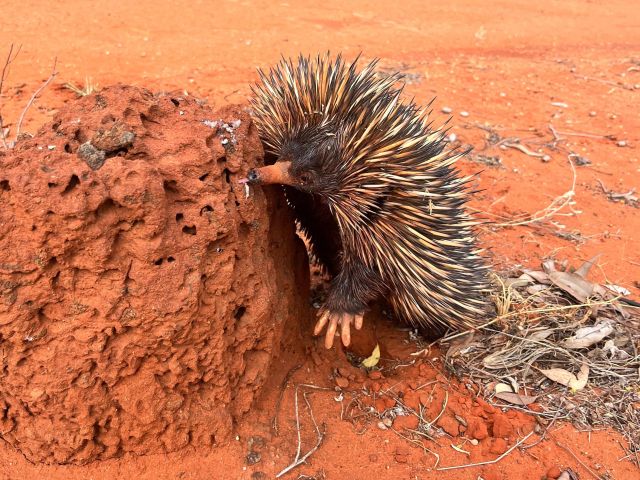
See the locals at Alice Springs Desert Park. (Credit: Tourism & Events NT)
Recently hitting the big screen again with the story of The Kanagroo Sanctuary, there’s a lot to surprise you in Alice Springs.
Three distinct desert habitats – desert rivers, sand country and woodland – are recreated over 1300 hectares at Alice Springs Desert Park. Time your visit for a presentation or a free bird show.
Later, turn your attention to the skies above, taking a dive into local astronomy at Earth Sanctuary. You’ll find a range of experiences, from a 90-minute toe-dip into the stars through to an overnight adventure.
Alice Springs packs a surprising punch with its tasty dining options, including pub grub and unique brews at Alice Springs Brewing Co, tapas and pizza at Epilogue Lounge and tasty cafe fare at the quirky Page 27.
2. Tjoritja/West MacDonnell National Park
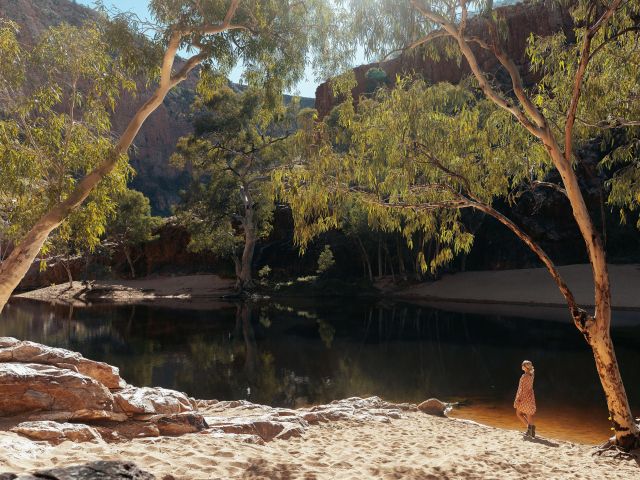
Dive into Ormiston Gorge. (Credit: Tourism & Events NT/ Dom and Jesso)
Beginning 15 minutes from Alice Springs and stretching across 161 kilometres, Tjoritja/West MacDonnell National Park is packed with striking ancient landscapes and inviting water holes.
Visit Standley Chasm – traditionally known as Angkerle Atwatye, meaning ‘Gap of Water’ – to take in its bold red and orange hues, and to observe the diverse bird species, lizards and wallabies that call it home.
Cool off in one of several picturesque natural swimming holes, like Ellery Creek Big Hole and Ormiston Gorge.
3. Uluru & Kata Tjuta
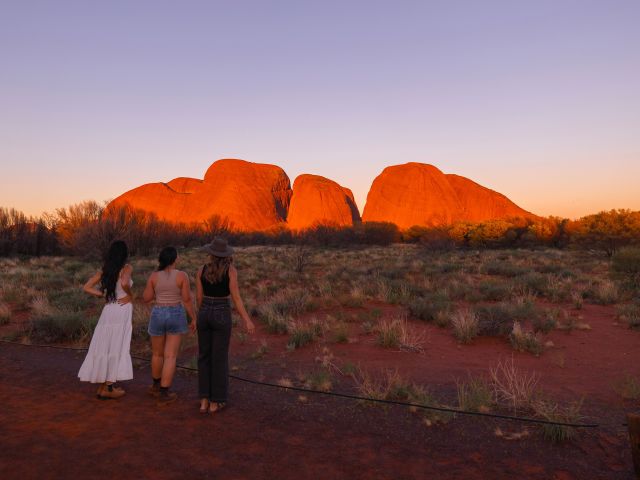
Explore Kata Tjuta. (Credit: Tourism & Events NT)
Visiting the Cultural Heart of Australia is something everybody should experience. There are so many side trips in the Red Centre you could easily spend a week here, but to get the most out of a short time, park the car then get out on foot.
Take the 10-kilometre Base Walk around the entirety of Uluru or join a free, ranger-guided Mala Walk along part of the base, learning about Tjukurpa (creation stories) and geology as you go.
For a change of pace, wait until nightfall and wander through the iconic Field of Light display by celebrated artist Bruce Munro, or see the Wintjiri Wiru lightshow that shares the ancient Mala story using drones, lasers and projections.
4. Tennant Creek
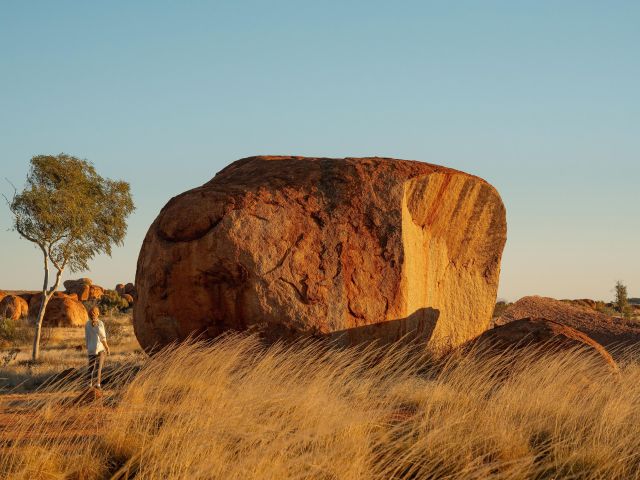
See the ancient granite boulders of Karlu Karlu (Devils Marbles). (Credit: Tourism & Events NT/ Dom And Jesso)
Tennant Creek was Australia’s third-largest gold mining town in the 1930s, and visitors can discover that history at Battery Hill Mining Centre – and even try their own hand at gold fossicking.
For a completely different side of history, pop into Nyinkka Nyunyu Art & Culture Centre, which preserves and shares Warumungu culture through art, performance, a museum and more.
Just outside town, find the ancient granite boulders of Karlu Karlu (Devils Marbles). A site integral to important stories held by the Warumungu, Kaytetye, Warlpiri and Alyawarra peoples, the boulders appear to almost have dropped out of the sky and seemingly continue to defy gravity.
5. Mataranka
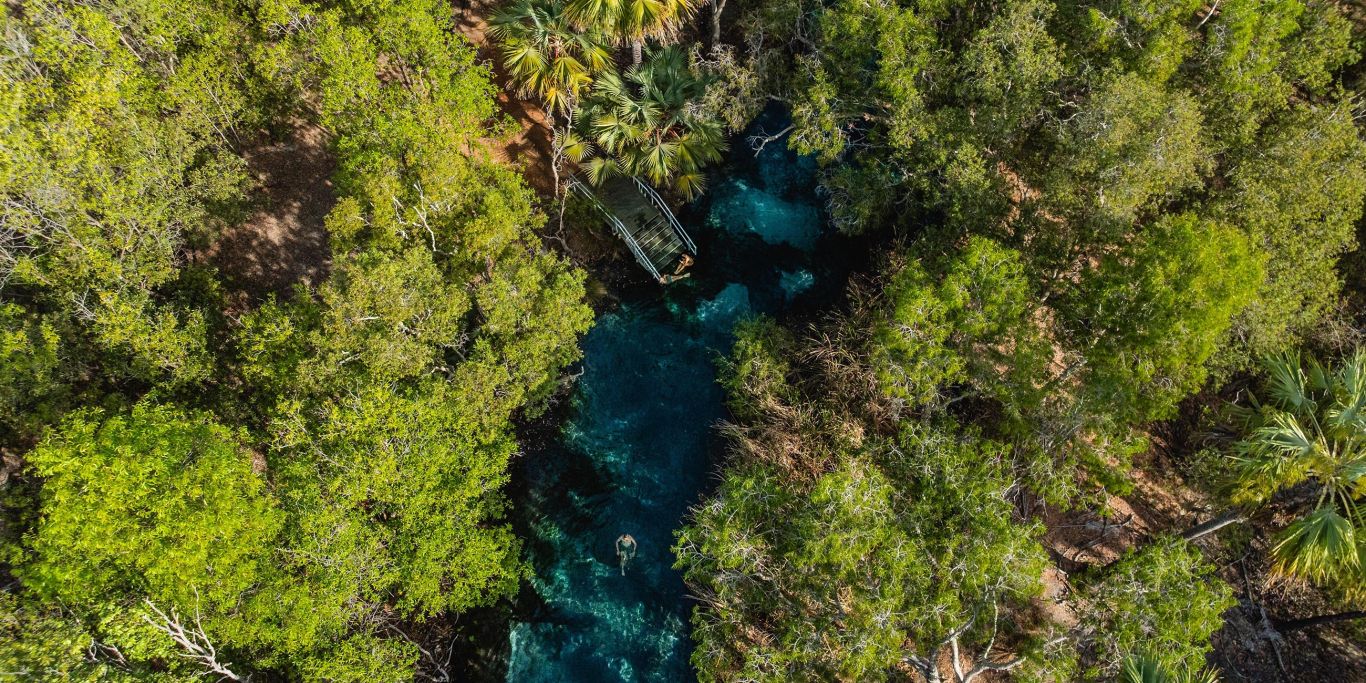
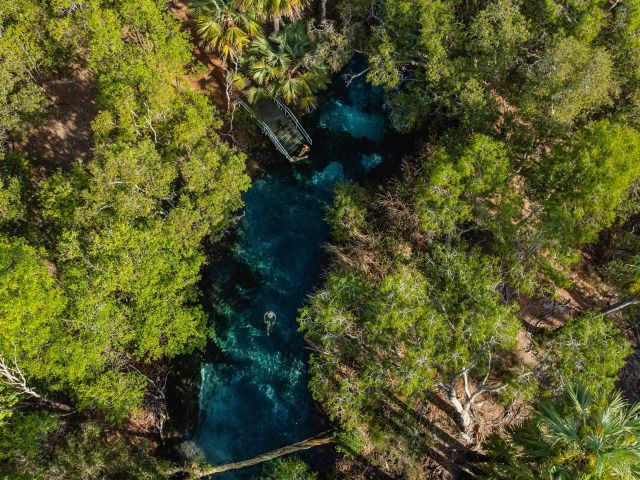
Dive into Bitter Springs. (Credit: Tourism & Events NT/ Ben Savage)
A town made famous by the novel We of the Never Never by Jeannie Gunn (and a movie of the same name), Mataranka is also known for its sandy-bottomed thermal pool, Bitter Springs, within Elsey National Park. Follow a 500-metre loop track around these spring-fed pools that stay a toasty 34°C year-round, before choosing your favourite spot to dive into. Enjoy the local birdlife while you relax.
Elsewhere in the park, find historical sites, several scenic walks and Roper River, which is perfect for boating and fishing.
6. Nitmiluk National Park
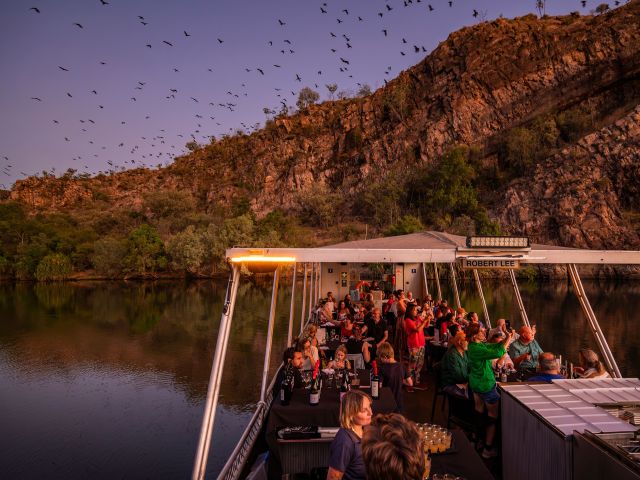
Join a sunset cruise with Nabilil Dreaming. (Credit: Tourism & Events NT/ Lachlan Gardiner)
Nitmiluk National Park is sandstone country, with 13 stunning gorges and plenty of waterfalls waiting to be explored.
One of the most beautiful spots can be found along the 62-kilometre Jatbula Trail, a five-to-six day bushwalk that follows an ancient Jawoyn songline from Nitmiluk Gorge to Leliyn (Edith Falls). Numbers are restricted and book out quickly, so be sure to plan well ahead. Not up for the hike? Drive right up to the falls and enjoy a dip without the challenge.
Elsewhere, explore Nitmiluk (Katherine) Gorge. Paddle a kayak through the river running through the canyon, or save your energy on a Nabilil Dreaming Sunset Dinner Cruise, discovering the stories and ways of the Jawoyn people while enjoying a candlelit dinner as the cliffs around you shift colour and glow with the changing daylight.
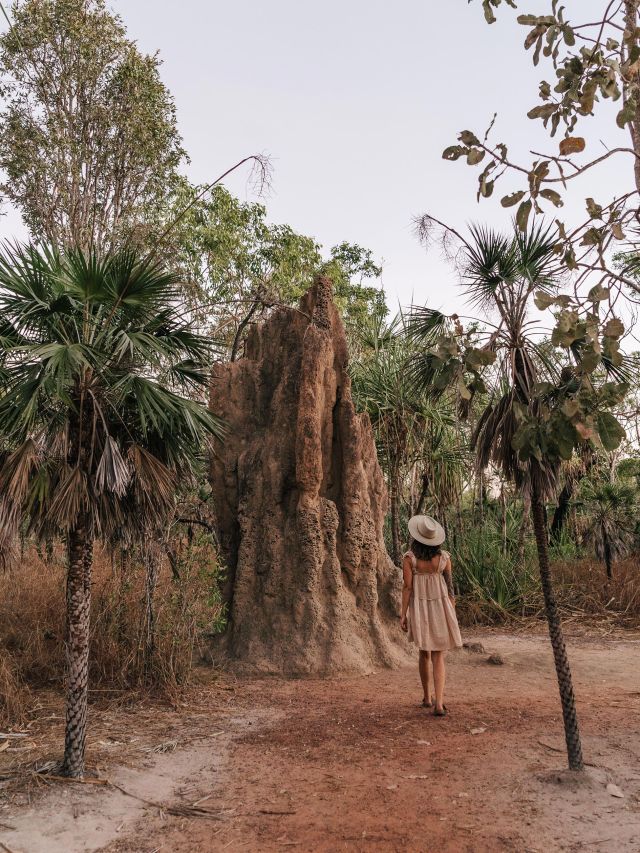
Be awed by giant cathedral termite mounds. (Credit: Tourism & Events NT/ As We Wander)
Just over an hour’s drive from Darwin lies the beautiful Litchfield National Park. It’s famous for stunning waterfalls and swimming holes, including Buley Rockhole, Wangi Falls, Florence Falls and Tjaynera Falls.
Here you’ll also find hundreds of giant – and magnetic – cathedral termite mounds that are truly a sight to see. Ageing up to 100 years old, you won’t find mounds like these outside the northern parts of Australia. Stroll along the accessible boardwalk to see them up close.
8. Darwin
Darwin art is streets ahead. (Credit: Tourism & Events NT/ Mark Fitzpatrick)
This list wouldn’t be complete without the territory’s capital city: Darwin. Situate yourself upon arrival with a stroll through the main streets, admiring the many art murals by local, interstate and international artists. They’re all remnants of the annual Darwin Street Art Festival, one of Australia’s longest running street art festivals.
Stop to recharge along Darwin’s Waterfront Precinct, an area of delectable restaurants, public swimming pools and free events. And, of course, it would be wrong to leave the city without enjoying a bowl of laksa at Mindil Beach Sunset Market as the sun goes down.